


What Is MD2 Pineapple? Variety, Acidity and Frozen Processing Choices
Sep 27, 2026
Leave a message

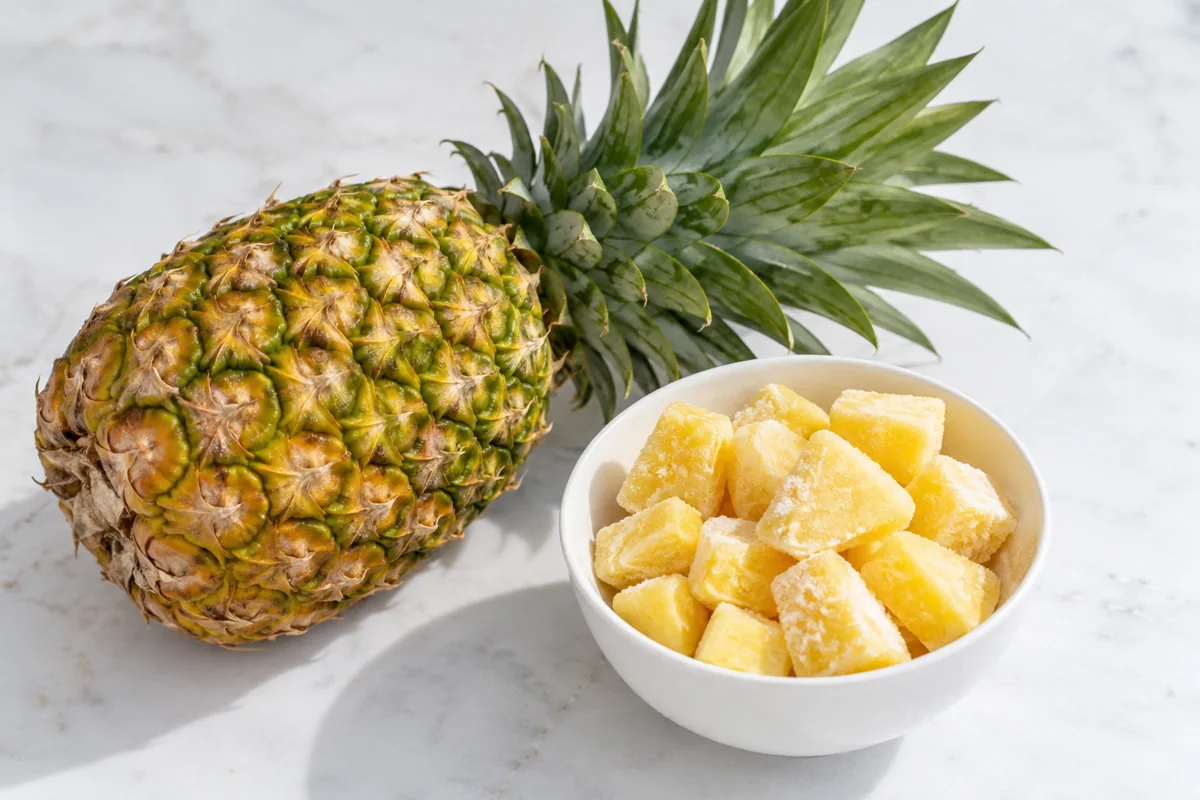
Identify MD2 and separate cultivar from grade
The cultivar name describes the plant lineage and the fruit produced from it. "Golden," "extra sweet," and similar terms may be associated with MD2 in trade, but they can also function as marketing language. A buyer should request the actual cultivar identity when it is part of a label or contract. A source declaration, production record or supplier specification is more useful than identifying a frozen pineapple chunk by its color. Once pineapple is peeled, cut and frozen, visual appearance alone cannot authenticate a cultivar.
The distinction matters because fruit quality still varies within one cultivar. Growing region, weather, harvest timing, maturity, postharvest handling and trimming all affect the ingredient received by a processor. A supplier may quote a Brix minimum for its own MD2 program. For instance, the Global Green fresh pineapple offer states a minimum soluble-solids value for that company's supply, while the LATO pineapple page publishes a different fresh-export range. These are program claims, not a universal biological limit for all MD2 pineapple or a specification for GreenLand's frozen product.
Even an apparently precise "MD2" request can conceal several separate decisions. Is the buyer asking for a cultivar because of a known flavor profile, a consumer label claim, a customer purchasing rule, or simply a familiar shorthand for yellow sweet pineapple? Each reason requires different evidence. A label claim may need documentary identity and traceability. A flavor goal needs sampling and agreed sensory criteria. A cost or yield goal requires cut recovery and processing loss. Ask the downstream product team what the name is expected to accomplish before writing it as the only line in an RFQ.
The frozen product description should then state its actual form. A slice gives a recognizable fruit shape in a pastry or foodservice pack, but its thickness and core removal matter. Dices can distribute through yogurt or a fruit preparation, while a larger irregular chunk may be appropriate for smoothies. GreenLand's frozen pineapple range presents several cut forms for quotation. The availability of MD2 in a specific cut, crop period and volume must still be confirmed with a current offer. The public range does not turn every cut into an always-available cultivar SKU.
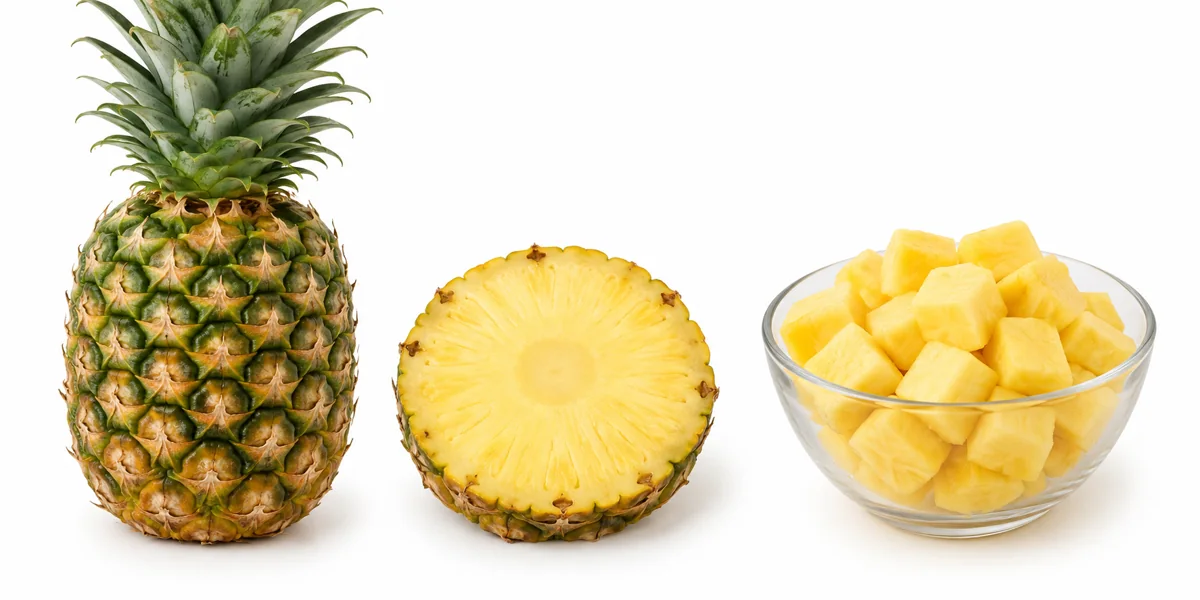
Illustrative view. Pineapple fruit beside flesh slice and dice.
Use a two-part item description in purchasing records. The first part identifies the fruit and any verified cultivar requirement. The second defines the frozen cut, size distribution, pack, intended use and agreed quality tests. This prevents an invoice or sample approval from treating the variety name as proof of all application properties. It also helps a buyer compare alternative lots honestly if one cultivar is temporarily unavailable or a different origin is proposed.
Traceability should follow the same logic. Request a lot code that ties the frozen pack to the declared raw fruit source and processing date, along with the documents relevant to the destination market. The buyer may need residue, microbiological or certification evidence under its own program; these cannot be inferred from MD2's reputation for fresh export. Variety identity is one attribute of an ingredient approval, alongside food-safety, process and physical specifications.
Read cultivar comparisons within their test conditions
Comparative pineapple research can inform a hypothesis for product development, but a published ranking has boundaries. A study may sample particular cultivars from one location and season, measure fresh flesh at a defined maturity, and use a specific preparation for sensory testing. Another study may examine pineapple peel, core or juice. Results for those tissues should not be transferred without qualification to edible IQF flesh. The variables that matter to a frozen bakery or dairy application may also differ from the variables that helped a fresh-eating panel choose a favorite.
The recent Thai cultivar comparison evaluates MD2 alongside Pattawia and Queen under its own sample and analytical conditions. It reports compositional and sensory differences that are useful as context. They do not prove that MD2 will win every bakery, beverage or frozen-fruit preparation trial, especially after a different harvest, cut, freeze and thaw route. The correct use of the paper is to identify traits worth measuring and to read the methods before borrowing a number.
A separate MD2 and Morris study analyzes pineapple core extracts at specified ripeness indexes. Its data are a good reminder that maturity and tissue choice influence measured properties. The core is not the diced edible flesh in a frozen carton. Publishing its Brix or acidity as a universal value for commercial frozen MD2 pieces would misrepresent the study. A buyer can instead ask the supplier to measure the actual edible portion in a representative sample using an agreed method.
Fresh suppliers may emphasize gold flesh, sweetness and low acidity because those traits sell whole fruit. For a processor, the relative importance can reverse with the application. A mildly acidic fruit may taste pleasant alone yet seem flat after mixing with a sweet dairy base. A stronger acid impression may balance a pastry cream but need adjustment in a beverage. Likewise, a fruit praised for fresh aroma may lose some top notes in a heated filling. A credible comparison specifies the matrix, inclusion rate and processing route in which the final product is judged.
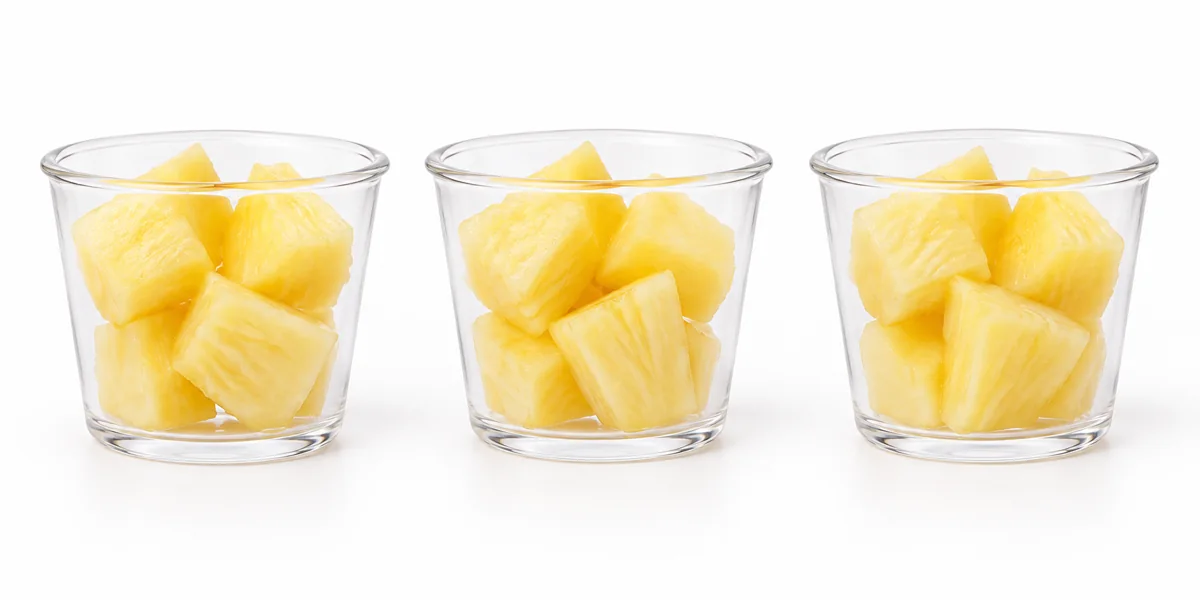
Illustrative view. Three equal-cut pineapple flesh samples for matched comparison.
When comparing MD2 with another cultivar, align the fruit condition first. Use equivalent edible flesh, trim out the eyes and core in the same way, cut to the same dimensions, and bring samples to the same temperature. Record maturity or harvest information if available. Then collect basic sensory notes, soluble solids and titratable acidity. If the end use is frozen, freeze and thaw all samples with the same protocol before making the decision. An unmatched comparison can make a difference in handling look like a difference in cultivar.
It is reasonable for a buyer to prefer MD2 based on an existing approved formula and consumer expectation. The supplier still needs to show that the proposed lot meets that formula's measurable targets. Conversely, another cultivar may be viable in a particular blended product if the customer permits it and the full trial supports it. The point is to make the cultivar request testable, not to erase a legitimate identity requirement. Keep the original identity declaration and the performance result as separate fields.
An internal reference sample helps where sensory language is subjective. Retain an approved frozen lot, prepare it and the candidate under the same conditions, and score aroma, perceived sweetness, sourness, texture and color in the finished matrix. Document who scored the samples and whether the difference matters commercially. This is more informative than a statement that one named variety is "best," because it captures the product the buyer actually intends to make.
Assess soluble solids, acidity and maturity together
Brix is a reading of soluble solids in a liquid sample under a specified measurement condition. In pineapple juice, sugars make a major contribution, but the number alone is not identical to perceived sweetness. Acid concentration and aroma change the sensory impression. A lot can meet a Brix target and still taste sharper than the approved reference; another can taste rounder with similar soluble solids. Use Brix as one measurement in a matched evaluation, with a stated sample preparation and temperature, rather than as a stand-alone flavor certificate.
Titratable acidity and pH answer different questions. Titratable acidity describes the amount of base needed to neutralize acids under a defined method, often reported as citric-acid equivalent. pH describes hydrogen-ion activity. Both can matter to a formulation, but neither replaces a taste and process trial. For a fruit inclusion in yogurt, acidity may influence the balance of the complete cup. In a beverage, it may guide formula adjustment. In a pastry, the heat and surrounding sweet ingredients can change how sharpness is perceived. If an RFQ says "low acidity," ask which measure and range the customer means.
Maturity complicates both readings. A pineapple harvested or processed at a different stage can show a different balance, even when its cultivar identity is correct. The buyer should ask how representative samples are taken and whether measurements refer to the edible flesh after trimming. A whole fresh-fruit export specification can be useful background, but it may measure a different condition than the frozen diced ingredient. A fresh MD2 supplier specification demonstrates how one trade program defines its own Brix and acidity limits; those limits should not be copied into a frozen RFQ without validating the customer's actual application.
For a practical incoming check, agree how many packs and pieces will be sampled, whether the fruit is tested frozen, thawed or expressed as juice, how temperature is controlled, and what instrument and calibration are used. Make the method repeatable enough that the supplier and buyer can investigate a discrepancy. A single handful squeezed after an uncontrolled room-temperature hold may not represent a bulk lot. If the process releases water during thawing, decide whether the sample measures the fruit plus drip or only drained pieces; the method changes the result and its relevance.
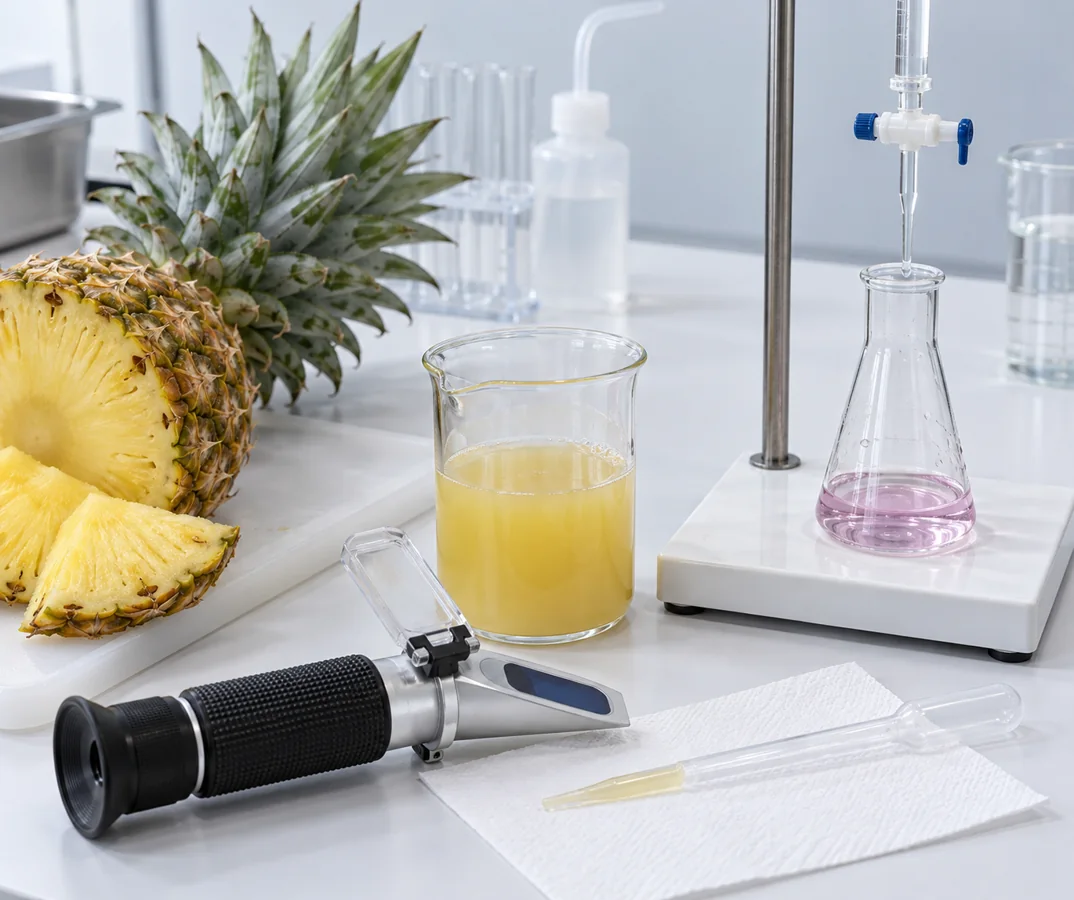
Illustrative view. Separate refractometer and acidity test setup beside pineapple juice.
Flavor acceptance should include a fixed comparison in the final product. Prepare a control formulation with the approved lot, then substitute the candidate lot at the same fruit weight and cut. Compare sweetness, acidity, aroma and color after the full process. If the formula can adjust sugar or acid, record the adjustment needed and its cost rather than declaring the candidate simply "good" or "bad." This makes the tradeoff visible to development and purchasing. Avoid changing fruit lot, inclusion rate and recipe together, because the observed difference then has no clear source.
The sensory panel should also note off-flavors and texture. A high Brix reading cannot excuse fermentation, damaged fruit or an undesirable fibrous bite. Likewise, strong color cannot compensate for residual peel or eye fragments. Supplier quality controls and the buyer's safety approval remain separate from these taste observations. The analytical measurements narrow the decision but do not replace an inspection of the physical ingredient.
Once a target range is established, keep room for the normal measurement variation of an agricultural ingredient. An overly narrow number copied from one successful sample can lead to unnecessary rejections without improving the finished product. Tie limits to the application trial and state the method and tolerance. The aim is reliable flavor and performance over repeat orders, with an evidence trail when a lot falls outside the agreed range.
Test the frozen cut in its intended product
The same pineapple lot can work differently as a visible slice, a small dice or a blender piece. A slice needs a continuous shape, controlled thickness and acceptable core and eye removal. A small dice needs a useful size distribution, free-flowing condition and enough structure to stay recognizable after mixing. A blending piece may tolerate a wider shape range while still needing clean trimming and predictable flavor. Select the cut according to the final process before comparing offers for price.
Thaw behavior deserves its own observation. Place a measured frozen sample under the proposed thaw or use condition, then record drained yield, free liquid, piece integrity and bite. If the fruit will be used directly from frozen, test that actual route. Do not judge an IQF ingredient only after leaving it overnight at room temperature when the factory will dose it into a chilled process. Conversely, if a fruit preparation holds pieces for a day, a five-minute thaw test is not enough. The test must reflect the manufacturer's time and temperature sequence.

GreenLand product photograph. Frozen pineapple chunks in a bulk pack.
For bakery applications, assess the fruit after the complete bake or reheat step. A slice that looks attractive frozen may fold or release juice under a glaze. Dices may migrate through a soft batter, and a generous fruit load can wet the surrounding crumb. Standardize piece weight, pastry base and bake conditions, then compare visible identity, liquid release and flavor in the finished serving. The ingredient choice is successful when the fruit performs in that full system, not merely when it wins a frozen display comparison.
For dairy or chilled desserts, examine cut distribution, acidity balance and texture after the intended hold. Some pieces may sink or separate in a thin base, while larger chunks can interfere with a filling nozzle or serving spoon. Prepare several units across a fill run and compare early and late distribution. Keep the base formula constant during the first fruit comparison. If the team later changes stabilizer or fruit loading, repeat the test because those variables may alter the apparent suitability of the cut.

GreenLand product photograph. Frozen pineapple cut measurement in bulk pack.
For smoothies and beverages, the cut geometry may matter less after blending, but the input still affects dosing, yield and flavor consistency. Check whether frozen pieces flow through the chosen hopper and portioning method, whether oversized fragments delay blending, and whether residual fiber or core changes mouthfeel. Use the actual equipment and serving dilution. A taste judgment on neat pineapple flesh may not predict a beverage mixed with other fruits, sweeteners or dairy ingredients.
GreenLand's frozen pineapple detail page shows real frozen product forms and asks buyers to confirm variety, cut and other specifications. The photographs can verify that the page discusses frozen pineapple pieces; they cannot authenticate MD2 for a particular photographed pack. A quotation should therefore pair the requested cultivar with a current availability statement and a representative lot sample. If the buyer needs slices rather than chunks, check the actual offered slice specification rather than treating a generic frozen-pineapple listing as proof of the exact cut.
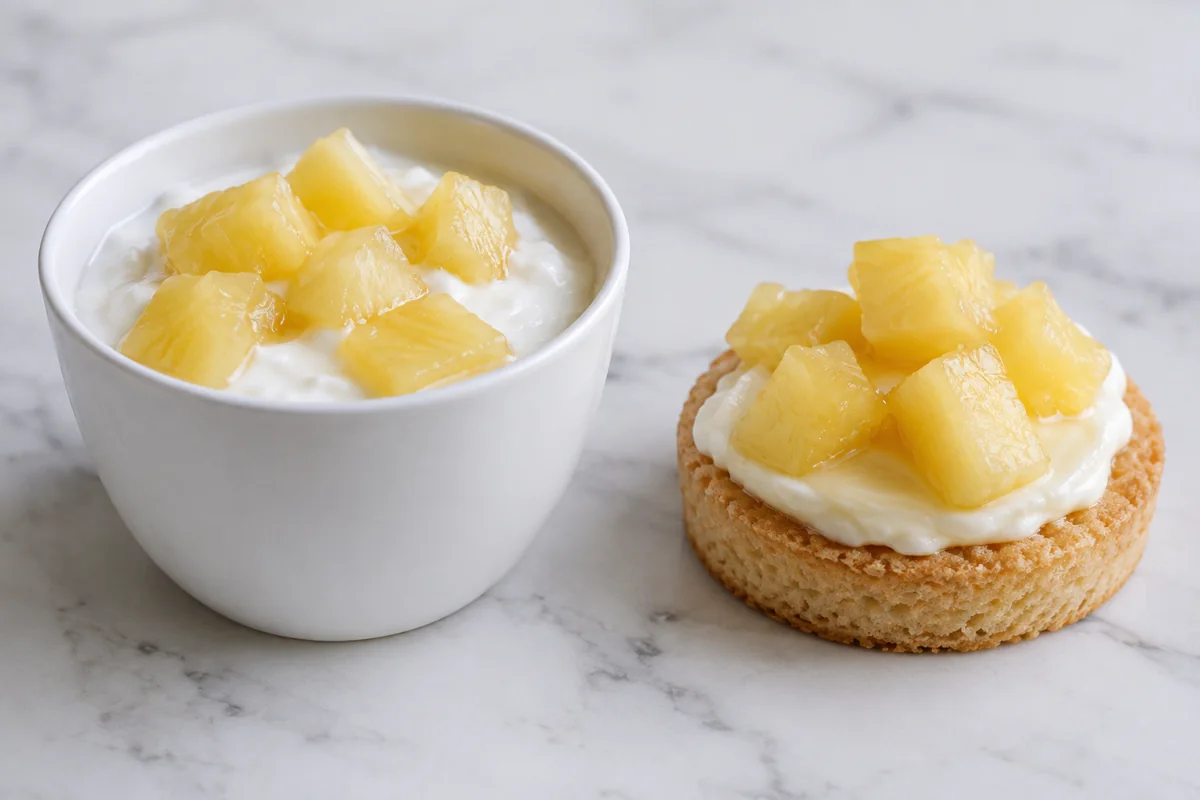
Illustrative view. Pineapple pieces in yogurt and on pastry test surfaces.
Record the result as an application matrix for the buyer's own process: lot, declared cultivar, cut, size distribution, trim defects, incoming Brix and acidity, thaw/drip result, heat or mixing outcome and final sensory score. These are proposed fields, not published GreenLand test results. They make the pilot reusable when purchasing must select a later crop or an alternative origin. A precise matrix is more useful than an adjective such as "premium," because it explains which property is essential to the finished product.
Write an application-based MD2 purchasing brief
An effective RFQ first states the product to be made. A beverage developer may need consistent pineapple flavor and free-flowing pieces for dosing. A bakery may need visible slices that retain shape after baking. A fruit-preparation producer may value small dice with controlled acidity and low visible trim defects. Those requirements should be explicit before the supplier suggests a variety or cut. The commercial offer can then be evaluated against the customer's actual priority rather than a generic MD2 reputation.
Specify identity and analytical tests in clear fields. Request the declared cultivar and origin where material, the frozen product form and target cut, the agreed Brix and titratable-acidity methods, color and defect criteria, and a representative sample. Ask for the supplier's available crop and lot information. If the purchaser has a reference formula, share the relevant fruit loading and process conditions so the supplier understands why a size or acidity range matters. Keep proprietary formula details limited to what is necessary for a useful proposal.
Physical acceptance needs equal attention. Define whether pieces should be free-flowing, how clusters and broken pieces are counted, how residual peel, core and eye fragments are checked, and what pack condition is acceptable. Give a realistic sampling plan for a commercial lot. The buyer should confirm the incoming temperature and cold-chain record appropriate to its receiving system. If a product is intended for direct use without a kill step, the food-safety team must separately approve the supplier documentation and process for that use.
The sample approval should include the finished application, not just a sensory bite of plain thawed fruit. Document the test recipe, processing route, serving state and score. Keep the approved sample and results so a later shipment can be compared fairly. If the proposed MD2 lot requires a formula adjustment, record whether that adjustment is permitted and what it changes in cost and label. If it cannot meet a critical physical or identity requirement, reject or renegotiate the proposal rather than hiding the mismatch behind a sweet flavor note.
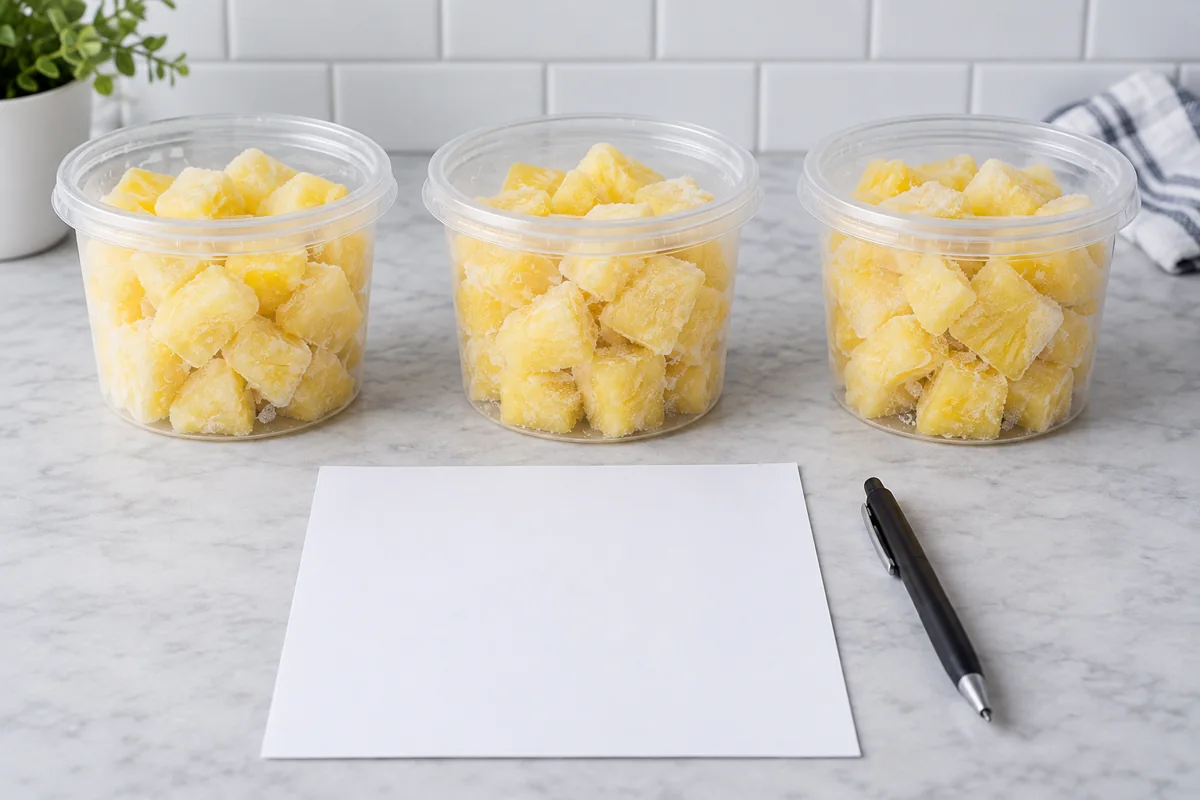
Illustrative view. Matched frozen pineapple sample tubs for purchasing comparison.
Commercial terms complete the brief. State estimated quantity, order frequency, preferred bulk or retail pack, destination, expected delivery window, private-label needs if relevant and requested export documents. Ask the supplier to confirm MOQ, lead time and current cultivar availability rather than assuming a public page guarantees the next crop. GreenLand-food can discuss frozen pineapple supply against these inputs and a current quotation. The buyer's acceptance values remain conditional until a real lot and process trial support them.
Finally, make the purchasing record resilient to change. Identify which items are mandatory, such as a verified cultivar statement for a label claim, and which are performance goals that an alternative sample might satisfy. When a new lot arrives, repeat the defined incoming measures and a shortened finished-product comparison. This gives the team a way to preserve flavor and functionality through seasonal supply changes while keeping the MD2 name accurate and meaningful. A reliable frozen pineapple program is built from a declared identity, measured lot properties and repeatable application performance together.
Source Frozen Pineapple with GreenLand-food
GreenLand-food is a professional frozen pineapple supplier and manufacturer in China, providing factory-direct wholesale supply for importers, food manufacturers, foodservice distributors and private-label programs.
Send the product form, specification, packing, quantity, application, destination, private-label needs and requested documents so we can confirm a current offer.