


Wood Ear Mushroom Salad from Frozen Black Fungus: Cook, Chill and Keep the Bite
Sep 27, 2026
Leave a message

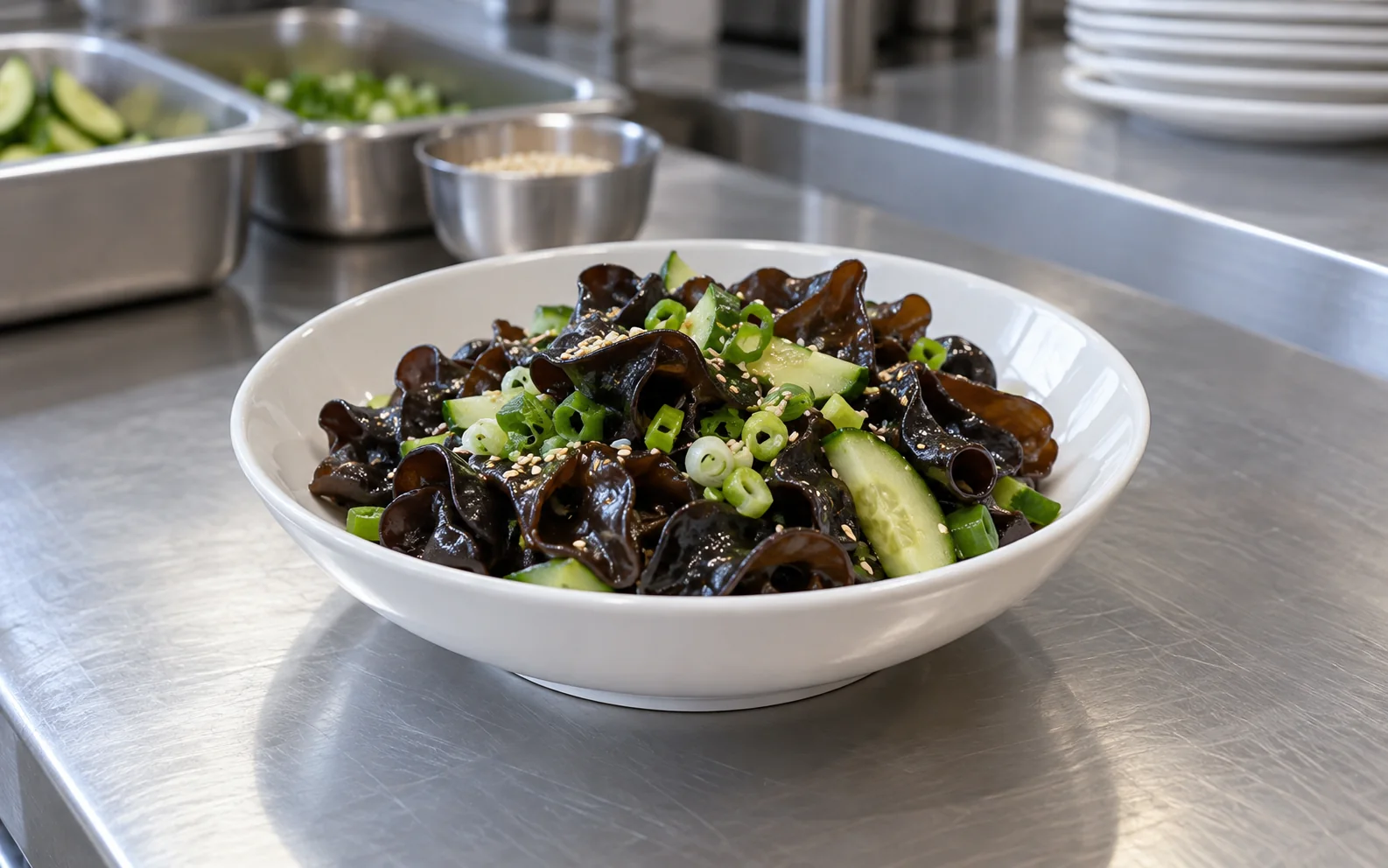
Many public recipes start with dried wood ear that is soaked and cooked. Their soaking times and yields do not transfer directly to a frozen product. GreenLand-food's frozen black fungus range shows sliced and strip forms; the photos help identify a possible cut, but current lot documentation must confirm whether a given offer is not ready to eat, fully cooked, or ready to eat. This article is a product-development method for foodservice and prepared-food buyers, not a fixed safety schedule for every fungus ingredient.
Start with the declared frozen wood ear form
Wood ear is valued in cold dishes for a resilient, slightly crunchy texture and its ability to carry a savory, acidic dressing. The format arriving at a kitchen or factory changes how easily that texture can be achieved. Whole pieces give the operator more control over cutting but may vary in thickness. Slices and strips are faster to portion, yet a narrow strip may soften or break during cooking and mixing. A visual selection should therefore be made in the finished salad, not only from the frozen bag.
Request a current specification before testing. It should identify the product, ingredient status, cut, size distribution, pack format, storage instruction, shelf-life basis, origin, lot code, and intended use. Most importantly, ask for a written statement of processing and whether the product is not ready to eat, fully cooked, or ready to eat. Those words direct the food-safety plan. A buyer cannot infer a sufficient pathogen reduction from the appearance of frozen pieces, the word "blanched," or an attractive product-page image.

Inspect frozen piece size and form before deciding how to cook and chill.
Where the current documents are ambiguous, hold the trial at the information stage rather than inventing a status. Ask what the supplier means by any heat-treatment term, whether it is a quality step or a validated safety step, and what use is intended after opening. The answer may determine which surfaces, utensils, and rooms the ingredient can enter. It also changes whether a cold salad can be assembled directly or needs a controlled cook. Clear documentation at this point is far cheaper than redesigning the process after a menu or retail cup has been approved.
Examine a representative frozen sample for piece separation, ice or clumping, broken rate, foreign material, and consistency of the cut. Keep the sample in its declared storage condition until the trial begins. Measure a portion before and after the intended preparation steps so the team understands yield. If different bag positions or cartons vary significantly, the formula may need a broader tolerance or the supplier may need a tighter grade. A single handful selected for photography cannot stand for an entire shipment.

The supplier photo identifies one offered cut, not a ready-to-eat declaration.
The frozen form avoids the dried-product soaking step, but it does not remove every preparation decision. Some operations may cook directly from frozen; others may temper or thaw under controlled conditions before cooking. The choice should follow the supplier's instructions and the operator's validated process. Record how much free water appears, because that affects dressing concentration and the serving weight. Do not import a rehydration ratio from dried-fungus recipes into this calculation; the starting materials contain very different amounts of water.
We use actual GreenLand-food black fungus photographs in this article to illustrate cut form. One shows sliced material and another shows strips. They are genuine product-page visuals, not evidence of the processing status or microbiological condition of a future lot. If the target dish needs broad, visually distinct curls, test a cut that keeps enough size after cooking. If it needs even distribution in a retail cup, a controlled strip may be easier to portion. The trial, not the image, resolves that choice.
Finally, align the cut with the claim and customer expectation. Some customers know the ingredient as wood ear mushroom; a supplier may list it as black fungus. The buyer should confirm the exact species or ingredient declaration required in its market and use consistent wording on the menu or pack. Any claim about country of origin, special processing, or ready-to-eat status needs matching documentation. Clear identity language makes food-safety instructions and purchasing approval easier to follow.
Cook for chilled use and protect the handoff
If the frozen ingredient is not ready to eat, the operator needs a product-specific cooking step suitable for the planned chilled food. The effective time and temperature depend on the form, equipment, load, starting condition, and applicable food-safety plan. A recipe blog's "boil for a few minutes" is not a commercial validation. Develop the process with the supplier's intended-use instructions, the operation's hazard analysis, and any governing local rules. Record how the coldest or most difficult portion reaches the required endpoint.
Cooking is only one part of the safety path. After the cook, the fungus moves through cooling, draining, cutting if needed, mixing, packing, and cold holding. Each handoff can introduce contamination or allow growth if it is not controlled. Separate raw or unverified ingredients and their utensils from the cooked side. Use clean, suitable equipment and trained handling. Establish a cooling method and monitoring record that matches the actual batch depth and container. A shallow tray or rapid-chill setup may behave differently from a deep tub of warm material.
The FDA Food Code is a model for retail and foodservice controls in the United States; the 2026 edition is current at the time of this article. It is not a universal instruction sheet for every factory, country, or specific mushroom product. The operation should apply the rules that govern its location and validated plan. We avoid publishing one generic cook, cool, or shelf-life number because a reader could apply it to the wrong product form. The correct numbers belong in the approved recipe and process record for the actual lot and service model.
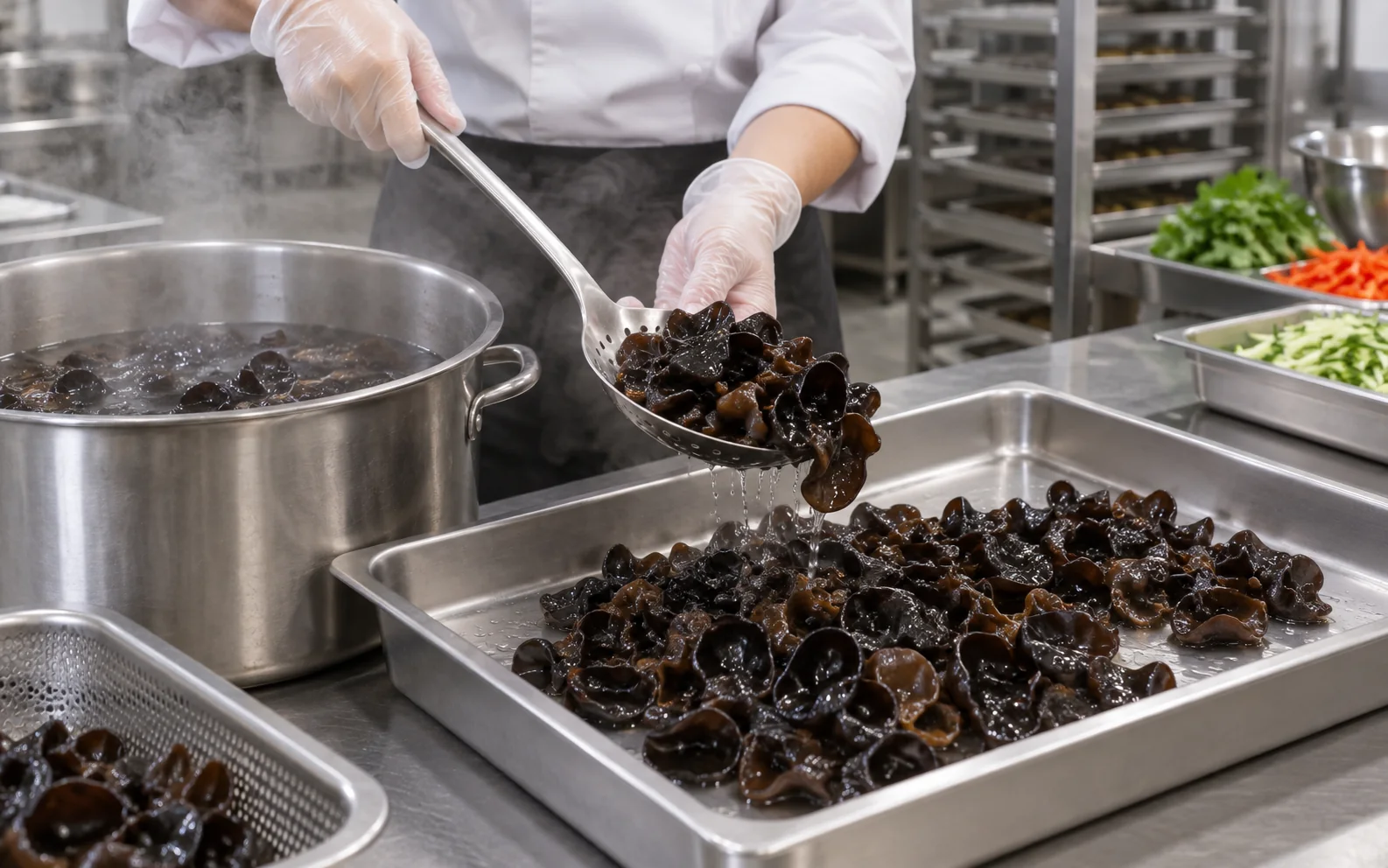
The handoff between cooking and cooling must follow the approved process for the specific product.
For a prepared salad, the product may be exposed again after cooling when cucumber, scallion, garlic, chili, sesame, or dressing is added. Those additions bring their own handling requirements. Wash or prepare fresh ingredients according to the operation's procedure, keep equipment and assembly areas clean, and avoid placing a cooked component back on a raw-preparation surface. If any ingredient is an allergen in the destination market, the ingredient declaration and cross-contact plan must be checked before the salad is sold.
Acidic dressing is not a replacement for the validated safety process. Vinegar can create a bright flavor, but the final product's pH depends on ingredient ratio, absorption, mixing, and time. A splash of vinegar on the surface does not prove preservation or a safe shelf life. If the business intends to use acidity as a formal control, it needs a separate validated formulation and measurement plan. Otherwise, treat the dressing as flavor and manage the chilled food through the operation's established controls.
The product should move into its controlled cold hold promptly after the approved cooling and assembly steps. The serving format matters: a small foodservice bowl, a large buffet pan, and a sealed retail cup face different handling and exposure. Set the permitted hold time and temperature from the applicable plan, then monitor them. A well-cooked fungus can still become an unacceptable salad if it spends too long in an uncontrolled warm mixing or display step.
Build the handoff into the process record rather than relying on staff memory. Identify where the cook ends, who verifies it, which container receives the cooked component, how cooling progress is checked, and which team may handle it afterward. The same record should state what happens if a batch misses a required limit. A corrective action cannot be improvised after the salad has already been mixed with fresh ingredients. The details will differ by operation, but an explicit chain of custody helps protect both the consumer and the quality of the product.
Drain and choose a cut that holds its bite
Wood ear's appeal is the contrast between a flexible surface and a firm bite. Overcooking can soften it; a poorly matched cut can feel rubbery or produce too many broken fragments. A chilled salad adds another texture challenge because the mushroom continues to sit in dressing. Test the actual cut through the complete sequence: cooking, cooling, draining, dressing, chilling, and the intended end of service. Evaluate at several points instead of trusting the first bite after cooking.
Draining controls both texture and flavor. Water carried into the dressing dilutes acid, salt, and aromatic ingredients and can pool at the bottom of a retail cup. Define the draining method in practical terms: basket size, loading depth, rest time, and whether mechanical dewatering is permitted. Then measure the cooked drained yield. Aggressive squeezing might reduce free water but crush the pieces; a gentle drain may protect texture but require a stronger formulation or different pack geometry. The trial should show which compromise works.
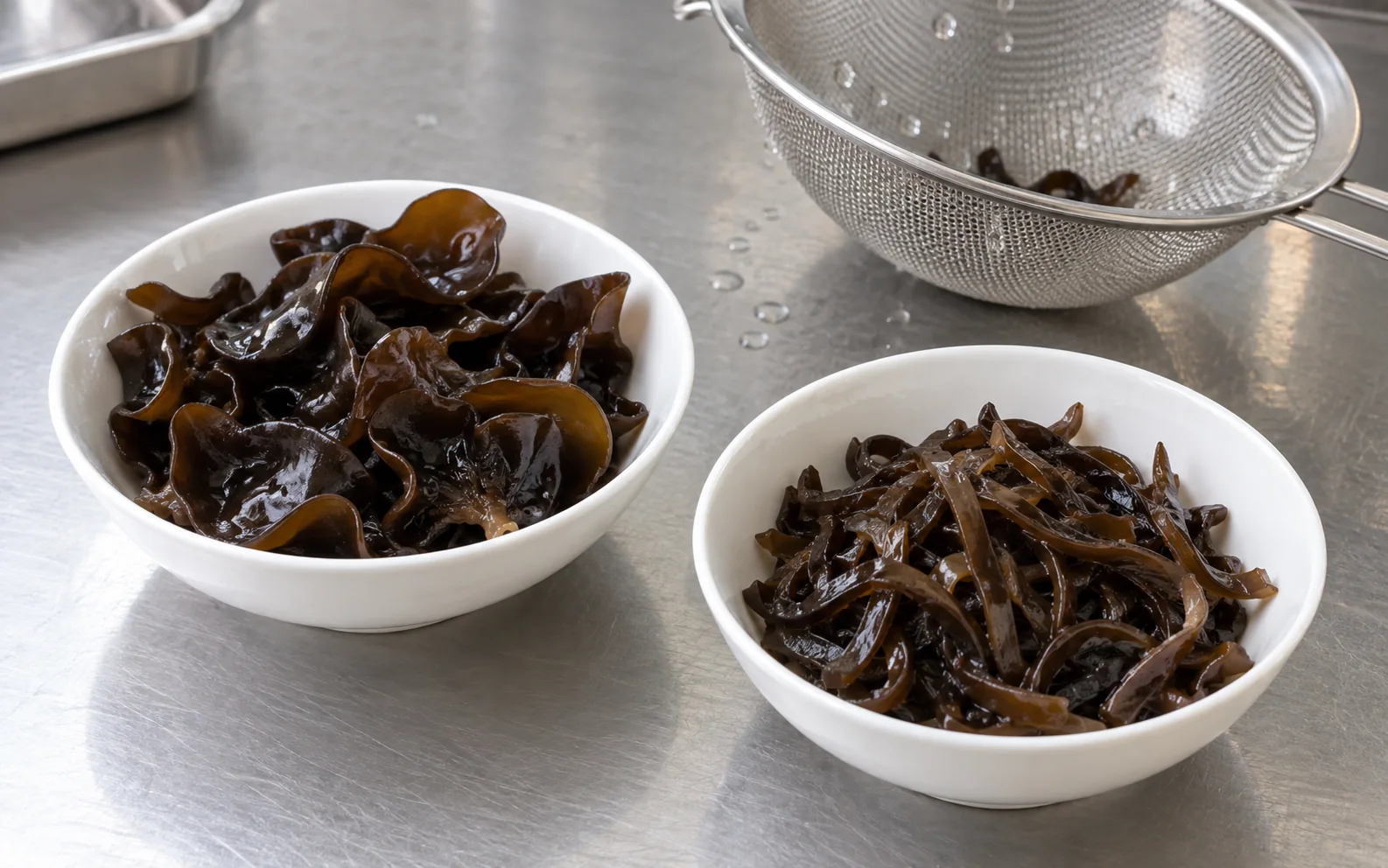
Compare cut form and bite after the same cooking and drain process.
Cut width and thickness should be judged in a serving portion. A broad piece gives a visible curl and bite, but if pieces are too large, they may tangle and portion unevenly. Thin strips distribute across the salad, but high broken rate can make the mix look messy and reduce the characteristic chew. In a chilled cup, inspect the top, middle, and bottom portions. If the fungus settles under the vegetables or dressing collects in one zone, the formulation may need a different cut ratio or mixing method.
Use a simple texture score with clear anchors. The team might describe the approved sample as springy with a clean bite, while rejecting samples that are limp, tough, or slimy. Avoid making a microbiological judgment from texture alone: unpleasant texture can be a quality problem, and a pleasant bite does not prove safety. Keep the safety release and sensory approval separate in the record. Both must pass before the product is sold.

The strip photo documents a distinct frozen cut, not a finished salad or RTE status.
Temperature affects sensory perception. The fungus can feel firmer when cold than when warm, and dressing aromas change as the salad rests. Serve samples at the intended temperature and at the intended hold intervals. If the product is for buffet service, include repeated service handling in the trial. If it is for a sealed retail cup, inspect after realistic transport vibration and display. A cut that works at the pilot bench may fail in a deep production mix or a long distribution chain.
Finally, record the texture target in a way the supplier can help meet. Piece-size distribution, broken rate, thickness range, and foreign-material limits can be written into a frozen ingredient specification. The kitchen's cook and drain process then controls the rest. GreenLand-food's separate wood ear texture guide covers the ingredient-quality side in more detail; this article follows the cooked chilled-salad endpoint. That division of responsibility is clearer than asking a supplier for "crunchy fungus" without explaining that the customer's salad will be cooked, dressed, and held cold for a defined period.
When comparing strips and slices, draw samples from several points in the pack rather than choosing only the largest intact pieces. Spread the frozen material on a clean tray and record the mix of sizes, fragments, clumps, and visible ice before the approved cook. Repeat the observation after draining and after the salad hold. This sequence shows whether breakage began with the ingredient, during preparation, or in the mixing step. A supplier can address an incoming cut problem; a kitchen must address damage introduced by its own equipment or handling.
Dress for flavor while controlling pooled liquid
A classic wood ear salad often balances acidity, salt, garlic, chili, sesame, and fresh aromatics. For a commercial version, the first formulation decision is the ratio of well-drained fungus to dressing. Too little dressing leaves uneven flavor; too much can create visible pooling, dilute the perception of the mushroom, and make portion weights inconsistent. Develop by weight rather than spoonful, then test a small and a full production batch. The larger batch may mix less evenly or hold more residual water.
Choose the dressing addition point deliberately. If acid is added while the fungus is still warm, absorption and aroma may differ from a cold assembly. If it is added immediately before service, the bite may stay firmer but flavor distribution can be uneven. A packed salad requires a result that still tastes balanced at the end of its declared life. Compare freshly dressed, mid-hold, and end-hold samples. Record liquid separation and piece appearance alongside flavor; a tasty spoonful from the top can conceal a watery bottom.
Other vegetables add visual appeal and complexity. Cucumber releases water, onion can intensify during storage, and herbs may lose freshness. Their preparation and portion size should be consistent. The more components added, the harder it is to diagnose a texture problem, so begin development with the fungus and base dressing before adding garnishes. Introduce each new component and observe whether it changes pooled liquid, color, allergen status, or shelf-life validation. A simple formula often makes the mushroom's characteristic bite easier to appreciate.
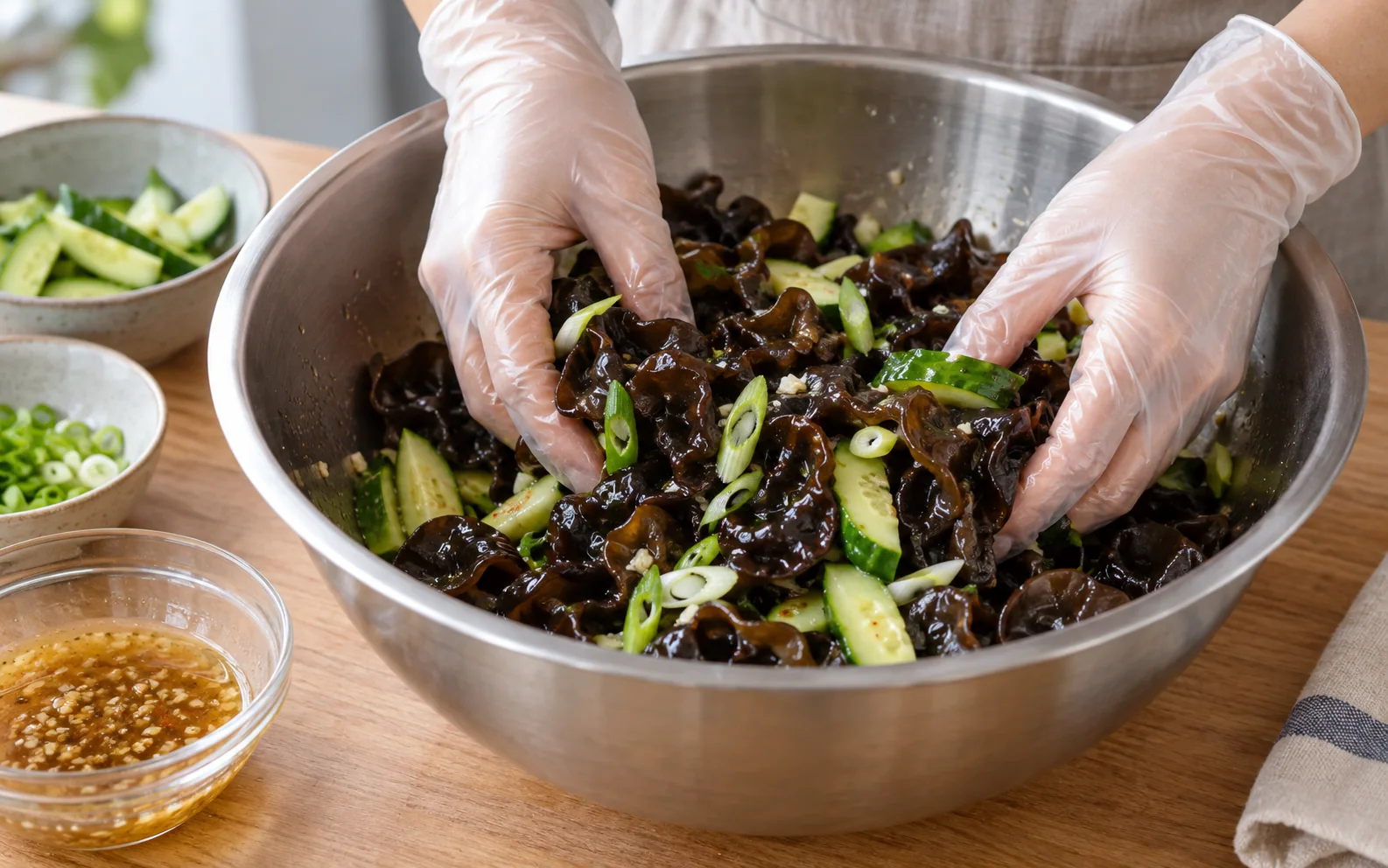
Dress cooked and cooled wood ear after controlling pooled liquid.
Pack geometry matters. A shallow service dish exposes more surface and may allow easier mixing; a tall cup can collect dressing below the solid component. Test the actual container and fill weight. If the salad is sold as a side, decide whether free dressing at the base is acceptable or whether the customer expects a relatively dry, crisp mix. Set a practical visual threshold and photograph it under repeatable conditions. That image can guide production and receiving teams more reliably than "no excessive liquid."
Salt and acid can alter texture over time, but the direction and degree depend on the full formula. We therefore avoid promising that a particular vinegar ratio will "keep the bite." Make the ratio a controlled recipe parameter and verify the finished product through its intended hold. If a shelf-life extension is proposed, repeat the relevant safety and sensory validation. Flavor balance, texture quality, and food safety are related operationally, but they are not interchangeable measurements.
For a private-label or export product, the dressing brings labeling and documentation needs beyond the fungus itself. Check all ingredients, additives, allergens, and destination requirements. The supplier of frozen fungus can provide its ingredient information; the salad producer owns the declaration and validation of the assembled food. Define this responsibility early so a successful culinary trial does not stall when packaging is ready to print.
Run a representative chilled-service trial
The final trial should mimic the actual operation from frozen ingredient intake through customer service. Start with a lot identified in the supplier documents and verify its storage condition. Cook using the approved process if required, monitor the critical step, cool under the validated method, drain to the defined yield, and assemble in the intended clean area. Use the actual dressing formula, pack, portion size, and planned holding conditions. Each deviation should be recorded; otherwise the result may not be repeatable.
Evaluate at release and at the proposed end of hold. Check appearance, liquid at the bottom, piece distribution, bite, aroma, and serving temperature. Keep the safety checks specified by the operation's plan separate from the sensory score. The product should only be released when both are satisfied. If a failure appears, identify whether it comes from the incoming frozen form, cooking, draining, dressing, packaging, or hold. Changing several variables at once will obscure the cause.
For a restaurant, a practical trial may involve a service batch, a realistic buffet or prep-line hold, and feedback from the people who portion the dish. For a manufacturer, include filling equipment, sealing, distribution, and a validated shelf-life study appropriate to the product. Do not assign a shelf life by copying a recipe website or by assuming that vinegar preserves the salad. The exact release conditions depend on local regulation, product classification, and the operation's validated controls.
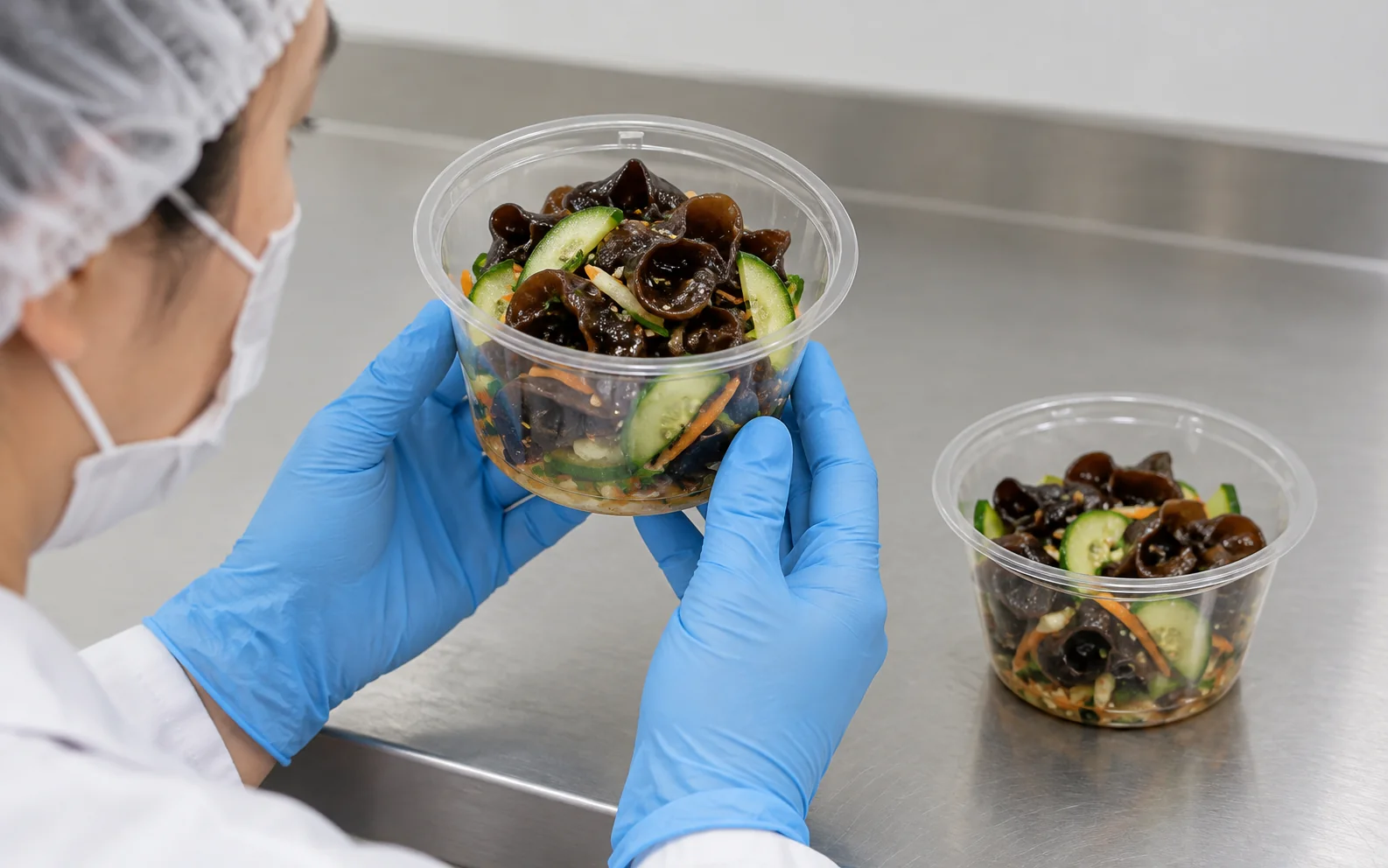
Evaluate appearance, pooled liquid and bite in the intended chilled-service pack.
Cost the result on usable chilled salad, not just the frozen ingredient purchase price. Measure cooked drained yield, broken or rejected pieces, dressing usage, labor, and portion-weight variation. A thicker cut may cost more per kilogram but retain bite and yield better; a thin strip may portion faster. Calculate what the chosen option delivers per approved portion. If the dish needs a specific visual style, include the value of consistent appearance rather than reducing the decision to raw cost alone.
GreenLand-food can discuss frozen black fungus slices or strips, packing, volume, and the documents available for the candidate lot. We would ask whether the application is a cooked chilled salad, a hot dish, or a further-processed product, because that determines which form and status information must be checked first. The buyer then validates the cook, cooling, dressing, and hold in its own operation. A product page is an invitation to request the current specification, not a substitute for the production trial.
An approved record should include the ingredient identity and lot, process status, cook and cool procedure, drained yield, dressing formula, pack, hold plan, sensory benchmark, and any required verification results. Review it when a supplier changes the cut, process, or raw-material source. A repeat order is easiest when the supplier and prepared-food operator can see which details were responsible for the successful salad. The goal is a crisp, clean-tasting wood ear dish whose safety and texture both survive the journey from freezer to customer.
Assign ownership before commercial release. Purchasing confirms the ordered cut and current supplier declaration; the kitchen or plant follows its approved preparation controls; quality verifies the required records and the chilled product; and product development checks that the eating experience still matches the retained benchmark. A visually attractive cup does not override an incomplete process record, and a compliant process record does not make a limp salad acceptable to customers. If the cut, dressing, package, or service model changes, review the linked controls and sensory target together instead of carrying forward approval automatically.
Questions from chilled-food developers
Can a frozen wood ear product be used without cooking? Only if the current product is documented as suitable for that use and the operation's food-safety plan accepts it. Do not infer ready-to-eat status from freezing or blanching language.
Can dried-fungus recipe timing be reused? No. Frozen and dried ingredients start with different water content and processing histories. Follow the frozen product's declared use and validate the commercial process.
Will vinegar make the salad safe for longer? Vinegar adds flavor, but an unmeasured dressing is not proof of preservation. Shelf life and cold holding require validation for the complete product.
Which cut should a buyer request? Test whole, slice, or strip form through cooking, cooling, dressing, and the intended hold. Choose by final bite, appearance, yield, and portioning consistency.
Source Frozen Black Fungus with GreenLand-food
GreenLand-food is a professional frozen black fungus supplier and manufacturer in China, providing factory-direct wholesale supply for importers, processors and foodservice buyers.
Tell us the cut, declared process status, pack, quantity, destination and intended salad application. We can compare a frozen wood ear sample with your validated cooking, cooling and chilled-service plan; current product documentation must establish suitability for that use.