


Drying Whole Cranberries and Blueberries: Why the Skin Changes the Process
Sep 27, 2026
Leave a message

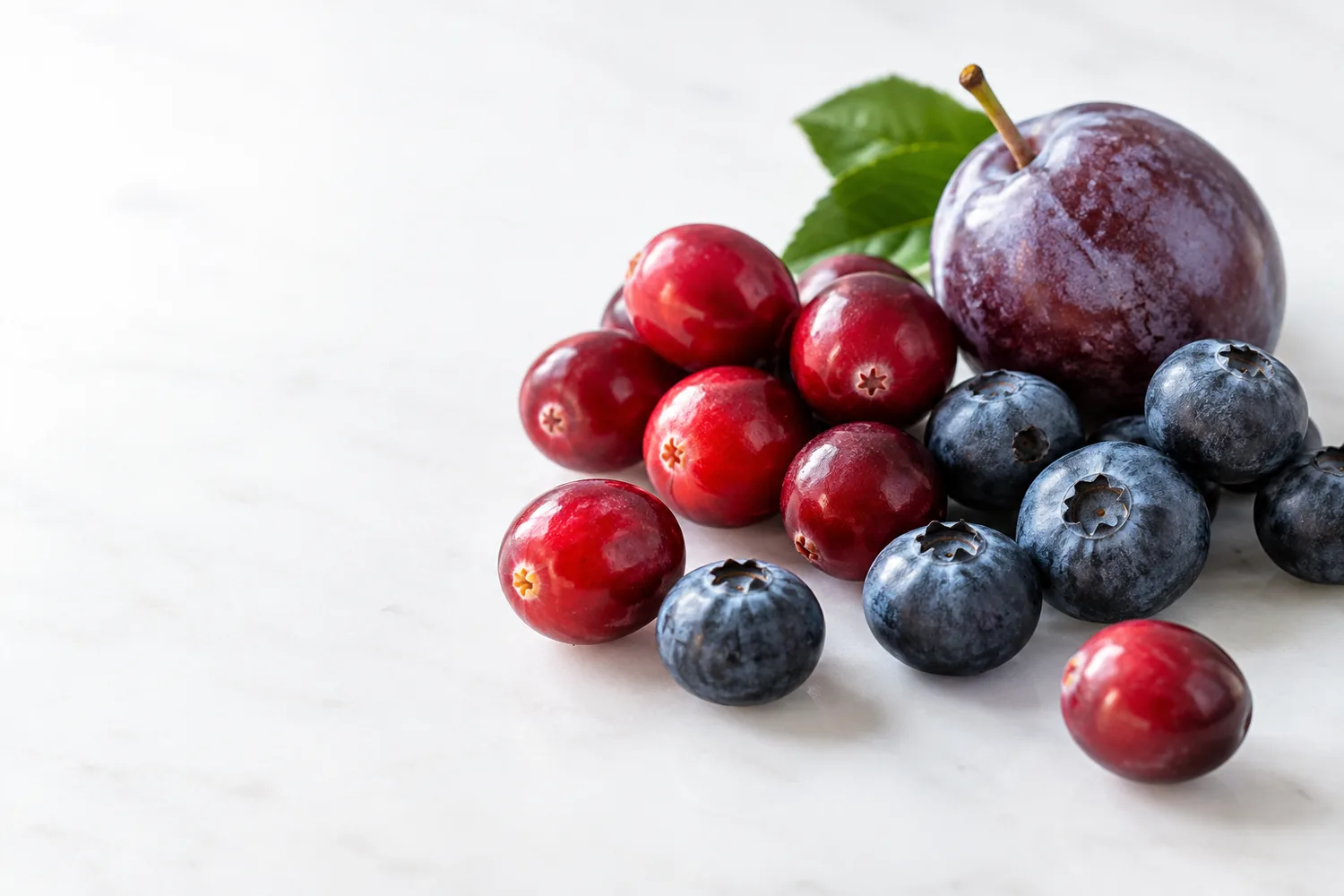
Our role at GreenLand-food is to supply frozen fruit in a defined form and condition. If a buyer plans to dry that fruit, we discuss the frozen input and the buyer's intended process; we do not represent a particular pretreatment or finished dried-fruit specification as universally suitable. The practical starting point is a representative lot, a clear target for the finished ingredient, and a pilot that measures water leaving the fruit separately from solids entering it.
Why intact waxy fruit dries differently from cut pieces
The outside of a berry is doing its job when it resists water movement. A cuticle and natural waxes help the fruit retain moisture while it is growing. In a dryer, that protective layer can become the main obstacle to even water removal. Air temperature and airflow still matter, yet increasing either one does little good if the skin remains mostly closed and the inner fruit stays wet. That is why advice for a sliced apple is a poor starting specification for a whole cranberry. The apple exposes a large wet cut surface; the cranberry initially exposes almost none.
Extension guidance from Utah State University describes checking the skins of whole plums, cranberries, and blueberries before home drying. The useful principle for commercial work is the surface barrier, not a transferable home time or temperature. A plant has different loading depth, air distribution, fruit history, and endpoint controls. The buyer should ask what physical change the proposed treatment makes to the skin and how the supplier verifies that the change is consistent across a lot.
Freezing may create ice damage and some surface breaks, but that does not establish that a frozen lot has been evenly checked. A piece can thaw with a damaged interior and still retain enough intact surface to slow water escape. Conversely, a lot with excessive freeze damage may leak, flatten, and stick during handling. We would compare skin condition on incoming frozen samples after a controlled thaw, with the same thaw method used for every candidate. The observation is more useful than assuming a frozen designation itself solves the drying barrier.
Fruit size changes the comparison. A small cranberry and a large one may share the same surface material yet have different distances from center to skin. Blueberry size classes can differ just as much. A small plum is larger again, and its pit changes how a processor may prepare it. A mixed-size lot can dry unevenly even when the skin treatment is uniform: the smallest pieces may become tough while large pieces remain too moist. Ask for the distribution that matters to your equipment, not just an average diameter. A photo of ten attractive berries cannot show the full range.
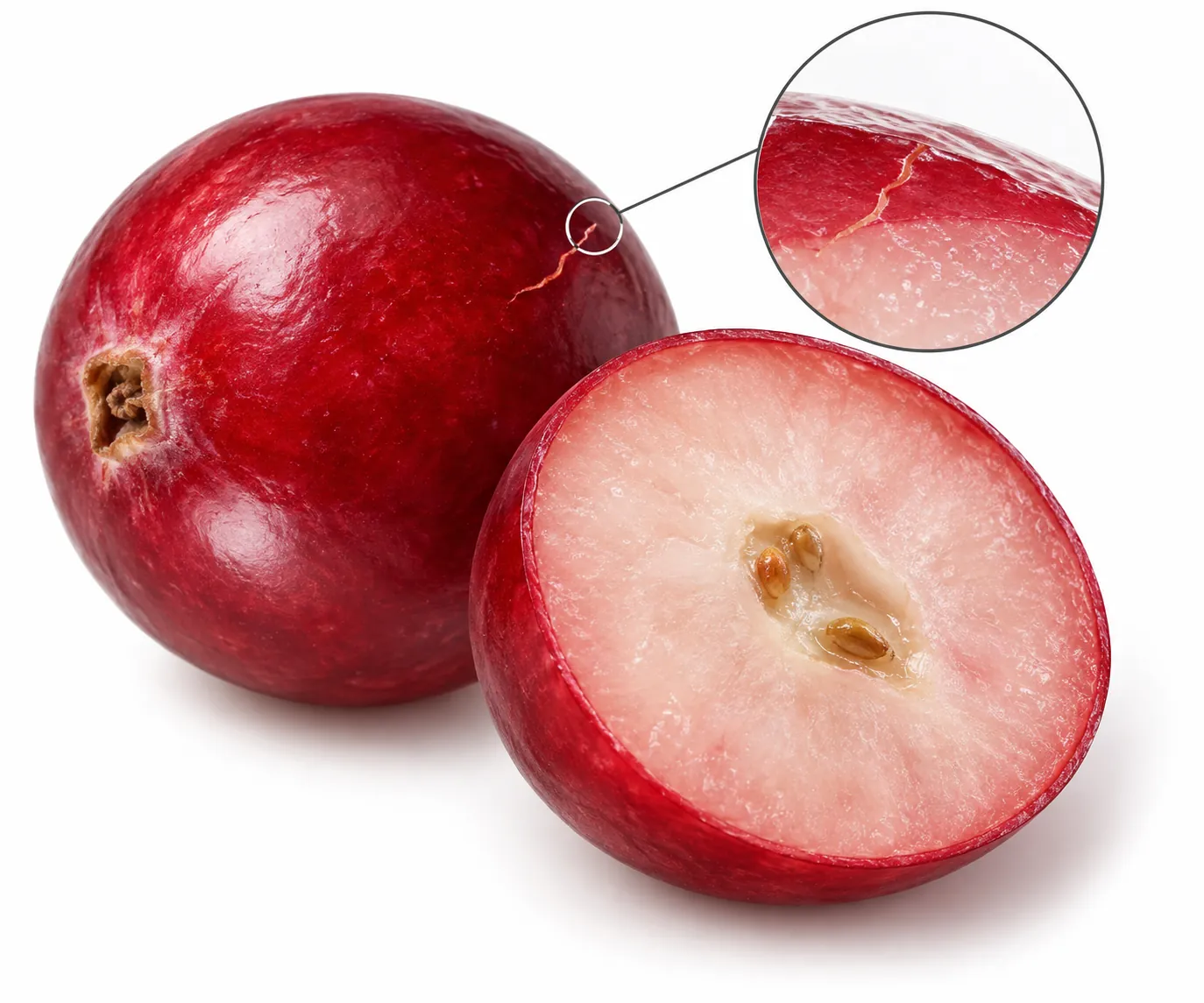
Conceptual cranberry cutaway showing the thin skin barrier and a small opening for moisture movement.
Whole-fruit identity also defines the visual target. Some snack formats tolerate wrinkles and a little collapse; an inclusion for a premium bakery mix may require recognizable berries that survive mixing. A buyer can choose a more aggressive opening step to shorten drying, but that may increase split fruit, juice loss, and sticky surfaces. The process should therefore start with an explicit acceptance range for intact shape, rather than making drying speed the only success measure.
For a first comparison, keep fruit variety or cultivar, incoming frozen condition, size band, loading, and dryer settings as steady as possible. Then vary the skin-opening method. Photograph the same number of pieces before and after treatment, record the fraction with visible cracks, and retain a sample of untreated fruit. These simple records help explain a later yield difference. A process that looks faster because half the berries split has answered a different question from a process that dries intact fruit evenly.
The cutaway illustration here shows the idea of a very thin surface layer and a small path through it. It is a mechanism sketch, not a microscopic image of a GreenLand lot. The actual openings created by a plant's method must be checked on its own fruit. That distinction matters when comparing two processors that use the same word, "checked," but produce different degrees of damage.
Choose a skin-opening method without losing intact fruit
Brief hot-water exposure is often mentioned for home drying because rapid heating can craze a waxy skin. The University of California drying guide also discusses checking skins on whole fruits. Industrial options may include carefully controlled thermal treatment, mechanical scoring, puncturing, or another validated step. None is automatically best for every berry, and a home instruction should never be copied as a plant setpoint. Fruit temperature on entry, residence time, cooling, surface sanitation, and the next processing step all change the result.
The question is how much opening is enough. An intact-looking berry with no effective pathway may retain a wet center. A deeply split berry may dry quickly but lose juice, seeds, color, and the shape the customer is paying for. Set up a small trial with at least an untreated reference, a moderate candidate, and an intentionally overtreated reference if safe and useful for the process. The last sample helps the team recognize the visual failure boundary. Count or weigh intact, lightly checked, and broken pieces after treatment. Record not only drying time but also recovered finished mass and the appearance of fines or sticky deposits.
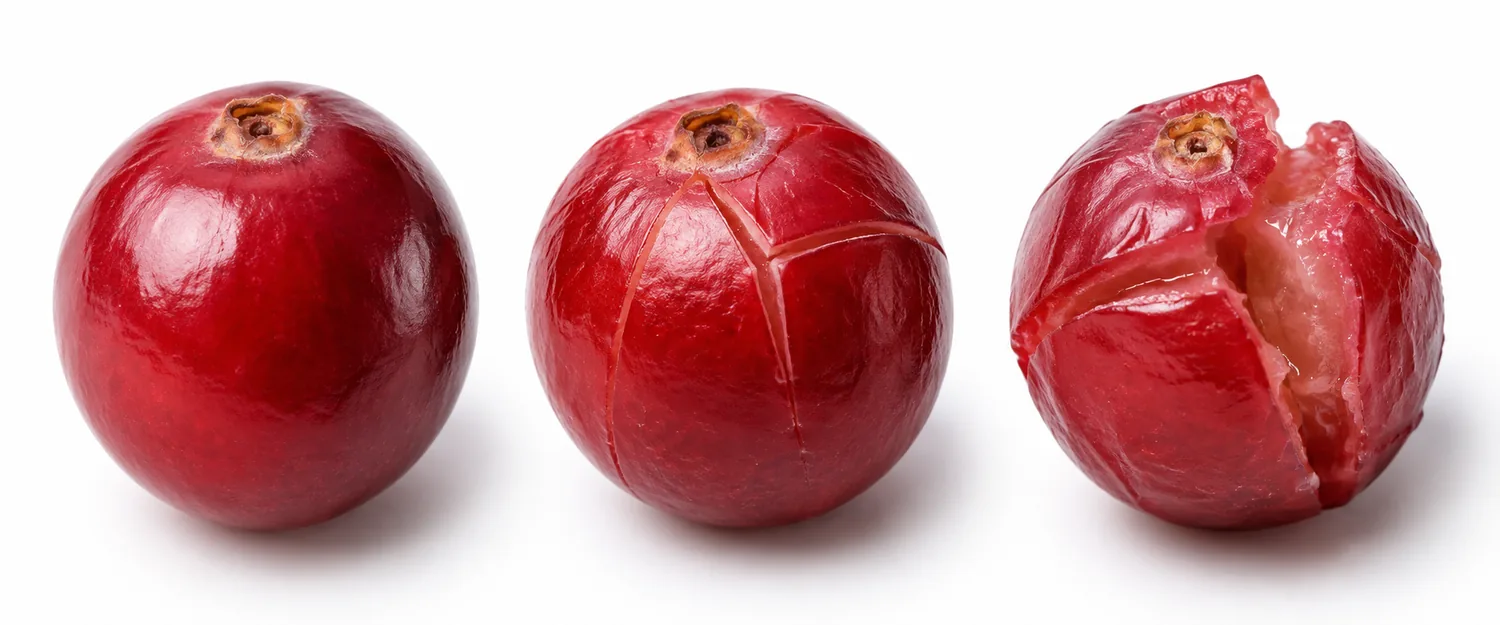
Illustrative comparison of intact, lightly checked and over-split cranberry surfaces.
Examine more than the tray at the dryer exit. Some damage becomes apparent only after the fruit cools, is tumbled, or passes through packing equipment. A skin opening that works well in a static tray may create unacceptable rupture in a belt transfer. The buyer should ask for samples after the complete proposed route, including any mixing or screening that the finished ingredient will experience. For a cereal inclusion, test the berry in the actual blend. For a bakery filling, observe whether the fruit holds its shape after hydration and heating.
Cold-chain handling before the opening step deserves attention. If a frozen lot partially thaws during staging and then refreezes, surface frost, clumps, and leakage may be different from those in the approval sample. A processor that orders IQF berries for controlled feeding needs an agreed pack size, frozen piece separation, and intake temperature range. Those are procurement conditions with direct process effects. They do not prove any one pretreatment is effective, but they make the pilot reproducible.
The surface treatment can also alter color. Blueberries carry a visible bloom that contributes to their expected appearance; hot water, abrasion, and handling may disturb it. Cranberries show different red shades, and exposed flesh can darken or look patchy during later processing. A process engineer may accept a color shift for a chopped ingredient while a retail whole-berry pack cannot. Photograph samples under consistent lighting, with an untreated control in the frame, rather than relying on memory of the fruit's starting color.

Real GreenLand frozen cranberry product photo showing starting fruit condition; no drying trial is implied.
Ask the processor to identify where sorting occurs. Removing broken pieces before drying improves the consistency of a whole-fruit grade but changes the yield calculation. Keeping them in may increase stickiness and affect the endpoint measurement. Both decisions can be valid for different applications, provided the buyer sees the recovered fractions. The cost of a more delicate opening step should be judged against saleable finished yield, not the gross dry weight alone.
An experimental study of cranberry pretreatment and combined drying shows why process sequence and quality measures belong in one trial. Its equipment and settings are study conditions, not instructions for every production line. We use such research to frame questions: what changed in moisture movement, color, and texture, and which endpoint did the trial actually measure? The answer for a particular frozen berry lot must come from the buyer's own validated route.
Measure cranberry water loss and sugar uptake separately
Many dried cranberries on the market have been sweetened. Cranberry's sharp taste makes an optional sugar infusion relevant to some snack and bakery applications, but "dried" and "sweetened" describe different process events. During an osmotic step, water can leave the berry while dissolved solids move in. A resulting weight change is the net of both movements. If a processor reports only the weight before and after soaking, the buyer cannot tell how much water was removed or how much sugar was added.
Build a mass balance around the proposed route. Weigh a defined fruit sample before treatment, after drainage from the osmotic medium, after any rinse, and after final drying. Measure soluble solids or sugar-related values with a method appropriate to the fruit and finished label. Track the concentration and reuse conditions of the bath, because the first load and a later load may not behave alike. Keep a no-infusion control that receives the same skin opening and dryer settings. The comparison reveals whether a softer texture or higher finished yield reflects water control, added solids, or both.

Real GreenLand frozen cranberry product photograph; no drying trial is implied.
A frozen incoming weight contains fruit plus any attached ice or free water in the pack. A trial should say whether the starting basis is frozen pack weight, drained thawed weight, or fruit dry matter. Otherwise two suppliers can quote apparently different yields from the same material. We would agree the basis before a processing trial and keep the lot identification through each weighing step. The dry ingredient buyer should also ask how sweetened and unsweetened fractions are segregated in production and named on documents.
The conceptual image of cranberries in a sugar bath indicates two possible directions of movement. It does not depict a GreenLand processing line or claim a measured rate. Actual transfer depends on skin openings, temperature, time, fruit-to-solution ratio, concentration, agitation, and initial fruit condition. A berry that gains sugar near the surface can still have a wet center. A single attractive finished photo cannot establish shelf stability or a safe endpoint.
The target is a finished ingredient suited to its package and use. Ask for moisture and water activity criteria appropriate to the product, along with the test method, sampling plan, and storage conditions. Water activity and moisture percentage answer related but different questions: one reflects the availability of water for biological and chemical processes, while the other describes total water content. Added sugar can change their relationship. We would not approve a lot because it reaches one generic number copied from a recipe; we would compare the processor's validated specification, legal labeling, and customer application.
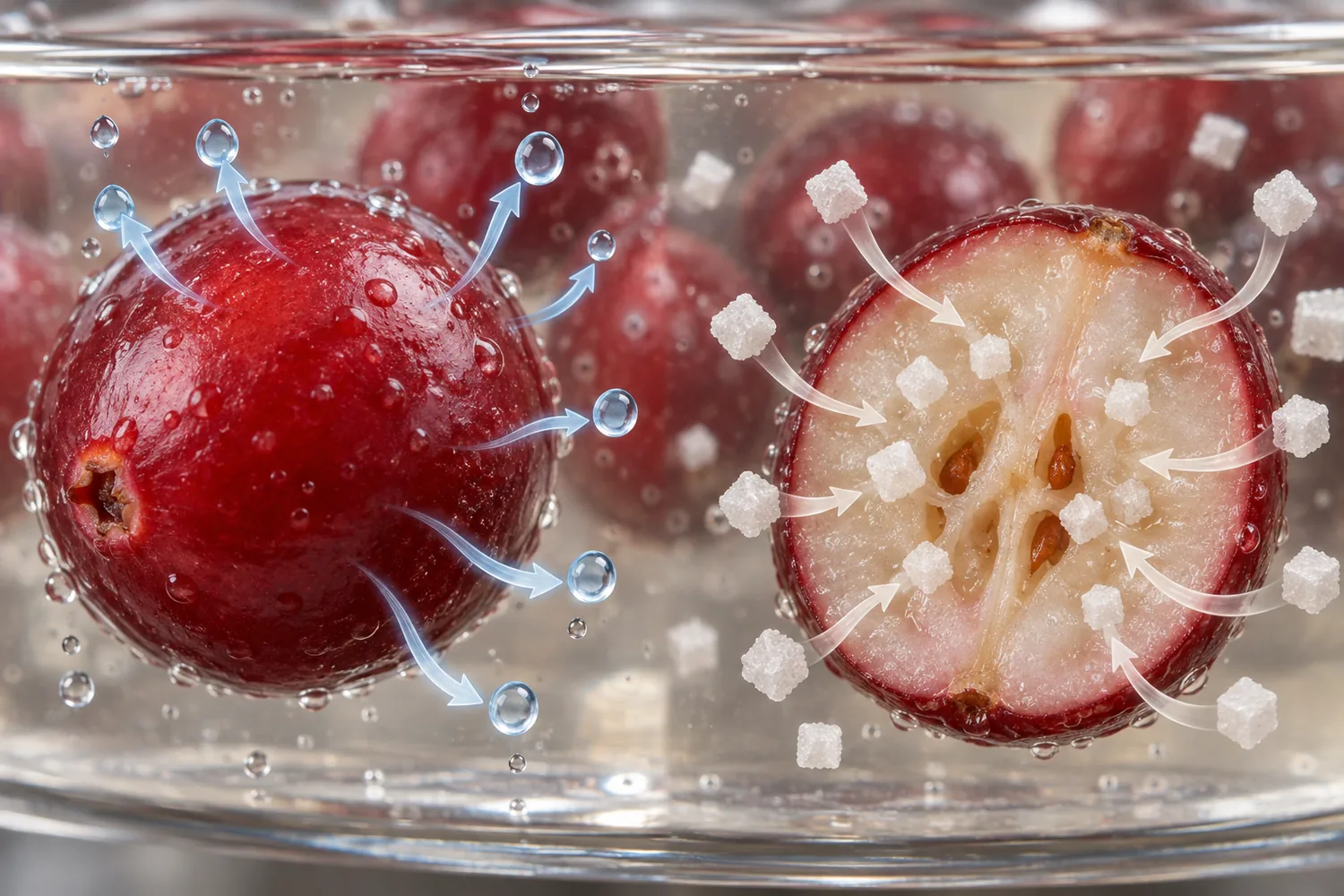
Conceptual water loss and sugar gain during an optional cranberry osmotic step, without measured rates.
Sugar also changes the buying decision. An unsweetened whole cranberry may be useful where the customer controls sweetness in its own formula. A sweetened piece may deliver a more palatable snack and a different texture, but it affects ingredient declaration, nutrition calculation, and formulation cost. Ask for the solids source and any other ingredients before approving a quote. The fruit input we supply can be discussed separately from the processor's later addition of sugar; that keeps the scope of each supplier's claim clear.
Look at physical handling after the final dry step. A high-solids surface can become sticky under humid packing conditions. Fruit may cluster, transfer color, or fail a customer feeder even though a small laboratory sample tastes good. A practical approval includes flow and clumping after storage, not only a fresh bag opening. Compare samples packed in the intended material and held through the expected route, then check whether the finished fruit still separates and meters at the customer's line.
Compare blueberry and small-plum acceptance checks
Blueberries share the skin-barrier problem but bring different visual risks. Their blue bloom and dark pigments are part of the expected appearance. A treatment that opens the skin may remove bloom, split the fruit, or release purple juice. If the product is destined for a muffin batter, some color bleed may be tolerable or even useful. If it is intended as a distinct whole inclusion in a pale cereal, the same effect may be a rejection. Write the end use into the acceptance plan before calling one blueberry treatment better than another.
Ask for a representative size range and the proportion of soft or broken berries in the frozen input. IQF separation matters to controlled feeding; clustered berries can enter the opening stage as uneven masses. A small, firm berry may survive a treatment that damages a large, tender berry. A processor should keep the incoming identity and size distribution with the finished sample so a later production order can be matched to the approved trial. An image of GreenLand frozen blueberries here shows a real product condition; it is not evidence that the photographed lot was dried.

Real GreenLand frozen blueberry product photograph; not a dried-fruit result.
Color needs a consistent method of review. Place a treated sample beside an untreated reference in the same light and on the same background. Record whether the concern is loss of bloom, overall darkening, pale exposed flesh, or free juice staining nearby ingredients. These are different defects with different likely causes. A processor can also check color after the fruit is rehydrated or baked, when an ingredient's behavior may differ from its dry appearance. Keep the description concrete enough that a second buyer can apply it.
Small whole plums face an even longer moisture path, and some processes remove the pit or cut the fruit. A pitted or halved plum is no longer the same drying problem as an intact small plum. That should be stated at the start of the trial, including how the pit is removed, how much flesh is exposed, and whether the desired final product must retain a whole silhouette. Skin checking is relevant to whole fruit, but it cannot substitute for a pit-control and foreign-material plan when the product is pitted. We should not infer a plum protocol from a cranberry result just because both have a waxy surface.
The visual comparison beside this section uses one cranberry, one blueberry, and one small plum to show their different surfaces. It is an educational image, not a lot photograph. A buyer should request real samples of each proposed frozen input and have the processor prepare side-by-side finished samples. Record defects by species: splits and sticky fines for cranberry, bloom loss and bleed for blueberry, tough skin, pit remnants, or uneven center drying for plum. A single "whole fruit quality" score hides the reason a lot may fail.
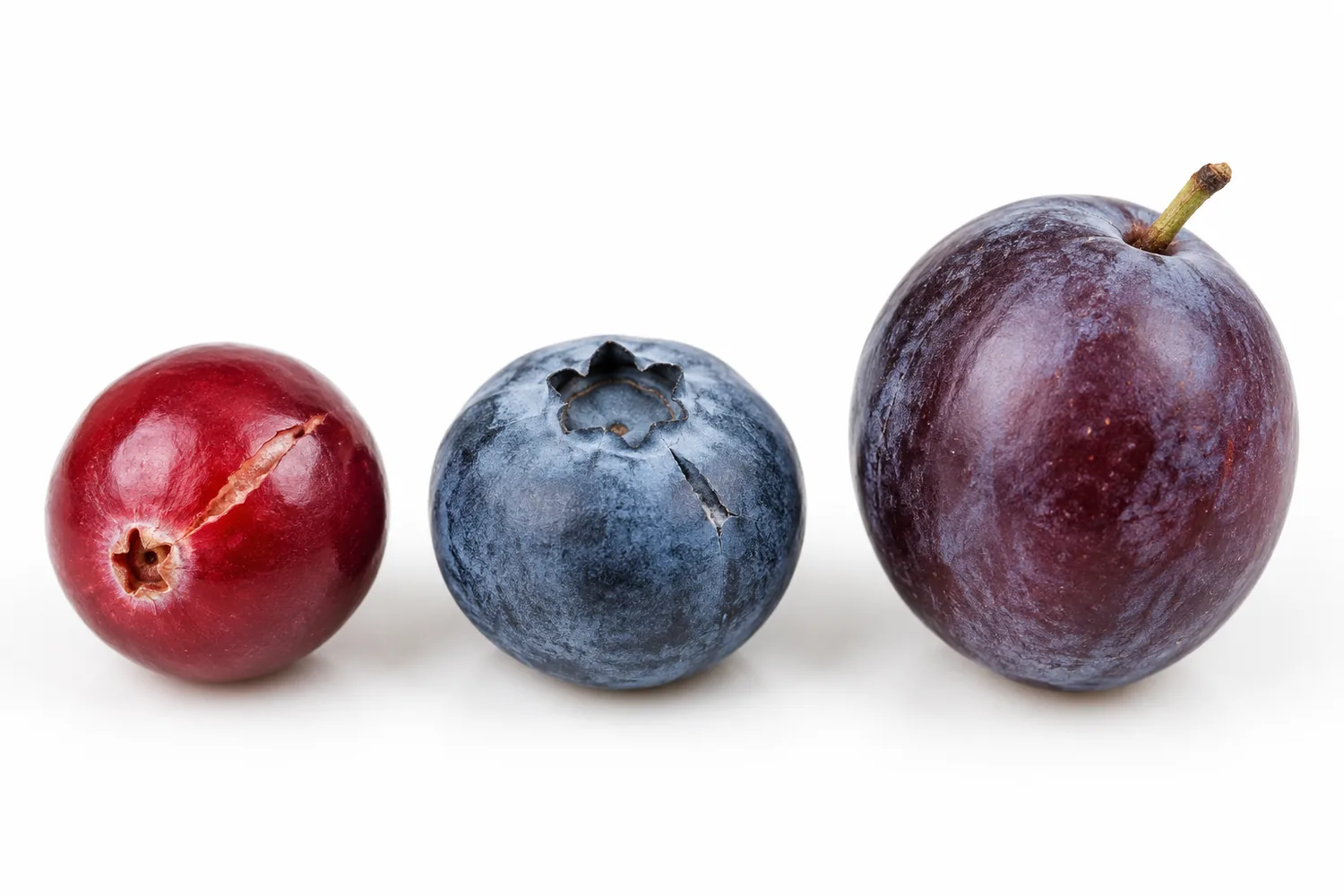
Illustrative surface comparison of a cranberry, blueberry and small plum.
The supply discussion should remain specific. If a project uses frozen cranberries and blueberries, confirm each fruit's cut or whole form, grading, pack, quantity, and destination. If plums are only a comparator in the development discussion, do not assume they are included in the same quote. We can help define the frozen-fruit input for a buyer's drying trial; the processor remains responsible for its treatment, finished ingredient specification, and validated storage.
Approve the dried lot for its intended application
Approval should start from the use, not a generic photograph of dried berries. A bakery customer may soak the fruit before mixing and care about recovered shape, color release, and pieces that survive baking. A cereal maker may care more about free-flowing feed, size consistency, and how the fruit softens in milk. A snack pack may emphasize surface appearance, chew, ingredient declaration, and behavior during storage. The same dried lot can pass one use and fail another without either team being unreasonable.
Write a sample protocol around that use. Identify the frozen source lot and treatment route, then retain a finished sample from the pilot and a production reference if available. Check appearance, size distribution, intact fraction, surface tack, flavor balance, moisture, and water activity under agreed methods. Recheck after the proposed packaging and holding period. If the customer reheats or bakes the product, include that condition. The target is a decision that another buyer can repeat, not a list of attractive descriptors.
Sampling matters for unevenly dried fruit. A handful from the top of a dryer load may miss wet centers in large berries or damaged pieces accumulating elsewhere. Agree how many locations are sampled, whether composite and individual readings are both needed, and how outliers are handled. A mean value alone can hide a small wet fraction that later causes clumping. The processor should own the release plan and provide the result with the lot record. GreenLand's frozen-fruit documents cover our supplied stage; the finished dried-fruit release belongs to the processor.
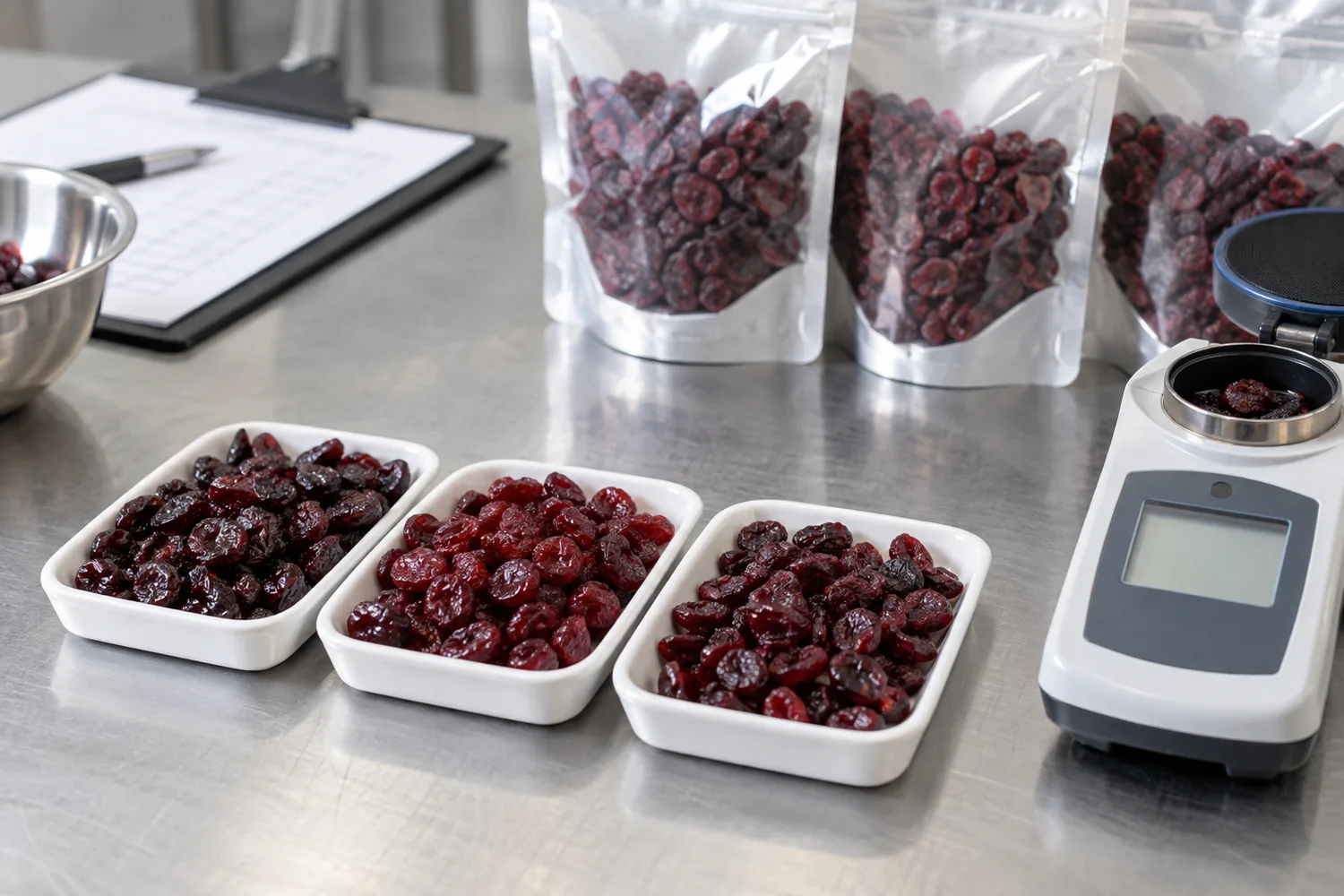
Illustrative dried-fruit quality comparison; the image contains no GreenLand test result.
The image of dried cranberry trays and a testing instrument illustrates the sort of comparison a processor might make. It does not report actual values or imply GreenLand sells those dried samples. Ask for the real result and its method. If the product is sweetened, confirm the ingredient declaration and solids basis. If it is unsweetened, verify that the sensory and textural target remains acceptable in the customer's formulation. If a preservative or coating is proposed, evaluate it as a separate ingredient and labeling decision.
Commercial terms should preserve the technical identity. The purchase order can state the fruit species, whole or cut form, IQF condition, pack weight, size or grade where relevant, intended drying trial, lot traceability, shipping conditions, and required documents. For a repeated program, include how a change of origin, cultivar, grade, or process route triggers reapproval. These details help both sides understand why a price comparison between two "frozen cranberries" may be misleading. They also make it easier to investigate a dryer complaint later.
We can provide frozen cranberry and blueberry options and discuss representative samples for a processor's development work. Share the desired whole-fruit appearance, annual volume, pack, destination, and planned drying route in the inquiry. The final skin-opening treatment, any sweetening step, and finished dried-ingredient release should be validated by the processor against the end product. That is the point at which a promising pilot becomes an orderable specification.
Source frozen fruit with GreenLand-food
GreenLand-food is a professional frozen fruit supplier and manufacturer in China, providing factory-direct wholesale supply for importers, food manufacturers and foodservice distributors.
Send the product form, cut or size, specification, packing, quantity, application, destination and requested documents. Frozen fruit inputs can be specified for a drying trial; the processor validates the later treatment and finished dried ingredient.