


Can Kiwi Go in Yogurt? Actinidin, Fruit Form and Hold-Time Tests
Sep 27, 2026
Leave a message

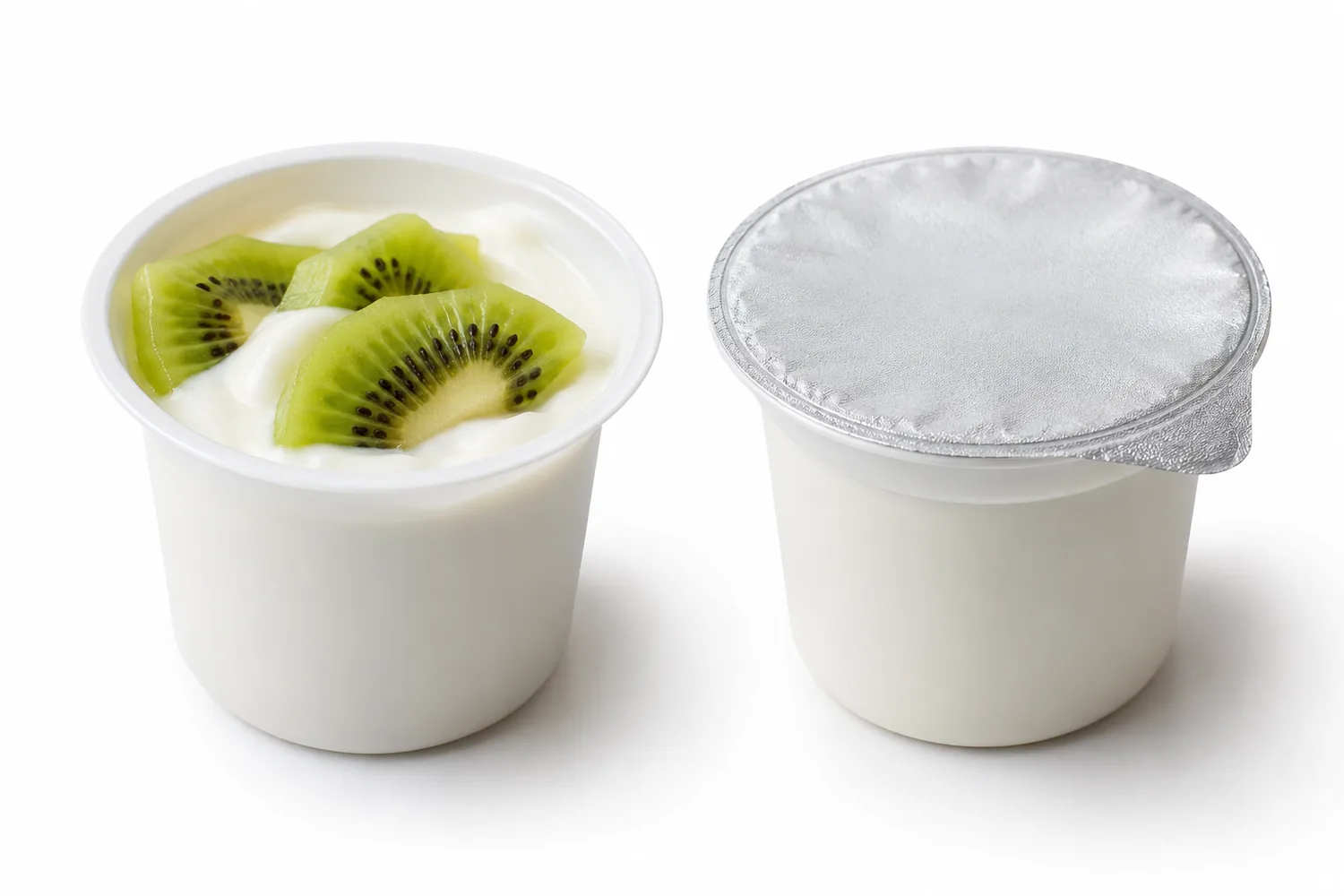
For a developer choosing GreenLand-food IQF kiwi, the practical question is how the fruit will enter the dairy product: added at service, folded into a cup shortly before distribution, or mixed into a product that must remain acceptable through its full shelf life. We can supply a frozen fruit input for a controlled trial. We should not claim that every frozen kiwi piece behaves the same in every yogurt, or that GreenLand offers a heat-treated kiwi preparation without confirming a separate product specification.
How kiwi changes a cultured dairy base
Kiwi's bright acidity and green color make an appealing contrast with plain cultured milk. The fruit also brings actinidin, a protease capable of breaking down proteins. The Academy of Nutrition and Dietetics notes that kiwi can change dairy texture and taste when mixed ahead of time, and that heat treatment can reduce enzyme activity. This is a reason to test the contact period, not a promise that every serving will become bitter. A spoonful eaten immediately and a sealed cup held for days give the enzyme and the yogurt network very different opportunities to interact.
The dairy base has its own structure. Cultured milk proteins form a gel that holds water. A fruit addition may disrupt that network through several routes: local acidity, extra water around thawed pieces, mechanical mixing, and enzyme action. Observing a thin ring of whey after a trial does not by itself identify which route caused it. A developer who changes fruit treatment, loading, and base formula at the same time cannot tell what helped. Start with a plain-yogurt control, then introduce one fruit variable at a time.
An original kiwi-derived coagulant study demonstrates that actinidin can hydrolyze casein in a dairy context. Its cheesemaking system is not the same as a commercial yogurt cup. It supports a plausible mechanism, while the actual sensory and texture result still needs testing in the intended cultured dairy formula. The amount of active enzyme can vary with fruit material and treatment, and the consumer perceives the combined effect of acid, sweetness, aroma, bitterness, and texture. We would avoid assigning a failed cup to "the enzyme" without a controlled comparison.
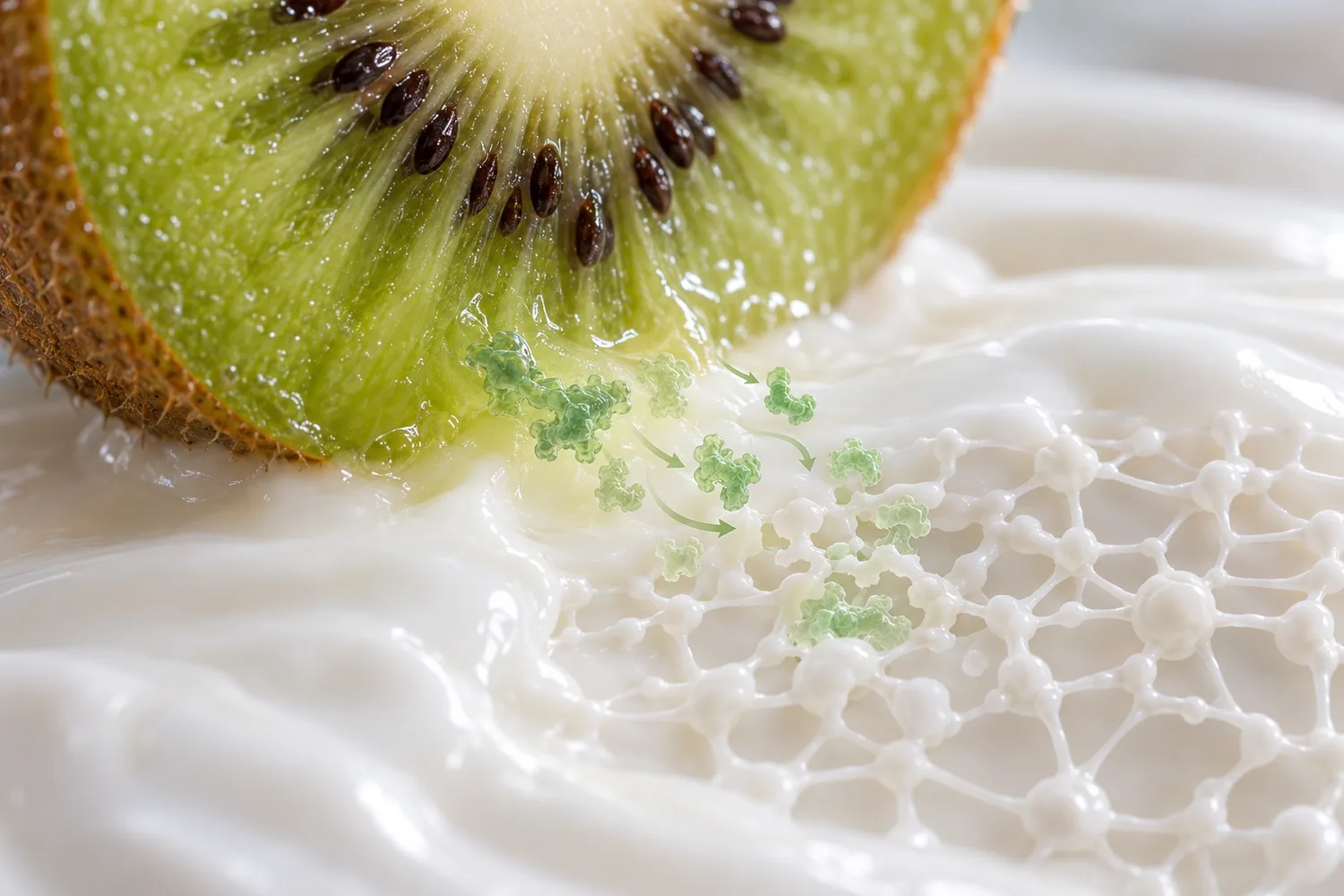
Conceptual view of kiwi contacting a milk-protein network; no measured enzyme level is shown.
Freezing preserves fruit for the supply chain but should not be used as an enzyme kill claim. Ice crystals can break cells and change how quickly juice and soluble material leave a piece during thaw. That could increase local contact with yogurt even if the fruit enters as intact frozen slices. A useful trial records whether the piece is added frozen, partially thawed, or fully drained, and measures the liquid that enters the formula. Keep those conditions consistent when comparing lots. Otherwise an apparently inconsistent actinidin effect may partly reflect different thaw handling.
The point of adding kiwi also matters. A fruit-on-top cup keeps much of the fruit separate until the consumer stirs it. A fully blended drink creates broad contact throughout the base. A layered fruit preparation may include sugar, stabilizers, and a prior heat process, all of which change the comparison. Do not infer that a successful topped cup proves a mixed beverage will hold. Match the contact geometry in the bench sample to the intended factory operation and package.
Look at taste and structure on separate score lines. A cup may remain visually thick but acquire an unwanted aftertaste; another may release whey without notable bitterness. Record the descriptors with a trained or at least consistent panel, using a base-only control and coded samples. Avoid asking a panelist only whether the product is "good." A specific note such as tart fruit flavor, chalky protein texture, watery rim, or late bitter note helps a developer decide which variable to adjust. The protein-contact illustration near this section is conceptual, not a microscopic view or a measured GreenLand enzyme result.
Choose a kiwi form for the intended yogurt
The incoming form shapes the trial. IQF slices offer a recognizable fruit image in a topped cup; dice distribute more evenly but expose more cut surface and can produce more drip on thawing. A fruit puree or a prepared layer changes the mouthfeel and the area of contact with dairy. A heat-treated fruit preparation may help when long contact with the base is required, but the heat schedule, product safety, flavor, and enzyme reduction must be validated for that preparation. It should not be assumed to be an off-the-shelf GreenLand frozen kiwi SKU.
Start by defining the finished eating moment. For a foodservice bowl assembled at service, IQF slices can be thawed under a controlled procedure and placed on top just before serving. For a chilled ready-to-eat cup, pieces may spend the full shelf life against the yogurt. For a drink, smaller pieces or puree may be technically easier to dispense, but their broader contact and thaw water need attention. The same fruit lot can be appropriate in one route and unsuitable in another. The buyer should ask for the form that serves the product design rather than ordering "kiwi for yogurt" without a cut or use specification.

Real GreenLand frozen kiwi slice product photograph; no dairy application is implied.
At the bench, compare a small number of clearly defined candidates: fruit added directly from frozen, fruit thawed and drained to a recorded endpoint, and a separately validated heat-treated comparator if one is available. Use the same dairy base, fruit percentage, mixing energy, package, and storage temperature for each. Keep the drain liquid as a separate observation rather than quietly discarding it in one sample and adding it in another. The volume and composition of that liquid affect both formulation and cost.
GreenLand's frozen kiwi product page provides a starting point for discussing actual frozen fruit forms and packing. The real product photographs in this article show frozen kiwi condition; they are not evidence that those photographed pieces have been incorporated into yogurt or heat treated. Ask us to confirm available cut, piece size, grade, pack, and lot documentation for the proposed order. If the trial requires dice, slice thickness, or a different format, put that requirement in the inquiry so a sample can be matched to a realistic supply option.
Size consistency matters to both the consumer and the filler. Very large pieces may bridge at a depositor or make the fruit layer look uneven. Tiny fragments may disappear visually but contribute more cut surface, liquid, and seeds to the base. A sample should be assessed after the handling the factory will actually use, including bag opening, thawing, pumping or folding, and filling. A pristine hand-placed slice is useful for photography but says little about survival in a production mixer.
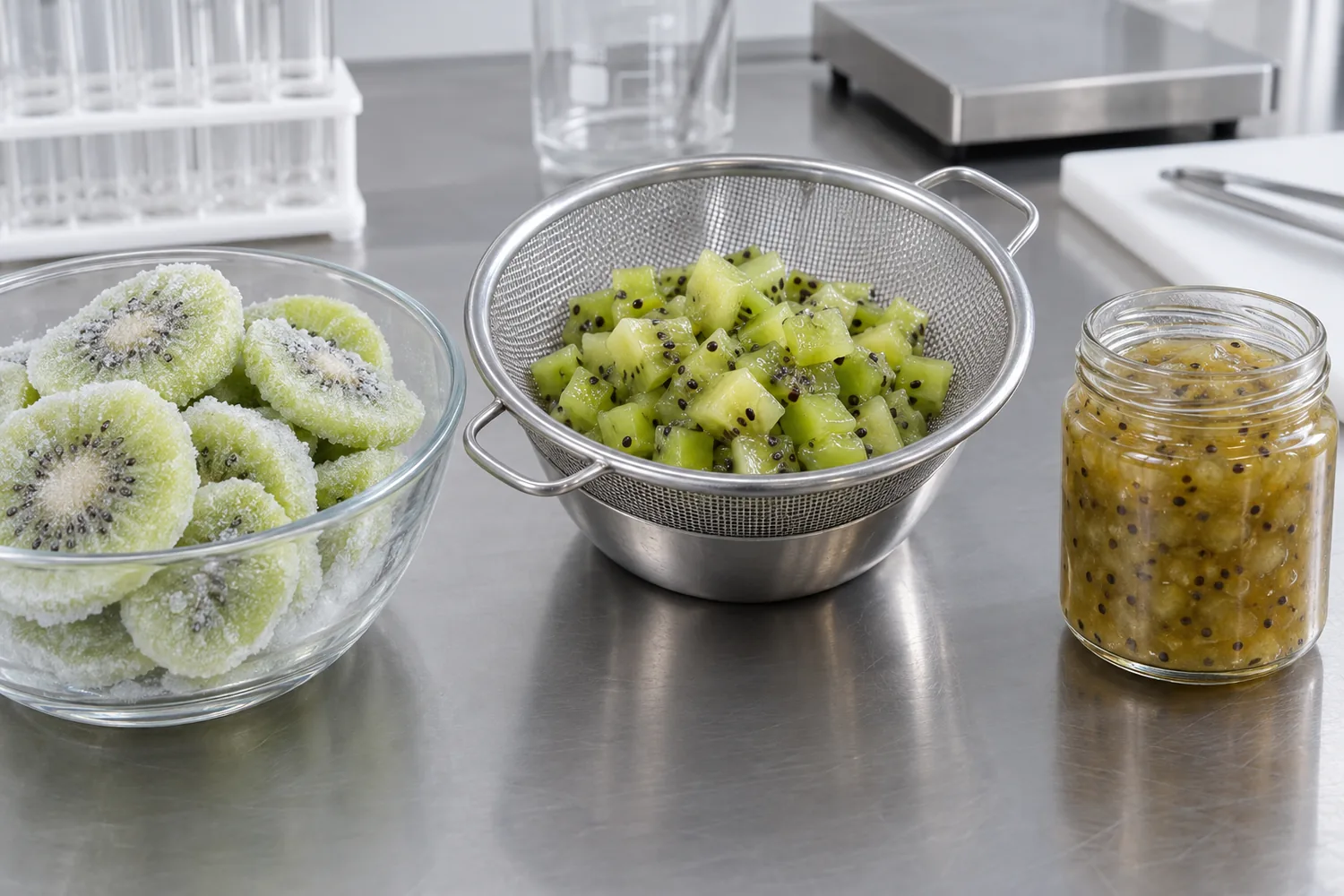
Illustrative frozen, drained and separately prepared kiwi inputs for a controlled comparison.
Keep the fruit identity visible in the formula. Kiwi's green flesh can become less vivid after some treatments and storage; some batches are more yellow or variable by maturity. Set an appearance range the product can honestly deliver. If a bright-green display is central to the concept, test the exact fruit preparation and package through the proposed hold. Avoid compensating for an unstable visual with an unvalidated label promise. The fruit-form comparison image illustrates three possible input states; it does not imply that all three are supplied by GreenLand.
The purchasing decision should include yield after the intended thaw method. A price per frozen kilogram may look attractive, yet a high-drip format can deliver less usable fruit to a cup if the recipe drains it. Conversely, some formulas intentionally include the thaw liquid and adjust the dairy base. Record the basis of the formulation and quote: frozen fruit as delivered, drained fruit, or final fruit preparation. The buyer and supplier can then discuss like-for-like cost and pack requirements.
Balance acid, fruit loading and seed texture
Kiwi's tartness is often the reason a developer wants it. In a plain or lightly sweetened yogurt, the same acidity may make the whole cup seem sharper than expected. A sweetened base can soften that perception, but sweetness should not be used to conceal a texture defect or an undesirable aftertaste. Evaluate fruit flavor, dairy flavor, and the transition between them after the same mixing and hold conditions. A spoonful containing a fruit piece may taste different from the yogurt between pieces, so include both in sensory review.
Measure pH with a defined method and sample location, then interpret it alongside sensory and texture observations. A pH reading from a blended cup is not the same as the acidity at the fruit-yogurt interface. If a developer mixes the entire cup for analysis, that is useful for one question but may hide local effects. Decide whether the product will be eaten stirred, layered, or with discrete fruit pieces, and sample accordingly. Keep the base-only pH and the fruit preparation pH in the record to support diagnosis when a trial changes.

Real GreenLand frozen peeled kiwi product photograph; confirm available form before ordering.
Fruit loading has more than a flavor effect. Increase the percentage of kiwi and the cup receives more acid, seeds, cut surface, and potential thaw liquid. The relationship may not be linear in perception: a small increase can make a spoonful suddenly seed-heavy or visibly watery. A sensible bench matrix uses a few practical loadings around the intended commercial target, with the same fruit size and base formula. Record the actual weight per cup rather than relying on a visual spoonful. A processor can then choose a loading that remains reproducible at production speed.
Seeds are normal to kiwi, and some consumers expect them. In a smooth dairy drink, however, they may register as grit or settle in a package. That is a format question, distinct from contamination. A buyer should specify whether visible seeds are desired, tolerated, or removed in the intended fruit preparation. If the product is a spoonable yogurt with recognizable slices, the seed pattern may add authenticity. If it is a strained, smooth beverage, a puree or filtration step may be more suitable, subject to process validation and truthful labeling.
Texture also depends on the yogurt itself. A high-protein strained base, a standard stirred yogurt, and a drinkable cultured dairy product respond differently to added liquid and mechanical folding. The developer should not carry a successful result from one base to another as proof. Keep solids, stabilizer system if any, fat level, and culture process fixed during the first kiwi comparison. Later, adjust the base deliberately to reach the target viscosity and spoon behavior. This order reduces the chance of solving the wrong problem with extra stabilizer.
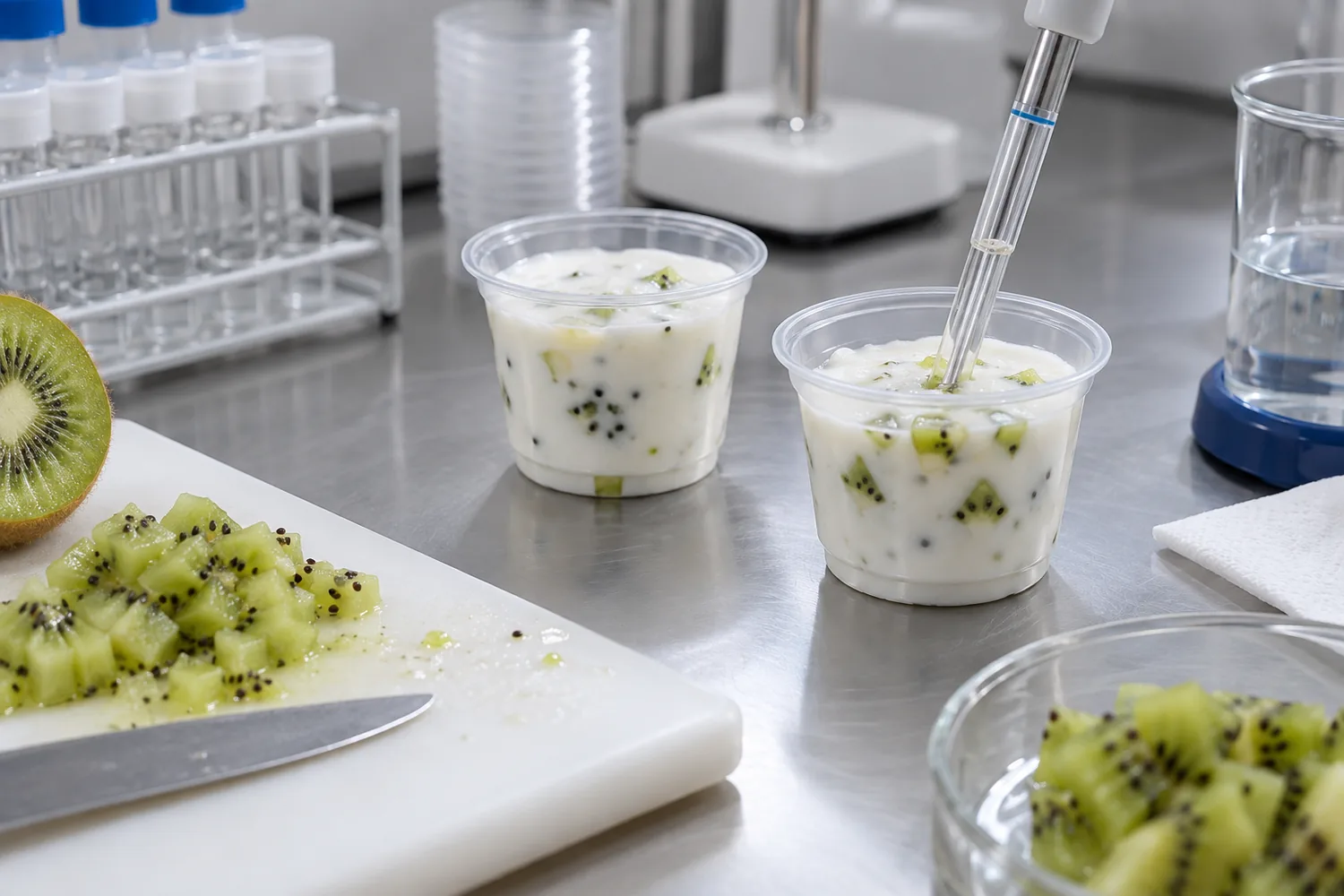
Illustrative kiwi yogurt development setup for fruit loading, seeds and pH sampling.
An original fruit-yogurt formulation study examined pasteurized kiwi-banana puree in a particular yogurt system. It is helpful evidence that a prepared fruit matrix can be studied with physical and sensory measures. It cannot predict the outcome of raw IQF kiwi slices in every dairy base. Use the study to justify testing both preparation and final product, then set acceptance ranges from the buyer's own product. The image with seeds and pH sampling illustrates a development bench; it carries no numerical result.
If the final cup has an off note, compare the timing of the note. Immediate tartness can be a formulation balance issue. A bitterness that develops only after contact may prompt an enzyme investigation, but aroma changes, ingredient interactions, and microbial or packaging issues must also be considered by the manufacturer's quality team. Do not declare a food safe or acceptable merely because a flavor defect has been masked. Diagnose the cause before changing the label or extending shelf life.
Run a controlled chilled hold-time test
The intended selling life is the core difference between "kiwi and yogurt taste good together" and "this kiwi yogurt is ready for distribution." A café can mix a cup minutes before service. A retailer's sealed cup may experience manufacturing, transport, warehouse storage, display, and a consumer's refrigerator. A developer needs to know whether flavor, viscosity, whey separation, fruit appearance, and microbiological requirements remain within the product's criteria through that route. A successful immediate tasting is the start of the test, not its endpoint.
Plan the hold around the actual package and distribution temperature profile. Fill enough units from one controlled batch to inspect at the initial point and several later points, including the proposed end of shelf life. Retain a plain-yogurt control. If the trial compares fresh or IQF pieces with a heat-treated fruit comparator, make the difference explicit and keep the base, fruit loading, package, and filling procedure aligned. Do not use one cup that is repeatedly opened and tasted as a substitute for unopened units held to each time point.
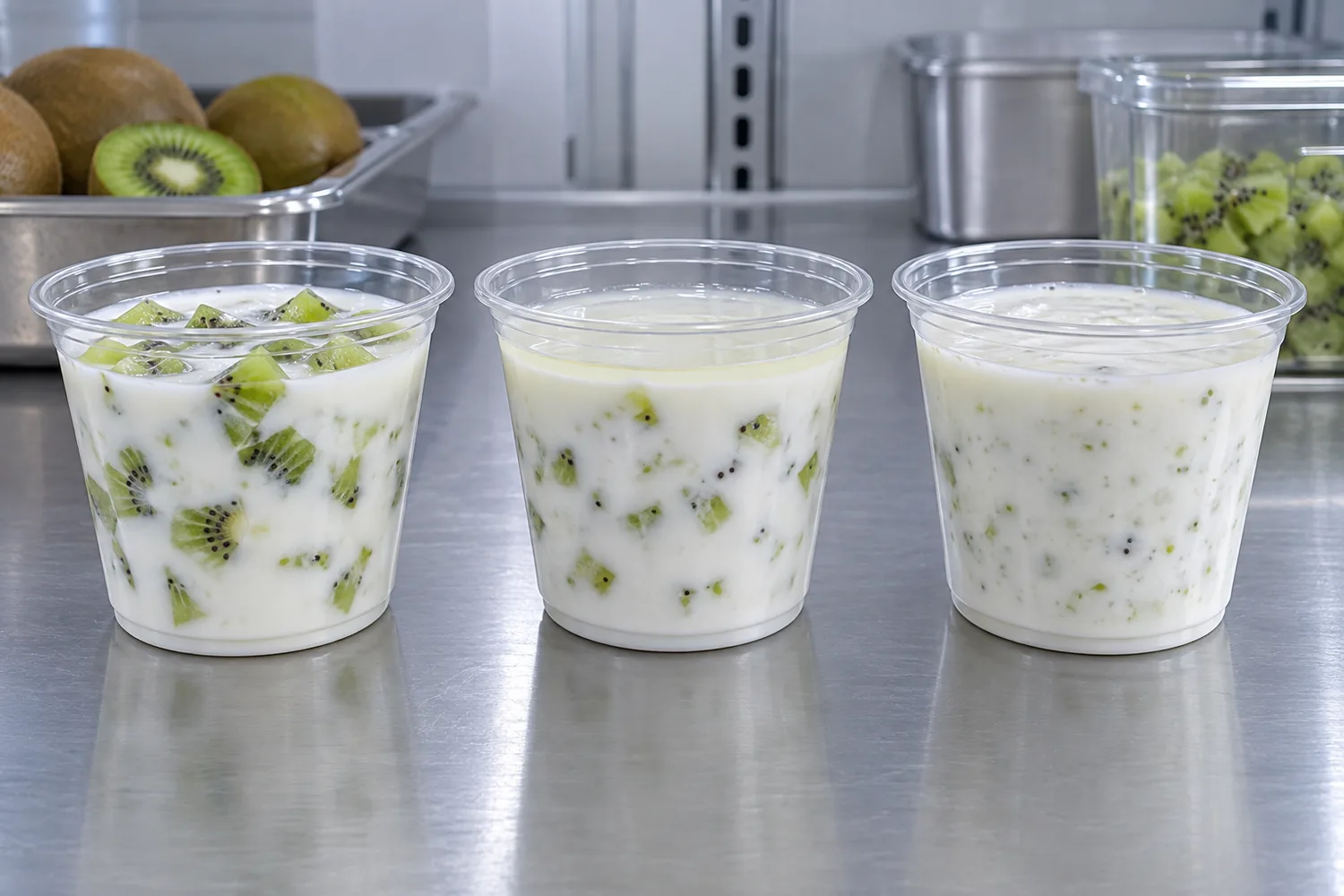
Illustrative chilled cup comparison; actual shelf-life outcomes need validated product testing.
Specify the observations before the test. Photograph the cup before and after stirring under consistent light. Record visible whey at the edge, fruit float or sink, color movement into the dairy, piece integrity, and apparent viscosity. Sensory reviewers should score tartness, fruit flavor, bitterness, and dairy aftertaste separately, with the same serving temperature and sampling procedure. Analytical measurements can include pH and other validated quality or safety measures required by the manufacturer. The test plan, not an article, determines the legal shelf life.
Temperature abuse should be handled as a separate controlled challenge if the quality and safety team approves one. Leaving a cup on a bench and then making a general shelf-life claim from the result is not a valid shortcut. The manufacturer should establish its refrigerated specification and any distribution excursions according to its own food-safety system. We can discuss the frozen fruit input and provide lot information; the finished dairy product's processing and release decisions belong to the dairy manufacturer.
When a cup changes, locate the change. Whey at the fruit interface suggests one diagnostic route; general thinning across the cup suggests another. A delayed bitter note without structural change deserves its own follow-up. Measure fruit drip separately from dairy syneresis where possible. This helps avoid a common misreading: a pocket of thaw liquid around kiwi pieces can look like the yogurt gel has failed everywhere. A side-by-side cup image is useful for the development team, but it is illustrative until actual trial data are recorded.
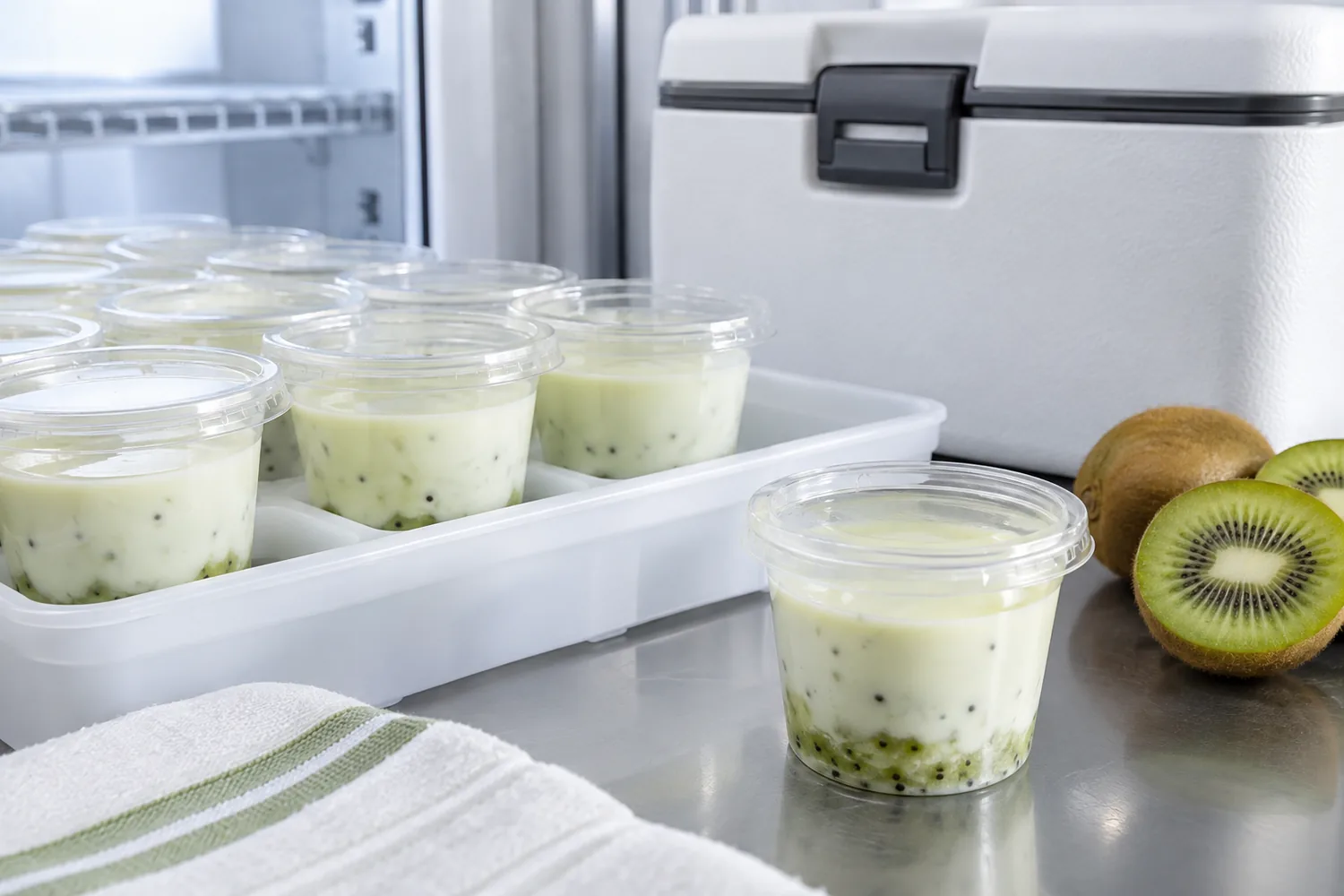
Illustrative chilled kiwi yogurt sample handling; no measured shelf-life result is shown.
Set a decision rule for the form, not just pass or fail for the fruit species. A raw slice may be acceptable for immediate foodservice assembly and unsuitable for a long-held mixed cup. A drained IQF dice may reduce added liquid yet still require assessment of enzyme action over time. A validated treated preparation may improve one hold criterion but change fresh-fruit character or appearance. The buyer can choose among these routes only after specifying the use, time, and cost target. "Kiwi works in yogurt" is therefore a conditional product decision, not a universal ingredient fact.
Retain the production details with the results: fruit lot, size, thaw protocol, base batch, incorporation point, filling date, package, storage temperature, and test time. Without that record, an acceptable pilot can be difficult to reproduce when the first commercial order arrives. A later change in cut size or fruit preparation should trigger a review of the original hold evidence. This is especially important when the visual design of the cup depends on discrete green pieces that may break during larger-scale mixing.
Turn trial results into a kiwi purchase brief
Once the product route is chosen, write the procurement brief around what was actually tested. Name the kiwi form, intended use, target piece size or distribution, frozen pack, expected annual and trial quantity, destination, and delivery conditions. State how the fruit will be thawed or added frozen and whether the formula keeps or drains thaw liquid. If the concept depends on a fruit-on-top appearance, include a photo and a measurable piece requirement rather than the word "premium." If the concept is a smooth drink, define the acceptable seed and particle behavior.
Ask for the documents your destination and product program require: specification, ingredient and allergen information where applicable, origin, lot traceability, packing details, and relevant quality records. The exact document set depends on the buyer's market and finished product; it should be confirmed before quoting. We can discuss available GreenLand frozen kiwi and sample options against that brief. Any claim about a special enzyme-inactivation treatment, validated heat process, or dairy shelf life requires separate evidence from the responsible processor.
Approve an incoming sample using the same questions that mattered in the yogurt trial. Check cut consistency, visible frost or clumping, broken-piece fraction, color, and condition after a controlled thaw. Measure drain if the formula depends on drained weight. Compare the approved sample with later deliveries at the same point in the handling sequence, not against a fruit photo taken under different light. Keep a retained reference where the customer's quality system allows it. These steps make a repeat order more predictable.
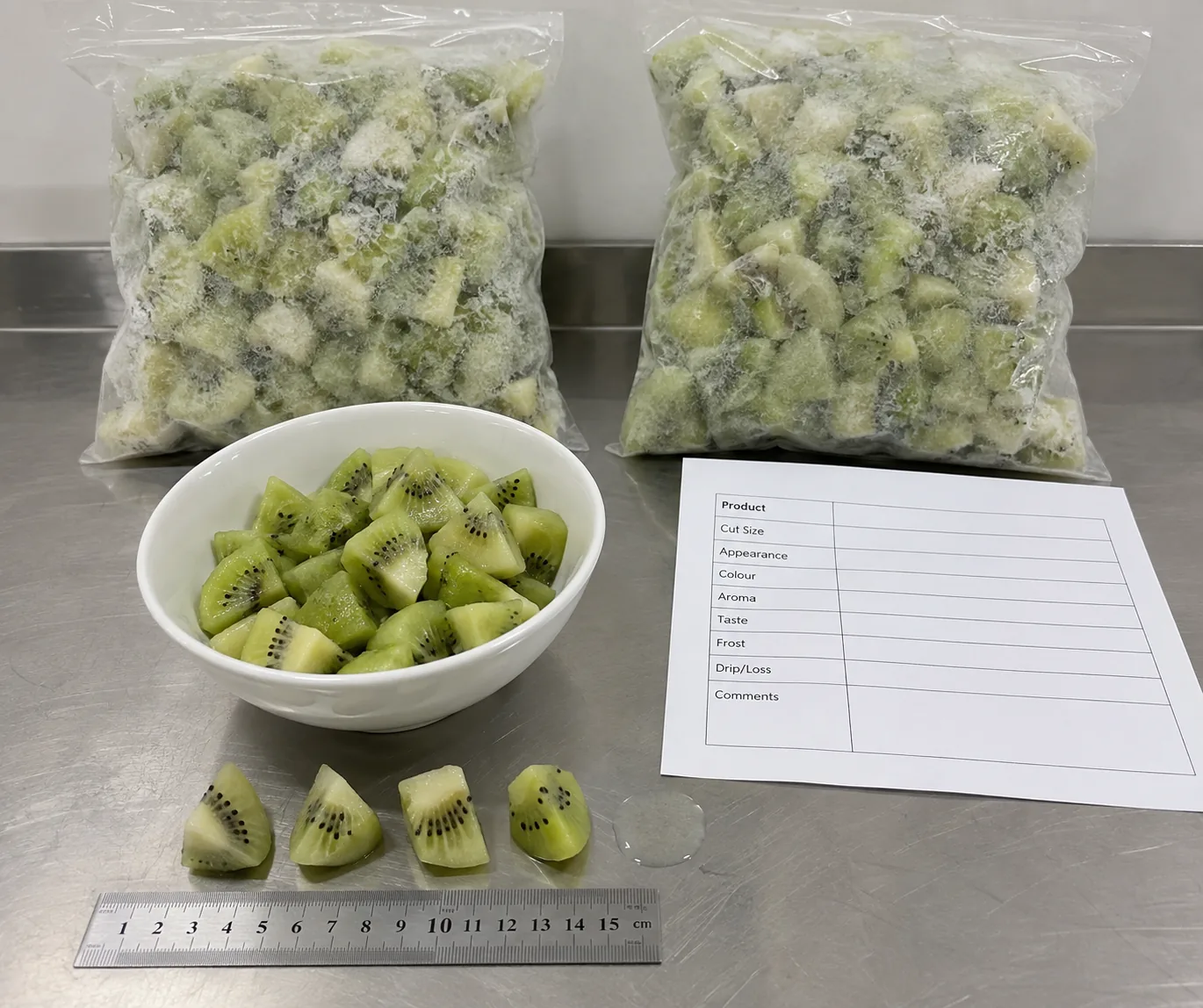
Illustrative sample check for frozen kiwi cut, frost and thaw drip; bags are not GreenLand packaging.
The sample-inspection image near this section shows the sort of visible details a buyer might examine; the bags and form are an illustration, not GreenLand packaging or a certified test record. The product photographs elsewhere are the actual GreenLand kiwi images. Their value is to show available frozen fruit condition, while the purchase brief gives the measurable requirements. Image, sample, and written specification should agree before a production commitment.
Commercial discussion should include usable yield and handling cost. A quote per delivered frozen kilogram is one input. The number of filled cups obtained after draining, size sorting, and production losses may be a better comparison for a yogurt line. If the chosen solution uses a separately processed fruit preparation, include that processing cost and ingredient changes transparently. A cheaper raw fruit can become costly if the finished cup fails its hold test; a more complex preparation is unnecessary if the cup is assembled at service and eaten promptly.
For a GreenLand inquiry, tell us whether the product is a spoonable cup, layered dessert, foodservice topping, or beverage; the required cut, packing, volume, destination, and target launch schedule; and the fruit form used in the successful trial. We can then discuss a frozen kiwi input that matches the development work. The dairy manufacturer remains responsible for validating its formulation, handling, food safety, and shelf life. That division gives the buyer a clear supply conversation without overstating what a frozen fruit sample proves.
Source frozen kiwi with GreenLand-food
GreenLand-food is a professional frozen kiwi supplier and manufacturer in China, providing factory-direct wholesale supply for importers, food manufacturers and foodservice distributors.
Send the product form, cut or size, specification, packing, quantity, application, destination and requested documents. Frozen kiwi input can be specified and sampled; dairy processing and finished-product shelf life remain the manufacturer's validation.