


Are Taro and Ube the Same? Root Identity, Color and Processing Uses
Sep 27, 2026
Leave a message

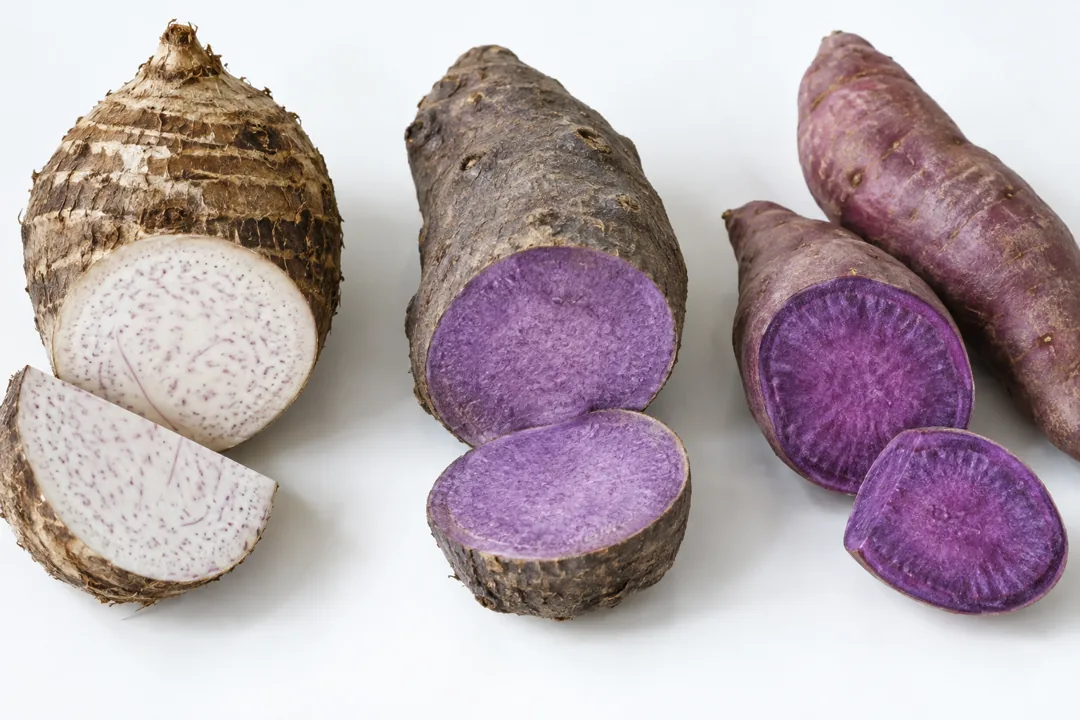
The distinction changes the product a food developer can make. Taro usually supplies a relatively mild, starchy base whose flesh may be pale with purple flecks; ube cultivars can provide naturally purple flesh and a different cooked flavor. Purple sweet potatoes can also make an intensely colored puree. Color and taste vary with cultivar, maturity, cooking, formulation, and the percentage of the named ingredient. Rather than promise a universal flavor profile from a photograph, compare representative samples in one fixed recipe. Frozen taro slices, cubes, and a prepared paste must be tested as different forms.
GreenLand-food's current frozen taro range gives buyers a real taro product route to examine. We have not verified an ube SKU in the GreenLand range and do not present the other roots in the illustrative comparisons as our products. Our role in an inquiry is to confirm the taro form, current specification, packing, quantity, destination, and documents we can actually supply. A formula that requires ube needs an independently verified ube source and a separate approval. The following comparison helps the purchasing team avoid approving a familiar purple image in place of the intended plant.
Identify taro, ube and purple sweet potato by species
Plant names are the safest starting point because common names overlap across markets. The Smithsonian's Hawaiian flora entry identifies taro, also called kalo, as Colocasia esculenta and describes its starchy underground corms. The University of Florida IFAS species assessment lists ube and purple yam as names for Dioscorea alata. Purple sweet potato belongs to Ipomoea batatas. These are different botanical species and families. A trade name such as "purple root" or "yam flavor" should therefore trigger an ingredient identity check rather than settle it.
Taro's edible storage structure is a corm. Ube is a yam tuber, and purple sweet potato is a storage root. That botanical distinction may not be obvious after peeling, cutting, cooking, freezing, or powdering. A bag of pale taro pieces can be easy to recognize when the cut surface is visible; a purple beverage powder cannot be identified reliably by sight. Ask for the scientific name on the supplier specification or supporting product documentation and compare it with the ingredient statement used on the finished product. A certificate or laboratory test may be appropriate for a high-risk authenticity claim, but no single visual cue is a universal identity test.
The real GreenLand photograph in this section shows speckled taro slices. It supports the identity and product-form discussion, but it does not show ube or prove what is inside another supplier's powder. For a buyer ordering frozen taro, the sales description should say whether the lot contains peeled slices, cubes, or another cut. Confirm the exact cut dimensions, tolerances, defect definitions, and cooking status from a current specification. A root cut into pieces before freezing is a different ingredient input from a prepared puree, even when both derive from Colocasia esculenta.
The English word "yam" is particularly loose in retail and culinary settings. Some sweet potatoes are marketed as yams in particular countries, while ube is a true yam in the genus Dioscorea. A product label that says "purple yam" could be accurate for ube, but a buyer should still request Dioscorea alata if that species is required by the formula. A Chinese-language name or a translation on a quote should be checked against the scientific name separately. Translation alone cannot prove botanical identity, and a buyer should not treat "purple taro" as an automatic synonym for ube.

Real GreenLand taro slices for identity and form
Species identity belongs on the RFQ before the supplier quotes price. Otherwise the purchasing comparison can mix three material markets: frozen taro pieces, ube puree or powder, and purple sweet potato products. Those may have different yields, supply origins, handling histories, and price bases. The buyer's target can be "taro for a mild starchy base" or "ube for a named purple-yam dessert"; each should be written plainly. A substitute can be explored as a formula change, but it should receive a new sample and label review rather than being silently accepted under the old ingredient name.
For imported material, ask whether the botanical name appears only in a sales email or in the controlled product specification used by the processing site. The latter is more reliable because it can be tied to change control and a lot number. If a seller buys prepared powder from a third party, request the upstream ingredient description through an appropriate confidentiality channel. The country shown on the shipping document may identify the exporter rather than the country where the root was grown. Keep those facts in separate fields. A buyer can then trace a complaint about flavor, color, or identity to the material actually used rather than to a generic item name.
Judge natural color and cooked flavor from samples
The common visual shorthand is that taro is pale and ube is purple. It is useful for an initial conversation, but it is too simple for a production specification. Taro flesh is often white or cream with purple flecks; cultivar and processing may shift its appearance. Ube may range from pale violet to strong purple, and purple sweet potato can also have richly colored flesh. The fresh cut face, cooked puree, frozen piece, and finished drink can show different intensities. Light, pH, heat history, other ingredients, and dilution in a dairy or plant-based base all affect what the customer sees.
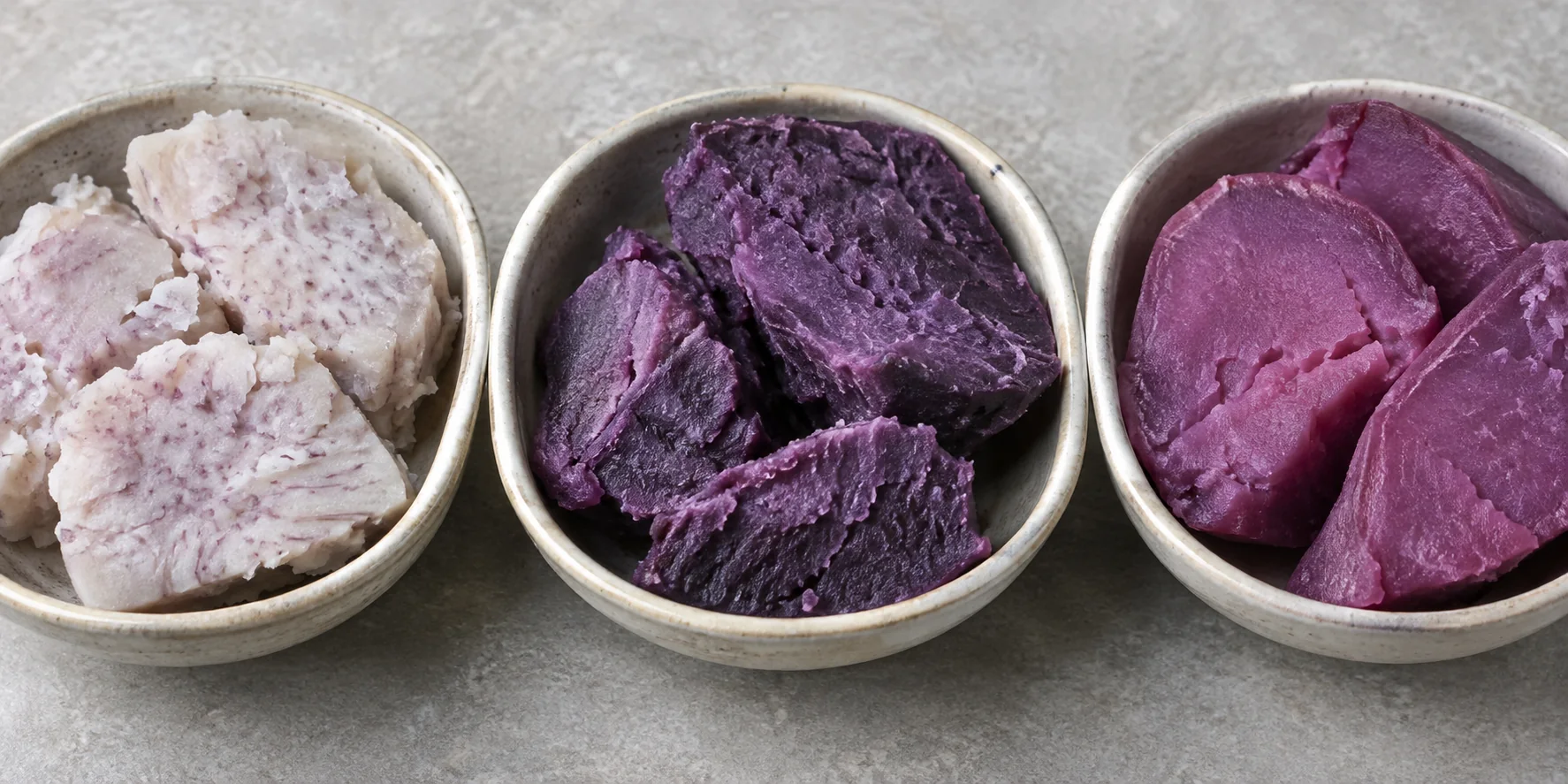
Compare cooked flesh texture and color under neutral light
The image compares the three cut surfaces conceptually. It should lead to a physical sample check, not a promise that every lot will match the depicted shade. Prepare equal masses of each root under defined cooking and mixing conditions, then record color using photographs under the same light or a measured color method if color is a controlled specification. A buyer can set an approved visual reference for the actual formula. A display photo taken in different lighting, or a brightly colored beverage in a shop, is a weak basis for accepting an industrial ingredient lot.
Flavor also needs a fixed test. Taro is often described as mild, starchy, and slightly nutty, while ube is commonly described as sweeter or more aromatic when cooked. Those words can be useful for a tasting panel, but added sugar, milk, coconut, vanilla flavor, and cooking method can overwhelm the root's own notes. A finished taro beverage may taste strongly of a commercial flavor blend; a plain cooked taro cube may taste quite different. Record what is in the test recipe and compare it with a retained approved reference. A change in root cultivar may matter less than a change in the percentage of root in a premix.
If color is the marketing promise, ask what supplies it. The full ingredient declaration should reveal whether a powder contains taro, ube, purple sweet potato, coloring ingredients, flavorings, sugar, or carriers. A claim such as "natural purple" still requires its own substantiation under the destination market's rules and the actual formula. No image or common flavor description proves the level of the named root in a preparation. Request the percentage when it is material to the purchase and verify it against the supplier's supporting records.
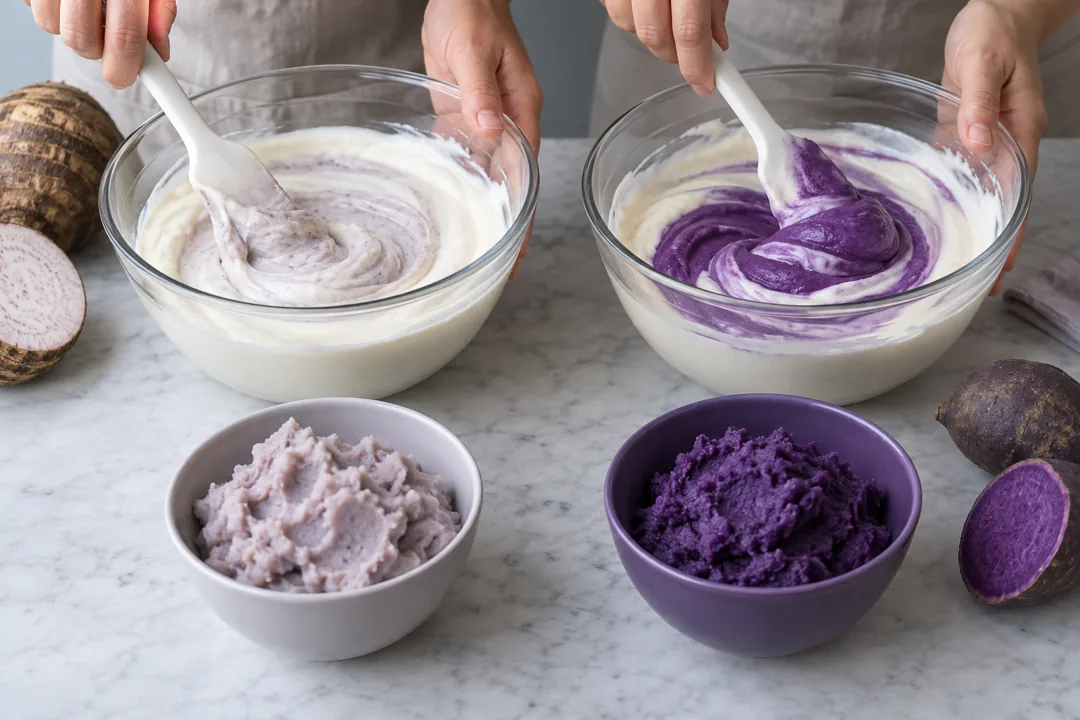
Show how root color changes in one base
A simple sensory trial separates identity from preference. Use the same base, sugar level, root inclusion rate, serving temperature, and hold time for each sample. Ask panelists to score color, aroma, sweetness, earthiness, graininess, and the flavor of the root after the sweet base fades. Include a blank base as a control. The goal is to decide whether the named root meets the product target, not to crown one species as universally better. A purchaser should approve the lot against the intended dessert or drink rather than against a photograph of a popular menu item.
For a retail drink, observe the product after the real mixing and display period. Some particles may settle, a pale base may change the apparent purple intensity, and ice dilution can alter flavor balance. For a frozen dessert, compare color and texture after freezing and after the planned serving temper. Use a reference prepared from the approved ingredient lot, then evaluate later lots against it. Photograph cups against the same neutral background and record the recipe mass and mixing conditions; otherwise differences in presentation may be mistaken for differences in root quality.
Compare pieces and pastes in the actual dessert or drink
Taro and ube contain starch, but their performance in a finished product is shaped by the cultivar, particle size, cook level, water content, sugar and fat in the formula, and subsequent freezing or thawing. A general statement that one root is "creamier" will not predict how a supplier's prepared paste behaves in a beverage line. Use an identical recipe, the same heating and mixing method, and a measured inclusion rate. Record viscosity or flow, visible particles, flavor, color, water separation, and texture after the intended hold. If the product is frozen after filling, test that actual freeze and thaw route.
For a spoonable dessert, compare cooked purees at equal solids where feasible. If one input arrives as a cooked sweetened paste and the other as raw frozen pieces, correct the comparison for added sugar and water before drawing conclusions about the root. A puree with more sugar may feel smoother even when the underlying root is not. Note whether the supplier has added starch, gum, milk ingredients, or flavor. Those additions may be useful to a formulation, but the product should be described as a preparation rather than a single-ingredient root. An ingredient statement and specification should make the distinction visible.
Pieces require a different trial. Frozen taro cubes or slices may be intended for cooking in a dessert, soup, ready meal, or foodservice base. Record the cut size, number of fines, piece integrity after cooking, drained yield, and whether the center reaches the required texture in the real process. A paste trial cannot approve a piece supplier, because particle distribution and visible cut shape matter. Similarly, a product developer seeking a smooth ube filling should not assume that frozen chunks will yield the same texture without additional cooking, milling, and process validation.
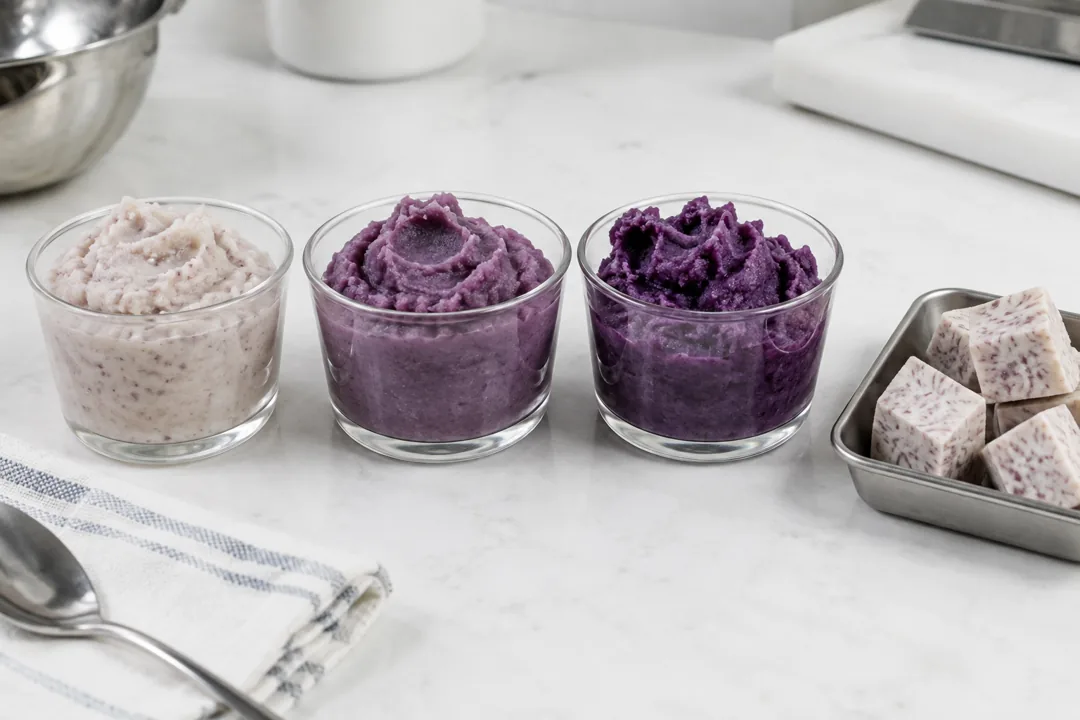
Compare cooked paste body under fixed recipe
Taro needs appropriate preparation. The GreenLand taro preparation guide explains handling and cooking issues, including irritation associated with raw taro. Follow the actual product's processing instructions and validate the final heating method for the intended food. Do not interpret "frozen" as proof that a taro piece is cooked or ready to eat. Ask the supplier whether the specific SKU is raw, blanched, or otherwise pretreated and obtain the current technical specification. The same question belongs on any ube or sweet-potato input, whose processing state may vary.
A small pilot can avoid a costly substitution error. Start with the approved recipe and make one change at a time: root species, input form, or supplier lot. Measure mass before and after cooking, record the particle size and process time, and photograph the product under fixed light. Then test the product at service or shelf-life checkpoints appropriate to the application. If a root change alters the label, allergen assessment of a compounded preparation, or nutrition calculation, let the regulatory team update those records. The trial result is valid for the tested formula and material, not a blanket conversion ratio between taro and ube.
The buyer should record how the frozen input is brought into the process. If pieces are cooked from frozen, the rate of heating and the cut size influence the time needed to reach a uniform texture. If the input is thawed first, any separated liquid affects the recipe water balance and apparent solids. Neither route should be chosen from the ingredient name alone. Use the processor's actual equipment and validate the step at the largest proposed batch size. A small kitchen cup may appear smooth while a larger vessel reveals unmilled particles or uneven heating.
Read the full ingredient statement behind menu names
Menus use flavor names to describe the customer experience, while specifications must identify the material purchased. A "taro milk tea" can be a formulated powder or syrup with several ingredients. A purple cup may derive its color from ube, purple sweet potato, an added color, or a blend. Some desserts called "ube" may contain a small amount of purple yam alongside sweeteners and flavor. The commercial name alone therefore cannot tell a manufacturer what root is present or whether it meets a brand promise. Ask the vendor for the full statement and percentage of named root when relevant.
Start with the orderable item, not the promotional photo. For a pure frozen root, the ingredient statement may be simple, but the botanical species and processing form still need confirmation. For a powder or paste, ask for all components and their order, carriers, sweeteners, added colors, flavors, and processing aids where disclosed by the governing rules. A proprietary formula may limit disclosure to competitors, yet the buyer still needs enough information to label the finished product accurately and assess allergens and claims. Negotiate the required confidentiality route before approving a vague "taro flavor" offer.
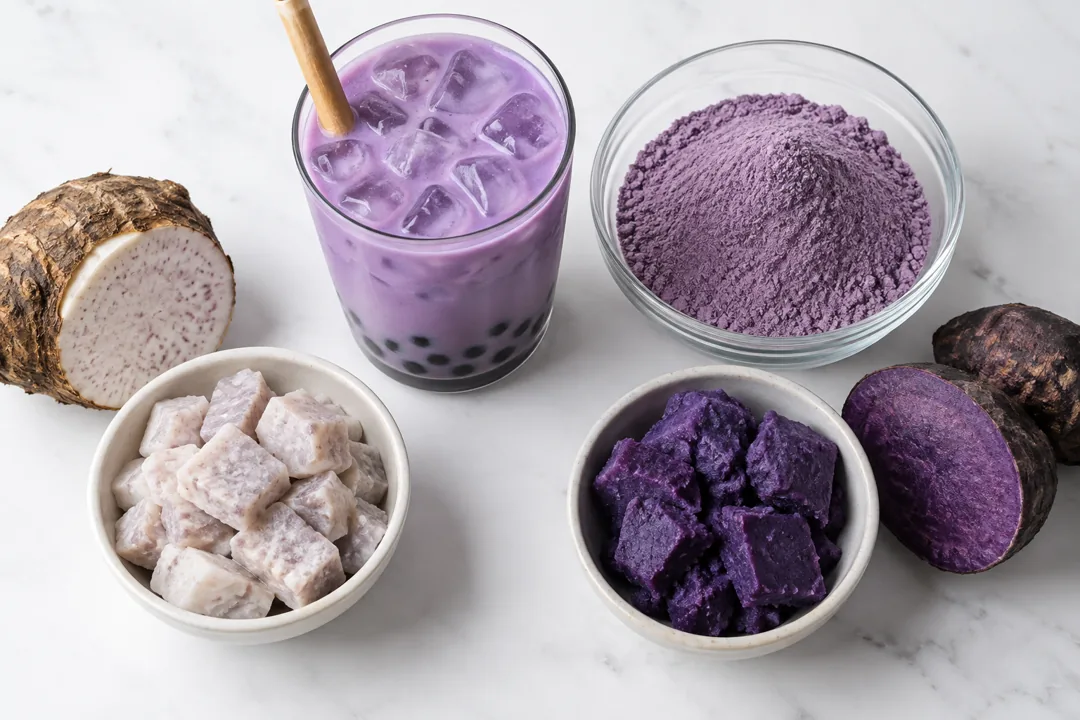
Show why beverage color cannot establish ingredient identity
Identity claims are especially important in private-label food. If the front of pack says ube, the regulatory and purchasing teams need evidence that the formula contains the named ingredient at the claimed level and is described correctly for the destination market. A product made with taro or purple sweet potato may be acceptable as a new recipe, but the label and customer expectation must be reconsidered. The reverse is also true: an ube-flavored ingredient should not be quietly substituted into a traditional taro item. The decision is about truthful specification and finished-food performance, not which ingredient has the more appealing shade.
Separate three questions in supplier correspondence. First, what is the botanical identity of the root ingredient? Second, what percentage and form of that root is in the purchased preparation? Third, what gives the finished preparation its color and flavor? Keeping those questions separate prevents a circular answer such as "It is ube because it is purple." It also lets the food developer choose a technical role for each component. An added color may solve appearance while leaving the flavor and texture unlike a root puree; a root powder may add solids while still requiring flavor adjustment.
An accepted sample should be tied to the supplied product code, ingredient declaration, and manufacturing site. If a supplier changes a colorant, carrier, sweetener, root source, or processing method, the sample approval may no longer apply. Ask for a change-control commitment appropriate to the purchasing contract. Keep a retained sample and record the lot used in the pilot. That traceability is more useful than a screenshot of a menu, because it links the material the customer actually liked to the product the buyer will order repeatedly.
When a customer asks why its beverage is purple, the product team should be able to answer from the formulation record. It should know which root supplied the solids, which ingredient supplied color, and whether flavor was added. This does not require revealing a confidential formula to every customer, but it does require an accurate internal identity trail. If a menu descriptor is intentionally broad, check that it remains truthful under the rules of the market where the finished drink is sold. The purchasing team should not approve a supplier's shorthand as the final label language.
Specify the right frozen root ingredient before ordering
The RFQ should start with the named species and intended form. For taro, specify Colocasia esculenta, the requested cut or puree form, expected processing state, and application. For ube, specify Dioscorea alata and verify an independent supplier's actual offer; GreenLand-food has not verified an ube SKU. For a purple sweet-potato formulation, use Ipomoea batatas and avoid describing it as ube. Include the destination, expected label wording, annual or trial quantity, pack size, cold-chain requirements, and documents. These fields let suppliers quote comparable ingredients rather than responding to a vague request for "purple frozen root."
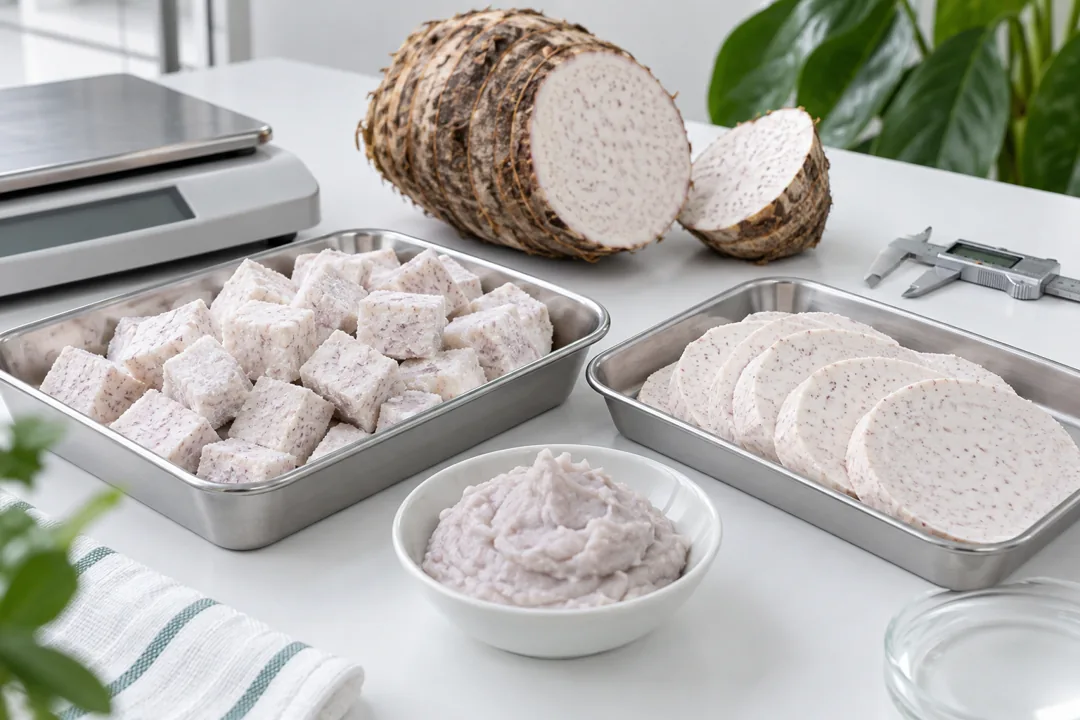
Compare taro cuts and cooked paste in buyer trial

Real GreenLand taro cube form for purchase specification
For the GreenLand frozen taro category, confirm the current SKU form and cut dimensions before placing an order. The real taro cube photograph illustrates one possible form, and the adjacent trial image illustrates how a buyer might compare cubes, slices, and cooked puree. Neither image is a specification. Ask for the actual piece size range, tolerance for small or broken pieces, peel and foreign-material criteria, packing format, net case weight, product temperature, shelf-life basis, and permitted processing claims. Match each item to a sample and a documented acceptance method.
The importer should also ask for growing and processing origin, lot coding, traceability, relevant food-safety documents, and a statement of the intended use or required cooking. Confirm whether the fruit or vegetable is supplied as a single ingredient or a compounded preparation. A buyer developing a drink base may need puree solids, viscosity, and color stability; a ready-meal processor may need cut integrity and yield after reheating. Share the actual line conditions and reject criteria with the supplier before the trial so that a visually attractive sample does not hide a poor production fit.
An approval sheet can compare identity, form, recipe performance, and labeling in separate columns. Identity must be supported by the specification and supplier records. Form should be checked against the delivered frozen pieces or prepared paste. Performance should be tested in the target application under one process. Labeling should be reviewed by the buyer's regulatory team for the destination. A material that passes three of these checks but fails identity cannot be sold under the wrong root name. A material that passes identity but fails the dessert trial may need a different use or supplier.
GreenLand-food is a frozen-food supplier and manufacturer in China offering factory-direct wholesale discussion for verified products such as frozen taro. We can confirm the available taro form, packing, quantity, application requirements, destination and requested documents for a specific inquiry. We cannot infer ube availability from a comparison article, and we would not promise that a taro substitution reproduces ube's color or cooked profile. Name the root you actually need, test it in the real recipe, and let the resulting specification control the order.
Source Frozen Taro with GreenLand-food
GreenLand-food is a professional frozen taro supplier and manufacturer in China, providing factory-direct wholesale supply for importers, food manufacturers, foodservice distributors, and private-label programs.
Send the product form, specification, packing, quantity, application, destination, private-label needs, and requested documents. We will confirm the current offer and documentation for your order.