


What Are French-Cut Green Beans? Cut Style, Cooking and Bulk Supply
Sep 01, 2026
Leave a message
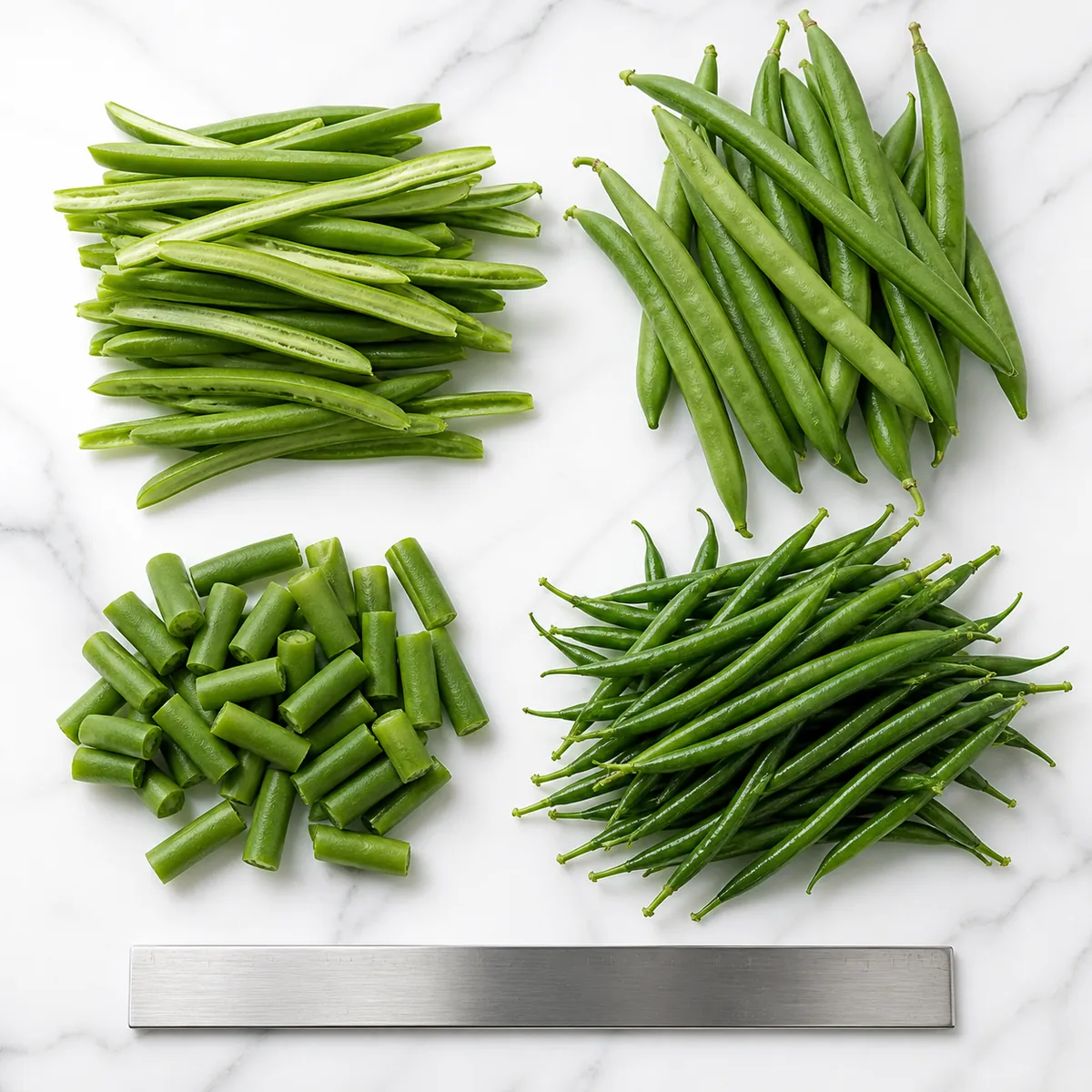
French-cut means split along the bean's length
A whole trimmed bean keeps its cylindrical pod shape. A cross-cut bean is chopped across the width into shorter segments. A French-cut bean is divided lengthwise, commonly into two or more thin strips. Because the wall is opened and the strips are narrow, they cook rapidly and integrate into casseroles, sautés, sauces and prepared meals.
Commercial terminology varies, so buyers should not rely on the name alone. Confirm strip width, length distribution, ends, seeds, broken pieces, fines, color, blanching, tenderness, free-flow and packing with a drawing, photos, written tolerances and an approved sample.
Key takeaways
French-cut, whole, cross-cut and haricots verts
| Form | Geometry | Texture and heating | Typical fit |
|---|---|---|---|
| French-cut | Lengthwise narrow strips | Fine, flexible, quick sauce contact | Casseroles, sautés, fillings and prepared meals |
| Whole or trimmed whole | Full pod with ends controlled | Distinct bite and strong visual identity | Sides, retail bags and plate presentation |
| Cross-cut | Short segments cut across the pod | Compact pieces with moderate bite | Soups, blends, ready meals and portion mixes |
| Haricots verts | Naturally slender whole bean | Tender whole-bean presentation | Premium sides and delicate plating |
How the lengthwise cut changes cooking
Splitting the pod exposes the moist interior and increases the surface area available to hot water, steam, oil and sauce. Heat reaches the center quickly, and the strips flex rather than behaving like a rigid whole bean. This is useful when beans need to blend through a casserole or coating instead of sitting as separate rods.
The same advantage creates risk. French-cut strips can move from bright and tender to dull and soft faster than whole beans. A process designed for whole frozen beans may overcook strips. Reduce the heat exposure during trials and judge the complete dish after its hold, reheat or service period.
Sauce pickup also changes. More cut surface gives dressings, butter and seasoning more contact, but wet strips can dilute a sauce. Frozen material may carry surface frost and release water. Use dry-heat finishing or controlled drainage when the application requires a concentrated coating.
Mechanical handling matters. Thin strips can tangle, bridge in a feeder or break during mixing. Check the production line at the real batch size rather than approving only a small stovetop sample.

Whole frozen green beans are not French-cut strips
GreenLand's IQF green beans provide a verified whole-bean supply reference. This page does not use that product photo as proof of an exact French-cut offer.
If French-cut form is required, send strip dimensions, application and volume. The commercial team should confirm feasibility and provide a representative sample before any supply claim is accepted.
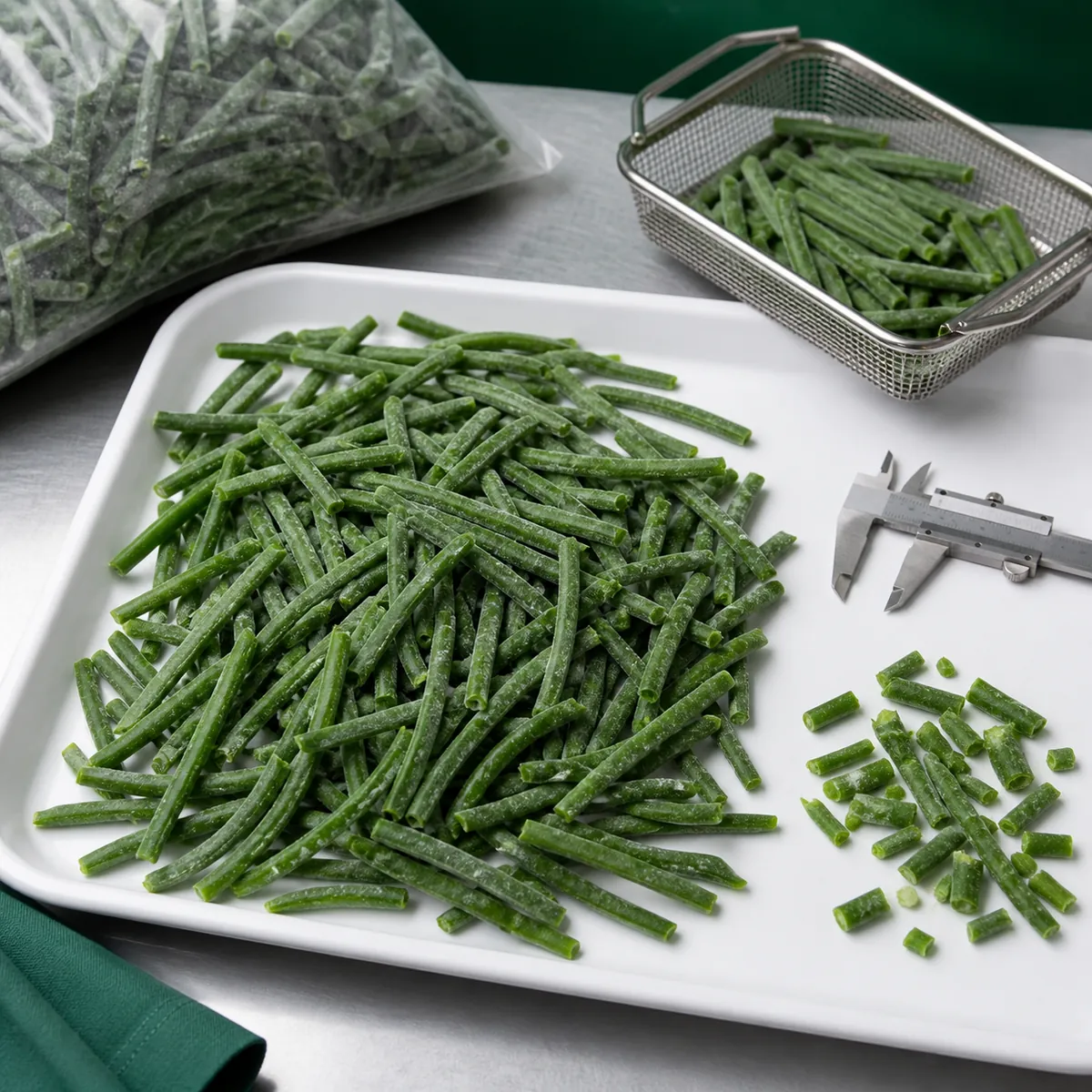
What to measure in a bulk French-cut specification
| Attribute | Why it matters | How to control it |
|---|---|---|
| Strip width | Controls tenderness, visual fineness and cook speed | Agreed range and measurement method |
| Length distribution | Affects plate coverage, filling and equipment flow | Size bands and percentage by weight |
| Broken pieces and fines | Change usable yield, sauce viscosity and appearance | Defined minimum size and tolerance |
| Seed development | Mature seeds create a coarse look and bite | Maturity reference and visual limit |
| Blanch and color | Influence enzyme stability, texture and cooked appearance | Process control plus frozen and cooked color standard |
| Free-flow and clumps | Affect dosing and partial-bag use | Frozen sample, handling test and tolerance |
How French-cut green beans are prepared
At home, a Frenching tool or careful knife can split trimmed whole beans lengthwise. The goal is long narrow strips, not short diagonal pieces. For even cooking, start with beans of similar length and maturity and keep strip width reasonably consistent.
Commercial frozen production needs more control. Raw beans are received, sorted and trimmed, then cut to the defined style. Blanching, cooling, dewatering and rapid freezing follow under the processor's validated system. The sequence must protect color and texture while avoiding excess surface water that produces clumps.
Cutting equipment condition affects the result. Dull or misaligned blades tear tissue and create ragged fragments. Feed orientation affects whether pods split lengthwise as intended. In-process checks should examine the actual distribution rather than a few attractive pieces.
The term "French style" can be used differently by processors and markets. A purchase contract should define the observable form instead of arguing over vocabulary after delivery.

Prepared meals expose the real performance
A bean can look acceptable after a short blanch yet become soft after sauce mixing, tray filling, freezing, reheating and hot holding. Approve the strip through the complete meal process.
Check distribution, color, bite, sauce pickup and breakage after the intended service period, not only at the kettle.
Application fit by green bean form
| Application | Likely form | Buyer check |
|---|---|---|
| Green bean casserole | French-cut for integrated texture or cross-cut for visible pieces | Sauce dilution and hot-hold bite |
| Plated side | Whole bean or haricots verts | Length, tenderness and visual uniformity |
| Soup or blend | Cross-cut pieces | Piece distribution and overcooking |
| Sauté or stir-fry | French-cut for fast cooking or whole for stronger bite | Surface water, breakage and sauce coating |

Use landed cost per usable kilogram
Price comparisons should include fines, unusable mature pieces, clumps, drip, cooking loss, labor and finished yield. A lower delivered price can be offset by a narrow usable fraction.
Run a defined sample mass through the real process and record yield. Compare suppliers with the same thaw or direct-cook method, seasoning and endpoint.
A sample-approval process
- Send the application brief. State French-cut direction, target strip width and length, use, heat process, pack and annual volume.
- Resolve terminology. Exchange a drawing or reference photos and write tolerances before the sample is made.
- Inspect frozen. Spread and weigh a representative sample; sort strips, cross-cut errors, fines, mature seeds, defects and clumps.
- Cook in the real process. Use production-equivalent load, sauce, hold, freeze and reheat where applicable.
- Approve a controlled reference. Retain measurements, photos, cooked result and specification version.
- Check incoming lots. Apply a sample plan and escalate deviations instead of silently adjusting the line.

Confirm supply before naming the SKU
A buyer review should confirm whether the exact French-cut style can be produced for the required volume, season, pack and market. Whole or cross-cut material cannot be relabeled to close the gap.
Ask for MOQ, lead time, origin, packing, technical documents, sample timing and cold-chain route. Availability remains order-specific until confirmed.
From cut concept to a controllable bulk product
Begin with a drawing or photograph that makes direction unmistakable. Show a whole pod split along its length, the number of intended strips and how ends are handled. Put a cross-cut piece beside it as a nonconforming example. This visual reference prevents a terminology dispute from reaching production.
Define the raw bean. Pod diameter, length, maturity, fiber and seed development determine whether clean strips are possible. Large mature pods can create wide tough strips and prominent seeds. Very slender pods may not divide economically into the requested width. The raw-material window and cut specification must be feasible together.
Choose how dimensions are measured. A flexible strip can curl, so length measurement needs a consistent straightening rule. Width can vary along the pod. State the sample size, tools, measurement points and size bands. Report the percentage by weight or count that falls within each band, not only an average that hides extremes.
Set a minimum useful piece size. Cutting, conveying, blanching, freezing and packing create fragments. Fines can disappear into sauce and change perceived yield. Sort a representative sample through agreed sieves or manual categories, weigh each fraction and connect the limit to the application.
Inspect cutting quality. Clean strips should have recognizable bean tissue without excessive tearing, crushed wet edges or large uncut pod sections. Blade condition and feed orientation can shift during a run. In-process checks should sample across time and equipment lanes, not only the start of the batch.
Blanching must balance enzyme control with texture. Thin strips heat faster than whole pods. A whole-bean blanch schedule can leave French-cut material too soft. The processor validates its own process, and the buyer verifies frozen and cooked color, flavor and bite rather than prescribing an untested universal time.
Dewatering is critical. Strips have more exposed surface and can retain water after cooling. Excess water becomes surface ice, clumps and diluted sauce. Evaluate frost and free-flow from unopened packs and after normal handling. Large ice crystals around pieces can indicate process or cold-chain problems.
Packaging affects breakage. Thin strips can compress and fracture in an overfilled bag or weak carton. Define inner bag, net weight, carton strength, pallet pattern and maximum stack conditions. A foodservice bag and a retail pouch may need different fill and handling even with the same product.
Test dispensing. Free-flowing strips may still tangle in a hopper, bridge over an opening or wrap around mixing equipment. Run the real feeder, auger, kettle or hand-portion method at production scale. Note whether the product can be dosed consistently without excessive manual breaking.
Control the cooking endpoint for the actual meal. French-cut beans can be tender after blanching and then experience sauce cooking, tray filling, freezing, distribution, reheating and holding. Evaluate after the final service step. A bright kettle sample is not proof that the customer receives good texture.
Compare forms in a blinded application trial. Use French-cut, whole and cross-cut material at equal usable weight and apply their appropriate cooking profiles. Score visual coverage, bite, sauce pickup, breakage and portion consistency. The preferred form should solve the product's job, not merely sound more premium.
Calculate cost after yield. Delivered weight minus fines, nonconforming cross-cuts, mature pieces and unusable clumps gives a more realistic ingredient cost. Add labor required to separate or break product and any change in cook loss. A slightly higher priced but controlled strip can be cheaper in a finished tray.
Prepare the RFQ with cut drawing, dimensions, tolerances, intended process, pack, annual volume, destination, required documents and sample plan. Ask the supplier to state what is standard, what requires a custom run and what MOQ or lead time applies. Custom cutting can be feasible yet uneconomic below a certain campaign size.
At receiving, verify product temperature, carton and bag condition, label and lot, then inspect a representative sample frozen. Measure strip fractions and defects under the agreed method. Cook a retention sample periodically to make sure the frozen visual check still predicts application performance.
Use careful product naming in catalogs and sales discussions. A whole IQF bean demonstrates whole-bean supply, not French-cut availability. A sliced green bean page may refer to cross-cut pieces. Represent the item as French-cut only after the lengthwise style, specification, production feasibility and order have been confirmed.
Troubleshooting French-cut performance
Strips are too soft after service: review blanching, strip width, maturity and the complete heat cycle. Reduce later cooking before asking for a harder raw bean that may create fiber and seed defects.
Sauce becomes watery: excess surface frost, poor dewatering or thaw liquid may be entering the formula. Compare direct cooking with a controlled drain method and specify clumps and frost.
The product looks chopped: length distribution or breakage is outside the visual target. Measure the fractions by weight and inspect packaging, transport and mixing for damage.
Too many seeds are visible: raw pods may be overmature. Set a maturity and developed-seed tolerance and review the harvest window with the processor.
Strips tangle in equipment: length may be too great for the feeder or mixer. Trial a shorter distribution or a different product form rather than forcing throughput and increasing breakage.
Pieces cook unevenly: strip width, pod diameter or frozen clumps may vary. Tighten the size method and verify the cooking load. A longer time will overcook the narrow fraction.
Color turns olive: extended heat, hot holding, pH and blanching can contribute. Evaluate frozen, first-cooked and served color to locate the change.
Delivered price is low but portions are inconsistent: weigh usable strips after removing fines, mature pieces and errors. Compare cost per conforming cooked kilogram.
The supplier offers sliced beans instead: confirm whether sliced means cross-cut. Do not approve a different geometry under the French-cut name. Request drawings, samples and order-specific feasibility.
Retail bags contain one frozen mass: investigate surface moisture, freezing, packing pressure and cold chain. Free-flow should be defined and checked at receiving.
Custom MOQ is too high: compare whether whole or cross-cut product can meet the application, aggregate demand into a production campaign or redesign the format. Do not create a false SKU claim to close the commercial gap.
Precise problem language keeps the solution precise. Strip width, maturity, blanch, dewatering, breakage, pack and cooking each have their own evidence and corrective action.
Packing, documents and order planning
Choose pack size around use. A full-bag casserole formula can use a large foodservice bag. Partial dispensing requires better free-flow and resealing control. Retail bags need consumer labels and a strip distribution that remains attractive after transport.
Confirm net weight tolerance, inner-film specification, carton dimensions and strength, lot coding, pallet pattern and loading quantity. Thin strips can suffer breakage when cartons are compressed or dropped.
Request product specification, ingredient statement, process description, microbiological and chemical criteria, origin, allergen or GMO statements where relevant, traceability approach and certificates required by the destination. Exact requirements depend on market and buyer.
Custom French-cut production may need a campaign MOQ. Share annual volume, call-off size and seasonal schedule early. A realistic forecast lets the supplier assess raw bean, cutting equipment and packing availability.
Plan sample stages: hand sample for form, pilot sample for cooking and a pre-shipment or first-production check. Approving a photograph alone does not test breakage, free-flow or cooked texture.
Agree how changes are communicated. A new raw bean size, blade setup, factory, blanch profile or pack can alter the product. Require approval when the change affects the controlled specification or application result.
At shipment, match documents and labels to the confirmed order. French-cut wording, code and photos should all describe the same lengthwise form. This prevents a whole or cross-cut product from entering under an ambiguous item name.
Commercial readiness combines technical feasibility, MOQ, lead time, cold chain and application approval. Until those are confirmed, discuss French-cut as a requested form rather than a guaranteed stock item.
Write a purchase specification for the required bean cut
Start with the cut name, then remove ambiguity with measurable language. State whether French-cut means longitudinal strips, how many strips are expected from a pod if relevant, and the acceptable length and width range. A photograph with a scale can support the written description, but it should not replace numerical limits and an approved sample.
A frozen vegetable cut-size specification helps translate the French-cut description into measurable tolerance.
Define raw-material expectations, including color, maturity, stringiness, pod defects and foreign matter. For frozen supply, add blanch condition, free-flow requirement, clumping, frost, broken pieces and temperature expectations. Ask how the producer controls knives, screens and metal detection, and how cut variation is checked during a run.
Describe the application and cooking method. A strip intended for a quick skillet preparation faces different handling from a bean used in soup, a frozen ready meal or a retorted product. Tell the supplier whether appearance, short cook time, sauce coverage, bite or mechanical resilience has priority.
Approve against a representative production sample, not an isolated photograph. Record thaw or direct-cook method, sample weight, pan or kettle loading, cook time, drain and sensory result. Compare the sample with whole and cross-cut controls when the team is still choosing a form.
Confirm packing, net weight, labeling, origin, MOQ, lead time and documentation. If an exact French-cut SKU is not already listed, request availability and specification confirmation before using supplier language in a menu, tender or product launch. A whole-bean product page cannot by itself prove longitudinal-cut supply.
This specification protects both sides: the buyer receives a form suited to the process, while the supplier can match the request to an available production line rather than guessing from a regional product name.
Frequently asked questions
What does French-cut mean for green beans?
It means the pod is sliced lengthwise into narrow strips. The form is finer and cooks faster than a whole bean.
Are French-cut green beans the same as French green beans?
No. French-cut describes a cutting style. French green beans or haricots verts usually describe naturally slender whole beans.
Do French-cut beans cook faster?
Usually yes, because the strips are thinner and more interior surface is exposed. Validate time in the complete dish to avoid overcooking.
Can frozen French-cut beans be roasted or sautéed?
They can, but surface moisture and thin geometry need control. Use high enough heat, avoid crowding and stop when the target bite is reached.
What dimensions should French-cut beans have?
There is no single universal commercial dimension. The buyer and supplier should agree strip width, length bands, minimum piece size and tolerances for the application.
Does GreenLand-food list an exact French-cut product?
The verified page linked here shows whole IQF green beans. Exact French-cut feasibility, specification, MOQ and sample must be confirmed before supply is represented.
Confirm the frozen green beans form your process needs
GreenLand-food is a frozen green beans supplier and manufacturer supporting factory-direct and wholesale programs. Share your required cut direction, dimensions, application, pack, market and volume so our team can review frozen green beans supply and French-cut feasibility without promising an unconfirmed SKU.