


How to Dry Apples and Other Fruit Slices: Preparation, Browning and Dryness
Sep 27, 2026
Leave a message

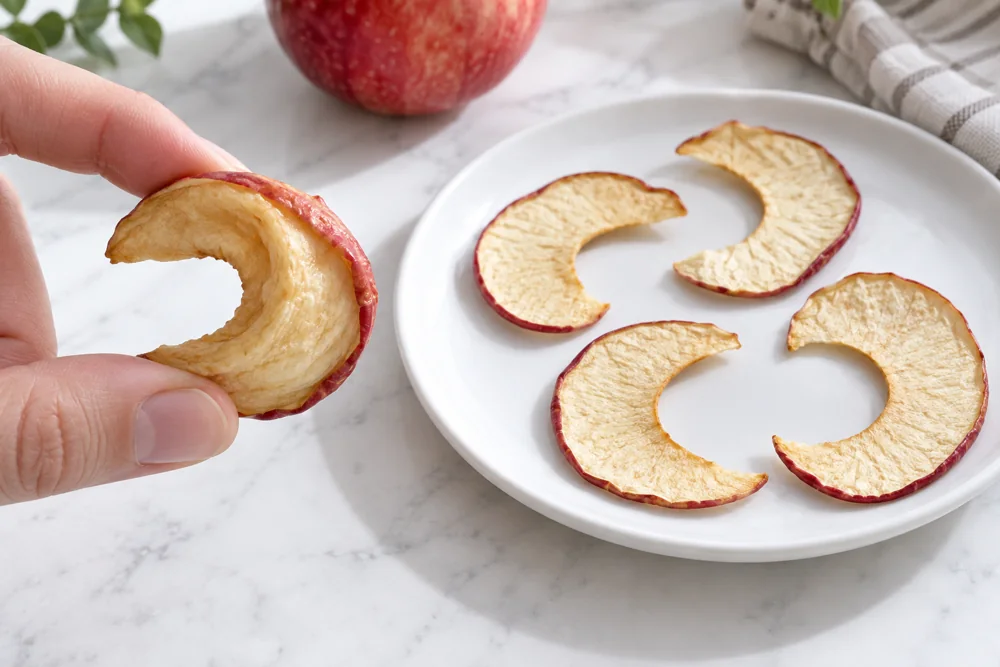
Apples are a useful starting point for sliced-fruit dehydration, but bananas, kiwi and apricots need their own preparation decisions. Browning, stickiness, seeds, skin and the shape of the cut all change the result. For a food business, the useful comparison includes the actual recipe, the drying endpoint, the package and the cost of accepted output. GreenLand-food supplies frozen fruit ingredients; the drying discussion here helps buyers choose between ingredient formats and design a measured trial. It does not establish a dried-fruit supply programme or a validated commercial drying schedule.
Choose apple slices or crisp chips before drying
A flexible dried apple slice is intended to bend and chew. A crisp chip is intended to break with a dry bite. Decide which experience the customer expects before setting the cut or reviewing a drying time. A thicker slice that remains pliable may be successful for a chewy snack but disappointing in a crisp topping. Equally, a very thin chip may fracture during mixing and disappear in a product where recognizable fruit pieces matter. Define the intended use in plain language, then create a reference sample that purchasing, production and quality teams can evaluate together.
Thickness affects the distance water must travel from the interior to the surface. Uneven slices therefore tend to finish unevenly even when they share the same tray and starting fruit. A slicer setting is only the beginning of control: check the actual pieces, including tapered edges, partial slices and broken fragments. For rings, consistent coring also prevents hard core material from remaining in the finished product. Record the nominal thickness and the tolerated variation in a commercial trial. Approving only the average can hide a small proportion of thick, moist pieces that matters after packing.
The drying method needs both heat and a route for moisture to leave. A dehydrator is designed around this combination; an oven's airflow and low-temperature control may behave differently. Follow the equipment instructions and a suitable tested process. Do not transfer a time from one machine to another simply because both display the same temperature. Tray loading, room humidity, fan pattern and fruit preparation all affect drying. The clock is useful for recording a process and planning checks, while the actual product endpoint determines whether the trial has achieved its stated purpose.
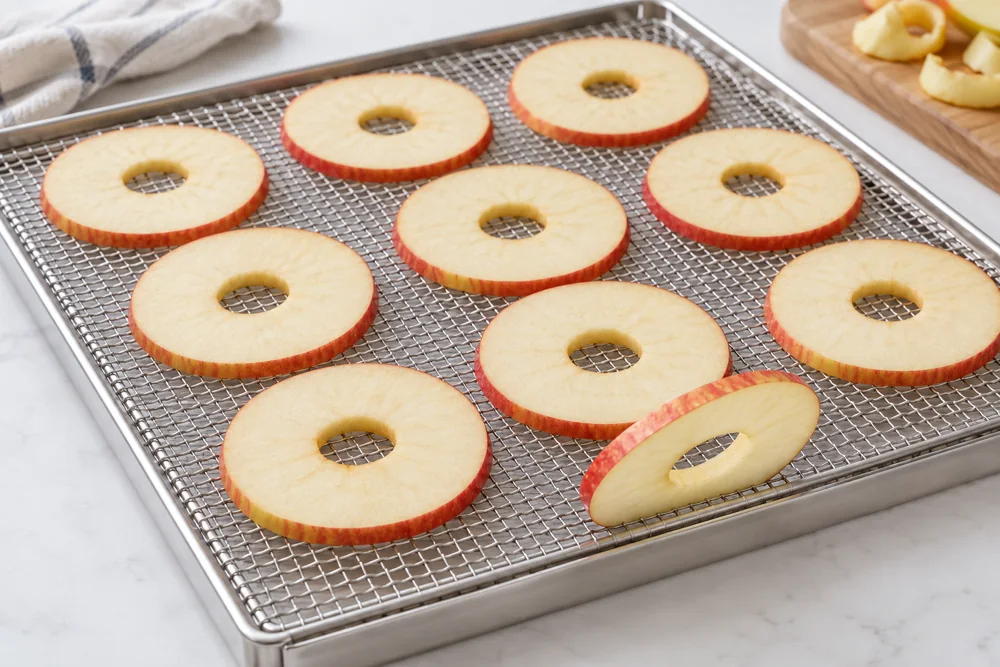
Illustration of single-layer loading. Actual cut thickness, airflow and loading belong in the drying record.
For a household apple example, Penn State's dried-apple guidance describes uniform slices, separated tray loading and checking cooled fruit. Its practical temperature and time directions belong to that home-preservation method. A manufacturer should use this as background for understanding the variables and establish a process for the actual commercial equipment. The distinction matters when a development team moves from a few trays to a larger dryer: the air path, loading density and rate of moisture removal can change substantially even if the fruit looks similar at loading.
Write the endpoint description before tasting the first sample. Include bite, flexibility or crispness, acceptable color, visible fruit identity and the intended use after opening. A cereal inclusion may need to remain crisp in its own pack but soften quickly in milk. A bakery inclusion may need to absorb a controlled amount of formula water without forming hard pieces. These are different acceptance decisions. A single phrase such as premium dried apple does not help an operator decide which tray to remove first or help a buyer compare samples produced for different applications.
Keep the pilot narrow enough to explain its result. Change one important variable at a time, such as slice thickness or pretreatment, while keeping the other conditions recorded. If thickness, cultivar, tray load and temperature all change together, a better sample provides little guidance about what to repeat. We would begin with the end product and its reference texture, then identify the fruit form that can support it. Fruit leather, whole-berry drying and freeze-dried powders follow different structures and processes; they should have separate development records rather than being treated as variations of the same sliced-fruit method.
Prepare apples, banana, kiwi and apricot for even drying
Choose sound, appropriately mature fruit and wash it using suitable food-handling procedures before cutting. Remove unsuitable material and prevent contamination from the outside of the fruit reaching prepared pieces through tools or work surfaces. Maturity is a processing variable: very soft fruit can be hard to cut consistently, while an immature lot may deliver a different flavor and firmer bite. Record the variety when known and relevant, and compare lots in the finished dried form. A fruit that tastes pleasant fresh may become too tart, too sweet or insufficiently aromatic after much of its water is removed.
For apples, peeling is a product choice with process consequences. Skin can contribute a recognizable edge and color, but it can also produce a tougher bite. Cored rings, crescents and wedges expose different surfaces and may create different thickness distributions. A wedge with a thick outer edge should not be assumed to dry like a flat ring. South Dakota State Extension's apple guidance emphasizes suitable preparation and handling; commercial production adds a defined cut specification, representative sampling and a record of trim loss. These controls help connect incoming fruit cost with usable prepared material.
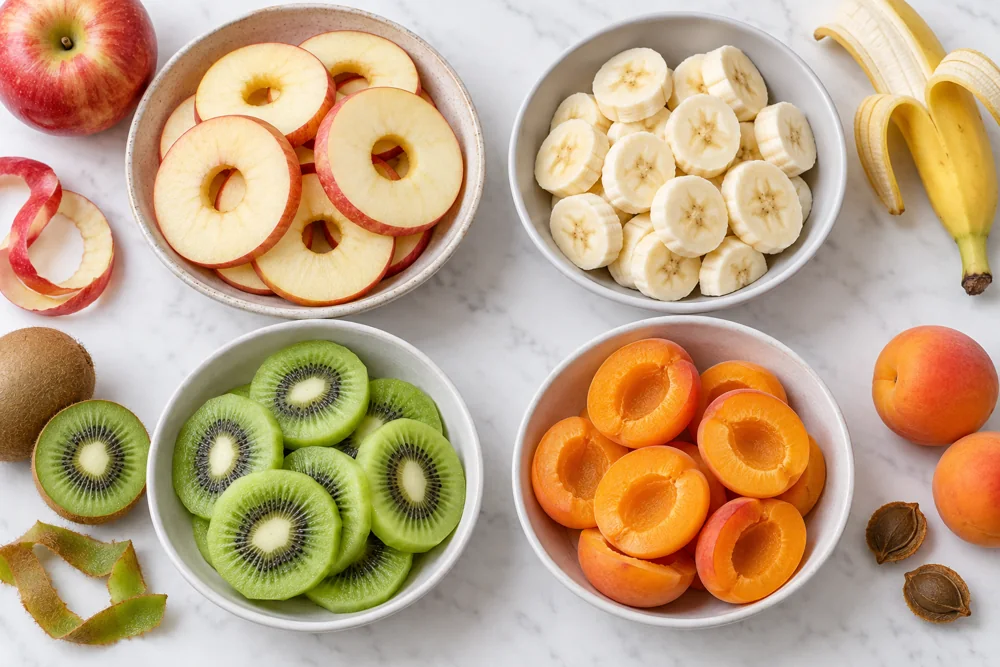
Illustration of four prepared fruit forms. Each needs its own process and endpoint assessment.
Bananas require a clear maturity range because softness and surface behavior can change rapidly as the fruit ripens. Peel them and choose a cut that can be transferred to trays without smearing or breaking. Thin rounds may dry differently from long strips, so keep the form consistent during comparison. Browning control and tray release are practical concerns, especially when a sweeter, softer lot creates a sticky surface. A commercial banana chip may also have been fried, sweetened or otherwise processed. Check the actual ingredient and process description before using such a product as the reference for a hot-air-dried banana slice.
Kiwi slices bring a different combination of acidic flavor, small seeds and a contrasting pale center. Decide whether the final product should retain this recognizable cross-section or become a smaller inclusion. Peeling and consistent transverse slicing make the comparison easier, but the selected maturity still affects handling. A very soft kiwi slice may lose its outline during transfer. Evaluate tartness after drying and in the finished application; a piece that is agreeable in a sweet cereal blend may seem much sharper when eaten alone. Avoid assuming that a kiwi requires the same pretreatment as a browning-prone apple solely because both are sliced fruit.
Apricot preparation begins with reliable pit removal and a defined fruit form. Halves have a curved surface and a thicker region that can create a different drying path from uniform slices. Record whether halves are opened out, divided further or kept intact for appearance. Do not mix forms in the same trial and average their results. The orange color of a commercial dried apricot can also depend on its treatment, so a bright retail sample may be an unsuitable reference for an untreated formula. Ask for the process and ingredient declaration before converting a visual preference into a purchasing requirement.
| Fruit | Preparation focus | Main observation after drying | Frozen alternative to evaluate |
|---|---|---|---|
| Apple | Core removal and consistent ring or slice thickness | Flexible bite or crisp fracture; peel toughness | Confirmed frozen cut in a moist filling |
| Banana | Peel, maturity and handling of soft rounds | Browning, stickiness and tray release | Frozen pieces for blended or cooked use |
| Kiwi | Peel and intact transverse slices | Tartness, seed texture and recognizable center | Frozen fruit in an appropriately balanced blend |
| Apricot | Pit removal and thickness of halves or slices | Thick-center dryness and color | Frozen pieces for a cooked fruit preparation |
Treat this comparison as a way to choose the next test rather than a common processing schedule. Each fruit may need a separate load and endpoint assessment, even when all four will later appear in one blend. If a mixed pack is the final product, first approve the components separately and then evaluate their behavior together in the actual package. Moisture can redistribute between ingredients after blending, changing texture. The most attractive sample on the day of packing may not remain the preferred combination through the intended storage period and opening pattern.
Choose a pretreatment that fits the ingredient declaration
Cut apple tissue can brown before drying begins, so preparation time and the selected treatment belong in the process record. An ascorbic-acid treatment can help control browning when used according to an appropriate documented method. Specify the food-grade material, solution preparation, contact time and drainage procedure rather than relying on an informal description such as a vitamin dip. Household guidance may offer practical alternatives, but a commercial team needs to approve the method for its own formula and market. Treatment choice also affects how ingredients and processing aids are reviewed for the product declaration.
The untreated reference is useful in a controlled development trial because it shows what the treatment changes under the same conditions. Compare color after the same delay, after drying and after the planned storage evaluation. Keep lighting and sample thickness consistent. A pale sample immediately after treatment does not establish the finished color. Nor does a browning treatment create a general food-safety clearance. Ingredient acceptance, hygiene and the validated process still need their own controls. This separation prevents a visual improvement from being mistaken for proof that the entire preparation is suitable for commercial release.
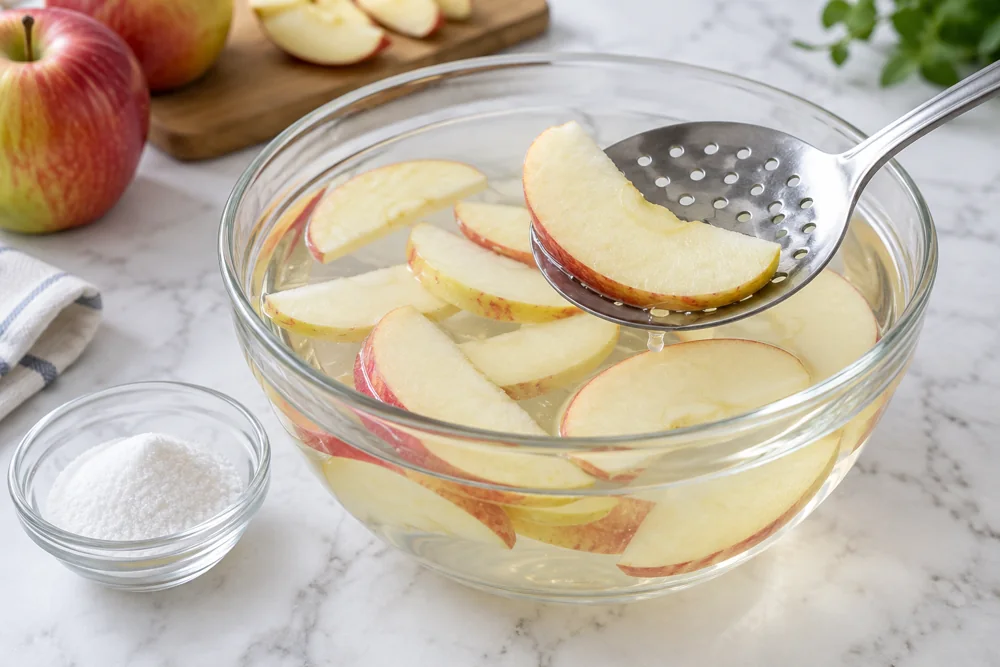
Illustration of a browning-control treatment. Use the documented food-grade ingredient, concentration, contact time and drainage method.
Syrup treatment changes more than appearance. Added sugars can affect sweetness, surface stickiness and the texture the consumer experiences. A syrup-treated fruit can therefore be useful for a deliberately sweetened application, while being unsuitable for a formula intended to contain no added sugar. Ask how much material is taken up, how the fruit is drained and what the finished declaration requires. Comparing syrup-treated and untreated slices by incoming fruit weight alone can obscure the added solids. Record the treatment as part of the formulation, and assess the cost and eating quality of the finished accepted ingredient.
Sulfite decisions deserve specific supplier and market review when relevant to a dried-fruit comparison. Do not assume that all dried apricots or apple slices use the same treatment, or that a particular bright color proves its presence. Obtain the ingredient declaration and appropriate supporting information. A brand may choose to exclude sulfites from a programme, while another specification may permit a defined treatment subject to applicable requirements. The production team should work from that decision before running trials. Copying a retail product's appearance without knowing its treatment can create an unattainable or incorrectly declared development target.
Pretreatment can also change loading behavior. Surface liquid must be handled consistently so one tray does not begin with substantially more free water than another. Record the drainage method and avoid squeezing or damaging soft slices in an attempt to speed the process. If a treatment softens the fruit enough to make transfer difficult, that practical loss belongs in the evaluation alongside color. A process that produces beautiful intact pieces in a carefully handled laboratory sample may deliver too many broken pieces when transferred through the intended line. Include handling tests early enough to influence the chosen cut and treatment.
For a buyer comparing dried and frozen apples, request the frozen product's own treatment information. A frozen apple specification may include an approved browning-control treatment or a particular peel and cut status. That information cannot be inferred from a photograph. Our guide to freezing apples explains the frozen-format background, including texture and treatment questions. When frozen pieces are proposed for subsequent drying, the previous preparation becomes part of the new process. Confirm it before attributing a color or texture difference to the dryer alone, and keep both stages visible in the trial record.
Check cooled slices, condition the batch and protect it
Evaluate pieces after cooling under the documented method because warm fruit can give a misleading impression of softness and surface moisture. Select pieces from different tray positions and include the thickest part of the approved cut range. The target may be a pliable slice or a crisp chip, but both require attention to the interior. A dry-feeling surface does not establish that moisture is evenly distributed through a thick piece. Break or cut representative pieces where the test method requires it, and record the observation alongside the process settings that produced the sample.
Case hardening describes a situation in which the outside dries and firms while moisture removal from the interior becomes difficult. Simply increasing temperature to shorten a slow batch can therefore produce an unsatisfactory result. The practical response is to review the cut, loading, airflow and suitable process conditions rather than judge the batch by its surface alone. A visibly moist interior is a reason to investigate. The illustrative image shows why a cut surface can provide information that a whole-slice photograph misses; actual acceptance still depends on the approved measurement and sampling method for the particular product.
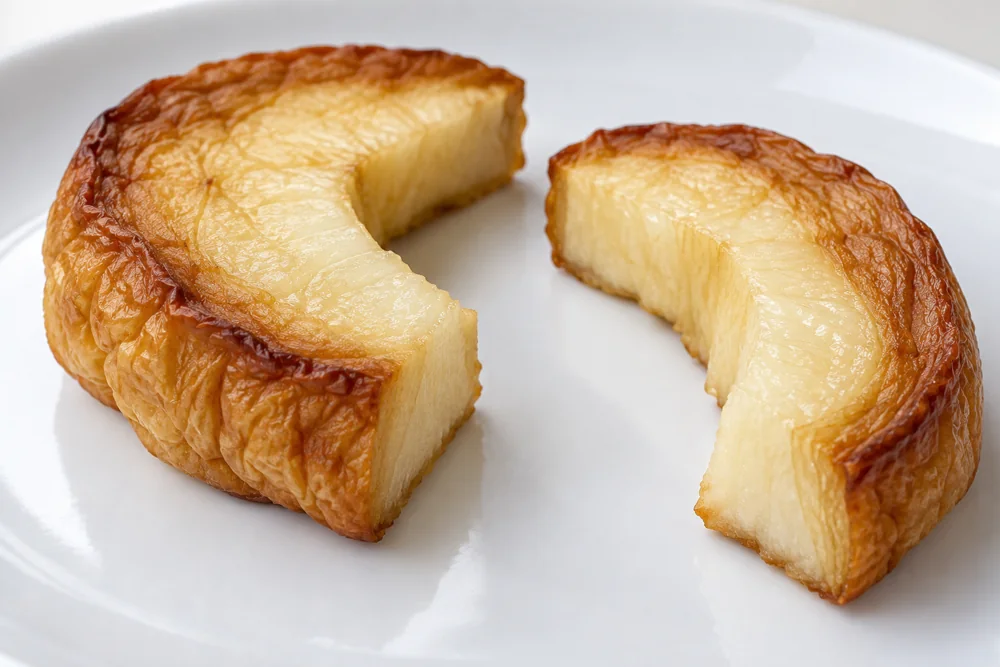
Conceptual cutaway of uneven drying in a thick cored apple piece, not a recommended cut thickness or accepted sample. Actual dryness requires the selected sampling and measurement method.
Conditioning is used in home fruit-drying guidance to allow remaining moisture to redistribute among pieces and reveal uneven drying. Follow the relevant tested instructions, including checks for condensation and the specified response when drying is inadequate. The University of Missouri dehydration guide explains general preparation and storage principles. In commercial production, a conditioning or equilibration step needs its own defined loading, duration, environment and release criteria. A sealed container is a tool in a method; its presence does not itself prove that the contents meet a safe or stable endpoint.
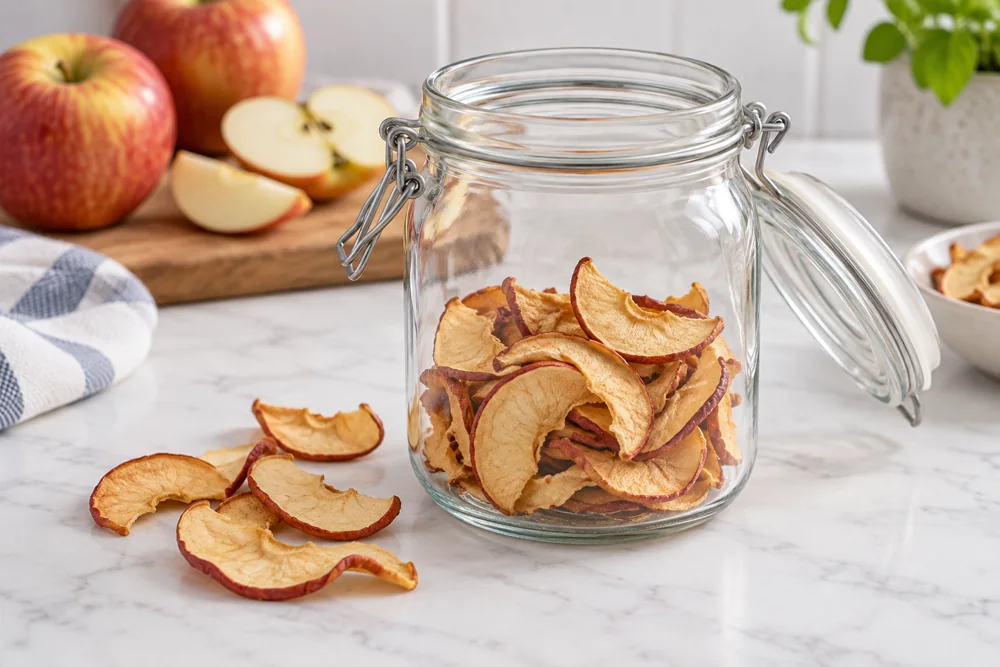
Illustration of loose packing before closing the jar. Follow the tested conditioning method and inspect for moisture; this open jar is not a storage recommendation.
Moisture content and water activity answer related but different questions. A commercial specification should identify which measurement is needed, the method, sample preparation and acceptance limit appropriate to the actual product and market. Do not copy one numerical limit across apple chips, chewy banana slices and apricot halves simply because all are dried fruit. Their composition, intended texture and package can differ. When developing a programme, use qualified technical support to connect the product's process, microbiological considerations and storage plan. A sensory dryness check remains useful for eating quality, but it cannot substitute for every required analytical control.
Packaging must protect the approved product from gaining moisture during its intended life. Evaluate the actual material, closure and pack size under the expected storage and distribution conditions. Crisp products may reveal moisture pickup through loss of crunch, while chewy products can become sticky or clump. Opening frequency matters as well: a large catering pack repeatedly opened in a humid preparation area has a different use pattern from a single-serve sachet. Record the storage instructions and test the package as customers will use it. A strong barrier film offers little benefit if the closure or sealing process is inconsistent.
Keep batch identity through cooling, conditioning and packing. If material from several dryer loads is combined, retain the relationship between those loads and the finished pack lot. The release record should make it possible to investigate a complaint about soft pieces, clumping or discoloration without guessing which production conditions applied. Set the sampling plan before release, include retained samples where appropriate and define what triggers a hold. Finished-product shelf life belongs to the validated formula, process and package; a generic online storage period should not become the date code for a commercial product.
Compare dried slices with frozen fruit in the actual recipe
Dried slices and frozen fruit solve different formulation problems. Dried material offers a concentrated fruit component with less water, while frozen pieces retain a much larger share of the fruit's original water. The useful choice depends on whether the recipe needs a dry inclusion, a moist fruit piece, a blended base or a cooked preparation. Compare them in the finished food and account for water and solids explicitly. A kilogram-for-kilogram substitution can change sweetness, texture, distribution and yield even when both products are made from the same named fruit.

GreenLand-food frozen apple dice photograph. Dice suit a different form specification from rings intended for dried chips.
If dried apple is used in a moist recipe, examine how it takes up liquid and how that affects the surrounding food. The time between mixing and consumption may change the bite considerably. A piece that remains hard after a short mixing step may soften during a longer hold; a crisp topping may lose its intended contrast. Test at the actual process and serving intervals. For frozen apple, measure released liquid under the intended thaw or cooking route and include it in the recipe decision. Draining it changes both water balance and the amount of fruit-derived material retained.
Starting a drying trial with frozen fruit adds another variable. Confirm the fruit's cut, treatment and intended-use instructions, then establish whether the proposed route loads it frozen, partially thawed or fully thawed under controlled conditions. Record any collected drip and the condition of the slices. Freezing can alter structure and handling, so an already-soft slice may be harder to transfer intact. The best route needs a measured pilot on the actual material. A home-dehydrator time developed for fresh slices does not establish the schedule or yield of a commercial process using a frozen input.
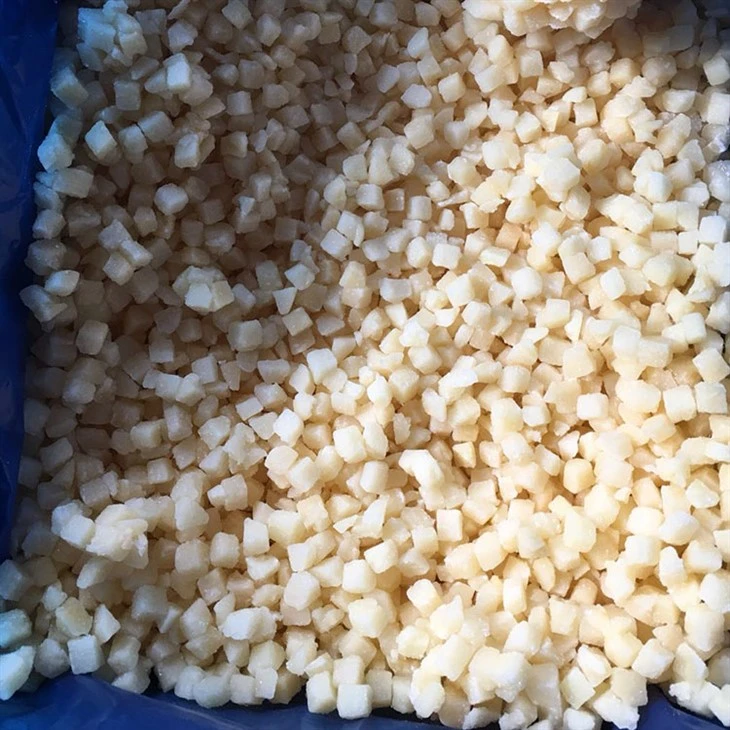
GreenLand-food product photograph showing apple cubes in a bulk liner. Confirm the actual cut and treatment before a recipe or drying trial.
The GreenLand-food frozen apple range is relevant when a buyer needs a frozen ingredient for fillings, fruit preparations or other suitable uses. Confirm the available cut instead of assuming that a photograph of dice represents slices for chips. A sourcing enquiry should state the application, peel and core requirements, cut dimensions, acceptable broken pieces, browning-control requirements and the intended processing step. Include packing, volume and destination so the sample discussion is connected to a feasible commercial order. If an exact form is unavailable, evaluate the implications before accepting a substitute.
For a mixed-fruit programme, approve each input against the finished product rather than relying on a broad fruit category. Banana maturity, kiwi acidity and apricot form can change the formula in ways that an apple-led trial will not reveal. Existing frozen banana guidance can support the frozen-format discussion, while each drying route still needs its own endpoint. Compare cost per accepted batch or serving after trim, drying, drainage and handling losses. This makes the price comparison relevant to what the production line actually delivers.
The final decision should leave the next operator with a clear target: the fruit and cut, treatment, loading method, endpoint, sampling procedure and package. Preserve the approved reference and document changes that require another trial. If the application works better with frozen pieces, carry the corresponding thaw or direct-cook instructions into the recipe and specify the supplied form. If dried slices are selected, base release on the approved drying and packing process. Either choice becomes easier to repeat when the records describe the physical product the customer needs and the conditions under which it must perform.
Source frozen apple with GreenLand-food
GreenLand-food is a professional frozen apple supplier and manufacturer in China, providing factory-direct wholesale supply for importers, food manufacturers, foodservice distributors and private-label programs.
Send the product form, cut or size, application, packing, quantity, destination and requested documents. We will use these details to discuss the appropriate frozen ingredient and sample requirements.