


What Is Mulberry Molasses? Pekmez and Frozen-Fruit Processing Choices
Sep 27, 2026
Leave a message

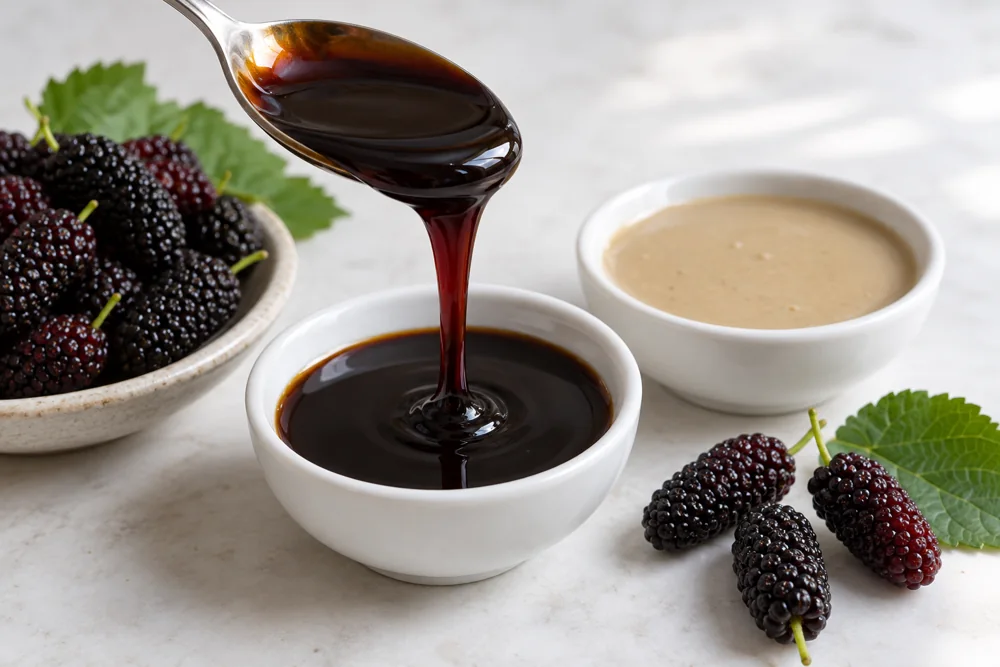
For a processor considering frozen mulberries, the useful starting point is a measured juice-recovery trial. Confirm the fruit identity, collect the released juice, document every added ingredient and follow the fruit solids through pressing and concentration. Then judge flow, flavor and the approved storage process independently. A thick spoonful provides a useful sensory impression, but it cannot establish purity, heat quality or shelf stability. GreenLand-food supplies the frozen fruit input; the condiment manufacturer must approve the formula and finished-product process for its own market and equipment.
Understand the ingredient behind the name pekmez
Pekmez belongs to a wider group of concentrated fruit products. Mulberry identifies the fruit source, while the particular formula and processing method determine the product delivered. A pure mulberry juice concentrate, a sweetened mulberry syrup and a blended fruit condiment can all be dark, sweet and pourable. Their similarity on a plate makes the ingredient record especially useful. A developer should ask whether the declared fruit percentage refers to incoming whole fruit, recovered juice, concentrated juice or the finished blend. These are different measurement bases and can produce very different purchasing comparisons.
The relationship to cane molasses is mainly one of familiar English naming and appearance. Cane molasses arises during sugar manufacture; mulberry pekmez concentrates fruit juice. That distinction matters when a recipe calls for molasses because sweetness, flavor, acidity and dissolved solids will differ. Replacing one with the other requires a recipe trial. A bakery may welcome a dark fruit note, while a sauce may become too sweet or develop an unexpected acidic finish. Equal spoon volumes do not establish equal solids, and equal solids do not establish equal sensory performance in the finished food.
Current recipe results illustrate why the name needs clarification. Forager Chef's mulberry recipe includes sugar, whereas a commercial pekmez listing describes a pure-fruit product and separately acknowledges sweetened versions. These are different formulation choices rather than a single specification. We would therefore record the complete ingredient declaration before discussing a frozen fruit sample. A customer seeking a pure-fruit concentrate needs a traceable fruit-solids calculation. A customer developing a sweetened condiment needs the same transparency about the type and amount of sweetener, even when the final flavor is intentionally similar.
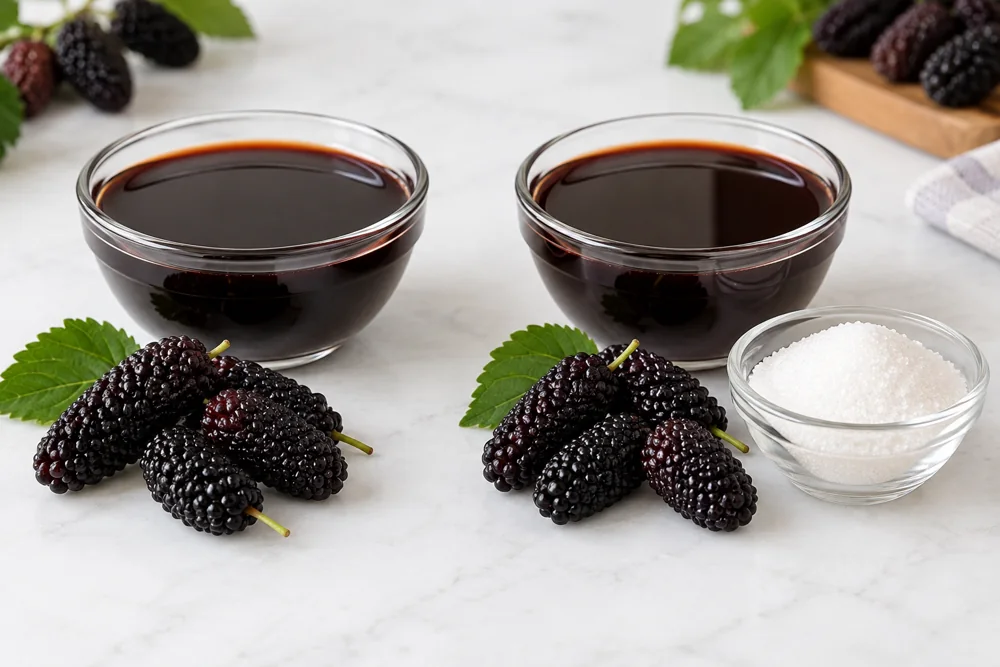
Illustration: similar-looking dark syrups can have different ingredient declarations. Check the formula before comparing samples.
Traditional use gives a sensible place to begin sensory testing. Tahini supplies fat, body and a roasted sesame character that changes the impression of sweetness. Plain yogurt adds acidity and a lighter background against which mulberry flavor is easier to recognize. A developer can compare both uses at recorded doses, using the same tahini or yogurt batch. This is more informative than tasting several concentrates directly from a spoon, where high sweetness and viscosity can overwhelm differences. Include the actual serving temperature because a refrigerator-cold concentrate will flow differently from a warm kitchen sample.
Product identity also affects communication with the customer. If sugar or another fruit is added, the specification and market-facing name must describe the formula accurately under applicable local requirements. A high refractometer reading is consistent with a concentrated product but cannot distinguish fruit-derived sugar from an added sugar solution. An authenticity concern therefore needs traceability and an appropriate analytical approach selected for the suspected addition. Do not promise that one routine quality measurement can answer every identity question. The test method should address the actual purchasing risk and the matrix submitted to the laboratory.
Keep nutritional claims separate from ordinary culinary use. Concentration changes the amount of sugar and other constituents delivered per spoonful, and a research paper's mineral result describes its tested material. It does not establish the nutrient profile of another crop or the health effect of a serving. Claims about treating anemia, preventing diabetes or providing a medical benefit are outside a normal ingredient trial. If a brand wants to make a permitted nutrition claim, it needs the appropriate product analysis and market-specific review. The practical reason to choose mulberry concentrate remains its contribution to the food being formulated.
Choose a mulberry lot for recovered juice
Begin with botanical identity when it is material to the intended product. Dark fruit is an appearance description and does not by itself prove Morus nigra. Some regional pekmez research uses white mulberry, while a frozen catalogue may describe dark or black mulberries without committing to the same species or cultivar. Ask for the actual raw-material identity and approved alternatives. Then compare maturity, soluble solids, acidity and sensory character. Two visually similar lots can produce different juice volumes and different flavor after concentration. Our existing mulberry flavor guide develops the taste and maturity background.
Whole-fruit price can obscure the cost of usable concentrate. Incoming fruit includes the portions that remain in press cake or on a screen, as well as the water later removed. A lower-priced lot with weaker juice recovery can become more expensive per kilogram of accepted concentrate. Conversely, a broken-fruit tolerance that is unsuitable for a visible dessert inclusion may be acceptable for a juice process if all safety and defect criteria remain satisfied. Approve the processing grade against the intended extraction method. Fermented, moldy or otherwise unsuitable fruit cannot be made acceptable by describing it as a processing grade.

GreenLand-food product photograph of whole mulberries. This fresh-looking view shows fruit identity and shape, not the condition of a delivered frozen lot.
Define the thaw and recovery method before comparing suppliers. Record the frozen sample mass, product temperature, container, thaw conditions, retained liquid and any drainage. If the process keeps the thaw juice, include it in the measured recovered stream. If the process removes it for a specific reason, measure that loss and assess what the removed liquid contains. Simply discarding drip from one sample while retaining it in another biases both yield and flavor. Freezing can alter tissue structure and juice release, so a trial with fresh berries does not establish the performance of the corresponding frozen input.
Use a pilot large enough to expose the behavior of the intended press or screen, while maintaining the approved food-handling controls. A hand-squeezed cloth trial and a mechanical press may apply different pressure and recover different amounts of suspended material. That changes apparent yield, mouthfeel and subsequent fouling during concentration. Record screen aperture or the relevant filtration specification, applied pressure where controlled, and the time allowed for drainage. A photograph of the equipment can support the record, but the method description needs enough detail for a second operator to repeat the trial without improvising.
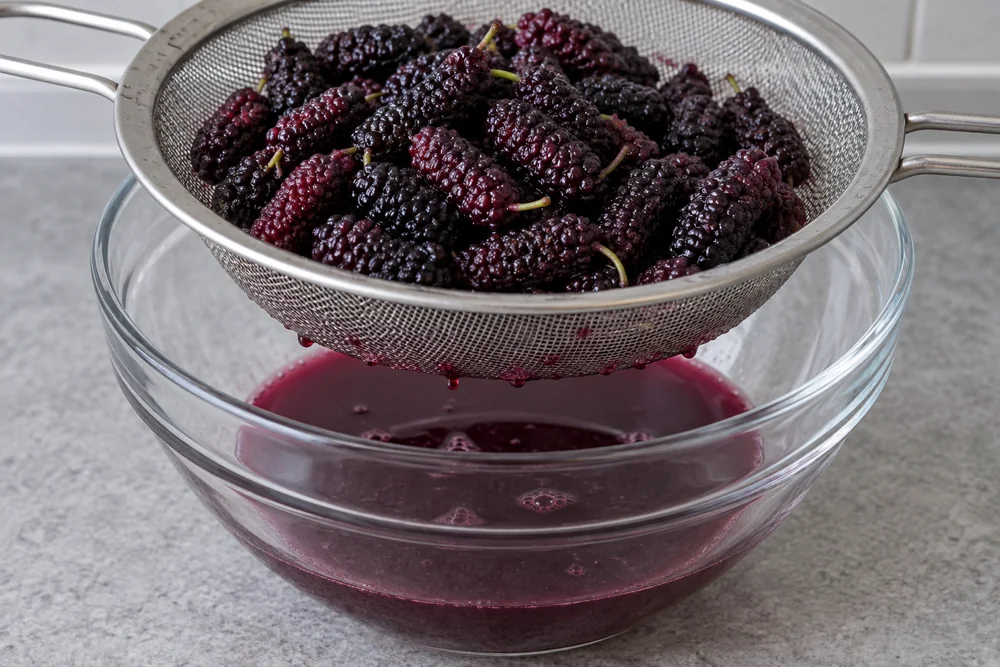
Illustration: collect and measure released juice when the proposed process retains it. Use controlled thaw conditions for the actual trial.
Sampling matters because a carton is rarely perfectly uniform. Take the agreed representative sample and retain its lot identity through thawing, extraction and concentration. Record visible stems, leaves, foreign matter, damaged fruit, clumping and excessive loose ice against the written specification. Do not let a laboratory aliquot of clean juice replace the receiving assessment of the fruit lot. The two records answer different questions. If the concentrate sample is approved, preserve the relationship between that sample, its input lot and the processing conditions so that a later commercial shipment can be assessed on the same basis.
For a frozen mulberry enquiry, we can review the available whole-fruit form, crop programme, packing and relevant documents with your purchasing team. The frozen mulberry supply page provides the commercial starting point. Juice recovery, final condiment viscosity and a customer's pekmez shelf life remain application results that require confirmation. Ask for a representative sample early enough to run the full process before fixing the purchase specification. A useful sample approval includes both the frozen-fruit checks and the resulting product, because either alone leaves part of the decision unresolved.
Balance fruit solids through concentration
Concentration removes water and increases the proportion of dissolved material, but losses occur before and during that step. Write down the mass of recovered juice entering the concentrator, its soluble-solids reading, every ingredient addition and the final product mass. Record retained material in the press, filtration residues, transfers and samples. A mass balance need not be elaborate to reveal a problem. If the final concentrate yield differs substantially between trials, the record helps locate whether the cause was fruit composition, extraction, evaporation or handling loss. Without this record, a higher yield can be mistaken for better fruit performance.
As a planning estimate, juice mass multiplied by its soluble-solids fraction gives an estimate of dissolved solids entering the process. If those solids were fully retained and nothing were added, dividing that amount by a chosen final solids fraction estimates the final concentrate mass. Treat this as an engineering estimate with stated assumptions. Refractometric Brix is a sucrose-equivalent reading in a mixed fruit system, and suspended material or the measurement procedure can affect interpretation. Actual trial mass and the chosen analytical method remain necessary. The calculation helps investigate an observation; it does not replace the observation.
Consider an explicitly hypothetical trial with 10 kilograms of recovered juice measured at 12 percent soluble solids. The simplified calculation gives 1.2 kilograms of initial soluble solids. At a hypothetical 60 percent endpoint, perfect retention would imply 2 kilograms of concentrate before handling losses. These numbers are an illustration of the calculation, not a proposed pekmez specification or a GreenLand test result. If sugar is added, its contribution must enter the calculation separately. The apparent output mass can rise while the amount of mulberry-derived solids stays the same, changing both cost and the formula's declared identity.

Illustration: a reducing pan and separate spoon sample. Measure the process and cooled product; visual thickness is only one observation.
Open-kettle concentration and reduced-pressure evaporation expose the juice to different heat conditions and equipment behavior. The appropriate choice depends on the desired flavor, available line, validated process, throughput and cleanability. A short pilot can show whether a particular kettle creates the intended cooked-fruit profile, but it may not reproduce the residence time and heating surface of a larger batch. Record the actual time and temperature history, agitation, loading and endpoint procedure. Where a reduced-heat route is available, compare finished material on equal analytical and sensory terms rather than assuming the equipment name guarantees a better product.
IQF describes how the raw fruit is frozen. Vacuum concentration describes a later removal of water by evaporation under reduced pressure. Freeze concentration removes water through ice formation and separation. These operations have different purposes, material streams and practical constraints. A purchasing discussion should name the operation being proposed and identify which company performs it. Supplying IQF fruit does not establish that the supplier manufactures a vacuum-concentrated syrup. Equally, a favorable research result from one concentration method does not validate another line. Keep the frozen ingredient specification and the finished condiment process connected through the pilot record.
For production costing, include the concentrate left on vessel walls, in transfer lines and in the filler. Increasing viscosity can make these losses more noticeable and can change pumping or dosing behavior. Collecting one excellent spoon sample near the end of a batch says little about recoverable saleable output. Measure the mass that reaches the approved package and the time required to handle it. If a more concentrated product is diluted again for the final application, evaluate whether the extra concentration step creates a useful logistical benefit or simply adds heat, handling and cost to the particular production plan.
Measure flow and heat quality separately
Thickness is useful only when the measurement conditions are known. A syrup that pours readily while warm may become difficult to dose after cooling. Compare samples at a stated temperature with a consistent method, whether a specified viscometer procedure or a clearly described application flow test. Record the sample preparation, waiting period and measuring equipment. If the product contains suspended fruit material, mixing and settling can affect the result. A meaningful acceptance range belongs to that method and intended use. It should not be copied from a paper that tested different fruit, equipment or temperature conditions.
Flavor and color add information that a single flow measurement misses. Concentration can intensify fruit character while heat changes its aroma and appearance. A darker sample may reflect raw-material pigments, greater concentration, a different species, storage history or heat exposure. Color alone cannot prove either authenticity or overheating. Use a fixed lighting condition for photographs and compare a sample against an approved reference at the same solids basis. Include a diluted tasting condition as well as the concentrate itself when the final use is a beverage, yogurt or sauce, so that the evaluation reflects how customers will encounter it.
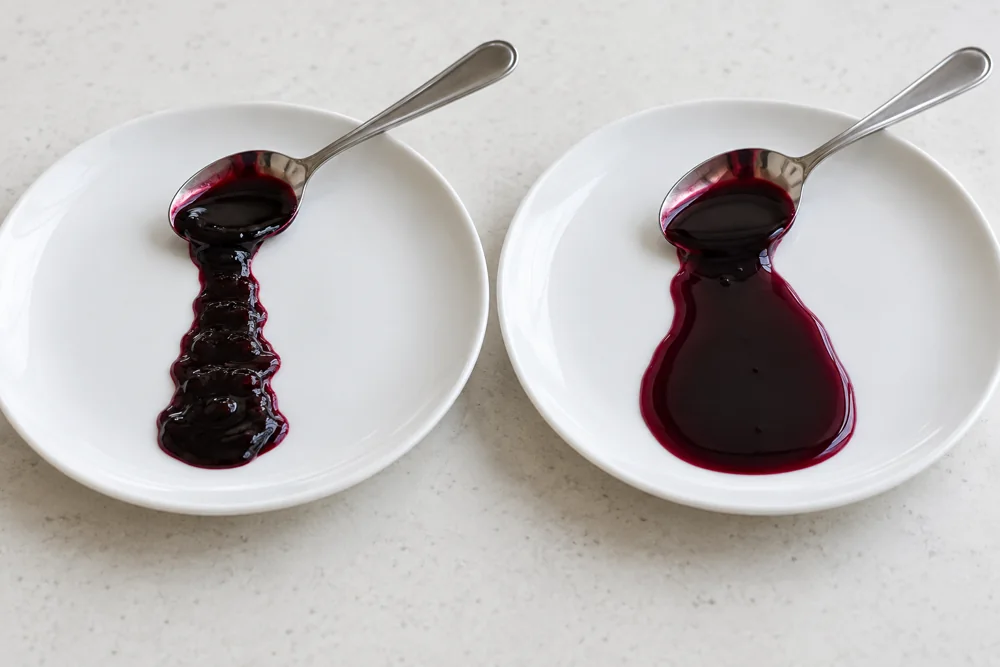
Illustration of different flow behavior. Use the same sample temperature and observation method in an actual comparison.
Hydroxymethylfurfural, often abbreviated HMF, is one analytical parameter reported in pekmez research. It can contribute to a heat-quality discussion, but its interpretation requires the product matrix, method and applicable specification. The Erzincan mulberry pekmez study reports variation across sampled products, illustrating why a single published result should not become a universal acceptance threshold. A buyer requesting HMF analysis should identify the laboratory method, reporting units and contractual basis. Historical study references to standards require a separate current check before being treated as binding requirements for a destination market.
The Tortum Bagbasi study provides a regional example of a measured pekmez product. Its specific soluble-solids, pH and HMF findings describe that sample and process. They do not certify a new frozen dark-mulberry formula. This limitation is useful in development: it directs the team to measure the actual product instead of trying to reproduce an isolated number from the literature. Choose the tests because they answer a defined question about your process or customer's specification, and retain the results with the batch formulation and processing record.
Sensory rejection and analytical rejection should be written separately. A batch may meet its selected analytical targets yet taste too cooked for a delicate dessert. Another may taste acceptable but fail a contractual identity or process requirement. Use a clear disposition system so a favorable tasting result cannot override a failed required check. When an observation is ambiguous, hold the material for the relevant evaluation. Do not use blending into another lot to conceal an unresolved failure. A controlled reformulation or rework decision needs its own authorization and traceable record within the manufacturer's quality system.
Assess the intended shelf period as part of quality development, using the exact package and approved storage conditions. Flavor, flow and color at production can differ from those at the point of use. For bulk customers, include opened-container handling and the practical frequency of dosing. A large pail repeatedly opened in a warm processing room presents a different use pattern from a single-use portion. The trial should reproduce the relevant exposure and handling, under an approved safety plan. This produces a useful product specification that describes performance through the expected use, rather than only at the factory exit.
Approve the finished condiment and its application
Begin finished-product approval with the complete formula and intended distribution. Identify whether the product will be refrigerated, frozen or shelf stable, the proposed container and closure, and the actual filling process. High sweetness, a high Brix value or a clean jar cannot independently establish shelf stability. The manufacturer needs an appropriate validated process and shelf-life basis for the exact formula and package. This is especially relevant when adapting a household recipe found online. Changing batch size, acidity, ingredients or container geometry can change the process, so a borrowed storage statement should not be carried into commercial documentation.
An application comparison is most useful when the dosage basis is stated. Equal concentrate weight answers one question; equal soluble solids answers another. A developer comparing products at equal weight may prefer the more concentrated sample simply because it contributes more solids. At equal solids, differences in fruit character, sweetness-acidity balance and color become easier to interpret. Record both the dose and the final recipe yield. If the concentrate displaces water, sugar or another syrup, record that adjustment as well. This allows purchasing to compare the cost per accepted serving rather than the price per jar.
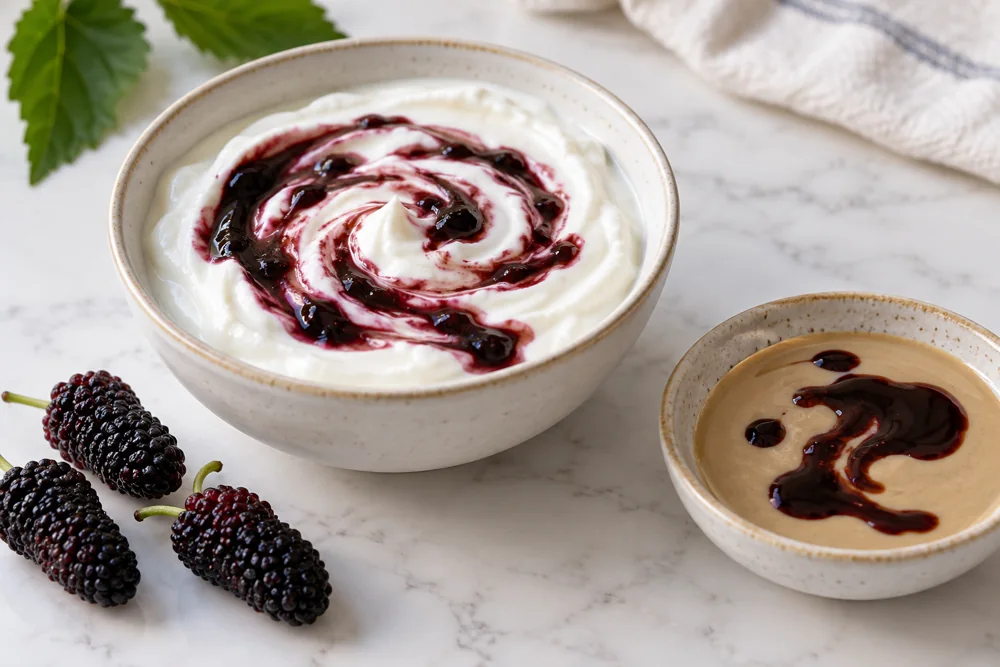
Illustrative serving tests with yogurt and tahini. Record dose and temperature when comparing fruit character and sweetness.
| Intended use | Main performance question | Trial observation |
|---|---|---|
| Tahini accompaniment | Does the dose balance sesame intensity and sweetness? | Mixing behavior and flavor at serving temperature |
| Yogurt preparation | Does fruit character remain clear after dilution? | Color, flavor and any separation during the approved hold |
| Bakery formula | How does the syrup change water and sugar balance? | Batter handling and finished texture in the actual bake |
| Beverage base | Can the concentrate disperse at the intended dilution? | Sediment, flow and sensory balance after mixing |
For a commercial pilot, keep a retained frozen input sample where appropriate, the raw-material specification, ingredient batch references, recovery record, processing record and finished-product test results. Include the method used for each measurement. Photos should show the actual samples and conditions, with clear batch identification in the private record. A development document can then connect a sensory decision with an order specification. If the crop or approved substitute changes, the team knows which parts of the trial need to be repeated, instead of treating a previous approval as proof of every future lot's behavior.

GreenLand-food frozen mulberry photograph. Lot identity, recovery and defects still require the agreed sample and specification checks.
GreenLand-food can help your purchasing team define the frozen mulberry enquiry around product form, maturity, required documents, packing and destination. Tell us that the fruit is intended for juice extraction and concentration, because that changes the useful sample discussion. Specify whether whole-fruit appearance has commercial value in your process or whether the agreed processing form is more appropriate. Ask for the available crop and lead time against the actual order rather than assuming a standard calendar guarantees stock. The final agreement should state the frozen ingredient supplied and the checks required before dispatch and on receipt.
Approval should end with an operational instruction that a production team can follow: which fruit lot or specification is accepted, which ingredients may be added, how yield and concentration are recorded, which flow and quality checks apply, and who approves the finished storage process. This gives the condiment its defined identity and makes later troubleshooting possible. When the next sample behaves differently, the record helps distinguish a raw-material change from a process change. That is the practical bridge between an appealing spoonful of mulberry pekmez and a repeatable ingredient for a food business.
Source frozen mulberry with GreenLand-food
GreenLand-food is a professional frozen mulberry supplier and manufacturer in China, providing factory-direct wholesale supply for importers, food manufacturers, foodservice distributors and private-label programs.
Send the product form, cut or size, application, packing, quantity, destination and requested documents. We will use these details to discuss the appropriate frozen ingredient and sample requirements.