


Pea Puree from Frozen Peas: Choose Texture, Color and Final Use
Sep 27, 2026
Leave a message

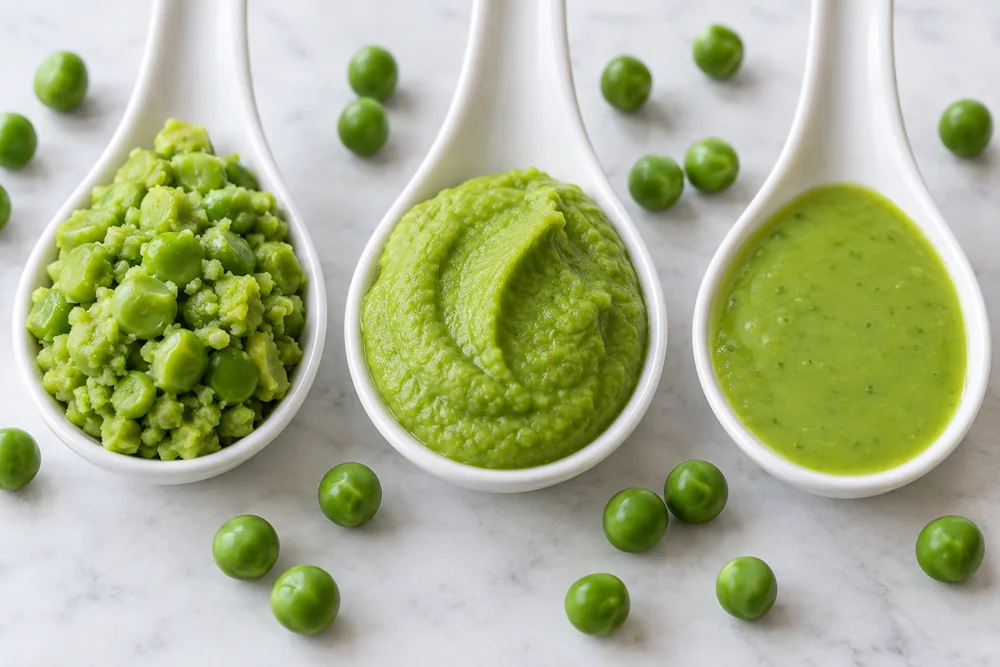
Those outcomes depend on more than a blender setting. Pea maturity, cooking, drainage, added liquid, fat, screening and subsequent holding all affect the result. A recipe that works with one retail bag or one small appliance may need adjustment for a foodservice pack or a prepared-meal line. We help purchasing teams connect the frozen pea specification with the finished application. The useful approval record follows the same peas from the frozen sample through cooking, blending and serving, with both yield and eating quality recorded at each relevant stage.
Set the texture for puree, mash or sauce
Start by describing how the preparation should behave on the plate or in the recipe. A coarse mash contains visible pea pieces and may suit a rustic side dish. A smooth puree should spread or hold a mound without unpleasant skin fragments. A sauce should pour or coat the intended food evenly. These are practical differences that a cook and a buyer can recognize together. The word smooth alone is insufficient: it can describe both a thick puree and a very fluid sauce, although they require different amounts of liquid and perform differently during service.
Use the actual serving temperature when defining the reference. A sample assessed directly after blending may flow differently after cooling and reheating. Fat can also change its behavior across those conditions. Test a recorded portion on the intended plate, spoon or production depositor, and allow the same observation period before comparing samples. A puree that looks neat immediately after spooning may spread or release liquid while the rest of the meal is being plated. The useful target is the texture at the point of consumption and under the real service conditions, rather than a photograph taken at the easiest moment.
The pea's identity should remain clear in the flavor as well as the color. Dairy, stock, oil, mint or other additions can be appropriate, but each changes the finished formulation. A strongly flavored stock may make it harder to compare pea lots. Begin a supplier trial with a simple standardized preparation, then assess the selected ingredient in the complete dish. This creates two useful views: the plain sample exposes differences in the peas, while the application sample shows whether those differences matter to the customer. Keep both results instead of allowing seasoning to obscure an unsuitable input.

GreenLand-food green pea photograph. Whole-pea appearance does not establish cooking requirements or finished puree texture.
| Target | Desired physical result | Main adjustment to test | Acceptance observation |
|---|---|---|---|
| Coarse mash | Recognizable tender pea fragments | Shorter mechanical breakdown | Comfortable bite and even distribution |
| Spoonable puree | Smooth body that holds a spooned shape | Controlled liquid and optional sieving | Clean edge and limited unwanted graininess |
| Pourable sauce | Continuous flow at service temperature | Measured dilution after blending | Even coating without unexpected separation |
This comparison helps resolve apparently conflicting recipes. Some culinary methods add little or no liquid, while others include cream, stock or a more generous water addition. Each may target a different texture and flavor. A no-added-liquid recipe does not prove that every blender can process every pea lot without assistance. A cream-based recipe also does not establish that cream is required for a smooth result. Identify the intended outcome, then test the actual equipment and ingredients. Treat published quantities as part of a specific recipe rather than a universal specification for pea puree.
Keep unrelated puree categories out of the approval. A preparation made from dried split peas has a different raw material and cooking behavior from a puree made from frozen green garden peas. Likewise, adding a large amount of potato creates a different formulation that should be evaluated on its own terms. Such blends can be useful foods, but they will change the intensity, color and water management of the pea component. Record any supporting ingredient explicitly so that a later production team can reproduce the selected product instead of trying to infer what made the sample feel smooth.
If several customers need different endpoints, a common cooked pea base may be convenient, but assess the branches separately. The coarse side dish may use the full cooked material, while the fine plated puree loses material at the sieve and the sauce receives additional liquid. Their yields and costs therefore differ. A purchasing specification should support the most relevant characteristics of the intended programme, and the production record should distinguish the resulting products. This prevents an acceptable sauce sample from being used as the sole approval for a thick puree that must survive depositing, chilling and reheating.
Cook the frozen peas for their intended use
Read the pack instructions and obtain the supplier's intended-use statement before choosing a preparation route. Commercial blanching is a processing step and does not automatically establish that a frozen vegetable is ready to eat. Some recipes use thawed peas with minimal further preparation, while others cook them first. That difference makes the product designation essential. A cooking requirement belongs to the actual SKU and must be met by the proposed process. A pleasant color, sweet taste or tender texture cannot independently demonstrate that the required food-safety step has been completed.
For a cooked puree, select a heating method that can treat the intended batch evenly and deliver a texture suitable for blending. Boiling, steaming and other approved methods can introduce different amounts of surface water and create different handling needs. Keep the batch load and starting condition consistent during comparisons. A large frozen block or heavily clumped bag may heat differently from free-flowing peas, and a deep container may contain colder regions after the outside is hot. Follow the validated process and equipment instructions, including any required stirring or standing step, rather than judging the batch only at its surface.
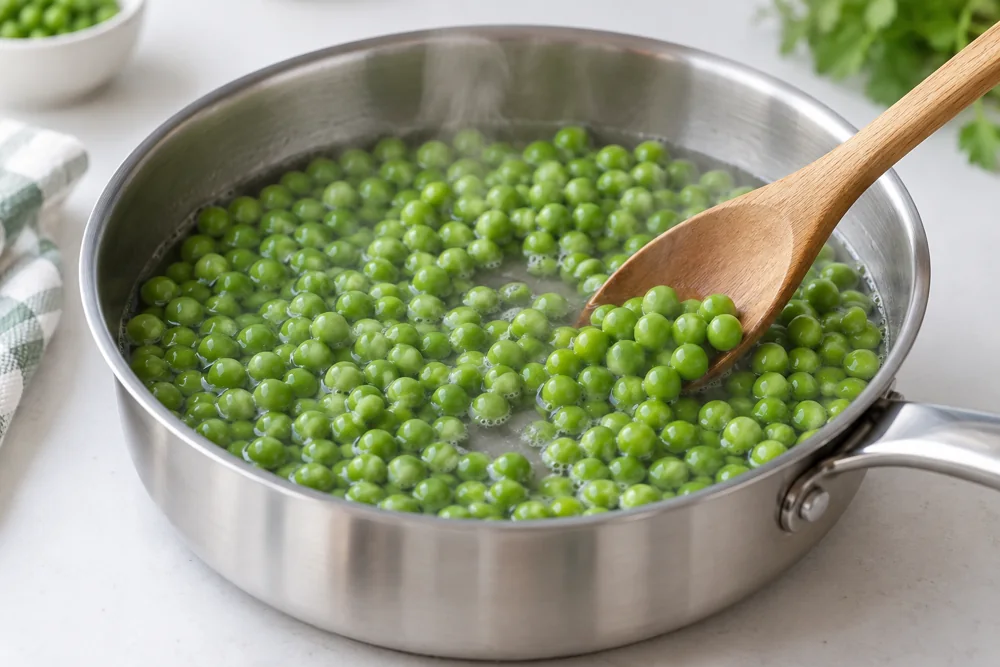
Illustration of cooking peas before blending. Follow the actual product instructions and the process required for the intended use.
The existing GreenLand guide to cooking frozen peas explains cooking methods and their texture implications. For puree development, the additional question is whether the cooked pea tissue breaks down to the selected finish without excessive extra processing. A pea can be acceptable as a whole side dish yet leave a coarse result in a fine puree. Test the cooked material in the actual blender and screen route. If the texture is unsuitable, investigate pea maturity and process conditions together instead of assuming that a longer blend will solve every problem.
Control the transfer from cooking to blending. Record whether the peas are blended hot, cooled under the approved process or held for a defined period before blending. These routes can affect both consistency and production timing. Handle hot material according to the blender manufacturer's instructions because steam and pressure can make an unsuitable container or lid hazardous. Work within the equipment's allowed batch and temperature range. A foodservice method should describe the sequence clearly enough that the next operator can follow it without deciding independently whether to seal a hot, full blender jug.
If cooked peas need cooling before later use, apply an appropriate safe cooling procedure for the business and product. The UK's food chilling guidance provides general handling principles; a commercial operation should use its own approved controls and applicable requirements. Container depth, portion size and equipment capacity affect how quickly the center cools. Avoid treating the outside temperature of a deep tub as proof that the full batch has reached its required condition. Retain the time and temperature records that the process requires and keep the lot identity visible.
Cooking should also fit the later heat exposure. A puree served immediately experiences a different overall process from a prepared meal that is chilled, distributed and reheated. The first cook cannot be considered in isolation. Evaluate tenderness, flavor and appearance after the complete approved cycle, while ensuring every required safety step remains satisfied. A development team may adjust the quality target within a validated process, but it should never shorten a necessary cooking step merely to preserve a brighter green. The appropriate goal is a process that achieves both its safety requirement and its agreed eating quality.
Control draining, blending and added liquid
Drainage is one of the simplest ways to make a puree trial more repeatable. Weigh the peas at the agreed point after cooking and draining, then record that method. A brief shake in a colander and a long rest on a fine screen will not necessarily leave the same amount of water with the peas. If one operator includes cooking liquid by eye and another drains thoroughly, their recipes can diverge before the blender starts. Record the cooked drained mass separately from the frozen input mass so that apparent yield can be interpreted correctly.
Add liquid in measured increments suited to the equipment and target texture. The first purpose is to allow effective circulation and breakdown; later additions can adjust the final flow. Pouring in the full anticipated amount at once can make correction difficult if the peas already contain enough water. Once a puree is too loose, concentrating it by further heating may change flavor and color as well as the schedule. A measured approach leaves a useful record of how much liquid the actual pea lot required and whether that amount remains practical at the intended production scale.
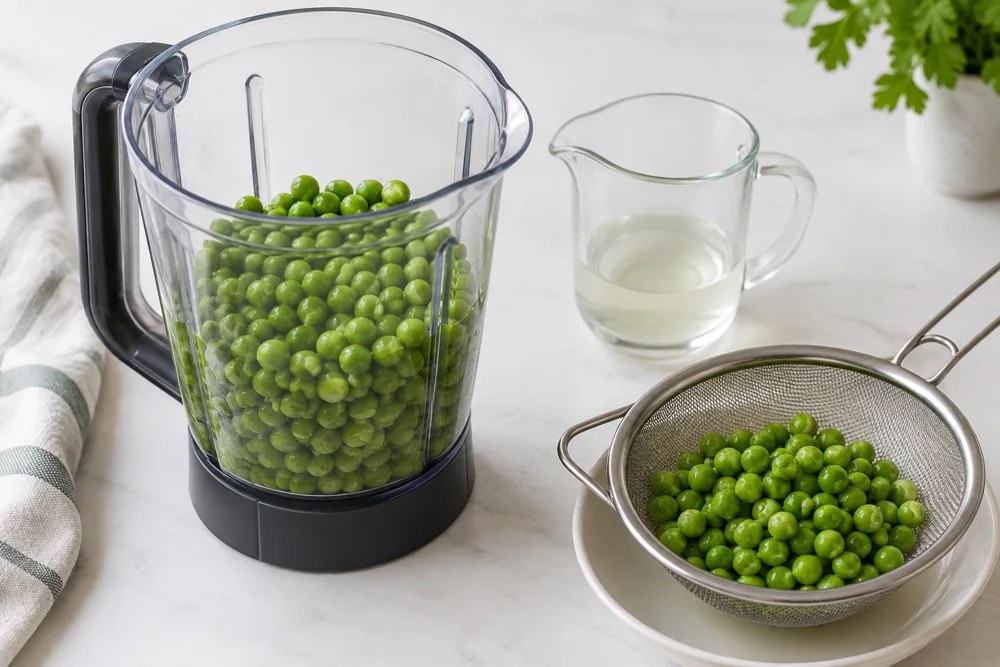
Illustration of measured liquid addition. Drain and weigh consistently before comparing puree yield.
Keep the identity of the liquid consistent. Water gives a comparatively neutral reference, while stock brings its own salt, flavor and sometimes solids. Cream changes fat content and mouthfeel, and its use introduces an ingredient that must be managed in the formulation and allergen system. A successful trial with one liquid cannot be assumed to transfer directly to another. Record the ingredient and its specification where relevant. If a recipe calls for cooking liquor, define how it is collected and used within the approved handling process, rather than leaving the operator to choose any available liquid from the kitchen.
Mechanical treatment affects texture independently of liquid addition. Blade geometry, jug shape, batch size and machine power influence circulation and particle breakdown. A small sample may circulate well in one blender but sit above the blades in another. Record the actual equipment and loading, and observe whether the mixture moves evenly. Stop and adjust only according to the manufacturer's safe instructions. Excessive blending can warm the product and incorporate air, so more time is not automatically an improvement. Compare the result against the target mouthfeel and appearance instead of selecting the longest programme as a default.
Use a simple yield record to separate what enters the process from what becomes usable puree. Record frozen pea mass, cooked drained mass, added water or other ingredients, material retained on the sieve and final accepted puree mass. If the recipe makes a sauce, record the final dilution separately. This avoids describing added water as improved pea recovery. It also gives the purchasing team a fairer basis for comparing lots: the relevant figure may be the cost of a serving that meets the texture target, rather than the price of a kilogram of frozen peas alone.
An illustrative development trial can split one cooked and drained pea batch into three equal portions. Process one as a coarse mash, one as a fine puree with measured liquid additions, and one as a sauce with a recorded final dilution. Keep the peas, seasoning and evaluation conditions consistent. Compare yield, graininess, flow and flavor in the intended uses. This is a proposed test design, not a claim about GreenLand trial results. The team can then identify whether the preferred texture comes from mechanical breakdown, screening or dilution and write the chosen method with enough detail to repeat it.
Decide what sieving and holding should achieve
Sieving can remove larger skin fragments and other coarse material that remains after blending. It is useful when the customer expects a very fine plated puree or when a particular application cannot tolerate visible particles. The screen does not create the same outcome as adding more liquid: one separates material, while the other changes the concentration of the whole mixture. Decide whether the texture benefit justifies the labor, equipment and yield loss. A rustic mash may be more appealing with recognizable fragments, so the finest possible finish is not the right target for every dish.
Specify the screen and the method used to pass the puree. Aperture, pressure, batch loading and the temperature of the material can affect throughput and what remains behind. In a kitchen, a spoon or ladle may be used; a larger line may use a different finishing system. A pilot should reflect the intended operation closely enough to expose its constraints. Weigh the retained material and record how long the task takes. A sample that is excellent after careful manual work may be impractical for a service operation if the approved output requires too much time or loses too much material.
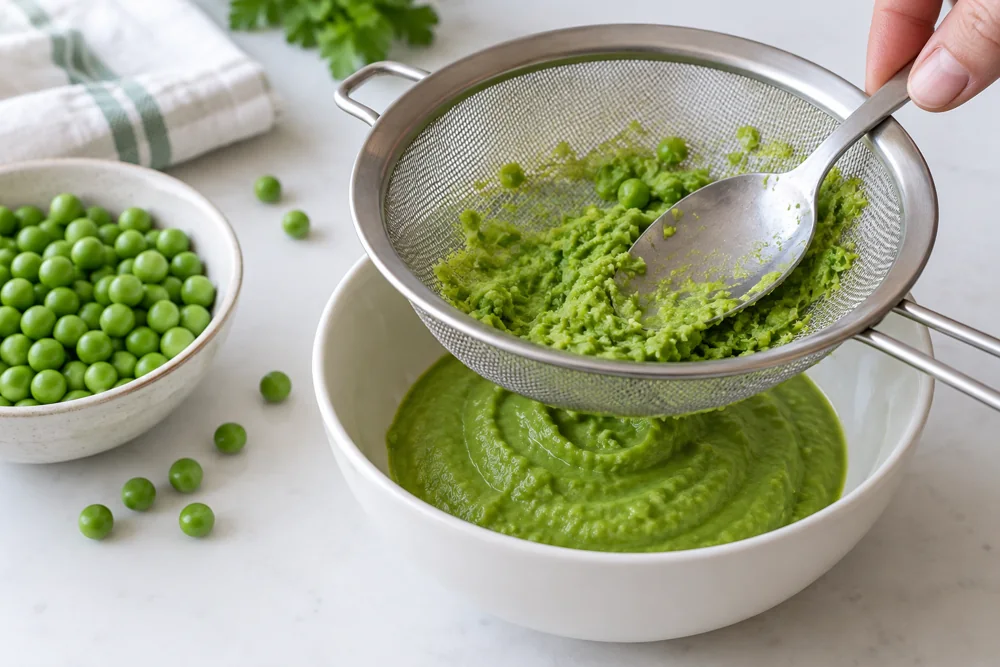
Illustration of sieving a pea mixture. Record the retained material and the accepted puree mass separately.
Color should be evaluated through the complete process, including any hold and reheat. Peas can lose their bright appearance during prolonged heat exposure, and the mixture's ingredients can also influence the result. Compare samples under the same light and temperature, with the same recipe. A photograph taken at different exposure settings can exaggerate or conceal a difference. Keep an actual approved reference where useful and record sensory observations alongside photographs. The aim is a reproducible green appearance appropriate to the dish, without promising that a particular shade can be preserved indefinitely through every production and distribution condition.
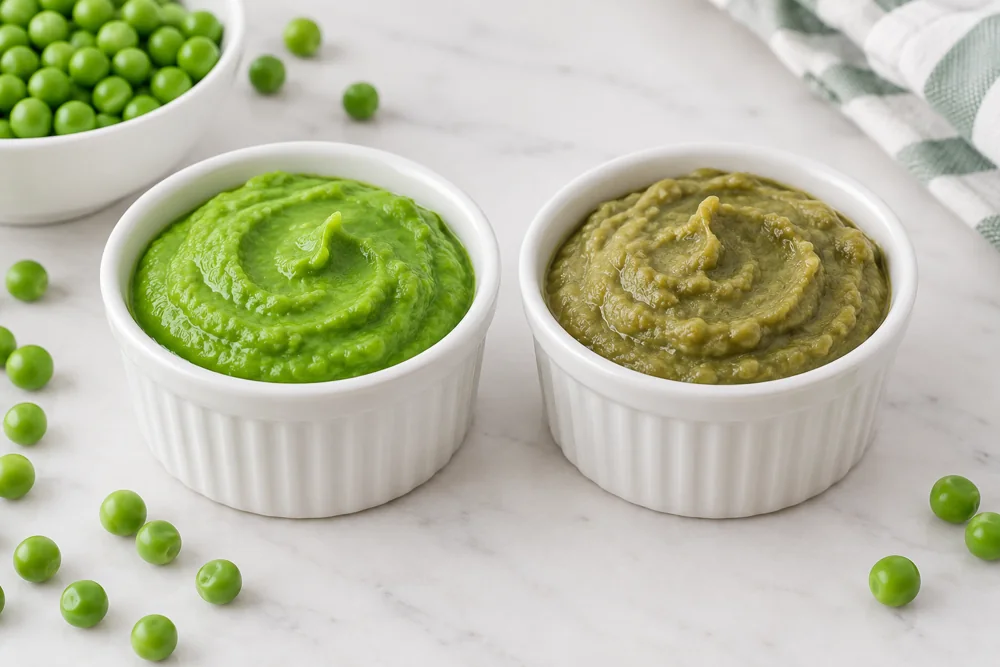
Illustrative color comparison representing different heat histories. These are not measured trial results or evidence of spoilage.
Acid additions deserve an application trial because flavor preference and color performance may pull in different directions. A small amount of lemon may improve the perceived freshness of a dish, while the timing and amount of an acidic ingredient can affect how a green preparation looks through holding. Record the addition and test after the full service cycle. Avoid using an uncontrolled squeeze of citrus in one sample and none in another, then attributing the difference to the peas. The same principle applies to herbs: mint can be a deliberate flavor component, but it should not disguise an input that fails the approved reference.
Holding tests should reproduce the actual business need. A restaurant plating a small batch over a short service interval has different demands from a factory filling chilled meal trays. Assess skin formation, thickening, liquid separation, flavor and color at the required points, under the approved food-safety controls. If the puree is reheated, include the actual container, portion size and reheating method. A favorable result in a small saucepan does not automatically predict a sealed tray or a deep bulk container. Define both the acceptable result and the action required when the sample falls outside it.
Cooling or freezing the finished puree can be considered only as part of a documented process for that exact formulation. Added dairy, oil and water, as well as the selected screening step, may change the behavior after storage. Assess the product after the intended thaw and reheat rather than assuming that because the starting peas were frozen, the finished preparation will recover identically. Preserve any storage-life claims for a validated product and package. For routine development, report the measured observations and the approved conditions, leaving untested storage periods clearly outside the specification.
Approve the pea ingredient in the finished dish
A plated puree should be tested beside the foods that will actually surround it. Hot fish, meat juices, sauce or vegetables can change the visual and eating result. Record portion size and observe whether the puree holds its intended edge, spreads too far or releases an unwanted watery halo. A soup base has different requirements: dispersibility, flavor after dilution and behavior through heating may matter more than the ability to hold a mound. A filling needs another evaluation of moisture migration and texture. These uses should not share one approval solely because each begins with frozen peas.
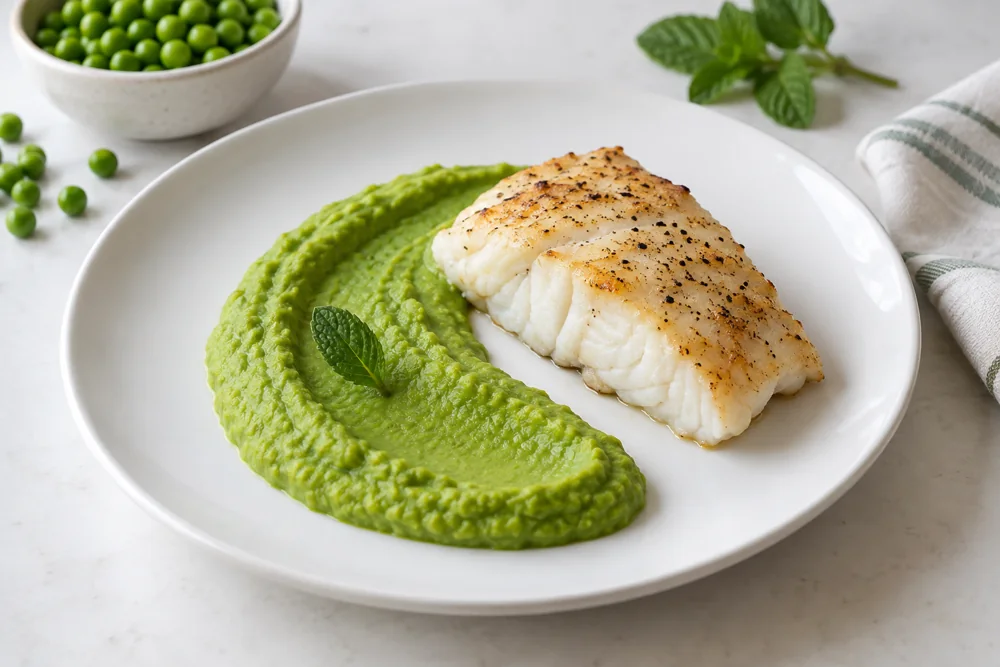
Illustrative foodservice application. Observe portion shape and any liquid migration beside the actual food at service.
The frozen ingredient specification should reflect the important application variables. Confirm the pea variety or accepted alternatives, size range, maturity or tenderness criteria where available, natural color, broken or split material, foreign-material controls and intended-use instructions. A puree process may tolerate some broken peas that would be undesirable in a visible whole-pea side dish, but that does not remove the need for a clear defect specification. Record the sampling method and acceptance basis before purchase. A broad grade name may be commercially convenient, yet it cannot replace the particular characteristics required by the customer's preparation.

GreenLand-food product photograph of bagged peas. Certification, lot status and intended use must come from the order documents.
GreenLand-food's frozen green pea supply page provides the starting point for an enquiry. We confirm available product and packing against the order rather than infer a puree result from a catalogue photograph. Tell us whether the peas are intended for a smooth plated puree, a coarse mash, a sauce or a prepared-food filling. That information makes the sample request more useful. Include the planned cooking and blending route, expected quantity, destination and document needs so the purchasing discussion addresses the actual programme rather than a generic bag of peas.
Inspect frozen condition as part of receiving and sample approval. Record pack integrity, batch identification, the required temperature information, unusual clumping, loose ice and visible defects under the agreed procedure. These observations help identify issues that can affect portioning and water management during preparation. A photograph of loose green peas does not establish microbiological suitability or a ready-to-eat designation. Keep documentary checks, receiving observations and application results together. If the sample is held for evaluation, identify it clearly so that its status is not mistaken for approval when another team begins a kitchen trial.
Packing size influences daily execution. A kitchen using small portions may need a pack that can be handled within its approved frozen-storage and portioning routine. A manufacturer may prioritize a larger format compatible with its batching system. Confirm inner packaging, net weight, carton identification, pallet requirements and the planned cold chain with the order. Ask for crop availability and lead time early enough to complete a representative trial. If a substitute lot or specification is proposed, determine whether it changes the texture or flavor variables that formed the basis of the original approval before accepting it into production.
The strongest approval record ends with an observed dish and a repeatable method. Retain the pea specification, lot identity, cooking instructions, drainage method, ingredient additions, equipment settings, screening loss and final evaluation. State the accepted texture at service and after any approved storage or reheat. When a later batch becomes too loose or grainy, that record gives the team a concrete place to investigate. It also makes the supplier conversation more precise: the issue can be described in terms of the supplied peas and their measured performance, rather than an unexplained difference between two green bowls.
Source frozen green pea with GreenLand-food
GreenLand-food is a professional frozen green pea supplier and manufacturer in China, providing factory-direct wholesale supply for importers, food manufacturers, foodservice distributors and private-label programs.
Send the product form, cut or size, application, packing, quantity, destination and requested documents. We will use these details to discuss the appropriate frozen ingredient and sample requirements.