


Mulberry vs Blackberry: Fruit Identity, Frozen Grade and Formula Fit
Sep 27, 2026
Leave a message

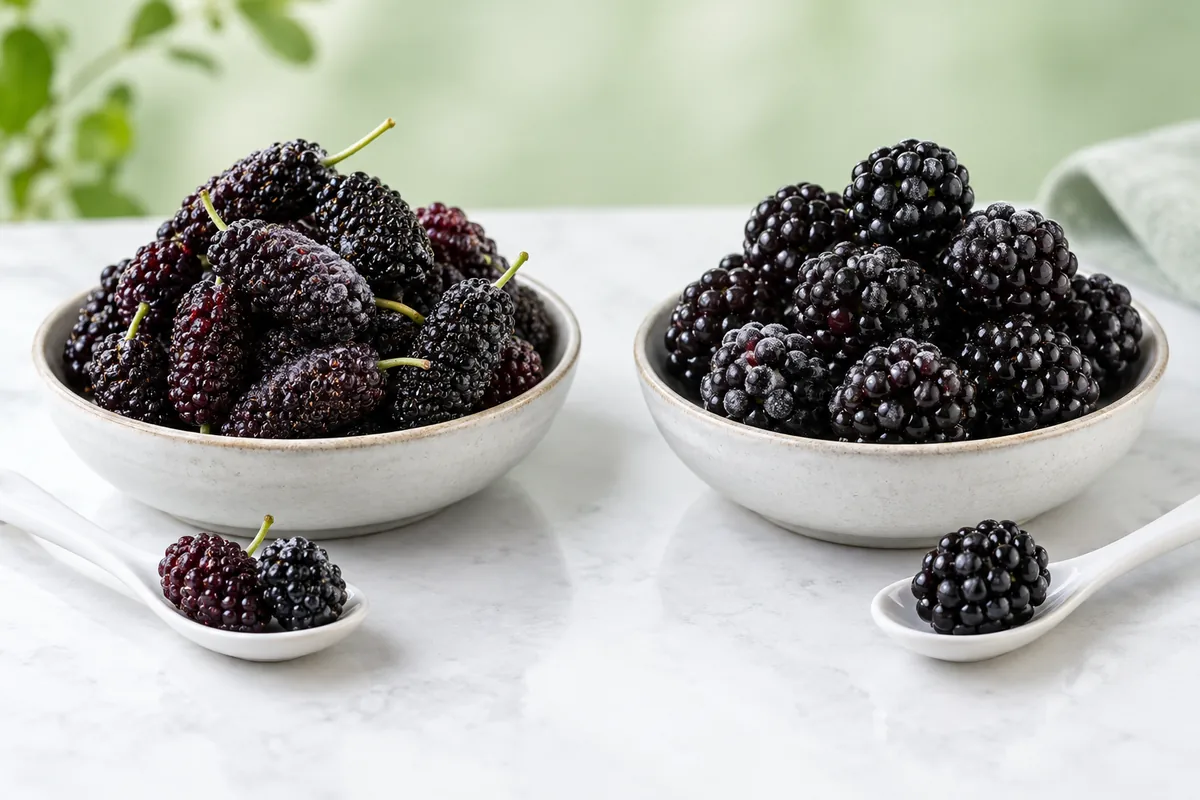
The choice can matter in a yogurt preparation, jam, bakery filling or beverage even when both samples make a similar dark purple puree. Whole-fruit shape, seed and stem perception, acidity, soluble solids, color release, thaw drip and broken-fruit rate can change the finished food. Those properties vary by cultivar, ripeness, processing and lot. We supply separate IQF mulberry and frozen blackberry products and can review their specifications against a buyer's application; neither product page is a guarantee that a particular shipment will taste or perform like a general comparison article.
They come from different plants and fruit structures
The names refer to different genera. Morus mulberries grow on trees in Moraceae. Rubus blackberries grow on canes in Rosaceae. That distinction is firmer than fruit color: dark-fruited mulberries and fully ripe blackberries can both look nearly black, while mulberries may also be red or pale depending on type and maturity. A carton photograph under different lighting cannot establish the botanical identity by itself. Put the declared fruit name and, when important, the botanical name on the supplier specification before judging the photographed fruit.
The structures explain why the fruits resemble each other without being the same crop. A mulberry is a multiple fruit that develops from a cluster of flowers. A blackberry is an aggregate fruit made of drupelets that develop from one flower. The University of California Agriculture and Natural Resources explanation makes that distinction clearly. These are botanical descriptions, not grades or flavor promises. They will not tell a processor whether a particular IQF lot releases too much liquid into a yogurt cup.
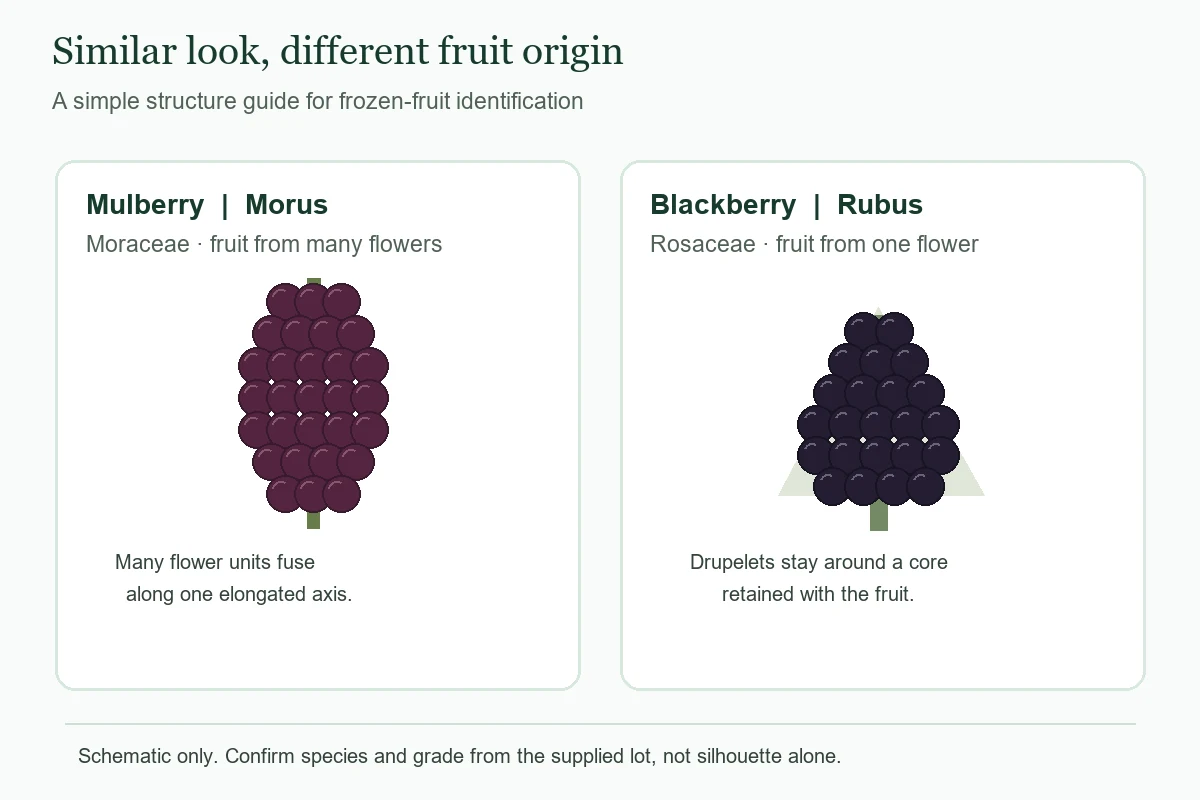
Schematic: a mulberry develops from many flowers, while blackberry drupelets develop from one flower around a retained receptacle.
One common online identification tip needs correction. A harvested blackberry is not normally hollow like a raspberry. The blackberry's receptacle stays with the edible fruit; the raspberry detaches from its receptacle and leaves a hollow center. The New Mexico State University blackberry production guide describes that difference. Some current comparison pages reverse the relationship while simultaneously saying that blackberries retain a central core. We would not use the hollow test to reject a blackberry sample or to identify a mulberry. A cut fruit may show a core, but frozen damage and maturity can complicate a quick inspection.
Field habit also helps when the crop origin is known. A mulberry tree and a blackberry cane look unlike each other in the field, and a short fruit stem can often be seen on mulberries. A receiving team, however, usually sees sealed bags rather than a tree or cane. It should rely on traceable species and lot declarations, a retained approved sample and a fresh examination of the actual delivered fruit. A sample bag identified only as "dark mixed berries" is not an acceptable substitute for a named mulberry or blackberry ingredient in a formula with a declared fruit identity.
Botany matters commercially when the finished pack names the fruit, when a recipe expects the bite of a particular whole fruit, or when a buyer is replacing one sourced ingredient. It does not justify predicting a fixed sweetness, acidity or nutrient value. Both fruits vary substantially with variety, maturity and growing conditions. The next question after identifying the plant is therefore how to test the frozen material the factory can actually buy.
Use visible clues, then verify the frozen lot
Mulberries often have a more elongated, cylindrical outline and may retain a short slender stem. Blackberries are commonly more rounded clusters of distinct drupelets around a retained core. These tendencies are useful when comparing representative whole fruits side by side. They are weaker after freezing, breakage or thawing, and they are not numerical acceptance criteria. Large blackberry cultivars can be long; a small mulberry can look compact. Build a receiving decision on a documented lot and sample, not on a single attractive berry selected from a carton.

GreenLand product photo: a listed IQF mulberry form, with elongated clustered fruit visible.
The real fruit in the GreenLand IQF mulberry product gallery shows the elongated clustered surface that gives this comparison its practical value. The page describes IQF mulberry supply, whole-fruit condition, size, Brix, broken-fruit tolerance, leakage and packing as questions to confirm by batch. That is the right level of specificity. A photograph can show product form; it cannot prove the distribution of sizes or broken fruit in a shipment. Request an actual offer specification and, when appearance matters, a sample drawn from the proposed lot.
At receiving, open a representative sample under the handling plan and spread the frozen fruit on a contrasting tray. Photograph several fields, not just one handful. Record the percentage or mass of whole fruit versus fragments using a method both parties agree to, and note visible stems, leaves, unripe pieces, clumps, ice, foreign material and color variation. A count of long fruit among a few selected pieces is too easy to bias. If the buyer needs whole fruit for a visible topping, the meaningful measure is how much usable whole fruit remains after normal handling, not whether some individual berries look like the catalog photo.
The pack label and documents should connect the bag to the declared product, production lot and supplier. Check that inner and outer marks agree with the purchase order, and retain a reference sample when the contract permits. If a shipment is described as mulberry but the approved sample looked like an entirely different fruit, pause the identity decision and ask for the raw-material record rather than trying to resolve it by taste alone. Conversely, a dark, elongated blackberry does not become a mulberry because it fits a general internet picture.
We treat the visual check as the beginning of a lot review. The existing GreenLand article on freezing mulberries covers the basic frozen handling question; this comparison is about what fruit has been supplied and whether its measurable form meets the intended recipe. When a buyer changes from one species to the other, update the ingredient statement, sample approval and sensory target together.
Compare flavor and texture in the finished formula
General descriptions often call mulberries mild or sweet and blackberries more tart. A buyer can use those words to frame a trial, but they are not dependable specifications. A dark mulberry lot can have a pronounced tang; a fully ripe blackberry lot can taste sweet. Processing changes the result again. A fruit that tastes balanced at room temperature may seem muted after freezing or when mixed into sweet dairy, while heating a jam may bring out different notes. Ask for Brix and acidity where they affect the formula, then taste a representative sample at the same inclusion rate and processing conditions as the current ingredient.
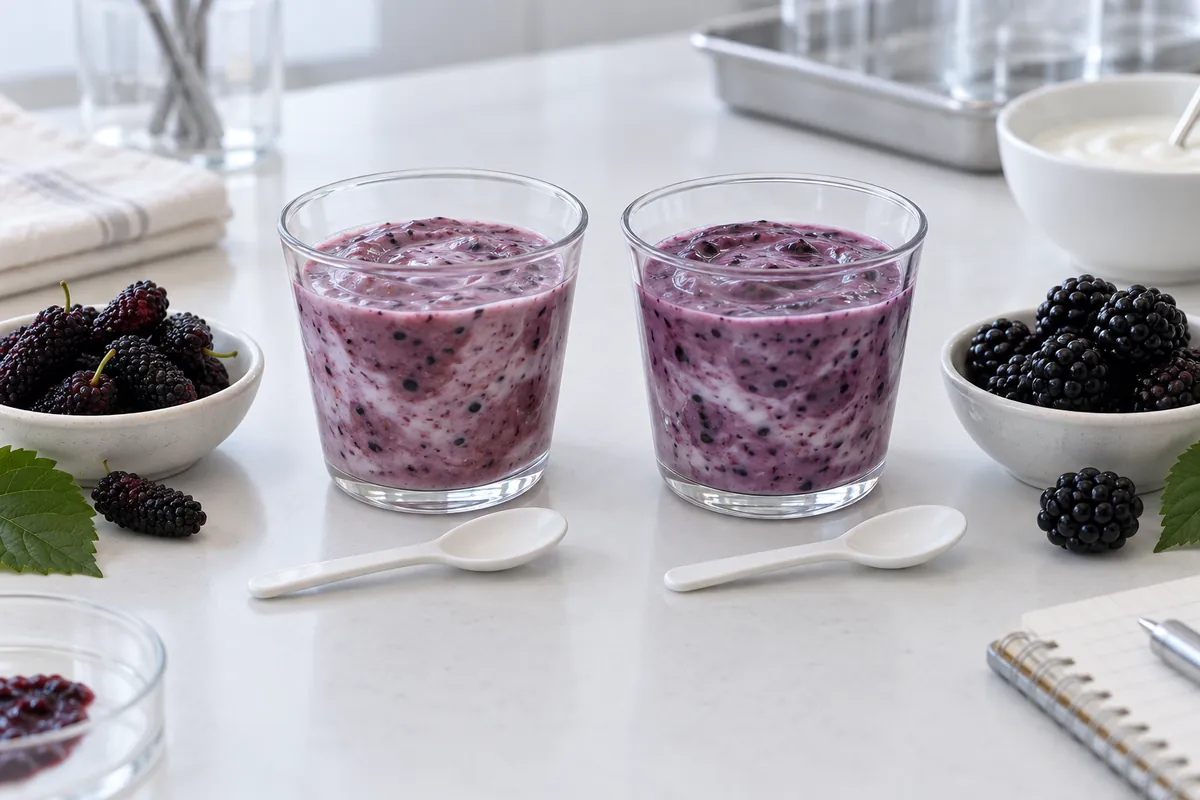
Illustration: compare equal-purpose fruit preparations in the same finished-food base.
| Buyer question | Mulberry trial | Blackberry trial | Decision to record |
|---|---|---|---|
| What flavor remains in the finished food? | Assess the offered Morus lot at the planned dose. | Assess the offered Rubus lot at the same dose. | Describe fruit note, sweetness and tartness without assuming a universal winner. |
| What texture reaches the consumer? | Check stem fragments, soft whole pieces and any fine seeds. | Check drupelets, seeds, core texture and fragments. | State whether whole pieces, strained puree or a fine preparation is needed. |
| What happens to color? | Observe the product's own pigment release and final hue. | Observe the same steps for the blackberry lot. | Compare after the real pH, heat, air exposure and storage interval. |
| What is usable yield? | Weigh fruit before and after the chosen thaw, drain or sieve step. | Apply the same method and acceptance rule. | Cost per usable kilogram matters more than a quoted kilogram alone. |
The table is deliberately a test plan rather than a list of unsupported typical numbers. The GreenLand frozen blackberry processing page identifies Brix, pH or acidity, maturity, whole or broken fruit and seed texture as application-dependent specification points. The mulberry page similarly asks buyers to confirm Brix, color, whole-berry ratio and leakage. Those fields become comparable only when the supplier uses the agreed sampling and methods. A result measured on crushed fruit is not automatically the same as one measured on strained juice.
For a yogurt fruit preparation, make two pilot batches with the same base and fruit dose. Hold all other ingredients, mixing time and storage conditions constant. Compare visible whole-fruit survival, syrup color bleed, seed perception and whether free liquid gathers in the cup. For a jam, make the same fruit-to-sugar formulation and heating profile with each fruit, then check spreadability, fruit pieces, color and taste after cooling. A beverage trial may need an additional sieve test and sediment observation. The point is to compare two usable ingredients in one product, not two berries in isolation.
If a formulation relies on a specific product claim, document what fruit is actually present. "Mulberry" and "blackberry" are not generic interchangeable colorants. The operator owns finished-food labeling and validation; we can provide raw-material identity, specification and agreed batch documents for the supplied frozen fruit. Avoid making a fruit substitution late in development merely because both pilot cups look purple on the bench.
Ask what whole IQF grade survives thawing
Frozen grade changes the comparison. An attractive loose IQF berry can reach production as fragments, fused clumps or berries with surface ice if handling and packing have not supported it. Whole-fruit integrity matters when a bakery, yogurt or retail pack shows recognizable pieces. For a cooked jam or puree, a higher controlled broken-fruit fraction may be commercially acceptable. Decide which defects matter in the finished use before negotiating a grade name. "Grade A" and "jam grade" have practical meaning only with a written acceptance table and approved sample.

GreenLand product photo: frosted whole blackberries offered for processing discussion.
The real product photograph from GreenLand's frozen blackberries for jam page shows frosted whole berries. It does not establish what percentage of a future batch will remain whole after transit. The page distinguishes whole, jam and processing uses and lists common size bands as options subject to offer. We would confirm any size band, whole-fruit ratio, red or unripe fruit allowance, surface ice, stems and foreign-material controls against the intended lot. We would make the same lot-specific inquiry for mulberries rather than borrowing the blackberry grade language.
Use a documented thaw test to expose differences the frozen tray may hide. Weigh equal representative samples in suitable containers, hold them under the same defined condition, then measure separated liquid and inspect intact fruit. Record both the fruit and liquid fractions; a fruit that loses more juice can still perform in a blended product, but it may fail a whole-piece presentation. Never equate a high drip percentage with a universal rejection threshold. The buyer's application, pack method and acceptable visual result set the limit. Repeat enough samples across the offered lot to see whether one corner of a carton is unusually damaged.
Cold-chain history matters alongside botanical species. Look for heavy ice accumulation, hard blocks, collapsed inner bags or wet cardboard that suggest handling questions, and check shipment temperature evidence against the contract. A single photo of frost on fruit is normal for many IQF packs and cannot by itself prove thawing and refreezing. Ask for the packing and loading records when the delivered condition differs from the approved sample. Keep the complaint tied to observable condition and the contract's acceptance method.
Some defects can be sorted; others change the economic use. A small broken fraction might be routed to puree if the buyer has approved such a split. A bakery inclusion line may reject soft fragments that disappear during mixing. A seeded blackberry piece may be fine in jam yet rough in a smooth beverage; a mulberry stem that is inconspicuous in a cooked preserve may be visible in a white yogurt. These are application and grade questions, not arguments that one species is inherently superior.
Choose whole fruit, puree or inclusion for the job
There is no single substitution answer across formats. Whole IQF mulberries can provide a recognizable elongated fruit in a specialty topping or retail mix when the agreed sample survives handling. Whole blackberries can give a distinct drupelet shape in bakery, dessert or a premium fruit preparation. Both can also be cooked or crushed into jam, sauce or a beverage base. Once the fruit is pureed, appearance matters less, while flavor, acidity, color, seed-removal yield and viscosity matter more. Decide which part of the fruit the customer actually sees or feels.
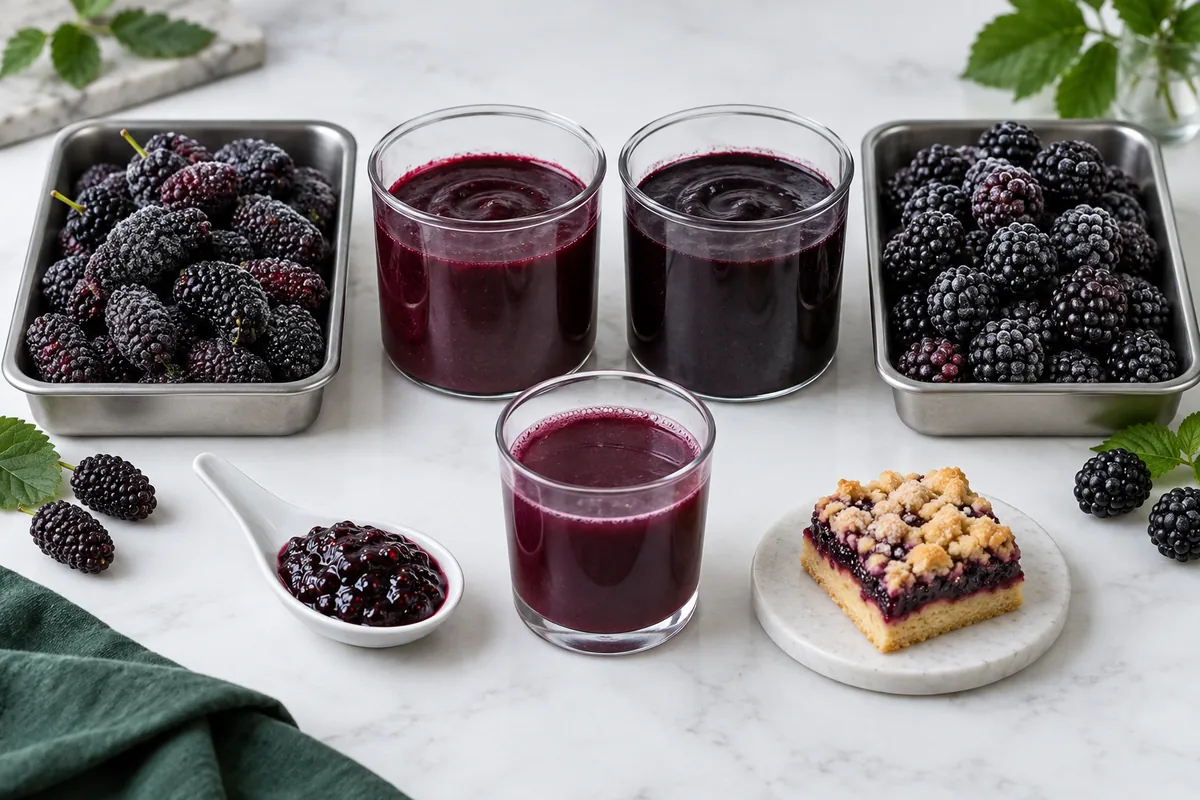
Illustration: whole fruit, screened puree and finished portions answer different purchasing questions.
For jam or compote, test the offered fruit with the intended sugar, acid and cooking profile. A higher broken-fruit allowance may make sense if the fruit will lose its original shape, but an undesirable flavor or large foreign-material load does not become acceptable merely because the fruit is cooked. Compare finished yield and the amount of whole pieces that remain where visible texture is part of the product. The GreenLand blackberry jam page provides a useful starting discussion of maturity, Brix, acidity and broken-fruit tolerance; use the corresponding mulberry lot's data for the alternate trial rather than translating blackberry figures across species.
A smooth beverage or fruit layer may require a screened puree. In that route, measure recovered puree after the specified sieve, not just the kilograms of frozen whole fruit fed to the line. Different seed and tissue structure can change screen load, labor and waste. The visual result may also change after acidification, heat treatment and chilled or frozen storage. The finished-product developer should set these conditions and approve the result. We can confirm whether an offered frozen fruit form and pack are appropriate to sample; a whole-fruit product photo alone does not certify a ready-to-use seedless puree.
For bakery and yogurt inclusions, use the real processing path. A fruit piece that looks good in a tray may bleed into batter, sink, break in a mixer or lose its edge after a freeze-thaw cycle in the finished item. Run both species at equal fruit solids or another clearly defined basis, then compare the result after the actual mixing, deposit, baking or cold holding step. If the application needs dark color more than visible pieces, a screened or prepared fruit input may be the more controllable form. If a label promises whole mulberries, a blackberry puree cannot satisfy that promise regardless of how similar its color appears.
Commercial availability also enters the form decision. Ask about the offered crop lot, pack size, minimum order, sample lead time and the production window before finalizing the formulation. A one-off bench sample that cannot be supplied in the approved format is not an approved ingredient. If a buyer wants a private-label frozen mix, define each fruit separately by species and proportion, and approve the finished mix for visual distribution and pack behavior. Do not let "mixed dark berries" erase the identities that matter to the product.
Run a controlled substitution and acceptance trial
When a buyer proposes replacing mulberry with blackberry or the reverse, make the proposed change measurable. A fair trial uses representative lots of both fruits, the same handling plan and the same finished formula. It also identifies what stays fixed: fruit mass, fruit solids, Brix-adjusted sweetness or final flavor target. Changing sugar, fruit dose and process at the same time may produce a good sample, but it will not reveal which change caused the result. Keep a reference batch from the currently approved fruit so the team can make a practical decision.
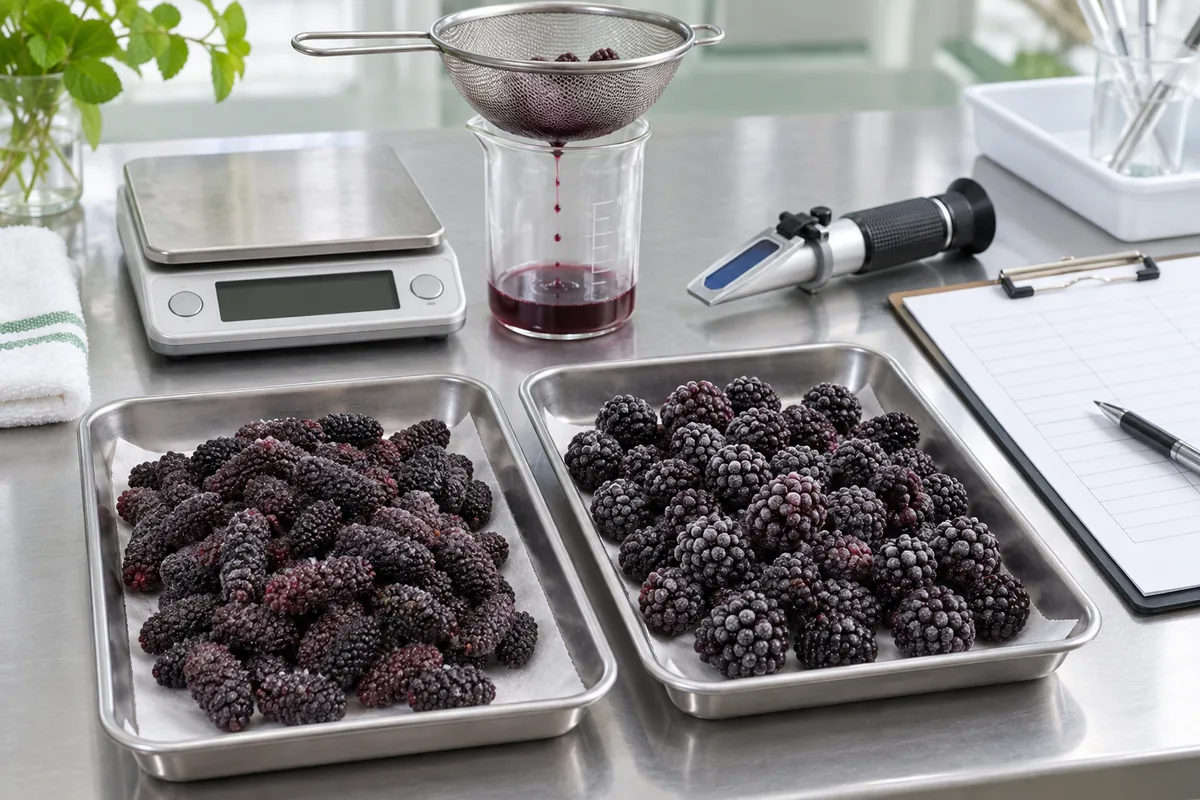
Illustration: use the same sampling, thaw, sieve and measurement method for both candidate lots.
- Confirm identity and sample provenance. Record the botanical or commercial fruit name, supplier, lot, frozen form, packing and sample date. Photograph the unopened bags and a spread tray. Use a retained approved sample when available.
- Measure the same incoming attributes. Under one agreed method, record whole and broken fruit, visible stems and defects, gross sample mass, Brix or other requested soluble-solids measure, acidity or pH when relevant, and thaw drip. Note the temperature and timing used for thaw observation.
- Make equal-purpose finished trials. Prepare the same jam, yogurt, beverage or bakery base with each fruit using a defined inclusion basis. Measure usable yield after any sieve or drain step. Assess flavor, seed/stem perception, color, visible pieces and stability at the planned service or shelf-life checkpoints.
- Approve the business result. Compare landed cost per usable kilogram, process time, reject or waste, supply lead time and the final product's declared identity. Record a pass, a conditional rework or a rejection with reasons, then link the decision to the lot and final specification revision.
A pilot sample is not automatically a production acceptance plan. If the processor receives whole IQF fruit by the pallet, the sampling method should cover cartons and positions across the lot. It should also state who measures, which instruments and methods apply, and what happens when one result is marginal. A tolerance with no measurement method invites a dispute; a measurement method with no agreed tolerance cannot establish acceptance. For a new crop or supplier, repeat the finished-food test until the team has enough evidence to approve the proposed grade. Do not turn a consumer taste preference into an unexplained numeric limit.
We can coordinate representative sample and specification questions for GreenLand's listed frozen mulberry and blackberry ranges. The processor remains responsible for validating the finished recipe, safety controls, labeling and any shelf-life claim. A documented trial saves both parties from a common purchasing shortcut: accepting the cheaper dark fruit by name, then discovering at the line that it has a different yield, seed feel or appearance.
Write the species and approved grade into the RFQ
An RFQ should start with the intended application and the fruit identity: IQF mulberry or frozen blackberry, not merely "black berry." State whether the processor needs whole fruit, controlled pieces or a puree input. Add the approved size or piece range if it matters, color and maturity expectations, whole/broken tolerance, stem and leaf allowance, foreign-material rule, pack configuration and the required net weight. Request Brix and acidity by the agreed method when they affect the formula. If the buyer needs a smooth output, say whether seed removal is performed by the buyer or requested as a distinct supplied form.
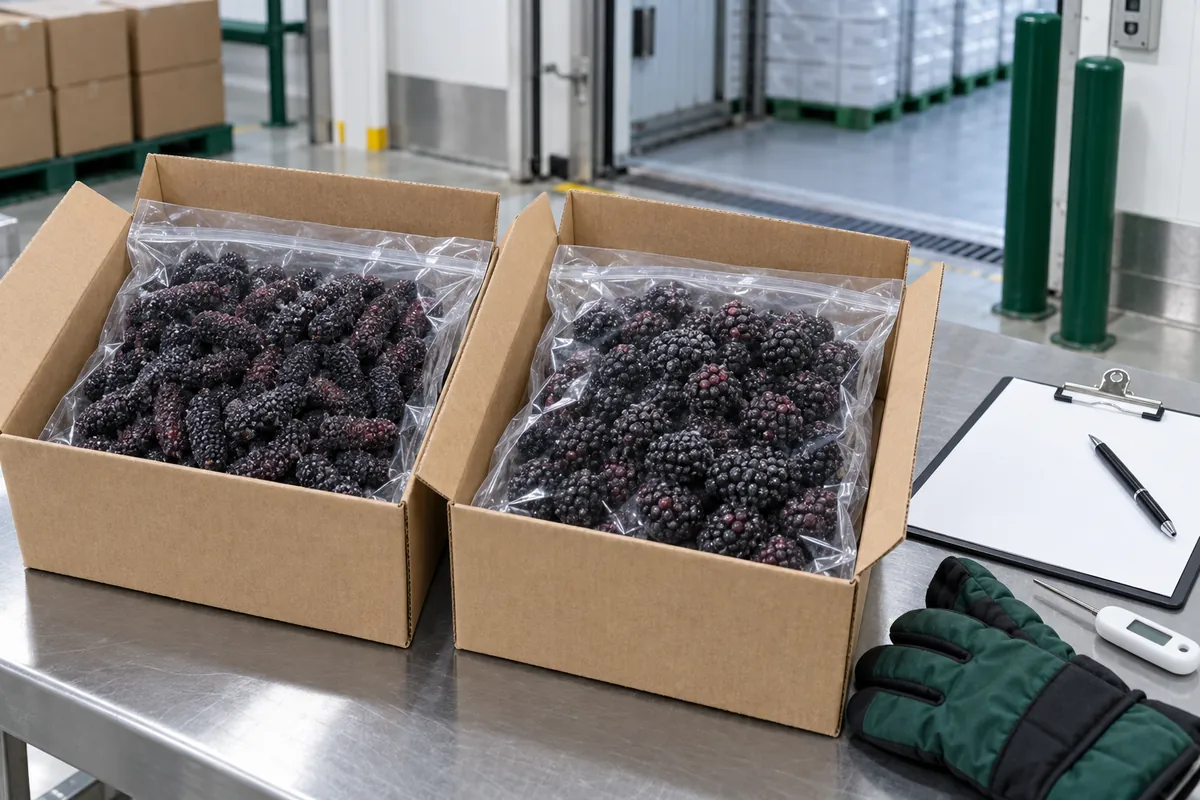
Illustration: connect each packed fruit sample to its species, lot, grade and receiving record.
Put the commercial variables beside the quality table. Quantity, destination, delivery schedule, bulk or retail pack, private-label requirement, requested documents and sample deadline determine whether the proposed grade can be quoted. Ask which production lot a sample represents and whether substitution among cultivars or source origins needs renewed approval. The GreenLand IQF mulberry page lists size, color, Brix, whole-fruit condition, leakage and pack questions; the blackberry processing page sets out whole, jam and processing decisions. The final offered values should appear in an order-specific specification, not be inferred from general webpage examples.
Before shipment, connect the agreed specification to the carton marks, lot code and requested quality documents. Loading photos can help verify pack condition and frozen handling, while the actual receiving sample tests the product against the approved lot. At receipt, count and identify cartons first, then inspect the fruit form and run the specified checks. Record any departure before the fruit is blended into a production lot. A correct invoice line for "blackberry" cannot cure an unapproved product identity or an unacceptable broken-fruit rate, and a correct species name alone cannot prove application fit.
The practical distinction is now clear. The botanical names prevent the two fruits from being confused; the sample, specification and finished-food trial determine whether either one works. Send us the target product, fruit form, pack, quality tolerances and destination, and we can review a suitable GreenLand frozen fruit offer and the evidence needed for a sound approval decision.
Source Frozen Fruit with GreenLand-food
GreenLand-food is a professional frozen fruit supplier and manufacturer in China, coordinating factory-direct wholesale supply for importers, processors, foodservice distributors and private-label programs.
Send the fruit species, form, specification, packing, quantity, application, destination, private-label needs and requested documents. We can review available mulberry or blackberry lots and a suitable sample plan.