


What Is Lychee Jelly? Coconut Topping, Fruit Gel and Real Lychee Compared
Sep 27, 2026
Leave a message

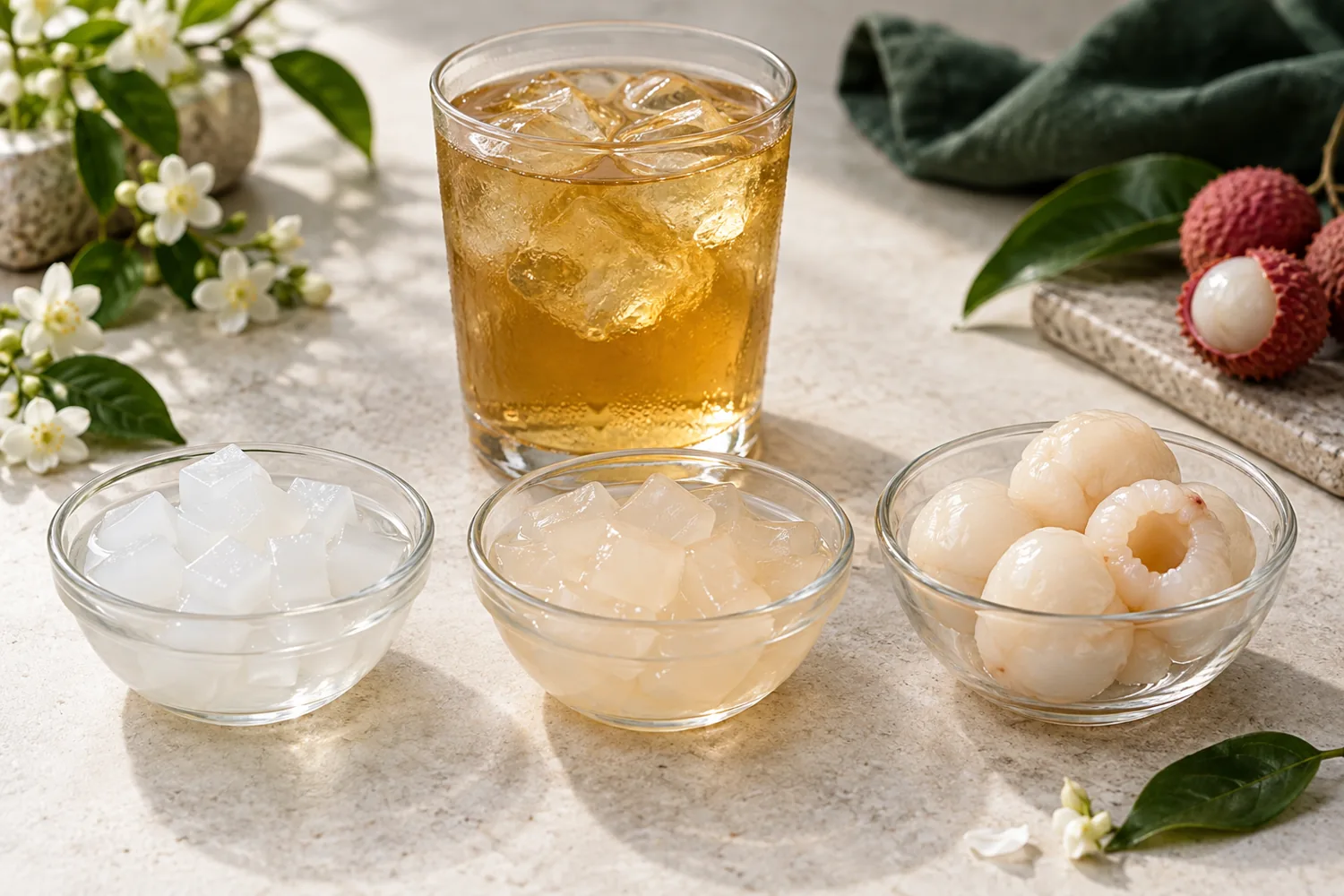
That ambiguity matters when a menu promises real fruit, when a beverage needs a particular chew, or when a manufacturer is deciding what to buy. GreenLand-food supplies frozen lychee fruit subject to the agreed specification; we are not presenting it as a ready-made lychee jelly. A beverage team can use our fruit as a candidate input for a separately developed fruit gel or as fruit pieces in a drink. If the desired result is a uniform, springy coconut topping that is ready to scoop from a jar, the team needs to source and assess that finished topping as a different product.
What does lychee jelly mean on a beverage menu?
A customer ordering lychee jelly in a fruit tea often expects small pale cubes with a firm, springy chew. That expectation is understandable: several current boba suppliers sell lychee-flavored nata de coco under the name. The gel itself is produced through fermentation of a coconut-water medium and then cut, sweetened, and flavored. In a drink, the cubes remain discrete as ice shifts and a wide straw draws them up. The lychee note may come from flavor rather than fruit flesh. The words on the menu describe a sensory experience, but they do not establish the ingredient statement.
The same words also appear over a home recipe made from lychee nectar and agar, or a dessert with lychee puree and another gel system. That piece may be softer, more brittle, or more opaque than nata de coco. It can carry real fruit flavor from its liquid base and still have no recognizable fruit pieces. A third menu might place peeled lychee halves in a cup and call the topping "lychee jelly" informally because the flesh looks translucent. That is a naming shortcut, not a reliable description of a gelled product. Ask to see the actual topping before approving copy or procurement terms.
The practical first question is therefore, "Which bite are we promising?" A firmer coconut cube gives repeated chew and a consistent cut. A fruit gel can give a softer break and a more direct fruit flavor, depending on its formulation. Peeled lychee has natural variation in shape, membrane, and juice release. In an iced tea, the three can look similarly pale at a glance; in the mouth, they are different. This is why a clear photograph of a cup is weaker evidence than a sampled ingredient list and an in-drink tasting.
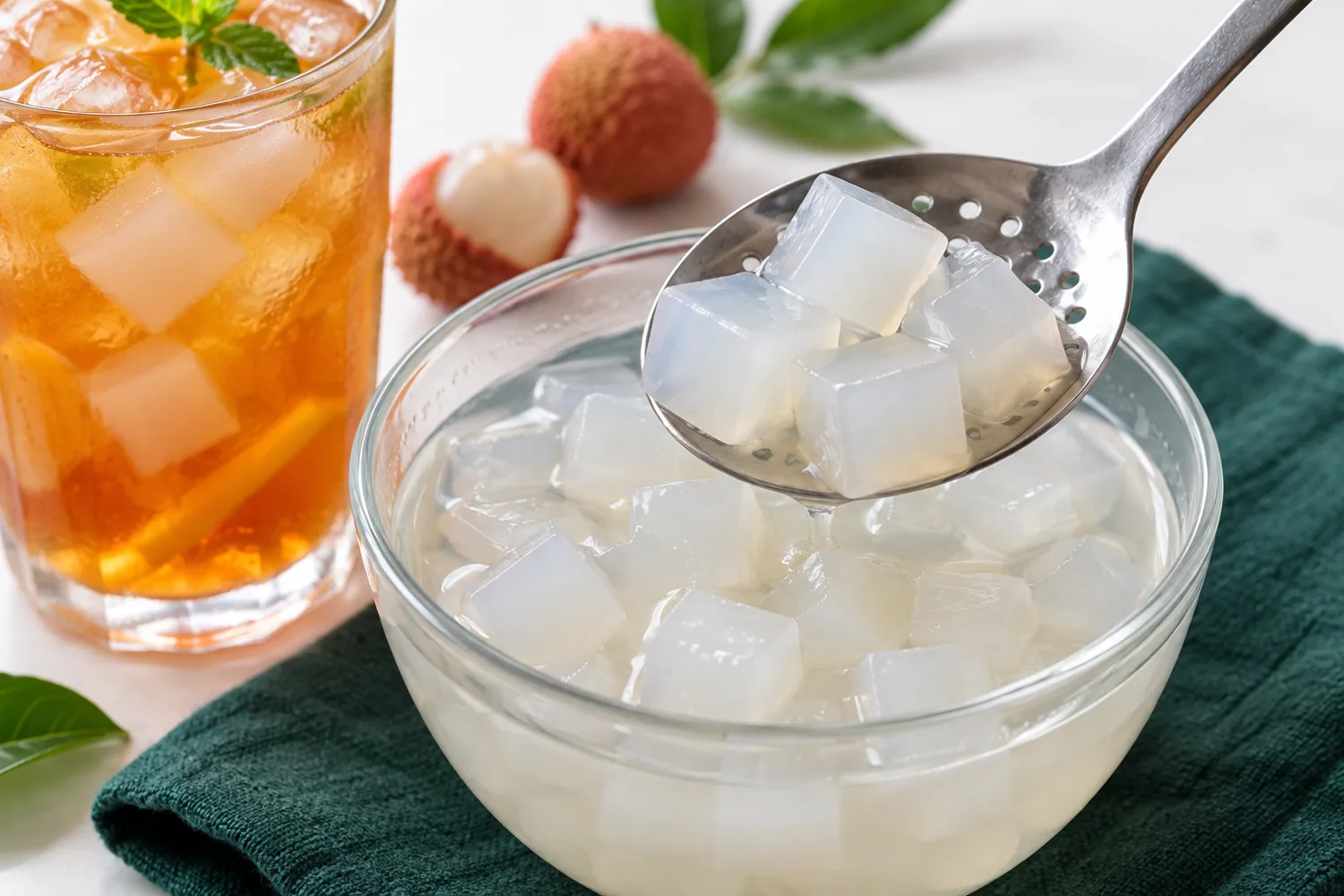
Translucent coconut gel cubes served with iced tea
Do not assume "coconut jelly" means coconut milk jelly either. Commercial nata de coco is a cellulose-rich fermentation product, not simply set coconut cream. A coconut milk dessert gel would be another formulation. The distinction affects ingredient declarations, expected texture, and how the topping behaves in syrup. It also affects whether a vegan or gelatin-free statement is justified. A particular nata de coco topping may have no gelatin, but the name lychee jelly is too broad to make that claim for all suppliers. The exact current label and specification decide it.
Many menus use "lychee jelly" as a familiar customer phrase and rely on the back-of-house specification for detail. That can work if the team knows what it is serving and the wording meets local labeling and advertising rules. A real-fruit promise needs a different level of proof from a lychee-flavored promise. If the topping is mainly flavored coconut gel, say so where the customer would otherwise reasonably expect fruit. If fruit is blended into a separate gel, define its percentage and identity according to the finished-product formula and destination market. The purchasing document should be more precise than the short menu name.
For training, let staff taste the candidate alone and then in the actual tea. Cold temperature suppresses some aroma, syrup changes perceived sweetness, and a straw changes how much of the piece reaches the mouth with each sip. A cube that seems pleasantly chewy from a spoon may feel too large in a narrow straw. A tender fruit piece may be appealing in a dessert cup but break apart in a shaker. The menu term is only the opening to that practical test.
What do commercial ingredient lists actually say?
Two current supplier labels show why the front name is insufficient. Red Sun/Winfull's lychee jelly page describes nata de coco morsels and lists nata de coco pulp, sweeteners, lychee flavor, acid, preservative, stabilizer, and other ingredients. It does not list lychee flesh or juice in the published ingredient line. Bobo Tea Shop's lychee coconut jelly page lists 43% nata de coco pulp, sweeteners, water, and flavor among its ingredients. Its published net weight and drained weight also differ. Those are observations about two named products, not a statement that every lychee jelly lacks fruit.
The label reader should separate four jobs. First, identify the material that creates the piece: nata de coco, agar, gelatin, pectin, konjac, or another system. Second, identify where the lychee character comes from: actual fruit flesh, puree, juice, concentrate, a declared flavor, or more than one of these. Third, identify the packing liquid and sweeteners, which may contribute a large share of the as-purchased weight and the sweetness entering the cup. Fourth, check the ingredient and allergen statements, additives, processing status, storage instructions, and destination-market documents for the exact lot and pack.
The order of ingredients may help a buyer understand relative prominence where applicable labeling rules require descending order, but it is not a substitute for a fruit percentage or a formulation sheet. If a buyer needs a real-lychee claim, request a written ingredient specification and the fruit content basis, then let the finished-food labeling team approve the final claim. A product page that says "lychee flavor" in the title can be completely legitimate for a flavored topping. It simply answers a different brief from one requiring actual lychee fruit.
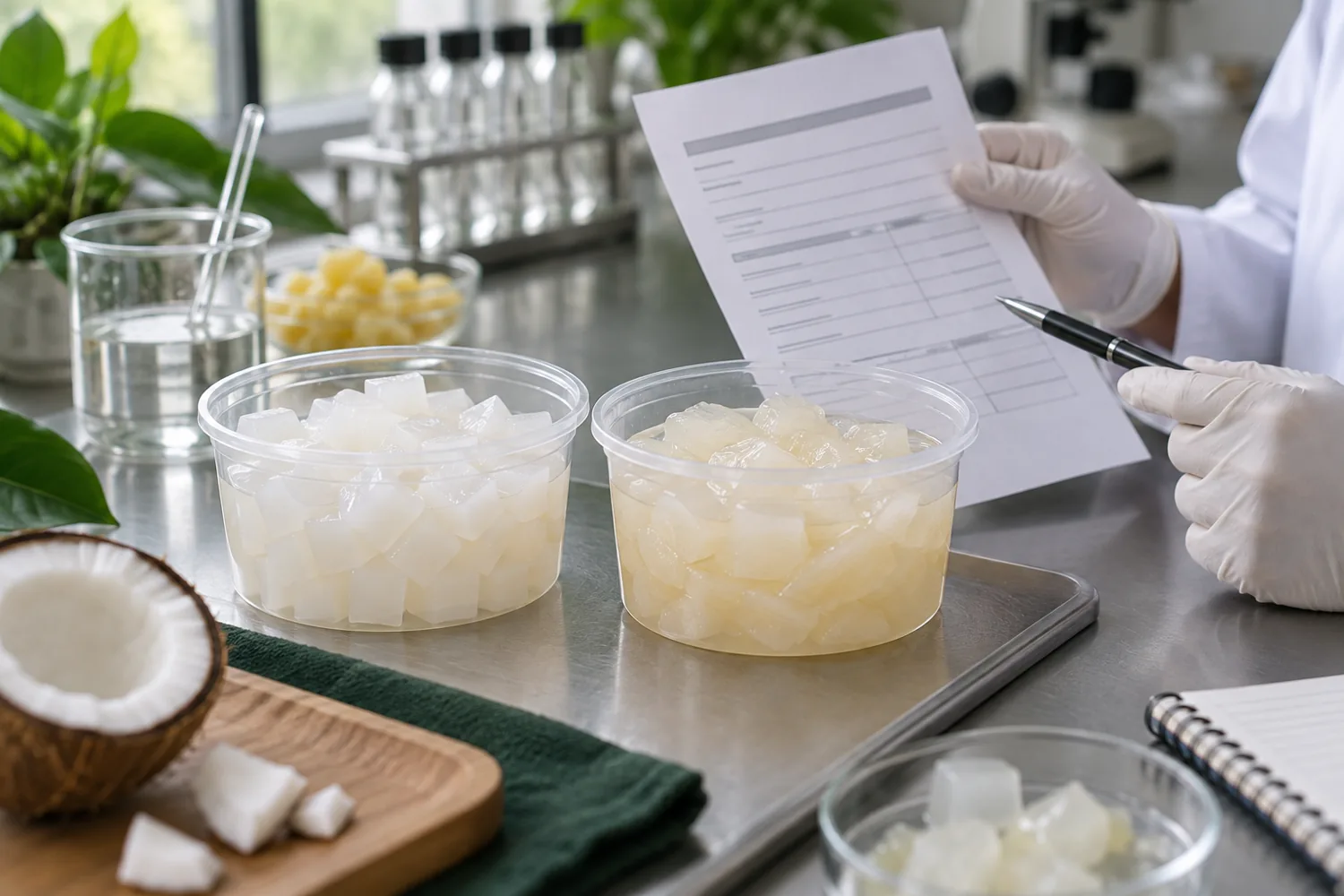
Two pale jelly samples beside an ingredient review sheet
Drained weight deserves its own line in a quote. A jar can contain cubes and sweet liquid, both paid for by gross or net weight. If the operation serves mostly pieces, compare usable drained piece weight and piece count at the intended scoop size. If the syrup enters the drink, test its sweetness and flavor contribution as part of the recipe. Two jars with similar case prices may produce different accepted servings when one has smaller pieces, more liquid, or a higher defect and breakage rate. Bobo Tea Shop's published net and drained weights illustrate the need to ask, not a universal ratio for other brands.
Read current pack documentation rather than relying on an image copied from a distributor listing. Ingredient formulas, preservatives, and claims can change between markets or pack sizes. A restaurant purchasing team may receive a bilingual imported label, a reseller's short description, and a manufacturer's specification with different levels of detail. Reconcile them before menu launch. Ask which document governs the actual shipping lot and whether any ingredient substitutions are allowed without notice. Keep the approved label with the sample record so a later purchase can be checked against it.
A fruit gel follows a different path. Sift & Simmer's lychee jelly recipe uses lychee nectar and agar. Honest Food Talks describes lychee pulp or juice with a gelling agent. Those recipes demonstrate that real fruit or juice can form part of a lychee jelly, but their household directions do not validate a commercial beverage topping's shelf life, process, or label. A professional developer must choose and validate the complete gel system for the fruit input, desired cut, packaging, cold-service conditions, and food-safety plan.
How do coconut topping, fruit gel, and lychee pieces compare?
The easiest way to stop talking past one another is to put all three forms on the same bench. Use equal serving mass, similar piece size where possible, and the same chilled drink. Look at each piece before it goes into the cup, then compare its behavior after shaking, pouring, and ten or twenty minutes with ice. This is a formulation trial, so those observation points are chosen for the operation; they are not a universal safe holding rule.
| Form in the cup | Source of structure and lychee character | Typical sensory direction | What to verify before purchase |
|---|---|---|---|
| Lychee-flavored nata de coco | Fermented coconut-water gel, then sweetener and a declared flavor or other lychee ingredient according to the label | Small uniform pieces with a resilient chew | Exact ingredient list, piece size, drained weight, syrup sweetness, pack and storage |
| Lychee fruit gel | Lychee juice, puree, or pieces set with a chosen gel system | Softer or more brittle bite, with fruit character dependent on formula | Fruit content, gel system, cut strength, handling and validated shelf life |
| Peeled lychee fruit pieces | Natural lychee flesh; no added gel required | Tender, juicy, variable pieces with visible natural texture | Pitting, size and defect limits, thaw behavior, juice loss, food-safety and cold-chain requirements |
The table describes three routes, not three fixed quality grades. A well-made coconut topping may be the right choice for a high-throughput bubble tea menu because it is portionable and withstands stirring. A fruit gel may better support a product positioned around real lychee fruit, provided its formulation and texture survive the intended cup. Peeled fruit may make the strongest visible fruit statement, though its natural shape and juice release demand a different serving method. None is inherently superior without the menu promise and operating conditions.
Measure texture in use rather than only when the pieces are dry or at room temperature. A broad straw can deliver a cube with liquid, creating a different bite from a spoon sample. Ice can abrade soft gel pieces. An acidic or strongly flavored tea can mute the delicate floral note of lychee. A milky base can make pale pieces less visible. If the drink is sealed and transported, the topping may sit in liquid for longer than in a made-to-order café cup. Every change should be tested with the actual beverage base, cup, ice load, and service route.
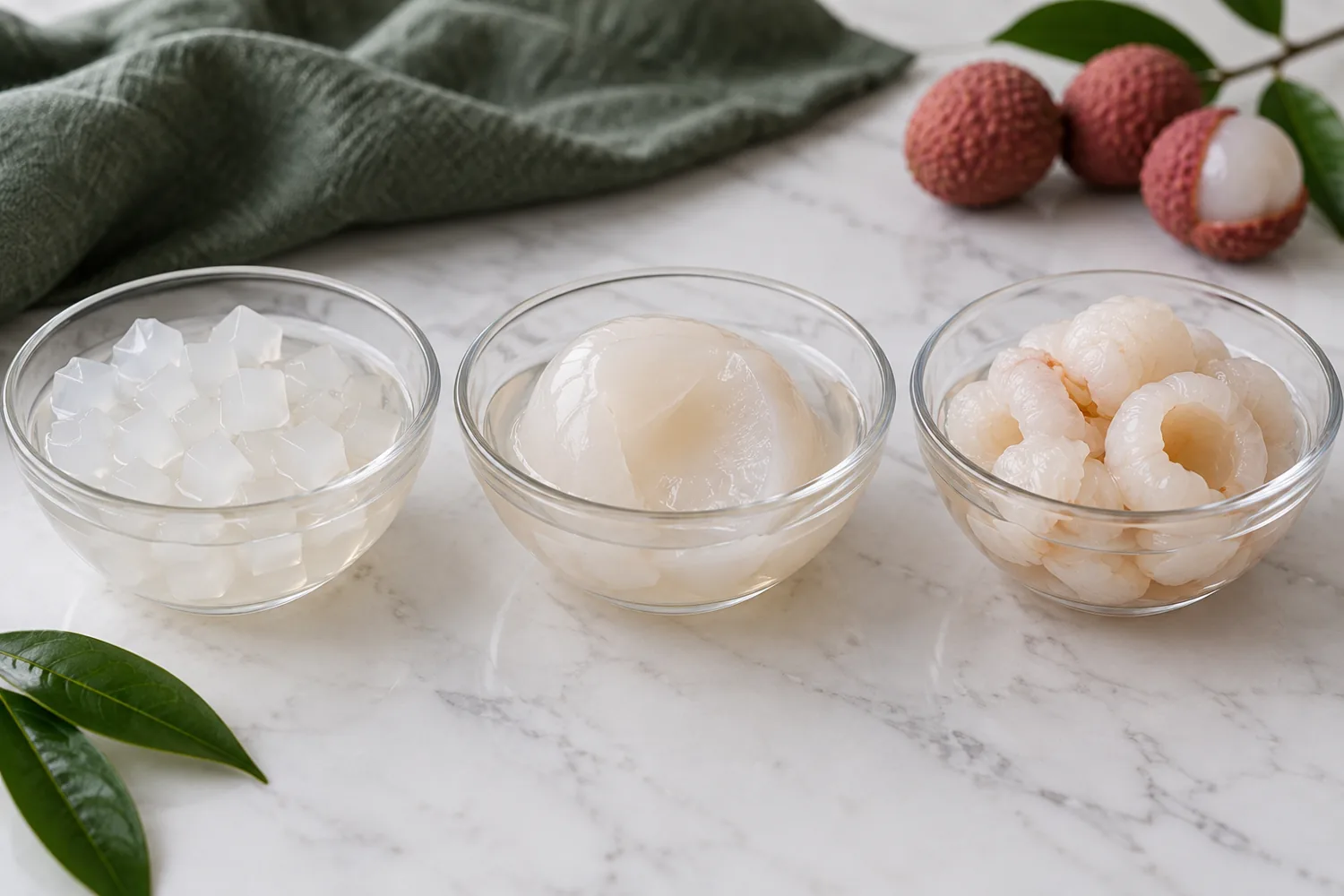
Coconut gel cubes, soft fruit gel and peeled lychee in three bowls
Piece size is a customer experience as well as an equipment issue. A uniform small cube usually meters through a scoop, but it can clump if too much syrup is drained. Irregular fruit pieces may need a larger spoon or careful portion training. A very soft fruit gel may tear during mixing; making it firmer can change the bite away from the intended dessert character. Record the fraction of pieces that reach the customer intact. Count them in a representative cup, not only in a sample tray. If the team uses a straw, test its bore with the actual piece-size distribution rather than approving a visually attractive average cube.
Flavor should be evaluated without giving the panel the answer first. Serve blind-coded samples at equal sweetness where a fair comparison is possible, then ask for perceived lychee aroma, sweetness, aftertaste, chew, and visual appeal. Some flavored toppings may have a vivid lychee impression despite no fruit flesh. A fruit gel can taste weak if the base has been diluted or heated in a way that loses aroma. Peeled fruit may release a burst of juice but contribute less uniform flavor from sip to sip. The result helps the team define the acceptance target in sensory terms, not merely choose the package with the most attractive product name.
When does frozen lychee belong in a jelly formulation?
Frozen peeled lychee belongs in the conversation when the buyer wants the actual fruit to be visible or present in a separately formulated gel. It can be diced into a fruit-in-gel concept, processed into a fruit input, or served as tender pieces, subject to the final product's validated handling and texture. The fruit does not set itself into a stable jelly. A developer must still choose a gelling system, sugar and acid balance, process, pack, and service conditions. Ponthier's professional fruit-jelly formulation sheet includes a lychee-puree pectin formula, illustrating how much design sits between fruit puree and a finished cuttable sweet. That formula is a reference example, not a GreenLand formula or a ready recommendation for cold drinks.
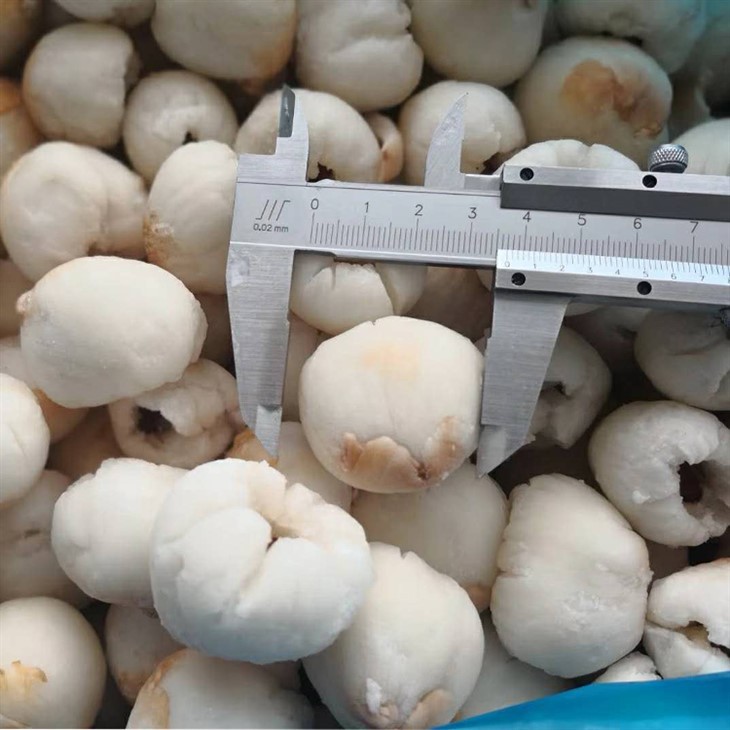
Peeled frozen lychee pieces with a size gauge
The first GreenLand source photograph shows peeled lychee flesh with a size gauge. It is useful for discussing the real raw ingredient: pieces may differ in diameter, natural cavity, surface condition, and remaining membrane. Ask whether the offered form is peeled and pitted, and verify the specification for pit fragments or skin remnants. A bubble tea operation needs to know whether the fruit will be blended, cut, or placed whole in the cup. A photograph cannot establish the acceptance tolerance for those defects; a representative lot sample and written specification can.
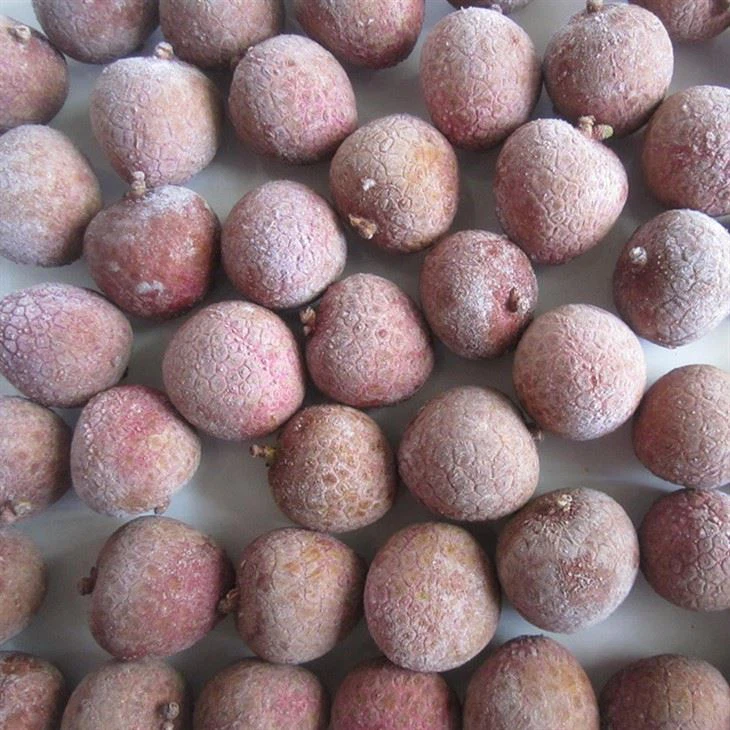
Whole frosted lychees shown on GreenLand peeled litchi page
The second photograph from the linked GreenLand page shows frozen whole lychees with skins, a visibly different starting form. It helps a purchasing team see why "frozen lychee" alone does not settle processing labor. Whole fruit requires a route for peeling and pitting before a soft gel or ready-to-eat drink; peeled fruit shifts that work upstream. Confirm the actual ordered product, because a page can show several stages of one fruit without offering every stage under the same stock code. GreenLand's peeled litchi product page is a place to begin that conversation, while the approved quote and sample define the delivered form.
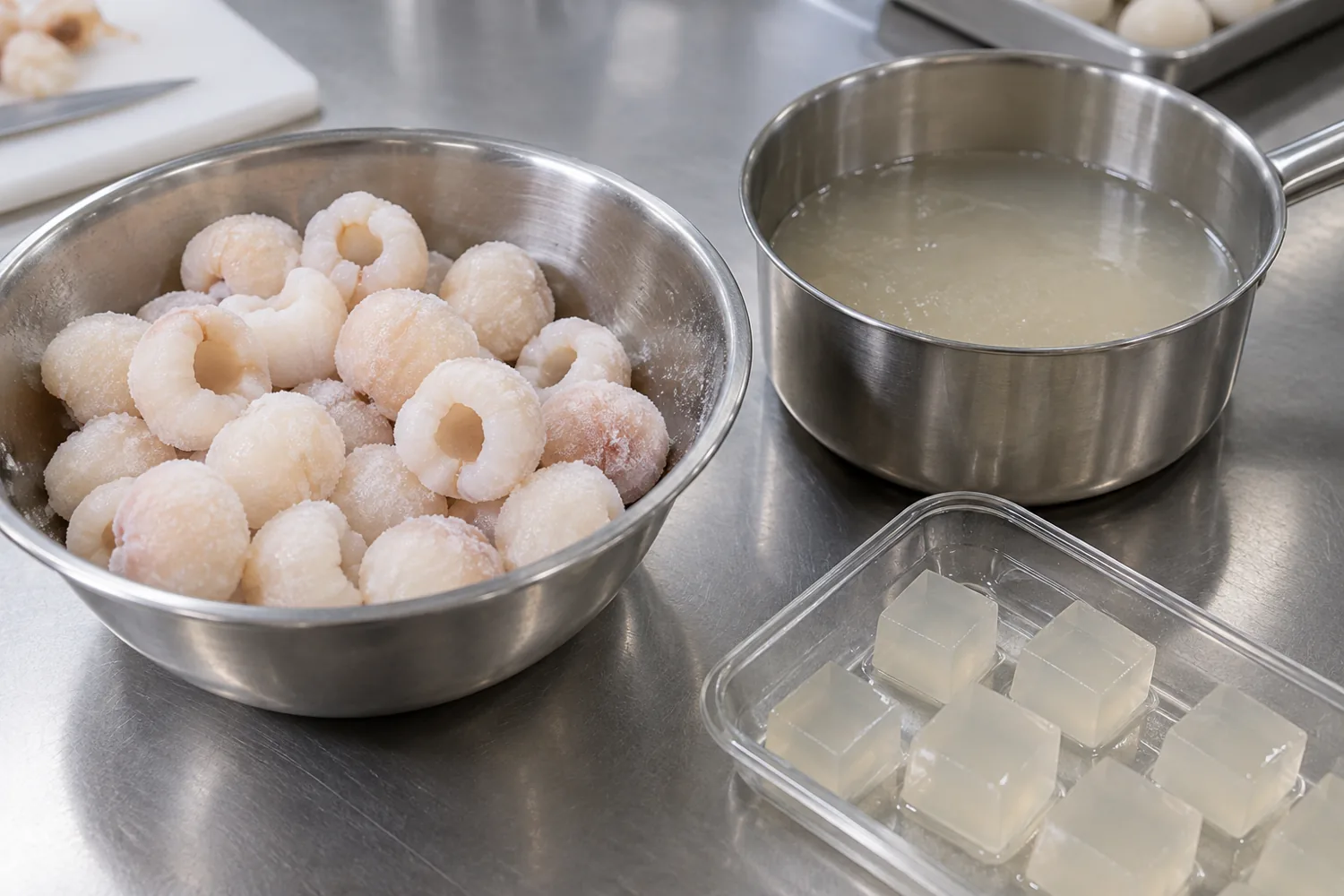
Peeled lychee fruit, gel base and test cubes on a workbench
For a trial, weigh frozen fruit before thawing, collect the released liquid under the approved cold process, then record the edible flesh mass and the usable liquid separately. If a gel uses puree, describe how the flesh is broken down and screened. A fine gel may need fewer visible particles; a premium fruit dessert may benefit from pieces large enough to recognize. The developer should test flavor and appearance after the actual thermal or cold preparation. Do not assume that a delicate lychee aroma in a thawed sample will remain identical after cooking, acid adjustment, gelling, or holding.
Supplier responsibility and finished-food responsibility meet at the specification. We can discuss fruit form, pack, appearance, defects, and available quality documents for a frozen lychee lot. The beverage or dessert manufacturer must validate its own gel process, microbial control, packaging, labeling, and shelf life. Frozen fruit is not sterile. A product that will be consumed without a later kill step needs an appropriate ingredient assessment and a safe ready-to-consume process designed by the operator's food-safety team. An IQF appearance or a cold storage temperature alone does not answer that question.
For an application needing a very uniform springy chew, buying finished nata de coco may be simpler than trying to make fruit pieces imitate it. For a menu promising real lychee, actual fruit can carry an identity that flavoring alone does not. The team may also choose both: a chewy topping for texture and a measured amount of fruit for a real-fruit claim, provided the formula, label, and portion economics support the claim. Keep the components separate in the trial sheet so the source of chew, flavor, and fruit content remains clear.
How should a beverage team test chew and portion?
Begin with an approved reference cup. State the drink base, ice mass, cup size, straw diameter, topping target by drained mass or piece count, service temperature, and expected time before drinking. Make the reference with the current ingredient and the candidate with only the topping changed. If the candidate also changes syrup sweetness, correct the base formulation in a controlled second trial rather than quietly comparing two different drinks. A blind tasting of the finished cup can reveal whether the new piece actually improves the experience.
Watch the scoop as well as the sip. Can staff drain or carry a repeatable portion? Does the jar's syrup stay with the pieces, and does it change the drink's sugar level? Are small fragments left at the bottom of the pack? Does a whole lychee require cutting for the straw? For a chain, those details can determine yield and labor more than the nominal case price. We suggest weighing several normal service scoops and counting pieces in each. The variation gives operations a target for training or a reason to change the ingredient's cut or packing liquid.
Use short descriptive observations rather than a single "good" score. "Cube blocks the straw," "fruit tears after shaking," "gel clouds the tea," or "syrup makes the final drink too sweet" each points to a different corrective action. Note the flavor on the first sip and again after the ice begins to dilute the drink. Photograph the same cup from the side at selected service points to see whether pieces sink, float, or collect at the interface. None of those visual observations replaces a safe holding plan, but they make the sensory decision reproducible.
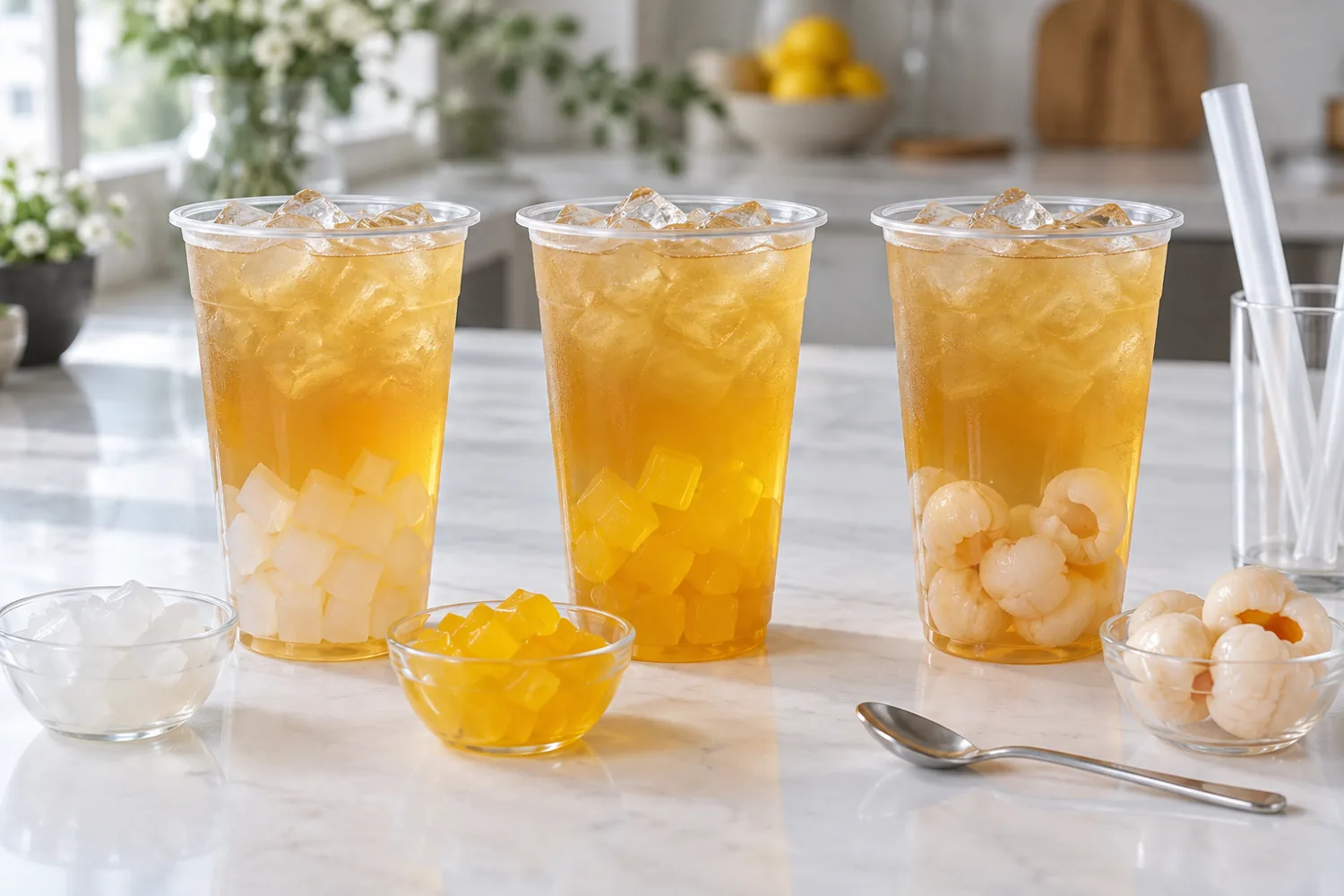
Three iced tea cups with different lychee topping forms
Test at least one demanding but realistic service condition. A takeaway cup with a lid may be moved and set down; a sealed cup may be shaken before the customer receives it; a dessert bowl may be eaten with a spoon. A soft gel that survives a gentle pour can break in a sealed-cup shaking routine. Peeled fruit can lodge in a straw opening that easily handles small nata de coco cubes. Trial the actual routine rather than approving from a static tasting cup. If the menu includes both tea and milk bases, repeat the relevant conditions; color and aroma can change substantially between them.
Record the economic result per accepted serving. For a jar topping, use the drained piece weight or the combined syrup-and-piece portion actually served. For a fruit gel made on site, include fruit input, gelling ingredients, processing loss, broken pieces, labor, and discarded short-life material. For frozen peeled fruit, include thaw loss, any additional trimming or dicing, cold storage, and the fraction that meets visual presentation. A higher price per kilogram can produce a lower cost per satisfactory cup if less is discarded or if staff can portion it consistently. The calculation should use the team's own process figures, not a supplier's generic yield claim.
When the team is satisfied with the sensory result, run a separate quality and food-safety review. Check the ingredient declaration, allergens and suitability claims, approved storage, opening and handling rules, microbial criteria, and destination-market requirements. The supplier's shelf-life statement applies to its unopened product under the specified conditions. It does not automatically become the shelf life of a diluted drink or a fruit-in-gel dessert prepared by another operator. Keep those approvals alongside the trial record so a later ingredient substitution triggers the right retest.
What should a buyer specify before approving supply?
Start with the identity rather than the flavor name. For a finished coconut topping, write "lychee-flavored nata de coco" if that is what the approved label shows, and request the full current ingredient list. For a fruit gel, identify the fruit content target, gelling system or acceptable texture, cut size, pack, and whether the supplier is responsible for the finished gel. For frozen lychee, ask for peeled and pitted status, whole or cut fruit, size distribution, defects, pack, temperature, origin, and intended use. These are three different RFQs even if a menu writer calls them all lychee jelly.
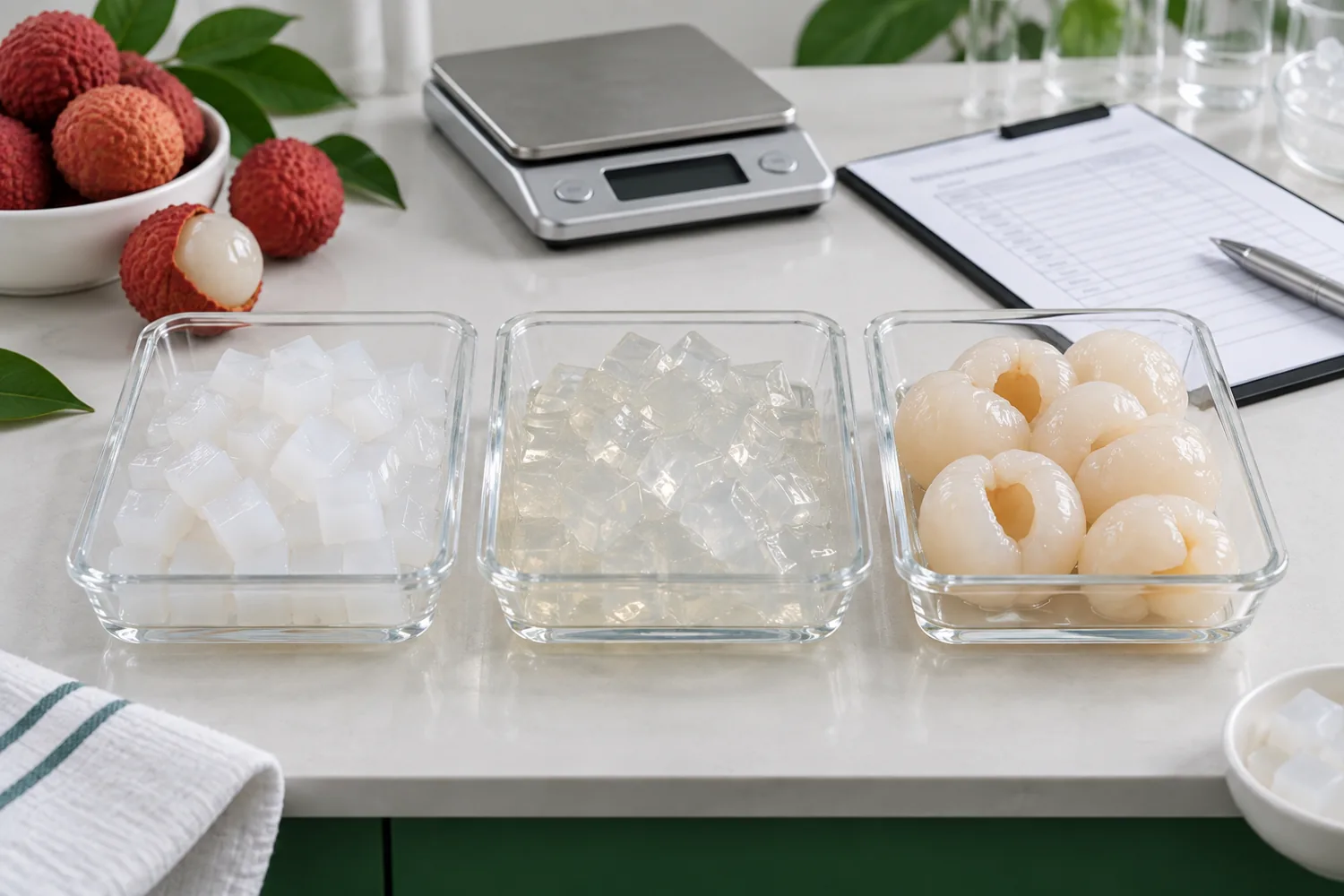
Three ingredient sample trays with a scale and specification form
The sample request should tell the supplier where the ingredient goes. Is it scooped into iced tea through a wide straw, served over shaved ice, blended into a puree, or placed in a molded fruit gel? A topping supplier needs the target cube size, chew, drained mass, syrup profile, and expected service route. A frozen fruit supplier needs the desired edible flesh form, whether pieces will stay visible, and whether the operator plans a validated ready-to-consume use. We can answer the frozen fruit portion of that brief and confirm what GreenLand can offer for the season and destination. We would not quote a finished jelly product on the strength of a fruit page.
Ask for an approval sample from the intended supply route and keep the lot code. Measure the parameters the recipe actually uses: serving mass, piece or fruit size, color, flavor, free liquid, and damage after the intended handling. Compare the result with the current approved reference in the actual drink. If the team expects a long-term program, ask how raw-material changes, ingredient substitutions, or pack changes will be communicated. A strong sample is useful only if later lots can be checked against the same written standard.
For frozen lychee, our frozen litchi range and guide to eating lychee, peeling, pitting, and frozen fruit provide further context for fruit forms. The lychee storage guide addresses handling context. Those pages do not turn frozen fruit into a finished jelly. The purchasing decision still returns to the approved product identity and the cup test. We help the buyer specify and source the fruit that is actually needed, while the finished-food team controls the gel or drink formulation.
If the brief remains "we need lychee jelly," request one more sentence before quoting: "We need a chewy flavored coconut topping," "we need a real-fruit gel," or "we need visible peeled lychee pieces." That sentence determines which supplier category to contact, which sample to request, which label claims to review, and which cost calculation is fair. It can prevent a beautiful but unsuitable case of fruit from being compared with a ready-to-serve syrup-packed topping simply because both share a short menu name.
Source frozen lychee with GreenLand-food
GreenLand-food is a professional frozen lychee supplier and manufacturer in China, providing factory-direct wholesale supply for importers, food manufacturers, foodservice distributors, and private-label programs.
Send the product form, specification, packing, quantity, application, destination, private-label needs, and requested documents. We will confirm availability and the suitable order plan.