


Raspberry Popsicles: Whole Fruit, Crumble or Puree for a Better Frozen Bite
Sep 27, 2026
Leave a message

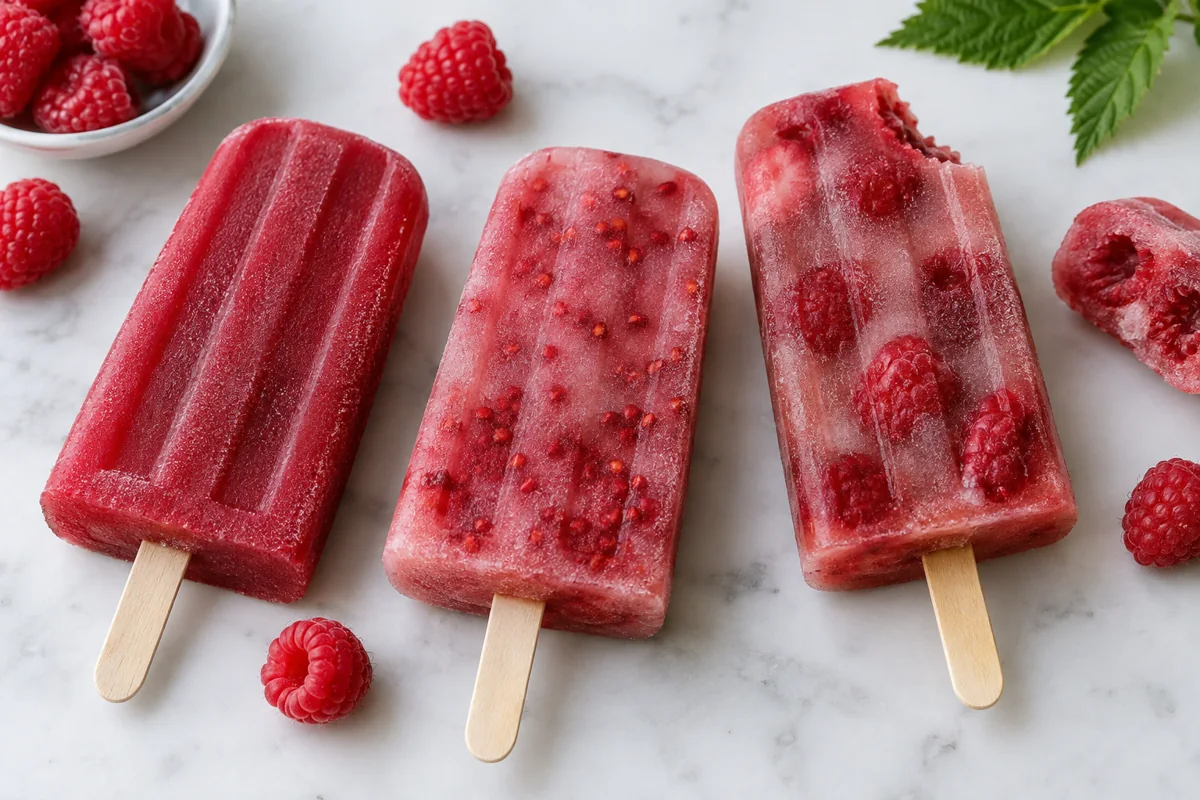
Define the finished pop bite and visible fruit target
An ice pop is a molded product with a fixed cavity and a defined serving shape. That makes fruit distribution more visible than in a scoop of sorbet. The developer should first decide whether the customer is buying a smooth red pop, a seeded fruit texture, a marbled or layered appearance, or pieces that are deliberately visible through the ice. Each target suggests a different input and process. A request for "real raspberry" is too broad to determine whether whole IQF berries, broken fruit or puree will be the best starting point.
Describe the expected bite at the temperature of service. A pop taken directly from a deep freezer can make a whole frozen raspberry feel much harder than the surrounding base. A short controlled tempering period can change that perception, but a consumer may not follow an ideal serving instruction. Establish a realistic serving state for testing, then note hardness, seed feel and whether the fruit separates from the base during a bite. Do not judge a fruit form only while the mixture is still liquid or after the pop has melted into a cup.
Appearance requires the same precision. If the concept depends on red fruit islands in a clear or pale base, specify how many visible pieces and what range of sizes make the pop look right. If the target is a consistent deep-red field, a screened puree may be more practical. A single display sample can hide uneven filling: the front face may show fruit while the back or final molds have little. Photograph multiple pops from a batch and note both sides, the top near the stick and the bottom of the cavity.
The base type also determines what the fruit should look like. Raspberry fragments may stand out in water ice, blend into a red fruit base, or appear as a swirl in yogurt or coconut. The Canada Agriculture and Food Museum's layered pop recipe uses raspberry puree with yogurt and notes optional seed straining. It is useful evidence that smoothness and visual layering are intentional choices. Its household sequence is not a process specification for a continuous filling line; commercial trials need a defined fruit form and repeatable distribution.
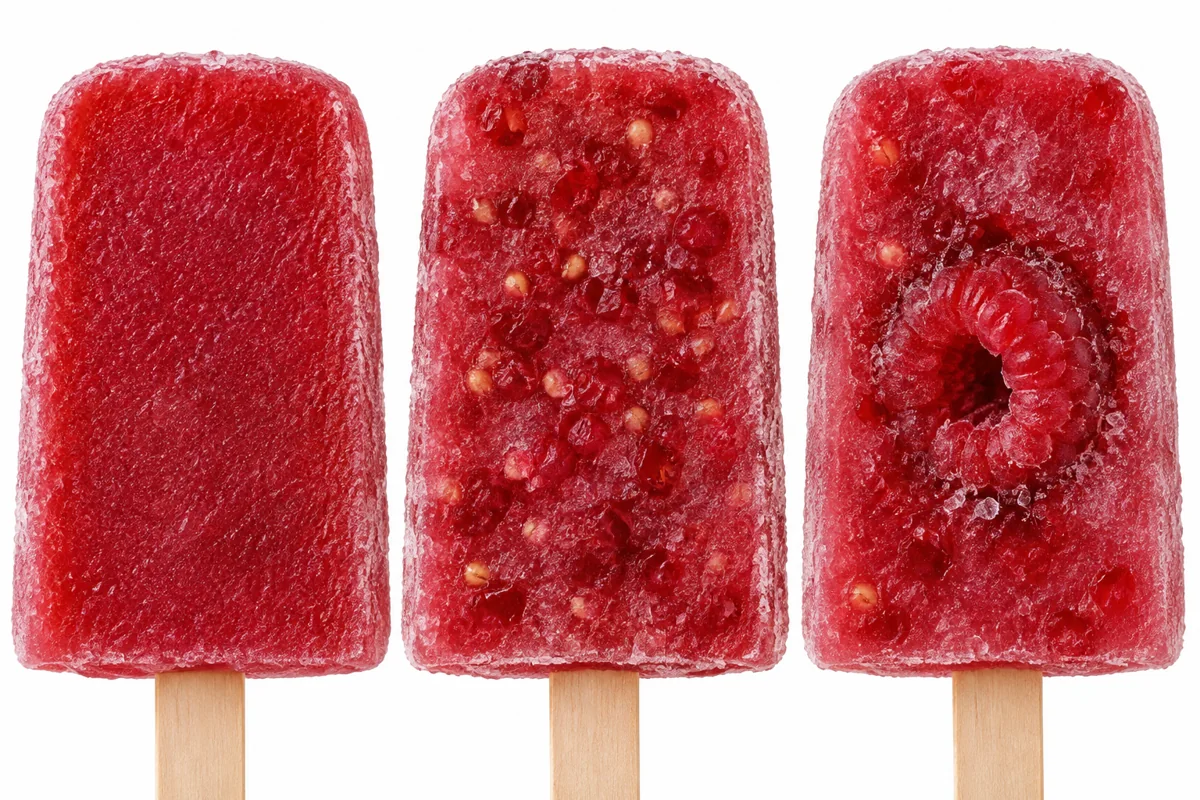
Illustrative view. Three raspberry ice-pop interiors with different fruit visibility.
Set a target that the team can score. Ask a small panel to describe the first bite, middle bite and final bite, including fruit intensity, acid balance, seed texture and any overly hard piece. Pair that sensory assessment with an appearance score for several units, not one. If the pop has a dairy or plant-based base, evaluate it under the actual allergen and ingredient plan. A formula that works in yogurt cannot be assumed to have the same viscosity or frozen bite in a vegan base.
Keep this molded-product decision separate from a chocolate-coated whole raspberry snack. Both may use IQF raspberries, but the coated bite depends on intact fruit and shell coverage, while the pop depends on distribution within a cavity and how the fruit feels when frozen into a base. Buying one grade for both concepts without a separate trial may force a compromise in each.
Compare whole berries, crumble and screened puree
Whole IQF raspberries preserve the recognizable berry structure and can create a prominent fruit center. They also occupy more cavity space, can block a stick or narrow filling point, and may give a very firm bite when completely frozen. Their irregular shape makes each pop potentially different. If whole fruit is the concept, set a piece-count and size range that works in the mold, then inspect how the berries sit after filling. Do not infer performance from a bulk carton in which the berries appear attractive and intact.
Raspberry crumble here means broken frozen raspberry pieces specified by particle range. It is an ingredient form, not a pastry topping. It can provide visible red flecks and distribute more easily than large whole fruit, but very fine fragments may cloud a base or settle unevenly. A crumble specification should define the useful particle range, oversize allowance, seed presence and how the fraction is sampled. Where pieces are important to the label or product photograph, test whether they remain identifiable after dosing and freezing.

GreenLand product photograph. Whole frozen raspberries in a bulk liner.
Screened puree offers a more uniform color and flavor throughout the pop. Passing puree through an agreed screen can reduce prominent seed sensation, but it also removes some pulp and changes yield, viscosity and mouthfeel. "Seedless" needs a practical definition: the screen size and acceptable residual seed fragments should be confirmed, not assumed from a smooth-looking cup. The raspberry sorbet pop recipe illustrates why some makers strain seeds for a smoother frozen bite. Industrial screening and supplier form need to be specified for the actual equipment and finished claim.
Compare the forms at equal fruit contribution before optimizing the full formula. A puree may contain a different proportion of water or be formulated with added ingredients, depending on its supplier specification. A whole-berry trial and a prepared fruit-puree trial should be normalized for fruit content where possible, with all additional sugar or stabilizer recorded. Otherwise a sweeter, softer pop may be credited to the fruit form when it came from a formulation change. The same principle applies to a crumble blended into a base that already contains puree.

Illustrative view. Whole raspberries, crumble and screened puree in separate bowls.
The GreenLand frozen raspberry product page lists whole, broken and crumble forms for quotation. It does not by itself establish that a screened puree is a currently offered GreenLand SKU. If a smooth input is desired, ask us to confirm the available form and any processing history; a customer can also test a puree prepared in its own controlled process from an approved frozen fruit input. Avoid writing an unsupported "GreenLand seedless puree" into a purchase specification before the offered product and screen method are confirmed.
A compact form comparison should record visibility, filling flow, seed feel and frozen bite for each candidate. The highest fruit grade is not automatically the best molded-pop ingredient. Whole fruit may justify its cost in a clear visible-fruit concept yet be wasteful in a smooth red pop. Crumble may be efficient for dispersed fruit but unsuitable if the brand photograph promises large recognizable berries. Puree may solve filling and color while failing a visible-fruit brief. The decision follows the finished product and the line, with safety approval handled separately.
Fit pieces through the mold and depositor
The cavity's narrowest point, stick position and depositor path determine the largest practical fruit piece. Measure the opening and the clearance around the stick, then compare them with the actual oversize tail of the fruit distribution. The average particle size alone is not enough: a small number of large whole berries can bridge a nozzle or displace the stick. A piece may fit when placed by hand but block a filling head at the intended flow rate. Use a representative small run with the real equipment whenever possible.
Watch what happens from the hopper to the last mold. Do pieces rise, settle, break or collect in corners? Does a dense berry near the stick cause an off-center pop or a weak area during release? If fruit is hand-placed, can operators hold a consistent count and position over a production shift? These are different questions from whether a berry tastes good. Record line settings and the visible fruit distribution from the first, middle and final molds. A well-photographed first tray does not prove that the last tray received the same fruit share.
An illustrative trial can use a simple start-middle-end sample plan. Take several consecutive filled cavities at each stage, weigh the filled units, count visible pieces at demolding and inspect cross sections. If the base is opaque, cut samples rather than judging only the surface. Record any clogged nozzle, delayed fill, spill, stick displacement or unusually empty cavity. The sample plan does not need a universal numeric acceptance limit at the outset; it needs to reveal whether the process can consistently produce the intended look.
Control fruit temperature and handling during this trial. Frozen whole fruit may clump in a hopper, while partially softened pieces may release juice into the base. A manufacturer should define a safe, repeatable staging condition that fits its process and food-safety plan. Do not warm berries casually to improve flow without checking the effects on quality and intended-use control. If a line requires a very specific form, it may be better to ask for that form in the supply specification than to correct an unsuitable ingredient through uncontrolled thawing.
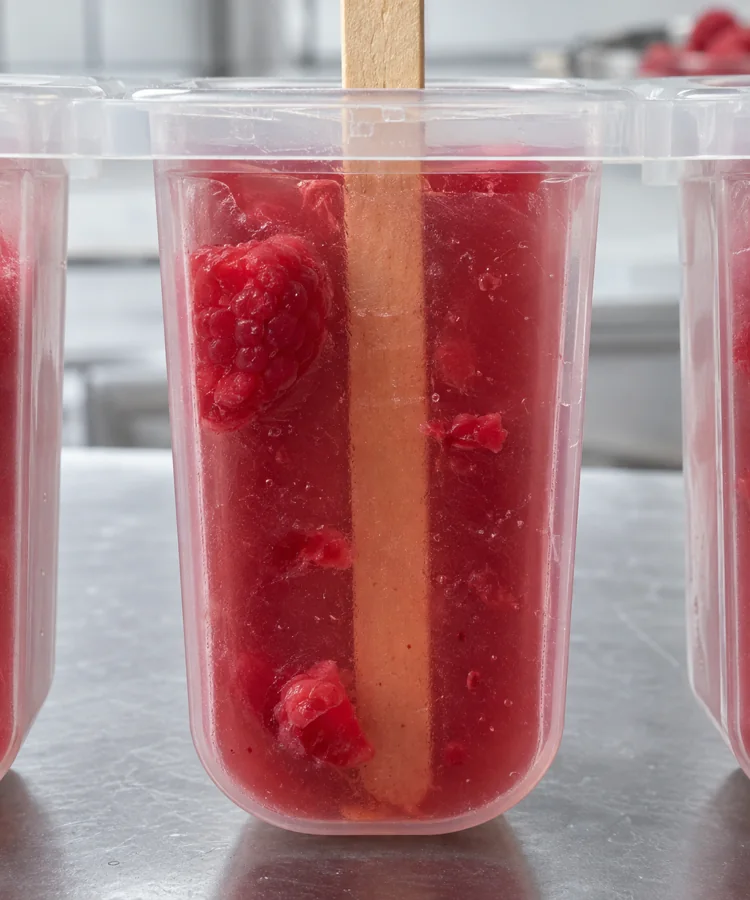
Illustrative view. Raspberry fruit pieces near the stick and wall of a clear ice-pop mold.
The base viscosity changes fruit movement. A thin water base can allow pieces to settle before freezing; a thicker dairy or fruit base may suspend them differently and may require a different depositor. Test fruit form and base together, but change one factor at a time when diagnosing failure. If the team changes only the particle size while keeping the base and fill sequence constant, the effect on distribution is easier to see. Once a promising form is chosen, confirm it again at realistic throughput and run length.
The Tree Top raspberry fruit-preparation page describes ingredient forms designed around process equipment and piece identity. That is a useful industrial baseline: ingredient geometry and viscosity are process variables, not mere marketing adjectives. For this particular product, the measurable issue is whether a defined whole, crumble or puree input travels through the chosen mold-filling system and creates consistent pops. The supplier cannot determine that from the keyword "popsicle" alone.
If the mold changes during development, repeat at least the clearance and distribution portion of the test. A narrow novelty shape, a wider foodservice bar and a tube format have different space around a stick and different visible surfaces. Approval of the raspberry lot is therefore linked to the validated format and filling route, even when the fruit itself remains within its original supplier specification.
Balance raspberry flavor within the complete formula
Raspberry acidity can give an ice pop a clear fruit identity, but the perception depends on the base, dilution and sweetener system. A raspberry puree that tastes balanced in a spoon sample may seem more acidic when frozen; a diluted water base may lose aroma or feel icy. Record fruit loading, soluble solids, acidity and the quantities of added water, juice, sugar or other sweeteners. Brix is a useful measurement of soluble solids in the mix but is not a complete model of freezing point, texture or perceived sweetness.
Set up a controlled formula comparison. Use the same fruit lot and form, prepare a few base formulations with one intentional change at a time, then freeze in the actual mold. Score sweetness, sourness, aroma, hardness and melting pattern at the intended serving state. Record whether pieces remain distributed. A water ice, a yogurt pop and a coconut-based pop should be treated as different product systems. Their solids, fat, acidity, viscosity, allergens and label requirements differ too much for one successful recipe to validate the others.
The raspberry-coconut pop recipe shows a household swirl built from raspberry puree and coconut milk. It demonstrates that the visible pattern can be a design objective, but it does not establish a commercial vegan claim for every coconut ingredient or shared production line. A brand seeking plant-based positioning must verify the full ingredient list, supplier declarations and cross-contact plan. A dairy version has its own allergen and cultured-base questions. The fruit trial should not conceal those formulation obligations.
Seeds and pulp can also alter the apparent flavor. A screened puree may feel smoother and allow the acid to read differently from the same fruit in whole pieces. A pop with large berries can deliver bursts of raspberry followed by neutral base, whereas a puree gives a consistent flavor across bites. Neither is inherently better; the brand brief chooses. Ask tasters to score the first, middle and last bite so a strong first fruit piece does not hide a bland center or vice versa.
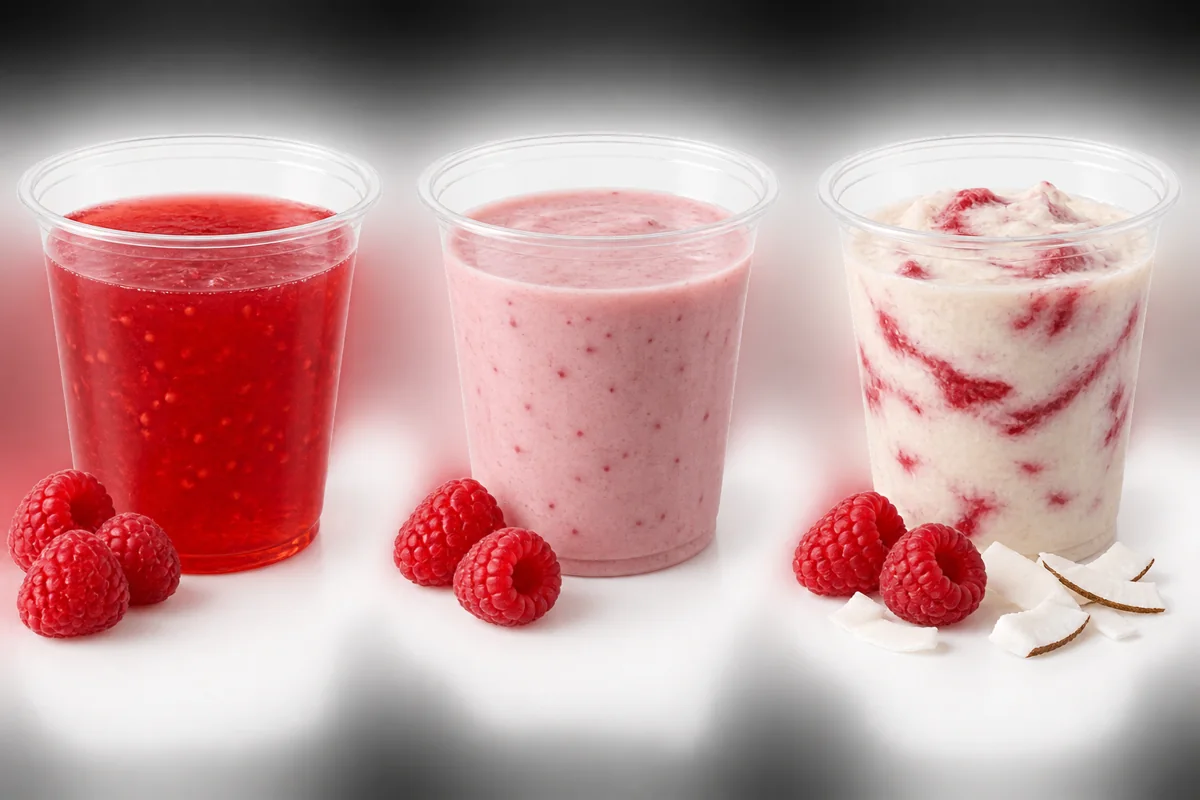
Illustrative view. Raspberry water, yogurt and coconut ice-pop bases.
Color should be assessed after freezing and under the actual pack and display light. Some bases look paler when air or dairy solids are introduced. A high fruit load can deepen red but also affect acidity, cost and frozen hardness. Avoid correcting color with extra fruit without rechecking the complete product. If color ingredients are considered, their label and market permissions require separate review. The fruit specification should state what natural color range and lot variation the formula can tolerate.
Where fruit pieces are combined with puree, record both fractions. A small amount of whole berry added for appearance cannot be treated as the same system as a pop made mostly of whole fruit. Weigh the fruit portion and note how much is in the continuous base and how much is discrete. This makes sensory and cost comparisons reproducible and helps purchasing quote the correct mix of forms.
The target is a repeatable formula window, not a universal raspberry-pop Brix. The development team should confirm its own texture, sweetness and melting targets under the intended frozen distribution conditions. Supplier data can support fruit selection, but the final freezing behavior belongs to the complete recipe and process. Keep the approved formula version with each fruit trial so a later lot comparison does not accidentally include a recipe change.
Test the pop after freezing and during service
Demolding is the first full-product check. Note whether the pop releases intact, whether a large fruit piece creates a tear, and whether the stick remains centered. A pop that filled well but fractures at release is not a saleable result. Compare units from different points in the fill run and inspect both faces and cut sections. Record the actual release method and product temperature so another shift can reproduce the result. Household recipes may loosen a mold with water, but a commercial release route needs its own validated timing and handling.
Evaluate hardness with the consumer in mind. A smooth puree pop can feel dense or icy depending on the formula; a piece-rich pop can have hard fruit islands. Test the first bite and subsequent bites at a defined serving condition. Ask whether the seed texture is pleasant, whether the raspberry pieces are too large and whether the base melts at a useful pace. A sensory panel should know which serving condition is intended, but blind comparisons can help avoid favoring the most visually dramatic sample.
Melt behavior reveals distribution issues as well. If fruit pieces fall out early, the base may not hold them well through service. If the continuous base disappears first and leaves a hard berry cluster, the eating experience may diverge from the sample photo. Measure or describe the drip and structural change after a controlled period at a defined ambient condition. Do not convert a short bench observation into a shelf-life claim; it is an application test that guides formula and fruit-form decisions.
Frozen storage can change the product before service. Check packaging fit, surface dehydration, visible ice crystals, color, stick integrity and any separation after planned storage intervals. Test a reasonable handling simulation for the distribution channel, while keeping food safety and validated shelf life under the responsible technical program. A pop may taste excellent when freshly made and develop an unattractive surface or loose pieces after transport. The approval sample should represent the product that reaches the customer.
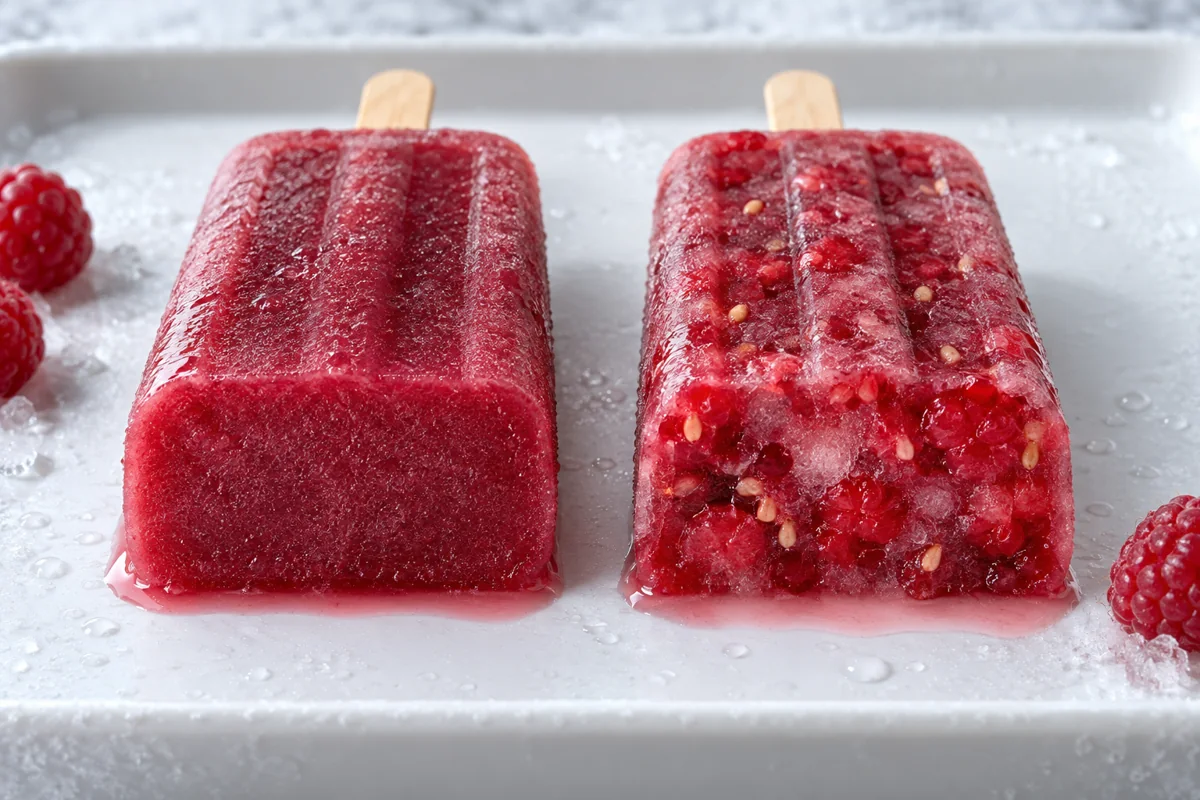
Illustrative view. Smooth and piece-rich raspberry frozen bites after demolding.
Safety remains a separate release decision. The US FDA's berry virus prevention strategy underscores the importance of preventive controls in berries. Freezing is not a kill step that can be assumed to make an unsuitable fruit safe for direct consumption. Confirm the raspberry supplier's intended-use statement and the final product's process controls, especially if the fruit receives no effective heat step. Sensory success cannot substitute for that documentation.
Retain approved finished pops and an ingredient reference lot for controlled comparisons. When a defect appears, record whether it belongs to fruit, formula, filling, freezing, packaging or storage. This stage-based view prevents a change of raspberry supplier from becoming the default reaction to every hard bite or uneven color. It also tells purchasing which fruit properties must be stable across repeat orders and which product conditions the manufacturer owns.
If the product has several flavors or bases, do not assume one raspberry grade will perform identically in all of them. A whole berry may be attractive in a clear fruit ice but visually disappear in an opaque dairy base. Reuse the approved testing method for each format and make a deliberate decision about whether to standardize the fruit form or specify different forms for different products.
Confirm a repeatable fruit brief
The next purchase brief should say what the development trial established. Name the required form: whole IQF berries, defined crumble, or a confirmed puree input with an agreed screening method. State the useful particle range, permitted oversize, broken-fruit tolerance, seed expectation, color range, packaging and quantity. Include the lot identity and sampling method. If the pop depends on a visible whole berry, define the feature in observable terms that QA can check in several finished units.
Attach the mold and process context to the approval record. Record cavity size, stick clearance, depositor opening, base type, fruit loading, freezing and release route and the approved formula version. The supplier need not own the buyer's complete formulation, but it should know enough to propose a suitable fruit form. When the factory changes the mold, base viscosity or fill equipment, a shortened distribution trial can determine whether the fruit specification still works.
Cost the ingredient by recovered saleable pops. A hypothetical worksheet can compare fruit price per kilogram, puree screening yield or crumble handling loss, fill-line rejects, fruit distribution failures and finished-unit rejects. Leave the result blank until the customer's trial produces data. Whole berries may cost more but create a visible premium effect in one concept; screened puree may reduce fill trouble but bring its own yield and processing cost. A price comparison that ignores rejected pops can favor the wrong ingredient.

GreenLand product photograph. Whole frozen raspberries in the supplier bulk pack.
For GreenLand-food, send the planned pop style, fruit form, particle or whole-berry target, intended no-heat use, pack size, annual or seasonal quantity, destination and requested documents. We can confirm the current frozen raspberry forms and arrange a representative sample against the brief. If a screened puree or particular crumble fraction is required, verify the actual offered SKU or discuss an appropriate processing route rather than assuming it from a generic product page.
The approval should close with three separate signatures or records: ingredient safety for the intended use, finished-pop sensory and physical performance, and the commercial supply specification. That separation helps a later buyer understand why a lot was accepted and what must be repeated. The best raspberry form is the one whose particle size, seed feel and flavor survive the entire mold-filling, freezing, distribution and serving sequence while remaining obtainable under a documented lot standard.
Source Frozen Raspberry with GreenLand-food
GreenLand-food is a professional frozen raspberry supplier and manufacturer in China, providing factory-direct wholesale supply for importers, food manufacturers, foodservice distributors and private-label programs.
Send the product form, specification, packing, quantity, application, destination, private-label needs and requested documents so we can confirm a current offer.