


NOP vs LPO for Organic Frozen Fruit: Check the Destination Before Ordering
Sep 27, 2026
Leave a message

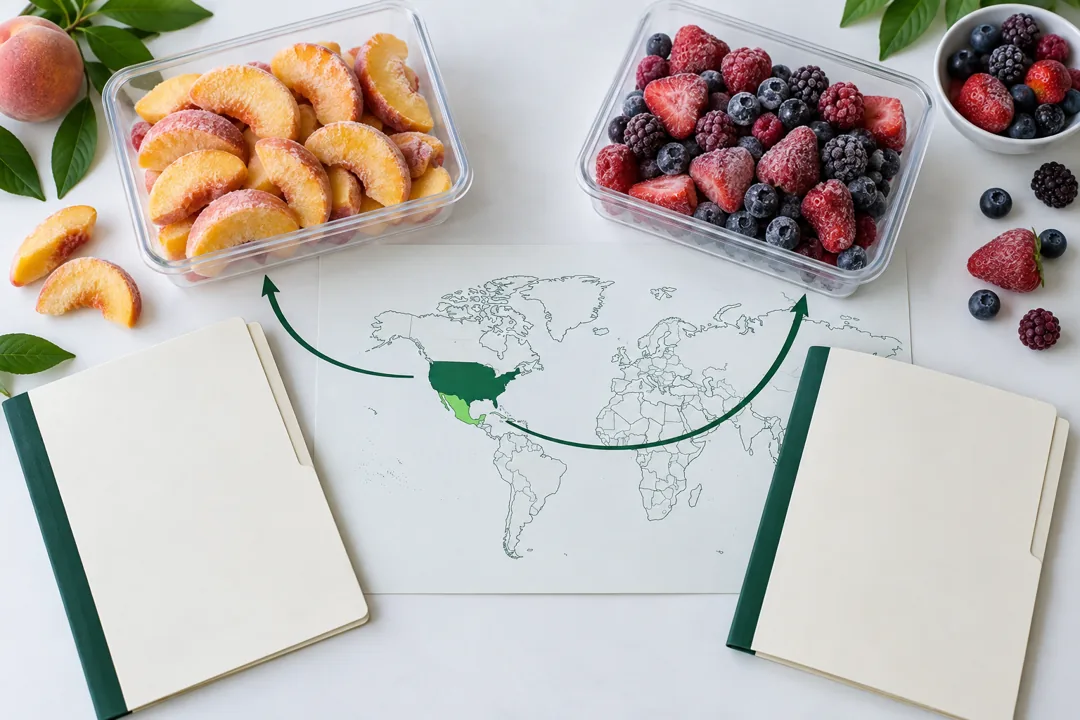
For a U.S. organic import, USDA says each shipment must be associated with a valid electronic NOP Import Certificate issued by the exporter's accredited certifier through the Organic Integrity Database. For the Mexico route, USDA states that Mexico has not recognized USDA organic standards as equivalent for U.S. organic exports; a Mexico-approved certifier must address LPO requirements. The exact approach for a shipment from China or another origin needs route-specific confirmation. These are separate checks from whether the frozen fruit itself meets a purchasing specification for cut, maturity, packing, and cold-chain handling.
The practical purchasing question is therefore more precise than "Do you have NOP and LPO?" A buyer needs to identify the certified legal operations, their current scopes, the named fruit and process, and the records for the intended shipment. We can help a purchasing team specify the frozen-fruit product and assemble the lot and packing facts it needs for a document review. We would not call a lot organic, or claim GreenLand-food holds a particular organic certification, until the actual certificate and product scope have been independently confirmed for that transaction.
Why a buyer may ask for both NOP and LPO
A dual-market request can arise when one purchasing program serves more than one destination, or when fruit will move through an intermediate country before final sale. In either case, the buyer should draw the physical route first. A peach lot frozen in China, an organic ingredient purchased for a U.S. processor, and a product intended for retail sale in Mexico may involve different certified operations and different border documents. The words "NOP/LPO" on a request for quotation do not reveal which path is intended. Ask for the growing country, processing country, export country, importer of record, and destination where the organic claim will be made.
The distinction is commercial as well as regulatory. A supplier may be able to quote the required fruit form but have no verified organic scope for that SKU. Another operation may hold a valid certificate for a different product or activity. A certificate issued for crop production does not, by itself, tell the buyer who handles cutting, freezing, repacking, or export. The purchasing team should compare the names and addresses on the documents with the entities on the contract, invoices, packing list, and product traceability record. Differences may be legitimate, but the certifier and importer need to explain the chain.
USDA's Mexico trade guidance states that U.S. organic products exported to Mexico need certification under Mexico's LPO because Mexico has not recognized USDA organic standards as equivalent. That specific statement concerns the U.S.-to-Mexico route. It should not be stretched into a universal rule for every origin, every product composition, or every transit arrangement. The buyer should put the actual route to a SENASICA-approved certifier and the importing party before committing a carton label or booking a reefer.
Consider a hypothetical purchase request for frozen peach chunks that may be sold to separate U.S. and Mexico buyers. The correct first response is a destination split: which lots are intended for the United States, which for Mexico, and which party will own each import and organic claim? The second response is a document request to the certifier for the relevant operation and product scopes. That sequence prevents a sales phrase such as "dual certified" from replacing verifiable names, dates, covered activities, and specific product forms. It also avoids adding the same buyer request twice simply because it appears on multiple internal quote lines.
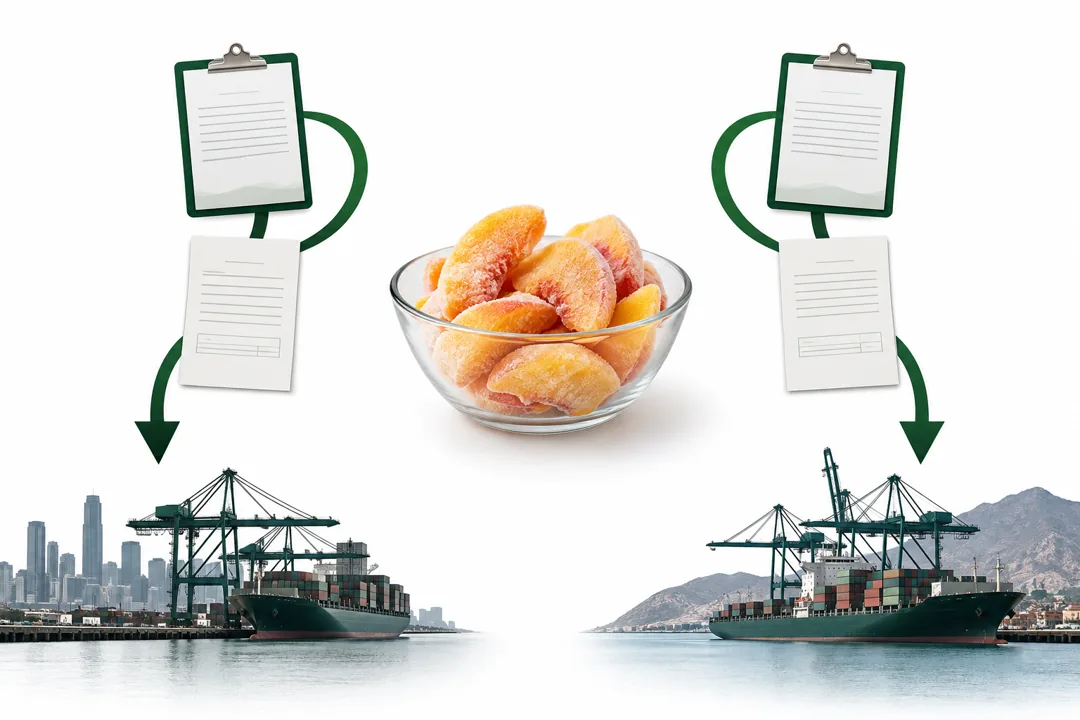
One frozen fruit request splits by destination
The fruit's ordinary quality approval still matters. A certificate does not set the acceptable peach cut size, broken-piece percentage, surface frost, net weight, packing format, or intended processing performance. For a buyer using the fruit in a filling or beverage base, those attributes require a sample and written specification. Keep the commercial product trial and the organic-document review connected by one lot code, while retaining separate acceptance decisions. If the product fails the physical specification, a valid certificate does not cure it. If the documents fail, attractive fruit cannot support an organic claim.
Match the origin, destination, product and certified operations
An organic certificate is meaningful only when it identifies the responsible operation and scope that apply to the material being purchased. Start with the farm or collection operation where relevant, then the processor that washes, cuts, freezes, sorts, or packs the fruit. Add a later handler or exporter if that business takes title, relabels, consolidates, or otherwise performs an activity for which certification is required. USDA's general organic trade guidance explains that U.S. organic importers, exporters to the U.S., and many intermediaries fall under expanded certification requirements, subject to limited exemptions. The exact status of each business must be checked, not inferred from its role name.
On the product schedule, look for the commodity and the form offered. "Organic fruit" is too broad for a buyer ordering IQF peach chunks. A schedule may identify a particular fruit, ingredient category, or handling activity; it may also specify locations and validity conditions. Ask the certifier or certificate holder to show how the frozen form maps to the scope. A seller's web product page can help define cut sizes and packing questions, but it is not evidence that the pictured goods are certified organic. The photographs here show real GreenLand frozen peach chunks as a form example only.
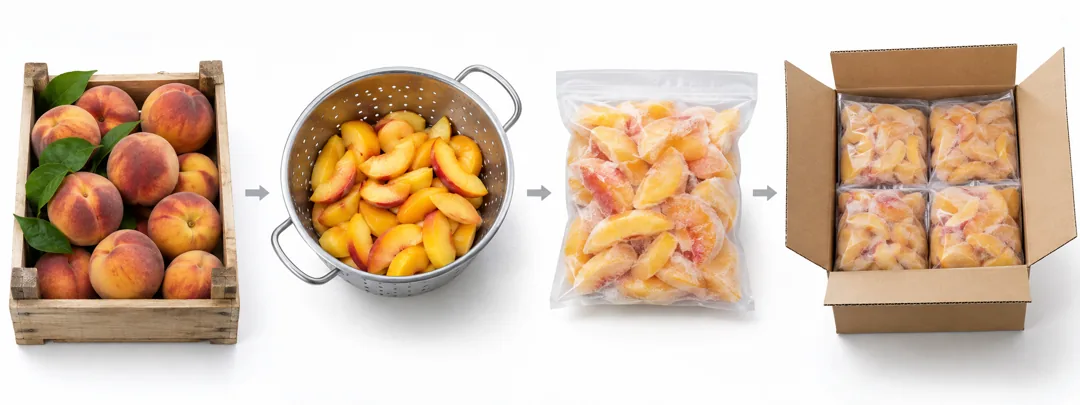
Distinguish fruit production, processing and frozen pack
Lot identity should remain intact while fruit changes form. The purchasing file should be able to connect source fruit, processing batch, packed cases, pallet or container identification, and the documents prepared for export. Ask whether organic and conventional material are processed in the same facility and what the operation's approved segregation controls cover. Do not translate a marketing phrase such as "dedicated line" into a factual claim without the current certificate or process evidence. A mass-balance or traceability review belongs with the certifier's approved system and the buyer's own acceptance procedure.
Origin has more than one meaning in a frozen-fruit supply chain. The crop may be grown in one country, frozen in another, and exported from a third. A product's country-of-origin declaration for customs purposes may follow rules that differ from the location of organic production or processing. For this article's organic decision, record each location as a separate fact and ask the certifier and importer how the route is treated. The relevant authority may need to see the operation that performed the last handling activity before export. USDA's Strengthening Organic Enforcement FAQ gives specific guidance on the final certified operation named in a U.S. NOP Import Certificate; do not choose that name merely from the invoice header.
The buyer also needs to distinguish product composition. Plain IQF fruit and a sweetened frozen fruit preparation do not necessarily have the same ingredient list or labeling category. For a blended or packed consumer product, confirm every ingredient and the intended organic claim with the certifier. If the carton is for industrial use, specify the claim and accompanying documents that the downstream manufacturer actually needs. The certificate review must follow the real product, not a generic title reused from a previous order.

Real GreenLand frozen peach form for product scope discussion
This operation map is useful before price negotiation. Organic material may require a certified route that changes sourcing, packing, document lead time, or feasible shipment date. A price based on conventional frozen fruit should not silently become an organic quote after the buyer asks for a seal. We would request the destination and certification evidence early enough to confirm availability and quote validity. If a certificate is pending, expired, restricted, or does not name the product, the offer should remain conditional instead of carrying an unverified organic description.
Check Mexico recognition and the applicable route
Mexico's LPO is a national organic framework that includes production, processing, commercialization, certification, and labeling requirements. SENASICA's certification guidance describes approved organic certifiers and the scope of activities they assess. The accessible USDA Mexico page is explicit on the U.S. route: Mexico has not recognized USDA organic standards as equivalent, so U.S. organic products sold as organic in Mexico require LPO certification. A buyer should use this as a clear warning against assuming that a USDA seal alone grants Mexico access.
For shipments originating elsewhere, the question remains route specific. Identify the exporter, the last handler, product origin, intended Mexico organic claim, and any repacking or transit. Then ask a SENASICA-approved certifier to state which operations and products require LPO coverage, what shipment control document applies, and who can request it. A certifier's decision is better evidence than a supplier brochure claiming broad "Mexico acceptance." The buyer should also have the importing party confirm current border and label requirements under the actual transaction. Requirements can change, and the exact order of production and export matters.
CCOF's Mexico program page illustrates why the two systems need separate attention. It describes LPO evaluation for operations exporting organic products to Mexico, including requirements that differ from NOP, and a Mexico Control Document for shipments under its program. That page is a certifier program description, not a universal certificate template. Oregon Tilth's U.S./Mexico transaction certificate instructions similarly show the need for a shipment document under its U.S.-to-Mexico pathway. The document name, issuer, and timing for another certifier or origin must be confirmed rather than copied from these examples.
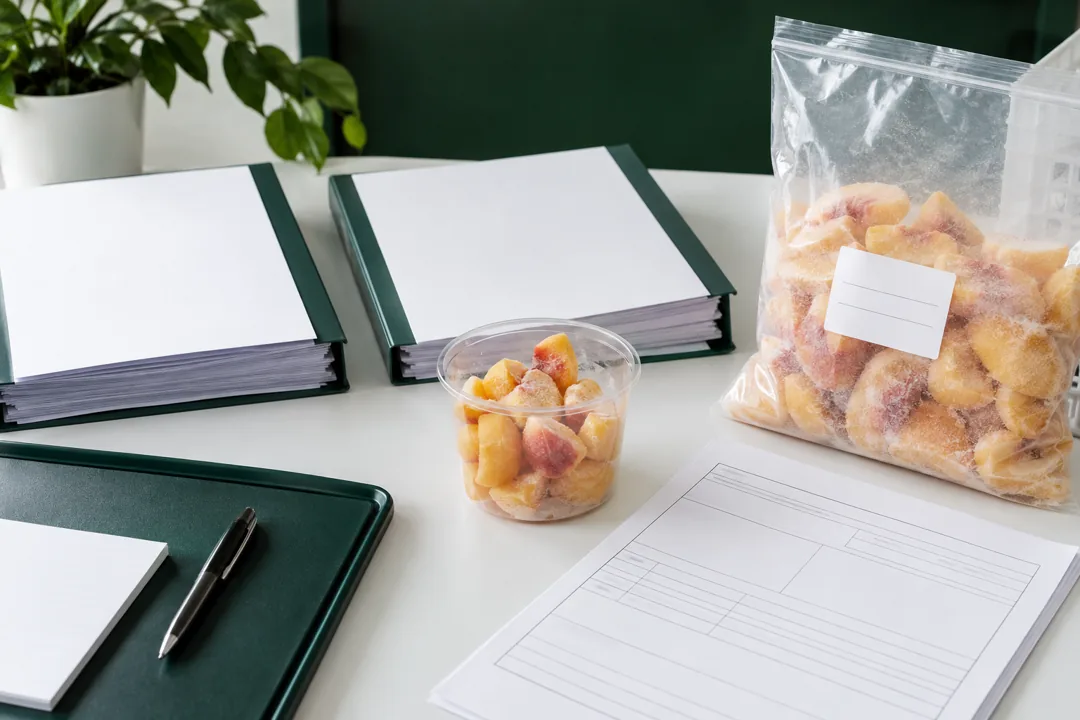
Separate standing certification from one-shipment record
Label review is part of the same decision. Organic wording on master cartons, retail bags, invoices, online listings, and customer specifications should match the certified status and the destination rules. USDA's Mexico page notes that the USDA organic seal and Mexican organic seal depend on certification to their respective standards. Before print approval, ask who owns the artwork and who authorizes the claim. A buyer may be able to purchase frozen fruit for conventional sale while a certification question is unresolved, but the organic description and markings must remain held until the required evidence is accepted.
Do not read a certificate logo as a substitute for checking certifier approval. Confirm the certifier's current status with the relevant authority or official directory and compare the certificate number, operation name, scope, issue status, and product category. Ask whether the certification covers the exact activity of a repacker or private-label handler, where applicable. For a multi-origin fruit program, repeat the check for each originating and processing operation. A single certificate from one facility does not automatically cover replacement supply from a second factory.
The safest procurement sequence is simple: freeze the intended route in writing, have the certifier identify the certification path, then authorize labels and shipping documents against the named lot. This is a planning method, not a customs ruling. Import admissibility, other food requirements, and organic-market claims all need confirmation by the responsible professionals for the destination. The buyer should make the unresolved item visible on the order approval sheet rather than burying it in a general "certificates available" line.
Separate operation certification from shipment evidence
An operation certificate demonstrates an approved status and scope at a point in time. Shipment evidence connects a particular movement of goods to that status. The distinction matters because an importer can possess a valid processor certificate while lacking the import certificate or control document for the specific cargo. It can also possess a shipping document whose lot description differs from the cases loaded. Neither file should be approved without reconciliation to the actual product and route.
For the United States, USDA states that each organic import shipment must be associated with a valid electronic NOP Import Certificate. The exporter's accredited certifier issues it in the Organic Integrity Database at the client's request, and the importer uses its data in the U.S. customs ACE filing. The USDA electronic certificate page is the current primary starting point for that workflow. Ask the exporter and certifier when the request must be completed relative to departure, how revisions are handled, and which importer receives the certificate data. Do not assume that a PDF copy of an operation certificate is the same document.
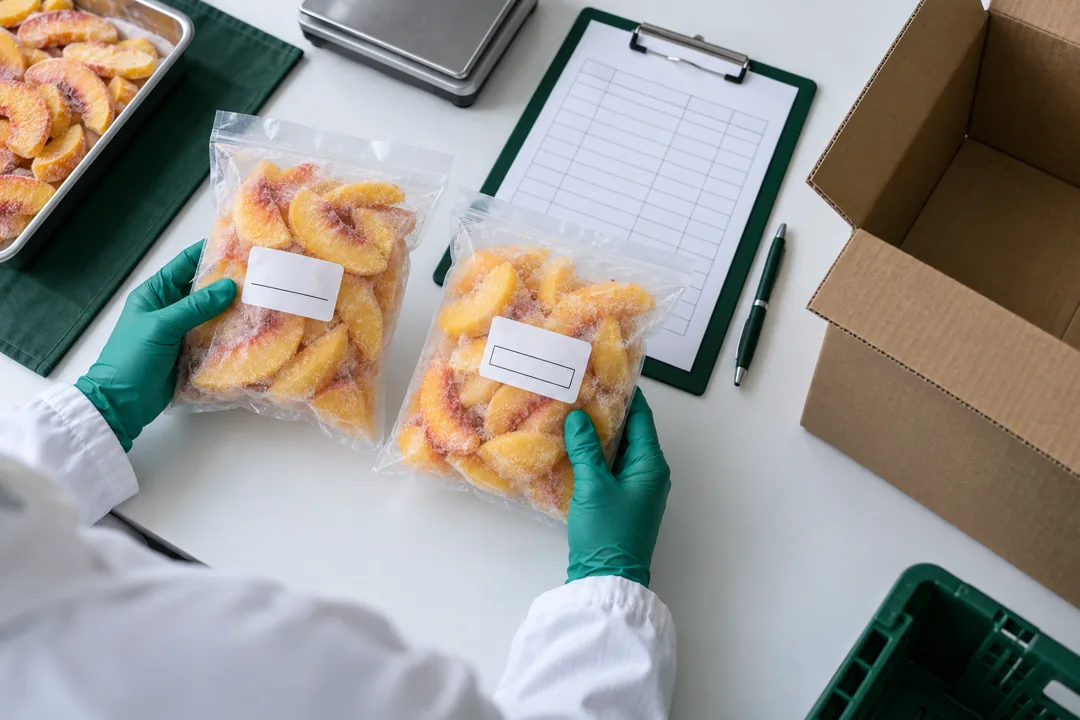
Match frozen fruit lot and shipment paperwork

Real bulk frozen peach photo near shipment lot discussion
The shipment file should carry matching identifiers. Compare product description and form, lot or batch codes, quantity, case count, exporter, consignee, shipping date, container number, and the document number required by the destination route. Differences need a documented explanation and, when necessary, an authorized correction. A packing list that says "peach slices" while the certificate or purchase order says "peach chunks" may be a harmless naming mismatch, or it may point to a different product. Resolve it before the cargo moves and before organic labels are applied.
Frozen fruit introduces physical controls that the organic file alone cannot answer. Specify the agreed product temperature at loading, reefer set point, packaging integrity, seal number, and traceable case marking. The quality file should retain the loading record and destination receipt findings. Those records protect product quality and lot identity; they should not be presented as proof of organic status by themselves. The organic traceability trail and the cold-chain trail meet at the same lot and shipment number, allowing a buyer to investigate either type of discrepancy without conflating them.
A document approval date is useful. If the order is placed weeks before harvest or packing, the final lot does not yet exist; the buyer may review the standing certificate and planned route first, then require a final shipment document before dispatch. This is an honest conditional approval. It prevents an old certificate or a sample document from being treated as the issued paper for a new container. The purchase order can state who must send the final file, who checks it, and what happens if the information does not match the loaded fruit.
For Mexico, ask the relevant approved certifier and importer for the document route that applies to this origin and transaction. Certifier examples show that control or transaction documents are used for specific pathways, but the buyer should not make a universal form promise. The product may pass through another certified handler, undergo repacking, or be sold under a private label. Each event can change the responsible operation and evidence. Keep the full route visible from farm to destination market so the certifier can give a precise answer.
Approve a two-market frozen-fruit document matrix
One approval table is easier to operate than a folder of disconnected certificates. Create one row per destination and lot, then record the actual origin, certified farm and processor where applicable, final handler or exporter, product scope, intended claim, shipment document, responsible issuer, and remaining open item. The table below is a proposed buyer control, not a declaration that any GreenLand lot is certified. Replace every "confirm" entry with verified evidence for the real transaction before placing an organic claim on sales material or cartons.
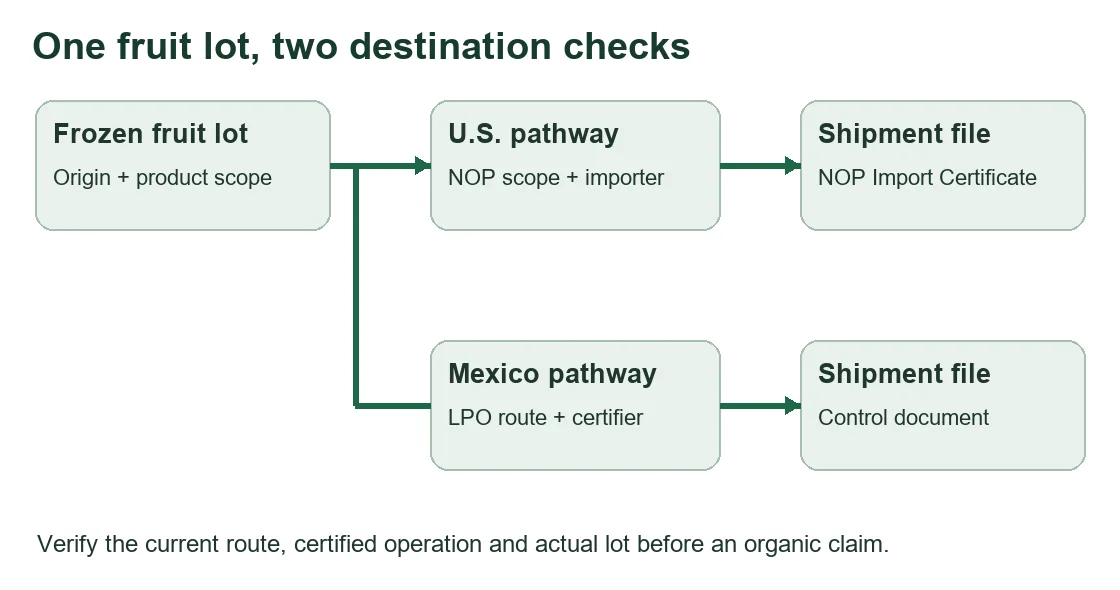
Show branching U.S. and Mexico document checks
| Decision point | U.S. organic import | Mexico organic route |
|---|---|---|
| Destination and claim | Name U.S. importer and proposed organic label | Name Mexico importer and proposed organic label |
| Certified operations | Confirm USDA-accredited scope across applicable operations | Confirm LPO or recognized route with SENASICA-approved expertise |
| Product scope | Match named frozen fruit and processing form | Match named frozen fruit and processing form |
| Shipment evidence | Valid electronic NOP Import Certificate and ACE data | Certifier-confirmed control or transaction document for actual route |
| Lot and packing match | Reconcile description, quantity, lot and container | Reconcile description, quantity, lot and container |
| Release owner | Importer, exporter and accredited certifier | Importer, exporter and approved certifier |
The matrix should name people, not only organizations. Ask who requests the certificate, who receives the issued document, who checks the final packed quantity, and who authorizes the organic claim. For a private-label program, include the artwork owner and the party that approves printing. If a document arrives after the booking cutoff, the buyer should know whether shipment can wait, whether it must move without an organic claim, or whether the transaction must be renegotiated. The answer depends on the contract and destination advice; it should be agreed before urgency removes options.
Sampling follows the same lot discipline. Request a representative frozen sample under its true status. Compare cut, color, texture after the intended use, free-flowing condition, broken pieces, and packing with the approved purchase specification. Where several grades are offered, ask which exact form and size are included in the certifier-reviewed product schedule. An organic label does not imply a premium appearance grade, and a carefully selected display sample is not a substitute for bulk-lot acceptance. Link sample approval to the planned harvest and processing window.
GreenLand-food's frozen fruit range and frozen peach forms help buyers identify the commodity, cut, packing, and application to ask about. Our existing organic frozen vegetable sourcing guide gives wider context on certification and cost, while this document focuses on the NOP/LPO destination split and shipment evidence for fruit. These product and knowledge pages do not establish that a particular organic frozen-fruit SKU or dual certification is available. Ask for current proof tied to the exact offer.
For a purchase order, send the supplier a precise brief: fruit and cut, quantity, packing, crop and processing origin, destination, intended organic claim, import party, required certification scopes, planned shipment window, and requested documents. Have the responsible certifier and importer review the route before the final order and label approval. Keep conventional and organic quotes separate until availability and scope are proven. The procurement decision then rests on an identified product, a traceable lot, and destination-specific documents that can actually be checked.
Source Frozen Fruit with GreenLand-food
GreenLand-food is a professional frozen fruit supplier and manufacturer in China, providing factory-direct wholesale supply for importers, food manufacturers, foodservice distributors, and private-label programs.
Send the product form, specification, packing, quantity, application, destination, private-label needs, and requested documents. We will confirm the current offer and documentation for your order.