


Tororo Soba: Which Yam Makes the Grated Topping?
Sep 27, 2026
Leave a message


Identify tororo soba and its grated topping
In the finished bowl, tororo gives soba a distinctive texture: a grated, viscous yam layer that clings to noodles and loosens as it meets the broth or dipping sauce. The dish may also include scallion, nori, egg, or other garnish depending on the kitchen. What defines this version is the grated yam experience. A spoonful of plain diced yam beside soba does not deliver the same mouthfeel, even if both ingredients are accurately called yam on a purchasing sheet.
The Japanese Ministry of Agriculture's description of tororo soba is useful cultural context for the dish. It also illustrates why an importer needs more than a generic English ingredient name. The culinary expectation is tied to grating behavior and a particular way the yam is served. Before reviewing a supplier sample, have the kitchen prepare a reference bowl from an ingredient it already accepts. Describe how the tororo flows from a spoon, how it coats the noodles, and what the customer should notice after the first bite.
The sauce affects the evaluation. A thick grated yam sample can seem appropriately sticky on its own but become too loose when mixed with a generous pour of broth. A thinner sample may coat noodles well in a dry bowl yet disappear in soup. Decide whether the menu item will be served chilled or hot, whether sauce is separate or already in the bowl, and how long the finished dish waits before service. These are formulation decisions, not properties a frozen ingredient supplier can decide from a photograph.
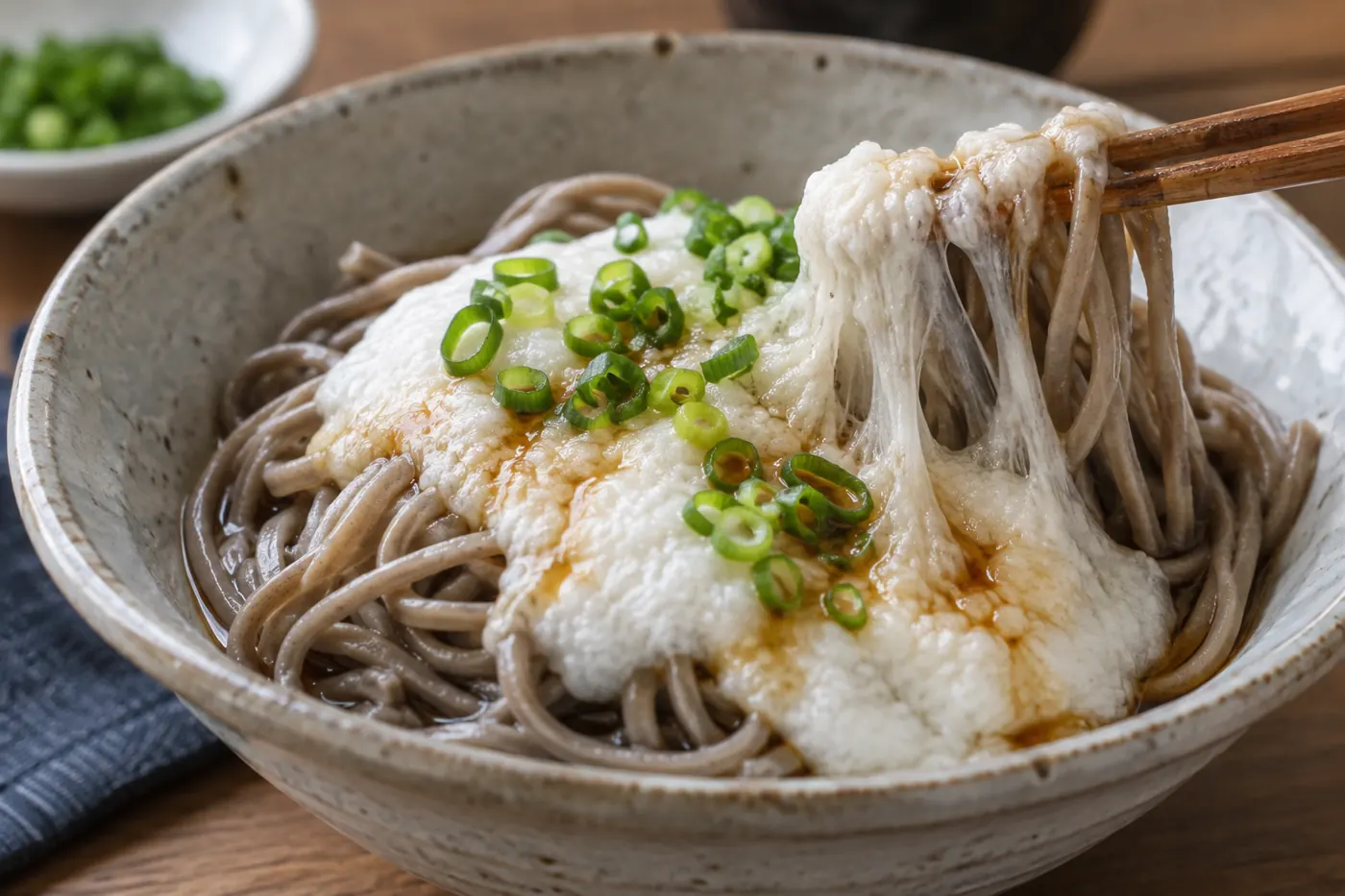
A bowl of soba with a pale grated yam topping.
Portion size matters because tororo can dominate a bowl's texture even at a modest weight. Record the prepared yam portion, noodle weight, and sauce volume when testing. Ask several tasters to compare the intended coating and flavor after the topping has been mixed into the noodles. A preparation that looks correct before the first stir may become watery or uneven later. Keep the test tied to the actual serving format rather than a tasting spoon at the development table.
The dish photograph here is an explanatory illustration of grated topping on soba. It is not a GreenLand product photo or evidence that any offered frozen cut is ready to grate and serve raw. The distinction matters when a menu buyer forwards a visual to purchasing: the team should ask what product would produce this topping under its approved kitchen process, not assume the pictured bowl identifies the material in a supplier's case.
If a distributor serves several Japanese-style outlets, consider whether the same topping standard suits every route. A central kitchen may grate and portion an approved ingredient under controlled conditions; an individual outlet may need a prepared topping with a defined handling instruction. Those choices affect pack size, yield, transport, and the time between preparation and service. Write the service method before asking a supplier for a price, because the commercial form follows the method.
Distinguish nagaimo, yamato-imo and other yamaimo
"Yamaimo" is used as an umbrella in Japanese food language rather than a precise purchase specification for one botanical species. The MAFF dish reference names nagaimo, yamato-imo, ichou-imo, and jinenjo among the types associated with grated yam preparations. They can differ in texture and kitchen behavior. The diagram maps the names as culinary categories; it deliberately does not declare that all four are the same species.
For a contract, request the botanical name and the supplier's commercial product name together. The former helps prevent a translation error, while the latter tells the kitchen what the seller actually packs. An English label saying "Chinese yam," "Japanese yam," or simply "yam" may be insufficient when a recipe relies on a particular grated texture. Even if the name is correct, grade, maturity, and processing can change performance. Keep a retained sample or reference description alongside the written identity.
Nagaimo is one familiar type in grated dishes, but the name alone does not establish a supplier's exact item. The Japanese food composition tables provide botanical context for foods identified as nagaimo. A buyer should check the offered lot's own documentation rather than infer botanical identity from a recipe page. Ask whether the quoted cut, pack, and processing route refer to the same plant the development kitchen evaluated.
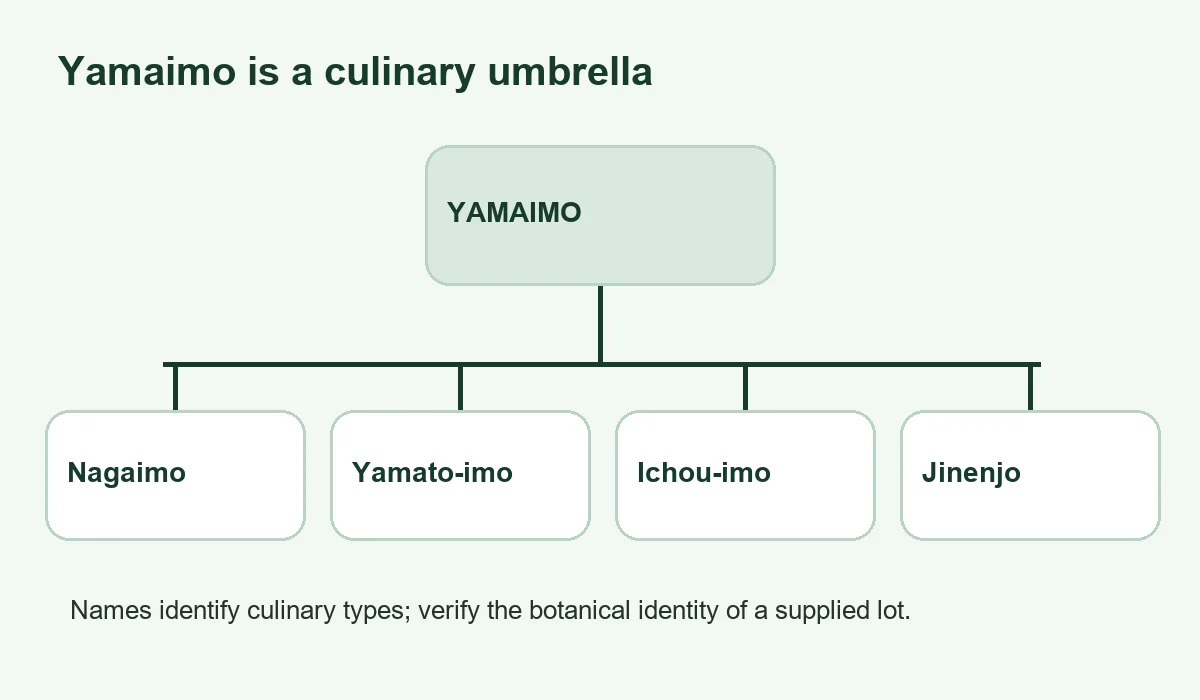
Japanese yam naming map with several culinary types.
Translation errors can survive several rounds of sampling because appearance seems close. A peeled frozen white cube may look like a familiar yam even when it comes from a different material or has been processed for a different use. The problem usually appears when the kitchen grates, thaws, or tastes it. Put the botanical and use information on the sample request, not only the final purchase order. Then compare what arrives with the document before investing in a full menu trial.
Texture vocabulary should also be defined. One chef may describe a sample as sticky, another as slimy, and a third as viscous. Those words may point to different features: strand length, cohesiveness, thickness, and how readily the yam releases from a spoon. A short video and a physical reference sample often make the requirement clearer than a single adjective. State the preparation method in the reference, including peel, grate or blend method, and any added liquid.
If the dish uses a different Japanese yam type by design, name that choice rather than making a silent substitution. A restaurant may intentionally want a denser tororo or a lighter topping. The supplier's role is to quote the available ingredient accurately, and the kitchen's role is to verify the resulting dish. Clear naming protects both. It reduces the chance that a sourcing change alters a signature texture after the menu photograph and description have already been approved.
Treat sticky texture as a measured ingredient requirement
Grating method has a large effect on what the diner sees. A hand grater, a coarse machine, and a high-speed blender can produce different particle size and incorporated air from the same root. When comparing ingredient samples, use one preparation method and one portion size. Keep peel loss and trim in the yield record. Otherwise, a machine change can be mistaken for a difference between yam types or suppliers.
The two sample textures in the illustration point to a practical comparison: does the grated material lift in coherent strands or run away as a thin liquid? Observe it on a spoon, then on the noodles after sauce is added. A texture that stretches attractively in a small bowl may be difficult to portion at service. A fluid topping may dispense easily but provide little coating. Select the target by how the dish is eaten and how staff will plate it, not by an isolated visual preference.
Temperature and waiting time belong in the test record. Grated yam prepared immediately before service may behave differently from a topping portion held under the kitchen's approved conditions. If the program uses central preparation and distribution, evaluate the material at the end of that route as well as at the start. Record separation, color change, and any water release without assuming one trial predicts a different product or a longer hold. Food safety limits remain separate from a sensory hold target.

A spoon lifting sticky grated yam beside a looser sample.
A simple pilot can compare three candidates with the same grate, portion, noodles, sauce, and waiting period. Photograph the topping on the spoon, on the dry noodles, and after mixing. Ask tasters to note coating, ease of slurping, blandness or off flavor, and whether the yam settles in the bowl. Keep the notes descriptive. A score such as 8 out of 10 means little if reviewers used different sauce volumes or did not agree what the target should feel like.
Yield is more than the weight left after peeling. For a frozen input, measure thaw loss, any discarded liquid, unusable pieces, and prepared topping yield. For a fresh root, measure peel and trim. Compare cost per acceptable serving under the intended process. A low case price can be misleading if the resulting topping is too thin or a large share cannot be used. Conversely, a premium input may be justified for a menu where the tororo texture is central to the customer's expectation.
The kitchen should write a short acceptance instruction from the winning trial: ingredient identity, preparation method, target texture, and the condition at plating. Keep a photograph or video from the approved batch. When a new shipment arrives, staff can compare it with something concrete. This is especially useful when the product is distributed through several kitchens and the original development chef is not present to judge every lot.
Compare fresh grated, frozen grated and frozen cut forms
GreenLand's frozen yam product page shows frozen pieces as a supplied form. The real product photographs in this section show those cuts. They are useful for discussing size, shape, packing, and how a case might feed a further process. They do not show a grated topping and do not certify that the product can be thawed and eaten without a validated preparation. A buyer should make that distinction explicit in the sample brief.
Frozen cuts may be attractive when a food manufacturer or central kitchen needs a portionable input. Yet freezing and thawing can change texture and release liquid. The effect on a tororo preparation must be tested with the proposed product, not inferred from a fresh-root recipe. Ask whether the offered lot is intended for cooking, further processing, or a specific ready-to-eat use. If the supplier has not documented a raw-use route, do not fill that gap with an assumption from the ingredient's Japanese name.

Frozen yam chunks shown on a GreenLand product page.
Piece size affects processing. A small dice can be easier to meter into a blender; a larger chunk may be preferred where the kitchen wants to assess integrity or control grating. What matters is how the actual pieces behave after the permitted thaw or cooking step. Inspect whether the cut is consistent enough for the machinery, whether it clumps in the pack, and whether the process produces the required texture. Set an agreed size range in the purchase specification only after the trial shows it matters.
The two photographs show separate views of frozen yam pieces from GreenLand. They should be treated as evidence of the general product form visible on the site, not as a promise that every shipment has identical piece dimensions or color. For a commercial order, ask for the current specification, case configuration, origin, lot coding, and representative sample. Confirm the documents needed for the destination market and the cold-chain handoff before deciding how the ingredient fits a kitchen plan.

A second GreenLand photo of frozen yam pieces.
If the route involves cooking the yam, the finished result may be a different dish from conventional tororo soba. That can be a good menu choice, but it should be described honestly. For a true grated-yam topping, the developer must verify the material and process appropriate to that use. Keep the proposed frozen cuts and any prepared grated product as separate candidates on the trial sheet. Otherwise, favorable comments about one may be mistakenly applied to the other.
We can discuss frozen yam supply when the application, quantity, destination, and required form are clear. A supplier can confirm what it offers; the buyer's kitchen and food safety team must approve the way it is prepared and served. That division of work is particularly important when a photograph of a finished soba bowl is being used to introduce a procurement request for frozen pieces.
Check raw-use status and the finished service test
An unheated tororo topping needs an explicit raw-use decision. The team should establish botanical identity, supplier processing and handling controls, any required microbiological or regulatory evidence, and whether the offered product is approved for that use in the destination market and facility. A generic frozen vegetable listing cannot answer those questions. Freezing is a preservation method, not a universal kill step. The decision diagram sends an unanswered checkpoint back for confirmation instead of drawing a reassuring green arrow through it.
Ask how the product was cleaned, peeled, cut, packed, and frozen, and which steps are documented for the offered lot. Do not assume that a photograph of clean white pieces proves a process or that an unrelated certificate covers the use you intend. Request the specification and appropriate documents through normal supplier channels, then have the buyer's quality team review them. Requirements may differ by market and by whether the ingredient will be cooked before service.
If cooking is required, define it in the recipe and evaluate the resulting dish as a cooked-yam application. If an unheated use is proposed, obtain the evidence and approval required by the site's food safety plan before putting it on a menu. A raw-use decision is not made by taste testing alone. It includes supplier suitability, handling after opening, equipment sanitation, preparation timing, and controls through service. This article cannot issue a blanket approval for a particular lot or kitchen.
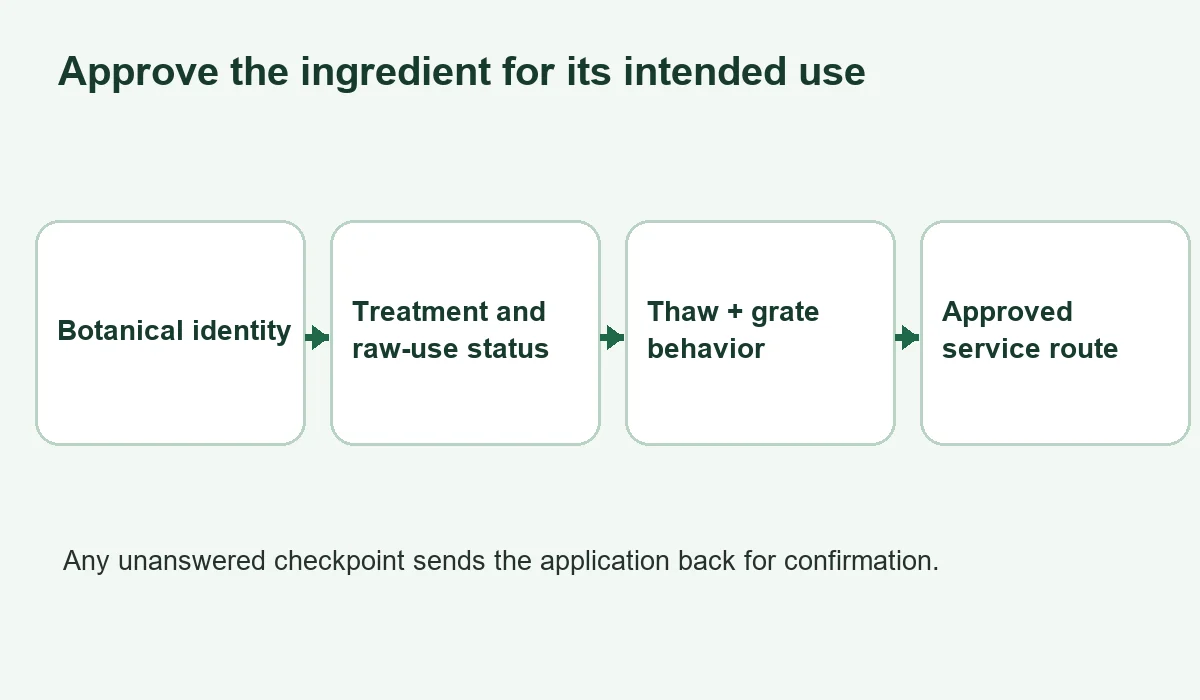
Ingredient approval path for a tororo soba application.
Traceability must survive preparation. Keep the case code with the container used during thawing, grating, or portioning; record any mixing of lots according to the facility's plan. If a central kitchen distributes a prepared topping, label it with the information the downstream outlet needs to use it correctly. Lot history becomes difficult to recover once pale grated yam from several cases has been combined into one unlabeled tub.
Allergen and sensitivity questions belong to the operator's own assessment as well. Some people experience irritation when handling or eating certain yams, and a restaurant should follow its ingredient communication and staff handling procedures. Avoid broad health claims or a promise that a specific type is suitable for everyone. The immediate purchasing question remains whether the supplied material matches the approved menu ingredient and preparation route.
Finally, specify who signs off a change. A substitution in botanical identity, processing, or raw-use status should trigger renewed review, even if the case looks similar. A documented change-control step prevents a buyer from approving a lower-cost input that a kitchen later cannot use for the menu item. The supplier and buyer can resolve these questions before shipment when the intended use is stated clearly at the RFQ stage.
Write a yam ingredient brief that protects the dish
A useful inquiry starts with the application: tororo soba with a defined grated texture, service temperature, and preparation route. State whether the team seeks an ingredient for a cooked process, an approved unheated topping, or a frozen cut to evaluate for further processing. Include the botanical name if known, the commercial name used by the kitchen, desired cut or pack, annual or monthly volume, destination, and documents required. Those details let a supplier answer accurately instead of quoting every product described loosely as yam.
Attach a short description or image of the approved dish and a video of the target spoon behavior if texture is decisive. The image should be a reference for application, not an implied specification for a frozen case. Ask the supplier to identify which offered material is intended for the process and what use restrictions or preparation instructions apply. If the supplier cannot confirm a crucial point, keep it open in the development plan instead of assuming equivalence.
Sample the proposed ingredient in the actual kitchen method. Check incoming identity, package condition, and lot information; record the frozen input weight and prepared yield. Then grate or process it using the proposed equipment and serve it with the intended soba and sauce. Review texture immediately and after the planned service interval. If the material does not meet the reference, write down which attribute failed. A clear failure note gives both the supplier and the kitchen a path to an appropriate alternative.
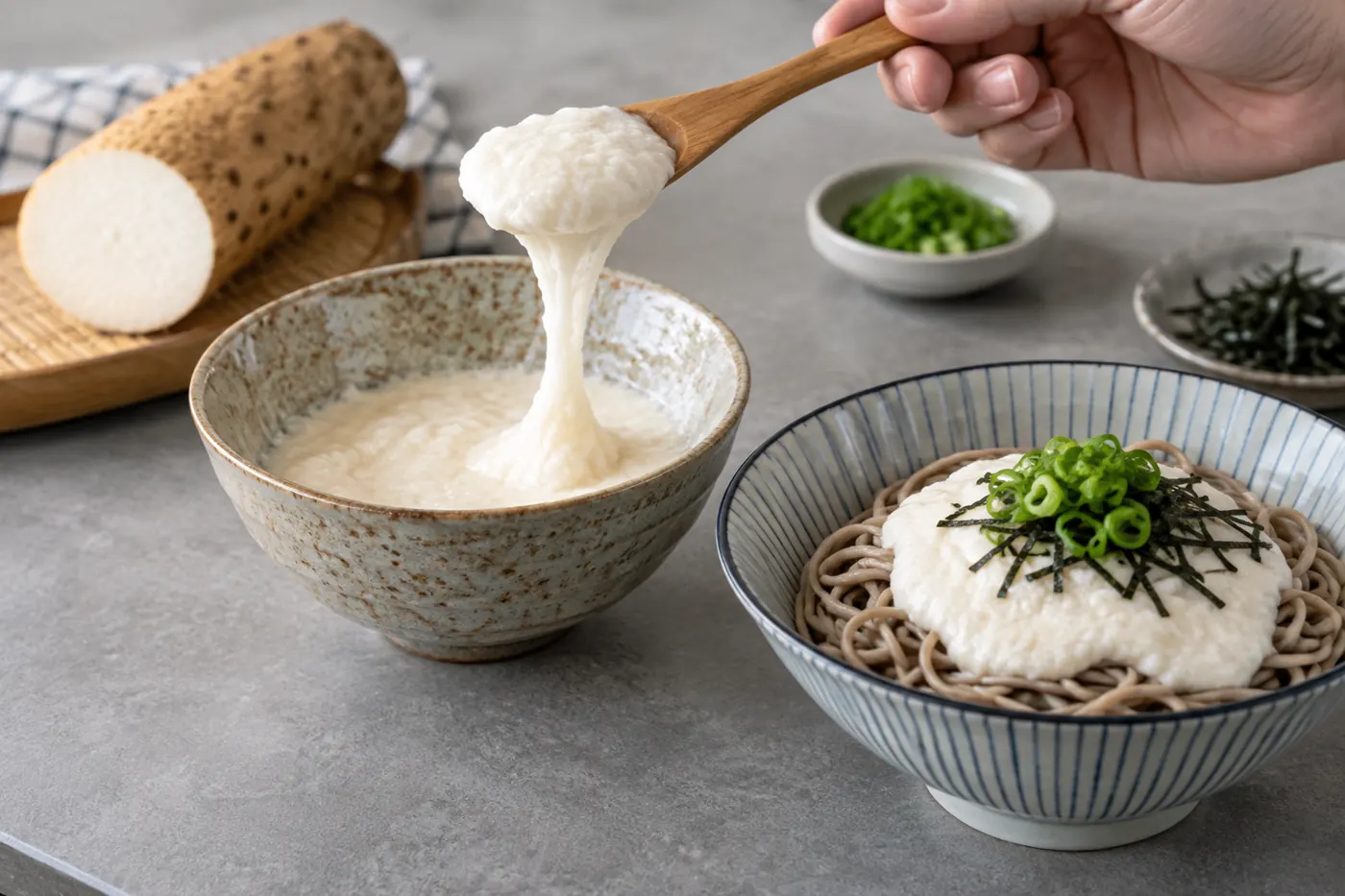
A spoon texture check beside soba and grated yam.
For repeat orders, agree the product specification, acceptable variation, case and pallet configuration, lead time, and cold-chain responsibilities. Confirm whether the destination market needs language or documentation beyond the standard offered pack. A sample is only one point in a supply program. The written specification and receiving test help the next lot resemble the one the menu team approved.
Our frozen yam range can be discussed in that context. We can provide the available supply details for the proposed item and review form, packing, quantity, and destination with the buyer. The kitchen must then confirm that its process creates the intended dish and that its safety route is approved. Keeping these two decisions visible protects the customer experience and makes the purchase order more precise.
Tororo soba is simple to name and unusually easy to misunderstand in procurement. The finished topping is grated, cohesive, and served in a defined dish; a case of frozen yam pieces is an input with its own identity and intended use. Connect them through documented specification, an appropriate processing route, and a real plate test. That is how a menu photograph becomes a repeatable, responsible service item.
If several candidate ingredients are available, schedule the trials close together and use the same noodles, sauce, and serving vessel. This prevents memory of a previous tasting from replacing a direct comparison. Keep a sample of the proposed pack label with each trial record and note whether the product was fresh, frozen, peeled, or already processed. The final selection should identify the exact route that produced the acceptable plate. That detail is more valuable to a future purchaser than a broad claim that the kitchen "tested yam."
Source frozen yam with GreenLand-food
GreenLand-food is a professional frozen yam supplier and manufacturer in China, providing factory-direct wholesale supply for importers, food manufacturers, foodservice distributors, and private-label programs.
Send your product form, specification, packing, quantity, application, destination, private-label needs, and requested documents. We will review the requirements for the proposed order.