


Strawberry Frosting from Frozen Berries: Concentrate Before You Whip
Sep 27, 2026
Leave a message

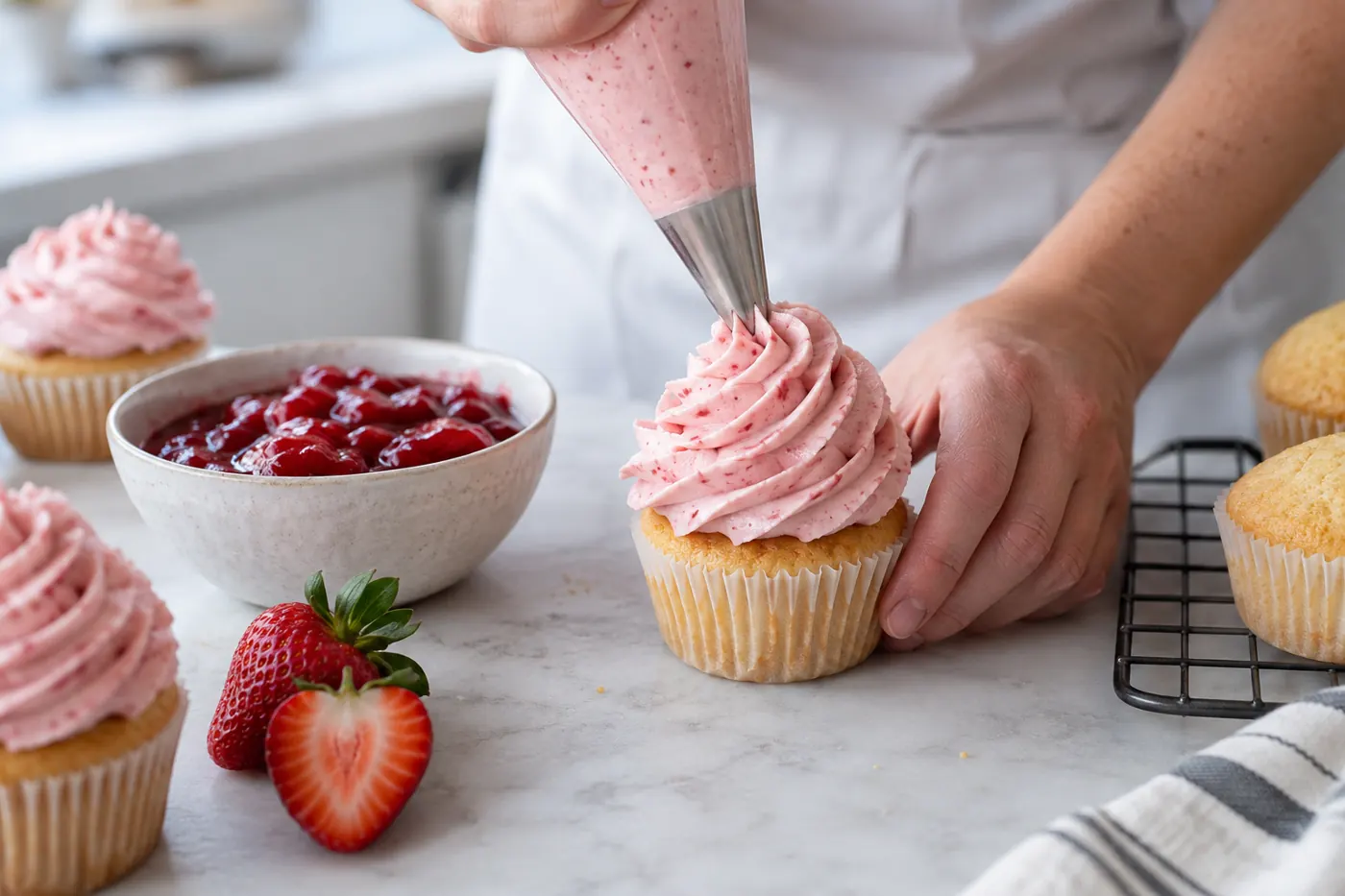
Understand why thaw liquid softens frosting
Start by measuring what happens when the frozen fruit thaws. Place a known weight in the approved food-safe container, follow the intended thaw procedure, and record the fruit and any free liquid separately. The diagram shows the basic material split without giving a universal percentage. Water release varies with the fruit, cut, ripeness, freezing history, and how the material is handled. An exact yield taken from someone else's recipe can make a pilot look precise while concealing the actual variable that determines frosting stability.
Decide whether the liquid is discarded, included in a reduction, or used elsewhere in the recipe. Draining can quickly reduce free water, but it also removes soluble flavor and color. Cooking down the fruit and juice concentrates those components while adding heat, time, and a possible cooked-fruit note. A bakery aiming for a fresh strawberry flavor may choose differently from one seeking a strong pink buttercream that survives transport. Record the choice so a second shift does not make the same frosting with a different water balance.
The buttercream base also matters. American-style buttercream, cream cheese frosting, and meringue-based buttercream do not respond identically to fruit addition. Fat content, sugar, emulsification, and initial temperature all change the amount of fruit a base can tolerate before it looks loose or split. Trial the fruit preparation in the exact base planned for production. A successful result in a small bowl of high-sugar buttercream should not be applied automatically to a lighter whipped formulation.
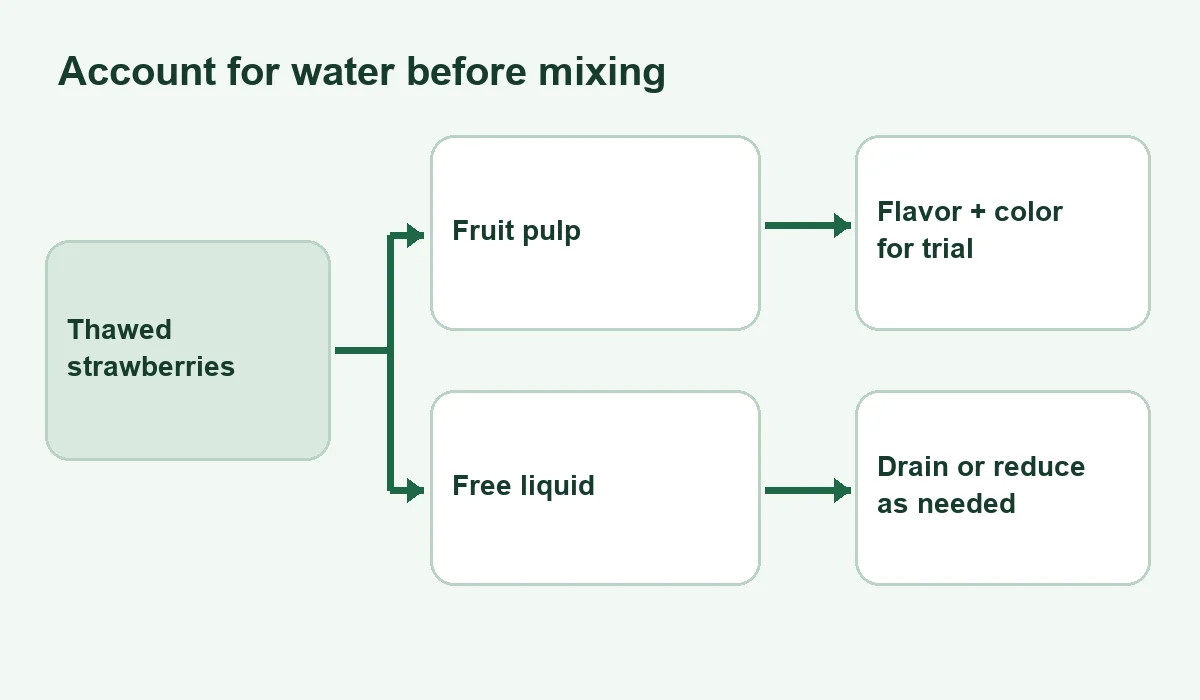
Thawed strawberry pulp and free liquid feeding a frosting trial.
Some recipe sources suggest reducing berries before adding them, as in Sugar Spun Run's strawberry frosting approach. That is a useful formulation idea, not a fixed industrial specification. The reduction end point needs to be described by weight, consistency, and process in the buyer's own equipment. A saucepan trial may evaporate water differently from a steam-jacketed kettle. Measure the prepared strawberry mass and its temperature before addition rather than instructing operators to "cook until thick" without a reference.
Cooling is part of the material balance. Warm reduction can soften butter and temporarily make a frosting appear fluid even if its final solids are adequate. Let the fruit preparation reach the temperature specified by the formulation before mixing, and record that temperature. If the reduction is stored for later use, apply the facility's approved cooling and holding controls. The texture test should use fruit prepared in the way production will actually prepare it.
A mass record makes the economics clearer. Write the frozen input, drained or evaporated amount, usable concentrate, and frosting batch yield. Compare candidates by cost per acceptable decorated unit, not only by price per kilogram of fruit. A berry that provides excellent flavor after modest reduction may be worth more than one requiring a long cook or additional color adjustment. The buyer should inspect several representative lots if small changes in fruit solids visibly affect a high-volume finish.
Turn frozen berries into a measured fruit base
Whole berries, halves, slices, and dices can all enter a puree or reduction process, but they create different preparation and inspection tasks. Smaller cuts may thaw and feed equipment more conveniently. Larger pieces can make it easier to inspect the fruit's original integrity before processing. Select a form based on the actual mixer, kettle, screen, labor, and yield. The real GreenLand photograph in this section shows frozen strawberry halves; it illustrates a purchasable fruit form, not a promise that those halves yield a particular frosting texture.
Look beyond cut size. Ask for the proposed grade, packing, case weight, lot identification, origin, and relevant quality documents. If the frosting's color is part of a decorated product standard, request a sample that represents the offered material and test it in the finished frosting. The same red fruit can read differently once dispersed through a white fat-rich base. A berry's visual appeal while frozen is useful for incoming inspection but insufficient to approve the finished cupcake or cake.
Thawing practice should be consistent. A direct-from-frozen cook may retain released juice in the kettle, while a prior thaw and drain will start with a different mass. Both can be legitimate processes. What matters is writing the method and evaluating the yield it creates. Keep the fruit protected and identified through the approved route; label intermediate puree or concentrate with the information the site requires. Do not reuse a pilot result after changing from halves to a different cut without confirming the behavior.

Frozen strawberry halves shown on a GreenLand product page.
The ingredient declaration may become important in a commercial frosting. A bakery can choose fruit alone, fruit with sugar, or a processed puree with its own formulation, but those are not interchangeable on a label or in a nutrition calculation. Confirm the exact supplied ingredient specification before composing claims about fruit content or added sugar. GreenLand's frozen strawberry range is a starting point for the supply discussion; the quotation and product documents define the offered case.
Frozen fruit is still an agricultural input with potential variation. Crop, cultivar, and handling can change flavor intensity and color. A tightly standardized frosting may need a fruit reference and a controlled adjustment procedure; the team should decide what may be adjusted and who approves it. An instruction to add more berries until the color looks right could add enough water to ruin piping. Protect the physical performance target while making any color adjustment.
For a multi-site bakery, consider whether fruit will arrive at each bakery or be converted into a standardized concentrate centrally. The second route can simplify store mixing but adds a separate manufactured intermediate with its own controls, packing, and shelf life. The first route may offer flexibility but demands stronger site-level instruction. State which operational model is planned when requesting fruit samples and packing options, because the most convenient case size can differ sharply between them.
Compare direct liquid, reduced base and dry fruit powder
Three common strawberry inputs illustrate the water problem. Thawed wet puree brings fruit solids, aroma, and free water. A cooked reduction concentrates the puree by removing water, usually making it easier to add meaningful strawberry flavor without overwhelming the frosting structure. Freeze-dried powder is very low in water and often gives strong color, but it is a different ingredient category with its own flavor and labeling considerations. The comparison image distinguishes the physical forms; it does not imply that GreenLand supplies every one of them.
Wet puree may be enough when the frosting base has room for liquid or the desired result is soft and spreadable. It is less forgiving when a decorator needs crisp ridges from a small piping tip. If using wet puree, add it in measured increments, allow the mixture to equilibrate, and assess after chilling and rewhipping as the process requires. A sample that looks acceptable while freshly mixed may weep onto the cake or slump after a display interval.
Reduction offers more control, provided the cooking process is repeatable. Weigh the pan or kettle contents before and after evaporation and define the end point using measurements that operators can reproduce. Note the effect of heat on strawberry aroma and color. An overcooked dark reduction might stabilize the frosting but miss the intended fresh fruit profile. A lightly reduced puree might preserve aroma while still carrying too much water. Compare them in the same base at a fixed fruit loading.
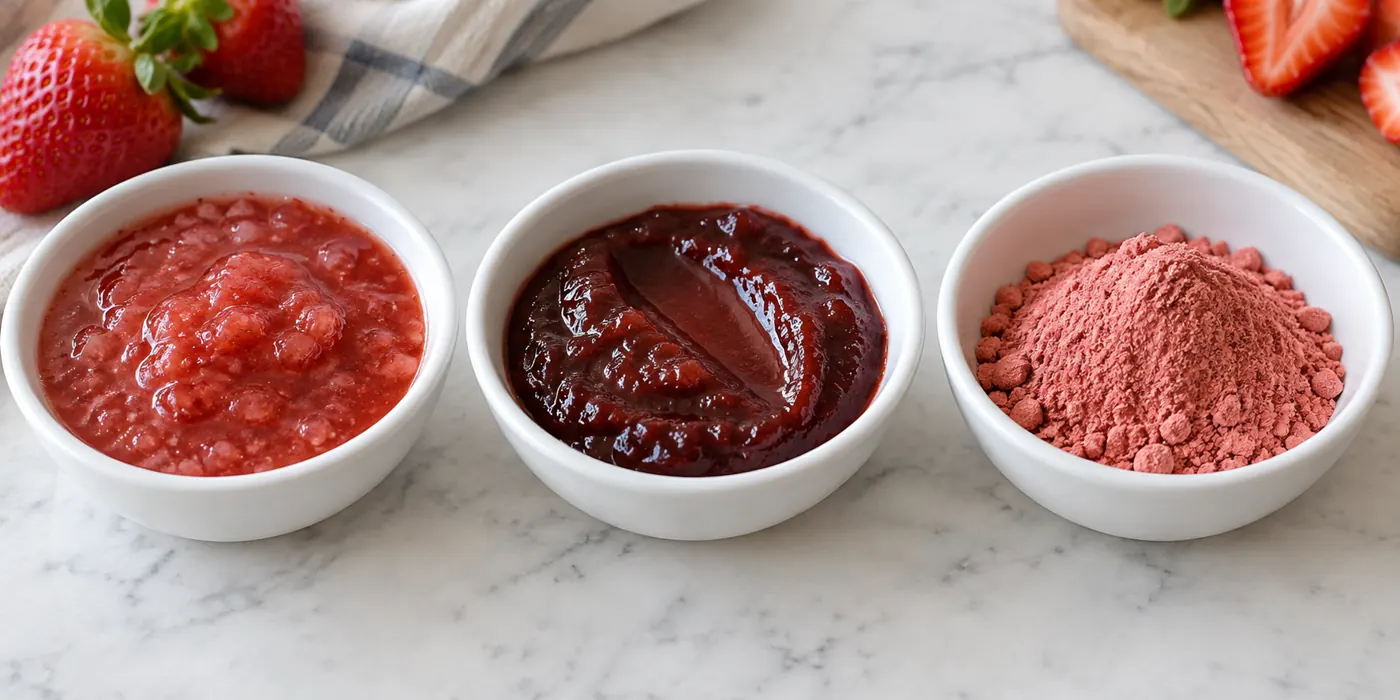
Wet strawberry puree, thick reduction and dry strawberry powder.
Dry powder can be a useful benchmark for what low added water achieves, even if the project intends to use frozen fruit. It may produce a different flavor impression and ingredient declaration. Do not present it as a direct substitute at equal weight. If a formulation combines powder and frozen fruit, record the purpose of each component and evaluate the finished product honestly. A buyer sourcing frozen strawberries should know whether the fruit is the principal flavor source or one part of a more complex system.
The Cupcake Project's strawberry frosting discussion offers another consumer-scale example of handling fruit in frosting. Commercial trials need additional questions: equipment loading, batch-to-batch variation, piping hold, distribution temperature, and label accuracy. Recipe inspiration is useful when it points to a mechanism. It becomes unreliable when a home batch's exact time, texture, or yield is treated as a production guarantee.
Set a comparison table in the development record with prepared fruit mass, frosting mass, flavor, color, piping definition, and any weeping at the target hold. Taste each sample after it reaches service temperature, not only immediately out of the mixer. A fruit form can look excellent on a spatula and seem dull after chilling, or taste bright at room temperature and overwhelm a cold cupcake. The best candidate meets the entire decorated-product standard, not one attractive photograph.
Add fruit to the actual fat-and-sugar system
Begin with a stable frosting base prepared by the approved method. Check its temperature and texture before adding strawberry; otherwise, an already soft or overmixed base can make a good fruit preparation appear to be the cause of failure. Divide a pilot batch into equal samples and add measured amounts of fully cooled puree or reduction. Record the addition as a mass ratio. This gives a developer a meaningful loading curve rather than one result from an unrepeatable spoonful.
Mix sufficiently to disperse fruit without destroying the intended aeration. The exact mixing speed and duration depend on the equipment and frosting type, so establish them in a pilot. Scrape the bowl in a consistent way and inspect for pockets of concentrated fruit. A patchy pink sample may look charming in a small bowl yet create visible variation across hundreds of cupcakes. If a streaked finish is intended, specify it as a deliberate design rather than an uncontrolled mixing outcome.
Watch for warning signs during addition: a glossy wet surface, loose liquid at the bowl edge, graininess, or a sudden loss of piping body. Stop and record the loading at which the change appears. More powdered sugar may thicken a sample, but it also changes sweetness and ingredient cost. More fat may alter flavor and mouthfeel. A structured trial makes these adjustments visible rather than hiding them as last-minute fixes to a fruit load the base cannot carry.
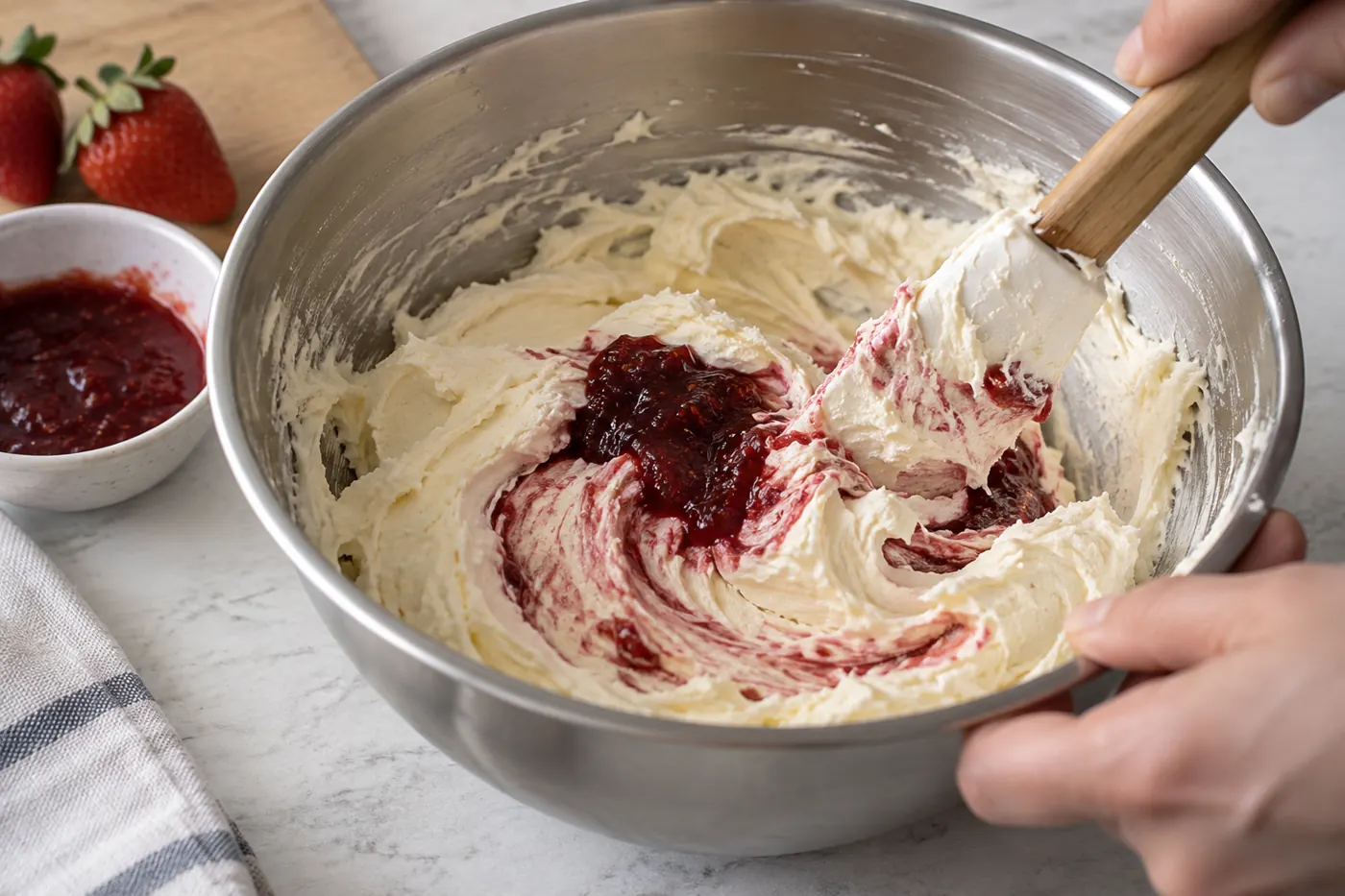
Cooled strawberry reduction added to a buttercream mixing bowl.
The illustrated mixing image shows the point of addition: a thick, cooled strawberry preparation enters aerated buttercream in a measured amount. It is a process illustration, not proof of GreenLand's factory practice. In a real line, the team should document the ingredient temperature, mixer condition, batch size, and target texture at that point. A shift from a five-kilogram pilot to a larger mixer can change mixing energy and warming, so scale-up deserves its own check.
After mixing, let the sample rest according to the intended production route and inspect again. Some frostings stiffen when chilled and loosen on rewhipping; others separate or become grainy. Test the actual sequence, including filling a piping bag, a pause in production, and return to use if that is permitted. Do not assume the first bowl texture predicts what decorators will experience after a break. Make any rework or rewhip instruction explicit and validate it for quality and food safety.
Taste the frosting on the finished cake or cupcake, not alone. The cake can contribute sweetness and moisture; an acidic strawberry frosting may be especially effective against a sweet vanilla base but feel sharp on another product. Decide the portion and decoration height before comparing flavors. A formulation can be technically stable and still be too sweet or too weak in fruit to meet the brief. The combined eating experience remains the reason for the trial.
Test piping, weeping, chilling and rewhipping
Piping definition is an observable performance measure. Choose the actual tip, bag, portion, and decorator motion, then pipe samples onto the intended substrate. Photograph the ridges immediately and after the defined chill and display steps. The side-by-side image shows a defined swirl and a slumped one so the team can discuss the failure clearly. It is illustrative, not a measured result from any commercial formula. Write what counts as acceptable edge definition for the real product.
Weeping can appear as a ring of colored liquid at the base of a swirl, a damp spot on cake, or a gloss that develops during display. Check for it after the product reaches the temperature customers will encounter. A cold sample taken straight from a refrigerator may conceal a problem that appears on a bakery counter. Conversely, an unrealistically warm test can unfairly reject a frosting intended only for chilled sale. Match the test to the approved storage and display route.
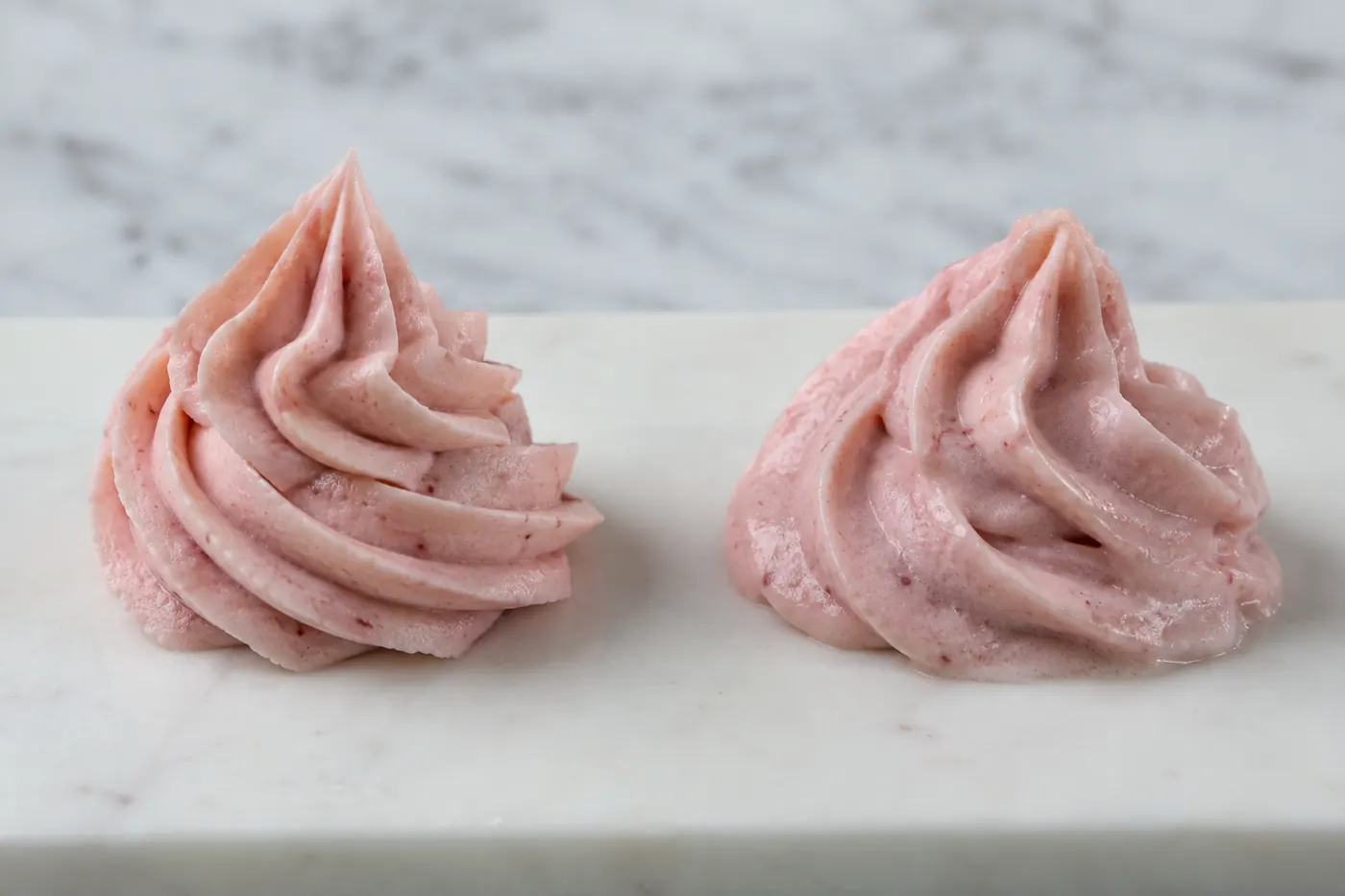
Defined and slumped strawberry frosting swirls in a piping trial.
The blank three-sample pilot record links fruit loading with piping, after-chill appearance, and rewhip behavior. Use actual sample identifiers and values when running it. A photo alone cannot tell whether the slumped swirl resulted from too much fruit, warm butter, an overfilled bag, or a longer display. The record lets the team change one variable and learn from the result. Keep the approved sample as a reference for the next fruit lot and production shift.
Transport introduces another question. A decorated cake may move through loading, refrigeration, delivery, and a customer pickup interval. Vibration or a brief temperature change can soften a marginal frosting. Test a realistic route with the approved packaging and evaluate smearing, color transfer, and shape retention. The goal is not an invented universal number of hours. It is a documented service window tied to the product the bakery actually sells.
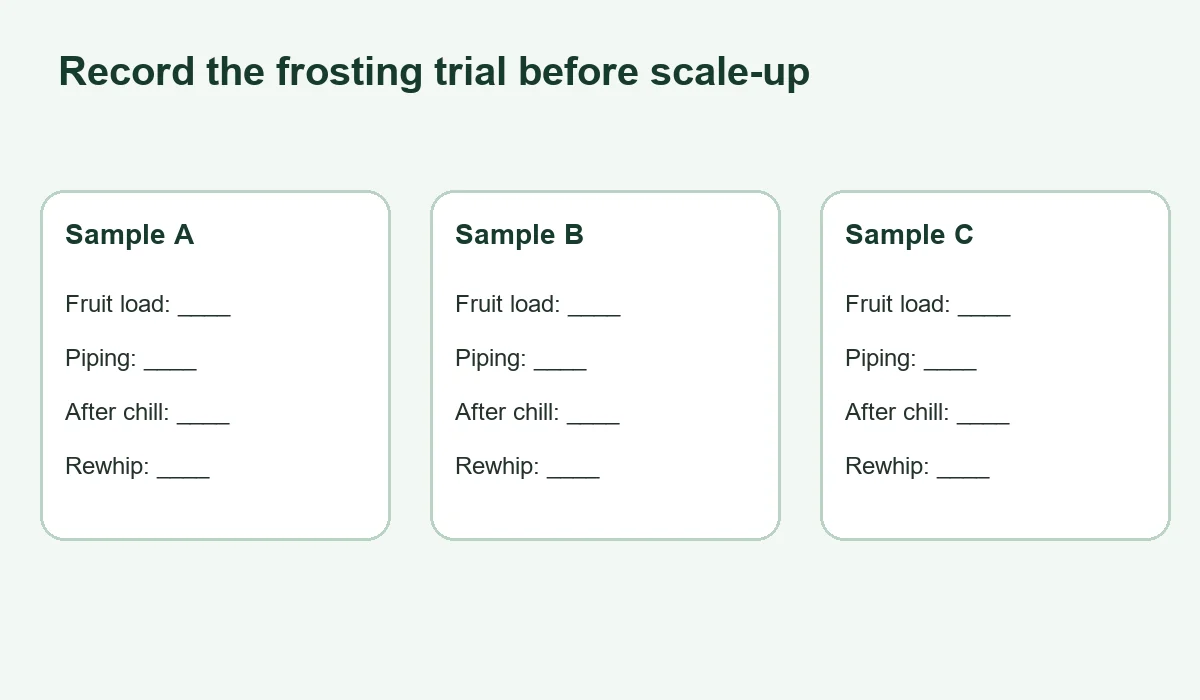
Blank sample record for strawberry frosting tests.
Food safety and quality windows need separate approval. The time a swirl remains visually defined is not the same as the period the cake may safely be displayed or sold. Follow the facility's controls for fruit preparation, dairy or other frosting ingredients, cooling, and finished product storage. The FDA notes that freezing generally does not inactivate viruses on berries, so an unheated fruit addition calls for a deliberate supplier and process decision. Cooking a reduction may affect risk, but the actual process needs review rather than a blanket claim of safety.
Before launch, have more than one decorator make the product from written instructions. Compare portion size, piping result, and waste. If a formula works only for the developer who knows how it should feel, the specification is incomplete. Add a visual reference, permitted adjustment range, and clear reject examples. This is where a good frozen fruit ingredient becomes a reliable decorated product rather than a successful single-day experiment.
Specify frozen fruit and final frosting controls
An approved frosting should yield an ingredient specification and a process sheet that agree. The fruit sheet can define form, cut, grade, pack, origin, lot code, and the documents required for the destination. The process sheet can define thaw or direct-cook method, whether released liquid is kept, reduction end point, cooling condition, fruit loading, mixing, piping, and the evaluated display route. Keep their revision dates together. A change in the fruit form should trigger a review of the frosting process, not simply a new invoice.
At receiving, inspect the frozen cases under the facility's procedure for identity, package integrity, and the required temperature evidence. Retain the lot code when berries move into thawing containers or kettles. A photograph of a case does not establish how much usable fruit it yields; measure that in a pilot. If a lot differs from the accepted reference in color or flavor, route it to the authorized decision maker. Do not allow a decorator to compensate by adding extra fruit without documenting the effect on water balance.
The real GreenLand strawberry photograph here illustrates whole frozen fruit as an input option. Ask for a current product specification and representative sample before approving it for a commercial frosting. The frozen strawberry supply page can help identify a suitable discussion path, while the written offer should confirm the exact grade, pack, quantity, and documents. If private-label finished goods are planned, share the intended label and market requirements early enough for sourcing to check them.

Whole frozen strawberries shown on a GreenLand product page.
Cost comparisons should include prepared-fruit yield, kettle time, mixing time, finished-unit scrap, and cold storage, not only frozen strawberry price. A concentrated fruit preparation may consume energy but reduce piping failures and flavor correction. A cheaper fruit grade may be entirely suitable for a cooked filling and still unsuitable for a bright pink frosting. The relevant value is the cost of a decorated product that meets its flavor and display standard consistently.
For seasonal planning, ask about available volume, production window, lead time, case and pallet configuration, and shipment conditions for the proposed strawberry form. Confirm these details for the actual order rather than inferring them from a general product page. A bakery chain planning a year-round menu needs a supply agreement that fits the recipe's acceptable variation. Build that discussion around the approved pilot formula and the expected monthly demand.
We can review frozen strawberry forms with your purchasing and development teams when you provide the application, product form, packing preference, quantity, destination, and requested documents. Run the frosting trial with your own base, equipment, decoration, and storage route. The goal is a genuine strawberry finish that pipes well and remains attractive through the point where a customer receives it, with the ingredient and process both written clearly enough to repeat.
Source frozen strawberry with GreenLand-food
GreenLand-food is a professional frozen strawberry supplier and manufacturer in China, providing factory-direct wholesale supply for importers, food manufacturers, foodservice distributors, and private-label programs.
Send your product form, specification, packing, quantity, application, destination, private-label needs, and requested documents. We will review the requirements for the proposed order.