


Do Cranberries Need Refrigeration? Fresh Holding Versus Frozen Inventory
Sep 27, 2026
Leave a message

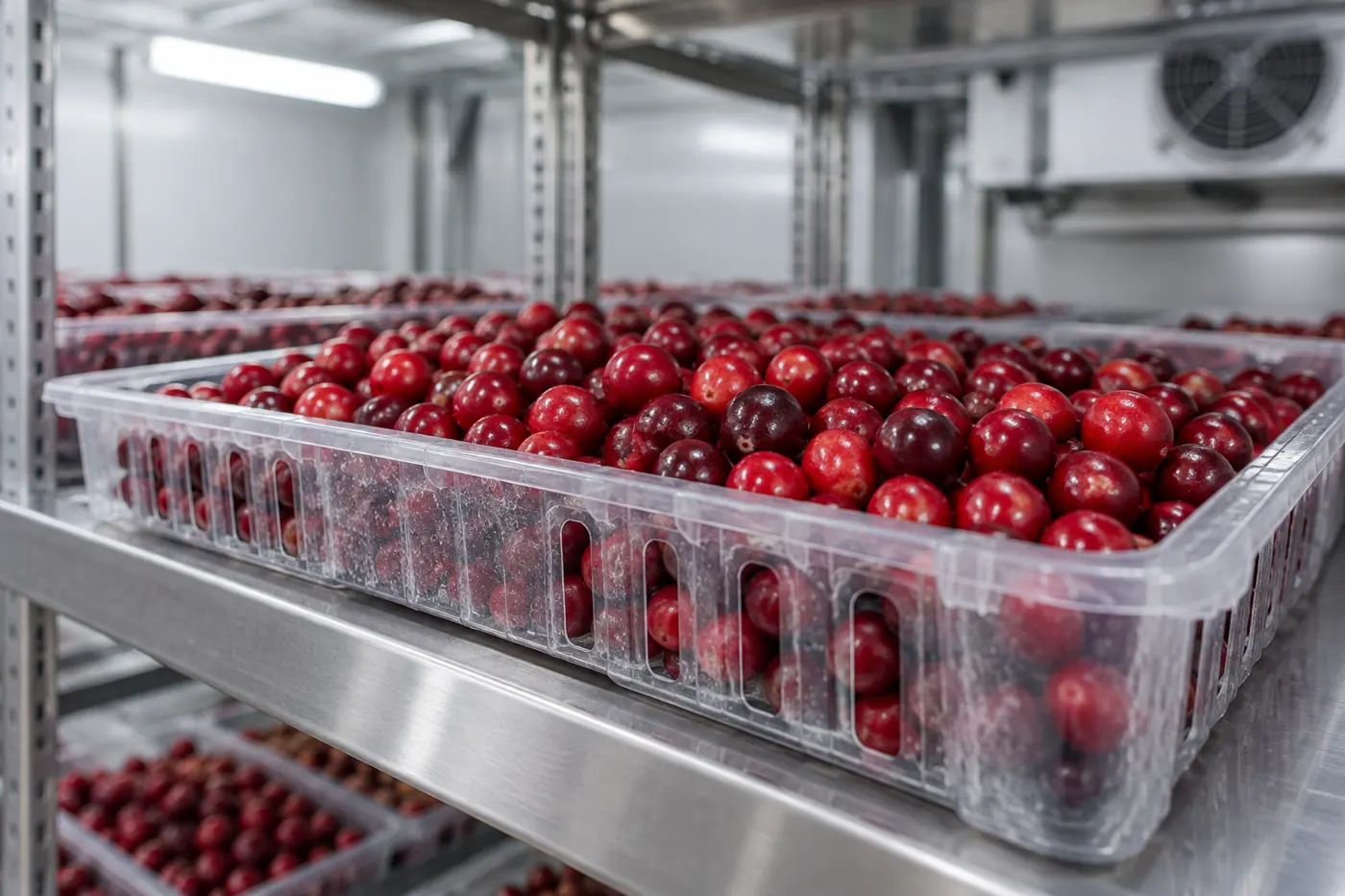
Refrigerate fresh cranberries for planned holding
Fresh cranberries are robust compared with many soft berries, but that reputation is not permission to leave a commercial lot in a warm holding area. Refrigeration slows quality loss while the fruit waits for packing, processing, or retail sale. The receiving team should identify the lot, confirm the expected transport condition, check the packaging, and move accepted cases to the intended cold space promptly. A precise temperature and shelf life belong in the approved product and site procedure; they should not be guessed from a general online answer.
The National Center for Home Food Preservation's cranberry guidance describes refrigerated storage and freezing for household use. That guidance is useful for understanding the fruit's basic handling, but an importer or processor still needs the supplier's pack, maturity, transit history, and acceptance rule. A tray of fruit bought at retail and a bulk case that has crossed a supply chain cannot share an assumed remaining life. Ask what condition was measured at dispatch and inspect the lot on arrival.
Place fresh fruit where cold air can circulate around its packaging. Cases pressed against walls, stacked above their design load, or wrapped so tightly that vents are blocked may create uneven conditions. A chilled room can also introduce condensation when warm fruit or wet packaging enters it. Check the actual surfaces that contact or surround the berries rather than relying only on the room display. The pictured ventilated crate illustrates the holding principle; the exact packaging arrangement must be checked for the purchased case.

Fresh cranberries in a ventilated cold storage crate.
Record the difference between a short staging period and an approved storage period. A receiving dock may need time to sample and count cases, but that interval is not a replacement for a cold holding plan. If a lot arrives warmer than expected, do not silently start the normal clock after it has cooled. Document the finding, isolate it if required by your plan, and decide with the supplier and quality team whether the material is acceptable for its intended use.
Freshness decisions should also follow the application. A bakery cooking cranberry filling may be able to work with visually variable but sound fruit within an approved specification. A premium whole-berry display has a much narrower tolerance for surface defects. That is a commercial quality distinction, not a reason to ignore spoiled or unsafe material. Write the defect and use criteria before the lot arrives so production pressure does not make the decision for you.
If a fresh lot will be frozen later, plan the interval and selection before freezing. Cold storage cannot repair fruit that was already leaking, moldy, or badly damaged. Sorting, cleaning, and freezing practices affect what the buyer receives as a frozen ingredient. A processor purchasing ready IQF cranberries should request the frozen product specification and lot controls directly instead of extrapolating from general fresh-fruit advice.
Sort damaged fruit before the hold
Condition is more informative than a calendar date by itself. Look for intact skins, sound color for the agreed grade, and fruit that remains firm enough for its purpose. Remove or segregate leaking, visibly moldy, severely softened, or damaged berries under the site procedure. A few loose berries in the bottom of a case and widespread free liquid are different findings; record extent and location. The illustrated comparison helps staff discuss visible defects, but the purchaser's acceptance specification governs the actual lot.
Moisture deserves particular attention because it can hide under a liner or at the lower layer of a case. Wet fruit may stick together or encourage local deterioration, and a wet outer case may reveal a handling problem before the top layer shows damage. Condensation on a cold pack moved into warm air is not automatically the same as juice leaking from fruit. Inspect the source of the moisture and the berry condition, then make a documented decision. A photograph of the top of one case cannot represent the whole pallet.
Packaging should protect fruit while allowing the agreed storage method to work. Ask whether the supplied case is intended for refrigerated fresh holding, frozen distribution, or immediate processing. Check liners, vents, case integrity, and stacking limits against that use. Changing from the supplier's pack into an open tote may simplify access, but it also changes exposure, moisture movement, and traceability. If repacking is part of the operation, assign a new container label that preserves the original lot identity.
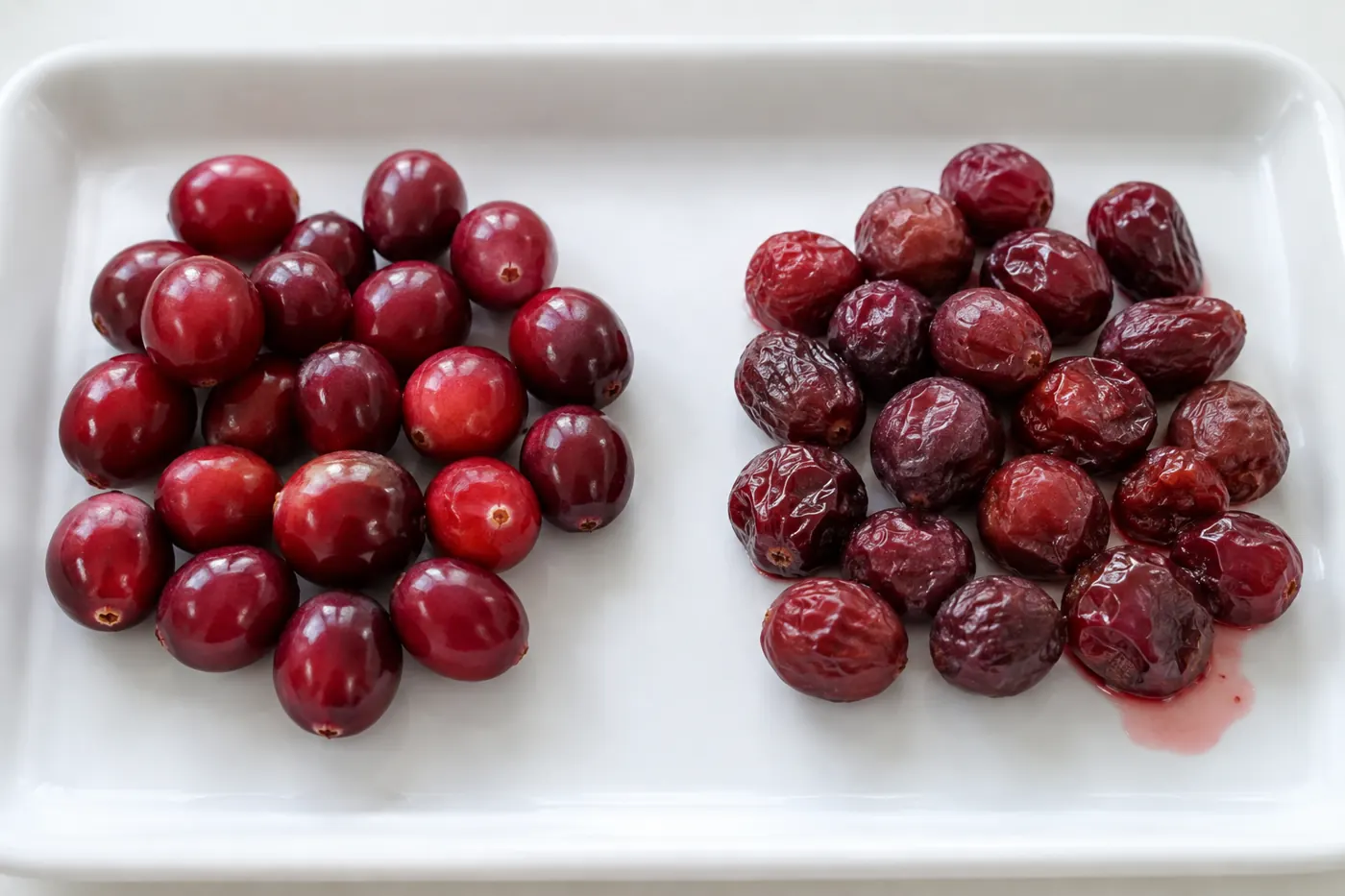
Sound fresh cranberries beside soft or damaged berries for sorting.
Sampling needs a pattern that can reveal variation. Examine more than the easiest case at the pallet edge, particularly when the load has spent time in transit. Include cases from different positions when the risk assessment calls for it, and document the sample size and observations. You do not need to invent a universal defect percentage in an educational article. The buyer and supplier should agree the actual tolerances, inspection method, and remedy for a nonconforming lot in the purchase specification.
Smell and touch can support a quality inspection, though they do not prove microbiological safety. A fermented odor, sticky leaked juice, or visibly collapsed fruit merits attention. Equally, glossy appearance does not prove that every berry in a lot is suitable. Keep sensory observations alongside transport records, packaging review, and any required testing or documentation. This avoids reducing a procurement decision to a single attractive sample photograph.
For a fresh-fruit program, establish who can authorize sorting, rework, processing diversion, or rejection. These decisions can have very different cost and food safety implications. Ask the supplier how claims should be documented, including images, case codes, and timing after receipt. A good condition report tells both parties what happened and gives the next delivery a chance to improve; an unstructured message saying the cranberries "look old" is hard to act on.
Manage packaging, surface moisture and airflow
Cold air needs a path around the stored pack. A vented case works only if its vents remain open in the actual stack. The airflow diagram shows a simple principle: air should reach the fruit while free moisture is identified and managed. It does not prescribe a universal crate design or exact room setting. Ask the warehouse team to inspect the pallet pattern, wall clearance, and any outer wrap in the place where the cases will actually stand.
Too much exposure can be undesirable as well. Open fruit left near a strong air stream may lose moisture or experience uneven drying, while a sealed wet container may retain condensation. The goal is a packaging and room combination appropriate to the product, not maximum ventilation at any cost. Follow the supplier's fresh-fruit pack instructions and confirm them with the storage operator. When the packaging changes, reassess whether the original hold expectation still makes sense.
Avoid wet handling immediately before prolonged storage unless the process includes an appropriate drying and sanitation step. Water used for cleaning can remain on berry surfaces or in the pack. A facility may have a validated wash and dry process, but a casual rinse before returning fruit to a case adds an uncontrolled variable. Keep receiving inspection separate from processing preparation, and follow the site's food safety plan for either operation.
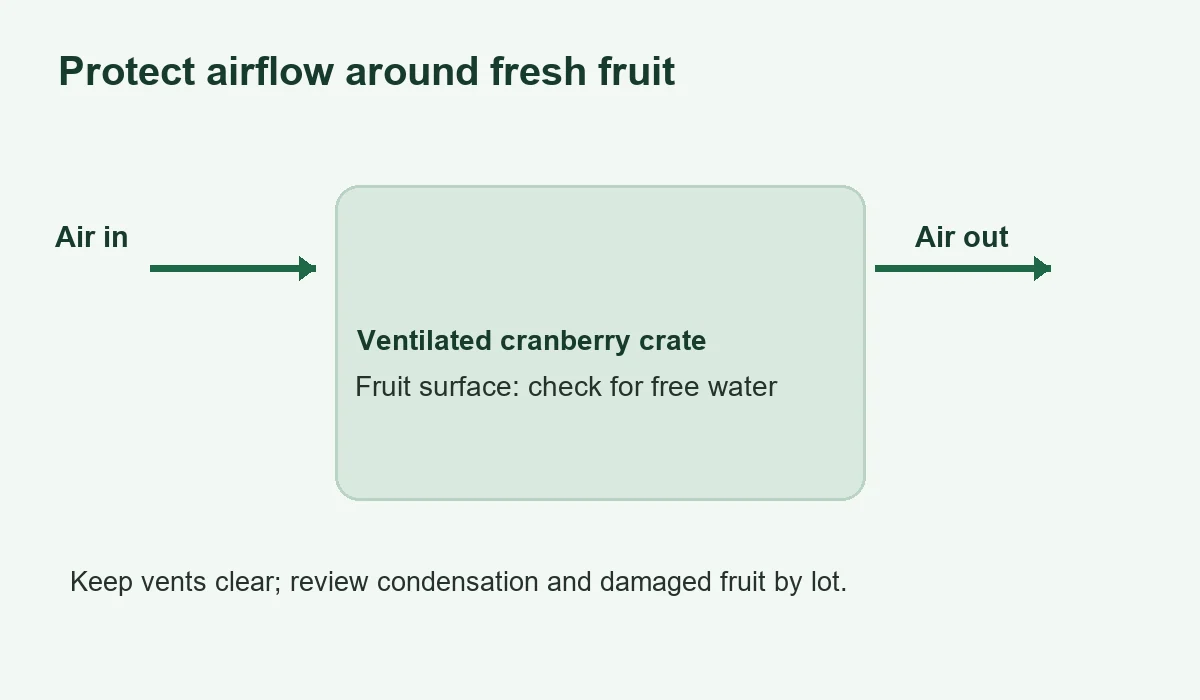
Air movement and surface moisture around a cranberry crate.
Door openings and movement between temperature zones can produce condensation. If cases are taken into a warmer sampling room and returned, record the time and inspect whether the packaging or fruit became wet. Repeated cycling may matter more than the nominal cold-room setting. For a distribution route, include the staging and loading environment in the handling plan; the cold room is only one point in a longer journey.
When fruit is held in a liner, inspect how the liner is closed. A tightly tied bag may trap moisture; a loose liner may leave fruit exposed to other risks. There is no one-line answer suitable for every pack. The exact material, vent pattern, pallet design, and intended hold should be assessed together. A supplier's packaging sample and a small warehouse trial can settle the issue more reliably than a generic statement that cranberries "breathe."
Maintenance matters as much as design. Clear vents can be obstructed by debris, collapsed cases, or shrink wrap added after receipt. Ask staff to observe the stack at intake and during periodic checks. A simple photograph of each pallet face can make a later discussion concrete. If the fruit is routinely stored at a second site, align the checklists so a lot does not receive careful handling at one warehouse and careless handling at the next.
Set a condition-based review schedule
Storage guidance often appears as a range of weeks. A buyer may be tempted to turn that into an unconditional promise. Remaining life depends on harvest and packing history, transit time, condition at receipt, temperature control, packaging, and the intended use. Set an initial review date from the lot's documents and your operating experience, then continue checking condition. The blank timeline records intake, a review, and disposition without presenting invented values as if they were measured.
The Global Cold Chain Alliance commodity guidance for cranberries is another reference point for storage thinking. It does not replace the contractual specification or the local food safety plan. If a supplier proposes a particular storage life, request the conditions and evidence behind that statement. Confirm whether it starts at harvest, packing, dispatch, or your receiving date. Without a defined start and conditions, two apparently identical shelf-life claims may mean very different things.
At receiving, capture the date and time, lot identifier, quantity, case condition, product condition, and any temperature evidence required by the agreed program. The next review should use comparable observations: berry firmness, visible defects, free liquid, odor, and packaging. A trend toward more soft or leaking fruit can matter even while the lot is technically within its scheduled hold. Escalate according to the agreed decision path before the material becomes difficult to use.
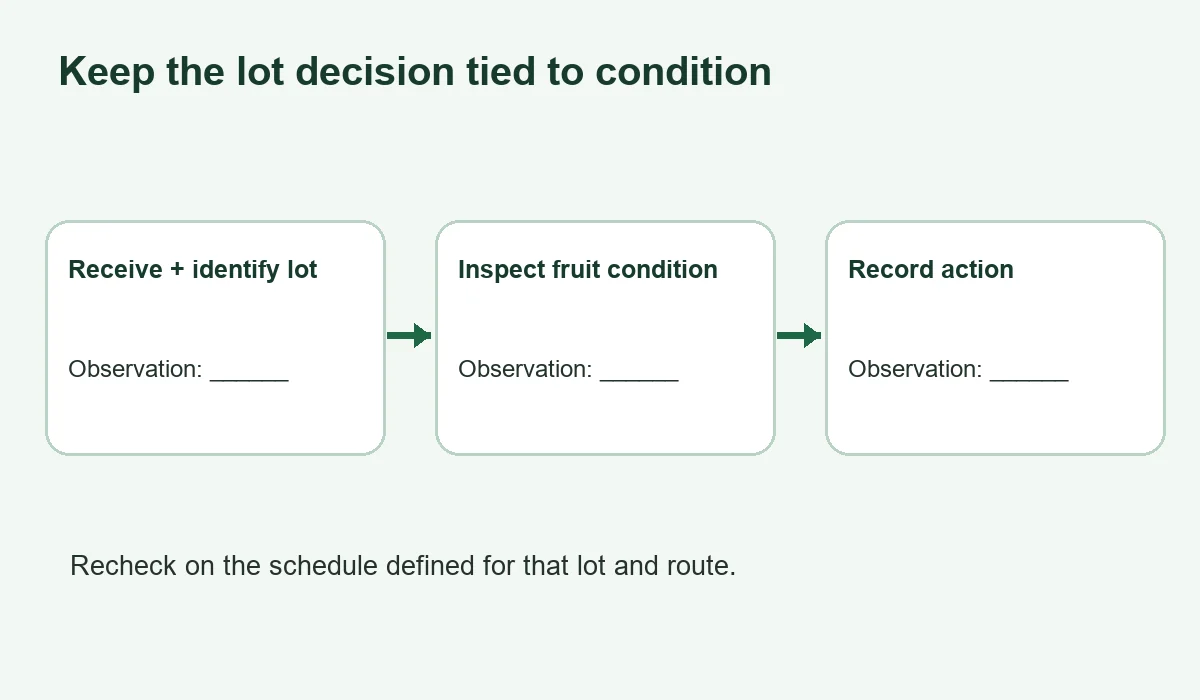
Blank intake and condition review path for fresh cranberries.
Keep the review plan tied to production demand. If a processor expects to cook a filling next week, it may allocate an accepted lot differently from a distributor filling whole-fruit retail orders over several weeks. First in, first out is a useful starting practice, but a later lot with a shorter approved life may need priority. The stock record should show the lot and its approved use status, not only the receipt date.
If the buyer cannot use the fruit within the evaluated fresh window, explore freezing only while the fruit is still suitable and under a controlled process. Freezing a deteriorated lot does not reset quality or erase a receiving concern. Decide in advance who authorizes that diversion, what processing steps are needed, and how the frozen output will be labeled. This prevents a financial pressure to salvage stock from overriding the product's intended specification.
As an importer, you may also need to coordinate claims across carrier, warehouse, and supplier. Preserve shipping records and photographs promptly if condition is disputed. Describe observed defects and sampled cases; avoid attributing cause before the evidence supports it. A reliable record helps all parties distinguish a packing problem from a temperature excursion or a delay at handoff. It also improves planning for the next crop or shipping route.
Decide when frozen inventory fits better
IQF cranberries are purchased and handled in the frozen state. They are often useful when a processor wants whole fruit available beyond a fresh harvest window, but the application must be tested with frozen fruit characteristics. The two real photographs in this section show GreenLand frozen cranberries and illustrate their product form; they do not establish a universal size, color, or yield tolerance. Request the specification and a representative sample for the exact offer before writing the fruit into a formulation.
The GreenLand frozen cranberry product page is a starting point for discussing supply, packing, and documents. A buyer should still confirm the proposed case size, net weight, grade, lot identification, country of origin, and the temperature and transport conditions on the offer. If the intended application requires a particular whole-berry percentage or defect tolerance, state it plainly. "IQF cranberry" describes the form, not every attribute a manufacturer may need.

Whole frozen cranberries shown on a GreenLand product page.
Freezing can make inventory planning more flexible, yet it does not restore the bite of fresh fruit after thawing. Ice formation and thaw release can soften berries and create free juice. That may be entirely acceptable for sauces, fillings, beverages, and cooked applications. It can be a problem for a product relying on crisp fresh texture. Test the frozen material in the intended process and evaluate it at the point of use, not only in the bag.
Keep the frozen chain documented from dispatch to receipt and onward storage. Inspect cases for damage, identification, and evidence of thaw or temperature abuse under your procedure. A photograph of ice or clumping alone may not establish the cause; record temperature evidence and discuss ambiguous findings with the quality team. Once a case is opened, protect the remaining fruit and preserve its lot code. The handling plan should prevent uncontrolled thawing and refreezing.

A second view of whole frozen cranberries from GreenLand.
Do not mix fresh and frozen purchasing assumptions in cost comparisons. A lower purchase price per kilogram can be offset by sorting, trim, thaw juice, or production loss; a higher frozen price may buy convenience and stable scheduling. Compare usable yield in the target recipe, labor, storage, and waste. For a cooked filling, the released juice may be part of the formulation. For a whole-berry inclusion, the same juice might be a defect. There is no useful general answer without the application.
If the facility uses both fresh seasonal and frozen cranberries, keep separate approved formulas or a documented conversion rule. Switching forms can change water addition, cooking time, and visible berry integrity. A product developer should sign off on the change rather than asking production to exchange one case for another by weight. This is especially important when the finished product's label or customer specification names a distinct fruit form.
Handle thawed berries as a different ingredient state
Thawing is the bridge between frozen inventory and a process, not a return to fresh-fruit storage. Plan how much material will thaw, where it will sit, how liquid will be contained, and when it must enter the next step under your food safety plan. The image shows juice released from previously frozen berries under chilled thawing. The amount varies by product and process, so measure it in your own trial rather than assuming the pictured tray predicts your yield.
Use food-safe containers that retain both berries and their liquid when the recipe calls for the juice. If a process discards the liquid, measure the drained yield and document that choice. A filling may benefit from the liquid as part of its cooked phase; a bakery inclusion may need a different handling step. The choice changes both flavor and cost per unit of finished product. Set the process before comparing quotations from suppliers.
Preserve the original lot identity through thawing and transfer. A case code can be lost when the berries move into an unmarked tub. Label the tub with the source lot and the relevant preparation information required by the site. If multiple lots are combined, record the combination according to the traceability plan. This enables a meaningful hold or recall response and prevents a good incoming inspection record from becoming detached from the material in production.
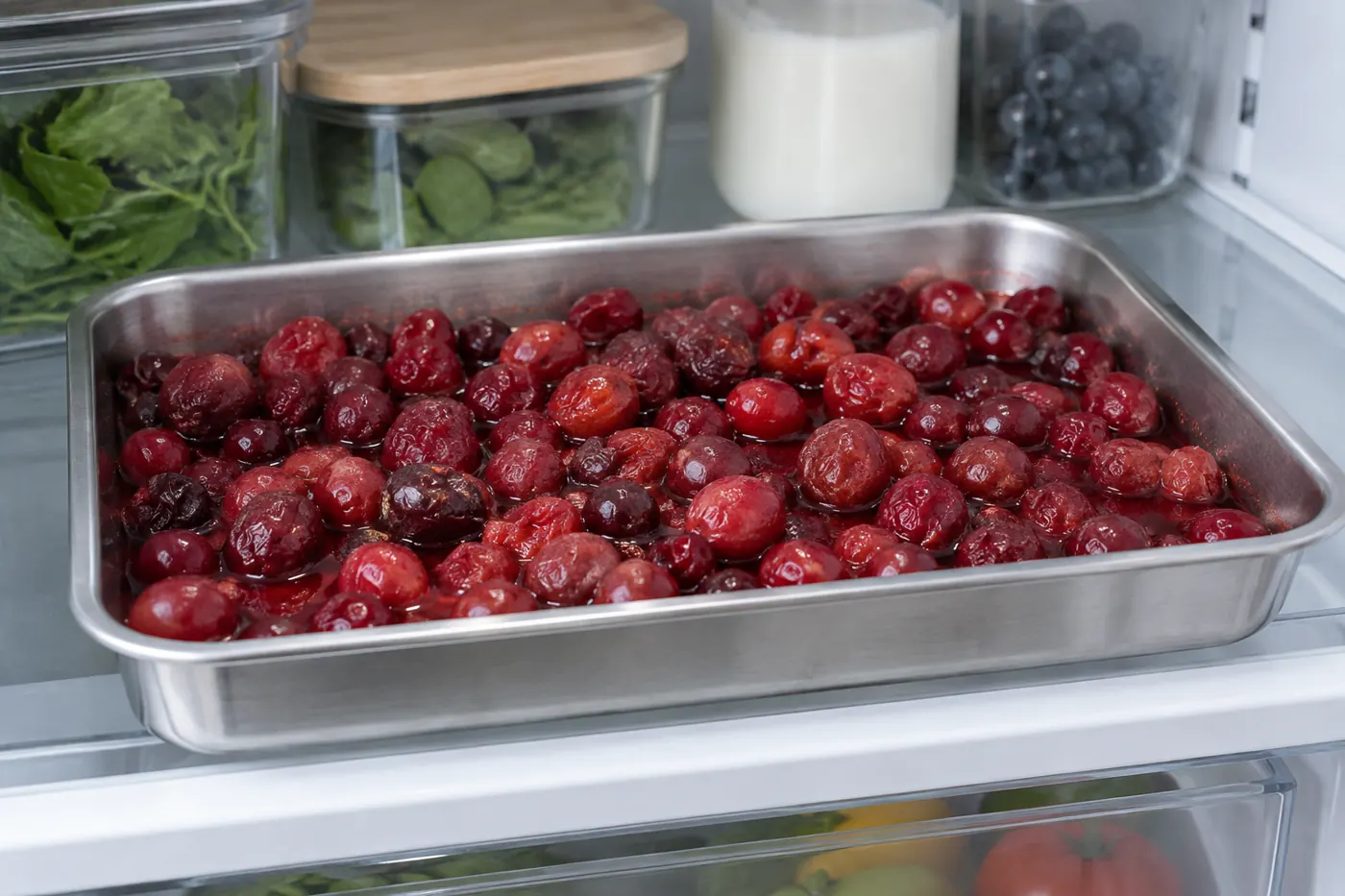
Previously frozen cranberries releasing juice during chilled thawing.
Food safety controls apply even when the berries look sound. Freezing is useful for storage but is not a universal pathogen elimination step. The FDA explains that freezing generally does not inactivate viruses on berries. Assess the intended use, particularly a ready-to-eat or unheated application, with the required supplier information and the facility's preventive controls. A cooked product and a raw garnish can require very different evidence and process decisions.
The point of a thaw trial is to learn how the fruit behaves in the finished recipe. Record the frozen input weight, retained or drained liquid, usable whole fruit, and finished product quality. Repeat with more than one representative lot if consistency matters. Keep photographs of the input and the finished use, because an isolated photo of thawed berries can overstate a defect that disappears during cooking or hide one that becomes obvious in a clear beverage.
When you ask us for a frozen cranberry quotation, tell us whether the berries will be cooked, blended, baked, or used whole, and include volume, packing, destination, and requested documents. We can discuss the supply form and provide the details available for the offered product. Your process team can then confirm thaw yield, fruit integrity, and the appropriate food safety route before approving a continuing order.
Keep a small reference record from that approval: the source lot, the process route, a photograph of the frozen input, and the quality of the finished use. When a new shipment arrives, the team can compare the attributes that matter to the recipe rather than expecting every thawed berry to resemble a fresh one. This preserves the distinction between fresh storage advice and a frozen ingredient program all the way through production.
For suppliers and buyers, the most useful next step is a sample trial with a written result. State the intended application and how the fruit will be handled, then compare the frozen material with the finished product's actual standard. Record any difference that would change the specification before repeating the order. A clear use case and a measured yield make the subsequent commercial discussion faster and more accurate.
Source frozen cranberry with GreenLand-food
GreenLand-food is a professional frozen cranberry supplier and manufacturer in China, providing factory-direct wholesale supply for importers, food manufacturers, foodservice distributors, and private-label programs.
Send your product form, specification, packing, quantity, application, destination, private-label needs, and requested documents. We will review the requirements for the proposed order.