


What Are Pineapple Tidbits? Size, Uses and Frozen Supply Formats
Sep 23, 2026
Leave a message

What Pineapple Tidbits Are
What Pineapple Tidbits Are.
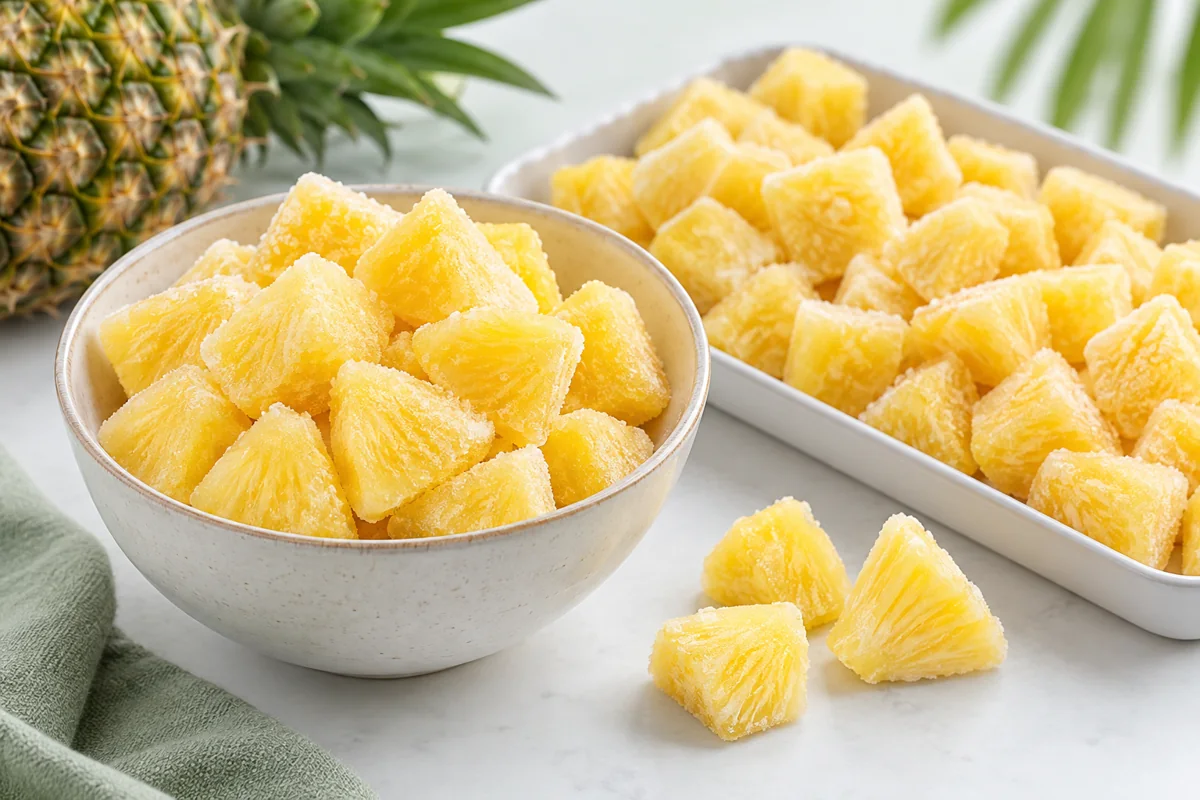
Tidbits are small recognizable pineapple pieces intended to provide bite-size fruit distribution without the bulk of a large chunk. Traditional descriptions often connect them with short segments cut from pineapple slices or rings, giving a curved or wedge-like form.
In practice, this is where many otherwise careful batches go wrong. Frozen suppliers may use tidbit more loosely for irregular small pieces, so the written dimension still controls. The useful control is to decide the endpoint before starting, then keep the preparation, package and later use consistent.
For a buyer or production manager, the same issue becomes a specification question. A photograph helps communicate shape but cannot replace a size range, tolerance and sample. Record what was tested, including starting condition, portion or load, equipment and the observed result, so the next batch can be compared on the same basis.
Buyers should confirm whether the name describes an actual controlled cut or simply a mixed small-piece grade. That boundary matters because a convenient household method is not automatically a validated commercial process. Tidbit is a commercial style name, not a universal dimension; the RFQ must define measurable size, shape and tolerances.
Authoritative background for this section includes USDA Frozen Pineapple Standard Codex Alimentarius Standards. These sources support the preservation or handling principles; the application recommendation still needs to be confirmed against the actual product and operating procedure.
A useful working check for "What Pineapple Tidbits Are" is to write down the starting material, the intended finished use, the variable being controlled and the point at which the result will be accepted. Traditional descriptions often connect them with short segments cut from pineapple slices or rings, giving a curved or wedge-like form. Then repeat the method with the normal production or household portion rather than judging only a tiny demonstration. Watch what happens during packing, freezing, heating or thawing as applicable, because a problem that appears at the end may have started much earlier. A photograph helps communicate shape but cannot replace a size range, tolerance and sample. If the result changes, investigate the material, load, temperature history, equipment and holding sequence before changing several settings at once. This simple record also makes supplier conversations more useful: both sides can discuss a defined form and observed performance instead of relying on broad adjectives. Finally, keep the limitation visible. Buyers should confirm whether the name describes an actual controlled cut or simply a mixed small-piece grade.
Tidbits, Dice, Chunks and Pieces Are Different Forms

Tidbits, Dice, Chunks and Pieces Are Different Forms using the specific product form shown.
| Route or format | Useful when | Main control |
|---|---|---|
| Tidbits | Bite-size natural-looking distribution | Define the actual dimensions |
| Dice | Regular metering and even inclusion | Confirm three-dimensional tolerance |
| Chunks | Prominent visible fruit pieces | Allow for larger bite and portion variation |
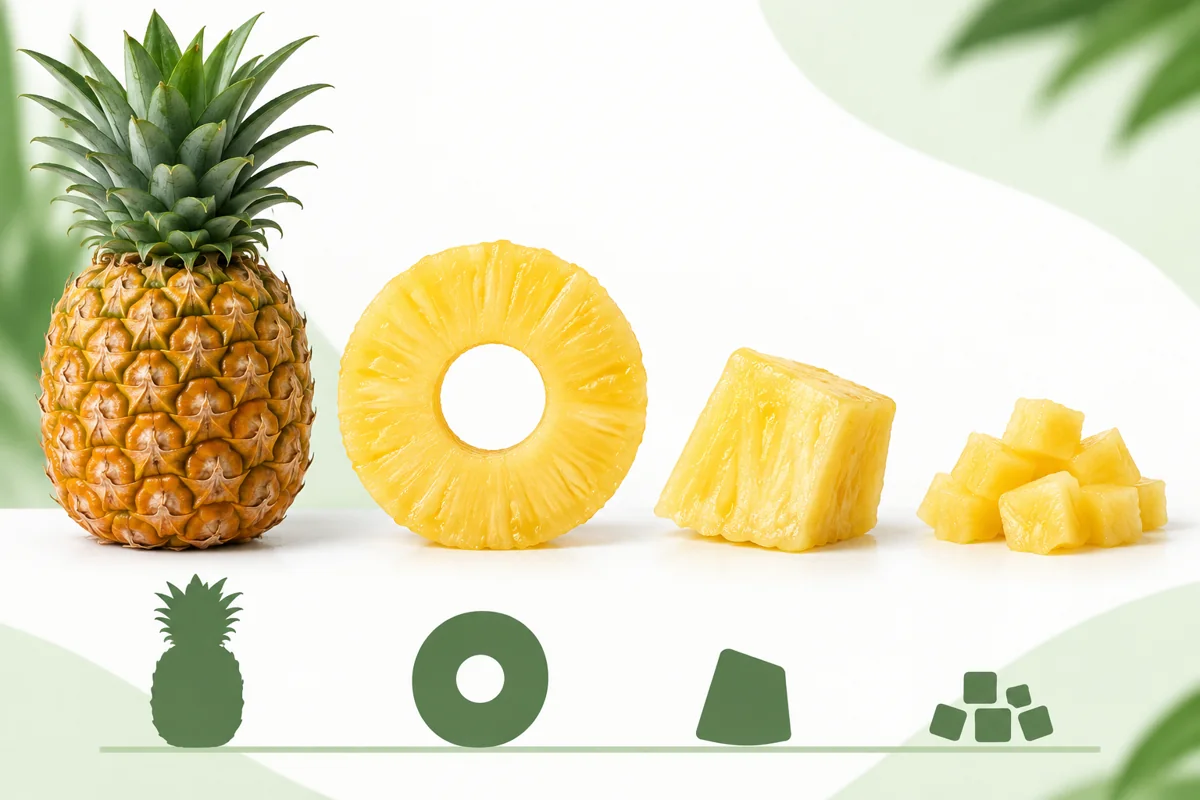
Dice are usually defined by three approximately equal dimensions and are selected when regular distribution matters. The decision should follow the intended use rather than a habit carried over from another format. Chunks are larger, more prominent pieces that keep stronger visual identity but may be too large for portion-controlled inclusions.
A practical trial should change one variable at a time. Tidbits tend to be smaller and less geometric than dice while remaining distinct from crushed or pureed fruit. If several variables move together, a wetter, softer or less even result cannot be diagnosed reliably.
The broad word pieces does not explain size, geometry or uniformity and should be followed by measurements. For repeat production, write the relevant cut, starting state, load, package and endpoint into the method. Staff should not have to infer them from a photograph.
Compare forms in the finished application rather than assuming the smallest cut is always the most economical. We treat that as a quality-control choice, not a marketing promise. Tidbit is a commercial style name, not a universal dimension; the RFQ must define measurable size, shape and tolerances.
The core preservation and handling references are USDA Frozen Pineapple Standard Codex Alimentarius Standards. They are used for factual limits and process logic, while exact product directions retain priority.
A useful working check for "Tidbits, Dice, Chunks and Pieces Are Different Forms" is to write down the starting material, the intended finished use, the variable being controlled and the point at which the result will be accepted. Chunks are larger, more prominent pieces that keep stronger visual identity but may be too large for portion-controlled inclusions. Then repeat the method with the normal production or household portion rather than judging only a tiny demonstration. Watch what happens during packing, freezing, heating or thawing as applicable, because a problem that appears at the end may have started much earlier. The broad word pieces does not explain size, geometry or uniformity and should be followed by measurements. If the result changes, investigate the material, load, temperature history, equipment and holding sequence before changing several settings at once. This simple record also makes supplier conversations more useful: both sides can discuss a defined form and observed performance instead of relying on broad adjectives. Finally, keep the limitation visible. Compare forms in the finished application rather than assuming the smallest cut is always the most economical.
Why Cut Geometry Changes Application Performance

Why Cut Geometry Changes Application Performance.
- Small pieces distribute more frequently per serving, which can improve consistency in yogurt cups, bakery fillings and prepared salads.
- Greater exposed surface can increase thaw drip, coating pickup and flavor exchange with the surrounding formula.
- Regular dice meter more predictably, while wedge-like tidbits may give a more natural fruit appearance.
- Mixed thickness causes uneven thawing and different bite within the same serving.
Small pieces distribute more frequently per serving, which can improve consistency in yogurt cups, bakery fillings and prepared salads. Greater exposed surface can increase thaw drip, coating pickup and flavor exchange with the surrounding formula.
The most useful check is not whether the method can work once, but whether it works with the exact material, portion and equipment that will be used. Regular dice meter more predictably, while wedge-like tidbits may give a more natural fruit appearance. Keep the first comparison small enough to observe clearly.
In procurement, translate the observation into something confirmable. Mixed thickness causes uneven thawing and different bite within the same serving. A written requirement makes supplier review and incoming inspection more objective.
A useful trial records piece count, fruit weight, breakage and distribution across several representative portions. Avoid converting a quality range into a safety guarantee or a photograph into proof of an unseen process. Tidbit is a commercial style name, not a universal dimension; the RFQ must define measurable size, shape and tolerances.
Reference points: USDA Frozen Pineapple Standard Codex Alimentarius Standards. Use the applicable label, local food-safety plan and product specification whenever they are more specific.
A useful working check for "Why Cut Geometry Changes Application Performance" is to write down the starting material, the intended finished use, the variable being controlled and the point at which the result will be accepted. Greater exposed surface can increase thaw drip, coating pickup and flavor exchange with the surrounding formula. Then repeat the method with the normal production or household portion rather than judging only a tiny demonstration. Watch what happens during packing, freezing, heating or thawing as applicable, because a problem that appears at the end may have started much earlier. Mixed thickness causes uneven thawing and different bite within the same serving. If the result changes, investigate the material, load, temperature history, equipment and holding sequence before changing several settings at once. This simple record also makes supplier conversations more useful: both sides can discuss a defined form and observed performance instead of relying on broad adjectives. Finally, keep the limitation visible. A useful trial records piece count, fruit weight, breakage and distribution across several representative portions.
Frozen, Canned and Dried Tidbits Behave Differently
Frozen, Canned and Dried Tidbits Behave Differently.
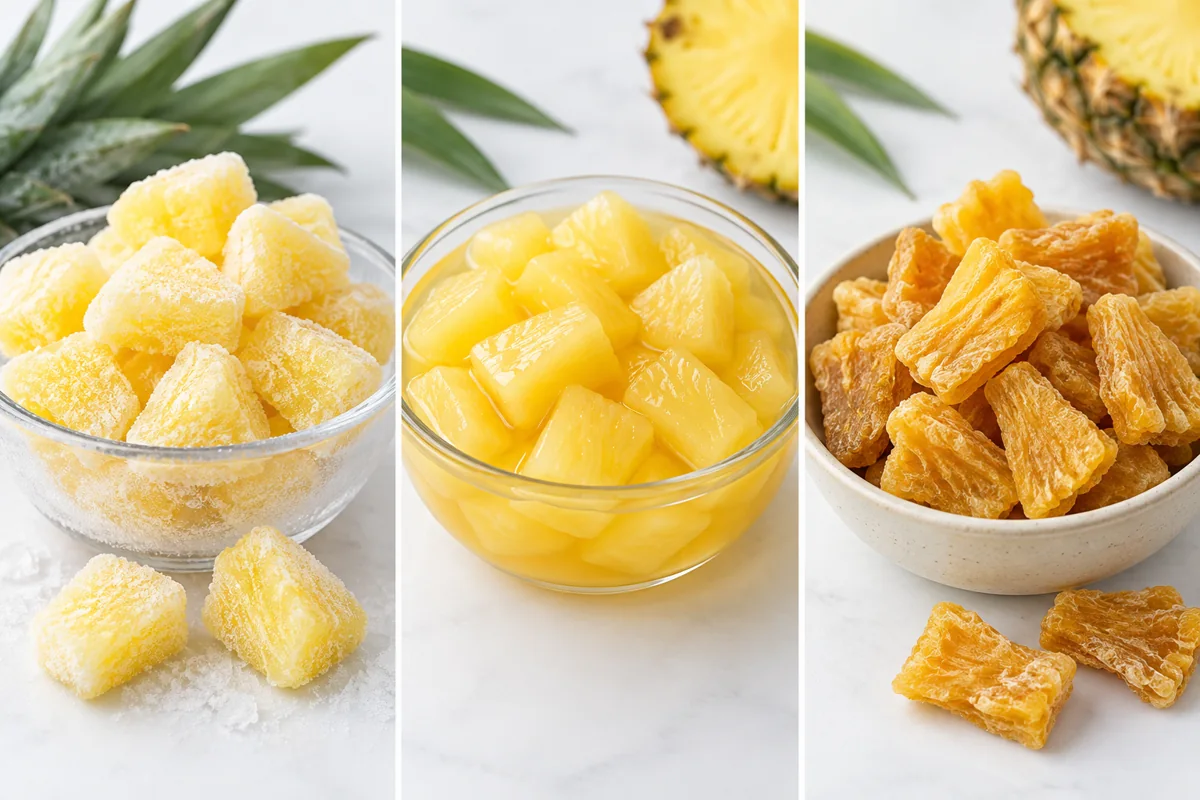
IQF tidbits are stored frozen and generally retain a firmer fruit character while releasing juice during thawing. That is the physical reason behind the recommendation. Canned tidbits receive heat processing and are commonly packed in juice or syrup, changing sweetness and texture.
Work in a clean, controlled sequence and avoid adding an unnecessary thawing or holding step. Dried tidbits have concentrated solids and a chewy bite, and they absorb moisture when added to wet formulas. A shorter process is not automatically better, but every extra transition introduces another variable.
The formats are not direct one-for-one substitutes by weight because water, packing medium and yield differ. In a commercial review, compare the same quantity under the same conditions and record yield, appearance, texture and handling loss.
State the preservation format before discussing size, price or application so quotations remain comparable. The result should be described honestly: useful for the named application, not perfect under every condition. Tidbit is a commercial style name, not a universal dimension; the RFQ must define measurable size, shape and tolerances.
Process principles were checked against USDA Frozen Pineapple Standard Codex Alimentarius Standards. Those references do not verify a supplier-specific specification; current product documents do.
A useful working check for "Frozen, Canned and Dried Tidbits Behave Differently" is to write down the starting material, the intended finished use, the variable being controlled and the point at which the result will be accepted. Canned tidbits receive heat processing and are commonly packed in juice or syrup, changing sweetness and texture. Then repeat the method with the normal production or household portion rather than judging only a tiny demonstration. Watch what happens during packing, freezing, heating or thawing as applicable, because a problem that appears at the end may have started much earlier. The formats are not direct one-for-one substitutes by weight because water, packing medium and yield differ. If the result changes, investigate the material, load, temperature history, equipment and holding sequence before changing several settings at once. This simple record also makes supplier conversations more useful: both sides can discuss a defined form and observed performance instead of relying on broad adjectives. Finally, keep the limitation visible. State the preservation format before discussing size, price or application so quotations remain comparable.
Where Tidbits Work in Foodservice and Processing
Where Tidbits Work in Foodservice and Processing.
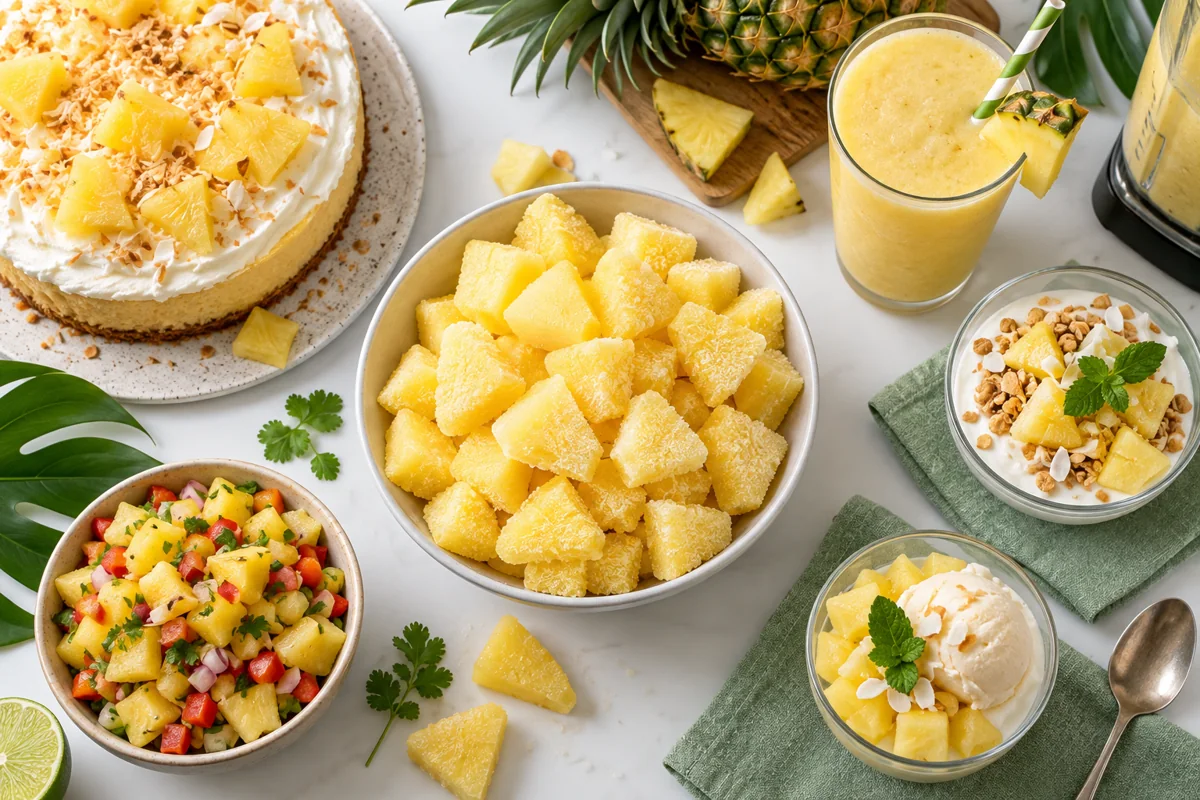
Tidbits suit yogurt, oatmeal, bakery filling, fruit salad, salsa, dessert topping, smoothie preparation and portioned bowls. Their size can provide visible fruit without forcing the customer to cut a large chunk during service.
In practice, this is where many otherwise careful batches go wrong. For pizza, hot sauce or baked products, test juice release and heat stability so the surrounding formula does not become wet. The useful control is to decide the endpoint before starting, then keep the preparation, package and later use consistent.
For a buyer or production manager, the same issue becomes a specification question. For cups and mixed salads, measure how pieces settle or separate during filling and storage. Record what was tested, including starting condition, portion or load, equipment and the observed result, so the next batch can be compared on the same basis.
Select the cut around the intended bite and distribution target rather than around the name alone. That boundary matters because a convenient household method is not automatically a validated commercial process. Tidbit is a commercial style name, not a universal dimension; the RFQ must define measurable size, shape and tolerances.
Authoritative background for this section includes USDA Frozen Pineapple Standard Codex Alimentarius Standards. These sources support the preservation or handling principles; the application recommendation still needs to be confirmed against the actual product and operating procedure.
A useful working check for "Where Tidbits Work in Foodservice and Processing" is to write down the starting material, the intended finished use, the variable being controlled and the point at which the result will be accepted. Their size can provide visible fruit without forcing the customer to cut a large chunk during service. Then repeat the method with the normal production or household portion rather than judging only a tiny demonstration. Watch what happens during packing, freezing, heating or thawing as applicable, because a problem that appears at the end may have started much earlier. For cups and mixed salads, measure how pieces settle or separate during filling and storage. If the result changes, investigate the material, load, temperature history, equipment and holding sequence before changing several settings at once. This simple record also makes supplier conversations more useful: both sides can discuss a defined form and observed performance instead of relying on broad adjectives. Finally, keep the limitation visible. Select the cut around the intended bite and distribution target rather than around the name alone.
Quality Checks for Frozen Pineapple Tidbits

Quality Checks for Frozen Pineapple Tidbits using the specific product form shown.
Check color, aroma, maturity, sweetness, core or eye defects, damaged pieces, foreign material and loose-flow condition. The decision should follow the intended use rather than a habit carried over from another format. Measure the cut using the agreed method and report the percentage outside tolerance, not just an average.
A practical trial should change one variable at a time. Thaw a representative sample under a controlled method and record drip, piece integrity, flavor and application performance. If several variables move together, a wetter, softer or less even result cannot be diagnosed reliably.
Review pack size, case weight, label, lot traceability, frozen storage and required microbiological or residue documents. For repeat production, write the relevant cut, starting state, load, package and endpoint into the method. Staff should not have to infer them from a photograph.
The real photographs show frozen pineapple pieces selected from a verified GreenLand page and support form inspection. We treat that as a quality-control choice, not a marketing promise. Tidbit is a commercial style name, not a universal dimension; the RFQ must define measurable size, shape and tolerances.
The core preservation and handling references are USDA Frozen Pineapple Standard Codex Alimentarius Standards. They are used for factual limits and process logic, while exact product directions retain priority.
A useful working check for "Quality Checks for Frozen Pineapple Tidbits" is to write down the starting material, the intended finished use, the variable being controlled and the point at which the result will be accepted. Measure the cut using the agreed method and report the percentage outside tolerance, not just an average. Then repeat the method with the normal production or household portion rather than judging only a tiny demonstration. Watch what happens during packing, freezing, heating or thawing as applicable, because a problem that appears at the end may have started much earlier. Review pack size, case weight, label, lot traceability, frozen storage and required microbiological or residue documents. If the result changes, investigate the material, load, temperature history, equipment and holding sequence before changing several settings at once. This simple record also makes supplier conversations more useful: both sides can discuss a defined form and observed performance instead of relying on broad adjectives. Finally, keep the limitation visible. The real photographs show frozen pineapple pieces selected from a verified GreenLand page and support form inspection.
How to Write a Useful Pineapple Tidbit RFQ

How to Write a Useful Pineapple Tidbit RFQ.
Name the required product as frozen pineapple tidbits and add measurable target dimensions, shape reference and tolerances. State variety or origin preference, Brix target, maturity, color, core and eye limits, broken-piece limit and additives if any.
The most useful check is not whether the method can work once, but whether it works with the exact material, portion and equipment that will be used. Specify net weight, inner and outer pack, case configuration, destination, certifications, testing and required documents. Keep the first comparison small enough to observe clearly.
In procurement, translate the observation into something confirmable. Describe the application and annual or trial volume so the supplier can assess an appropriate cut and pack. A written requirement makes supplier review and incoming inspection more objective.
We can review available frozen pineapple pieces and tidbit feasibility against the RFQ before confirming supply. Avoid converting a quality range into a safety guarantee or a photograph into proof of an unseen process. Tidbit is a commercial style name, not a universal dimension; the RFQ must define measurable size, shape and tolerances.
Reference points: USDA Frozen Pineapple Standard Codex Alimentarius Standards. Use the applicable label, local food-safety plan and product specification whenever they are more specific.
A useful working check for "How to Write a Useful Pineapple Tidbit RFQ" is to write down the starting material, the intended finished use, the variable being controlled and the point at which the result will be accepted. State variety or origin preference, Brix target, maturity, color, core and eye limits, broken-piece limit and additives if any. Then repeat the method with the normal production or household portion rather than judging only a tiny demonstration. Watch what happens during packing, freezing, heating or thawing as applicable, because a problem that appears at the end may have started much earlier. Describe the application and annual or trial volume so the supplier can assess an appropriate cut and pack. If the result changes, investigate the material, load, temperature history, equipment and holding sequence before changing several settings at once. This simple record also makes supplier conversations more useful: both sides can discuss a defined form and observed performance instead of relying on broad adjectives. Finally, keep the limitation visible. We can review available frozen pineapple pieces and tidbit feasibility against the RFQ before confirming supply.
Source frozen pineapple with GreenLand-food
We supply and coordinate frozen pineapple for wholesale and factory-direct programs. As a manufacturer-facing supplier, GreenLand-food will review the requested form, packing, documents and application before confirming an offer. Tidbit is a commercial style name, not a universal dimension; the RFQ must define measurable size, shape and tolerances.