


Does Banana Bread Freeze Well? Packaging, Thawing and Portion Control
Sep 23, 2026
Leave a message
Research This Article & Topic with AI
Verify key claims, compare reliable sources, and explore GreenLand-food's practical frozen food knowledge.
Article details and research questions are prepared in the links. Sign-in or sending may be required.

Does Banana Bread Freeze Well and What Changes After Thawing?
Banana bread is a quick bread with a moist, cake-like crumb. That structure is forgiving in frozen storage because the finished loaf contains enough sugar, fat and fruit solids to remain tender after ice forms and melts. A well-made loaf may feel slightly softer after thawing, and its aroma can seem quieter until the slice warms, yet it should still cut cleanly and taste like the original bake. A short warm-up often restores the aroma that cold food temporarily suppresses.
Freezing does not repair a loaf that was underbaked, gummy in the center or already stale. It preserves the condition present when the bread enters the freezer. A properly baked loaf should have a set center and a stable crumb before cooling. If it is wrapped while warm, vapor condenses against the package and later freezes into surface ice. When that ice melts, the crust becomes wet and the outer crumb can feel sticky. The freezer receives quality; it does not create it.
The useful quality window depends on formula, package and freezer stability. Many home guides suggest using well-wrapped banana bread within about two to three months for its best flavor and texture. That is a planning range, not a universal expiry date. A commercial product needs its own supported shelf-life statement, packaging specification and storage condition. Continuous frozen storage at about 0°F / -18°C protects the frozen state, while door opening, partial thawing and air leaks accelerate quality loss.
Freezer burn is moisture loss, not a special form of spoilage. It appears as pale, dry or tough areas and is more common on thin slices because they have more exposed surface relative to their mass. Odor pickup is another quality risk. Banana bread readily carries butter, vanilla, spice, chocolate and fruit aromas; an open or thin package can exchange those aromas with onions, seafood or other strongly scented freezer contents. A clean, stable freezer and a close barrier both matter.
Texture also depends on the rate at which the loaf passes through its freezing zone. A large loaf freezes more slowly at the center than a thin slice, so its moisture has more time to move before the crumb is fully frozen. Home freezers offer limited control over this rate, but practical habits still help: start with a cool loaf, avoid stacking warm or unfrozen products tightly around it, and place the package where cold air can circulate. Once hard, move it to the location that protects it from impact and temperature swings. Commercial programs should assess the actual freezer load, package dimensions and product core rather than borrowing a household time estimate.

Close wrapping protects the soft crumb. Air exposure shows first at edges and cut faces, where drying and surface ice become visible.
Cool, Set and Portion the Loaf Before It Enters the Freezer
Cooling is part of the freezing method. Leave the bread in its pan only long enough for the fragile hot loaf to firm enough for removal, then transfer it to a rack so air can reach the base and sides. The exact time varies with pan material, loaf size and formula. The working test is the loaf itself: the center and bottom should no longer feel warm, and no vapor should collect when a clean cover is briefly placed over it.
A cooled loaf also slices more accurately. Warm quick bread compresses under a knife, smears inclusions and sheds a wet crumb. A settled loaf accepts a serrated knife with less pressure. For portions, choose a target thickness or weight and check the first several pieces. Uniform pieces thaw and warm at a similar rate, which matters when a foodservice team pulls ten or fifty portions for the next service.
Decide the frozen unit before reaching for wrap. Preserve the loaf whole when the future use is a family table, gift, buffet or high-volume slice service. Cut it first when customers need one portion at a time. A half loaf is often a practical middle ground. Mini loaves provide a complete product with less thawing time, though they use more packaging per kilogram and can lose moisture faster if their barrier is weak.
Keep the interval between cooling and freezing controlled. Leaving an uncovered loaf on a rack for many extra hours trades condensation risk for staling. In production, record the end of baking, depanning, cooling acceptance and freezer entry so the team can repeat the result. A simple cooling acceptance may combine product temperature, crumb set and the absence of visible condensation, provided the criteria are validated for the site's loaf size and environment. The record is especially useful when seasonal room temperature or humidity changes the cooling rate.

A rack releases heat and moisture. Once the loaf has set, uniform slices hold their shape and can be packed as predictable portions.
Whole Loaf, Slices or Mini Loaves: Choose the Right Frozen Unit
The best freezer unit is the amount that will be served after one thaw. Repeatedly opening, warming and returning the same loaf exposes it to moisture movement, odor and handling. A useful format keeps the remaining stock frozen while the required portion moves through thawing and service.
| Frozen unit | Best fit | Main advantage | Control point |
|---|---|---|---|
| Whole loaf | Gifts, buffet slicing, shared use | Lower exposed surface and good moisture retention | Allow a longer, even thaw before cutting |
| Half loaf | Small households, café backup stock | Balances protection with a smaller thawed quantity | Protect the cut face closely |
| Individual slices | Breakfast, grab-and-go, controlled service | Fast thawing and exact pulls | More cut surface needs strong wrapping |
| Mini loaf | Retail, gifts, room service | Complete presentation with shorter thaw time | Confirm unit weight and package fit |

A whole loaf protects quality for a shared service, while separated slices and mini loaves shorten the time from freezer to plate.
For slices, parchment separators work when several portions share one outer bag. Individual close wrapping gives stronger protection and cleaner service, but it adds material and labor. A bakery can test both options by weighing pieces before freezing, after thawing and after the intended warm-up. The better choice is the one that meets sensory targets with an acceptable pack cost and a realistic service routine.
Forecasting should guide the unit choice. If a café sells twelve slices on a quiet day and thirty on a busy day, packs of six may allow two, three or five bags to move into thawing without exposing the rest. A hotel breakfast buffet may prefer complete loaves because staff slice them immediately before presentation. Retail mini loaves need packaging that protects the crown and presents a consistent unit weight. Mapping sales patterns to pack count prevents the freezer from becoming a collection of partly opened, poorly identified products.
Packaging That Protects Moisture, Aroma and Shape
A good freezer package performs three jobs. It limits moisture and oxygen exchange, keeps outside odors away from the crumb, and protects the loaf from crushing. One loose bag rarely performs all three for long. Close contact around the bread reduces the pocket of air next to the surface. A second freezer-grade bag or sealed container adds another barrier and catches damage to the first layer.
- Confirm the loaf is fully cool. Remove any baking parchment that is wet with grease or condensation; a clean liner may remain when it supports the loaf without trapping moisture.
- Wrap the whole loaf, half loaf or each portion closely with freezer-suitable film, foil or another approved barrier. Cover the cut face without gaps.
- Place the wrapped unit in a freezer bag or lidded container. Press excess air from a flexible bag without squeezing the crumb.
- Add the product name, bake or freeze date, lot or batch reference, variant, unit count and any allergen or service information required by the operation.
- Freeze on a level surface with space for cold air to circulate. After the product is firm, arrange it so heavier items cannot deform it.

The inner wrap limits air exchange, the bag adds a second moisture barrier, and a rigid outer container protects shape in a busy freezer.
Foil offers a useful light and vapor barrier but hides the product, so the outer label must identify it clearly. Transparent bags make inventory visible but vary widely in thickness and seal quality. Rigid containers protect decorated tops, mini loaves and delicate slices. A glaze, frosting or sticky topping may need a short uncovered firming stage before close wrapping, followed by protected frozen storage. That handling should reflect the topping's own food-safety needs.
Labeling is part of quality control. Without a clear date and variant, older stock remains behind newer stock, nut-free and nut-containing loaves can be confused, and operators may thaw more than they can sell. First-in, first-out rotation works only when the package can be read. Commercial teams should align freezer labels with production records and the finished-product specification rather than relying on memory or package color.
How to Thaw and Reheat Banana Bread Without Making It Wet or Dry

A whole loaf benefits from a controlled thaw; a single slice can move quickly from frozen storage to gentle reheating.
A whole loaf needs time for the center to catch up with the surface. Thawing it under refrigeration provides a controlled route for operations that plan service the next day. Home bakers often thaw a plain, securely wrapped loaf at cool room temperature, then remove or loosen the wrap as needed to manage condensation. Products with perishable fillings, frostings or other temperature-sensitive components require the handling defined for those components.
Keep the package closed during the first part of thawing when you want condensation to collect on the outside of the inner wrap instead of directly on the bread. Once the loaf is thawed enough that surface ice is no longer present, open the wrap and check the crust. If it feels damp, a short rest on a rack lets the surface equalize. Cutting a still-frozen center can tear the crumb and gives misleading impressions of dryness.
Slices are faster. One portion can thaw in its wrap, or it can be warmed gently from frozen in a toaster oven or conventional oven when the service method has been tested. A microwave is quick, yet excess time makes the crumb rubbery and then dry as steam escapes. Use short intervals and serve promptly. A low, controlled oven refreshes the crust more evenly, especially for several portions.
Reheating is optional. A well-protected loaf can be pleasant after a complete thaw without further heat. Warmth increases banana, spice and butter aroma, so it may improve sensory perception even when texture has changed little. Define the service goal: a room-temperature retail slice, a warm plated dessert and a toasted breakfast portion need different endpoints.
Avoid thawing an entire loaf merely to remove two pieces and refreeze the rest. Refreezing may be acceptable after safe refrigerated handling, but another freeze-thaw cycle costs texture and makes stock history harder to control. Packaging smaller service units from the beginning is usually more consistent. Discard bread with mold, an abnormal fermented or rancid odor, damaged packaging with uncertain handling, or a thawing history outside the operation's approved limits.
How Recipe Structure and Inclusions Affect Freeze-Thaw Quality
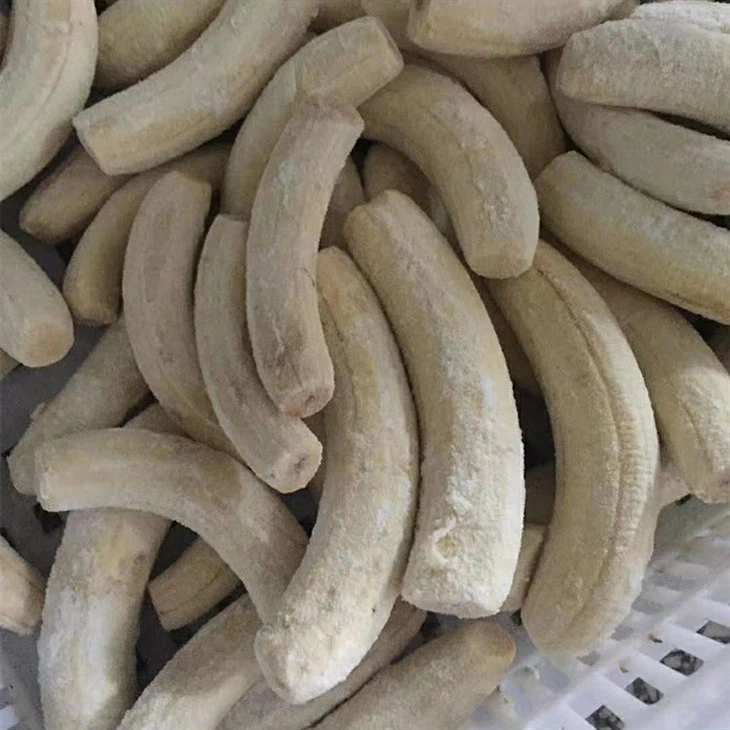
Whole peeled frozen bananas can be thawed, weighed and mashed for bakery batches when the process controls released liquid and final batter consistency.
Two banana breads can respond differently even when they enter the same freezer. A dense loaf with high banana content carries more water than a lighter cake-style formula. During freezing, some of that water forms ice; during thawing, it must redistribute through the crumb. If the original formula is under-structured or extremely wet, the center may feel pasty after thawing. A balanced bake with a set crumb returns more cleanly.
Nuts generally tolerate freezing well, though their fats can pick up freezer odors or oxidize during long storage. Toasted nuts may soften slightly as moisture moves from the crumb. Chocolate pieces remain stable but can show harmless surface bloom after temperature changes. Fresh fruit pieces, cream-cheese swirls and heavy glazes introduce their own moisture patterns. Test the complete product instead of assuming that a plain-loaf result applies to every variant.
The bread's surface treatment changes the packing order. A dry streusel needs protection from pressure and moisture if its crisp character matters. A simple sugar glaze can become tacky after condensation. A dairy-rich frosting needs temperature control that plain banana bread does not. Freeze-thaw testing should include appearance, slice integrity, crumb softness, surface condition, aroma and flavor after the actual thaw and service method.
Frozen banana ingredients influence the baked formula before the post-bake freezing stage begins. Thawed fruit is soft and may release liquid. Measure the combined pulp and released liquid consistently, or define how much is returned to the mash. A variable banana input changes batter viscosity, baked moisture, loaf yield and later freeze-thaw behavior. GreenLand-food's guide to using frozen bananas in bakery formulas explains that ingredient decision in more detail.
A useful test plan holds the base formula constant and changes one factor at a time. Compare a plain loaf with the same loaf after the intended frozen-storage period, then repeat the test for nut, chocolate or topped variants. Record batter weight, baked yield, cooling loss, frozen unit weight, thaw loss and portion count alongside a short sensory score. Photographs of the same cut face under consistent lighting help teams discuss shrinkage, wet bands and crumb fracture. The goal is a repeatable acceptance method that production, quality and foodservice staff interpret in the same way.
Portion Control and Frozen Banana Inputs for Foodservice and Bakery Programs

Physical form is measurable. Buyers can define cut, maturity, Brix, color, packing and tolerances before frozen banana enters a repeat bakery program.
For a commercial program, freezing finished banana bread can separate production from service. A central bakery can bake and cool loaves in planned runs, while cafés or catering units thaw only the quantity forecast for a service period. The benefit depends on defined units. Record loaf weight, target slice weight, acceptable weight range, pieces per pack and cases per delivery. Then connect those numbers to expected covers and the thawing space available at each site.
Run a practical trial through the entire cycle: bake, cool, portion, pack, freeze, store, transport, thaw, warm and hold. Evaluate the first and last portions from the batch. A slice that tastes good immediately after thawing may dry during a two-hour display. A package that works in a chest freezer may be crushed during distribution. Acceptance should reflect the real route rather than a single bite at the bakery.
Ingredient consistency supports the finished product. Frozen banana slices, whole peeled fruit, chunks, mash or puree create different receiving and preparation work. A bakery may value a puree-style input for dosing, while a smaller kitchen may prefer whole or portioned fruit. Useful purchase details include product form, ripeness direction, Brix target, color tolerance, treatment declaration, pack size, lot coding, storage condition, microbiological requirements and documents.
At GreenLand-food, we confirm frozen banana form, maturity, Brix, cut size, color, drip-loss expectations, packing and cold-chain requirements against the buyer's application. A sample should be tested in the actual banana-bread formula, including the liquid released during thawing. Finished-loaf freezer performance remains the bakery's validated product result; the ingredient specification helps keep the starting point stable from batch to batch.
Translate the service plan into purchasing quantities. Start with target portions per week, grams of banana input per batch, expected production yield and a realistic safety stock. Add the supplier's pack size and the time needed to temper or thaw that pack without holding excess ingredient. This calculation exposes whether a convenient price per kilogram creates awkward leftovers or whether a smaller foodservice pack reduces waste. Include destination, cold-storage capacity, shipment frequency and required documents in the RFQ so the supply proposal reflects the operating plan.
For adjacent sourcing detail, review the GreenLand-food frozen banana range and the separate guide to thawing frozen banana ingredients. Those pages extend the ingredient decision while this article stays focused on the baked loaf.
Questions About Freezing Banana Bread
How long is frozen banana bread at its best?
For a well-wrapped home loaf, two to three months is a useful quality-planning range. Formula, freezer stability and package barrier change the result. Commercial products need a supported shelf-life statement based on the complete product, pack and distribution route.
Should banana bread be sliced before freezing?
Slice it first when you want individual portions and fast thawing. Keep it whole when you will serve most of the loaf together and want the cut surface protected. Half loaves and mini loaves offer useful middle options.
Can banana bread with nuts or chocolate be frozen?
Usually yes. Protect the package from air and odors, then test the complete formula. Nuts can soften or pick up odors, and chocolate may show surface bloom after temperature changes even when the product remains usable.
Can banana bread be refrozen after thawing?
A safely refrigerated plain loaf may be refrozen, but another cycle usually reduces crumb quality. Products with perishable fillings or toppings follow their specific handling rules. Smaller frozen units avoid the need to thaw more than the service requires.
Source Frozen Banana with GreenLand-food
GreenLand-food is a professional frozen banana supplier and manufacturer in China, providing factory-direct wholesale supply for importers, bakery manufacturers, foodservice distributors and private-label programs.
Send the product form, specification, packing, quantity, application, destination, private-label needs and requested documents so we can review the right frozen banana supply plan.