


How to Fry Frozen Okra Without a Soggy Coating
Sep 20, 2026
Leave a message

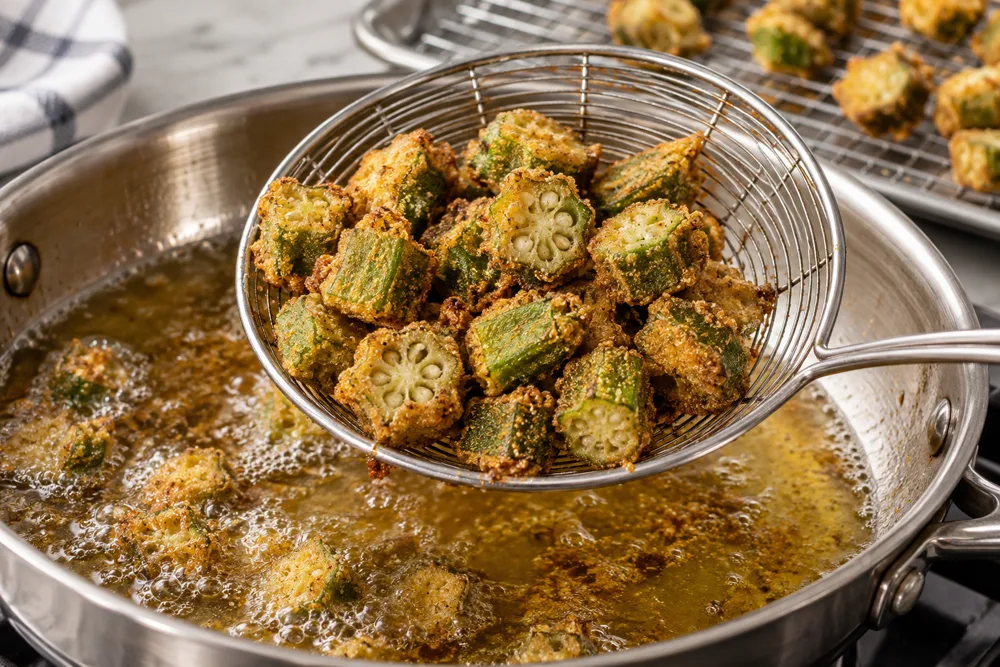
Plain frozen okra needs a separate coating decision. A dry meal coating, a flour-and-egg dredge and a commercial batter system do not adhere in the same way. Follow a tested recipe's preparation state rather than pouring dry flour over heavily frosted pieces and expecting it to stay attached. If controlled thawing is required for that recipe, it is a different preparation route from direct-from-frozen frying.
The aim is a properly cooked center with an attached, pleasantly crisp exterior. Color alone cannot establish that result. This guide focuses on frying, coating, oil recovery and service; selecting and freezing fresh pods is covered separately. Any trial temperature or timing must give way to the actual product's validated cooking directions.
Identify plain, home-breaded and pre-breaded frozen okra
Plain IQF cut okra gives the cook flexibility over seasoning and coating, but it does not arrive as a finished frying product. The exposed vegetable surface, moisture and cut size influence how a coating attaches. Whole plain pods add another variable because their centers take a different heating path from thin rounds. Choose a format that the intended recipe actually uses before deciding how to cook it.
Home-breaded frozen okra may already carry a light cornmeal or flour layer. Its performance depends on the recipe used, the surface condition when it was coated and the way it was frozen. A loosely dredged piece will not behave like a commercially developed batter-and-crumb product. Some coating loss may be normal for a traditional meal-style preparation, while a continuous crust requires a different formulation and process.
Commercial pre-breaded pieces should come with a specific preparation method. Check whether the product is raw-breaded, partially cooked or otherwise processed, and which appliance the directions describe. A par-fried exterior does not necessarily mean the whole product is ready to eat. Keep the original instructions associated with the SKU, especially when a distributor supplies several similar-looking coated vegetables.
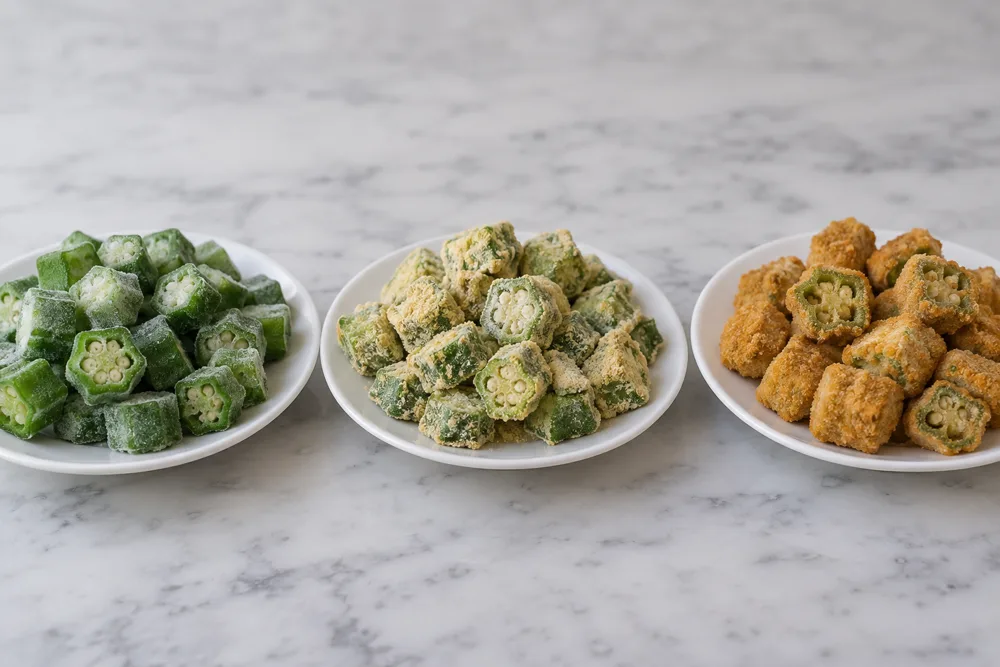
Each starting format requires its own coating and cooking decision.
| Product in the bag | Starting approach | Main risk to check |
|---|---|---|
| Plain frozen cuts | Use a tested coating recipe and its specified preparation state | Poor adhesion from excessive frost or uncontrolled moisture |
| Home-breaded frozen cuts | Follow the recipe used to prepare them | Loose coating and uneven piece thickness |
| Commercial pre-breaded okra | Follow the package's direct-frozen method where stated | Wrong temperature, load or cooking appliance |
| Whole plain pods | Use a method designed for whole okra | Exterior darkening before the center is adequately cooked |
Read the ingredient and allergen information, not just the product's front name. A coating may contain wheat, egg, milk, spices or functional ingredients that are absent from plain okra. Oil and seasoning already included in the product also change the recipe. Do not add an extra wet batter to a commercial coating unless the complete combination has been deliberately developed and tested.
Frozen separation matters because frying depends on controlled loading. Pieces fused into a solid mass cannot be assumed to cook like individual rounds. Avoid breaking hard clumps with a knife or dropping a large icy block into hot oil. Review the package condition and preparation guidance. If the product should be free-flowing but is not, record the observation and ask the supplier to assess it.
For businesses choosing a substrate, our frozen okra range provides whole and cut options for further preparation. A request for a finished breaded item requires separate confirmation of formulation and availability. Keep that distinction clear in the quotation: a plain-okra offer does not establish a coating specification, allergen statement or frying instruction for the finished snack.
Prepare a coating that adheres to frozen pieces
Coating adhesion starts with the surface receiving it. Dry flour on a thick frost layer can attach to the ice rather than securely to the okra. As that layer melts, the coating may loosen or form a wet paste. At the other extreme, a very dry smooth surface may not hold enough meal for the intended crust. The goal is the controlled surface state specified by the recipe, not simply the largest possible amount of powder.
A light cornmeal coating produces a different bite from a thicker flour-based crust. Cornmeal particle size affects the texture, while flour can help bind a finer layer. Some recipes use both; others use an egg or dairy step to carry the dry coating. Choose a complete tested formula and retain its sequence. Replacing a binder or changing the meal-to-flour ratio can alter adhesion, browning and the time the center needs.
For a recipe designed around chilled, drained okra, thaw under a suitable refrigerated procedure and remove free surface liquid before coating. Do not describe this as a no-thaw method. A measured preparation step can be useful, but an open-ended counter thaw creates an uncontrolled condition. Keep the unused product under its required storage conditions and prepare only the quantity the operation can handle safely.
For a genuinely direct-frozen method, use a product or tested recipe developed for that starting state. Commercial pre-breaded pieces normally need no additional dredging. Keep them frozen until loading, separate loose pieces without damaging the crust and follow the package. The convenience comes from the coating already being matched to the substrate and cooking route, not from the word frozen by itself.
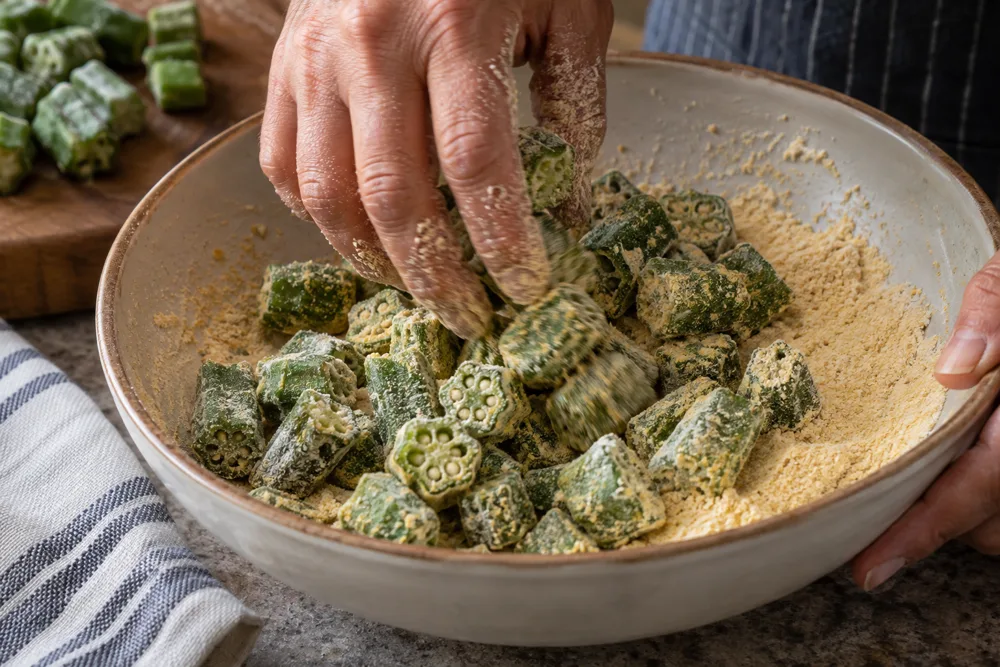
An even attached layer behaves differently from loose powder or wet coating clumps.
Work in small coating batches when applying a home-style dredge. A bowl that accumulates vegetable liquid changes as preparation continues: the first portion may receive a dry dusting while the last receives sticky lumps. Keep the recipe's proportions and handling consistent, and replace contaminated or excessively wet coating mixture according to the kitchen's procedure. Do not return used dredging material to its original dry-ingredient container.
Shake away loose excess coating using an appropriate utensil or sieve away from the hot oil. A thick layer that is not attached will shed into the pan and darken, which complicates later batches. This does not mean stripping every piece bare. Inspect whether the desired layer remains reasonably even, with no large wet clumps bridging several rounds together.
Keep the coating station separate from the draining and serving area. Bowls or utensils used with uncooked ingredients should not contact finished fried okra. Egg-containing mixtures and other perishable binders require their own safe handling controls. A plain vegetable's cooking method cannot substitute for managing the complete recipe and any cross-contact risks from its ingredients.
Evaluate coating pickup during a commercial trial by comparing substrate weight with coated weight under an agreed method. More coating is not automatically better: it changes the vegetable-to-crust ratio, portion cost and cooking behavior. Record the approved appearance and eating texture, then ask whether the same result is practical to reproduce across normal preparation volumes.
Heat the oil and manage temperature recovery
Use equipment designed for frying and follow its fill and operating instructions. Water and excess ice can rapidly produce steam on contact with hot oil. Keep utensils and the surrounding work area dry, remove loose excess ice from the food, and avoid adding a wet frozen mass. The USDA frying safety guide explains these hazards and emphasizes careful loading and supervision. Never use water on an oil fire.
Select an oil suitable for the intended frying temperature and the operation's ingredient requirements. Flavor, allergen controls and the oil manufacturer's guidance all matter. Do not use visible smoke as a target for readiness. If oil smokes or the equipment behaves abnormally, stop heating and follow the appliance's safe procedure. Frying depends on controlled heat, not on pushing the pan to its hottest possible state.
A thermometer suited to frying is more informative than judging heat from a single crumb. Position it as instructed, without resting the sensing part against the pan. For an initial trial with an appropriate breaded-okra product, temperatures around 350–365°F / 175–185°C are common, but the label or tested recipe controls the setting. This is not a universal specification for every coating and piece size.
The oil temperature changes after frozen food is added. A larger load brings more cold material and moisture into the same quantity of oil. If recovery is slow, the pieces spend longer in conditions that may leave the coating pale and greasy. A smaller load can improve consistency without requiring an excessively high starting temperature that darkens the first-contact surfaces too quickly.
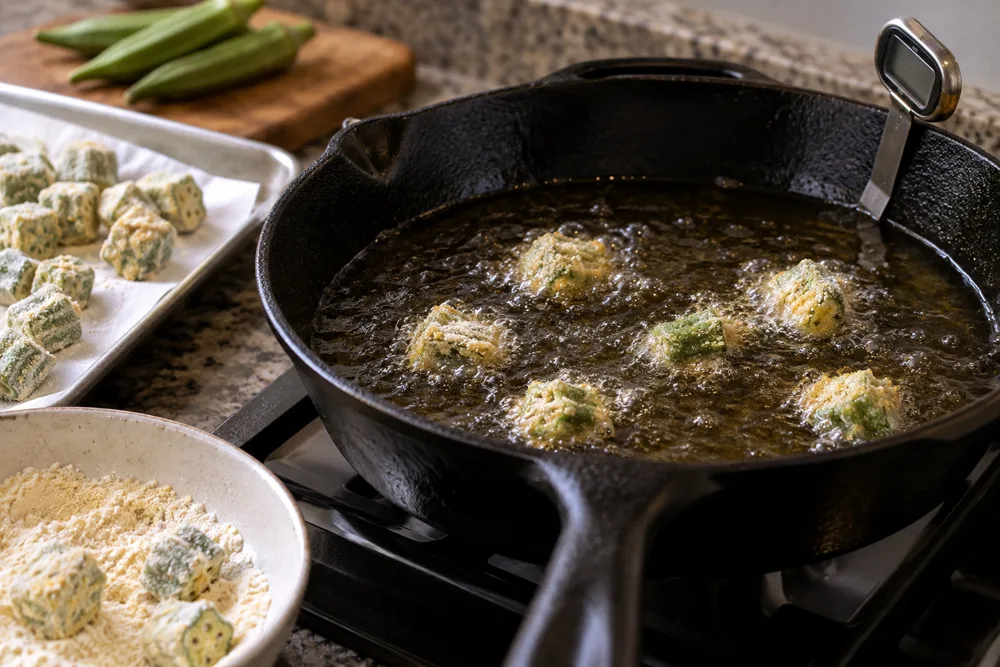
Use measured loads and monitor oil recovery under the product's frying instructions.
Keep the batch weight consistent while developing the method. The practical capacity of a fryer depends on oil volume, heating power, basket shape and the product. A kilogram rating on the appliance does not establish the ideal load for every food. Begin conservatively within the manufacturer's limit, observe recovery and finished quality, then increase only if the result remains acceptable.
Shallow frying adds pan-contact differences. The bottom coating receives direct heat while the upper surface waits for turning, so pieces need space and a controlled oil depth suitable for the recipe. Deep frying surrounds the food with oil but still requires a manageable load and adequate room for bubbling. Treat them as related methods with separate trials rather than copying one timing across both.
Between batches, remove loose crumbs with suitable equipment and allow the oil to return to the prescribed range. Do not judge the next load solely by how long the previous one took. Coating debris can darken and affect later portions, even when the fresh food has not cooked enough. Follow the operation's oil-management procedure and replace degraded oil according to the applicable equipment and quality controls.
Record both the starting condition and what happened after loading. A development sheet that lists only the thermostat setting misses the recovery problem. Note batch weight, observed temperature change, frying duration, coating color and center condition. This gives the next operator a useful method and helps distinguish a product change from a different load or an exhausted oil system.
Fry in small batches until the centre and coating are ready
Prepare the draining rack, serving container and seasoning before heating the oil. Frozen okra should not sit beside the fryer for a long uncontrolled interval while the cook searches for equipment. Check that the portion is the correct product and that the package instructions are available. A consistent starting condition makes the first batch easier to compare with later ones.
- Set up suitable frying equipment and heat the oil to the temperature specified by the product or tested recipe. Keep the preparation area dry and the equipment attended.
- Measure a modest batch within the equipment's limit. Separate loose pieces and remove excess loose ice or unattached coating without rinsing the product immediately before frying.
- Load carefully using the appliance's prescribed basket procedure or suitable heat-resistant utensils. Do not drop food from a height, overfill the vessel or add a large frozen block.
- Let the coating establish before unnecessary movement. Turn shallow-fried pieces as the recipe requires, or manage the basket according to the fryer instructions so pieces cook evenly.
- Cook for the product's required method and assess representative larger pieces. The exterior should have the intended color and attachment, and the center must satisfy the preparation directions.
- Remove with a suitable basket or utensil, drain promptly and serve using the planned holding procedure. Allow oil recovery and remove loose debris before starting the next measured batch.
A short frying time reported for one commercial cut should not be treated as a timer setting for an unfamiliar product. Piece thickness, coating weight and whether the product was previously heated all change the result. During a new trial, begin checking at the point advised by the recipe or label. Record the actual outcome rather than assuming that golden color means every piece is ready.

GreenLand product photograph. Substrate thickness helps determine the center-heating requirement.
Examine a representative large piece after safely removing it from the oil. The vegetable should not retain an icy or inadequately heated center, and the coating should not hide a wet uncooked layer of batter. Follow any specified temperature or other validated endpoint for the complete product. Do not try to measure the food's internal temperature while it is submerged in the fryer.
If the outside becomes dark before the center meets the required endpoint, investigate the setting, piece size and coating system. Raising the temperature further is unlikely to solve that mismatch. A product-specific lower setting and longer cook may be appropriate only within a tested method. If the product has instructions, consult them or the supplier before adopting a major change for service.
If pieces join into clusters, avoid tearing through them aggressively while the coating is fragile. Review whether the initial load was too large, the home-applied batter too wet or the pieces insufficiently separated before cooking. The next trial should address that starting condition. Separating a badly clumped batch after cooking does not establish a repeatable process.
The cut-okra photograph illustrates why substrate thickness deserves attention. Similar-looking rings can have different diameters and wall structures, while broken pieces expose additional surfaces. Define a realistic cut range for the intended frying method. The supplier sample and the commercial lot should be assessed using that same agreed range and cooking procedure.
Drain, season and serve before the crust softens
Fried okra continues to release steam after leaving the oil. A crisp coating can therefore soften even when the frying stage was successful. Drain promptly in a shallow arrangement with room for steam to escape. A rack set over a suitable tray can keep the pieces away from collected oil; use equipment that is clean, stable and appropriate for hot food.
Avoid piling the finished pieces into a deep bowl immediately. The lower layers carry the weight and moisture of the food above them, while a tight cover traps steam. A single shallow layer is easier to assess and serve with its coating intact. Where a commercial hot-holding procedure is required, choose equipment and an approved hold that meet safety needs as well as the desired texture.
Season while the surface can retain the seasoning, accounting for salt already present in the breading. Heavy additions can obscure whether the basic frying result is acceptable during a trial. First evaluate a plain portion, then test the finished seasoning dose. If a sauce is part of the dish, judge the combination rather than assuming the unsauced crust will remain unchanged.
| Result after frying | Question to investigate | Useful controlled adjustment |
|---|---|---|
| Pale, greasy coating | Was recovery slow after loading? | Reduce the next batch and monitor oil recovery |
| Dark exterior, poor center | Did coating color outrun center heating? | Review product instructions, cut size and setting |
| Crust loosens immediately | Was surface moisture or adhesion inconsistent? | Review the coating preparation state |
| Crisp at first, soft in service | Was steam trapped during holding? | Compare shallow draining and the actual container |
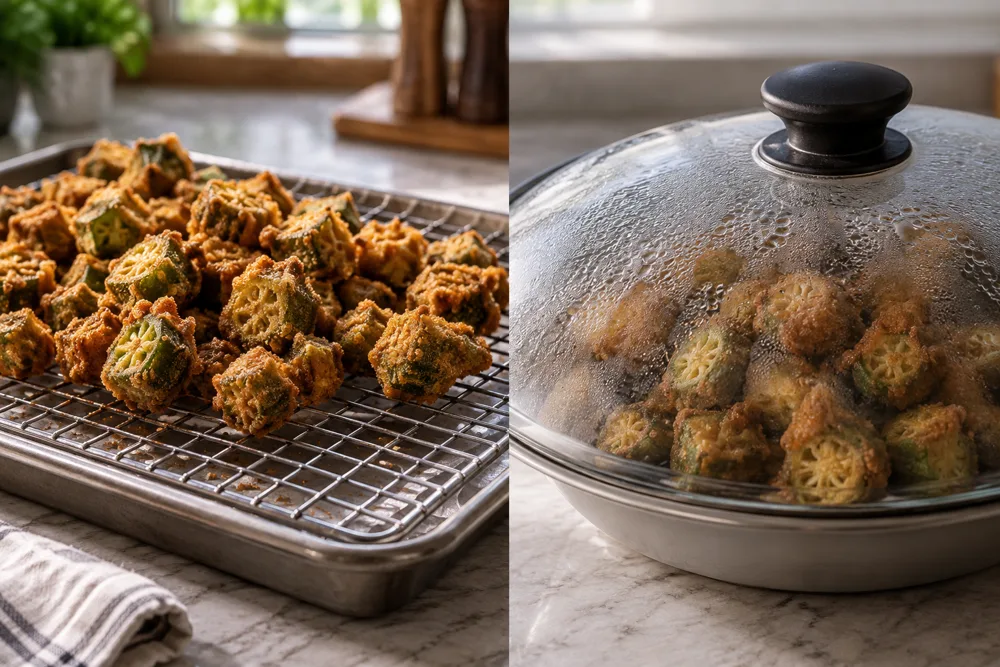
Steam can soften the crust after frying; draining and holding belong in the method.
These observations suggest where to investigate; they do not diagnose the cause with certainty. For example, a greasy impression can reflect the coating, oil condition, loading or draining. Change one variable at a time and keep the product lot consistent. Otherwise an improved batch may leave the team unsure which adjustment should become the permanent instruction.
For takeaway, trial the actual pack. A sealed container may preserve heat while softening the surface, and a sauce cup can wet the coating if it leaks. The appropriate design depends on the service requirement and safe handling controls. A vented or separated arrangement may improve quality, but it should be tested with the operation's real transport interval rather than assumed to solve every problem.
Do not extend room-temperature holding in an attempt to preserve crispness. Food-safety controls take priority over a dry surface. Refrigerate leftovers promptly under established guidance, and use a suitable reheating method when needed. Reheating may improve some surface texture, but it cannot reverse a poorly attached coating or guarantee the same result as a fresh batch.
Define the quality hold separately from the safety procedure. A product can lose its intended crispness before reaching any safety-related limit. A restaurant may therefore choose a short discard or replacement interval for quality within its approved controls. That decision should follow the customer's eating experience and the operation's waste plan, not simply the longest period the food can remain warm.
Scale the method for foodservice production
A restaurant should approve the method at its normal service load. One lightly filled basket does not establish performance during a rush, when successive batches affect oil temperature and operators may leave finished food waiting. Simulate the intended order pattern with the exact SKU. Include loading, draining, seasoning, packing and recovery time when estimating how many portions the station can produce.
Write the instruction around quantities staff can reproduce. State the frozen batch weight, equipment, oil setting, product-specific cooking method and service portion. A direction to add a handful leaves too much variation between operators. If the outlet uses several fryers, confirm that the approved method transfers to each one or provide separate instructions where recovery differs materially.
Keep the freezer-to-fryer handling sequence short and controlled. Prepare only the amount needed for the next batch and protect the remaining product according to its label. Repeatedly leaving an open bag in a warm kitchen changes the starting condition and can damage coating. Product that has thawed beyond the approved preparation state should be handled through the established procedure rather than quietly returned to the normal frozen queue.
Shared frying equipment needs an ingredient and cross-contact assessment. Coating fragments and oil can transfer allergens or flavors between products. A plain-okra specification does not make a finished fried portion free from allergens introduced by the breading, oil handling or other menu items. Keep the supplier's ingredient information and the kitchen's actual process aligned with what is communicated to customers.
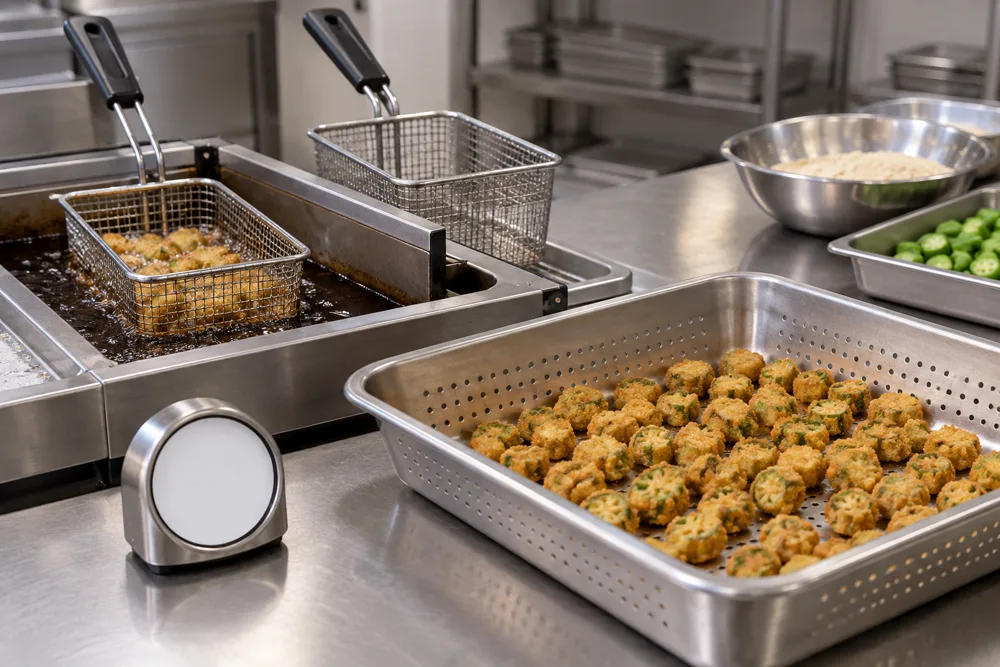
Evaluate the normal service sequence, including loading, draining and recovery.
Measure finished yield and saleable portion count. Include coating lost during handling, damaged pieces and food rejected after the quality hold. A lower purchase price may not improve portion cost if the product sheds substantial breading or produces inconsistent servings. Use the same calculation method for competing samples so the comparison reflects usable output rather than different weighing conventions.
For central preparation, separate substrate approval from finished-product development. Plain frozen cuts may be appropriate for an in-house coating line, but the line must control preparation state, coating pickup and the subsequent cooking sequence. A custom breaded frozen product requires its own development, ingredient declaration and validated instructions. Do not extend a kitchen trial into a factory release specification without the necessary process work.
Train staff to report specific observations. "Coating falls off during loading" points to a different stage from "crispness disappears in the delivery box." Keep the batch code with that report and record any unusual frozen condition or equipment behavior. We can review the substrate specification with the purchasing team, while the coating and kitchen teams examine the stages they control.
Retain an approved reference and review it when the product, coating, oil, fryer or pack changes. Even a seemingly minor change can alter the finished bite. A short confirmation trial is easier to manage than discovering the difference after a menu launch. The objective is an instruction the normal operation can repeat, not a perfect plate achieved only under unusually light test conditions.
Choose frozen okra specifications for frying
For plain okra intended for further coating, specify the form and cut dimensions first. Thickness and diameter influence the distance heat must travel, the vegetable-to-crust ratio and the way pieces portion. Include a tolerance for small fragments and broken rings where those affect coating loss or appearance. A broad description such as good-quality frozen okra leaves these practical requirements unresolved.
Pod maturity also matters. Tough, fibrous material does not become a tender bite merely because its coating is crisp. Ask for an appropriate tenderness requirement and a cooked-sample assessment. The whole-pod photograph supports a discussion of incoming shape and grading; it cannot prove tenderness, flavor or compliance on its own. Evaluate the actual sampled product under the intended method.
Frozen separation, loose ice and handling damage deserve explicit acceptance criteria. Free-flowing cuts are easier to weigh and coat consistently. Excess loose ice changes loading behavior, while broken substrate can increase small particles in the coating station. Agree how these conditions are assessed so a receiving complaint can be compared with the signed specification rather than a general visual impression.

GreenLand product photograph. Pod condition and tenderness requirements belong in substrate selection.
For a finished breaded offer, request the coating ingredient and allergen statement, coating proportion where relevant, preparation state, any previous frying step, oil information, cooking directions and pack details. Confirm that the supplied sample represents the proposed commercial product. Approval of plain frozen okra is not approval of an untested coating system applied later by another party.
Packing should fit usage. Smaller inner packs may help an outlet maintain the required frozen condition while portioning; a processor with suitable frozen handling may prefer bulk packs. Send the order quantity, destination, delivery plan and private-label needs with the technical request. We can review the whole and cut okra formats against those requirements before confirming the offer.
Keep the preparation-before-freezing question separate from the frying instruction. Our guide to freezing okra for frying covers that earlier stage. The present approval should begin with the actual frozen product and follow its coating, frying and service sequence. This avoids using an upstream preparation recommendation as evidence that an unfamiliar finished item will cook correctly.
Finally, connect the sample result with the order documents. Retain the product specification, relevant test information, lot identification, applicable certificates and packing agreement. A cooking trial establishes application performance, while supplier qualification and shipment controls address different responsibilities. Combining those records gives the buyer a defensible acceptance decision and a clear reference if the next lot performs differently.
Source frozen okra with GreenLand-food
GreenLand-food is a professional frozen okra supplier and manufacturer in China, providing factory-direct wholesale supply for importers, food manufacturers, foodservice distributors and private-label programs.
Send the okra form, cut specification, packing, quantity, frying application, destination, private-label needs and requested documents. Tell us whether you need plain substrate for further coating or a separately confirmed finished breaded product.