


What to Do with Frozen Okra: Beyond Stewing
Sep 20, 2026
Leave a message

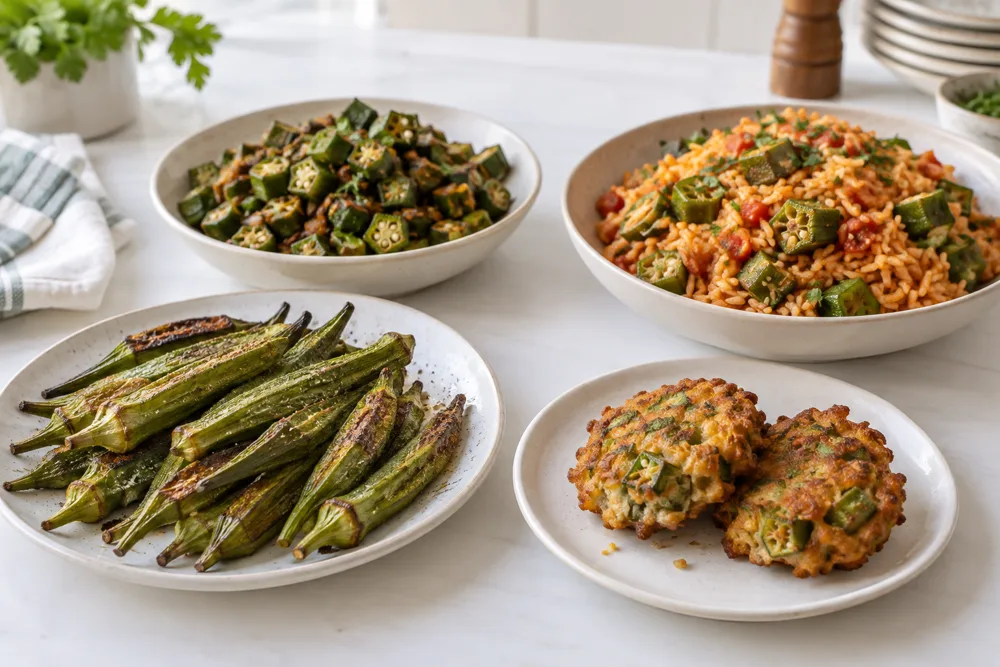
The useful question is what role the okra should play on the plate. Do you want a browned vegetable with a tender center, a crunchy coating, small pieces distributed through rice, or body in a sauce? Each target leads to a different sequence. A dry side should finish away from excess liquid; a curry can deliberately use the moisture and texture that dry cooking tries to limit.
This guide focuses on choosing dishes and adapting them to a home kitchen, foodservice menu or prepared-food program. It does not promise to remove okra's natural mucilage, and it is not a replacement for a product's cooking directions. Start with one application, test the actual portion and equipment, and judge the food as it will be served.
Start with the frozen okra form you actually have
Read the product name and ingredient list before choosing a recipe. Plain whole okra, plain cut okra and breaded okra are different starting ingredients. A bag of coated rounds may contain flour, seasoning and oil, and it may have a specific oven or fryer method. Those additions change flavor, allergens and the amount of starch entering a dish. Breaded pieces are therefore a poor substitute for plain okra in a rice pot or delicate sauce.
Whole pods create an obvious vegetable portion. They work well beside grilled food, on a shared vegetable platter or as a substantial component in a grain bowl. Their shape can make portioning by count practical, provided size is reasonably consistent. Very different pod lengths or diameters make both cooking and presentation less predictable. For a plated menu, consider the number of pods that fits comfortably beside the other components.
Cuts provide smaller bites and more opportunities for browned edges. They are easier to distribute through a spiced vegetable mixture, a rice dish or a fritter. Cut thickness affects whether the finished food contains recognizable okra pieces or a softer, more integrated vegetable texture. Choose a cut that fits the intended spoonful, rather than assuming the smallest available pieces will always perform best.
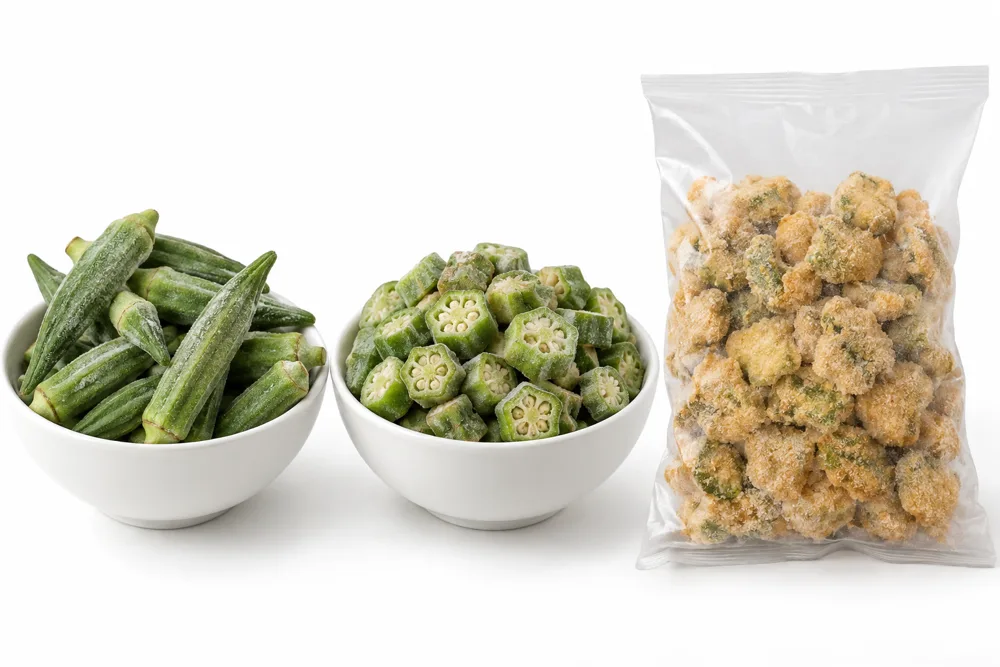
Start with the actual form in the bag; a coating changes ingredients and suitable applications.
| Starting form | Useful applications | Main selection question |
|---|---|---|
| Plain whole pods | Roasted side, grain bowl, visible curry component | Will the pod size cook and portion evenly? |
| Plain cuts | Skillet vegetables, rice dishes, fritters | Does the cut give the desired bite and distribution? |
| Breaded pieces | Appetizer basket, crisp side, snack menu | Is the coating designed for the available equipment? |
| Seasoned or sauced product | A compatible finished dish | How do the existing ingredients change the recipe? |
Inspect frozen separation as well as shape. Free-flowing pieces can be weighed and spread where they are needed. A hard block cannot be distributed evenly without a different handling step. Do not force a knife through a frozen mass. Follow the label or contact the supplier if the condition differs from what the product is supposed to provide. A clump is also a receiving observation worth recording, not simply a cooking inconvenience.
Our frozen okra range covers whole and cut formats with the final size, packing and quality requirements confirmed for the order. For menu development, ask for the form that matches the dish first. A whole-pod sample cannot establish how a small cut will behave in a fritter, even when both come from the same vegetable category.
Keep plain and coated products clearly identified in storage. Similar-looking cartons can create an expensive substitution during a busy service. An outlet using both formats should connect each recipe to the correct product code and preparation instructions. That simple distinction protects the intended texture and helps keep ingredient and allergen information accurate.
Roast or air-fry for browned edges
Roasted okra makes a useful vegetable side when the menu needs a tender center and a dry, lightly browned exterior. Whole pods can be served beside fish, chicken, beans or another main dish, while cuts are convenient for bowls and mixed roasted vegetables. A light seasoning of oil, salt and suitable dry spices keeps the vegetable recognizable. Add a wet dressing near service if the finished plate calls for one.
An oven is often the easier choice for a tray-sized portion. Spread plain frozen okra in a loose layer on a suitable rimmed metal tray, following the product's cooking directions. A conventional setting around 425°F / 220°C is a common development starting point, but the package and cookware limits take priority. Check during the first trial instead of treating a recipe's time as a guarantee for every pod size and oven.
An air fryer suits smaller portions and repeated short batches. Its useful capacity is the amount that receives adequate airflow, not the volume that can be packed into the basket. Small whole pods and cuts can work, but a deep heap changes the result. Follow the appliance and product instructions, shake or turn as directed, and compare pieces from different parts of the basket before deciding the batch is uniform.
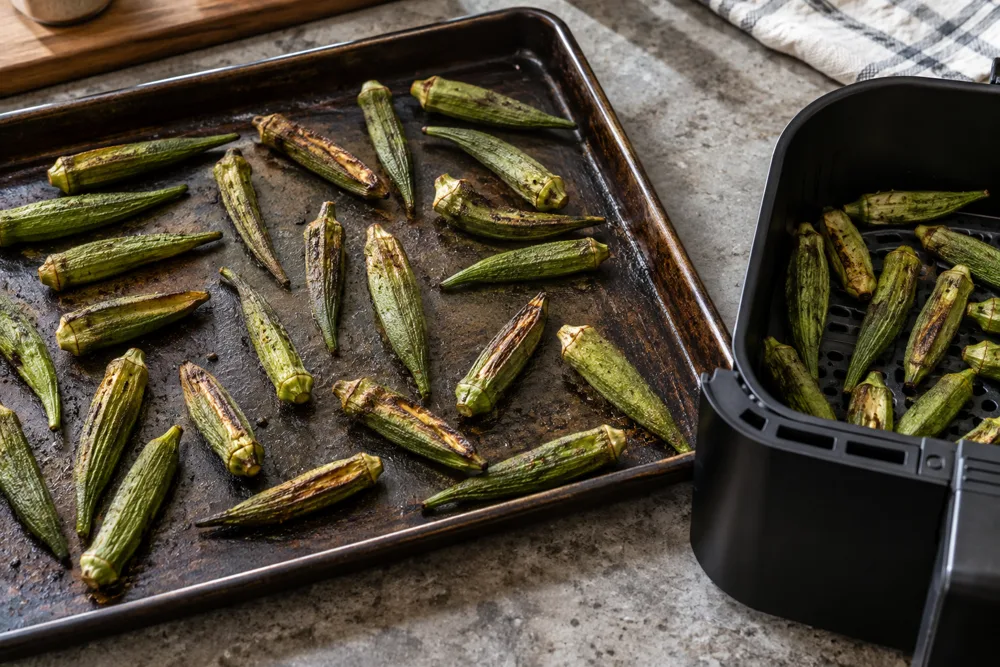
Tray and basket loading affect the practical portion each appliance can handle.
For a grain bowl, roast the okra separately from a very wet vegetable mix. Tomatoes and mushrooms can release enough liquid to change the cooking environment around it. Combine the components after each has reached its intended texture. This gives the bowl a clearer contrast between grain, sauce and vegetable, and makes the okra portion easier to measure across orders.
A yogurt-based dip, herb sauce or lemon dressing can complement browned okra, but serving it underneath the entire hot portion quickly changes the surface. If a dry finish matters, place the sauce alongside or use a measured drizzle at dispatch. The same logic applies to a takeaway bowl: a sealed container captures steam, so a result judged on an open plate may not survive the delivery interval.
Roasted cuts can also garnish a bean dish or a warm salad. Treat the garnish as a meaningful vegetable component, with enough weight to remain noticeable after mixing. Extremely small pieces may become visually lost among grains, while large whole pods can be awkward in a bowl eaten with a spoon. Trial the actual utensil and portion format as part of choosing the cut.
Do not expect every plain frozen pod to become crisp like a breaded snack. Browning and a drier surface are realistic targets, while the inside remains a cooked vegetable. If the menu description promises a crunchy crust, a suitable coating system is a different product choice. Describe the approved result honestly and avoid extending cooking until the center is dry merely to justify a menu adjective.
Use a hot skillet for bhindi-style and dry sautés
A spiced skillet dish gives frozen okra a role beyond a plain side. The aim can be distinct pieces coated with aromatics and spices, served with flatbread, rice or beans. Bhindi-style preparations vary widely by cook and region, so there is no single seasoning formula to reproduce. The useful process decision is to prepare a flavorful base without surrounding the okra with more liquid than the intended dry dish can tolerate.
Begin by deciding which ingredients need a longer cooking period. Onion often needs time to soften and develop flavor, while garlic and ground spices can scorch if left in a very hot pan too long. Cook these components in a controlled sequence. Where appropriate, remove the prepared aromatics briefly, cook the okra in the available pan area, and combine them near the finish. This avoids forcing every ingredient through the same heat exposure.
Use a broad pan suited to the burner and a portion that can spread across its working surface. Plain cuts are convenient for a spoonable dry sauté; small whole pods give a more distinctive shape. Keep the product frozen until needed unless its instructions specify another preparation route. Add it carefully, allow moisture to escape, and turn enough to distribute heat without crushing softened pieces.
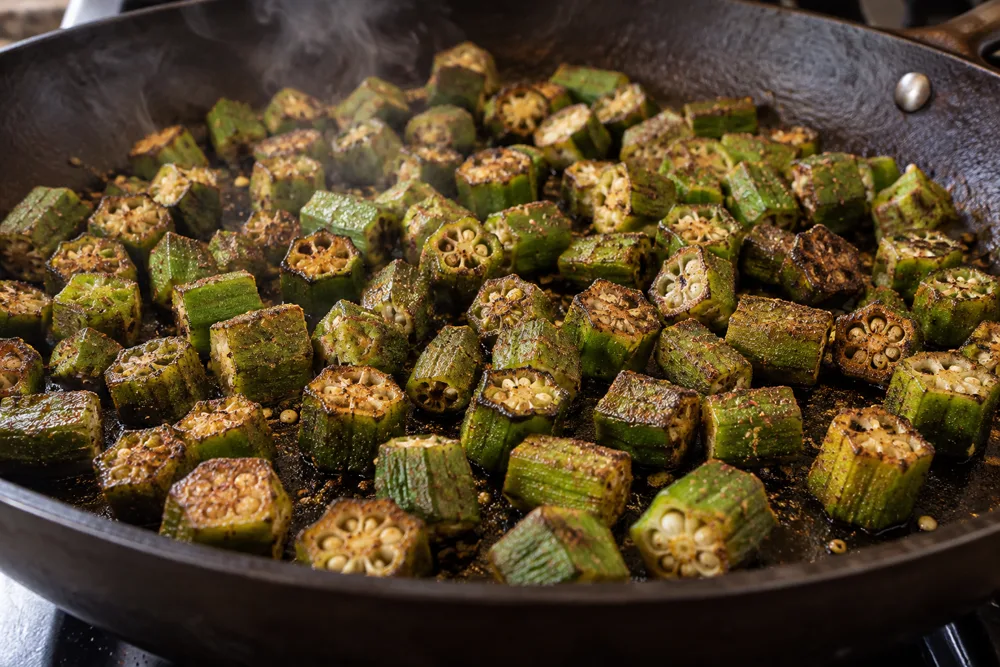
A broad skillet supports the spiced vegetable dish when the load allows moisture to escape.
If tomatoes are part of the dish, their timing should follow the intended result. A small quantity cooked down with the aromatics can provide flavor without becoming a large pool of sauce. Fresh juicy tomatoes added late produce a wetter dish. Neither result is wrong, but the recipe should choose deliberately. A tomato-based curry belongs to a different application target from a dry spiced okra side.
Potatoes, peppers or onions can make the dish more substantial, but different vegetables do not necessarily cook at the same speed. Cook firm potato pieces separately or use a recipe that establishes their readiness before the okra finishes. Frozen okra should not remain in the pan for an extended period simply because another component is still undercooked. Coordinate the ingredients rather than asking the most delicate one to wait.
For service, keep the final mixing gentle and brief. A broad spatula can lift and turn a portion with less damage than repeated forceful stirring. Taste the seasoning after the components are combined, because the aromatics and any salted additions affect the balance. A squeeze of citrus can be useful at the finish, but it should be a measured flavor choice rather than a promised cure for every texture problem.
A foodservice trial should record the pan diameter, okra weight and sequence of additions. The same spice mixture can taste and look different when doubled into a crowded pan. Approve the method at the outlet's normal load, then photograph the finished portion and describe its expected tenderness and free-liquid level. Those details make the recipe easier to transfer between cooks and shifts.
Turn frozen okra into fritters and crisp snacks
Fritters offer a different way to use plain cut okra. Instead of expecting each piece to develop its own dry exterior, the recipe holds small vegetable pieces inside a cooked batter. The finished portion can work as an appetizer, a side or part of a sharing plate. The important development questions are how much okra remains identifiable, how thick the fritter is and whether the batter cooks through before the outside becomes too dark.
A fritter formula needs a controlled liquid balance. Frozen okra can contribute moisture as it warms, so a batter that looks appropriately thick at mixing may change while it stands. Use a complete tested recipe as the starting point. If that recipe calls for thawing and draining the vegetable, do so under an appropriate refrigerated preparation procedure, account for the drained weight and do not substitute a wetter frozen portion without a trial.
Cut size determines the bite and how evenly the batter surrounds the vegetable. Large frozen segments can create a thick cold center, while very fine pieces may disappear into the mixture. A modest, consistent cut makes portioning easier. Do not cut hard frozen pods by holding them loosely in the hand. Select an appropriate precut format or use a safe controlled preparation method before chopping.
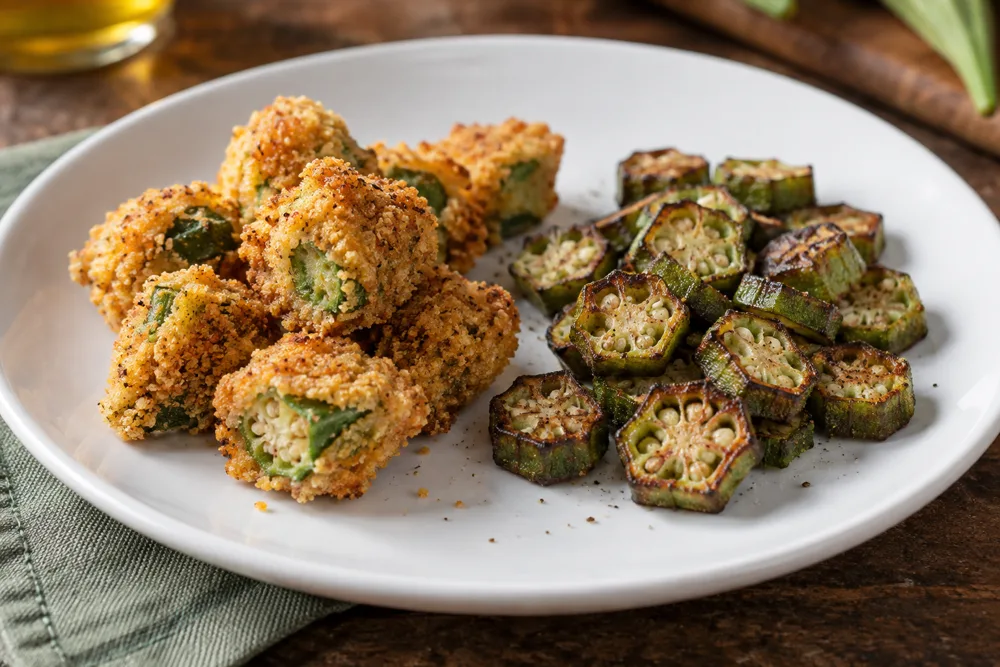
A batter or coating creates a different texture target from plain roasted okra.
For a shallow-fried fritter, keep portions reasonably even in thickness and follow the recipe's cooking instructions. A large mound is not simply a bigger version of a small flat fritter: heat has farther to travel to its center. Assess a cut-open sample from the actual portion size. The batter should be properly cooked, and any egg or other ingredient introduces its own food-safety requirements that vegetable appearance cannot verify.
Breaded frozen okra takes the dish toward a different snack format. Its coating is already attached to individual pieces, which can simplify portioning and shorten preparation at service. Select a SKU with instructions for the available fryer, oven or air fryer. Do not assume every commercial breading works equally well in every appliance, or that a product labeled frozen has already been fully cooked.
For a sharing plate, pair the crisp component with a dip that is easy to serve separately. A wet sauce tossed over the whole portion can soften the coating quickly. If a sauced snack is the menu's goal, test it that way and describe it accordingly. The packaging and service delay matter as much as the first attractive photograph taken directly after cooking.
Keep ingredient controls visible when moving from plain okra to a batter or coating. Wheat, egg, milk and other ingredients may be present, and a shared fryer creates additional cross-contact considerations. A supplier's plain-vegetable specification does not describe the finished fritter. The kitchen or manufacturer needs the complete formulation and its own appropriate controls for the final product.
Add okra to curries, rice and tomato dishes at the right stage
Okra can contribute distinct vegetable pieces to a curry without becoming the entire thickening system. Choose whole pods when their shape is part of the presentation, or cuts when even distribution matters more. Prepare the sauce base first, then add the okra with enough time to complete the product's required cooking. Judge both the sauce and the vegetable at the intended serving stage, because they continue to influence one another during holding.
For a tomato dish, decide whether the okra should be integrated into the sauce or remain visibly separate. A longer cooking interval generally gives more opportunity for softening and movement of material into the liquid. A separately roasted or sautéed component added near the finish can preserve a different appearance. That additional step takes labor and equipment, so it should earn its place through a result the menu actually needs.
Rice dishes require attention to water balance. Adding frozen vegetables to a rice formula introduces another source of moisture and changes the temperature of the pot. Do not simply add a large bag to a familiar rice recipe and assume the original liquid quantity still applies. Use a recipe developed for that combination, or cook the okra separately and fold it into properly cooked rice under the kitchen's established safe handling procedure.

GreenLand product photograph. Cut size affects how okra distributes through rice, curry and tomato dishes.
Separately cooked components are particularly practical for a rice bowl assembled to order. The kitchen can control the grain portion, okra portion and sauce independently. This can improve visual consistency and make a customer choice easier to accommodate. It also requires separate storage and holding controls; an attractive assembly system is useful only when the operation can manage every component safely.
In a one-pot vegetable meal, choose companion ingredients whose texture targets are compatible. Tender okra and slowly softening root vegetables may need different addition times. Canned or already-cooked beans may only need the heating specified by the recipe, while raw animal ingredients require their own complete cooking process. An okra timing suggestion cannot establish the safety of a mixed dish.
A prepared-food producer should test the whole meal after its intended storage and reheating sequence. Sauce thickness, rice texture and okra integrity can all change between initial cooking and consumption. Assess the actual tray, fill weight and heating instructions. A component that is attractive in a development saucepan can behave differently when surrounded by sauce in a sealed meal container.
The visible cut surfaces in the product photograph help explain why size selection matters, but they do not predict the final sauce consistency by themselves. Run two small trials using the same base and different proposed cuts, keeping other variables constant. Compare spoonability, vegetable recognition and portion uniformity. This is a more useful application decision than choosing a cut solely because it looks appealing while frozen.
Plan batch size, holding time and menu service
Choose the service model before finalizing the cooking method. An appetizer cooked to order, a buffet vegetable and a chilled ready-meal component have different quality demands. Crispness is especially sensitive to steam and time, while a curry may tolerate a longer controlled hold with less noticeable change. The same frozen ingredient can support several menus, but it needs a separate practical instruction for each result.
For cooked-to-order service, determine a portion the equipment can produce consistently during a busy period. A small air fryer may make an appealing trial but become a bottleneck when several orders arrive together. A broad oven tray may handle more portions, yet require coordination with other menu items. Measure the cycle, including loading, turning, unloading and any recovery between batches, instead of counting only the displayed cook time.
For a buffet, taste the food after the actual planned holding interval. Use the establishment's approved temperature controls and suitable equipment throughout. A dry roasted side placed in a deep covered pan may soften, while a sauced preparation can remain more compatible with that service style. Select the dish to fit the service conditions rather than promising a just-fried texture from prolonged covered holding.
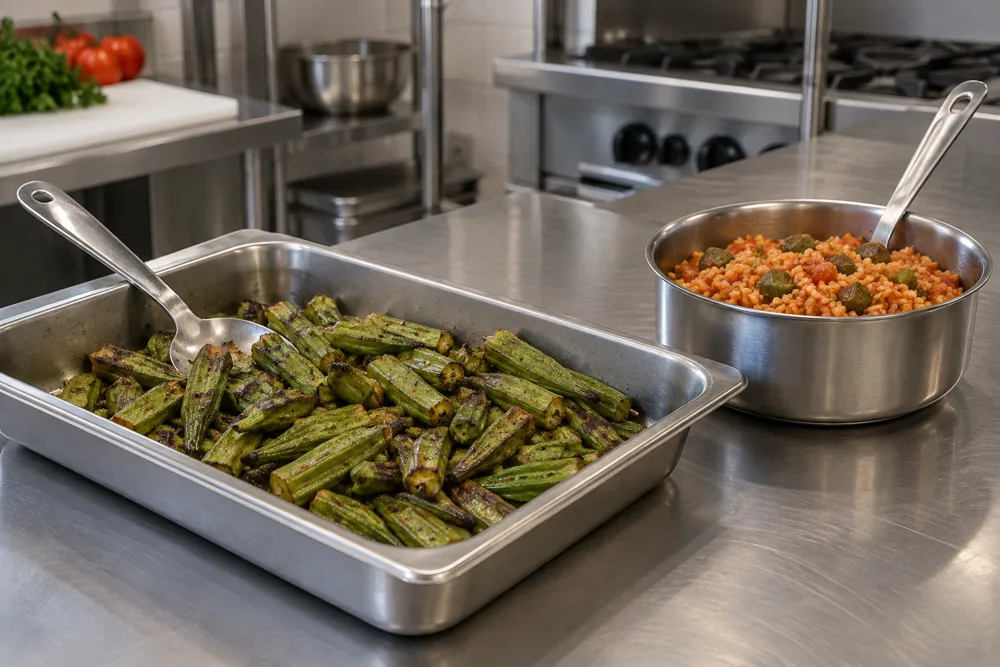
Choose a preparation that suits the planned batch size and service conditions.
Takeaway adds packaging to the recipe. A closed container can collect condensation, and a dip cup can leak into the vegetable if packed poorly. Trial the actual container and journey time while maintaining safe handling. For a crisp snack, separating sauce may matter more than an extra minute in the fryer. For a curry bowl, avoiding leaks and maintaining a pleasant rice-to-sauce ratio may be the more important target.
Measure cooked yield when comparing applications. Weigh the frozen ingredient, then the usable cooked output under a defined procedure. State whether oil, sauce or batter is included in the final weight. A battered snack and a plain roasted side cannot be compared meaningfully through finished weight alone because the added ingredients differ. Include portion cost and preparation labor in the menu decision.
Record what happens to unused product during service. Inner-pack size influences how often a bag is opened and how much frozen handling staff must manage. Smaller packs can be convenient for a low-volume outlet, while a central kitchen may efficiently use a bulk format. The economical pack is the one that fits actual usage without unnecessary handling, damaged product or poor stock rotation.
Repeat the final trial with another representative lot before launching a large program. Natural agricultural variation can affect size and tenderness within the agreed specification. A recipe that works only with a hand-selected sample needs further development. Keep the approved photographs, portion weight and written texture description together so the purchasing and kitchen teams share the same expectation.
Specify frozen okra for the intended application
Begin an inquiry with the finished dish and required form. Whole pods for a roasted platter need different size and appearance priorities from cuts for a fritter. Explain whether the okra must remain visually prominent, distribute through a mixture or integrate into a sauce. We can then review the product form and sample against a concrete application instead of treating all frozen okra as interchangeable.
Define the dimensions that matter to the method. Whole-pod length and diameter influence appearance and heating; cut thickness influences bite, coating and distribution. Include realistic tolerances for broken pieces, stems, discoloration and fibrous material. A grade name alone does not communicate these requirements clearly. Our whole frozen okra page provides a starting point for discussing the available forms and confirmed specifications.
Ask for a representative sample and identify the lot it comes from. Cook it using the proposed equipment, load and service sequence. Record the incoming frozen condition, finished weight, tenderness, piece retention and any liquid released into the dish. A sample approval becomes useful for future orders when the test method and acceptance criteria are retained with it.

GreenLand product photograph. Whole-pod grading supports application and incoming-quality discussion.
Discuss packing in relation to the outlet or production line. Specify the inner-pack weight, carton arrangement, order quantity, destination and any private-label requirements. If the product will be sold in retail bags, the cooking directions must match that actual product and declared equipment. A generic internet method is not an adequate basis for printing a commercial instruction without validation.
Confirm which documents are needed for qualification and shipment. The product specification, relevant test information, lot traceability and applicable certificates should correspond to the offered product. Requests for an organic claim or a particular customer standard require separate confirmation. Photographs support product discussion but cannot replace documents or establish compliance with a destination-market requirement.
For mixed purchasing, our frozen vegetable range provides broader context. Keep the okra's own application criteria distinct even when it shares a shipment with other vegetables. A common carton size or freight plan does not make the cooking behavior of different ingredients equivalent. Each component should earn approval in the dish for which it is intended.
Finally, distinguish a supply requirement from a recipe preference. A fibrous-pod limit belongs in product acceptance; a preferred spice level belongs in the kitchen formula. Free-flowing frozen condition belongs in receiving checks; sauce placement belongs in service instructions. Assigning each requirement to the right stage makes problems easier to investigate and gives both the supplier and the food operator a practical route to a consistent result.
Source frozen okra with GreenLand-food
GreenLand-food is a professional frozen okra supplier and manufacturer in China, providing factory-direct wholesale supply for importers, food manufacturers, foodservice distributors and private-label programs.
Send the whole or cut form, size specification, packing, quantity, intended application, destination, private-label needs and requested documents. Include the service format and sample trial so we can review the okra against the finished dish.