


How to Freeze Okra for Frying Without Losing Texture
Sep 01, 2026
Leave a message
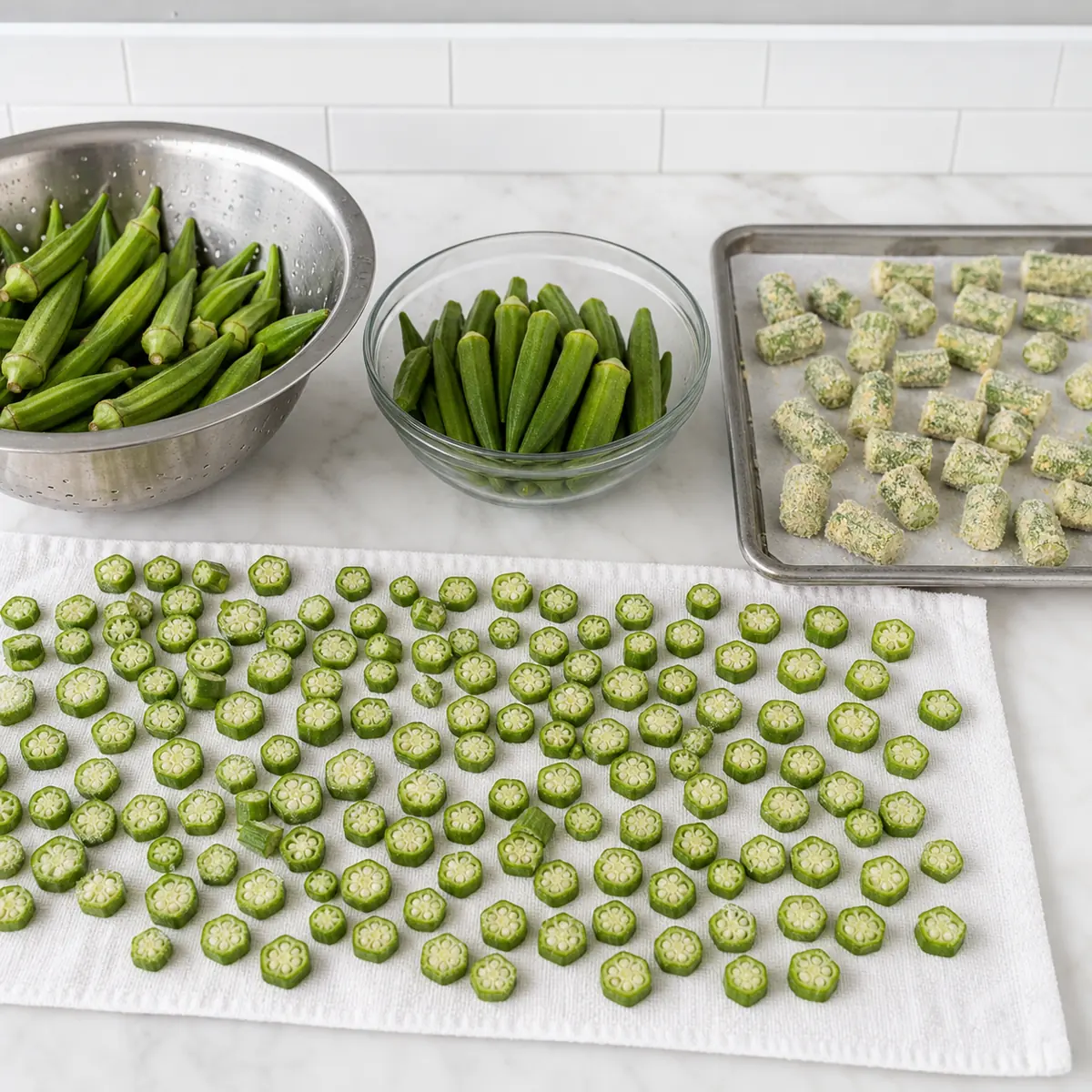
Blanch, cool and dry the okra before tray-freezing it for frying
Select young tender okra, wash it, trim the stem without opening the seed cells and blanch small pods for 3 minutes or large pods for 4 minutes. Cool promptly, drain and dry very well. Leave pods whole or cut crosswise. For fried okra, freeze unbreaded pieces for maximum flexibility or dredge dry cut pieces in meal or flour before tray-freezing, then fry from frozen in controlled batches.
For ingredient format details, see Can You Freeze Whole Okra?.
The measured blanching times follow the National Center for Home Food Preservation method. Equipment, altitude, piece size, coating system and commercial process can require a validated adjustment; this article does not turn a household method into a universal factory specification.
Key takeaways
- Young pods with small seeds and tender walls give a better fried bite than mature fibrous pods, regardless of freezing method.
- Trim the cap carefully, blanch by pod size, cool immediately and remove surface water before cutting or coating.
- Tray-freeze pieces in one layer so the breading or cut surfaces do not fuse into a solid block.
- Fry from frozen in modest loads and validate oil recovery, coating adhesion, center temperature and hold time.
Whole, cut, breaded and unbreaded okra compared
| Format | Freezing preparation | Frying behavior | Best reason to choose it |
|---|---|---|---|
| Whole unbreaded pods | Blanch, cool, drain, dry and tray-freeze | Slowest center heating; coating later is difficult | Visible whole-pod dishes and flexible later processing |
| Cut unbreaded rounds | Blanch whole, cool, dry, cut and tray-freeze | Easy to season or batter later; may release mucilage | Maximum coating and application flexibility |
| Lightly meal-dredged rounds | Cut dry okra, coat lightly, tray-freeze and pack | Convenient; loose dry coating fries evenly | Traditional meal-coated fried okra |
| Wet-battered or heavily breaded pieces | Requires a tested pre-dust, batter, crumb and freeze system | High risk of clumps, coating cracks and oil cooling | Standardized foodservice product when professionally developed |

Start with tender okra, not a clever coating
Mature okra can be fibrous even when cooked perfectly. Choose young bright pods that snap or cut cleanly, with no mold, wet spots or tough ridges. Sort by size before blanching because a large pod needs more heating time than a small one. Uniform raw material gives a fairer texture trial and avoids a basket containing both soft small rounds and underprepared thick pieces.
Do not trim deeply into the shoulder of a whole pod before blanching. Opening the seed cavity releases more mucilage into the water and leaves a ragged end. Remove only the stem tip while keeping the cap intact. If the final product will be cross-cut, blanch the whole sorted pods first, then cool, dry and slice unless a validated process specifies otherwise.
Why blanching matters before frozen storage
Blanching is a controlled heat treatment that slows enzyme activity responsible for quality loss during frozen storage. It also brightens and cleans the surface, but it is not a cooking competition. Excess time softens the walls; too little time gives incomplete enzyme control. NCHFP specifies 3 minutes for small pods and 4 minutes for large pods, followed by prompt cooling for the same length of time.
Start timing when the covered water returns to a boil after the okra is added, following the complete published method. Use enough water for recovery and work in batches. At high altitude or in a commercial system, rely on the applicable validated process. Blanching times cannot be guessed from color alone, and frying later does not correct poor frozen-storage quality.
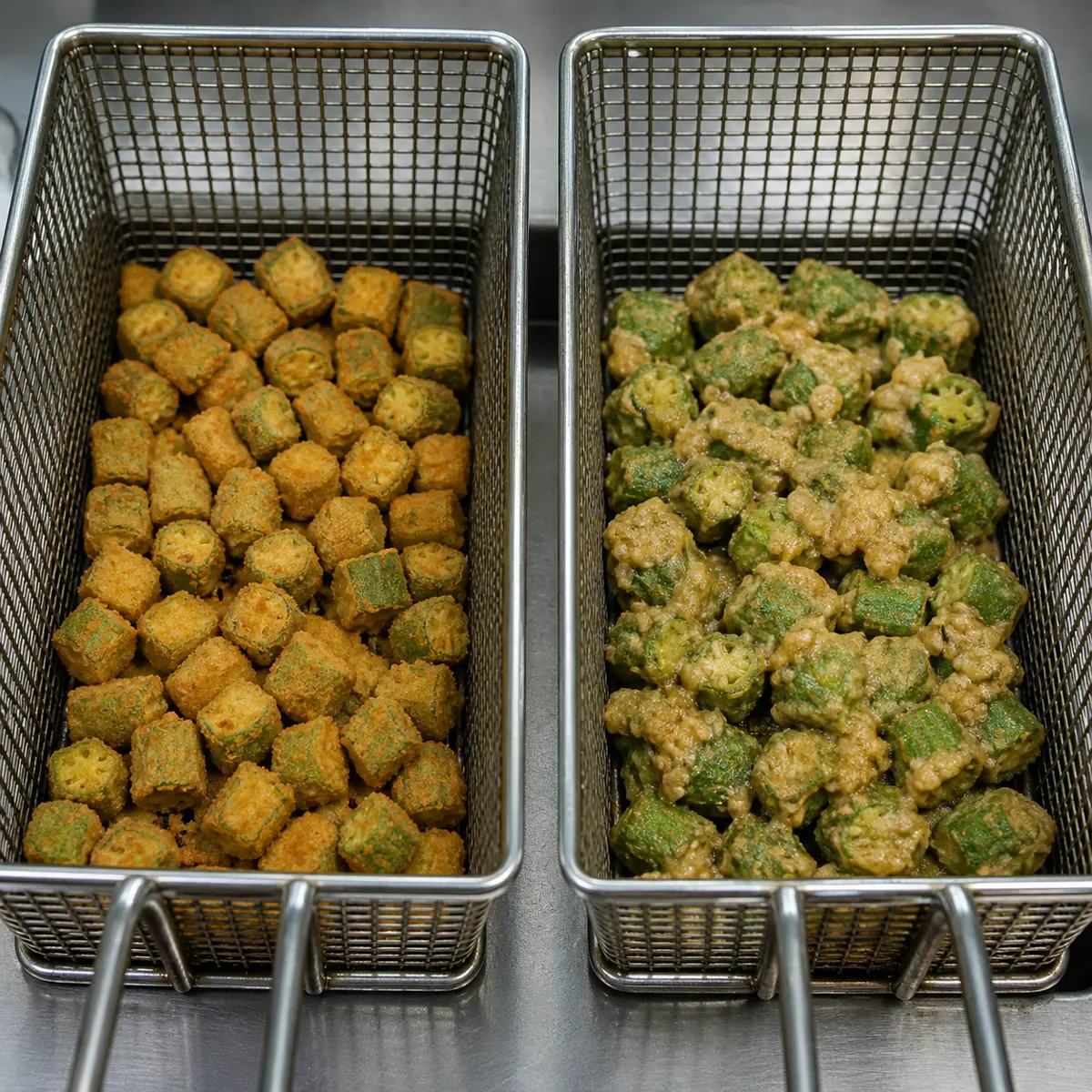
Moisture control decides whether breading stays attached
After cooling, drain the pods thoroughly and spread them on clean absorbent towels or a rack. Surface water dilutes flour, creates gummy patches and freezes pieces together. Cut only after the outside is dry enough to handle cleanly. Freshly cut okra releases some mucilage naturally; work efficiently and avoid soaking the rounds.
For a simple meal coating, toss small dry batches so every surface receives a light even film rather than a thick paste. Shake off excess. A wet batter or multi-layer breading system needs controlled viscosity, pickup percentage and freezing conditions. Household intuition is not enough for a product that must survive packing, transport and a commercial fryer.
Breaded versus unbreaded: choose by flexibility
Unbreaded frozen rounds take less space and let the cook choose flour, cornmeal, batter or seasoning later. Their exposed cut faces can stick if they are piled before firm, so tray-freeze them first. This format also works in gumbo, curry and stew if the frying plan changes. It is the more flexible freezer inventory.
Pre-breaded rounds save service labor and reduce mess, but the coating becomes part of the specification. Meal type, particle size, seasoning, allergen status, pickup, loose crumb and breakage all matter. Freeze the coated pieces in one layer, pack only after they are hard and test them without thawing. A good fresh coating can still crack after a freeze-thaw cycle.
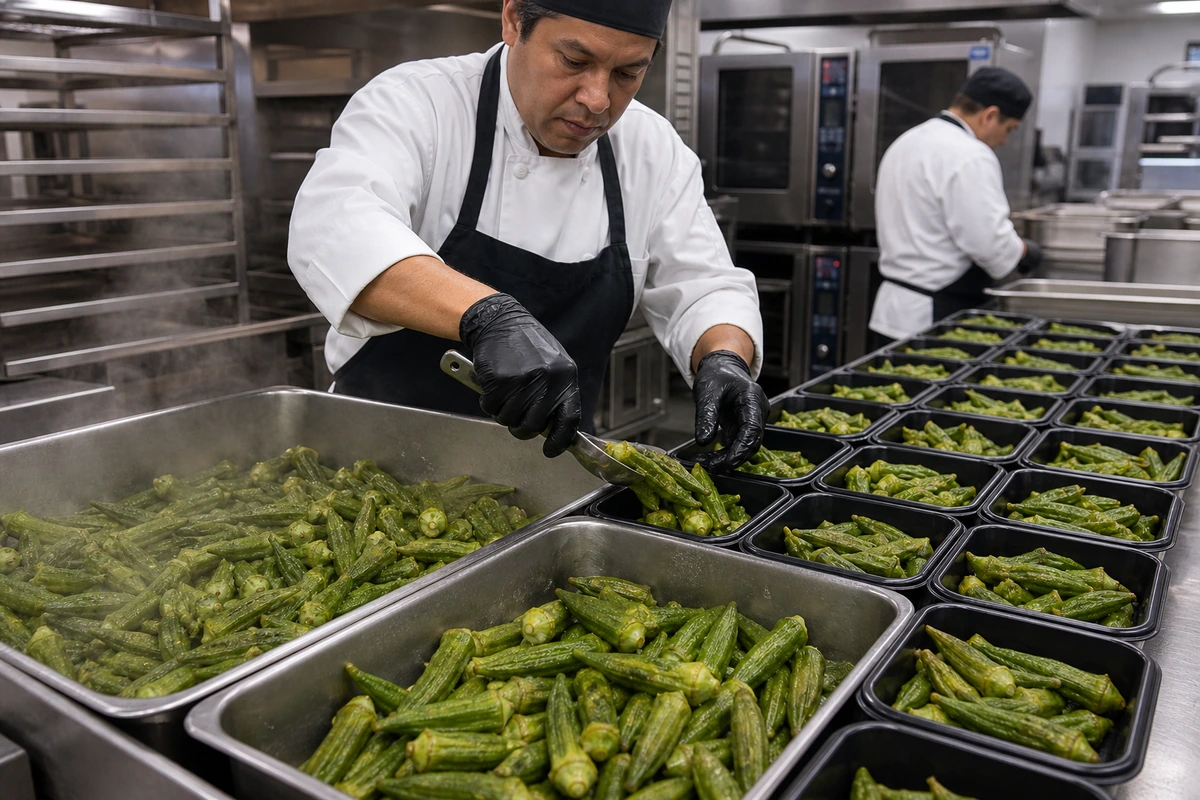
Whole pods and cut rounds behave differently in hot oil
Whole pods have a smaller exposed interior area but a thicker center. They take longer to heat and can trap steam. Cut rounds heat faster and present more edges for coating, yet they also expose seed cells and mucilage. Choose a consistent thickness so the center cooks before the coating becomes too dark. Very thin rounds dry; very thick rounds stay soft and cool the oil.
Do not compare a whole-pod trial and a cut-round trial by the same clock. Record actual piece dimensions, starting frozen temperature, oil temperature, basket load and cook time. A fryer thermostat display shows equipment status, not the temperature inside every piece. Follow the relevant food-safety plan for the final product.
Fry directly from frozen in controlled loads
Thawing breaded okra creates condensation that softens the coating. Move the required portion from freezer to fryer without a long warm wait. Lower it carefully to manage spatter and never add loose surface ice. Use a basket load that allows oil temperature to recover; a dense load produces pale greasy coating and uneven centers.
Drain the cooked okra on a rack or suitable absorbent surface without piling it deep. Season while hot if the recipe requires it. Evaluate immediately and again after the expected service hold. A coating that is crisp for one minute but collapses under a heat lamp is not acceptable for a foodservice program with a ten-minute hold.

Diagnose slime, clumps, pale coating and tough pods
Some mucilage is natural to cut okra. Excessive slime in preparation often follows very mature pods, deep trimming, soaking, repeated handling or slow work. Frozen clumps point to wet pieces, inadequate tray separation or temperature fluctuation. Pale greasy fried okra points to a heavy basket load, low oil recovery or coating that holds too much water.
Tough walls and large hard seeds start with raw-material maturity. No blanch or fryer adjustment can turn an overmature pod into tender okra. Separate raw-material, freezing and frying causes during troubleshooting. Change one variable per trial, weigh the batch and use a consistent scoring sheet for tenderness, coating adhesion, color, oiliness and hold decline.
Control cut thickness and coating pickup together
A nominal half-inch round does not describe the whole cut distribution. Measure a representative sample and separate very thin coins, target pieces and thick ends. Thin pieces carry more coating relative to okra and darken quickly. Thick pieces expose less cut surface but require longer center heating. A narrow distribution lets the fryer reach one endpoint without burning one group or undercooking another.
Coating pickup should be expressed as a measured percentage, not as looks well breaded. Weigh okra before and after coating, account for loose crumb and repeat across batches. Too little coating exposes wet cut cells; too much creates a doughy shell that absorbs oil. In commercial development, check whether pickup changes after the breading machine warms, flour hydrates or recycled crumb becomes finer.
Oil recovery is part of the product test
Record oil temperature immediately before loading, at the lowest point after loading and when it returns to the target. Two fryers set to the same number can recover very differently because of oil volume, heater power and basket geometry. A product trial that ignores recovery may blame okra quality for pale greasy coating caused by equipment overload. Use the actual service basket weight rather than an unrealistically small laboratory portion.
Filter condition and oil age also change color and flavor. Run comparative samples in the same oil state and order, or alternate the order across repetitions. A highly seasoned crumb can darken before the okra is tender. When approving a product for multiple customers, describe the validated equipment range and require a local confirmation rather than promising one time for every fryer.
Assess the held product, not only the basket exit
Fried okra releases internal steam after it leaves the oil. If pieces are piled in a deep bowl, that steam softens the coating. Drain in a shallow layer and use a vented service container. Score crispness, coating adhesion, oiliness and center tenderness immediately, then again after the expected hold. A five-minute restaurant side and a thirty-minute delivery item are different performance targets.
Photographing the fresh basket is not enough for customer approval. Measure weight loss during holding and note whether crumbs fall away, pieces stick or mucilage becomes more noticeable. If the product will be sauced, run the sauce contact test for the real duration. Some coatings are designed to remain crisp; others are intended to absorb seasoning and become tender.
Specify raw-material maturity and defect limits
Pod length is an imperfect proxy for tenderness. Variety, growth rate and harvest timing also influence wall fiber and seed hardness. A useful specification combines size range with sensory or physical maturity expectations and limits for tough pods, dark spots, broken tips, open seed cavities and foreign material. Review the cross section of cut pieces; large hard seeds reveal maturity that a green exterior can hide.
Confirm how the supplier samples and reports these defects. A buyer should inspect more than the attractive top layer of one bag. Take portions from several locations, count or weigh defects against the stated method and retain a controlled reference sample where practical. Tie any claim to the proposed facility, product code and order because a generic okra certificate does not define the exact cut or frying performance.
Write a frying specification that can be repeated
The method should name okra form, target cut thickness, breading identity, frozen portion weight, fryer model or oil capacity, target temperature, cook time range, drain method and service hold. State that pieces are cooked from frozen and what to do with large clumps or excess surface ice. If multiple coatings are approved, give each a separate product code; staff should not guess whether a pale meal coating and a coarse crumb need the same endpoint.
Define sensory terms. Crisp exterior can mean a dry audible crust, a light meal texture or simply a non-gummy coating. Tender center can permit natural mucilage but reject woody walls and hard mature seeds. Use a color reference and score coating loss in the basket. The specification becomes more useful when it includes reject limits for broken pieces, fines, open seed cavities and burnt crumb.
Run the test after realistic frozen storage and opened-bag handling. A newly produced sample may pour freely, while a bag exposed to humid service air develops frost and clusters. Close working bags promptly and never return warm held product to the master pack. For a chain customer, repeat the fry in representative equipment at more than one location before finalizing the instruction.
Cost comparison should use servings that pass the quality limit. Include cook loss, loose breading discarded, oil turnover, labor and rejected hold product. A cheaper okra with mature pods or unstable coating can produce fewer acceptable portions. Conversely, a premium coating designed for long delivery may be unnecessary for immediate service. Match the specification and cost model to the real customer promise.
Keep breading allergens and rework under control
Flour, cornmeal and crumb systems may contain wheat or other declared allergens. A kitchen or factory must keep breaded and unbreaded okra clearly identified and follow its allergen controls for utensils, lines, labels and storage. Do not return unused breading that has contacted wet okra to the original dry supply. It has changed in moisture, microbial exposure and particle distribution.
Commercial lines should define whether loose coating is screened, discarded or reworked under a validated procedure. Excess recycled fines can produce heavy pickup and dark spots. Package labels and specifications must match the actual coating formulation. When a buyer wants a gluten-free or clean-label product, confirm the complete ingredient, cross-contact and facility scope rather than assuming that an okra product is simple because the vegetable itself has one ingredient.
Store breaded and unbreaded samples in separate sealed packs and use distinct utensils during the fry trial. Record the ingredient lot and coating pickup for each sample. If a formula changes, repeat adhesion, color, oil and hold tests instead of assuming a visually similar crumb is equivalent. Small changes in starch, particle size or seasoning can shift water absorption and frying time. Keep the approved control sample and score sheet available for the next production review.
How to freeze okra for frying
-
Sort young pods by size
Select sound tender okra and separate small from large pods. Remove moldy, bruised, wet or fibrous pieces before the batch reaches hot water.
-
Wash and trim without opening the seed cells
Rinse under clean running water and trim only the stem tip. Keep the cap intact so mucilage loss and water entry remain controlled.
-
Blanch for the measured time
Use the complete NCHFP method: 3 minutes for small pods and 4 minutes for large pods, timing correctly after adding the product. Follow altitude and process adjustments where applicable.
-
Cool, drain and dry thoroughly
Cool promptly for the specified period, then drain. Spread on clean towels or a rack until no free surface water remains.
-
Cut and choose the coating route
Leave pods whole or slice crosswise to a consistent thickness. Freeze unbreaded for flexibility, or apply a light tested meal or flour coating to dry pieces.
-
Tray-freeze, pack and fry from frozen
Freeze pieces in one layer until hard, transfer to airtight freezer packaging and label. Fry the planned portion from frozen in a controlled basket load, then evaluate immediate and held texture.
Commercial frozen okra: specify the frying result, not just the cut
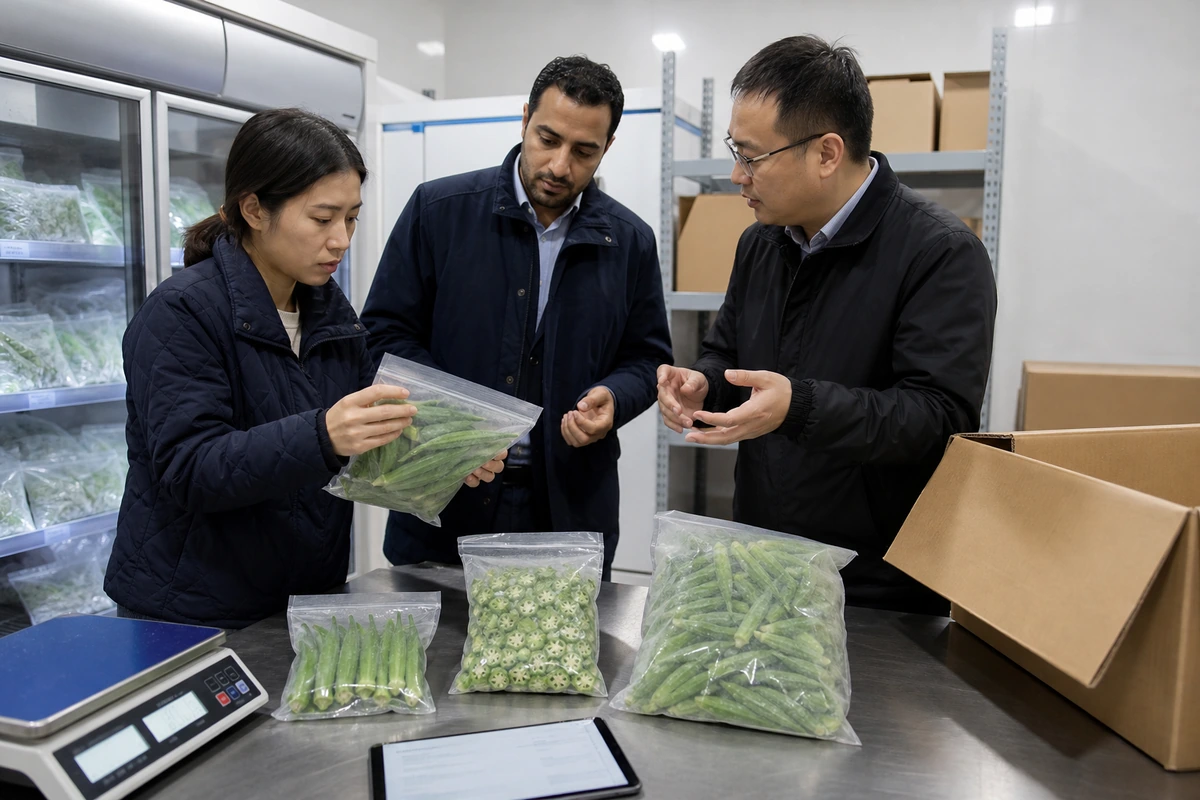
An inquiry should state whole pod or cross-cut, target length or thickness, pod maturity, blanching status, breaded or unbreaded identity, coating composition and intended fryer system. Whole IQF okra for curry is not automatically suitable for breading, and a cut okra approved for gumbo may have too many fines for a premium fried side.
Review a thawed visual sample only as one part of approval. Run a frozen fry test with controlled oil type, temperature, basket load, time and hold. Record separation, loose ice, coating pickup, breakage, color, oil absorption, seed hardness, wall tenderness, mucilage perception and yield. Repeat on more than one representative sample when the decision is material.
For a wholesale or private-label order, confirm pack size, inner liner, carton, net weight, MOQ, loading, shelf life, cold-chain controls, allergen documentation for coated items and destination label requirements. The final specification should identify the applicable facility and document scope. GreenLand-food can review available frozen okra formats and arrange the next sample or commercial discussion.
Frequently asked questions
Do you have to blanch okra before freezing it for frying?
For dependable frozen-storage quality, use the measured blanching method: 3 minutes for small pods and 4 minutes for large pods, followed by prompt cooling and thorough drying.
Should okra be breaded before or after freezing?
Either can work. Freeze unbreaded rounds for flexibility, or lightly bread dry rounds before tray freezing for convenience. A wet or heavy commercial coating needs its own validated system.
Can you freeze whole okra for frying?
Yes, but whole pods heat more slowly and are harder to coat evenly later. Cross-cut rounds are usually more practical for traditional fried okra.
Should frozen okra be thawed before frying?
Usually not, especially when breaded. Thawing creates condensation and weakens coating. Fry from frozen in a modest load while following the equipment and food-safety procedure.
For preparation details, see How to Fry Frozen Okra Without a Soggy Coating.
Why is my frozen fried okra slimy?
Common causes include mature pods, deep trimming, soaking, wet surfaces, thick cuts or a low-temperature crowded fry. Control raw material, moisture, cut and basket load separately.
Reference points
- National Center for Home Food Preservation - freezing okra
- NCHFP - freezing okra for frying
- USDA FSIS - freezing and food safety
These references support the measured handling points and method boundaries. Product labels, local food-safety requirements, site procedures and lot-specific specifications still control a real decision.
Confirm frozen okra against your real application
GreenLand-food is a frozen-food supplier supporting each manufacturer, importer, distributor and wholesale buyer. For factory-direct sourcing support, send the required form, cut, application, packing, quantity, destination and trial method. We will review available frozen okra specifications and the next practical step.