


Strawberry Cold Foam with Frozen Fruit: Texture and Batch Control
Sep 27, 2026
Leave a message

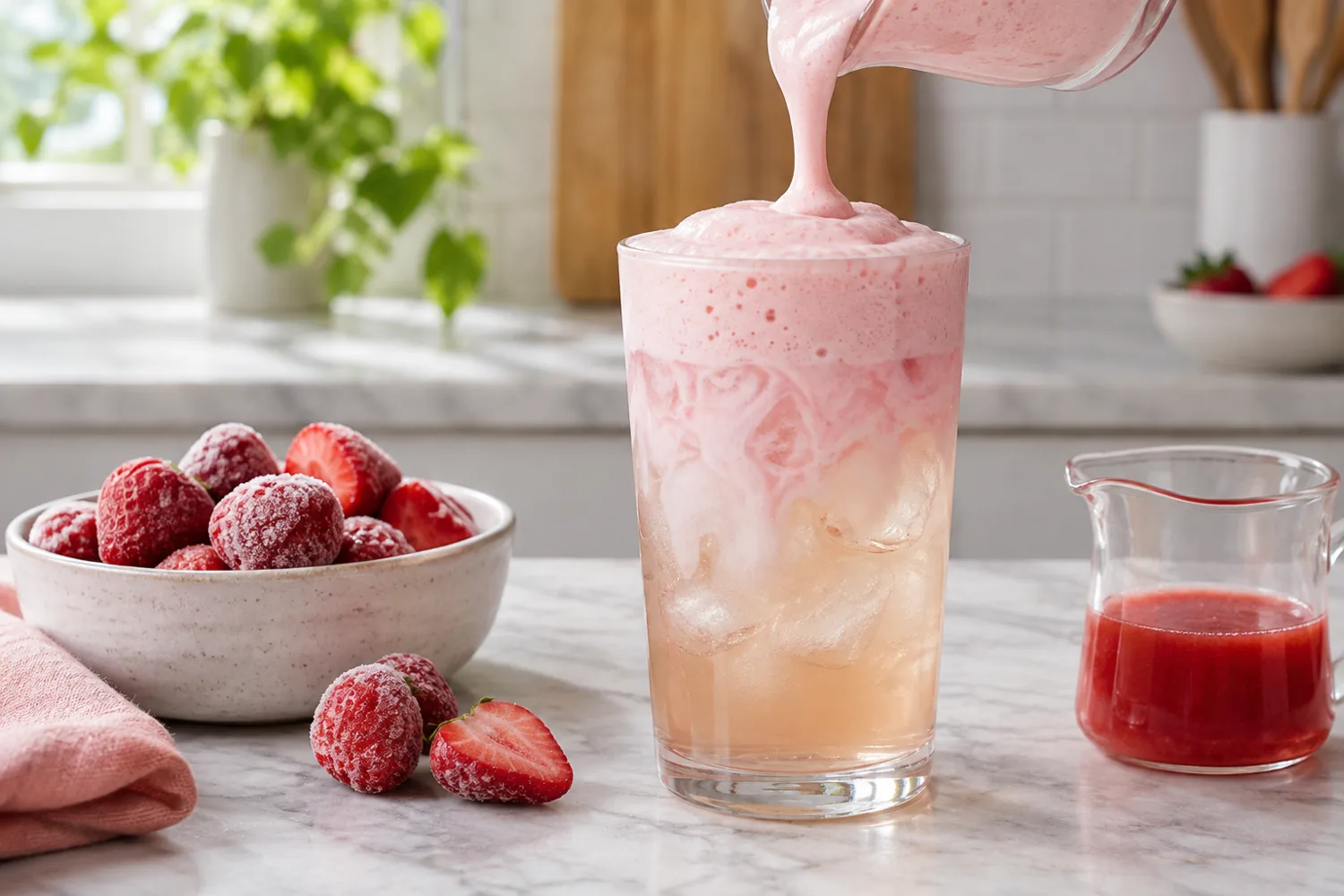
The most useful pilot separates two questions. First, does the strawberry input give the desired flavor and color without excessive seeds, pulp, or free water? Second, does the chosen dairy or plant base still whip and hold once that fruit input is added? Recipe pages commonly use fresh berries, thawed puree, syrup, jam, or freeze-dried powder. They show that several routes are possible, but they rarely measure foam height and drainage in the intended glass. GreenLand-food supplies frozen strawberry forms, including whole berries, cuts, and puree subject to the confirmed specification. We can help a purchasing team match the fruit input to a controlled beverage trial; the finished cold foam formulation and its safe service process must be validated by the beverage operator.
How do you make strawberry cold foam with frozen berries?
For a small development batch, start with a chilled, approved foam base and a measured strawberry preparation. Use a thawed frozen-berry lot that has been handled under the food-safety plan for the intended beverage. Blend enough fruit to make a smooth puree, then decide whether to strain it. Chill the prepared fruit input and base, weigh both into the same vessel, and froth with the equipment and cycle planned for service. Stop when the foam reaches the target volume and bubble texture, then pour it over the actual iced drink. Record the time from whipping to service; a pleasing layer immediately after whipping is only the first observation.
This is a method, not a fixed universal formula. Heavy cream, milk, sweetened cream blends, and plant-based alternatives differ in their ability to hold air. A strawberry puree differs from a syrup or jam in water, pulp, seeds, acid, sweetness, and viscosity. Even frozen strawberries of the same named form can vary by variety, maturity, and thawing loss. Keep a base-only control and add fruit in measured steps during the pilot. If the first fruit level makes the foam heavy, watery, or slow to froth, the answer may be a smoother or more concentrated fruit preparation, a lower fruit load, or a different foam base. Do not simply whip longer without recording the change.
At home, a hand frother or small blender can make a pleasant topping from a few berries and chilled cream. Commercial service introduces more variables: staff may use different pour sizes, the fruit input may settle in a bottle, the base may warm while waiting on a counter, and a large batch may receive less uniform aeration than a single cup. Create a short operating instruction after the pilot. It should specify the weighed fruit and base amounts, mixing order, temperature range chosen by the operator's validated process, equipment setting, expected appearance, and point at which the foam is remade rather than served. The exact limits belong to the operator's equipment and safety assessment.
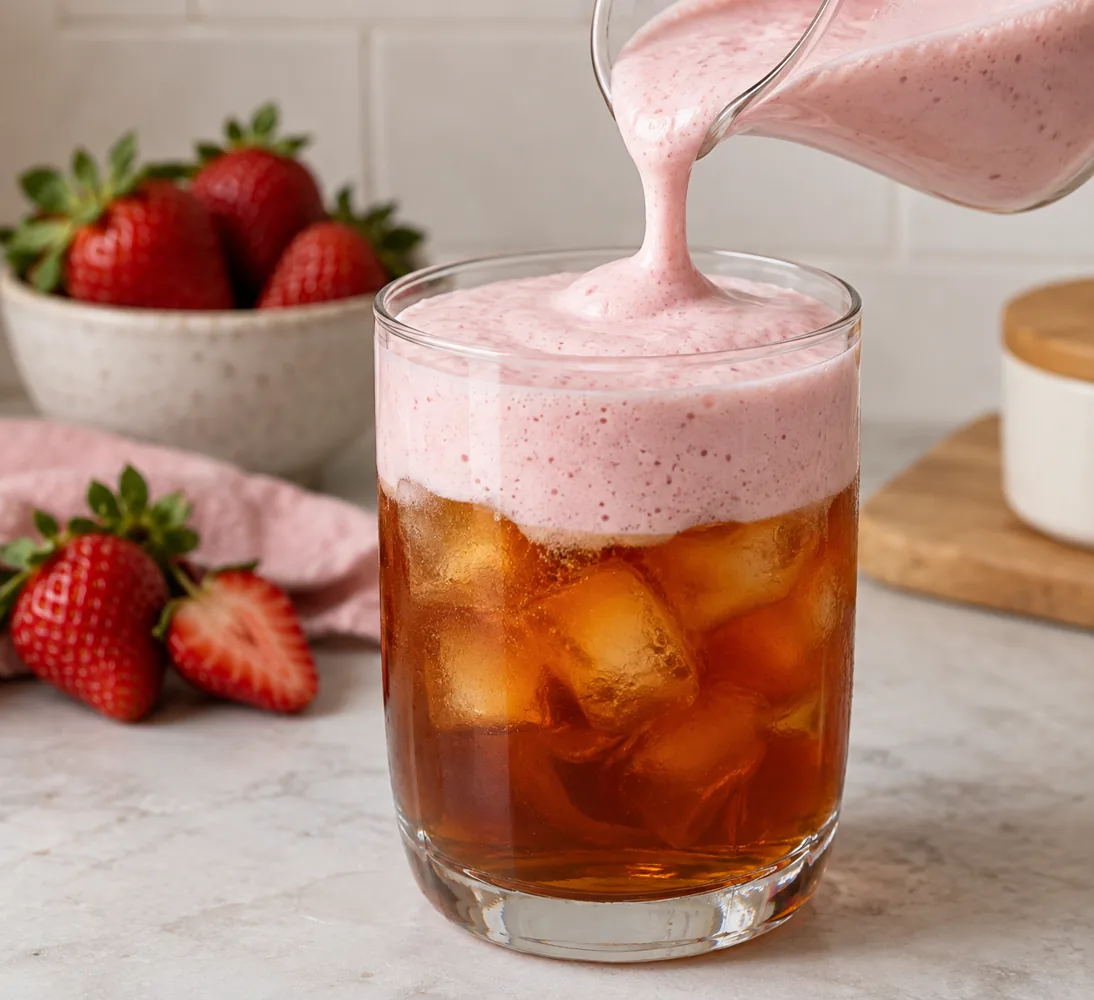
Strawberry foam pour
A cold foam is a dispersed air structure. The customer sees bubbles, a soft boundary above the beverage, and a texture that can be sipped or spooned. If the topping behaves like dense whipped cream, it may be too heavy for the target drink; if it vanishes at the first stir, it may not survive normal service. Evaluate it on the intended base beverage, whether iced coffee, tea, matcha, or a fruit drink. The liquid beneath can change the apparent color and contrast, while ice movement and straw insertion can disturb the layer. A photo of foam in an empty glass is useful for checking aeration but does not replace a real service test.
Keep the recipe's consumer promise modest. "Made with frozen strawberries" can be accurate when the prepared fruit is genuinely part of the foam, but the label, menu wording, allergen statements, and any fruit percentage claim must match the approved formula and destination market. If the fruit sits only in the beverage under a plain foam, describe it accordingly. The supply specification should support the promised product identity without asking the raw frozen strawberry supplier to certify the finished drink's texture or shelf life.
Which strawberry input gives the right pulp and seed load?
Whole IQF strawberries give a developer control over blending and straining. They also introduce seeds, pulp, and thaw liquid that have to be managed. A prepared frozen puree may save a processing step, provided its ingredient statement, particle size, sweetness, and microbiological status fit the formula. A cooked fruit concentrate or jam carries a different solids and flavor profile; it may reduce free water but adds a cooked note and can alter sweetness. A syrup can distribute easily through a foam base but may provide less fresh-fruit texture and can differ in fruit content. These are formulation choices, not interchangeable purchasing descriptions.

Frosted whole strawberries showing surface seeds
The first GreenLand product photograph shows frosted whole strawberries and their visible surface seeds. It is a useful reminder that a whole-berry input is not a seedless liquid. For a fine-bubble foam made with a narrow frothing head or a dispenser, the development team should test whether the seed and pulp size obstruct the equipment or leave gritty particles on the palate. A blender may reduce large pieces but will not necessarily eliminate seeds. Straining can produce a smoother pink liquid while removing some pulp and changing fruit yield. Record both the input mass and the strained output so cost and flavor can be compared fairly.

Bulk frozen strawberries in a blue-lined bag
The second GreenLand photograph shows a bulk frozen strawberry presentation. A buyer should use the actual offered lot and pack for the trial, because an attractive recipe made from a retail bag does not prove that a bulk carton will have the same fruit size, defect rate, Brix, or thaw behavior. Ask for the frozen form and pack weight, as well as the specification for color, maturity, calyx or stem residue, defects, and any documents required for the intended ready-to-drink use. If the production route needs puree, confirm whether GreenLand can supply that puree to the required specification; a photograph of whole berries does not establish a ready-made puree supply for every order.
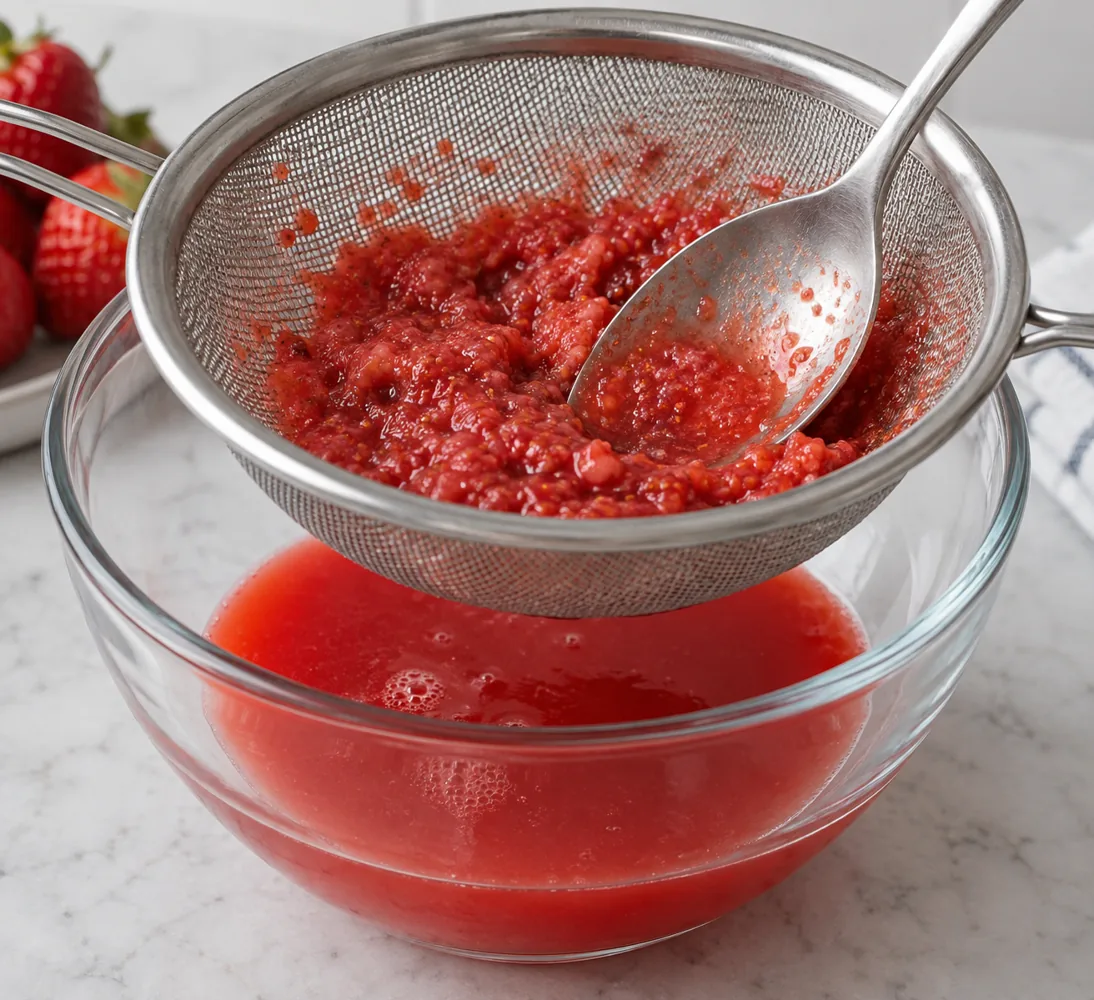
Strawberry puree straining
Thaw-and-strain is a useful pilot route when the target is a clean foam with visible strawberry color but few suspended seeds. Use a weighed fruit lot, collect all thaw liquid under the approved cold process, blend consistently, and pass it through a mesh size compatible with the target frother. Record the retained material and the liquid recovered. If a finer strainer produces a more stable looking foam, the improvement may come at the cost of fruit flavor or color; taste the foam as well as looking at it. The selected mesh and pressing method should be reproducible at commercial scale, not a one-off hand squeeze that a beverage chain cannot perform.
A cooked concentrate can be compared with the cold strained input when a stronger strawberry note is needed without adding too much water. Heat treatment changes flavor, color, and food-safety considerations; it should be designed and validated by the finished-product operator. Do not apply a household jam method to a commercial ready-to-drink ingredient without a separate process assessment. If a supplier offers a prepared fruit input, ask for its composition and processing status. If the buyer makes it in-house, the in-house step becomes part of the controlled production plan.
Make the input decision by the finished foam and by purchasing practicality. Whole IQF fruit may suit a kitchen with a reliable blender and sieve workflow. A standardized puree may suit a chain seeking repeatable dosing. A concentrate may suit a formula that cannot tolerate much fruit water. For each route, compare strawberry flavor, color, seed perception, fruit usage, processing labor, waste, and impact on aeration. A cheaper kilogram of fruit can be more expensive in the cup if much of it is strained out or if staff must remake unstable foam.
How does fruit loading change a dairy or plant foam?
Adding more strawberry usually deepens color and flavor, but it also changes the material the frother must aerate. Fruit brings water, acids, soluble solids, and suspended particles. A foam base relies on its own proteins, fats, emulsifiers, or other stabilizing components to form and hold bubbles. The way those components respond to fruit cannot be predicted from the fruit alone. A dairy cream blend that accepts a given puree load may behave differently from an oat or coconut base with the same puree. Run each base as its own formulation, with a base-only control and several measured fruit levels.
Start by fixing the cup and measuring method. Weigh the base, fruit input, and any sweetener separately, then record total mass. Use the same chilled starting condition and frothing cycle for every sample. Measure or mark foam height immediately after whipping and after pouring onto the drink. Note bubble size, pourability, visible curdling or graininess, color, and the amount of liquid that gathers beneath the foam. Taste the topping at the point customers drink it. If two samples have equal height but one tastes diluted, the visual result alone is not enough. A recipe developer should balance both strawberry identity and the promised light texture.
Acid balance deserves a measured check, particularly in a dairy base. Strawberries are acidic, but the effect of an addition depends on the base composition and the amount used. A low-fruit dose may be uneventful, while a larger dose or a different concentrate can shift texture. Do not publish a universal safe fruit percentage or pH threshold without testing the specific formula and process. Record pH and Brix where they help the development team explain changes, and keep those measurements linked to each trial batch. They are product-development data; they are not by themselves proof that the drink is microbiologically safe.
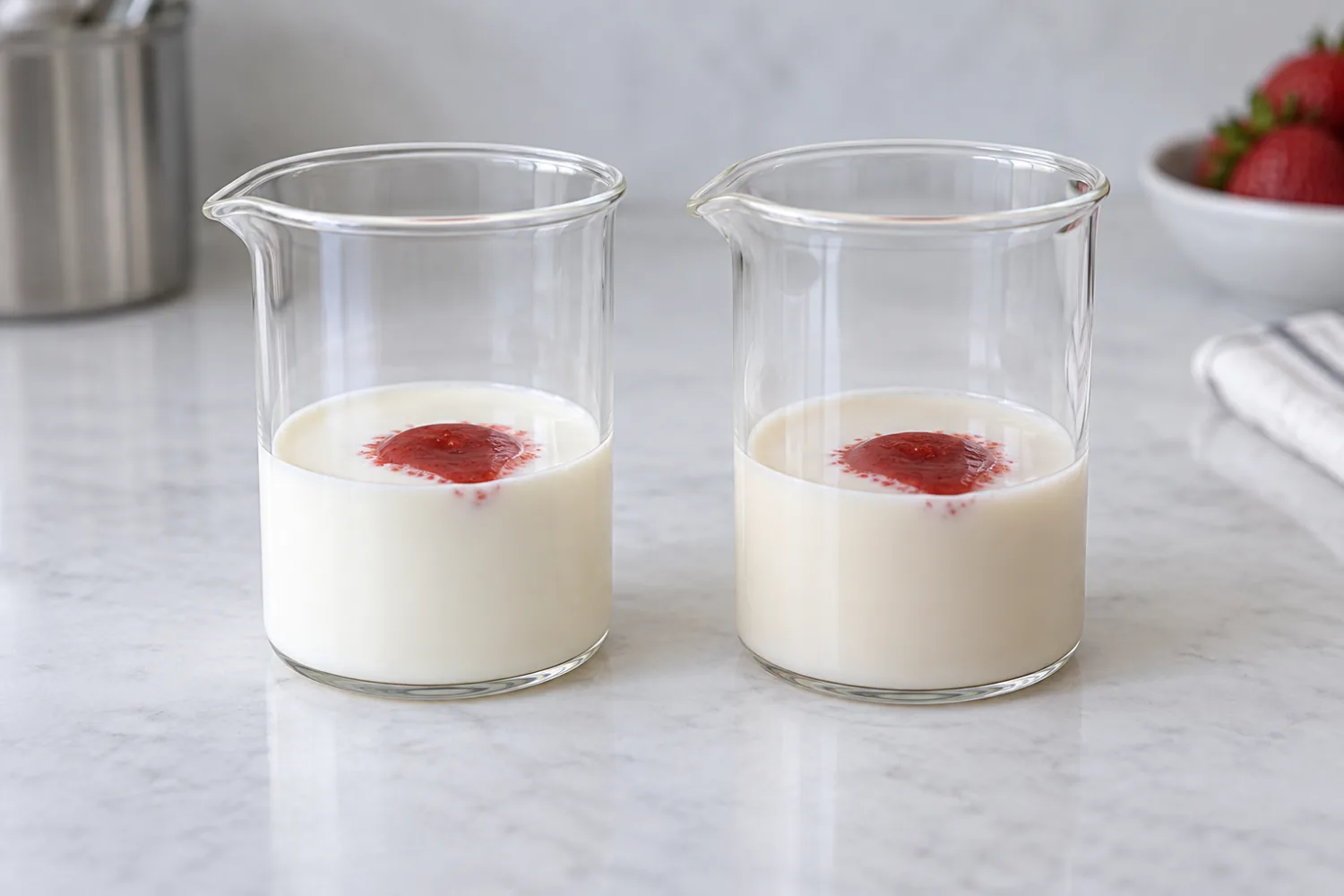
Strawberry dairy and plant bases
Pulp is another independent variable. Two fruit inputs with the same strawberry mass can have different particle sizes and liquid fractions. Fine suspended pulp may help give body, while coarse pulp may interrupt a smooth mouthfeel or interfere with equipment. Seeds can be felt even when the foam looks attractive. The comparison should therefore include a strained and an unstrained route at the same effective fruit level. If the strained route wins, set an input specification that the kitchen or supplier can reproduce. If some pulp is desirable for a "real fruit" appearance, define an acceptable range through sensory and equipment trials rather than assuming that more is better.
Plant bases require special attention to the exact commercial product. "Oat base" or "coconut cream" names do not describe protein, fat, emulsifier, and stabilizer content. Sift & Simmer presents coconut cream as a household alternative, but that does not mean it matches heavy cream's foam height, flavor, or service window in a chain beverage. Choose the actual plant base intended for sale, then rerun the same strawberry input levels and observation points. Document allergens and menu claims separately. A plant trial that looks stable in a small frother may need a second check in the equipment that staff will use repeatedly during service.
Fruit loading is a purchasing issue as well as a recipe issue. The desired pink intensity might be reached with a small amount of concentrated fruit preparation or a larger amount of thawed berry puree. Those routes can differ in cost per cup, sweetness adjustment, waste, and identity claims. We suggest asking suppliers for lot-linked Brix, fruit form, ingredient statement, and pack format so development can compare cost and function on a consistent basis. The best dose is the one that meets flavor, appearance, and foam stability together in the actual beverage.
What should a cold foam holding trial measure?
Define the service question before choosing time points. A made-to-order café topping may need to look good long enough for a customer to collect and drink an iced beverage. A prewhipped batch held in a cold dispenser has a different requirement. No published recipe can provide a trustworthy holding time for your exact fruit input, foam base, cup, ice load, and service temperature. Set a target window based on the operation, then observe the foam at selected intervals. The intervals are trial points, not food-safety limits. The operator's approved cold holding and cleaning rules govern safe service.
A simple side-view test can record foam height, bubble texture, visible liquid drainage, boundary clarity, and color against the drink below. Use identical transparent cups and the intended beverage. Mark the fill line and foam line at the start, then photograph the same angle at each observation point. If staff normally put a lid on the cup, include that step. A lid can touch and compress foam; a straw opening can disrupt it. A foam that remains high in an open laboratory beaker may fail the customer-facing drink. Record how gently moving the cup affects the layer as well as how it looks standing still.
Drainage is liquid leaving the bubble network. Watch for a clear or pink liquid layer at the interface, large coalesced bubbles, and uneven fruit color. A little settling may be acceptable in a casual made-to-order drink; a premium layered beverage may require a tighter visual standard. Decide that standard before comparing candidate formulas. If a foam loses height but retains a pleasant sip texture, the team may accept it for one menu. If pink liquid streaks down the cup or seeds collect at the boundary, a different fruit preparation may be needed even when the total foam height remains adequate.
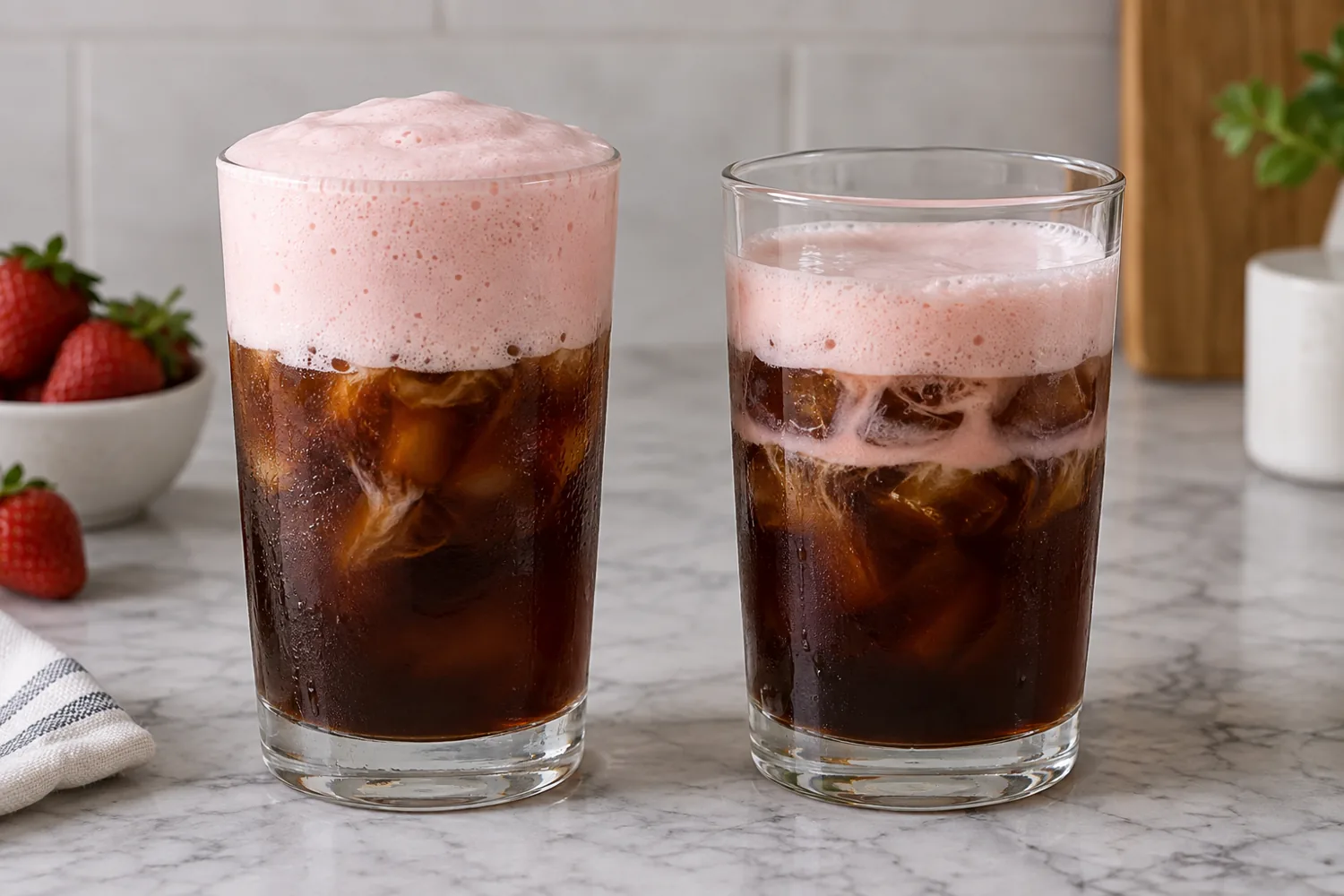
Strawberry foam drainage comparison
Measure at the temperature the operation actually maintains. Foam prepared from cold ingredients can warm while waiting on a counter. Ice melts, diluting the drink beneath the foam and moving the interface. A delivery cup in a warm environment behaves differently from an iced glass served immediately. Keep ambient and product temperature in the trial record, but do not assume a sensory test defines a safe temperature. The food-safety team must set and verify storage, thawing, sanitation, and service controls for the recipe and destination market. Frozen berries themselves are not sterile, and a cold beverage preparation deserves a validated ready-to-consume handling plan.
Run at least two practical conditions: a single made-to-order cup and a small batch that follows the staff's proposed holding and dispensing pattern. The comparison may show that a formula works only when frothed immediately before pouring. That is a valuable operating conclusion. If batch prewhipping is required, retest the fruit load, base, agitation, and dispenser with the real service cycle. Do not quietly extend a home recipe's refrigerator storage suggestion to a commercial foam on a beverage; the ingredients and exposure route are different.
Document failure modes in words a bar team can use. "Foam becomes coarse by the second observation," "pink liquid drains around ice," and "fruit specks collect in the frother" point to different corrective actions. If the team merely records "unstable," it may repeatedly change ingredients without understanding the issue. A short standardized photo series plus a sensory scorecard can connect purchasing specifications to actual cup performance. The resulting acceptance rule should be tied to the selected formula and equipment, with retesting when the fruit lot or foam base changes materially.
How should a buyer specify frozen strawberry for the pilot?
Tell the supplier what the fruit will become. A request for "frozen strawberry for cold foam" should say whether the operation will blend whole berries, use a prepared puree, or strain for a clear fruit liquid. It should state the target flavor and color, seed and pulp tolerance, required Brix range if the formula needs one, defects or calyx limits, pack size, expected order volume, destination market, and documents required by the buyer. If the operator needs fruit for a ready-to-consume beverage, microbiological requirements and the handling plan should be agreed by the buyer's quality team. A supplier sample cannot by itself validate the finished drink's safety.
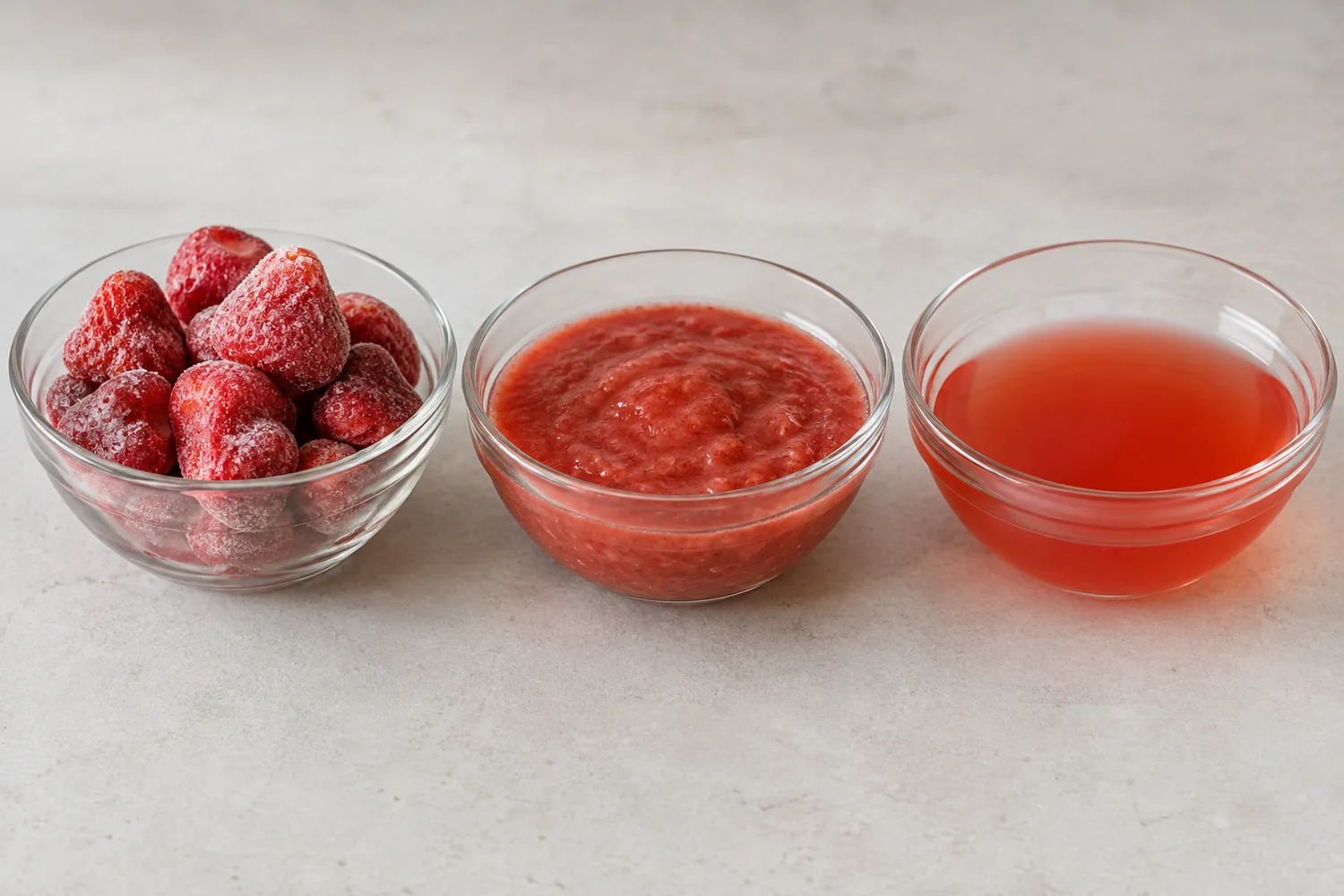
Strawberry input forms
The three bowls show why product form matters. Whole IQF fruit requires thawing and size reduction; puree is already dispersed but may carry seeds and pulp; a strained liquid behaves more evenly in a narrow frothing head yet may lose some fruit body. Ask for the actual available form and its ingredient statement. GreenLand-food's frozen strawberry page describes whole berries, cuts, and puree programs subject to the confirmed specification and order plan. Our pureeing frozen strawberries guide explains processing choices, while the frozen strawberry uses guide covers broader applications. The cold foam trial adds the aeration and holding questions those general guides do not answer.
Ask for a representative sample from the planned supply route. Record lot code, country of origin, fruit form, pack, storage condition, and any approved processing information. On receipt, inspect frost, clumping, color, visible defects, and pack integrity. Prepare the sample with the intended thawing, blending, or straining method. Weigh the usable fruit input after any retained pulp or seeds are removed. Without that mass balance, two quotes for whole fruit and puree cannot be compared fairly. A practical cost calculation uses fruit per accepted cup, staff time, waste, and remake rate, not only the price of a carton.
Match the test formulation across lots. Keep foam base, fruit input by as-used weight, sweetener, equipment cycle, cup, ice, and observation schedule the same. If a new lot needs a different dose to reach the approved color or flavor, record that change and decide whether it is allowed within the recipe. A lot with a beautiful berry photograph may still release more water or leave more seeds than the reference. This is why a visual and sensory service trial belongs alongside the ingredient specification. Procurement can then approve the lot against both product quality and operational performance.
Commercial planning completes the RFQ. State the proposed monthly or seasonal quantity, bulk or foodservice pack, private-label needs if any, desired lead time, shipment destination, and required documents. GreenLand-food can review fruit size, maturity, Brix, color, defect tolerance, packing, cold-chain arrangements, and traceability for the offered frozen strawberry form. We would confirm any puree or special processing request against the actual order rather than infer availability from a generic product category. The beverage team remains responsible for the final foam formula, equipment process, allergen information, and safe service limits.
For a pilot decision, keep one approved strawberry input, one approved foam base, a matched recipe, and a short photo record of the finished drink through the required service window. That record turns "pink and fluffy" into an observable standard. It lets the next strawberry lot be checked for the properties the customer actually experiences, while leaving room to adjust the fruit format if the menu or equipment changes.
Source frozen strawberry with GreenLand-food
GreenLand-food is a professional frozen strawberry supplier and manufacturer in China, providing factory-direct wholesale supply for importers, food manufacturers, foodservice distributors, and private-label programs.
Send the product form, specification, packing, quantity, application, destination, private-label needs, and requested documents. We will confirm availability and the suitable order plan.