


What Does Kale Taste Like? Fresh, Blanched and Frozen Forms
Sep 27, 2026
Leave a message

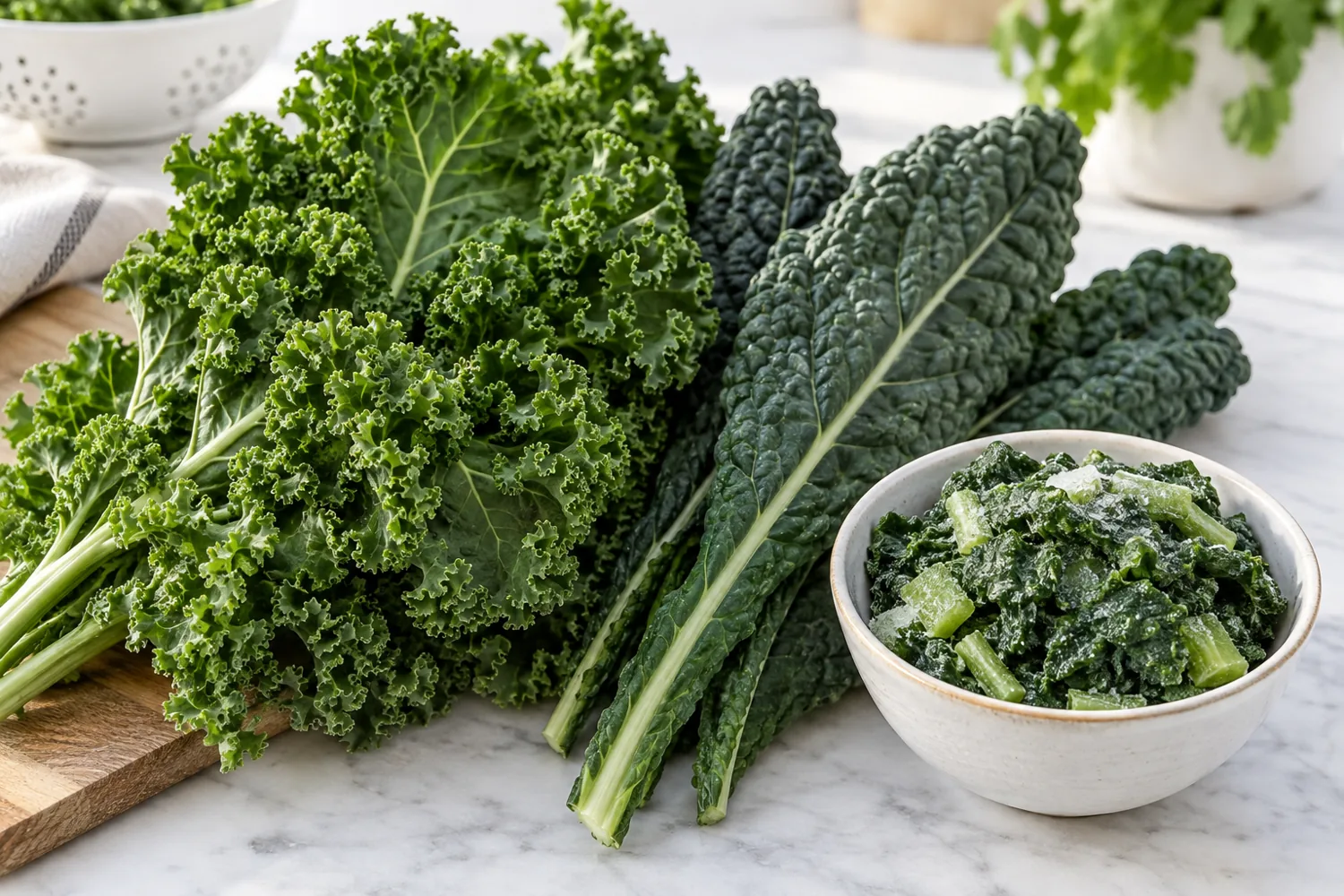
For a buyer approving frozen kale, taste it in the actual recipe at a fixed inclusion rate. A green smoothie can reveal a lingering leafy note that a seasoned soup hides, while a soup may expose tough stem pieces or excess released water. GreenLand-food supplies chopped and cut-leaf frozen kale forms and confirms leaf condition, stem ratio, cut size, blanching or pretreatment, moisture, packing, and destination needs against the order. We use those controllable inputs to help a developer decide which kale lot tastes acceptable, rather than promising that every kale type will be mild or that every frozen lot will match a fresh raw leaf.
How does raw kale taste across leaf types?
The first bite of raw kale often has a recognizable brassica character: green, earthy, slightly peppery, and sometimes distinctly bitter. It also has a strong physical texture. The leaf can feel thick or chewy, and a large midrib can be tougher than the blade. University of Rhode Island nutrition material describes kale as slightly bitter and earthy with a chewy texture. Those words are a starting vocabulary for a tasting panel. They cannot predict the exact intensity of a particular lot, since leaf type, growing conditions, harvest maturity, and preparation all influence what reaches the mouth.
Kale leaf type comparison
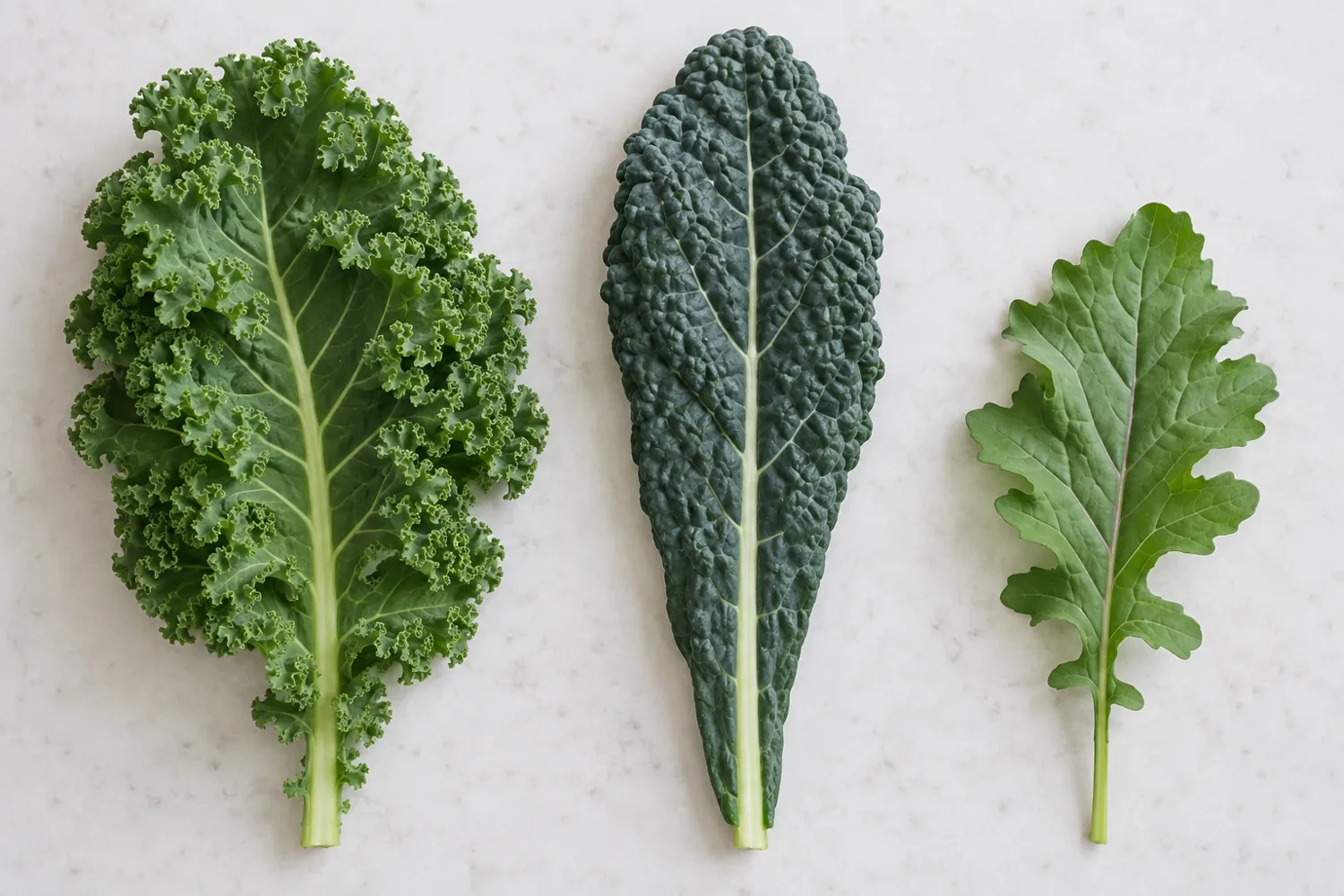
Variety is a major reason that one person's description differs from another's. UMass Extension describes curly kale as peppery with a fibrous stem, lacinato as somewhat sweet and nutty, and very young baby kale as tender. Those comparisons do not mean a named type is guaranteed to be sweeter than another in every field or season. They tell a buyer to state the type and inspect the real leaves rather than assume a generic "kale flavor." If a smoothie developer approved baby kale in a fresh trial, switching to a mature chopped curly leaf at the same weight can change both taste and mouthfeel.
Raw preparation also changes the experience before any heat is applied. Thin slicing reduces the amount of thick leaf in a single bite. Removing the midrib eliminates a concentrated source of chewiness. Massaging finely cut leaves with oil and salt or holding them in an acidic dressing can soften the texture and reduce perceived bitterness, as extension guidance suggests. In a commercial salad, those steps need to be controlled for time, dressing concentration, and shelf life. A tasting at the start of the hold may not represent the product at the end of its display window.
Taste and aroma should be separated in notes. Ask panelists whether the first impression is grassy, cabbage-like, peppery, earthy, or bitter, then record how long any aftertaste remains. Another useful question is whether the leafy note is pleasant at the target dose or merely tolerable in a highly flavored base. A small raw leaf tasted on its own may feel assertive; the same mass distributed through a fruit smoothie can register differently. Neither test replaces the finished recipe, but the simple raw tasting can tell a developer which dimension to watch during formulation.
Leaf condition matters as much as cultivar name. Fresh, crisp leaves with sound color are a better starting point than wilted or yellowing material. Visible damage or abnormal odor should be handled as a quality issue, not "normal kale bitterness." GreenLand-food discusses frozen kale specifications by raw-material condition and natural green color because those incoming characteristics shape the frozen ingredient. For a high-volume program, retain a reference from the approved lot and record the sensory terms that purchasing, product development, and quality teams actually agree on.
What do stems and maturity contribute?
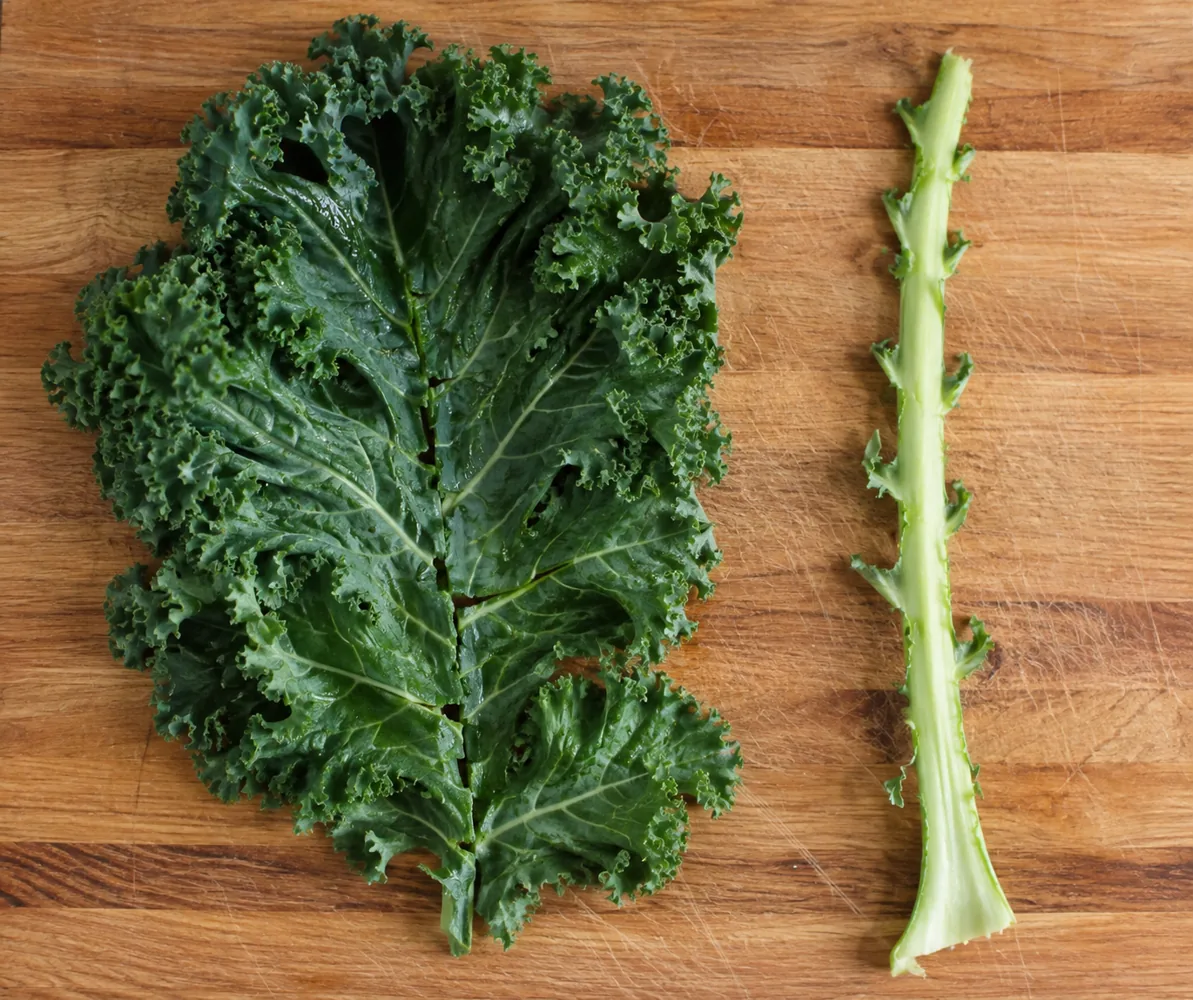
Kale is not one uniform piece of tissue. The leafy blade can soften quickly, while the central stem or rib stays thicker and more fibrous. In raw preparations a coarse stem piece can make a kale product seem harsher even if the leaf flavor itself is acceptable. In a smoothie, the stem may be noticed as a coarse particle or a persistent vegetal note after blending. In a soup, it can remain firmer than the leaf after the same cooking time. Describing that as "too much bitterness" may lead a developer to add sugar when the real issue is an uncontrolled stem fraction or particle size.
Kale leaf and stem separation
Harvest maturity changes the balance of tender and tough material. Montana State University Extension notes that older leaves, particularly during warmer periods, may become tougher and more bitter. UMass describes baby kale as tender. These observations support a conditional trend, not a universal rule about every mature or young kale lot. A field can produce variation within one delivery. If the product will be used in a smoothie or finely dispersed sauce, ask for a representative frozen sample and examine leaf pieces and stem pieces after thawing or cooking. The percentage of visible stem, its maximum size, and the sensory result can all be defined in an order specification.
Cutting changes how that material appears. A coarse chopped leaf may show recognizable pieces and make a soup look substantial. A fine cut can distribute green color more evenly but can also spread a strong flavor through the whole formula. A stem-heavy fine cut can be harder to identify visually once mixed, yet still affect texture. We confirm cut dimensions and stem ratio for frozen kale orders because both features influence dosing, appearance, and taste. A supplier should state how the ratio is controlled and what a normal sampled pack looks like, instead of relying on the broad word "chopped."
Use a simple separation trial when a panel reports a harsh sample. Take the same lot and prepare three small portions: the supplied blend, leaf-rich pieces selected from it, and the larger stems. Apply the same heat or blending time and taste at the same weight. The goal is diagnosis, not a claim that the production line can automatically deliver any selected ratio. If the stem portion is the source of the complaint, agree on a measurable stem limit or a different trim and cut. If the blade itself carries the strong note, variety, maturity, processing, or inclusion level deserves attention.
The physical form matters at receiving. Frosted clumps or compact blocks may require a different dosing and thawing procedure than free-flowing IQF pieces. Examine more than the surface of a carton, because the distribution of fine leaf fragments and stems may vary within a pack. Record whether pieces separate as expected and whether the cut still looks appropriate after the recipe's normal heating or blending step. Those observations give the sensory panel a material explanation for what it tastes. They also help purchasing compare two quotes that appear identical if only "frozen kale" and pack weight are listed.
What changes during blanching and cooking?
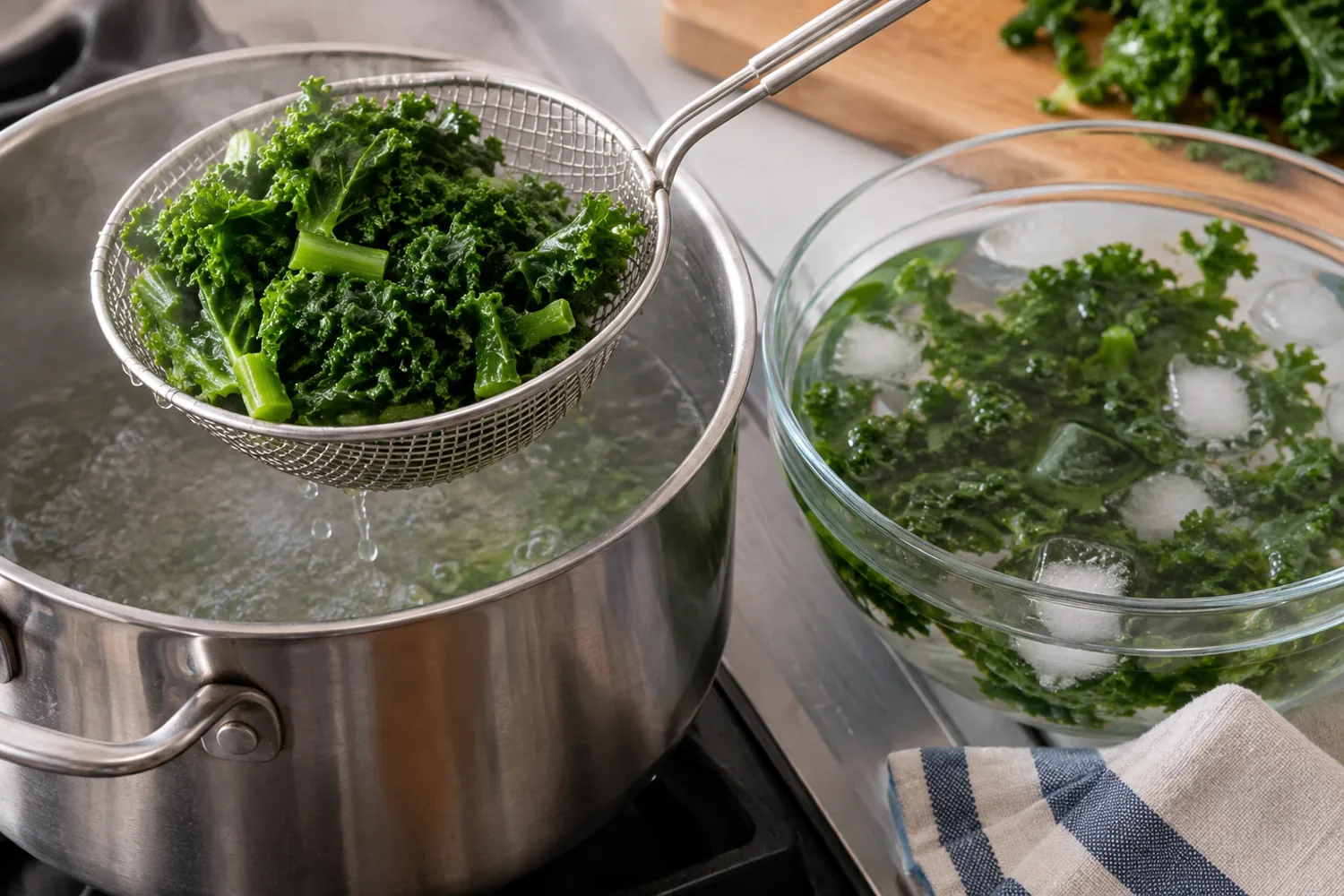
Blanching is a brief heat treatment often used before freezing leafy vegetables. It softens tissue and changes the raw leaf's bite; it can also support color and storage quality when correctly controlled. In a household guide, UMass recommends blanching kale leaves before freezing, while other extension materials describe blanching or cooking as ways to soften a tougher leaf. A commercial buyer should ask whether the offered frozen kale is blanched, what the approved process is, and how the resulting product performs in the final recipe. There is no safe shortcut from "blanched" to "always sweet."
Kale blanch and cool
The method matters. A short blanch followed by prompt cooling can leave more recognizable leaf structure than prolonged boiling. A sauté drives off some water and introduces oil, salt, aromatics, and browned flavors. A soup simmer exposes the leaf to liquid for longer and can move soluble flavor compounds into the broth. A roasted leaf may become crisp and taste quite different again. When a developer says "cooked kale tastes milder," ask which route produced that impression. The same raw lot can produce different results under these treatments, and a treatment that makes a leaf pleasant in soup may leave it unsuitable for a raw-style salad.
Perceived bitterness is only one dimension. Cooking can reduce chewiness and alter the release of sulfurous, cabbage-like aromas. It can also make a leafy note more noticeable when the cooked pieces are concentrated in a spoonful or when the cooking liquid remains in the recipe. Salt, acid, and fat often shift perception, but none of them erases an off flavor or corrects poor incoming material. If a product's target is a clean vegetal background, judge it after the complete preparation, including any sauce, broth, or hold step. Tasting the blanched kale in plain water can be a useful screen, not the final approval.
For a matched trial, note the sample mass before and after preparation, water added, drain time, heat level, and serving temperature. Use the same conditions for every lot. Otherwise a wetter sample may taste weak simply because it diluted the formula, while a well-drained sample may taste more concentrated. In a soup, record the intensity of the broth as well as the leaf. In a pasta or rice dish, record whether the kale remains visible and whether the stem texture is acceptable. These are straightforward observations a kitchen can reproduce across pilot batches.
GreenLand-food's frozen kale page lists blanched or pretreated preparation according to the agreed product specification. That wording is deliberately conditional. A buyer should not assume all packs from all origins have one standard blanching history. Ask for the actual lot description, ingredient statement, processing status, and any required quality records. Confirm food-safety controls and intended use separately from sensory approval, especially when a finished product will be sold ready to eat. The blanching used in vegetable processing is not a substitute for validating the later finished-food process.
Does frozen kale taste different from fresh?
A comparison is meaningful only when the baseline is defined. Fresh raw kale, fresh kale that has been blanched, and frozen kale that was blanched before freezing represent different processing histories. If frozen kale tastes softer or less sharp than a raw leaf, some of that difference may come from pretreatment and subsequent cooking rather than freezing itself. Freezing also changes cell structure and can affect water release and mouthfeel after thawing. The practical question is how the offered frozen form tastes in the finished soup, smoothie, sauce, or meal, compared with the approved fresh or frozen reference.

Frozen chopped kale with leaf and stem pieces
The first GreenLand product image shows chopped frozen kale with both leaf and stem pieces. It helps a buyer see why "frozen kale" is too broad a sensory description. The leaf-to-stem distribution, size of pieces, and clumping condition can change how much green material reaches each serving. The photograph is product evidence; it does not prove a particular bitterness score. We confirm the actual cut and processing status on the order and use a representative lot sample for taste. A visually greener sample is not automatically more pleasant or more suitable for a formulation.

Second frozen chopped kale sample close-up
A second product view reveals another distribution of chopped leaf and stem fragments. Use these views as a prompt for what to inspect in your own supplied carton: are pieces cleanly cut, is the ratio consistent, and is there a sensible amount of fine material for the recipe? A smoothie program may welcome small pieces that blend quickly but dislike fibrous stems. A hearty soup may accept a coarser leaf that remains visible. A ready meal may require a tighter cut to ensure a predictable bite across servings. Those judgments belong to the particular application, not to frozen kale as a category.
Water release is a hidden sensory variable. If a portion of frozen kale is thawed and drained before blending, it may have a different effective leaf concentration than a portion added frozen with its associated ice and drip. If two suppliers' samples release different amounts of water, the formula can taste different at the same nominal weight. We recommend comparing as-used mass and recording any draining step. For a smoothie, assess color, bitterness, mouthfeel, and separation at the same inclusion and liquid level. For soup, assess the leaf and broth after the normal heating and hold period.
Frozen storage quality still matters. A stable frozen chain helps preserve the intended condition; repeated warming and refreezing can worsen clumping and texture. Ask the supplier to state the recommended frozen storage condition and check receiving temperature, pack condition, and date or lot code under your own control plan. Sensory findings should be traceable to a lot and storage history. If a new lot tastes markedly different from the approved one, inspect the material and process records before editing the recipe to hide a supply problem.
How can a recipe balance a strong kale note?
Work first with the kale itself: variety if known, leaf maturity, stem ratio, cut size, pretreatment, and dose. Recipe balancing is then a controlled formulation choice. Acid can brighten a cooked leafy green, fruit can shift a smoothie's flavor balance, and salt or fat can change how bitterness is perceived. Those are options to test, not universal fixes. A larger fruit dose can make a smoothie sweeter while still leaving a fibrous particle problem. More seasoning may hide the first bite in a soup while a strong green aftertaste remains. Write down the exact defect the panel is trying to solve.
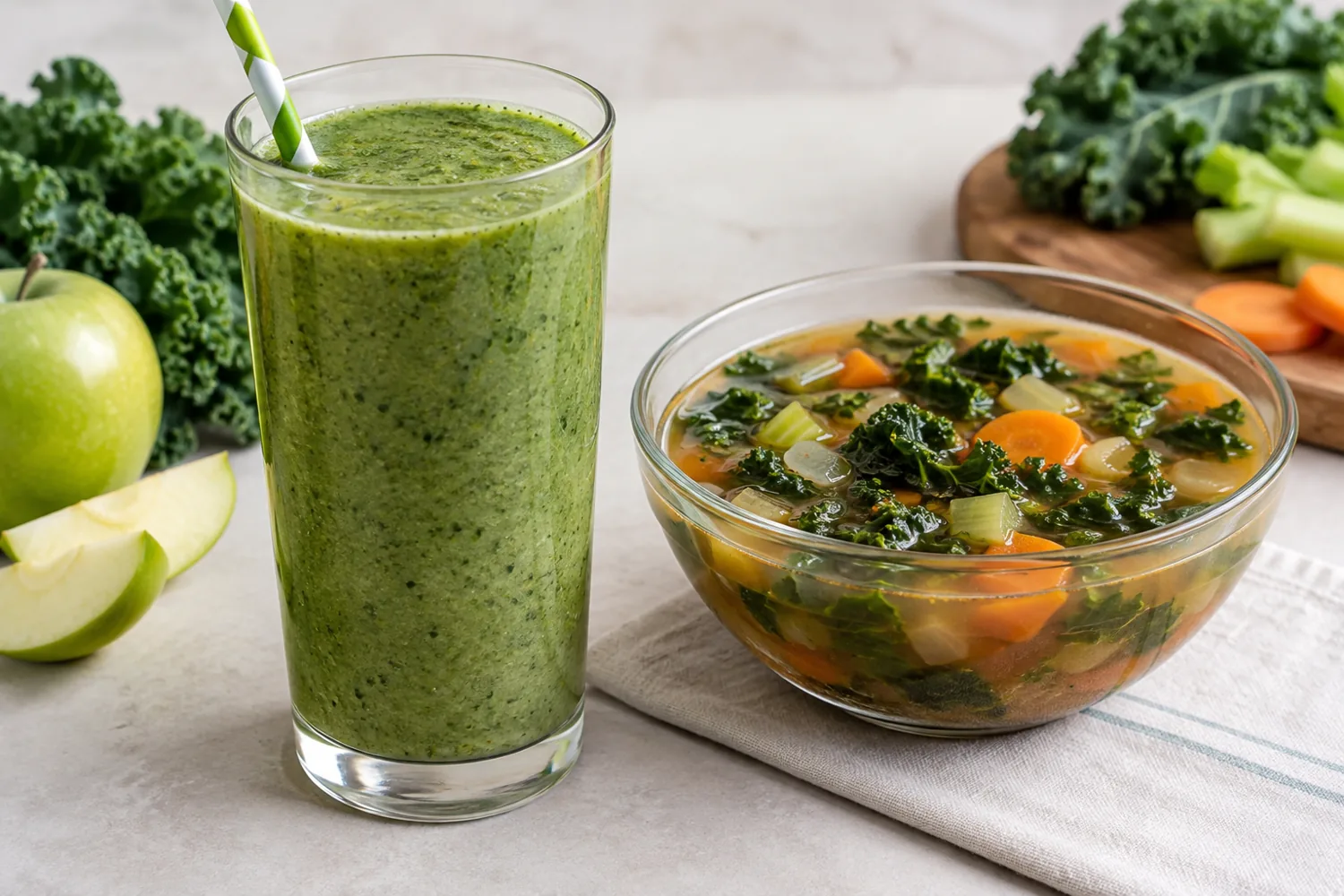
Kale smoothie and soup
A useful two-recipe trial compares the same kale lots in one smoothie and one savory cooked dish. Choose a fixed kale inclusion by weight and a fixed liquid or broth amount. Make a control recipe with no kale, then two kale samples in identical recipes. In the smoothie, record initial green aroma, bitterness, aftertaste, particle size, color, and any water separation after the intended service interval. In the soup, record leaf visibility, stem chew, broth flavor, and texture after a normal hot hold. The point is to see which sample fits each formula, not to manufacture one total score that hides important differences.
When balancing a smoothie, test one variable at a time. A modest change in fruit type or acid level may shift perception, but it also changes sweetness, color, and the finished product's identity. If the fruit preparation is the real source of inconsistency, adding more fruit will not cure an uncontrolled kale lot. For a savory dish, oil, garlic, onion, or a tart finish can make the kale feel integrated, but the trial should still reveal whether the green ingredient is too strong at the planned dose. Compare against an agreed sensory target rather than relying on a panel member's favorite seasoning.
Particle size and water release should be measured alongside flavor. A blender can turn a stem into smaller pieces without necessarily removing its chew or lingering green taste. Longer blending may warm the beverage and change the service experience. In a soup, very fine kale may cloud the broth or make the green flavor feel more diffuse. A coarse cut may look attractive but produce an uneven spoonful. Ask what the customer will actually see and feel at the end of service. Then set the kale cut, recipe dose, and preparation method together.
We also advise testing at realistic batch scale. A small blender cup can process a different ratio of stem to liquid than a production blender. A pilot kettle may hold heat longer than a tasting saucepan. Keep the ingredient lot, formula, equipment setting, and serving temperature in the record. If the same lot passes one application and fails another, that is valuable sourcing information. It may justify separate kale specifications instead of forcing one compromise ingredient across a smoothie and a ready meal.
How should a buyer compare kale samples?
Begin with a plain product specification and a small sensory plan. Request kale type or approved equivalent if available, raw material and pretreatment status, cut dimensions, leaf-to-stem target, natural color, allowable defects, pack, MOQ, destination, and required documents. For a frozen supply program, confirm free-flowing or block form, storage condition, lead time, and the planned sampling lot. GreenLand-food can discuss chopped kale, cut leaves, and customized cuts against the application; a quoted form still needs to be confirmed for the actual order and production schedule.
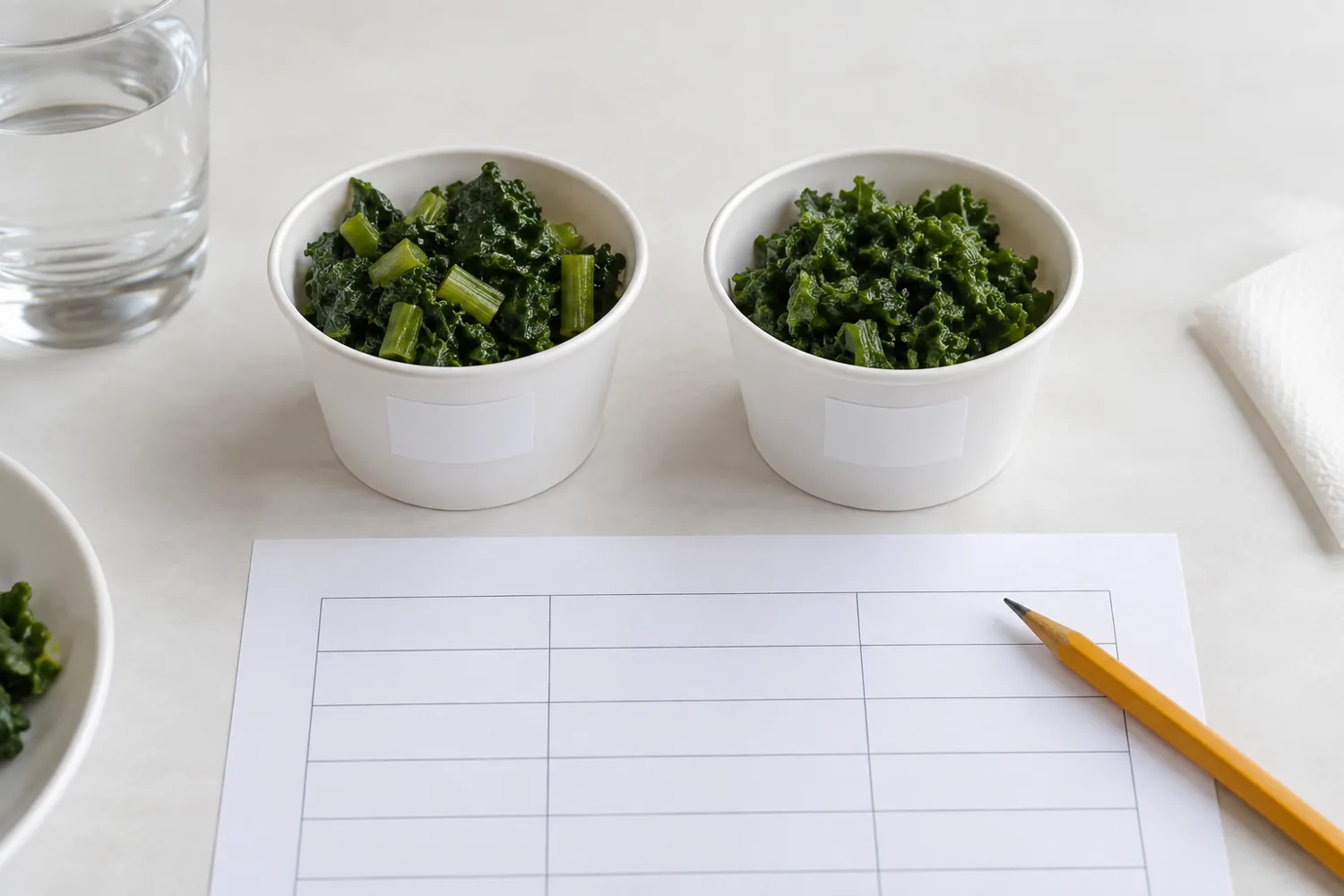
Kale blind tasting samples
Code two candidate lots and a reference so tasters do not know which is which. Prepare each at the same as-used kale weight, with the same stem handling, thawing or direct-cooking method, and recipe batch size. Present them at the temperature and time customers will encounter. Use a simple scorecard with separate lines for initial green note, bitterness, earthy or cabbage-like aroma, aftertaste, stem chew, leaf texture, color, and water release. A single "like/dislike" score is too vague to guide a supplier adjustment. Keep descriptive notes as well as ratings, because a panel may agree on a defect while disagreeing on its numerical severity.
Set acceptance rules before seeing the sample identities. For example, the development team may decide that obvious hard stem pieces are unacceptable in a smoothie even if the total flavor is pleasant. It may accept a stronger kale note in a seasoned soup if color and leaf texture are good. If a score falls near the boundary, repeat the preparation from another sampled pack rather than judging a single spoonful. Record lot codes and preparation dates. Avoid treating a panel trial as a formal food-safety determination; microbiological and other compliance requirements must be agreed and checked through the buyer's separate quality process.
Compare price on the form that enters the recipe. A frozen sample with a slightly higher carton price may save trim, washing, and chopping labor, but a high stem fraction or excess drip may reduce usable value. Record the actual portion delivered to the recipe and the labor or processing steps needed to make it fit. Ask for a representative commercial sample, not only a small hand-selected leaf pack. If the winning sample becomes the reference, retain its sensory description and physical specification so later lots can be assessed against it rather than against memory.
The frozen kale supply page describes the cut and packing options we can review. Our guide to preparing frozen kale covers handling and moisture, while the kale bunch conversion guide helps when a fresh recipe is being translated into a weighed formulation. The tasting plan here completes that translation: it gives product development a repeatable way to decide whether the leaf, processing, and cut deliver the flavor the finished food needs.
Source frozen kale with GreenLand-food
GreenLand-food is a professional frozen kale supplier and manufacturer in China, providing factory-direct wholesale supply for importers, food manufacturers, foodservice distributors, and private-label programs.
Send the product form, specification, packing, quantity, application, destination, private-label needs, and requested documents. We will confirm availability and the suitable order plan.