


When Are Cranberries in Season? Wet Harvest, Processing and Frozen Supply
Sep 27, 2026
Leave a message

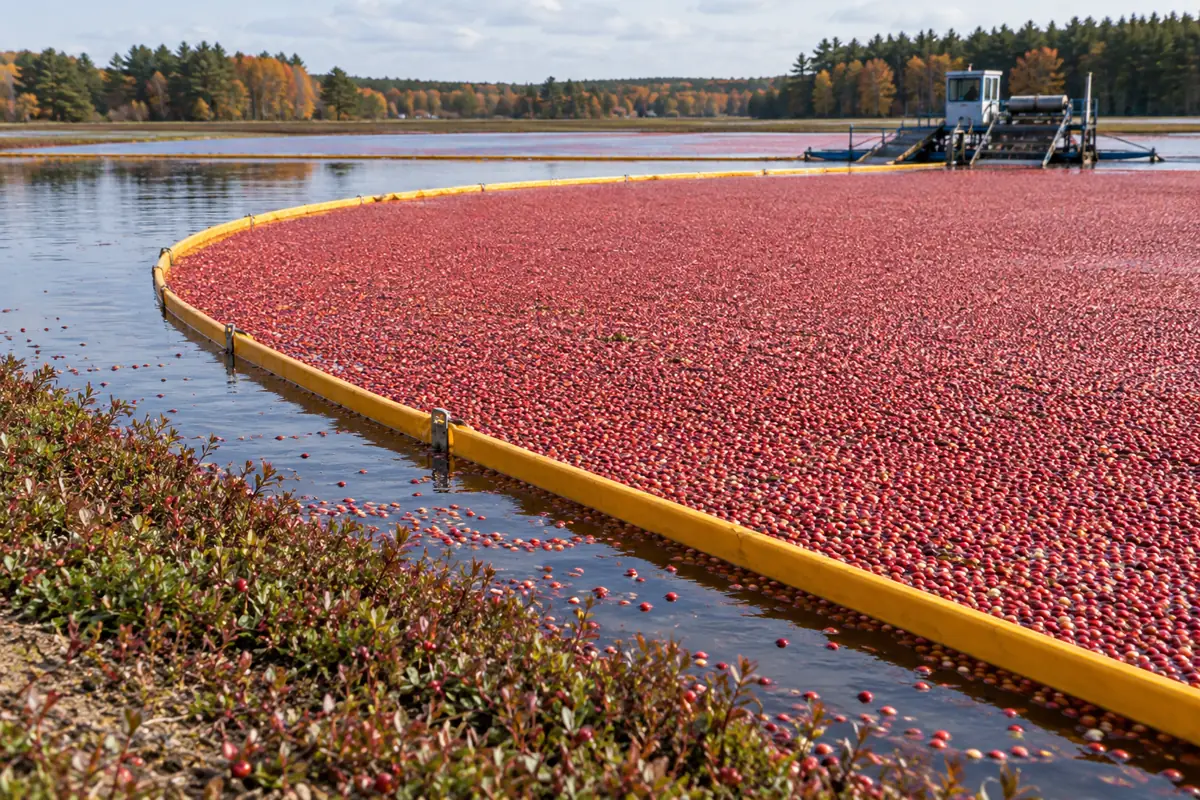
The distinction matters because a calendar answer can be correct and still lead to the wrong purchase plan. A processor may want red color and sound whole fruit for a sauce line, while a bakery may need individual berries that disperse evenly through batter. A beverage producer may care more about color extraction and acidity than the appearance of every berry. Each use draws a different line between acceptable processing fruit and a premium whole berry grade. At GreenLand-food, we help translate the desired application into a frozen cranberry specification and confirm current lot availability before the buyer schedules production.
The fall cranberry crop window depends on origin
Cranberries grow on low perennial vines in managed beds. The beds are sometimes called bogs, but the plants do not spend the growing season underwater. Growers maintain soil moisture, manage frost and allow berries to develop color through summer. Flooding is one harvest method applied when the crop is ready. That physical distinction helps explain why dramatic photographs of floating cranberries represent a short harvest operation, not the crop's normal growing condition.
In the major North American producing regions, harvest generally begins in September and continues into November. The Cranberry Institute describes a majority of US and Canadian fruit being harvested in September and October. Oregon State University's regional account for Oregon and Washington places harvest between September and November, with most fruit picked by late October. A Michigan grower advertises fresh fruit in October and November and scheduled harvest visits in early October 2026. These statements are compatible because they describe different origins, channels and points in the season. They do not establish a universal date for all cranberry farms.
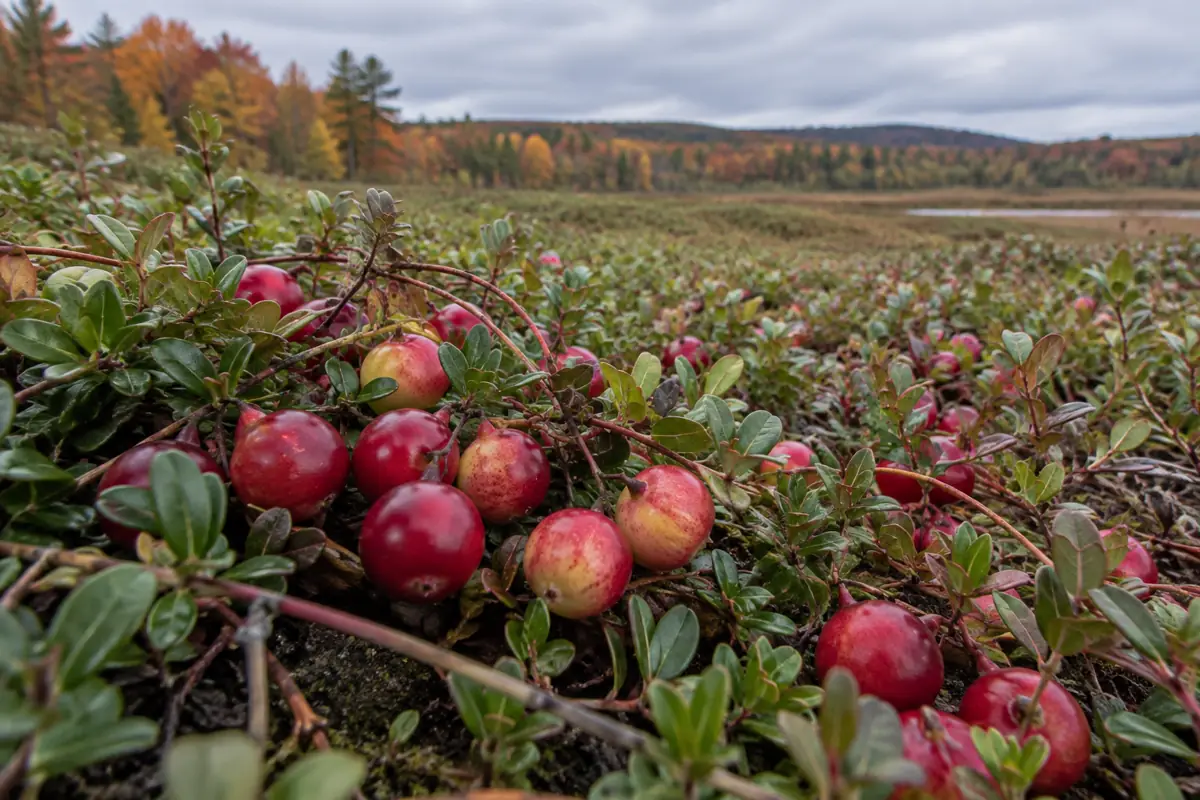
Ripe and yellow-red cranberries attached to low vines before harvest.
Cultivar and intended use also affect the picking decision. Fruit destined for a fresh bag needs a combination of color, firmness and storage quality. Processing fruit can be harvested to meet color and composition goals in its own route. A later calendar date does not automatically produce a better frozen ingredient: wet weather, fruit condition and a plant's processing capacity matter. Even berries from neighboring beds can reach the receiving station on different days. A buyer should therefore request the harvest region and crop year rather than treating the word "new crop" as a complete lot description.
The fresh sales window can extend beyond the picking weeks. The National Center for Home Food Preservation describes US store availability from October into December or early January. That is a retail stock observation, not proof that berries were picked throughout January. Similarly, frozen cranberries can remain available far beyond the harvest period when correctly processed and stored. An Ontario grower describes October harvest and frozen sales throughout the year. For the buyer, these are three different clocks: crop picking, retail display and frozen inventory. Confusing them can cause an unnecessary rush purchase or a production plan that assumes an unverified new lot is already released.
The origin behind a GreenLand quotation needs to be stated on the quotation and product documents. A North American crop calendar is useful background for understanding cranberry trade, but it does not identify the origin of every cranberry lot offered through an international supplier. We confirm origin, crop year and actual dispatch timing for the offered material. If a customer needs fruit from a named region or cultivar, that requirement belongs in the inquiry before sampling. The same discipline applies when a formulation relies on a specific red hue or characteristic tartness: the crop window indicates when fresh raw material may move, while the lot sample shows whether this year's ingredient performs as expected.
Wet and dry harvest feed different channels
Wet harvesting begins by flooding a mature cranberry bed. Equipment loosens the berries from the low vines; because the fruit contains air spaces, it floats. A boom gathers floating berries so they can be removed and taken to a receiving station. The visual sequence is striking, yet it has a direct commercial consequence: fruit handled in this way normally enters a processing stream. The Cranberry Institute, Oregon State University and Oregon agriculture education material all distinguish this route from dry harvest for fresh-market fruit.
Dry picking removes berries from vines without flooding the bed. Mechanized combs collect fruit into bins or sacks, followed by cleaning and grading for fresh sale. The two harvest channels have different handling and destination requirements; harvest method alone does not establish the finished ingredient grade. Fresh-market berries must tolerate display and distribution as intact fruit. Processing berries move toward freezing, sauce, juice, dried fruit or other manufacturing uses where the acceptance criteria are tied to the specific process. A frozen whole berry buyer should ask which grade and handling route apply to the offered lot rather than assuming all wet harvested berries are interchangeable.
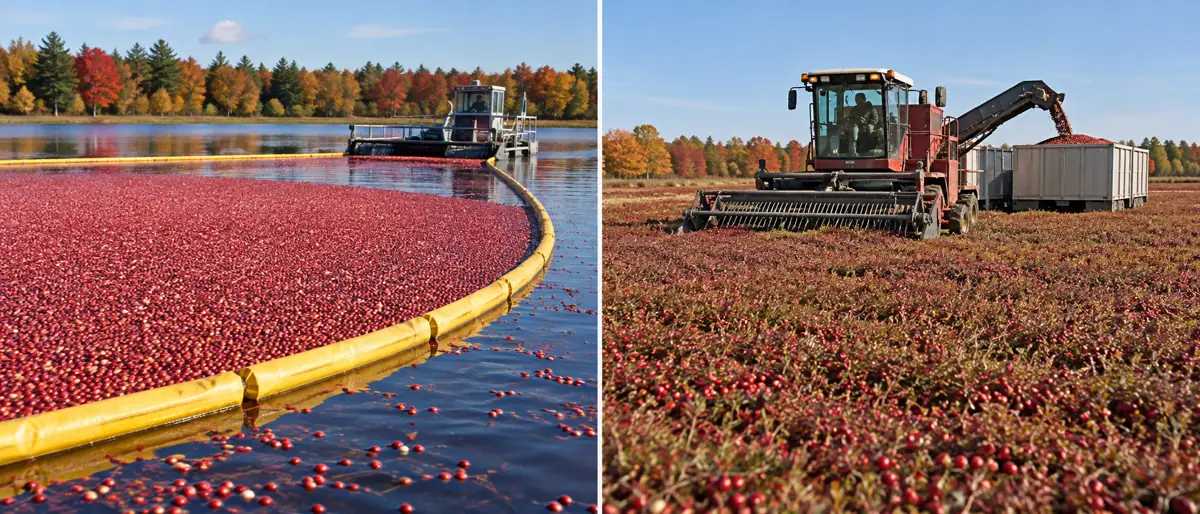
Parallel flooded wet harvest and dry mechanical picking.
Water harvest has a timing implication. Fruit that enters the processing channel often moves quickly from receiving and sorting into freezing or other conversion. Oregon State's regional plan states that fruit for processing is frozen immediately after harvest in that region. "Immediately" in a technical description does not authorize a promise that a particular commercial order is palletized and ready to ship on the harvest day. Receiving capacity, sorting, grading, packaging, testing and order allocation still need to be confirmed. The correct commercial question is when a specified finished frozen lot is available and released, with a traceable relationship to its harvest period.
Method alone also does not settle the intended product form. A beverage plant making juice can accept a different appearance profile from a bakery placing whole berries on a pastry. Both may buy frozen cranberries from a processing channel, but one may be concerned mainly with color, acidity and sound fruit, while the other needs a documented whole-berry percentage and limits on splits. A foodservice sauce line may tolerate a wider size distribution than a retail frozen pack. Sorting and specifications divide these uses after picking. Wet versus dry is the beginning of the explanation, not a substitute for the finished grade.
When comparing offers, request the photo and sample of the actual frozen form. An attractive fresh cranberry image cannot prove free-flowing frozen performance. A process image of floating berries cannot prove final whole rate. Our frozen cranberry range gives the commercial product context, while the lot specification should define the berry size range, color, defects, foreign material control, packing and destination documents to be supplied. For a buyer evaluating a whole berry program, this prevents the harvest story from obscuring the more practical question: what condition will the berries be in when the line opens the carton?
From picked fruit to a ship-ready frozen lot
The first checkpoint after harvest is reception. A processor identifies the source and lot, removes field debris and checks fruit condition before grading. Wet fruit needs handling suited to its arrival state; any damaged, soft or visibly unsuitable berries should be managed under the plant's quality system. The whole frozen product then needs a defined route through cleaning, sorting, freezing and packing. We should never infer one universal factory sequence from a crop calendar or an illustrative photograph. For each proposed supply program, ask the supplier to identify the actual process and the records available for the offered lot.
Freezing changes the buyer's calendar. A berry picked on Monday is not necessarily a released IQF ingredient on Tuesday. The plant may process in campaign batches, hold stock for inspection, or allocate a portion to another product form. Individual quick freezing aims to produce berries that pour and meter rather than a solid block, but the result still depends on the berry condition, surface moisture, freezer operation and later temperature control. A sample can be assessed for clumps, loose ice, broken fruit and drip after thawing. It is the actual sample and agreed acceptance method that decide whether the stock fits a depositor, mixing line or retail pack.
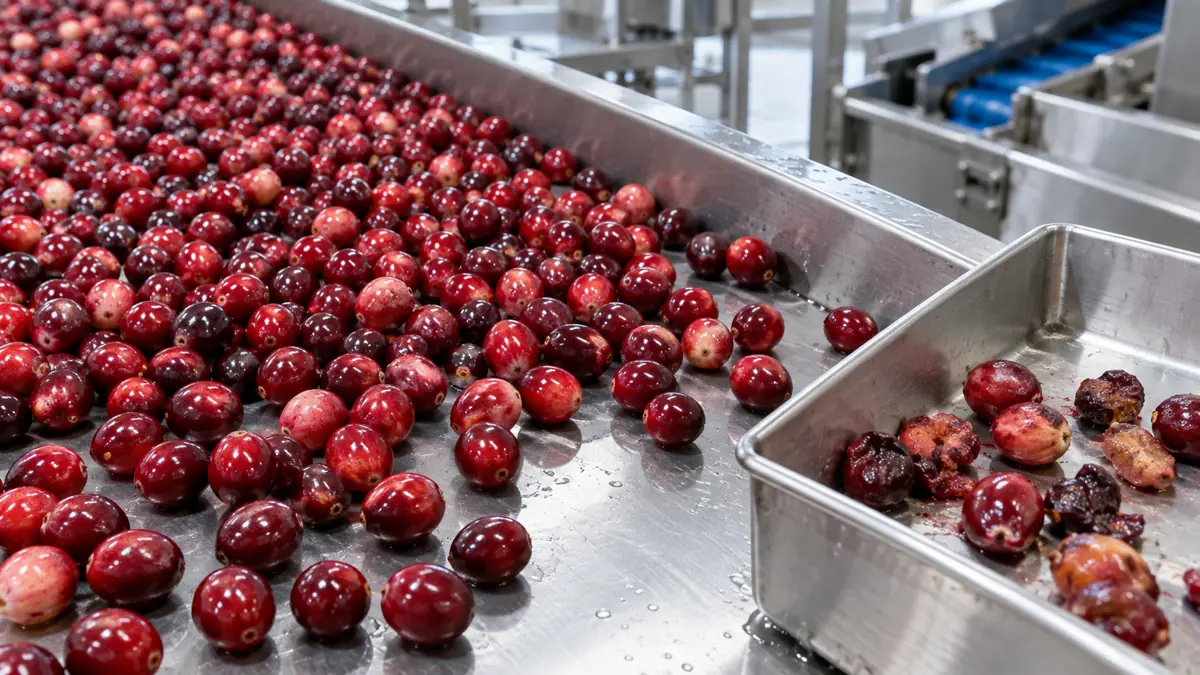
Generic sorting scene distinguishes intact berries and rejects.
Quality release sits between physical production and available-to-ship inventory. The supplier may need to complete internal inspection, microbiological testing or document preparation before confirming a lot for a destination market. The required documents depend on the product, customer, destination and regulatory route. Buyers should identify these before setting an arrival deadline. A requested certificate named after booking can add more delay than the crop itself. We can confirm which reports and export documents apply to the quotation, including the link between batch identity, carton marks and shipment paperwork.
Shipping then adds another interval. A product may be released and sitting in a frozen store but still require consolidation, container space, customs paperwork and reefer planning. Delivery date estimates should state their basis: ready stock, ex-factory dispatch, port loading or destination arrival. The meanings differ by weeks in an international program. Ask for the pack format, cartons per pallet where relevant, total quantity and destination early enough to evaluate loading. For a new crop inquiry, a useful timeline includes the expected harvest period, estimated production period, lot release target and feasible shipping window, each labeled as forecast or confirmed.

Individual frozen cranberries in a product tray.
Inventory from an earlier crop may also be appropriate when it meets the agreed quality and storage criteria. The crop year alone does not determine performance in sauce, baking or juice production; storage history, packaging integrity and the sample trial matter. Conversely, a new crop label should not excuse broken berries or an unsuitable flavor profile. If the business case requires a particular crop year for marketing or traceability, state that. If the business case needs continuity, compare approved lots on the same test before rejecting one based solely on the date in its file name.
The GreenLand guide to freezing fresh cranberries explains the underlying need to sort, drain and package fruit carefully. A commercial purchase adds batch controls, lot release and logistics to those fundamentals. For a frozen ingredient program, the useful answer to "when are cranberries in season?" is therefore an annotated supply timeline. It shows how the annual crop becomes a purchasable frozen lot and where buyer approval must occur before dispatch.
Forecast and specify a full-year cranberry program
An annual forecast should start with use by month, not a guess about how many cartons are available immediately after harvest. Map the customer's planned production runs, the percentage of cranberry in each formula, expected process yield and any peak promotional months. A bakery that sells holiday products may need stock delivered well ahead of November, while a beverage plant could consume the same crop across the following spring and summer. A rolling forecast allows the supplier to discuss reservation, staged shipments and pack sizes before the crop enters a crowded processing period.
Separate volume from grade. For whole berry inclusions, specify whether the fruit must remain intact after mixing or baking, the acceptable proportion of splits, berry size distribution, color and the level of loose ice. For juice or sauce, define the processing aim: color and tartness in an extract, or a sauce with visible pieces. Those applications can be sampled from different lots or grades. A single line reading "frozen cranberries, grade A" rarely gives the supplier enough to price and reserve the right material. The plant's grading names may differ; measurable criteria and an approved reference sample make the conversation clearer.
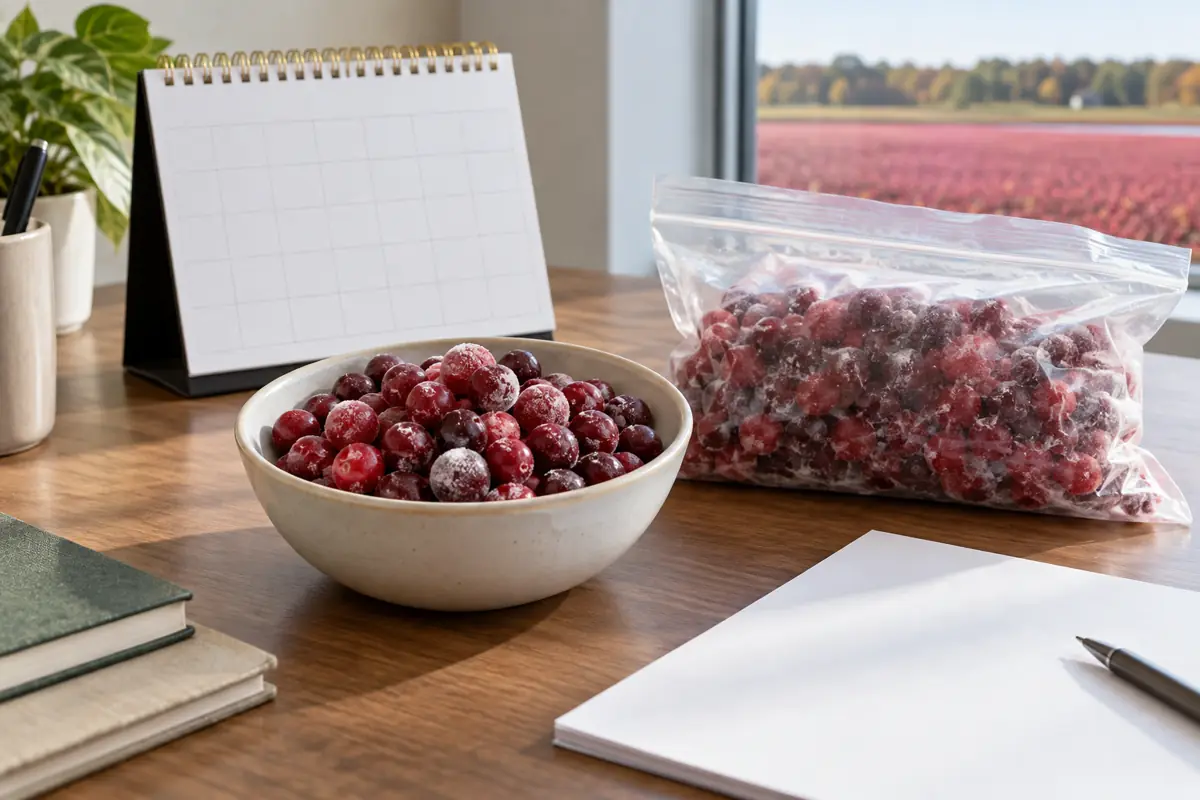
Generic frozen sample, calendar and blank specification show planning elements.
Packing also changes inventory economics. A processor drawing large quantities at once may prefer a bulk carton with an appropriate liner. A foodservice or retail buyer may require smaller bags, a different carton count or private-label information. Packaging decisions affect pallet density, handling, exposure after opening and production labor. State net unit weight, outer case requirements, pallet preferences, labeling market and whether the buyer will repack. Do not assume a 10 kg carton is automatically economical if the line uses much smaller portions or if a warehouse cannot handle the resulting pallet configuration.
Temperature control must be included in the plan. A released IQF lot should remain in the agreed frozen condition through storage and transport. For receiving, ask how the buyer will record case condition, visible frost or clumps, core or product temperature under its procedure, seal integrity and lot numbers. One warm excursion can alter free-flowing behavior even if a later reading shows frozen temperature again. A receiving plan should therefore include both measurable checks and an escalation path for cartons showing thaw and refreeze signs. The purpose is to protect the intended use, not to create a blanket rule from a single photograph.
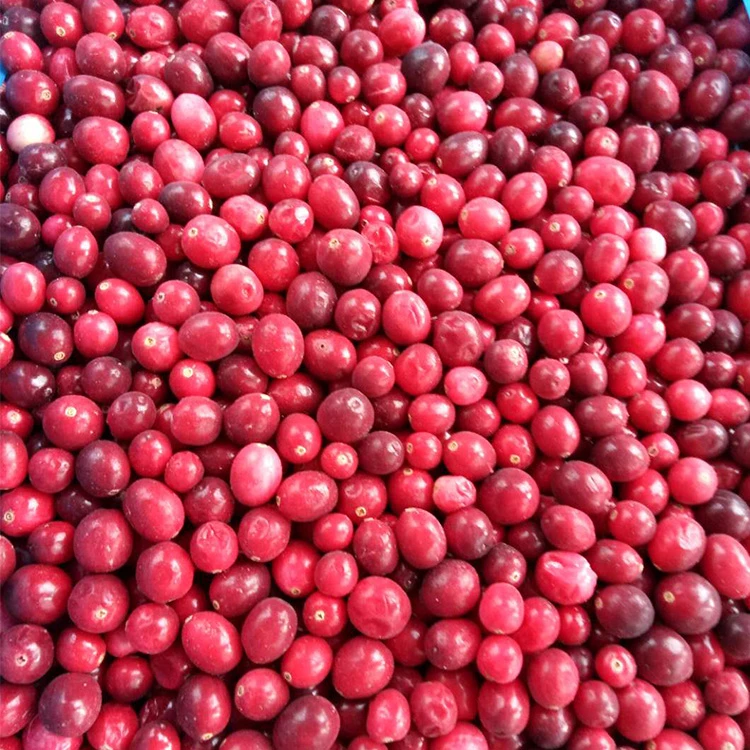
Whole IQF cranberries shown as a bulk product lot.
Traceability and documents should be specified as actual deliverables. Identify the crop year and origin needed, the lot coding expected on inner and outer packs, certificate of analysis items, microbiological criteria where relevant, pesticide or residue documentation if required, and any destination-specific forms. Confirm sampling method and acceptance timing. Where a buyer plans a private-label pack, artwork approval and label claims may require more lead time than freezing. We help purchasing teams gather these requirements before quotation so that a supplier can answer with a real pack and lot proposal rather than a generic promise of year-round cranberries.
Price and supply stability follow from those details. A spot offer for a small number of cartons and an annual reserved program can differ in available grade, pack efficiency and dispatch schedule. Neither should be judged on quoted price per kilogram alone. The buyer should consider usable yield in the final application, storage cost, repacking labor and the cost of an interruption. A forecast based on actual monthly draw gives the seller a basis to discuss safety stock or staged delivery. It also gives the buyer a chance to test the next crop while approved previous stock can still support production.
Check new-crop samples against the intended application
The crop transition is the right moment to compare lots with a controlled trial. Take the proposed new crop sample and the approved reference lot, record each one's harvest year, origin, pack and storage history, and thaw or use them under identical conditions. If the product will go into a baked filling, compare berry distribution, color bleed and the appearance of pieces after baking. If it will become sauce, measure the cooking endpoint, color, tartness and visible fruit structure. If it will be extracted into a beverage, monitor the flavor and color profile under the same extraction procedure rather than treating a photograph of the berries as evidence of juice quality.
Use a practical sampling quantity. A handful can reveal foreign material, color, obvious splits and free-flowing state. It cannot predict how a large mixer treats berry structure or how a production oven changes a filling. Start with a bench comparison and follow with a pilot run at the target inclusion rate. Record the actual line settings and formula so a difference between lots is not confused with a change in process. No universal pass percentage is appropriate here; the buyer should set limits based on the finished product and the process capability.
The sample should be evaluated as received as well as after use. Inspect the sealed pack for damage, confirm the lot label, pour the berries to check whether they separate, and note frost and loose ice. Measure size and visible defect categories on a defined sample mass. Thaw a portion under a fixed method to compare drip and texture if the application involves thawing. For a baked or cooked use, run the required heat process. These steps help distinguish a berry that looks attractive frozen from one that performs in the finished product.

Generic sample trial of whole fruit, sauce and filling.
Color deserves care. A deep red lot may look desirable in a product photo, but the color visible in a beverage or filling depends on the proportion of skin, extraction, pH, added ingredients and heat. Compare the actual formulation against the same reference, including the appearance after storage. The same applies to tartness. Cranberries are naturally sharp, yet one lot can alter a sweetened formula enough to require balancing. Ask for relevant lot data and measure the output rather than assuming that cultivar, harvest method or crop year alone predicts the final taste.
Once a sample passes, capture the decision in a short acceptance record. Name the lot, sample date, test formulation, observations, tolerances and approved uses. If a substitution is later offered, it can be checked against that record. A product that is accepted for sauce might still need a separate approval for intact berry decoration. A planned crop transition with an explicit comparison also avoids pressure to approve the only available new lot during a production emergency. If more than one annual shipment is expected, reserve a representative sample for later receiving comparison under the buyer's own quality procedure.
Harvest reports help a purchasing team anticipate a change in raw material. They cannot replace inspection of the frozen lot that will actually be shipped. Ask us for the proposed frozen cranberry supply, current crop and origin details, available pack, and a sample matched to the intended application. With those facts, the fall cranberry season becomes a planning input for a year-round ingredient program rather than a vague promise tied to a photograph of an autumn bog.
For purchasing teams that compare several origins, use the same information request for each offer. Ask for the harvest period relevant to the quoted stock, confirmed crop year, processing and packing location, release status, quantity available by grade, pack format, and the earliest realistic dispatch date. Put the buyer's requested arrival date next to those entries. This makes a late harvest in one region comparable with older but approved inventory in another without implying that either option is always preferable. It also exposes the point where a purchase decision depends on an unconfirmed assumption, such as a future test result or container booking. Resolve that assumption before the line needs fruit.
Source Frozen Cranberry with GreenLand-food
GreenLand-food is a professional frozen cranberry supplier and manufacturer in China, providing factory-direct wholesale supply for importers, food manufacturers, foodservice distributors and private-label programs.
Send the product form, specification, packing, quantity, application, destination, private-label needs and requested documents. We will confirm the current lot and sample plan.