


What Does a Yam Taste Like?
Sep 24, 2026
Leave a message

For a buyer, a tasting note alone is insufficient. Confirm the botanical or trade identity, the cut, and the cooking method before approving a sample. A photograph of a cooked slice can help, but the same tuber can seem quite different after boiling, roasting, mashing or frying. In this guide we use "true yam" for Dioscorea species, "Chinese yam" for the pale root sold in our frozen yam range, and "sweet potato" for the separate crop that is often called a yam in North American retail language.
A yam tastes mild and starchy, with variation by type
Most true yams are valued more for body and texture than for pronounced sweetness. A plainly boiled piece has a restrained earthy flavor and a starch-forward finish. Depending on its variety and maturity, it may seem firm and slightly dry, tender and floury, or smoother once thoroughly cooked. Seasoning, sauce and the rest of the dish frequently shape the final taste more than the root itself. This is why descriptions such as "sweet like a sweet potato" can mislead a menu developer.
The word yam covers a group of Dioscorea crops rather than one standardized flavor. Flesh can be white, cream, yellow or purple, and its moisture and starch behavior can vary. The same name on two offers does not guarantee equal eating quality. Even two shipments of one named product can differ if the specification leaves cultivar, growing region, maturity and cut size open. We therefore treat "mild and starchy" as a useful starting point, not as a finished acceptance criterion.

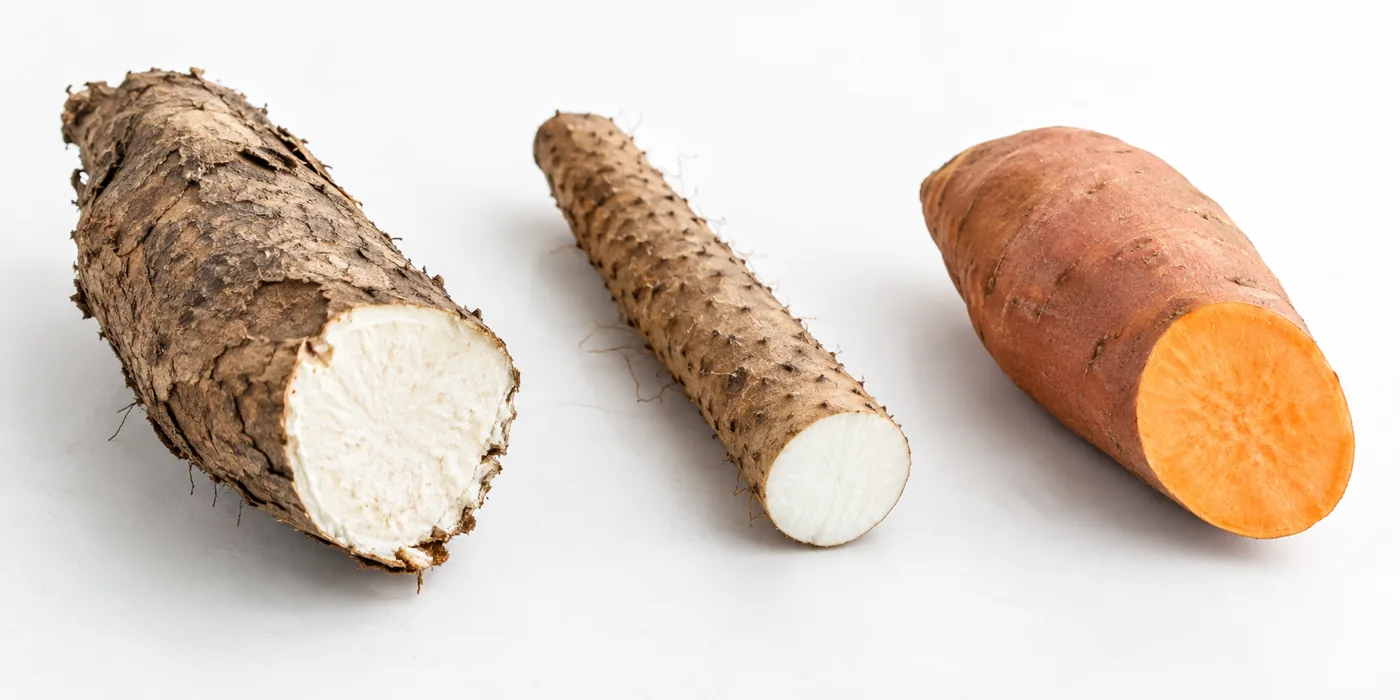
Qualitative yam and sweet potato flavor and texture comparison.
Texture often gives the clearer answer. A cooked cube that keeps defined edges can support a stew or plated side; a cube that breaks down rapidly may suit a thick soup or mash. An ingredient that is pleasant when freshly steamed can appear watery after an unsuitable freeze–thaw cycle, especially if it was stored or cooked poorly. Taste panels should describe mouthfeel and appearance alongside flavor: firmness, graininess, surface dryness, color and any off note. Those observations are more actionable than a single adjective such as "good."
One practical test is to cook a small sample plainly, without sugar, strong spice or sauce. Assess it warm, then taste the same prepared ingredient in the intended recipe. Plain cooking reveals the root's baseline; the application test reveals whether that baseline matters. A sweet glaze, for example, may cover a subtle varietal difference, while a clear soup exposes the cut's flavor and surface condition. Keep the preparation time, water ratio and portion size the same when comparing offers.
If tasters disagree, ask what each person noticed before averaging their scores. One person may be responding to sweetness, another to powdery texture, and a third to a woody or fibrous piece. Those are different problems with different remedies. The first may reflect crop identity or recipe expectation; the second can be a variety and cooking issue; the third could call for a closer inspection of the raw material and cut. Capture the words used by the kitchen team in the sample record. They are often more useful than a single overall rating when purchasing has to discuss a change with the supplier.
True yam and sweet potato create different eating experiences
In some markets, "yam" on a grocery sign refers to an orange-fleshed sweet potato. They are different crops. True yams belong to Dioscorea; sweet potatoes belong to Ipomoea batatas. The names are not interchangeable in a commercial specification. A purchaser who orders by the casual market name can receive a root that changes the sweetness, color, cooking loss and finished portion of a dish.
An orange sweet potato commonly tastes sweeter and becomes moist and soft after cooking. A true yam tends toward a more neutral, earthy profile and can keep a firmer, starchier bite, though the result varies among Dioscorea species. A pale Chinese yam has its own character: delicate flavor, pale color and a surface that can be slippery or mucilaginous when peeled. These are broad comparisons, not guarantees for every lot. Roasting also concentrates and browns flavors, whereas boiling can make either ingredient seem less sweet.

Plain steamed yam and orange sweet potato side by side.
If the goal is a naturally sweet orange mash, identify sweet potato explicitly. If the dish needs pale cubes that hold their outline in broth, ask for a specific yam form and test it in that broth. A recipe that merely says "yams" leaves too much room for substitution. It is particularly risky for prepared meals and retail packs, where customers can see a color or texture change immediately. Product labels, ingredient declarations and destination-market naming should follow the actual crop supplied.
Visual inspection helps but does not settle everything. Whole true yams can have rough, bark-like skin and pale or colored flesh; sweet potatoes more often have a smoother, thinner skin. Once peeled and diced, some pale roots resemble one another. Request the ingredient identity on the product specification and lot documents, then compare a retained sample with the proposed lot. We recommend describing the approved cooked result with a photograph and simple sensory notes rather than relying on a local common name alone.
The buyer's question is therefore two-part: "What does this named ingredient taste like?" and "Which crop is this?" The second answer gives the first one meaning. Our guide to where yams come from gives further crop background; for a purchase, the product-specific cut and cooking trial remain decisive.
For menus and finished-product descriptions, use the name customers will recognize only after the ingredient has been checked. A dish sold as yam fries may refer to a true yam in one market and orange sweet potato in another. The kitchen may be satisfied with either, but a chain needs the intended result defined across locations. Color is a useful immediate check: an orange sweet potato fry will not look like a pale yam fry. The two can also change seasoning balance and cooking yield. A clear internal specification lets marketing choose accurate public wording without forcing the procurement team to interpret an ambiguous menu name.
Chinese yam, white yam and purple yam need separate descriptions
Chinese yam is often the form encountered as pale frozen slices or pieces in an Asian soup, hot pot or stir-fry specification. It has a relatively gentle flavor that readily takes on broth and seasoning. The raw peeled surface may feel slippery, so the handling note belongs in processing instructions, not in a promise of a particular cooked texture. In soup, properly cut pieces can remain visible, while longer cooking softens them. Actual firmness depends on the cut dimensions and cooking time.
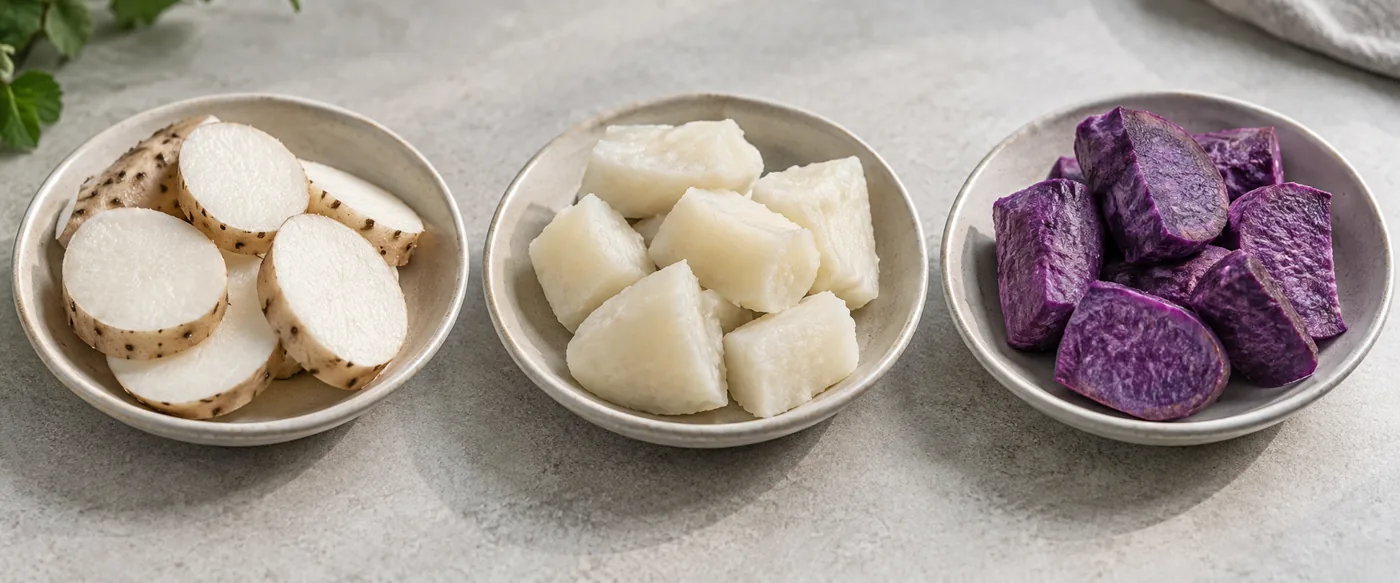
Three differently colored and shaped yam preparations.
White-fleshed true yams used in West African and Caribbean cooking often have a more substantial starchy body. Boiled pieces may be eaten with sauces, pounded, mashed or fried. Their taste can be described as mild, earthy or slightly nutty, but it would be inaccurate to promise that every white yam has the same texture. Market varieties and preparation practices differ. If a foodservice customer specifies "white yam," we ask for the intended dish and the accepted cooked sample before fixing a frozen-cut specification.
Purple-fleshed Dioscorea forms can bring a clear visual role to a dessert or plated dish. Their color should not be confused automatically with purple sweet potato, which is another crop. Color can change with heat and recipe conditions; any proposal for a purple ingredient needs a cooking test in the actual formula. The attractive raw cross-section is only the beginning of an evaluation. Check the cooked shade, flavor intensity, surface breakdown and whether the ingredient bleeds color into adjacent food.
These examples show why a one-line answer to "what does yam taste like?" has limits. Botanical identification, cut and cooking state can each change the sensory result. Rather than writing a universal hierarchy of sweetness, create a short sample record with the ingredient name, cut size, cook method and observations. The record becomes especially valuable when a restaurant group or factory must compare a new shipment with an approved reference months later.
For a tasting panel, compare like with like. A seasoned purple dessert, a plain boiled white yam and a Chinese yam slice in broth cannot fairly be ranked on one sweetness scale. Prepare all samples plainly for the first pass, then repeat in their intended applications. The first pass helps reveal the ingredient; the second helps decide whether it works in a product. Keep the panel small enough for consistent preparation but include the people who will own the result: a cook or product developer, purchasing and quality. Their comments can reveal problems that a single department might miss.
Cooking changes flavor and mouthfeel
Boiling is the clearest starting point for a sensory comparison. Water transfers heat evenly and lets a buyer assess the root without browned edges or strong added fat. Place comparable pieces in the same amount of gently boiling water, cook until the center reaches the intended tenderness, drain, and taste them while warm. Record time and final texture, but avoid treating one published number as a universal rule. A small frozen dice and a thick whole-root chunk do not cook at the same rate.
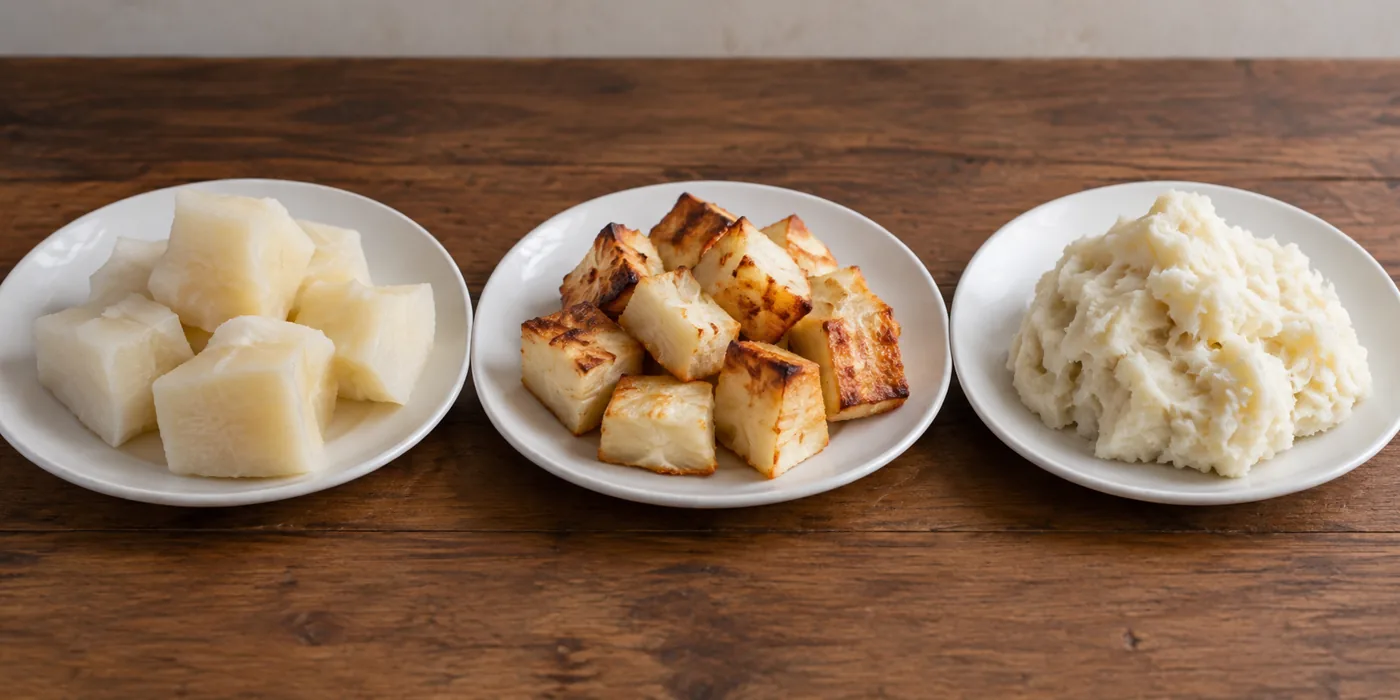
Boiled, roasted and mashed yam in separate portions.
Roasting removes surface moisture and adds browning. It can make a yam seem richer or slightly sweeter even though the ingredient has not become the same crop as a sweet potato. Results depend on oil, oven loading, piece size and pre-cooking. A large pale piece may need boiling or steaming first so its center is tender before its exterior dries. For a repeatable commercial test, weigh the frozen pieces, use a known tray loading and record both oven conditions and finished yield. Taste a plain piece before coating the batch with seasonings.
Frying gives a crisp surface and a softer interior, but oil quality and temperature can overwhelm the root's delicate flavor. A buyer assessing fried yam should distinguish whether they want the taste of the tuber or the performance of the cut. Check whether pieces separate, whether the center cooks through before the surface overcolors, and whether the shape survives handling. If a sample was designed for soup or boiling, its geometry may be poor for frying. Ask for the application before comparing offers by price per kilogram.
Mashing and pounding remove much of the visible difference between pieces but make texture central. A starchier yam may produce a dense, cohesive result; extra liquid, fat or overcooking changes that result. For a food manufacturer, the relevant measure may be the consistency of a cooked mash rather than the flavor of an individual cube. Test with the actual recipe and the intended equipment. A spoon tasting in isolation is a screening step, not final approval for a high-volume prepared food.
Clear soup and broth expose different characteristics. Pale Chinese yam pieces can soften and absorb the surrounding flavor without giving the soup the orange color of sweet potato. The cook must still control simmer time and agitation if intact pieces matter. In a frozen diced format, small pieces may thaw and heat rapidly; adding them too early can make them softer than the menu requires. Test with the correct kettle or portion size where possible. A photo of the plated broth should be paired with a note on bite and cooking duration.
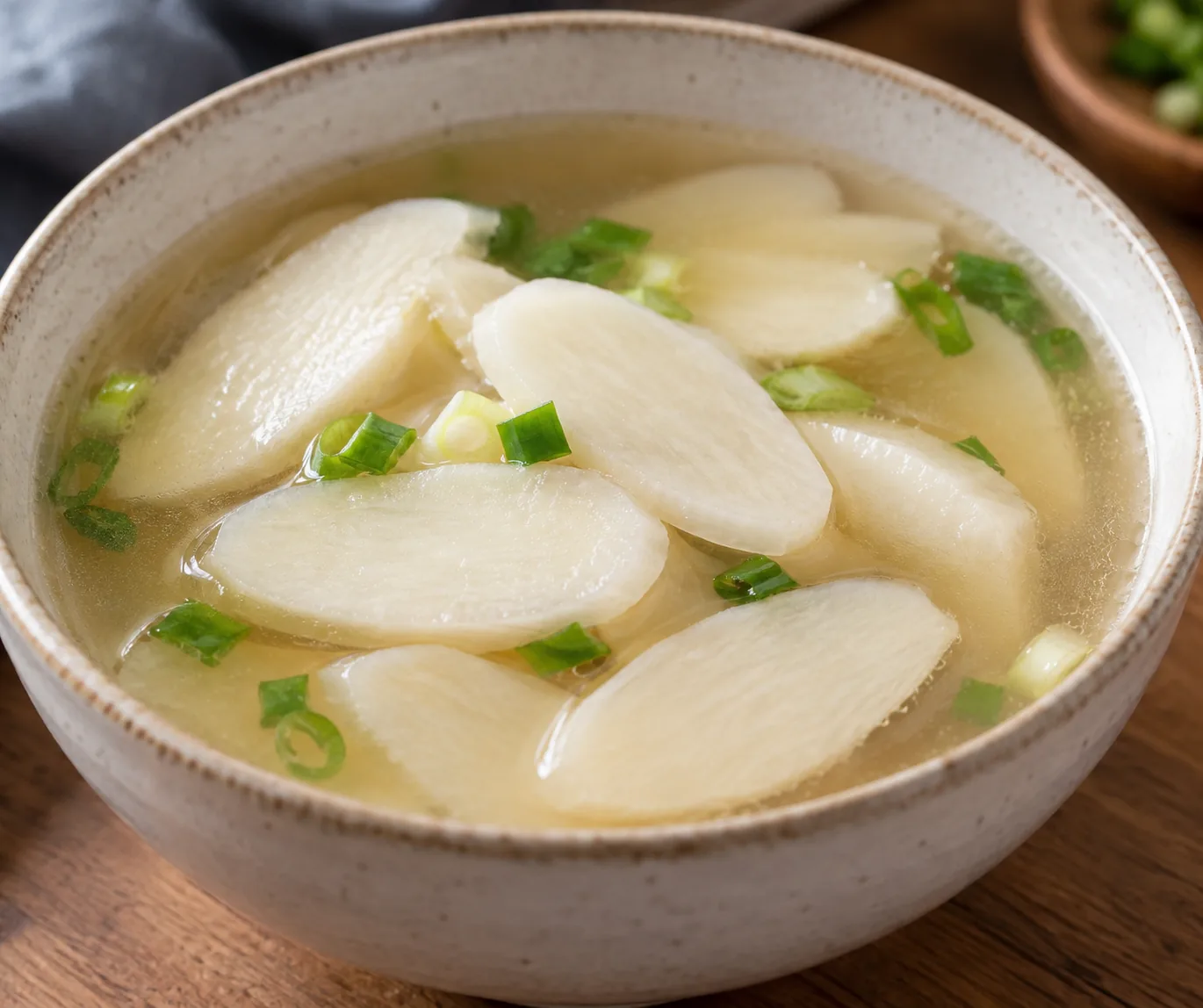
Pale Chinese yam slices in a clear soup.
The practical conclusion is that preparation is part of the tasting specification. Record whether the sample was cooked from frozen or thawed, whether it was washed or pre-cooked, the piece dimensions, the heat method and the endpoint. If two offers are prepared differently, the tasting cannot fairly attribute the difference to the root. Consistent preparation protects both buyer and supplier when a later shipment is reviewed.
Service conditions add another test. A yam piece that tastes right immediately after boiling may soften while held hot for a buffet or delivered meal. A roasted piece can lose its dry edge under a lid, and a soup portion can continue to cook after the heat is turned down. Hold a small portion for the actual service period and record the change. For manufacturing, repeat that check after any reheating step expected by the final customer. It is the eaten condition that matters. A sample approved only at the stove may perform differently in a chilled or frozen finished meal.
What frozen yam pieces can and cannot deliver
Freezing makes a defined cut available for planned production and can remove peeling and cutting work from the receiving kitchen. It does not preserve every feature of a fresh whole root in every application. Ice formation and later handling can change cell structure, so a thawed sample may feel softer or release moisture. This may be unobtrusive in soup or a cooked filling and more visible where a firm, fresh-looking surface is central. Test the frozen material in the intended preparation, not only after defrosting it on a bench.
GreenLand-food's frozen yam slices show a pale, prepared form for buyers who need slices. The frozen diced yam page shows a different cut. Those pages are useful starting points for shape, but the RFQ should still state the target dimensions, allowable variation and application. A slice designed for soup has a different surface area and cook time from a dice for a filling. Ask for a physical sample when geometry affects the finished dish.

Frozen Chinese yam slices with pale cut faces.
Inspect the pack before cooking. Pieces should be identifiable as the specified cut, with a reasonable degree of separation for the declared format. Heavy clumps, excessive loose ice, broken fragments, discoloration or damaged packaging warrant a closer check against the agreed specification and temperature history. A little frost alone cannot diagnose the whole chain, and a photograph cannot prove core temperature. Use the receiving records, pack condition and representative sample together.
The most revealing trial has three views: frozen, cooked plain and cooked in the actual product. The frozen view shows size distribution and obvious defects. Plain cooking shows baseline taste, center tenderness and cooking loss. The application view shows whether the cut gives the portion, appearance and mouthfeel the buyer needs. Keep a reference sample and written acceptance notes. This gives purchasing, quality and kitchen teams a common language when they discuss the next lot.
Portion economics can also change with the cut. If a bag contains many fragments, a soup line may still use them, while a plated side that promises uniform chunks may not. A thin slice can give a different perceived portion from the same weight of small dice. Measure the usable yield after the real cooking process, including any draining, breakage and holding loss. Comparing only the frozen price per kilogram hides these effects. The relevant cost is the amount of acceptable finished food that reaches the plate or pack.
Specify yam identity and test a commercial sample
Before requesting a quote, write down the ingredient identity as precisely as your market and application require. "Frozen yam" may be sufficient for an initial inquiry, but a purchase specification should confirm the crop or commercial variety, cut form, size range and preparation state. State whether the product is intended for boiling, soup, frying, roasting, mash or further industrial processing. A small slice that works in broth may break under the shear of a mixing line; a large chunk may slow a fast service operation.
The sample trial should use the same method the customer will use. Note whether the pieces cook directly from frozen, how they are drained, and how long they stand before serving. Compare bite, flavor, color, breakage and yield with the approved reference. If the dish contains a strongly seasoned sauce, add a separate plain test so the ingredient's quality remains visible. If the visual is important, record a photograph under consistent lighting. A simple form with the recipe, time and observations makes future comparisons more reliable.

Frozen Chinese yam pieces showing irregular small cut geometry.
For recurring supply, agree on packing and quantities as carefully as on taste. Choose pack sizes that match line or kitchen throughput; avoid repeated warming of an opened pack. Confirm the expected shipment volume, destination and delivery window. Ask for the documents required by the destination market and your own quality system, including product specifications, traceability information and the relevant inspection or export documents. The exact document set depends on the product and destination, so it should be confirmed for the order rather than assumed from another customer's shipment.
GreenLand-food can help buyers compare our frozen yam forms against a clear application brief. Tell us the cut and finished dish, plus any limits on size, color, breakage, packing and labeling. We can then discuss the appropriate sample and what needs to be confirmed before a production order. The useful sensory answer is the one tied to that approved product: how this yam tastes after this cooking method, in this portion, for this buyer. That is a stronger basis for repeat purchase than a generic claim that all yams taste alike.
Once the reference has been approved, keep changes controlled. If a buyer switches from slices to dice, moves to a smaller portion pack or changes the recipe heat profile, the original tasting result may no longer predict performance. Review the new combination with a small trial before a full order. Likewise, investigate an unexpected flavor or texture by checking the lot identity, cold-chain record and kitchen method together. It is easy to blame the root when a longer hold time caused the change, or to blame the recipe when an unapproved cut arrived. A disciplined record makes the next decision faster and fairer.
Source frozen yam with GreenLand-food
GreenLand-food is a professional frozen yam supplier and manufacturer in China, providing factory-direct wholesale supply for importers, food manufacturers, foodservice distributors, and private-label programs.
Send the yam form, cut specification, packing, quantity, application, destination, private-label needs, and requested documents.