


How to Eat Scallions: Raw, Cooked and Frozen Uses
Sep 24, 2026
Leave a message


Scallions are also sold as green onions or spring onions, depending on market and naming convention. The names can overlap, so look at the actual product: slender pale bases with long tubular green tops and no large mature bulb. For foodservice buyers, the proportion of white to green and the cut length may matter more than the name printed on the carton.
What parts of a scallion can you eat?
The pale white shaft, the light-green transition and the darker green tops are edible. The small root tuft at the base is normally trimmed away, as are any wilted, slimy or badly damaged leaves. University of Illinois Extension notes that both white and green portions can be used. That is the direct answer to "do I throw away the green part?": no, the tops are often the part chosen for a fresh, visible finish.
The sections are not interchangeable in flavor. The white base is usually more assertive, with the onion-family bite that makes it useful in a sauté or aromatic base. The hollow green leaves are gentler and more delicate. A broad cut of green top can give a visible stripe on noodles, while a fine ring disperses onion flavor through a dressing. A recipe may call for "one scallion," yet the result changes if only the white or only the green is used.

Whole fresh scallions show root ends, edible pale bases and long green leaves.
Some scallions have a little swelling at the white base; that does not automatically turn them into a large dry storage onion. However, products sold under "spring onion" may vary by region, and some may have a more developed bulb. If a recipe's texture and cut dimensions matter, inspect the stalk or product specification instead of relying on the common name. This is especially relevant when a processor orders pre-cut frozen pieces from a different market.
Raw or cooked use is a choice, not a safety exemption. Fresh scallions grow near soil and have overlapping leaves that can hold grit. Wash them before cutting, use a clean board and follow the foodservice operation's produce handling policy. When they are a ready-to-eat garnish, cleanliness and segregation from raw proteins matter. The edible portions are not an invitation to use visibly spoiled produce; discard stalks with slime, strong off odor or substantial decay.
The roots are sometimes discussed in home regrowing tips, but that does not make the root tuft a normal plated ingredient. In a commercial kitchen, trim it cleanly and avoid leaving loose root fibers in a finished dish. If you are minimizing trim waste, focus on using the sound green portion rather than cutting it away by habit. The green leaves can add both flavor and color without another garnish ingredient.
For a buyer, "whole scallion" still needs a condition standard: proportion of green leaf, stem diameter, yellowing, damage and cleanliness. A photograph of one attractive bunch is not enough to describe a delivery lot. The part-to-part difference becomes even more important after chopping; a frozen product dominated by green leaf will not taste or look the same as one with a large proportion of white base.
Wash, trim and cut for the intended dish
Start with firm, fresh-looking stalks. Rinse the white base and the inside of any loose outer leaves, where soil may hide. Pat dry if the scallions will be a raw topping, since extra water dilutes dressing and can make the garnish limp. University of Minnesota's green-onion guide describes washing, trimming and using the vegetable raw or cooked. Separate the root end from the edible shaft with a clean knife; remove any yellow or bruised leaf tip.
Choose the cut for the eating experience. Thin crosswise rings scatter across soup or noodles and deliver small bites of onion. Wider diagonal slices remain visible in a stir-fry. Long strips can be used where a dish needs a springy green accent, but they should be cut consistently so diners do not pull out one long string while the rest disappears. A coarse cut of white base can be too pungent on a delicate raw dish; a very fine green cut can vanish in a long cook.
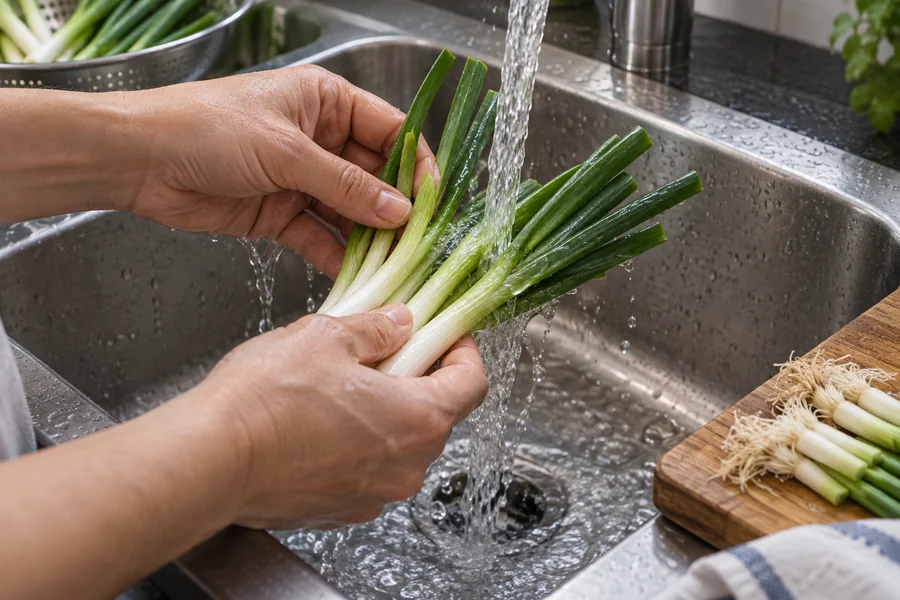
Hands rinse fresh scallion stalks and white bases under running water.
Keep whites and greens in separate piles if you will cook them at different times. This takes almost no extra prep but makes the intended flavor easier to control. If the recipe calls for the entire scallion to be added at once, ask what result is wanted: cooked aromatic flavor, crisp green finish, or both. A staged addition often gives the cook more control than a single mixed handful. The distinction becomes visible in the pan within minutes.
Use a sharp knife. Crushing the tubular leaves with a dull blade creates ragged edges and releases moisture; a clean slice gives a better-looking topping. Slice shortly before serving when the garnish needs a fresh appearance. For higher-volume production, define a target cut length and permitted proportion of crushed or bruised pieces, then compare actual output. The same cut is not ideal for a noodle garnish, a dumpling filling and a sauce base.
After cutting, keep the prepared scallions within your kitchen's time and temperature controls. Fresh chopped greens do not become shelf-stable because their onion aroma is strong. Avoid returning wet chopped pieces to the container holding clean uncut stalks. If you are preparing in advance, decide whether the recipe truly needs a raw fresh finish; a cooked filling may accept a different ingredient form and handling pattern.
The practical test is simple: taste one piece of white and one of green, then assess the finished dish. If the raw white overpowers it, use less or cook it. If green color disappears during a long cook, reserve some fresh green for the finish. A cut specification is useful only if it supports the actual eating result rather than a convenient machine setting.
This preparation step also reveals the value of the entire stalk. A cook who discards the green tops every time may be paying for edible material that could improve a soup, noodle dish or garnish. A cook who insists on using every damaged outer leaf can harm the final quality. Sound edible yield is the goal. Record trim loss if a large kitchen buys by bunch weight, because different suppliers may deliver different lengths of stem and proportions of leaf even when the case weight is identical.
Use scallions raw for fresh aroma and color
Raw scallions are often easiest to understand as a final accent. Thin green rings over noodles, rice, soup, eggs or a savory bowl add a fresh onion note and visible color without the weight of a large raw bulb onion. The white base can also be eaten raw, but use it deliberately: it is usually sharper and may dominate a mild dish. The Kitchn's white-versus-green guide makes the same practical distinction between a stronger white section and a lighter green finish.
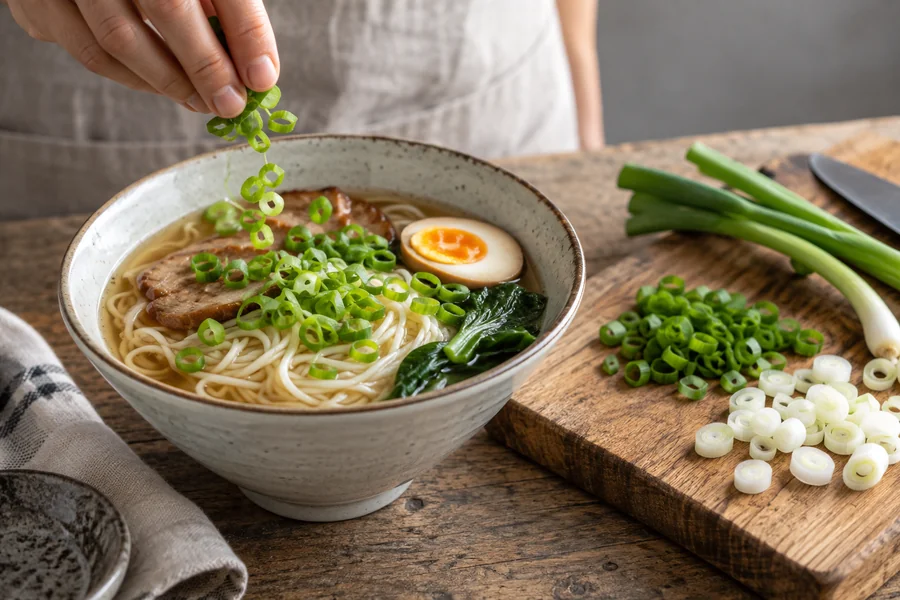
Fresh green scallion rings are added as a raw garnish to noodles.
Taste the raw ingredient before committing it to a full batch. Scallion intensity changes with variety, maturity and how much white base the prep team included. A small tasting can reveal whether a garnish should be thinner, more green-heavy or mixed with another fresh herb. This is particularly useful for a cold sauce or salad where no cooking step will soften the bite. The best cut size is the one that distributes flavor evenly across a serving.
Raw use also shows flaws immediately. A pale, limp leaf will not recover its snap after cutting. A wet pile of finely sliced greens can mat together instead of scattering. Wash and dry sound stalks, hold them appropriately, then add the topping near service. Keeping the garnish separate from hot food until the last moment protects its green color and fresh aroma. If staff add it too early to a steaming container, they may get a partially wilted topping even though the recipe says "raw."
There is room for white scallion in a raw preparation. Mince it finely into a dressing, relish or dipping sauce when you want a sharper onion note that still feels lighter than a large bulb onion. Start with less than you think and taste after it has been dispersed. Large chunks of raw white base create uneven sharp bites. Green tops can be cut more generously if their gentle aroma and visible shape are part of the dish.
For a ready-to-eat use, source and handling controls deserve attention. Rinse under clean water, use sanitized tools and avoid cross-contact with raw meat or dirty outer cartons. University of Minnesota presents raw topping as one normal use, but the kitchen still needs its established produce hygiene process. Washing is not a substitute for rejecting spoiled material, and a garnish station should not be an uncontrolled holding area.
Do not choose frozen chopped scallion as a direct replacement if the promise is a crisp raw ring. Ice crystals and thawing change the structure of the tender leaves, so the pieces can release moisture and look less lively. A frozen product may still give onion flavor in a chilled formulation after testing, but its intended strengths are usually cooked applications. If the customer judges fresh crunch and color, buy fresh and manage the prep rather than expecting a frozen ingredient to recreate that texture.
Cook whites and greens at different moments
When the dish is cooked, put the more robust white and pale-green pieces into the pan early enough to soften and flavor the oil or sauce. Add the dark green pieces later if you want them to retain shape, color and a fresher aroma. Milk Street's scallion guidance explains this useful division. It is a cooking sequence, not a rigid rule that green can never be heated or white can never be eaten raw.

Scallion white rounds cook in a pan while green rounds wait to be added.
In a stir-fry, the whites may enter with ginger or garlic after the pan is ready, followed by the main ingredients. The greens can go in for a brief final toss. In a soup, the whites can simmer in the base while green rings are reserved for the bowl. In a dumpling or savory pancake filling, both portions may be mixed through and cooked, because the goal is an even onion flavor rather than a distinct raw garnish. Match the order to the final texture.
Heat changes the appeal of each portion. The sharp white base mellows as it cooks and becomes part of the savory foundation. A long-cooked green top contributes flavor but loses the crisp, bright finish that makes it a garnish. If the dish needs both effects, divide the same bunch: cook one part, finish with the other. This can be more efficient than buying a separate mild onion for the base and scallions only for the top.
Keep cut size consistent with cooking time. Thick white chunks added just before service may still taste raw while thin green rings added early can disappear. A chef should assess the center of a white piece and the appearance of the greens in a finished batch, then adjust the sequence. A factory formulation may need a more precise cut-length range because the cooking step is standardized and the pieces are distributed across many servings.
Do not overstate "seconds" as a universal cooking instruction. Pan heat, load size, moisture, cut thickness and whether the pieces are fresh or frozen all change the result. Cook to the intended flavor and texture, while following the dish's food-safety process. If a product is used in a ready-to-eat formulation, use its supplier specification and your validated preparation method. A photograph of a bright-green pan is a visual example of one stage, not a verified endpoint.
One practical experiment is to make two small batches of the same dish. Add all scallions at the start in one, and stage white then green in the other. Taste and compare color after service holding. The method that looks best immediately may not be the one that holds best in a delivery container. This is especially relevant for commissaries, where the food may be reheated before eating and a late green garnish added in the central kitchen can become fully cooked by the customer.
Use frozen scallions in cooked foods
Frozen chopped scallions are well suited to recipes where the pieces will be heated or incorporated: soups, dumpling fillings, savory sauces, noodle bases, rice dishes, omelets and prepared meals. They can be portioned without washing and chopping fresh stalks for every batch, but the intended use still matters. A frozen cut added to a hot pan may release some water; give the recipe room to evaporate it if concentration is important. Do not promise raw-fresh crispness after thawing.

Genuine GreenLand photo of cut frozen spring onions with a caliper for scale.
GreenLand-food's IQF frozen green onion page shows actual chopped pieces in different visual views. Those photos are useful for discussing approximate cut and white-green mix. They are not a full specification by themselves. Ask for current cut-size limits, proportions, color criteria, defect tolerance, pack size and handling guidance for the lot offered. A single product name cannot express all of these details.
"IQF" indicates pieces are individually quick frozen in the intended product form; it does not mean that every bag will pour identically after poor storage or partial thawing. Inspect the offered sample for separated pieces, visible ice buildup, clumps and the mix of pale and dark pieces. Then cook it in the actual dish. A sauce with a long simmer will be less sensitive to shape than a short-fried dumpling filling where larger green pieces may remain visible.
Frozen green onion is sometimes treated as a simple one-for-one fresh substitute by weight. That can miss differences in water, cut distribution and fresh top-note. Start with a small formulation trial, record the quantity and compare flavor after the intended heating and holding steps. If the original recipe uses fresh green tops only, a frozen product with many white bases may taste sharper. If the original uses whites early in the pan, a mostly green frozen cut may not create the same aromatic base.
Foodservice inventory benefits from predictable portions, but predictability requires a written target. Confirm the pack weight and bag size that fit one shift or production batch so staff do not repeatedly expose a large bag to warm air. Keep the product frozen according to the label and use the supplier's instructions for cooking or handling. Do not thaw an entire pack simply to imitate the appearance of a fresh bunch; the structure and moisture behavior have already changed.
The right question to ask a supplier is not merely "do you have frozen scallions?" It is "what white-to-green balance, cut length and usable pack format will produce the flavor and appearance we need after cooking?" That turns a generic ingredient into a controllable part of the recipe. It also gives the quality team a measurable basis for accepting repeat deliveries.
Choose a frozen cut for foodservice or manufacturing
Start with the dish. For a soup or cooked sauce, smaller chopped pieces may disperse evenly. For a savory pancake or dumpling filling, a larger segment can remain visible and give distinct scallion character. For a reheated prepared meal, test the product after the full heat and holding cycle rather than judging it immediately out of the bag. The intended appearance at consumption is the target, not the appearance on the frozen product page.

Genuine GreenLand photo of fine chopped frozen spring onion pieces.
Set the white-green ratio. White pieces deliver stronger onion flavor; green pieces carry more visible color and milder top notes. Ask whether the supplier's standard specification already matches the recipe or whether an alternative cut is possible. Set a realistic range rather than a single ideal photograph. Uneven distribution can change flavor from pack to pack even when total weight is correct, so inspect representative portions from the actual shipment.
Document cut length, allowable broken or crushed pieces, foreign-material controls, color and the amount of ice or clumping acceptable at receipt. Ask for current product documents and packing options appropriate to your destination. The photographed GreenLand pieces here show two genuine product views: a plain chopped sample and a caliper-assisted close view. Neither image alone certifies every specification or food-safety control. The sample and written agreement must carry that work.
Run a kitchen trial with the normal batch size. Weigh the frozen ingredient, add it at the planned cooking point and record whether the whites soften enough, whether the green stays visible and whether moisture changes the dish. Repeat after holding or reheating if that is part of the customer's experience. A buyer may prefer a slightly different cut to reduce complaints about strings, hard white pieces or a dull-green finish. That judgment belongs to the actual application.
Evaluate samples from more than one part of the bag. A surface scoop may have a different mix of white and green pieces from the remainder if handling has caused settling. Observe the product when it is opened at the normal freezer temperature, not after a display sample has been allowed to thaw. Photograph the cut beside a simple scale during trial, then compare it with the written range. The purpose is to make repeat purchases predictable without pretending that every natural scallion stem has identical color or diameter.

Genuine GreenLand photo of coarser chopped frozen spring onion pieces.
Check the operational fit as well as the food. One large bag may be efficient for a high-volume production line but inconvenient for a small restaurant that draws only a handful each day. A smaller pack can reduce repeated handling, while a larger one may reduce packaging per kilogram. Confirm the available packing configuration, storage instructions and dispatch conditions with the supplier. The finished dish should determine how much cut variation is acceptable; the freezer and daily workflow determine which pack size is practical.
Fresh scallions remain the sensible choice for a crisp raw finish. Frozen chopped scallions can simplify prep and portioning for cooked formulations, especially when daily fresh trimming creates inconsistent yield. GreenLand-food can discuss frozen spring onion supply for wholesale and food-manufacturing needs. Share the dish, cut-size target, white-green preference, pack weight, destination and required documentation so a sample can be assessed against the result you need.
The short cooking answer is to use both edible sections, wash and trim the stalk, then add the whites and greens according to the flavor and texture you want. For a raw garnish, protect the fresh green finish. For a cooked product, define the cut and test it through the full process. That simple separation keeps the ingredient useful from a single home plate to a repeatable production batch.
Source Frozen Spring Onions with GreenLand-food
GreenLand-food is a professional frozen spring onions supplier and manufacturer in China, providing factory-direct wholesale supply for importers, food manufacturers, foodservice distributors and private-label programs.
Send your product form, specification, packing, quantity, application, destination, private-label needs and requested documents so we can discuss a relevant sample and quotation.