


Where Do Yams Come From?
Sep 08, 2026
Leave a message
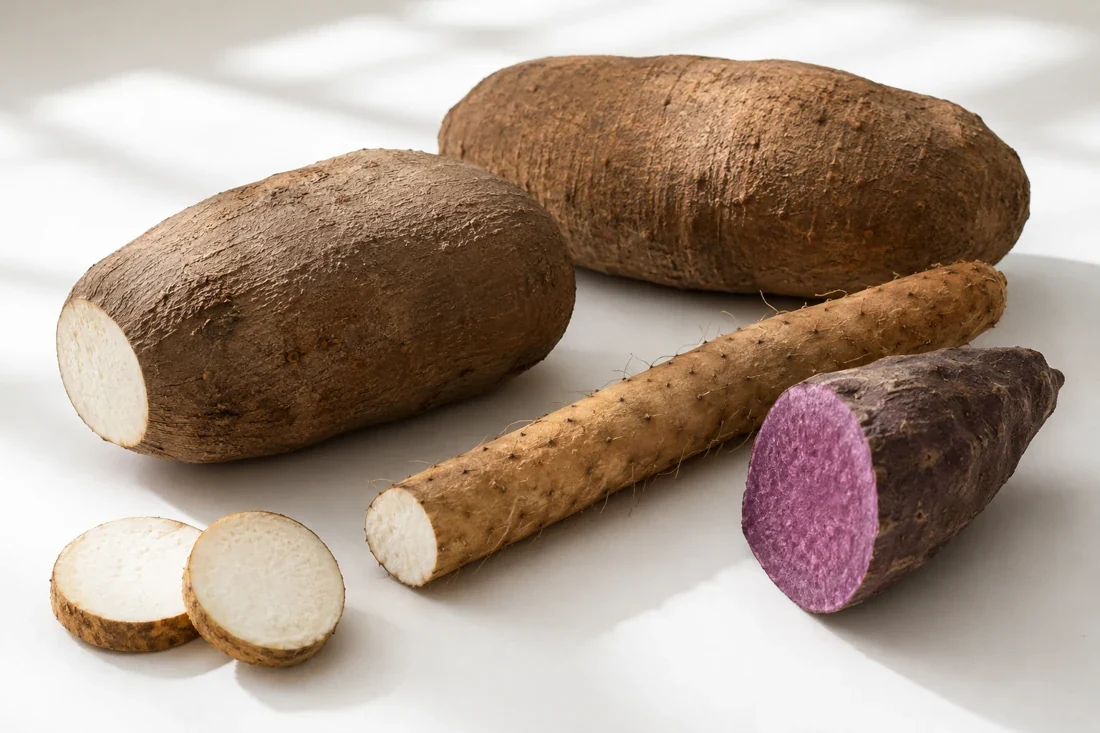
For a cook, that distinction helps explain why two products bearing the same name may behave differently in a pan. For an importer or food manufacturer, it determines what belongs on the specification. A useful answer to "where do yams come from?" therefore needs three details: which yam, where that species originated, and where the purchased crop was actually grown.
Yams have several geographic origins
Yam describes a group of related plants rather than one crop with a single birthplace. The genus Dioscorea includes the species used for familiar food yams, but those species have different histories. White Guinea yam is associated with West Africa; greater yam, also called water yam, has an Asian history; and cush-cush yam has roots in the tropical Americas. These geographic associations describe plant origins and domestication, not an exclusive right to grow the crop today.
The FAO overview of root and tuber crop origins is useful for seeing that diversity. It places important cultivated yams in several geographic groups. Its older terminology needs care, and its historical production figures should not be treated as a current market report. The durable point is that "yam" encompasses distinct crops that people selected, transported and cultivated in different places.
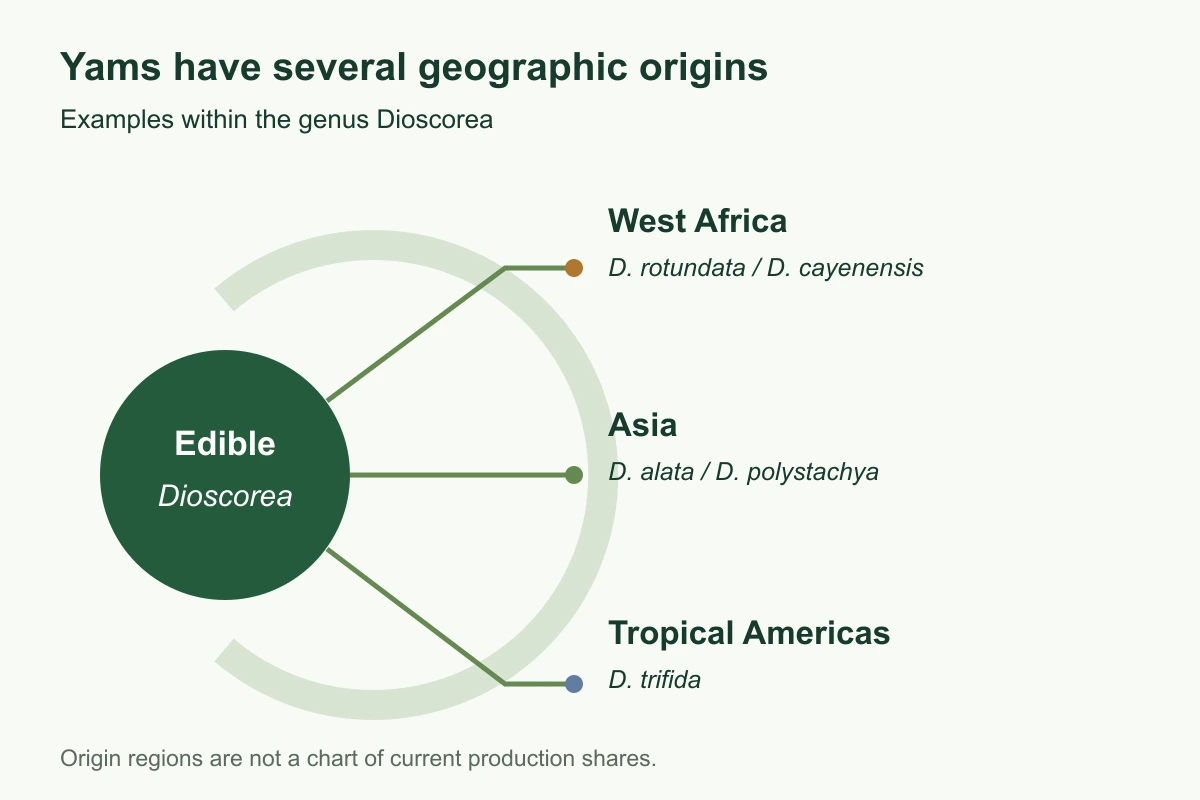
Examples of cultivated yam species have different geographic origins; these regions do not represent current production shares.
Native distribution, domestication and modern farming are related questions with different answers. A plant can occur naturally across an area larger than the place where people developed a particular cultivated form. It can then become an important food thousands of miles away. Calling every yam African, or every purple yam Asian without identifying the species, hides this history and can create a practical ingredient mistake.
A purple cut face is an especially weak shortcut for identification. Flesh color can help describe a sample, but the commercial name, botanical identity and variety information still matter. The same applies to a long tuber or a rough brown skin. Photographs are useful for an initial conversation; they cannot carry the whole specification. A clear sample label should connect the appearance to the actual product being offered.
When comparing origins for a purchase, begin with the name the intended users recognize, then add the botanical identity. If a customer requests yam for a traditional dish, ask what form they currently use and what texture they expect after cooking. That small clarification can prevent a quotation for a product that is botanically a yam yet unsuitable for the recipe. Origin becomes more useful once the ingredient itself is unambiguous.
This is also why a broad world map cannot tell a buyer which frozen product to order. A map can explain where groups of yams developed. It cannot establish whether a shipment contains a floury tropical yam, a slender Chinese yam or an orange sweet potato sold under a regional common name. Those distinctions belong in the product description before price, packing and shipment terms are compared.
West Africa is a major center of yam cultivation
West Africa has a particularly strong relationship with food yams. White and yellow Guinea yams are associated with the region, where yam cultivation supports established food traditions and substantial commercial activity. Nigeria is a major producer, and neighboring growing countries also contribute to regional supply. Exact production shares change with the reporting year, so an older percentage should not be used as a present-day sourcing claim.
The FAO introduction to root and tuber crops describes this long-standing importance. It also makes clear that species differ. For a reader interested in where yams come from, the region is central to the answer. For a buyer, "West African yam" remains the beginning of identification: the type, variety, harvest condition and intended preparation still need confirmation.
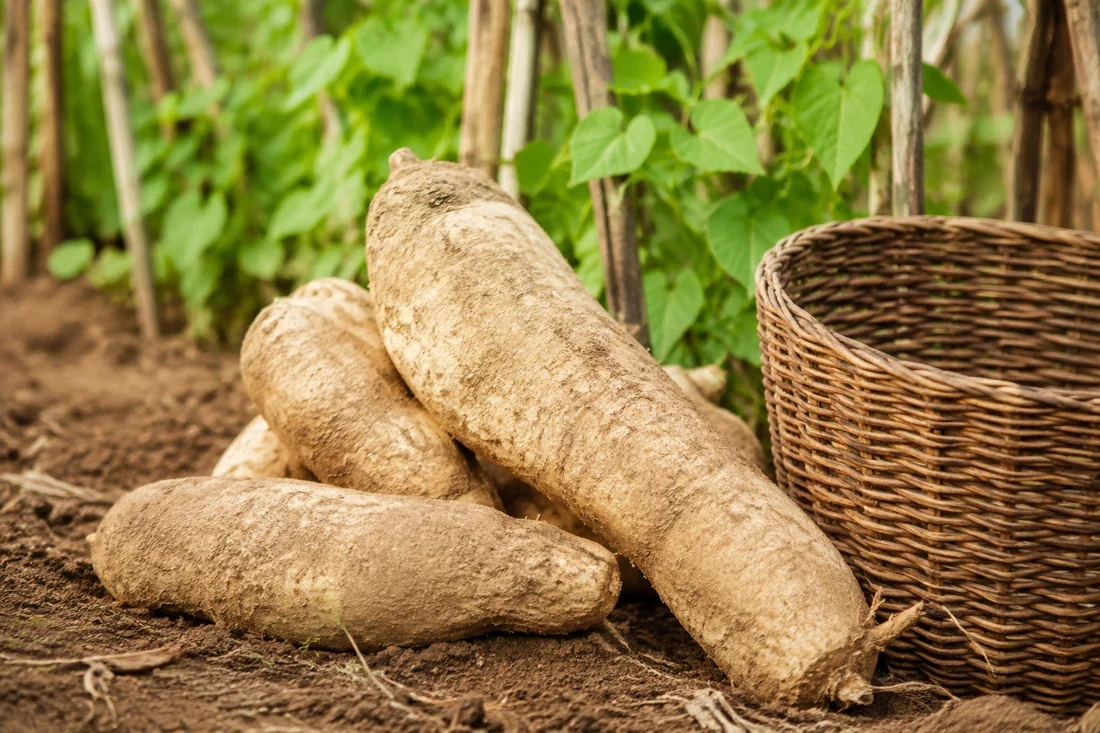
Yam cultivation is deeply established in West African food systems. Harvest illustration.
A yam bought for pounding may be judged by its behavior after cooking and working into a cohesive mass. A yam for visible chunks in a stew may be judged by how well the pieces hold together. A frying application introduces another set of expectations. The shared regional association does not make every yam suitable for all three uses, and a frozen slice intended for soup should not be substituted solely because the invoice says yam.
Fresh tubers also carry a different set of purchasing considerations from prepared frozen pieces. A sack of whole roots includes skin and trimming losses. Its usable yield depends on condition when opened and prepared. A peeled frozen ingredient has already passed through some preparation steps, but its cut, surface condition and cooking behavior need their own assessment. Comparing only the delivered price per kilogram overlooks those differences in usable material.
For a distributor serving customers familiar with a particular yam, a substitution deserves a cooking comparison in the customer's normal dish. Prepare the current and proposed products using the same recipe and record any necessary changes. A good trial asks whether the finished dish still has the expected texture and identity. It does not assume that a similar raw appearance will produce the same result.
Regional knowledge is therefore valuable when it leads to a more exact purchase. It can explain the type of food a customer expects and the names used in that market. It should then be translated into a written product requirement, supported by a representative sample. The crop's cultural and agricultural background remains meaningful, while the purchase is anchored in the ingredient that will actually enter the kitchen.
Asian yams and the Chinese yam supply chain
Asia is home to several cultivated yams, including greater yam and Chinese yam. They should not be collapsed into one Asian product category. Chinese yam is commonly identified as Dioscorea polystachya. It often has a long, slender tuber and pale flesh, making a recognizable contrast with many larger tropical yams. Older sources may use different names, which is one reason to check the identity behind a translated product name.
The tororo yam identity guide gives a concrete Japanese application for distinguishing Asian yam types.
The North Carolina State plant profile for Chinese yam places its native range in East Asia and describes its climbing habit and tubers. Botanical information establishes which plant is being discussed. It does not establish the growing province, farm, harvest date or processing site of a commercial lot; those details come from the supplier's records for the offered product.

Frozen Chinese yam pieces with frost on the cut surfaces. Chinese yam orders need an agreed identity and cut.
At GreenLand-food, our frozen yam range includes prepared forms for commercial use. Our Chinese yam slice information is the relevant starting point when a buyer needs pale slices for soup, a meal component or another suitable application. We confirm the actual form and specification with the inquiry. We do not treat that product as a universal replacement for the yams used in every regional cuisine.
A buyer developing a Chinese yam soup may care about slice thickness, intact edges, surface appearance and the texture after the full cooking cycle. A manufacturer filling a mixed meal may also need the pieces to portion consistently and remain recognizable after reheating. These requirements can be assessed directly. A general country-of-origin statement cannot tell the development team how the ingredient will perform at those stages.
The phrase "from China" also needs a defined meaning in a sourcing discussion. It can describe where the crop was grown, where it was processed or where the exporting business is based. A complete origin declaration should make the relevant facts clear for the intended market. When several stages involve different locations, the documents should describe the actual chain rather than allowing a commercial address to stand in for crop origin.
For an initial quotation, send the current ingredient name, a photograph or sample specification, the target cut and the application. Include whether the finished food needs a soft center, an intact bite or a particular appearance. We can then review the Chinese yam form against that requirement and confirm the available details. That produces a more useful conversation than requesting "Asian yam" without describing the dish or the expected result.
Why yams and sweet potatoes are confused
The familiar American use of yam for an orange sweet potato is a naming convention, not a botanical classification. Sweet potato belongs to Ipomoea batatas, while true food yams belong to Dioscorea. Both provide starchy underground food, which helps explain why shoppers compare them. Their botanical relationship, growing structures and cooking properties are different enough that the name should be clarified whenever a recipe or purchase crosses markets.
The distinction can often be seen on a cutting board. An orange sweet potato typically shows orange flesh under relatively smooth skin. A true tropical white yam may have a rougher surface and pale interior. Chinese yam may appear as a much narrower, elongated tuber. These are useful examples rather than an identification key: varieties differ, and neither flesh color nor shape alone confirms every product.
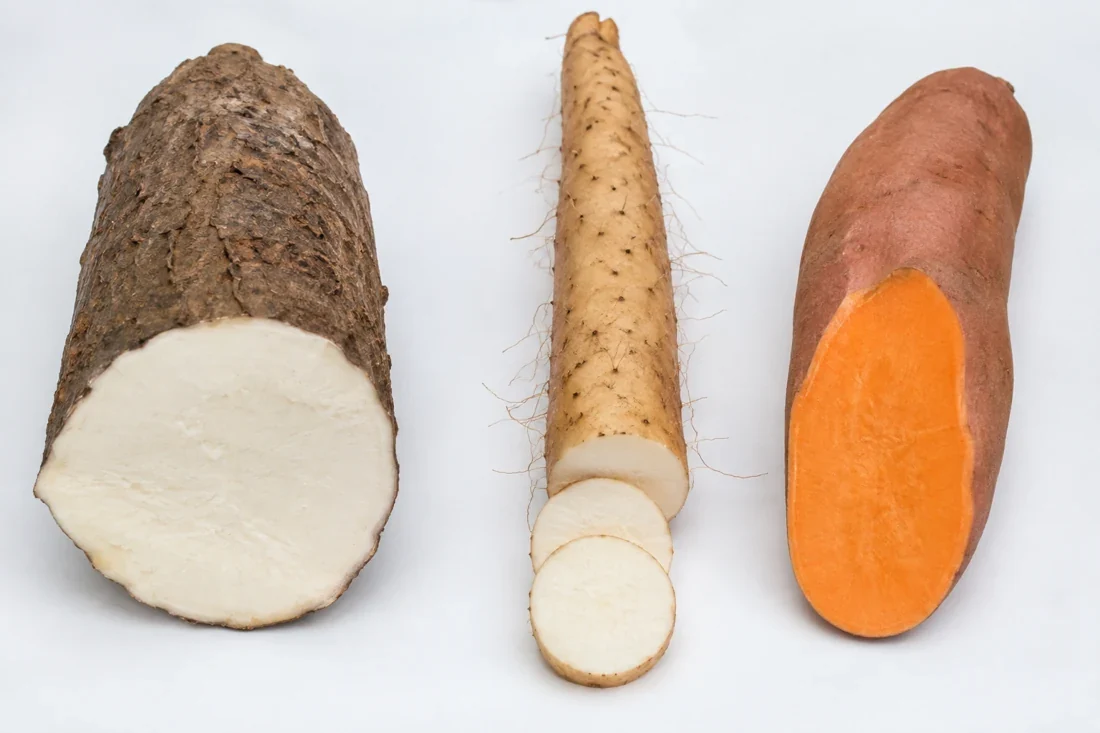
True yam and orange sweet potato belong to different botanical groups.
| Ingredient | Plant identity | Practical distinction |
|---|---|---|
| True food yam | Dioscorea species | Species and cooking properties need confirmation. |
| Chinese yam | Dioscorea polystachya | A defined yam ingredient; not a universal substitute for pounding yam. |
| Sweet potato | Ipomoea batatas | A separate crop, even when a market calls it yam. |
The USDA Forest Service review of Dioscorea species provides botanical context for true yams. Its discussion of names also illustrates how easily older or regional terminology can travel into later descriptions. In commercial work, a specification should remove that uncertainty by giving the accepted ingredient name and the form being supplied. A label that simply repeats a customer's ambiguous word leaves the problem unresolved.
For a recipe calling for baked "yams" with orange flesh, first check whether the author actually means sweet potatoes. A photograph, ingredient description or named variety can help. Replacing them with pale Chinese yam changes more than appearance. The result may need different preparation and will not automatically match the sweetness, texture or flavor balance intended by the original recipe. A recipe title alone is insufficient evidence for substitution.
The same problem occurs in purchasing systems. If one stock code is used for both sweet potato dice and Chinese yam dice, similar-looking frozen bags can enter different recipes under the same description. Separate item names and specifications make receiving and production clearer. The distinction should be visible on the approved sample record and internal ingredient list, not left to the person who happens to recognize the pieces on the line.
A practical inquiry might therefore say "Chinese yam, Dioscorea polystachya, peeled frozen slices" or "orange-fleshed sweet potato, frozen dice," followed by the required dimensions. That wording gives a supplier something definite to quote. It also helps the kitchen understand what to expect. The useful habit is to resolve the common name once, then carry the same ingredient identity through the sample, order and finished-product documentation.
How a yam vine produces the food underground
True yams are climbing plants. The visible vine and leaves grow above ground, while the edible tuber develops below the soil. A tuber is a storage organ that supports the plant's growth cycle; it is not simply an unusually large ordinary root. Some Dioscorea species also produce small aerial bulbils, but those structures should not be confused with a purchased food tuber or assumed edible from appearance alone.
This growth habit explains why a photograph of a harvested yam reveals only part of the plant. A field may show climbing vegetation supported above the ground while the marketable tuber remains hidden. Harvesting exposes the tuber and begins a different handling stage. The skin, cut surfaces and physical condition then become relevant to storage and preparation, especially where long or irregular tubers can be damaged during lifting and movement.

The elongated underground tuber develops beneath a climbing Chinese yam plant. Botanical illustration.
The FAO discussion of yam postharvest storage connects tuber condition, injury and storage behavior. It is a historical technical reference, so its treatment procedures should not be copied into a modern operation without review. Its practical lesson is still clear: a tuber's condition at harvest influences what happens later. Freezing a prepared ingredient does not remove the need for sound raw material.
For a processor, the shape of the harvested tuber affects preparation. A long slender Chinese yam can be cut into rounds, while an irregular thick tuber may produce a different mix of slice shapes and trimming. A finished specification should describe the acceptable cut rather than implying that every piece will be geometrically identical. Natural raw material variation needs a defined tolerance if portion appearance is important.
A production trial should also distinguish a raw cut from the cooked piece. The diameter visible in a frozen sample is only one observation. The development team may need to assess how the piece looks after simmering, how its surface handles mixing and whether it remains intact during portioning. A botanical explanation is useful because it leads to these concrete questions about the part of the plant being used.
For home readers, the safest identification habit is to buy a known food yam from a reliable food source and follow an appropriate preparation method. A wild climbing plant or an unfamiliar bulbil should not be treated as a substitute based on a photograph in an article. The diversity within Dioscorea is precisely why an explanation of the genus cannot serve as permission to eat every plant that resembles it.
Reading the origin of a frozen yam lot
The origin of a species and the origin of a shipment belong in different records. "Chinese yam originated in East Asia" is botanical background. "This lot was grown in a named country and processed at a specified site" is a traceability statement. A supplier should be able to explain the latter for the product being offered, with the detail appropriate to the order and the customer's documentation requirements.
Start by connecting the sample to the proposed product code and specification version. If a sample is taken from stock, identify the lot it represents. If it is a development sample, make that status clear before using its appearance to approve a future order. A photograph without a product code or a sample without a stated processing condition cannot reliably answer questions about the eventual shipment.

Peeled Chinese yam pieces with irregular cut faces. Connect the selected cut with the origin and lot information for the order.
Our Chinese yam slice page sets out the product form and examples of specification details. For an actual order, we confirm the agreed dimensions, preparation, packing and supply arrangement. Buyers needing crop-origin information, production dates or particular documents should include those requirements in the inquiry so that availability can be reviewed against the specific product and shipment.
Dates deserve the same clarity as locations. Harvest, processing, packing and shipment can occur at different times. A frozen product shipped later in the year does not necessarily come from a newly harvested crop. That can be entirely consistent with planned frozen supply, provided the product remains within its approved shelf life and storage requirements. A buyer should know which date is being quoted rather than interpreting "new shipment" as "new crop."
When receiving goods, compare the carton identity and lot information with the approved documents. Check that the delivered form matches the purchase description and that the required cold-chain information is available. An origin statement answers one question; it does not replace inspection of packaging, product condition or specification compliance. The records and the physical product should tell a consistent story about the same lot.
For recurring orders, ask how changes in crop source, processing site or specification are communicated. The answer should be specific enough for your purchasing and quality teams to manage approval. A new source may require a fresh sample comparison even when the commercial product name stays the same. This is where a general interest in yam origins becomes a useful control over the ingredient entering production.
Matching yam identity to a commercial application
The best yam for an application is the one that produces the intended finished food consistently. A soup using visible Chinese yam slices, a regional dish made with a floury tropical yam and a sweet potato bakery filling begin with different expectations. They should be developed and purchased as separate ingredients. Similar common names are not a sound basis for sharing a recipe standard or supplier approval.
Define the cooked result before deciding which measurements matter most. For a soup, the team may want slices that remain recognizable after the planned simmer and reheating cycle. For a mixed meal, portion size and distribution across trays may be important. For a puree, smoothness and flavor may matter more than the original piece shape. These priorities help determine whether a slice, chunk or dice deserves a trial.
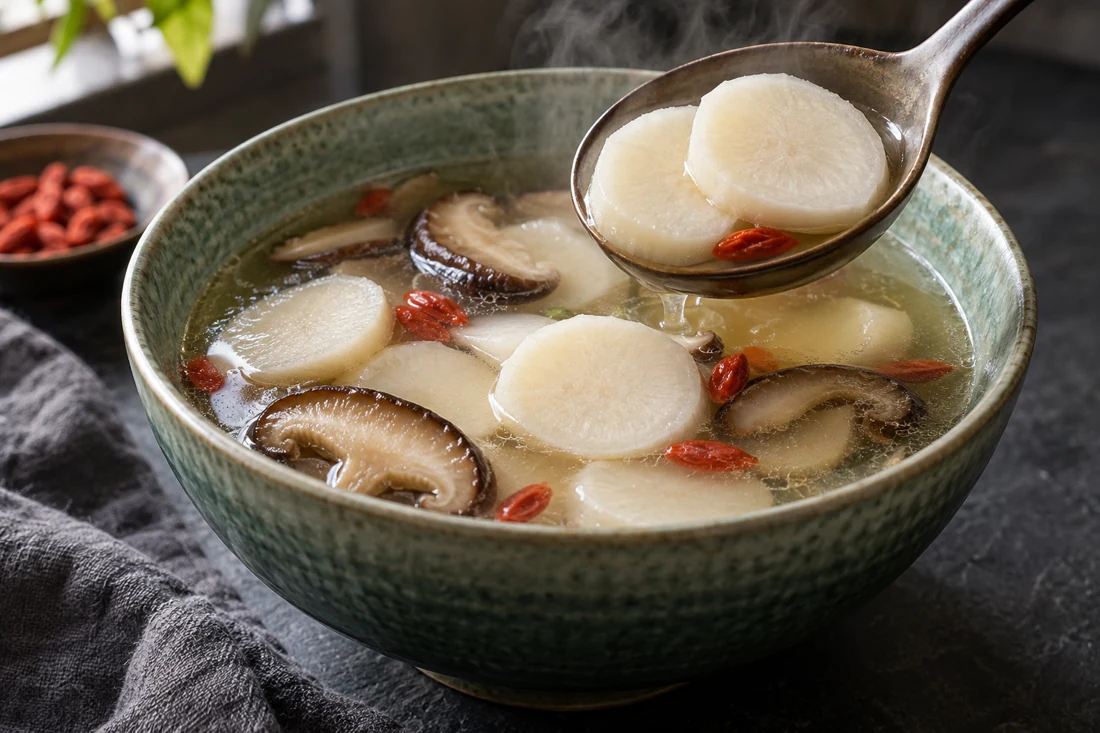
Chinese yam slices remain visible in a clear soup. Illustration.
Run the trial under the intended conditions, including any later holding or reheating stage. Record the starting product state, piece size, recipe quantity and cooking sequence. Evaluate the finished food against the current approved version. If the new ingredient requires a meaningful recipe adjustment, document that adjustment before approving it. A favorable taste of one freshly cooked piece is useful, but it does not represent the entire production process.
Packing can then be matched to use. A kitchen opening several small bags each day has a different handling pattern from a factory tipping larger quantities into a batch. The selected pack should suit the order volume, storage space and portioning method. Mixed loads, private-label requirements and delivery timing should be discussed against actual availability; they should not be inferred from a broad product-range description.
We supply frozen vegetables with the product identity and specification kept central to the inquiry. For yam, that means confirming the Chinese yam form we can offer and reviewing it against the intended application. If your customer expects another type of yam, name it clearly at the start. That lets both sides assess fit before spending time on a sample or quotation built around the wrong ingredient.
An accurate answer about origin ultimately improves an everyday decision: buying the right food. Knowing that yams have several geographic histories explains why the name covers such different products. Carrying that knowledge into the specification helps a buyer select the correct species, source and form. The result is a clearer order and a more meaningful cooking trial, with fewer assumptions between the crop in the field and the dish on the plate.
Discuss frozen yam supply with GreenLand-food
GreenLand-food is a professional frozen yam supplier and manufacturer in China, providing factory-direct wholesale supply for importers, food manufacturers, foodservice distributors and private-label programs.
Tell us the yam identity, cut, application and packing you need, together with quantity, destination and requested documents.