


Can You Stir-Fry Frozen Broccoli Without Thawing?
Sep 20, 2026
Leave a message

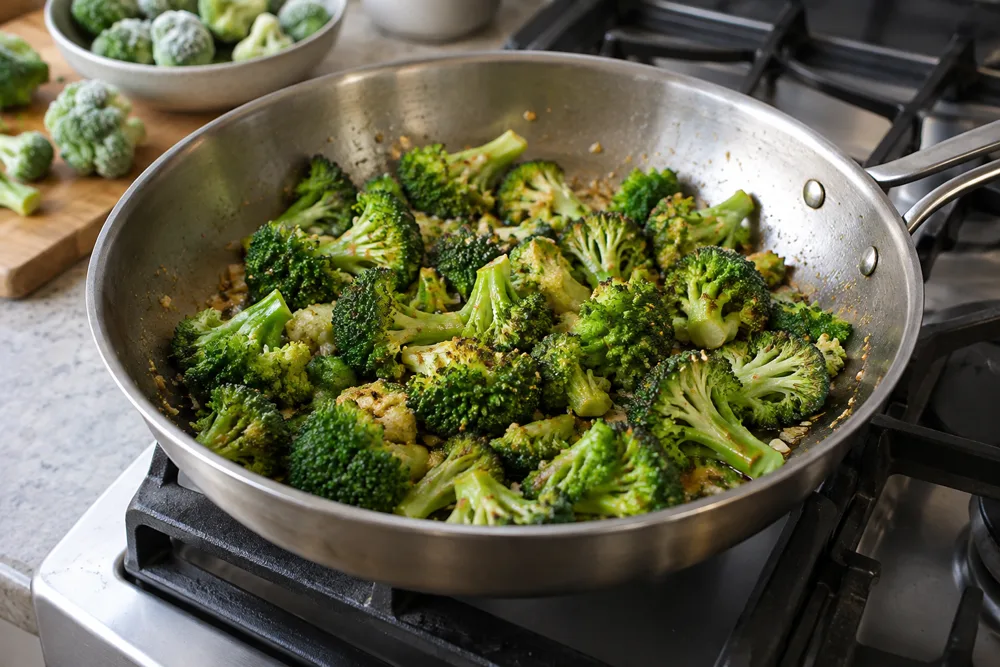
For a first trial, use about 250–300 g in a broad 28–30 cm skillet, with a small amount of oil over medium-high heat suitable for the pan. A cooking period around 7–10 minutes is a useful planning range, but size, frost, pan load and burner output change it. Follow the package's cooking instructions and required endpoint; browned edges do not prove that the center is cooked.
A briefly microwaved, drained start can also work when florets are large or a burner struggles to recover. It adds a handling step but removes some of the initial thawing load from the skillet. The useful choice depends on the equipment and product. Comparing the two routes under controlled conditions gives a clearer answer than treating thawing as always necessary or always wrong.
What changes when broccoli goes into the pan frozen
Frozen broccoli brings both cold vegetable tissue and surface ice into the pan. During the first part of cooking, heat melts ice and warms the florets, while moisture collects and turns to steam. This early wet stage is normal. Browning becomes easier once enough surface water has evaporated and the food can make effective contact with the hot pan.
Commercial frozen broccoli is commonly blanched before freezing. That process prepares the vegetable for frozen storage but does not mean every product is ready to eat. Follow its cooking directions. The prior treatment also affects texture: a frozen floret has a different heat history from fresh raw broccoli, so copying a fresh-broccoli stir-fry time can produce an over-soft result.
The crown and stem behave differently. Fine buds expose a large surface, while a thick central stem takes longer to warm. A pan can therefore show attractive brown tips even when the largest pieces need more cooking. Check representative thick florets and keep the supplier's preparation requirements part of the method.
Stir-frying does not require the broccoli to remain completely dry from the first second. A short controlled steaming stage can help warm a thick floret before the pan is uncovered for evaporation and finishing. The difficulty arises when a large load keeps generating moisture faster than it can leave, or when sauce is added before that stage is complete.
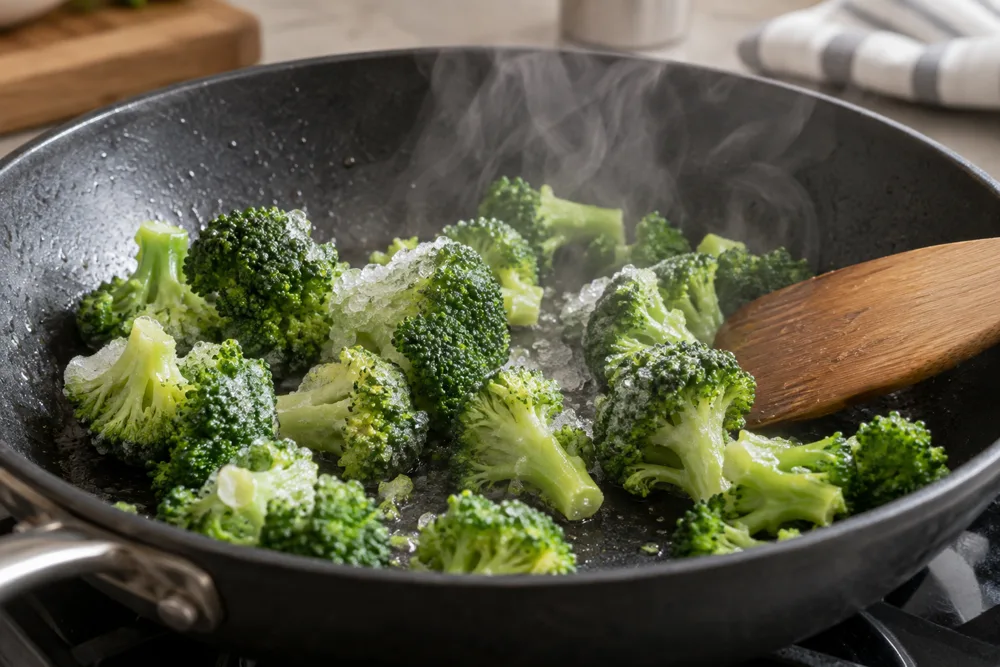
The first stage includes thawing and evaporation, even when the broccoli enters a hot pan.
Oil improves contact and carries flavor, but more oil is not a dependable fix for a flooded pan. A generous puddle can combine with melted ice to create splattering while the broccoli still steams. Begin with a modest coating appropriate to the cookware, add the frozen food carefully, and keep loose ice away from large amounts of hot oil.
For product development, distinguish the heating task from the finishing task. First bring the broccoli through its required cooking process; then establish the surface texture and sauce coating. These tasks overlap in time, but identifying them helps explain why a pan of pale wet florets needs a different adjustment from fully cooked broccoli sitting in an overly diluted sauce.
A high-sided wok is useful only when the available burner and the quantity of food suit it. On some home burners, a broad skillet gives more broccoli direct contact with the heated base. The equipment's name does not determine the result. Choose a pan that sits securely on the appliance and can be handled comfortably when loaded. For a useful comparison, weigh the broccoli and record the pan's working diameter; a photograph of the finished dish alone will not reveal why one trial evaporated water faster.
Choose florets that heat evenly
A reasonably narrow floret-size range is useful for stir-frying because the pieces can reach a similar endpoint together. Very large crowns beside small broken buds are difficult to manage: the small pieces may soften or scorch while the thick stems remain cool. Check the contents of the portion before loading the pan and avoid treating all frozen broccoli formats as interchangeable.
Plain florets give the cook control over seasoning and sauce. Broccoli already coated in cheese sauce, butter or another preparation follows a different method. Its added ingredients may stick, separate or burn under a dry stir-fry schedule. Use the product instructions and develop a separate procedure for a coated or seasoned SKU.
Our bulk frozen broccoli page describes several floret-size options and the relevant stem, cut and packing considerations. Smaller consistent florets can be convenient for fast skillet handling. Larger florets can provide a substantial bite but require a method that heats the central stem without damaging the crown.
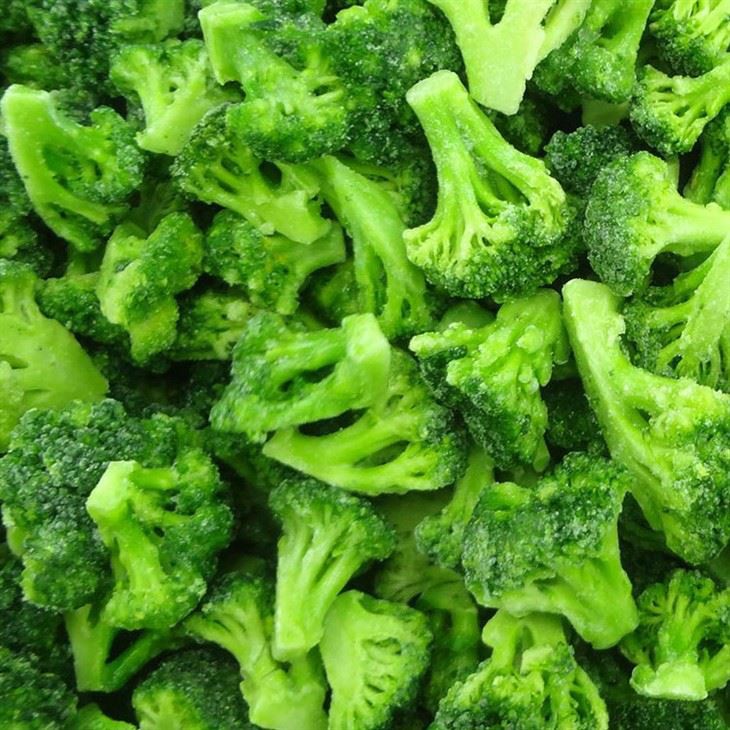
GreenLand product photograph. Floret size and stem proportion affect even heating.
Stem ratio matters as much as the largest dimension. Two pieces of similar overall width can contain different amounts of dense stem. A retail or foodservice buyer should therefore review the actual sample, including its cut profile. A size statement alone does not describe every texture difference likely to appear in the finished stir-fry.
Look for manageable frozen separation. Large clumps are harder to distribute, and forcing them apart can create excessive fines. Heavy loose frost adds water to the cooking load. Investigate such conditions against the agreed product specification and handling records rather than assuming that one visual clue establishes a complete storage history.
For an approval trial, retain a small photographic record of the frozen portion, including a reference for scale. Note the starting weight, observed size variation and the amount of broken material. A later comparison will be more meaningful if the team can see whether the new lot resembles the one used to establish the cooking instruction.
Compare direct-frozen cooking with a drained start
Direct-frozen cooking is convenient when the florets are separate, reasonably small and loaded in a quantity the pan can handle. The skillet performs the warming, moisture release and finishing stages. It reduces separate handling, but the cook needs to allow the early moisture to escape before expecting a browned surface.
A microwave-assisted start can be useful for larger florets or a less powerful hob. Use the product's microwave directions as appropriate, then drain carefully and transfer promptly for the skillet finish. The goal is a controlled heating step, not an indefinite room-temperature thaw. Keep any resulting hot liquid away from your hands and from pools of oil.
Draining removes liquid already released during heating. It does not restore the structure of fresh broccoli, and squeezing the crowns aggressively can break them. A sieve and a short controlled draining interval may be enough for the intended process. If you blot surface moisture, use clean suitable material and avoid leaving fragments on the food.
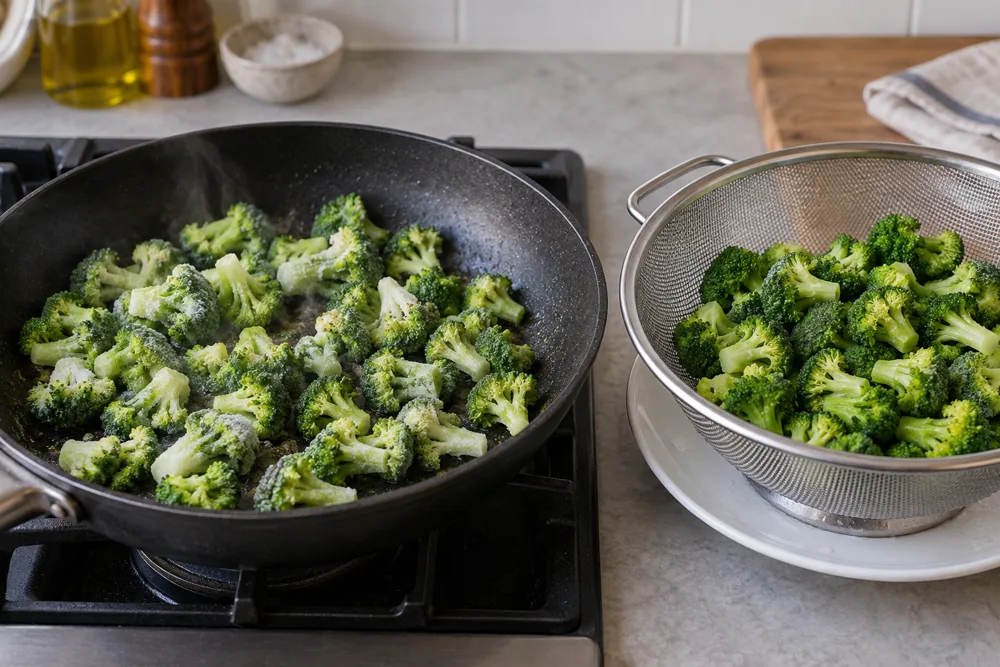
Compare direct-from-frozen cooking with a controlled preheat-and-drain step.
| Route | Where the early moisture is handled | Main advantage | Main control |
|---|---|---|---|
| Direct from frozen | In the skillet | Fewer preparation steps | Modest load and evaporation before sauce |
| Microwave then drain | Before the skillet finish | Less initial cold load in the pan | Avoid excess preliminary cooking |
| Refrigerated thaw under a defined process | During controlled thawing | Useful for some planned production systems | Drainage, time, temperature and texture review |
For a home cook, the first two routes usually provide the most practical comparison. For commercial production, a controlled thaw may be part of an established process, but it needs its own handling procedure and performance trial. Do not leave broccoli on a warm counter simply because a recipe uses the word thaw.
Test equal starting weights from the same lot. Keep the pan, oil, sauce dose and desired endpoint consistent, and record the total preparation time as well as the skillet time. The microwave route may look faster if only the final pan stage is counted. Include draining and handling when deciding which route suits the kitchen.
Evaluate the finished portion after the intended service interval. A route that browns attractively at once may soften more during holding if it includes unnecessary preliminary cooking. The preferred method is the one that produces acceptable broccoli at service with a manageable process, rather than the one with the most dramatic first-minute sizzle.
Stir-fry in stages and add sauce at the end
Prepare the sauce, aromatics and any other ingredients before heating the pan. Broccoli finishing is easier when the sauce is measured and ready. If the dish contains raw meat or another ingredient with separate cooking requirements, handle and cook it under an appropriate procedure. Do not rely on a broccoli timing range to establish the safety of a mixed dish.
- Select a broad skillet or wok suited to the burner. Begin with approximately 250–300 g plain frozen florets for a trial in a 28–30 cm skillet, reducing the quantity if it forms a crowded pile.
- Heat the pan over a suitable medium-high setting and add a modest amount of oil. Follow the cookware's limits, especially for coated pans; do not leave an empty nonstick pan over aggressive heat.
- Add the frozen florets carefully and spread them out. Allow the early moisture to release while turning the pieces enough to distribute heat. Follow the product's required cooking method, using a brief covered stage if that method calls for it.
- Uncover for the finishing stage and allow excess free liquid to evaporate. Turn and reposition the florets so several surfaces contact the pan, without grinding the crowns into small fragments.
- Add delicate aromatics late enough to avoid burning them. Add the prepared sauce once the broccoli is adequately cooked and the pan is no longer flooded, then toss briefly until the coating reaches its intended consistency.
- Remove promptly and serve. Evaluate the largest stems, the amount of free liquid and the coating, then adjust the next batch's load or sequence if needed.
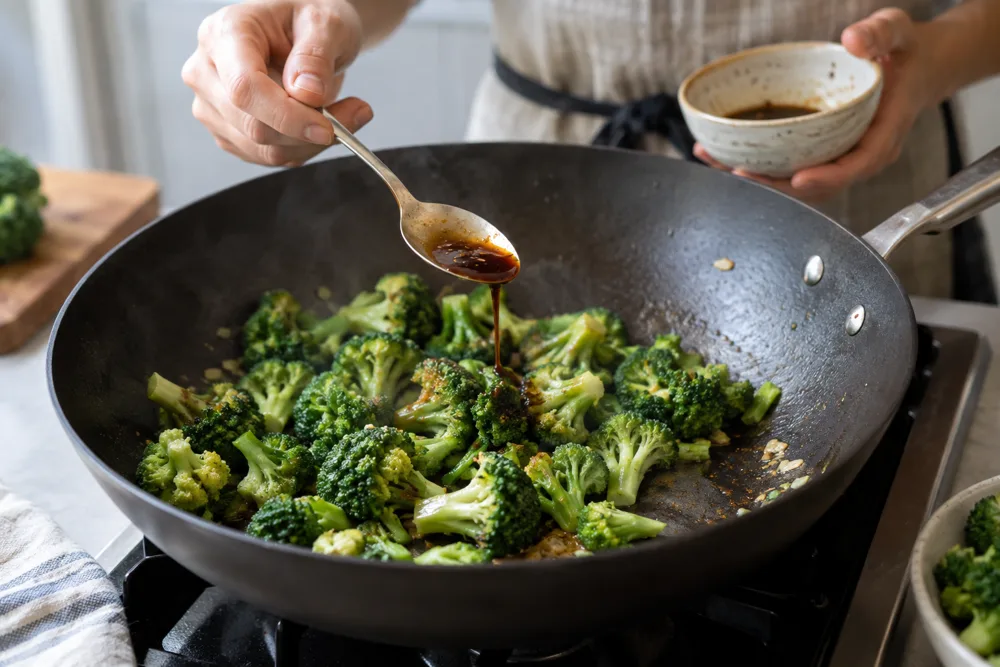
Add sauce after excess free water has been reduced and the broccoli has cooked appropriately.
A starting total around 7–10 minutes can help plan the first small batch, but use observation and product directions to determine completion. Some florets need longer; others become soft sooner. A time range is especially unreliable if the burner, pan material or frozen load differs from the development setup.
Sauce dilution is easier to prevent than to correct. If you add the sauce while the broccoli is releasing substantial water, its salt, sweetness and starch concentration all change. Cooking longer to restore thickness also continues cooking the vegetable. Letting the earlier moisture clear gives the sauce a more predictable environment.
For a starch-thickened sauce, disperse the starch correctly and heat it according to the recipe. Stir the sauce before adding because settled starch can otherwise remain in the bowl. Use enough sauce to coat the intended amount of broccoli; a larger volume transforms the dish into a simmered preparation with different texture and timing.
Fix watery sauce and unevenly cooked florets
If liquid pools around the broccoli, identify whether it appeared before or after the sauce was added. Water released during the initial heating points toward pan load, frost, floret size and evaporation. A sauce that begins at the correct consistency but becomes thin after mixing may indicate that the broccoli still had substantial moisture to release.
Reduce the next batch load before increasing the heat dramatically. A domestic burner has limited output, and an oversized wok does not automatically solve that limitation. A broad skillet may provide more usable contact over some hobs. Choose the vessel that heats effectively on the actual equipment and gives the food enough exposed area.
If the crown is dark while the stem remains undercooked, reduce size variation or revise the preliminary heating stage. Raising the heat further can intensify the difference. Do not cut hard frozen florets in your hand. Use a product with an appropriate cut, or follow a safe controlled preparation method before dividing oversized pieces.
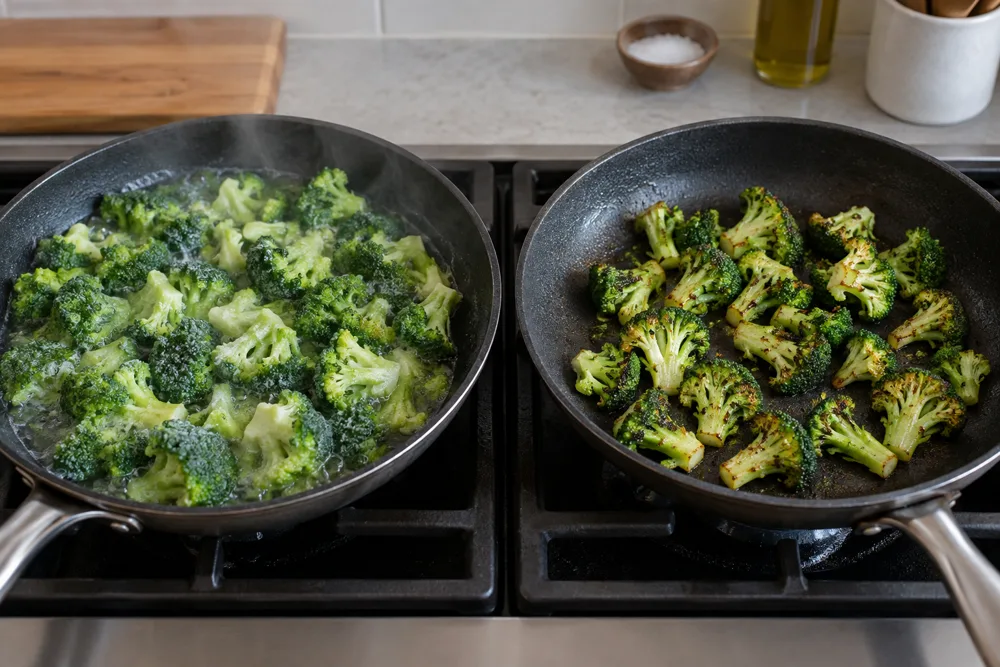
Pan crowding changes heat recovery and the amount of moisture retained around the florets.
| Observation | First variable to check | Next controlled trial |
|---|---|---|
| Florets sit in clear liquid | Load, surface ice and pan heat recovery | Cook a smaller portion in the same pan |
| Sauce becomes unexpectedly thin | Moisture remaining when sauce was added | Delay sauce until free water clears |
| Buds darken before stems are ready | Floret geometry and heat sequence | Compare a narrower cut or drained start |
| Broccoli breaks into fragments | Starting fines, preliminary cooking and stirring | Use suitable florets and gentler handling |
Burned garlic is a separate issue from broccoli moisture. Adding finely chopped garlic at the beginning of a long frozen heating stage exposes it to uneven conditions: it can brown rapidly where the pan is dry while broccoli elsewhere remains wet. Introduce it at an appropriate later point or use the aromatic sequence in a tested sauce recipe.
Avoid masking a process problem with extra salt or starch. More starch may absorb some water but can produce a heavy coating; more salt intensifies flavor without changing the broccoli's structure. A useful correction starts with the observed cause and changes one major variable. Keep a note of what changed so an improved result can be repeated.
The existing broccoli uses article provides broader meal ideas. For this method, retain the narrower acceptance question: are the florets properly heated, pleasantly tender and coated without an unwanted pool of liquid? That question makes troubleshooting focused and measurable.
Scale a skillet method for foodservice
Multiplying the ingredients does not automatically multiply the capacity of the pan. A larger frozen load absorbs more heat and releases more moisture. If the equipment cannot recover quickly, a successful small trial can become a long steaming stage at production scale. Define the maximum practical batch through trials on the actual line.
Record the pan or wok, burner setting, starting product temperature, batch weight and loading sequence. Include any lid stage, draining step and sauce addition point. A short written procedure should describe the food's condition at each transition, so the cook can respond to normal variation without relying only on a stopwatch.
Separate components when their cooking requirements differ. A mixed stir-fry may include protein, broccoli, onions, peppers or noodles, each adding its own moisture and heat demand. Cooking appropriate components in stages and combining them near the finish can provide more control. The overall process still needs to meet the food-safety requirements for every ingredient.
Measure finished yield using a consistent method. Weigh the frozen input and the finished broccoli at a defined point, keeping sauce and oil accounting clear. A yield measured before sauce cannot be compared directly with one measured after a generous coating. The record is most useful when it shows how much acceptable finished food the kitchen obtains from the purchased ingredient.
Holding deserves its own trial. Steam trapped in a covered deep container can soften crowns and thin the sauce. Use the establishment's approved holding procedure and assess the portion at the intended service time. A quality adjustment must remain compatible with the required time and temperature controls; leaving food exposed at an unsuitable temperature is not a texture solution.
For a ready-meal application, include the later cooling, freezing and reheating sequence. The first stir-fry is only one part of the thermal history. A product that looks ideal at the end of that stage may become too soft after the consumer's final heat. Define acceptance at the final eating stage and have the full process reviewed by the responsible technical team.
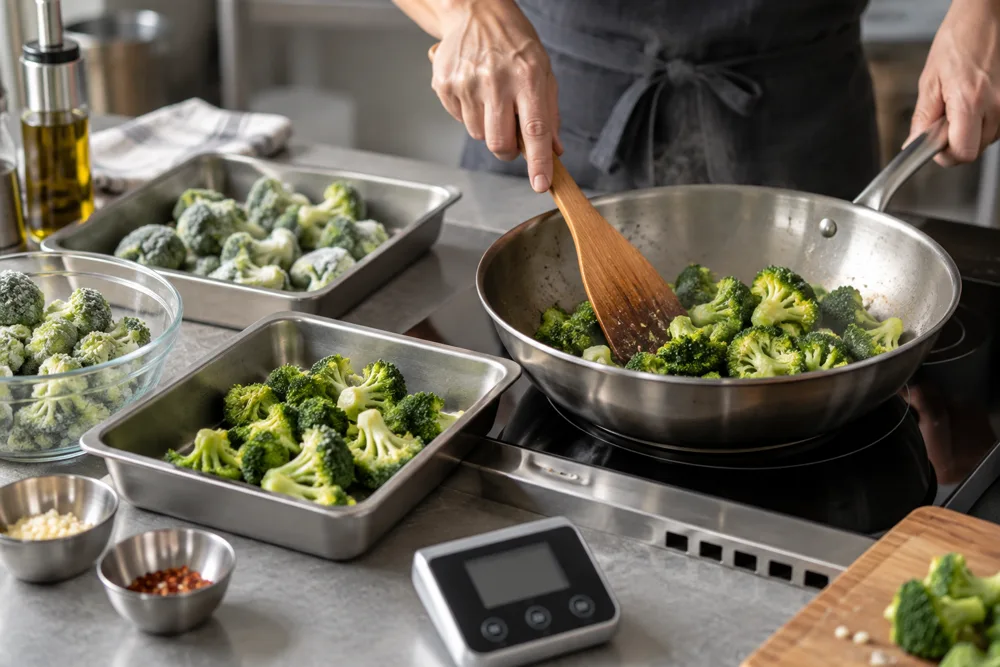
Measure the batch size the equipment can handle consistently during service.
When comparing suppliers, keep the cooking procedure fixed long enough to understand the ingredient difference. Then make a separate optimized trial if needed. This distinguishes a product that fits the existing kitchen method from one that could work well with a revised process. Both may be commercially useful, but they carry different implementation costs.
When a batch gives an uneven result, separate the possible causes before repeating it. A pan that was crowded from the start suggests a load problem. Large florets that are cold while small ones soften suggest a size problem. Broccoli that cooks acceptably and then becomes wet after saucing points toward the sauce or finishing sequence. Each observation calls for a different adjustment.
Make one change at a time during development. Reducing the load, increasing heat and changing the product cut together may produce an attractive plate, but it does not show which change mattered. A short sequence of controlled tests is easier to transfer to another shift than a method assembled from several simultaneous guesses.
Watch the time between finishing and serving. A stir-fry intended to be eaten immediately has a different quality target from one packed into a closed container. Steam retained under a lid can soften the surface and dilute sauce already coating the florets. Trial the actual container if delivery or takeaway is the intended service format.
The operator's workload belongs in the comparison too. Direct-from-frozen cooking avoids a separate draining station, but may occupy the pan longer. A controlled microwave-and-drain step adds handling but can help coordinate several portions. Choose the method whose measured result and staffing needs fit the kitchen, then write that method clearly into the production instruction.
Specify and test broccoli for a repeatable stir-fry
We help purchasing teams confirm the broccoli form and size for their intended process. Begin with the preferred floret range, stem proportion, whole-floret appearance and acceptable broken material. Include color, relevant defects and frozen separation. These requirements describe the ingredient the cook needs more clearly than a general request for the best grade.
The application trial should reflect the buyer's equipment. A small restaurant skillet, a high-output wok station and a central-kitchen pan have different heating and evaporation conditions. Share the proposed cooking method, batch size, sauce and serving pattern when requesting a sample. That information helps us review whether the available cut fits the job.
Agree how incoming quality will be assessed. A representative frozen sample can be inspected for size distribution, frost, clumping and damage, then cooked under the approved procedure. Record the lot and the observations. If a shipment differs from the reference, the supplier and buyer can discuss a defined change rather than relying on a photograph without context.
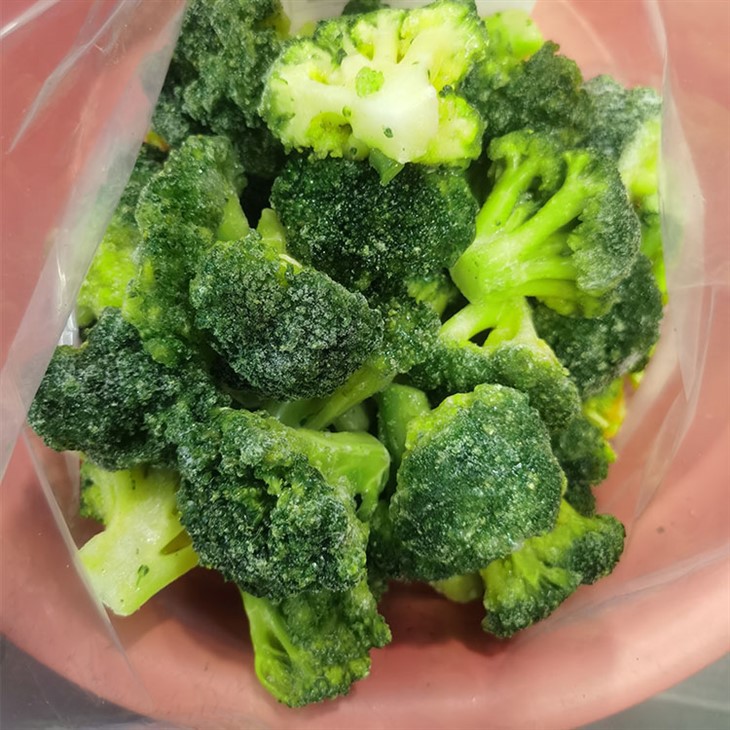
GreenLand product photograph. Approve size, breakage, packing and preparation instructions for the intended operation.
Packing should support portioning while maintaining frozen storage. Smaller inner bags can simplify use at individual outlets; bulk packing can suit larger operations with the necessary handling controls. Confirm bag and carton weights, order quantity, private-label needs, destination and loading plan before comparing offers. A low unit price is less useful if the packing creates avoidable thawing or portioning difficulties.
Request the agreed specification, relevant test information, current applicable certification documents and batch traceability records. The exact document set depends on the product, destination and customer requirements. These records support supplier qualification, while the stir-fry trial establishes application performance. Neither replaces the other.
Our wider frozen vegetable supply range can support related foodservice and processing programs. Keep broccoli acceptance specific even when it is purchased alongside other vegetables. A floret selected for a fast stir-fry, a chopped ingredient for soup and a component for a twice-heated ready meal can require different limits. The approved product and cooking sequence should work together to deliver a consistent portion at service.
Source frozen broccoli with GreenLand-food
GreenLand-food is a professional frozen broccoli supplier and manufacturer in China, providing factory-direct wholesale supply for importers, food manufacturers, foodservice distributors and private-label programs.
Send the floret size specification, stem tolerance, packing, quantity, stir-fry application, destination, private-label needs and requested documents. Share the pan load and service format used in your trial so we can help review the appropriate broccoli form.