


When Is Garlic in Season?
Sep 24, 2026
Leave a message


The harvest season depends on place and product
There is no single global garlic month. Garlic is often planted in autumn where winter conditions help bulb development, then lifted as leaves yellow in late spring or summer. Different regions, altitudes, cultivars, and planting dates change that sequence. In a Pennsylvania production guide, Penn State Extension describes many varieties becoming ready around mid-July and ties the harvest decision to leaf yellowing rather than a calendar day. A southeastern U.S. crop handbook gives a May-to-June window for its region. These sources describe different growing systems, so their dates should remain local examples.
Commercial supplier calendars show the same variation. A China sourcing calendar describes the main fresh crop around early summer, with stored garlic then offered into the following spring. Egyptian exporters describe an earlier spring new-crop period. The exact opening can move with weather and how quickly harvested bulbs are cured, graded, and cleared for shipment. A purchasing forecast built on last year's first shipping date should allow a range, not assume a guaranteed day. If an order depends on new-crop origin, ask the supplier for the current season's realistic availability and the earliest fully prepared shipment.

Harvest timing changes with growing region and crop stage.
"Garlic" also names several sale states. Green garlic is immature and tender, with a fresh stalk and a shorter holding life. Newly lifted mature bulbs may have moist wrappers and strong fresh character. Cured garlic has dried necks and wrappers so it can be stored and transported more effectively. Peeled, diced, minced, pureed, dried, and frozen garlic are processed ingredients whose availability follows production and stock plans as well as the field harvest. A retailer seeking fresh bulbs and a factory seeking frozen minced garlic are therefore asking different seasonal questions.
The buyer can make the date meaningful by stating the origin and form: "new-crop cured whole bulbs from this year's China harvest," or "IQF peeled cloves from a specified production lot." The first request is anchored to field and curing dates. The second is anchored to processing, freezing, stock, and cold-chain control. Both can be purchased at a similar time, but the documents and quality checks differ.
A crop calendar from planting to cured bulb
The useful calendar follows four stages, with the actual months set by region and crop conditions:
- Plant cloves at the locally suitable time and confirm the growing origin.
- Allow roots, leaves, and bulbs to develop through the growing period.
- Lift mature bulbs when field checks show suitable clove development and wrapper condition.
- Cure, sort, and prepare bulbs for the intended fresh, stored, or processed channel.
Planting time varies by region; the NIFTEM garlic processing manual notes more than one planting season within India alone. That variation is a useful warning against treating a planting or harvest month from one country as a universal rule. A buyer should request the actual growing origin and current crop estimate.
Harvest readiness is a physical condition. Lower leaves yellow and dry while enough upper foliage remains to protect the bulb. A representative bulb can be lifted and checked for clove development and intact wrappers. Lift too early and the bulb may be small with poor keeping quality; wait too long and wrappers can split or cloves separate, limiting storage value. The site already has a detailed When and How to Harvest Garlic article on those field decisions. Here the commercial consequence is the timing and condition of the usable crop entering storage or processing.
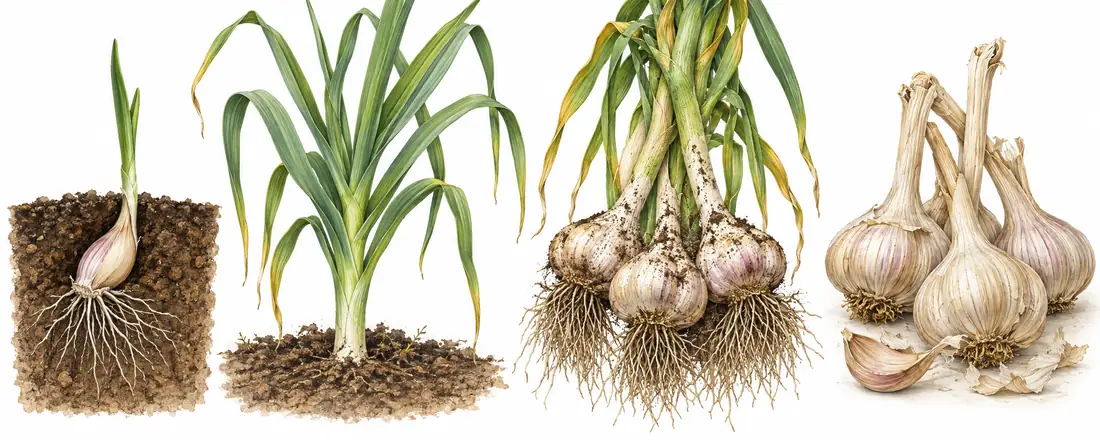
The crop calendar runs from planting through curing.
Freshly lifted mature garlic may be sold promptly in a local market, but garlic intended for longer storage is usually cured in a dry, ventilated setting. Curing dries the neck and outer wrappers and helps the bulb withstand handling. It is a controlled postharvest period rather than another growing stage. Penn State explains that garlic can be eaten straight after harvest, while curing becomes important when storage is planned. That distinction explains why "harvest started" is not the same as "export-ready cured garlic is available." A buyer should build curing, sorting, packaging, testing, and shipping into the calendar.
For a twelve-month program, map three related clocks: the field harvest period, the release of cured stock, and the production dates for processed garlic. Frozen cloves made from an earlier crop can still be a valid ingredient when held to the agreed storage conditions, but that is not a new-crop claim. Mark each purchase lot by its actual harvest or raw-material origin where available, processing date, and shelf-life term. Those dates tell the story more accurately than a broad "in season" label.
Weather can shift each clock differently. Rain near lifting may delay field access; humid curing conditions may extend the period before a bulb is suitable for longer storage. A late crop can compress the time available to peel and freeze enough raw material for a seasonal production program. These effects should be discussed in volume and lead-time terms rather than translated into a blanket quality judgment. An updated forecast can show the planned crop window, expected throughput, available carryover stock, and the latest date by which a buyer must approve a sample. The source of a change is easier to manage when both sides have named the stage it affects.
What changes as stored garlic ages
Good curing and storage extend the selling period, yet the bulb is a living plant organ. Over time, cloves can lose moisture, sprout, soften, or develop defects if temperature, humidity, ventilation, and incoming condition are poorly managed. Storage life differs by type. Illinois Extension gives a longer typical keeping period for properly cured softneck garlic than for hardneck garlic, illustrating why a single shelf-life claim should not be applied to every variety. A tightly wrapped bulb at arrival deserves inspection regardless of the month on the purchase order.
The first receiving checks are ordinary physical observations. Are wrappers intact and dry? Is the neck firm rather than damp? Are cloves sound when a sample bulb is opened? Is there visible mold, significant sprouting, decay, or condensation in the pack? A strong garlic odor can be normal after cutting, but sour or musty notes warrant investigation. Inspect representative cartons throughout the lot. A neat top layer can conceal damaged bulbs lower in a pallet, especially after a long storage or transit period.
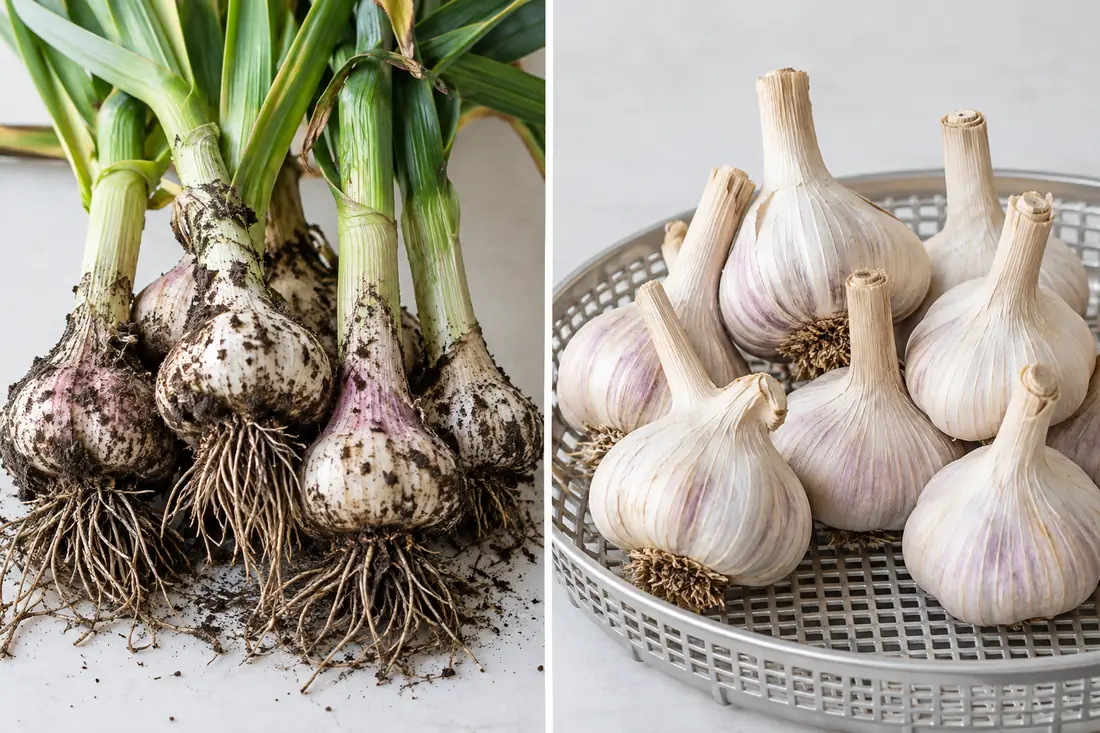
Curing changes wrapper and neck condition before long storage.
Storage age also matters to a processor even if whole-bulb appearance remains acceptable. Peeled yield can fall when cloves have dried or sprouted; broken or diseased pieces increase trimming labor and rejection. A sauce producer may tolerate cosmetic wrapper damage if the cloves inside meet the recipe's aroma and safety criteria. A retail bulb program may reject the same lot because shelf appearance is central to its sale. Define the acceptance criteria around the intended use and the actual preparation step, not only the crop year.
A buyer should compare lots across the season with a retained sensory and physical reference. If the tender of the year begins with a new-crop sample but later deliveries will come from stored bulbs, ask for samples from the expected storage period as well. Record actual peeled yield, visible defects, aroma after cutting, and performance in the final recipe. This test reveals whether a supply plan can maintain usable output as storage time grows. It also gives the supplier a clear basis for selecting stock or proposing a processed format.
Why garlic is sold beyond harvest
The long retail and wholesale selling period is possible because well-cured whole bulbs can be stored and because different origins harvest at different times. A buyer in one country may see local new garlic for a short period, then cured local garlic, then imported garlic from another origin. Some commercial storage systems extend supply from a particular harvest into the following year. A research paper on postharvest garlic storage documents how curing and temperature management can support year-round bulb supply in the system studied. It does not imply that every supply chain has the same storage life or quality outcome.
Processing adds another bridge. Garlic can be peeled and frozen, dried into flakes or powder, or prepared in other controlled forms while suitable raw material is available. Once processed and packed under the appropriate controls, the product has its own stock and handling calendar. This is useful when a kitchen or factory consumes garlic steadily, but the expected form must be precise. A frozen peeled clove is not a dry whole bulb. A powder is not a fresh clove. Each form changes texture, dosing, packaging, storage, and how flavor develops in a dish.
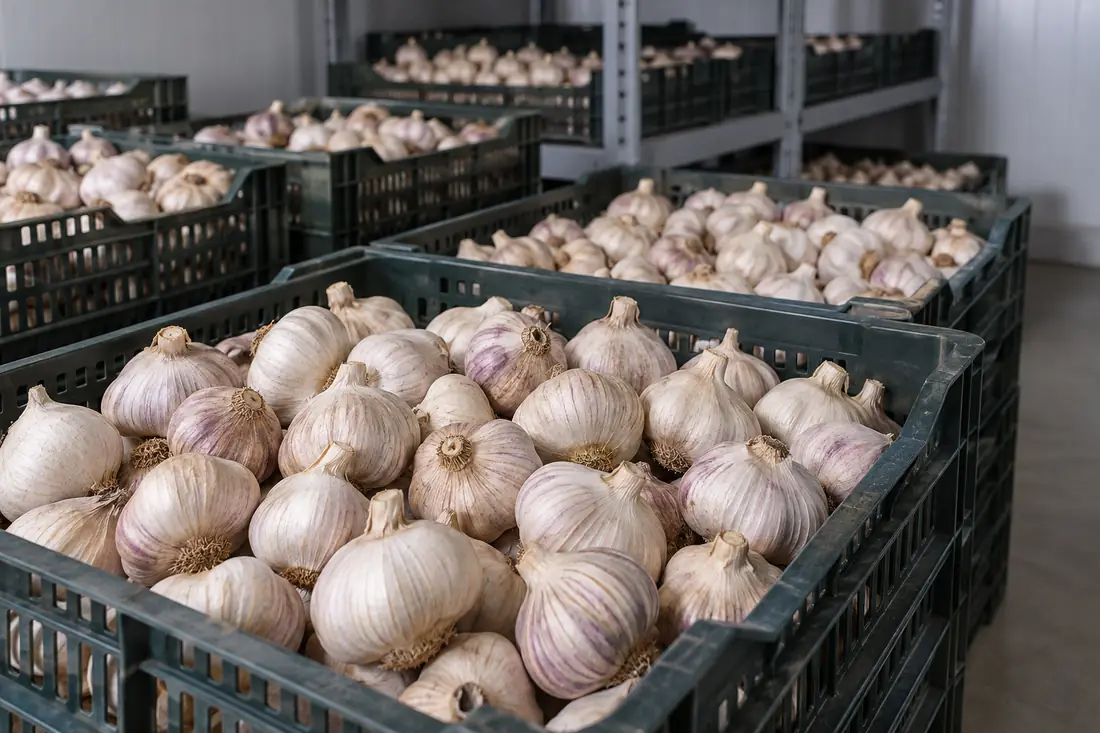
Stored cured bulbs extend availability beyond field harvest.
Year-round availability is a supply capability, not a promise of unchanged flavor or unlimited immediate quantity. Even with storage, an adverse crop year can affect bulb size, defect rate, price, and volume. A processor with a fixed-size garlic dice or a private-label pack may need to reserve raw material and production slots. A supplier may bridge the season with planned inventory, but the buyer should ask which crop, lot, and form will cover each delivery period. A long-term agreement should allow an agreed substitute only after sample approval and documentation review.
The practical alternative to a single-origin program may be a qualified second origin or a second approved garlic form. Such options require advance work. Bulb varieties can differ in clove size, wrapper adherence, storage behavior, and sensory profile. Frozen diced garlic from another raw-material pool may look similar but release aroma differently under the buyer's heating conditions. Trial the proposed option before the original stock becomes scarce, record what can change within the approved grade, and identify the person authorized to release it. The goal is continuity without hiding crop variation from the customer or the factory receiving team.
The purchasing team should distinguish several dates in a quotation: estimated harvest, curing completion, processing or freezing, packing, planned loading, and arrival. An early harvest claim does not shortcut drying or inspection. Likewise, a later delivery can be commercially sound if the lot is stored and documented appropriately. The useful question is how the supplier maintains the specification from the current crop through the next one.
Where frozen garlic fits a twelve-month plan
Frozen garlic offers a prepared ingredient path when a foodservice or manufacturing program needs garlic through the year. The GreenLand-food frozen garlic range includes peeled cloves and cut or pureed formats for discussion with buyers. Processing suitable garlic during a planned window and holding finished packs under a stable frozen chain can reduce daily peeling work and make portioning more predictable. It does not remove the need to manage crop quality, capacity, inventory, or lot-by-lot acceptance.
| Product state | What the date means | Main receiving check |
|---|---|---|
| Newly harvested bulb | Field maturity and the start of the current crop | Bulb soundness and intended fresh or curing use |
| Cured, stored bulb | Postharvest handling and time in storage | Wrapper condition, sprouting, defects, and peeled yield |
| Frozen prepared garlic | Processing date, freezer stock, and cold-chain history | Pack integrity, frozen condition, lot identity, and recipe performance |

Frozen peeled cloves support a planned ingredient supply.
A frozen program should begin with the application. Whole peeled cloves give kitchens flexibility to slice or crush at use. Diced and minced forms can feed sauces, soups, ready meals, and other lines that need measured additions. A puree may suit a blended product where discrete pieces are unwanted. Confirm cut size, portion weight, free-flow or block format, acceptable frost or clumping, pack size, and the point at which garlic enters the cooking process. The ingredient should work with the dosing equipment, not merely fit a catalog description.
The cold chain is central. GreenLand-food's frozen whole garlic page describes storage and transport at about -18°C or below and cautions against repeated thawing and refreezing. At receipt, check frozen hardness, carton condition, lot identification, excess frost, free flow where promised, and evidence of partial thaw. A stable freezer can protect an acceptable pack, but it cannot reverse thaw history or poor initial raw material. Confirm loading and arrival checks in the contract for a long supply program.
The frozen product photograph here is from GreenLand's actual garlic product page. It shows a real commercial form, while specifications and lot documents are still required for an order. Frozen garlic may feel softer after cooking than a freshly cut clove, which is often acceptable in soups and sauces. For an application where intact raw crunch is essential, trial the frozen product before committing. A calendar advantage is valuable only when the final recipe accepts the form.
Choosing whole, diced, minced or puree
Whole frozen peeled cloves retain a recognizable clove shape and allow further processing at the destination. They suit a buyer whose recipes vary or who wants to control cutting in house. The tradeoff is labor and equipment time for any later size reduction. If the line cannot pause for chopping, buying a cut form may be more efficient. Specify a workable clove size range, acceptable broken pieces, trim, color, and whether the pack must remain free flowing. A photograph cannot establish every tolerance, but it can start a sample discussion.
Diced and minced garlic reduce preparation labor and can help maintain consistent addition size in a recurring recipe. Particle size affects aroma release and visible texture. A fine mince enters a sauce differently from a larger dice; very small pieces may distribute well but become less visible after cooking. State the intended application and request a sample in the finished food. The supplier may offer different cuts, but a named "diced" form without dimensions is too broad for a factory specification.

A real frozen clove form can be specified for commercial use.
Puree and portioned blocks suit a blended formulation or a kitchen that needs measured additions. Ask whether the product is plain garlic, how it is portioned, and how a block is expected to thaw or enter the process. A large block can be efficient for a kettle that consumes the full quantity; it creates waste for a restaurant that only needs a small dose. Confirm the inner and outer pack sizes, labeling, pallet configuration, and the temperature at which the unit can be safely handled within the buyer's process.
The season affects each form's raw-material plan. A supplier may process several forms from a crop, but the conversion yield and preparation steps differ. If a program changes from whole cloves to mince during the year, treat it as a product change rather than an administrative substitution. Approve sensory performance, cut distribution, packaging, and documents again. GreenLand-food can discuss form and packing against the recipe and destination; the buyer's test remains the basis of approval.
How buyers plan supply and check lots
Start the annual plan with usage by month and the form actually needed. Mark peak demand, trial quantities, production lead time, transit time, and the point at which a new crop or processed inventory may replace older stock. Separate a fresh-bulb purchase from a frozen-ingredient purchase in the forecast. Both derive from garlic crops, but they have different storage, transport, and handling costs. For imports, allow time for the product specification, samples, document review, packing approval, inspection, loading, and customs clearance.
Ask the supplier what the quoted availability means. Is the offer based on newly harvested bulbs, cured stock, stock already frozen, or a future production slot? Confirm raw-material origin and crop year where material, production lot, packing date, frozen storage condition, shelf-life term, minimum order, and lead time. If the market requires a particular certificate or residue test, name it before pricing. A statement such as "available all year" is useful only when supported by a delivery schedule and a method for maintaining the agreed grade.

Compare product states and lots before approving a supply calendar.
At sample stage, compare quality after the ingredient follows the real process. For whole bulbs, assess wrapper integrity, defects, sprouting, peeled yield, and clove aroma. For frozen cloves or cuts, check packaging, frozen condition, cut size, discoloration, clumps, and behavior after cooking. For puree, test portion release and distribution. Record a reference sample and acceptance notes that the receiving team can use. An annual contract based solely on a harvest-time sample can miss changes that emerge after long storage.
When lots arrive, sample across cartons and document the result against the agreed specification. Track crop or processing transitions so the production team knows when an approved material changes. If a lot performs differently, retain samples and discuss the actual deviation: weaker aroma, higher peel waste, more frost, cut-size drift, or damaged packing. Do not infer a defect simply because the delivery falls outside the local fresh season. The purchasing decision should rest on the product state and evidence at receipt.
A rolling forecast helps both sides. Share expected monthly volume, then revise it at agreed intervals as promotions, menus, or factory output change. If a frozen program grows, ask about freezer inventory and processing capacity early enough to reserve suitable raw material and packaging. If demand falls, avoid allowing a sample-approved pack to sit past the practical quality window simply because the contract called for annual availability. The best calendar is one that joins crop information with stock turnover, lot rotation, and actual consumption. It gives purchasing a way to act before a seasonal change becomes a line interruption.
Garlic may be harvested for a short period and still be sourced for much of the year. Curing, storage, multiple origins, and processed stock create that longer availability. Frozen garlic is one practical option for a continuous commercial program when its form suits the recipe and the cold chain is controlled. We help buyers confirm form, specification, packing, volume, destination, and document needs against the delivery months they must cover, so the word "season" becomes a workable supply plan rather than an uncertain date on a calendar.
Plan Frozen Garlic Supply with GreenLand-food
GreenLand-food is a professional frozen garlic supplier and manufacturer in China, supporting factory-direct wholesale supply for importers, food manufacturers, foodservice distributors and private-label programs.
Tell us the garlic form, specification, packing, quantity, application, destination, private-label needs and requested documents so we can discuss the right product and delivery plan.