


Is Garlic Powder Made from Garlic Skins?
Sep 24, 2026
Leave a message

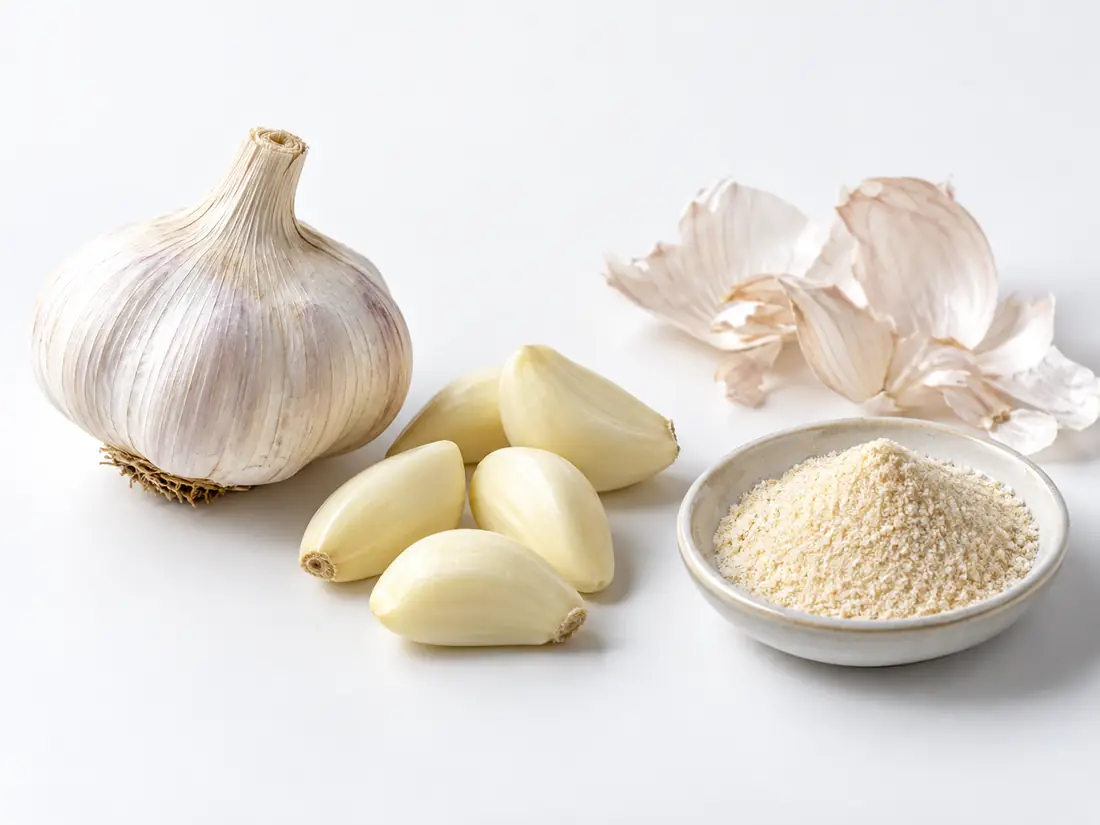
What garlic powder is made from
A garlic bulb is a cluster of cloves enclosed by dry protective layers. Each clove contains the moist, aromatic flesh that processors intend to dry and grind. The broad outer wrapper holds the bulb together during storage; it is lightweight, fibrous, and relatively poor as a source of the desired garlic flavor. The thinner covering around each individual clove is also called skin, which is why two people can appear to disagree about whether a powder process "uses skins" while talking about different layers.
Standard descriptions of garlic powder start with garlic bulbs or cloves, then describe separation, preparation, drying, and milling. The NIFTEM garlic processing manual, prepared under an Indian food-processing program, identifies dried garlic cloves as the basis of the powder. A commercial processing overview explicitly lists clove separation and peeling before washing, slicing, drying, and grinding. These are descriptions of garlic flesh as the main raw material, even though the extent of fine-skin removal can differ between production methods.

Garlic clove flesh supplies the substance of ordinary powder.
The ratio between a fresh bulb and the final powder depends on starting moisture, trimming, drying endpoint, and recovery through milling and sieving. Buyers should avoid a universal conversion ratio in formulation work. A dry powder disperses differently from minced or frozen cloves, and its perceived intensity changes with particle size, heat, hydration, and recipe fat. The same nominal garlic percentage can therefore produce different flavor at the end of cooking.
For a single-ingredient powder, confirm that the declared ingredient is garlic and ask whether any processing aid or anticaking agent is used. "Garlic powder" and a garlic seasoning blend are different purchase descriptions. A blend can legitimately include salt, starch, or other spices when declared, but the additional ingredients change dosing and labeling. When the intended claim is 100% garlic, put that requirement into the specification and check the ingredient declaration on both sample and order documents.
What happens to the skins during processing
The first separation usually breaks the bulb into cloves. Dry outer wrappers and roots can then be screened, blown away, or removed during cleaning and sorting. A peeling step may strip the covering from each clove before slicing. In other methods, the processor may remove the broad bulb wrapper yet leave a fine individual clove skin through part of the drying operation. The NIFTEM manual describes just such a distinction: outer skin is removed, while individual clove skin may remain in the particular method it outlines. That technical detail prevents a blanket claim that every garlic powder contains absolutely no skin.
This does not make skins the intended bulk ingredient. A few fine coverings traveling with garlic pieces are materially different from collecting the papery waste and milling it as powder. Whole wrappers can create visible fiber, altered color, weak garlic intensity, and poor mouthfeel. The practical concern is the share, size, and nature of material that remains in the final lot. One producer may achieve a cleaner powder by peeling before drying; another may rely on sorting and sieving later. The finished grade must meet the buyer's agreed limits regardless of the route.

Outer wrappers and individual clove skins are distinct layers.
Visual inspection alone has limits. Cream to pale yellow is a common appearance, yet cultivar, drying conditions, and age also affect color. A darker speck may be peel, browned garlic, soil, or another foreign particle. A light powder can still fall short on aroma or microbiological requirements. For an order where peel content matters, state an acceptance method: for example, a defined sample mass spread on a contrasting tray and examined under consistent light, coupled with a clear foreign-matter criterion. The parties should agree what counts as harmless garlic tissue and what is a rejectable fragment before the first commercial shipment.
The same discipline applies to purchased frozen garlic. We prepare and inspect peeled clove forms against agreed appearance and trim requirements, but any claim about a particular lot should come from its specification and sample. The frozen garlic product range shows the available form discussion; it should not be read as proof of a dehydrated-powder specification.
How cloves become powder
Commercial production follows a sequence, although the equipment and validated drying endpoint vary by plant and grade:
- Sort the bulbs and cloves, removing loose wrappers, roots, damaged material, and other rejects under the agreed raw-material specification.
- Clean and prepare the garlic flesh, then cut it into pieces that can dry reasonably evenly.
- Dry the pieces to the plant's validated endpoint and protect them from moisture before milling.
- Mill, sieve, and pack the dry garlic to the agreed particle-size and quality specification.
Thin slices expose far more surface area than a whole clove. The dried pieces may also be sold as flakes or granules. A buyer should request the finished-product measures that matter rather than assume every line uses one temperature profile or recipe.
Cut uniformity matters before the dryer. Thick pieces can remain wetter while thin edges brown, producing uneven aroma and storage behavior. A processor that dries too slowly or packs before the product is ready can create a caking and microbial-risk problem; excessive heat may darken the product and shift its taste. Powder also draws moisture from humid air after grinding. Its packaging has to protect the dry state during storage, transit, and repeated opening at the receiving plant. The research on garlic-powder packaging and shelf life supports treating packaging and storage temperature as part of quality preservation, not as an afterthought.

Slicing and drying prepare clove flesh for milling.
Milling establishes a second set of decisions. Fine powder can distribute uniformly in a spice mix, while coarse granules may be useful where visible particles or a slower flavor release are wanted. A mesh number alone is not a complete performance promise. The buyer should trial the actual grade in the intended medium: a dry snack dust, oil marinade, aqueous sauce, dough, or reconstituted soup will wet and disperse the particles differently. Check clumps before and after storage, not only on the day a fresh sample arrives.
The process sequence also explains why garlic powder is a dry ingredient and frozen garlic is a moist one. Freezing a peeled clove retains much of its original water, even though ice formation will change its texture after thawing. Dehydration removes water deliberately, creating a concentrated dry material for different dosing and packaging. Neither process turns papery bulb wrappers into the core garlic material. The choice begins with how the final food is made and sold.
An incoming processor audit can follow the material across these transitions without demanding proprietary equipment settings. Ask to see how whole bulbs are sorted, where rejected wrappers and roots leave the line, and how garlic pieces are protected between slicing and drying. The records should connect raw lots with finished powder and identify any rework policy. If a supplier offers several powder grades, compare how the grades are screened and packed. A fine sieve can remove coarse material while leaving a different particle distribution; it is therefore useful to sample the actual sale grade rather than an unsieved demonstration lot. This process view is especially relevant when the skin question arose from visible fibers in a previous delivery.
Can skins be present in a finished lot?
Small remnants of individual clove covering are possible in some documented processes. Their presence does not establish that a manufacturer intentionally used discarded outer wrappers as raw material. Conversely, a supplier saying "made from garlic" does not by itself prove that every visible fragment was removed. The distinction is especially relevant when the powder is used in a pale sauce, smooth dip, infant or medical food formulation, or a fine seasoning where even a few dark fibers are noticeable. In those cases, the buyer should define the visual grade and a repeatable method of checking it.
Begin with a representative sample drawn from more than the top of a single bag. Spread an agreed quantity on a clean white or contrasting tray and compare it with a retained approved sample. Note fibrous pieces, hard fragments, color variation, and caking. If the powder will be hydrated, inspect it after hydration too: thin peel may become visible as a strand or feel different in the mouth. A sieve or magnifier can assist an investigation, but laboratory results and a documented defect definition are needed for formal acceptance. Do not treat the generated inspection illustration on this page as an actual lot result.

Illustration of a sample check for visible fragments; not a commercial lot.
Foreign matter control extends beyond garlic skin. Soil, root material, packaging fibers, and equipment fragments each raise a different question. A specification can set limits for extraneous vegetable matter and require metal detection or other controls appropriate to the line. Buyers may also request moisture, particle-size distribution, color, sensory profile, microbiological limits, pesticide-residue compliance, and a lot-specific certificate of analysis. Which measures are necessary depends on the destination market, product risk, and whether the powder enters a food that will receive another validated kill step.
When a lot fails a visual or sensory check, keep it identified and obtain a supplier response before blending it into production. A photographic complaint is useful as initial evidence, but retain material for joint examination. Ask for the material's identity, likely entry point, affected production lots, and corrective action. This is more useful than asserting from a picture that all dark flecks are skins, or that all skins are unsafe. The commercial issue is whether the agreed ingredient grade was delivered.
Garlic powder versus frozen garlic
Garlic powder is suited to dry seasoning systems and products where a small, evenly dispersed particle is useful. It can be added to snack coatings, spice blends, bakery fillings, instant mixes, and sauces when the recipe is designed for its hydration and flavor release. Frozen peeled cloves, diced garlic, minced garlic, and puree serve a different operational need: they give a cook or processor prepared garlic with moisture and a recognizable fresh-garlic form. GreenLand-food's frozen whole garlic page describes peeled clove preparation and commercial forms.
| Ingredient form | What enters the recipe | Practical fit | Trial question |
|---|---|---|---|
| Garlic powder | Dry, milled garlic solids | Dry blends, coatings, and formulas designed for rehydration | Does the chosen grade disperse and release flavor at the actual addition point? |
| Frozen peeled or cut garlic | Prepared garlic with its moisture and a defined clove or cut form | Cooked sauces, ready meals, and kitchens avoiding daily peeling | Does the cut, thaw behavior, and cooked aroma suit the line and finished food? |

GreenLand frozen peeled garlic retains a moist clove form.
The difference becomes obvious in a dry mix. A frozen clove would add water and require chopping or further cooking, while powder can be measured and distributed among other dry ingredients. In a sauce kettle, frozen minced garlic can contribute body and cooking aroma without daily peeling. Powder may disperse faster and remove a preparation step, but the flavor profile and finished texture can differ. Test both in the full recipe at the actual cook time and addition point. A short raw taste test can mislead because heat changes garlic's sulfur compounds and because dry particles need time and water to hydrate.
Frozen garlic also requires freezer space, intact packaging, and a continuous cold chain. GreenLand-food discusses frozen storage at about -18°C or below and avoiding repeated thawing and refreezing on its product pages. Powder instead depends on a dry barrier pack and humidity control. Cost comparisons should therefore include usable yield, labor, waste, shipping format, storage, dosing accuracy, and recipe response. Comparing only the unit price per kilogram obscures the very different water contents and handling steps.
A buyer who requires visible clove pieces in a ready meal may use whole or diced frozen garlic. A buyer making a uniform dry rub may choose powder. Some formulas use both: powder for even background seasoning and a prepared clove form for identifiable garlic character. That is a formulation decision, and the two should be specified and sampled separately. The real product photograph here shows a frozen garlic form; it is not evidence about any powder supplier's peel removal.
What a buyer should specify and test
For garlic powder, begin the RFQ with the intended use and the expected ingredient declaration. State whether the product must be pure garlic or whether an anticaking agent is permitted. Describe the desired particle size or distribution, appearance, aroma, moisture or water-activity requirement where appropriate, foreign-matter tolerance, microbiological limits, residue requirements, packaging barrier, shelf life, and destination-market documents. Ask how the supplier samples and releases a lot. The requested values should be justified by the application and regulatory context rather than copied from a generic web table.
Clarify skin handling in ordinary language. "Outer papery bulb wrapper removed" and "individual clove skin removed before drying" are distinct requirements. If a no-visible-peel grade is necessary, define what "visible" means under an agreed sample size and inspection method. An absolute "zero" without a measurement method invites disagreement after arrival. Retain an approved pre-shipment sample and make sure production, purchasing, and the supplier compare the same grade. For a powder used in a light-colored finished food, include a hydrated appearance test.

A real garlic product sample still needs a written receiving specification.
For frozen garlic, the request is different. Confirm whole peeled clove, dice, slice, mince, crushed form, or puree; specify piece size or portion weight, acceptable color, trim, free-flow condition or block form, packing size, and intended cooking application. On arrival, inspect carton integrity, frozen condition, excessive frost, fused clumps, odor, and lot identification. A visual product photo helps a buyer discuss the form, but the commercial acceptance criteria belong in the signed specification and sample approval. Our frozen garlic sourcing page can be used to start that discussion.
Both dry and frozen forms need traceability. Request origin, production date or lot code, applicable certificates, and the documents required by the importing market. Confirm the sampling point, retained-sample policy, complaint procedure, and who approves a substitution if the specified cut or grade cannot be supplied. When a recipe is sensitive to garlic intensity, test at least one production-scale batch before locking the annual purchase. The value of the specification is that it connects a sample to a repeatable receiving decision.
For repeat orders, agree how a lot is represented. A single spoon from one bag cannot describe a container of powder, and one attractive bag of frozen cloves cannot represent every pallet. Define sampling locations, composite or individual samples, and the disposition of an out-of-specification result. Keep photographs of approved appearance, but pair them with written limits. If a critical attribute changes after arrival, preserve the sealed unit, transport record, and temperature or humidity history as relevant. A joint review can then distinguish production variability from storage damage. This matters particularly for powder because caking may develop after moisture exposure, and for frozen garlic because clumping may reflect a temperature event.
Choosing the form for the application
For a powdered sauce base, a seasoning blend, or a snack coating, powder usually offers the easiest path to even dry dosing. Its limitations are moisture pickup after opening and a sensory profile that may shift with drying and storage. Packaging and the point of addition should be decided with the plant team. A heavily humid production room can turn a free-flowing powder into a dosing problem even when the supplier packed a sound lot. Small working containers and controlled replenishment can protect the approved grade once it is opened.
For a hot sauce, soup, marinade, or ready meal, frozen garlic may suit the workflow better when the recipe calls for a prepared moist ingredient. Whole peeled cloves allow further cutting; diced or minced forms reduce line labor; puree supports uniform blending. Choose a piece size the equipment can meter and a pack size the line can use without thawing more than necessary. The frozen form's texture after cooking matters more than whether it resembles raw garlic at room temperature. If the final food needs crisp raw garlic texture, neither a dried powder nor a thawed frozen clove may meet that aim without reformulation.

Dry powder and moist cloves suit different preparation steps.
Run a fair side-by-side trial. Match the garlic contribution to the recipe's flavor target, adjust added water if changing from frozen to powder, and use the same heating profile and holding time. Observe aroma when added, flavor after cooking, visible particles, viscosity, color, and how the product tastes after its normal shelf-life simulation. Track yield and labor as well as ingredient cost. The correct conversion comes from that trial, because cultivar, drying process, particle size, and frozen cut all influence the result.
The skins question then becomes a manageable quality point within a larger ingredient decision. A well-defined garlic powder should derive its useful material from cloves, with wrapper and peel treatment described by its process and grade. A frozen garlic specification should describe the peeled, cut, or pureed form delivered to the line. We help purchasing teams compare samples and confirm the frozen form, pack, quantity, destination, and documents that fit their production plan. For broader preservation choices, the existing How to Preserve Garlic guide covers fresh, frozen, and dehydrated routes in more detail.
If the finished food is sold through multiple markets, give the formulation and purchasing teams a shared ingredient dossier. It can contain the approved supplier, exact form, ingredient declaration, sample code, current specification, shelf-life term, pack dimensions, and evidence required by each destination. A change from powder to frozen cloves alters water addition, processing time, texture, labeling, and logistics; a change between powder grades may alter particle behavior and visible specks. Reapproval prevents a sourcing substitution from quietly changing the recipe. This is the most reliable way to turn a seemingly small question about garlic skin into a clear, repeatable ingredient decision.
Plan Frozen Garlic Supply with GreenLand-food
GreenLand-food is a professional frozen garlic supplier and manufacturer in China, supporting factory-direct wholesale supply for importers, food manufacturers, foodservice distributors and private-label programs.
Tell us the garlic form, specification, packing, quantity, application, destination, private-label needs and requested documents so we can discuss the right product and delivery plan.