


When and How to Harvest Garlic for Best Quality
Sep 01, 2026
Leave a message
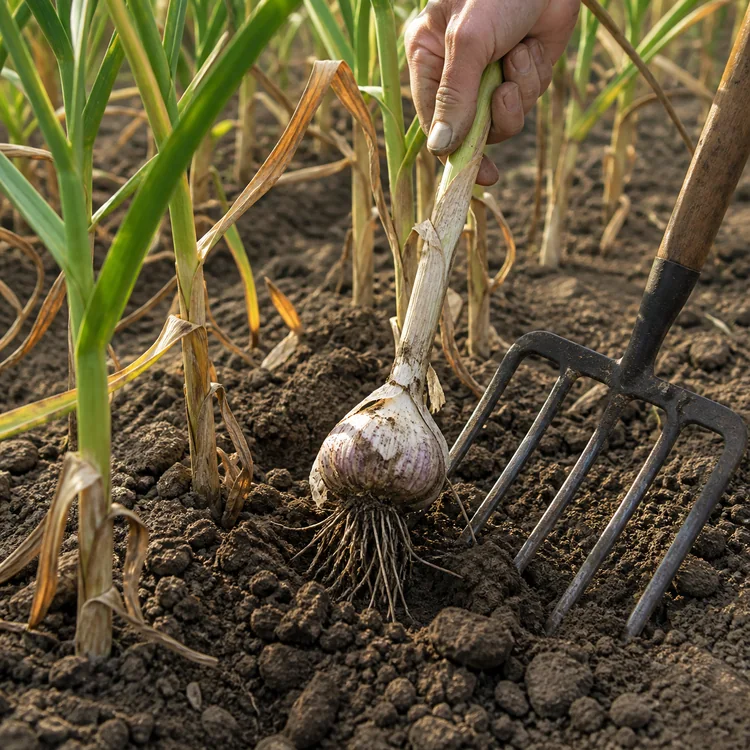
Use leaves to trigger inspection, then open test bulbs
Do not harvest by date alone. Cultivar, planting date, winter conditions, spring heat, irrigation, soil, and plant health all shift maturity. When lower leaves dry while a useful number of upper leaves remain green, dig representative bulbs from several parts of the field. A ready bulb should have the expected size, distinct filled cloves, and wrappers that still hold the bulb together.
Lift during a dry window when the soil can release without smearing or tearing skins. Loosen beneath and beside the bulb, handle it by the plant without yanking, and keep it out of direct sun. Early, on-time, and late harvests can produce different bulb fill, wrapper integrity, storage behavior, peeling yield, and suitability for frozen processing.
Key takeaways
Four maturity signals are better than one harvest date
A calendar can tell you when to scout, not when every field is ready. The reliable decision comes from combining plant appearance with bulb inspection. Research and extension guidance consistently emphasizes leaf senescence and test digging, although the exact number of green or dry leaves varies with garlic type, region, and market. The University of Georgia guidance, for example, notes harvesting with several wrapper leaves still present. Use local experience and the buyer's end use to set the field rule.
| Signal | What to look for | What it tells you | Caution |
|---|---|---|---|
| Leaf pattern | Lower leaves brown; several upper leaves remain green | Bulb fill is advancing while wrapper potential remains | Disease, drought, or heat can brown leaves early |
| Bulb shape and size | Bulb has reached the cultivar and market target | Saleable size and fill may be adequate | Large external diameter alone does not prove clove fill |
| Clove definition | Distinct, filled cloves under the wrappers | Bulb structure is commercially developed | Split wrappers may mean the crop is already late |
| Wrapper integrity | Several sound layers still cover and hold the bulb | There is protection for handling and curing | Very wet soil can stain or damage skins even at good maturity |
How to sample a field before committing the crew
Pulling one plant at the headland is not a maturity survey. Select bulbs from early and late areas, lighter and heavier soil, irrigated edges, and representative interior rows. Loosen and lift them as carefully as the commercial crop. Brush away enough soil to examine the skins, then cut or peel a small subset to judge clove development. Record leaf stage, bulb diameter, wrapper condition, clove fill, disease, mechanical damage, and the location of each sample.
If the field is uneven, the best decision may be staged harvest rather than waiting until every plant looks the same. Waiting can increase size in late plants while sacrificing wrapper integrity in early ones. For a processing program, discuss the acceptable blend and defect limits before harvest. If the raw material is intended for long fresh storage, wrapper protection may carry more weight than the last increment of bulb size.
Sample again after a short delay if maturity is borderline. The interval should follow local crop speed and weather, not a fixed internet rule. Hot, dry conditions can move the crop quickly; rain can delay entry and increase soil adhesion. Keep field notes so next season's decision begins with evidence rather than recollection.
Hardneck, softneck and climate change the visual clock
Hardneck and softneck garlic do not mature on one shared schedule. Cultivars differ in planting adaptation, leaf number, bulb form, wrapper behavior, dormancy, and storage potential. Hardneck types produce a scape and often have fewer, larger cloves around a central stalk. Softneck types usually have more cloves in layers and are widely used for longer storage and braiding, though performance depends on cultivar and conditions.
Removing hardneck scapes can redirect growth and makes scape timing another crop record, but it does not replace bulb inspection. In warm regions the crop may mature earlier; in cool conditions it may remain green longer. Spring moisture, heat, nitrogen, irrigation cutoff, plant density, and disease pressure also influence leaf appearance and bulb development.
The operational rule is simple: build a local maturity standard for each cultivar and intended market. Keep photographs and measurements from accepted lots. When a buyer changes from fresh bulbs to peeled or frozen garlic, review the standard instead of assuming the old harvest window is automatically ideal.

Harvest decisions continue downstream: sound, mature bulbs support more consistent peeling, sorting and freezing.
How to harvest garlic: an eight-step field process
- Confirm the destination. Know whether the lot is for fresh sale, long storage, seed, peeling, immediate processing, or frozen production. This determines which defects and wrapper conditions matter most.
- Scout the leaf pattern. Map early and late zones. Begin test digging when lower leaves have dried while several upper leaves are still green and functional.
- Dig representative test bulbs. Sample across the field and inspect size, clove definition, wrappers, basal plate, roots, disease, and soil condition. Do not rely on one convenient plant.
- Choose a suitable weather and soil window. Aim for soil dry enough to release cleanly without hard clods, smearing, or heavy adhesion. Stop if wet handling is causing skin injury.
- Loosen below the bulb. Insert a fork, spade, blade, or mechanical undercutter far enough away to avoid slicing bulbs and deep enough to release the root zone. Set equipment depth with test passes.
- Lift gently. Support the plant after loosening. Do not yank unloosened bulbs by the tops, strike them against tools, or throw them into hard containers. Garlic that looks firm can still bruise.
- Protect and sort promptly. Keep bulbs shaded and ventilated. Separate cut, crushed, diseased, sunburned, split, water-soaked, or otherwise unsuitable bulbs so they do not compromise the sound lot.
- Move to the next controlled step. Cure storage bulbs under suitable airflow, temperature, and humidity; route short-term processing bulbs according to the processor's hygiene, intake, and timing plan.
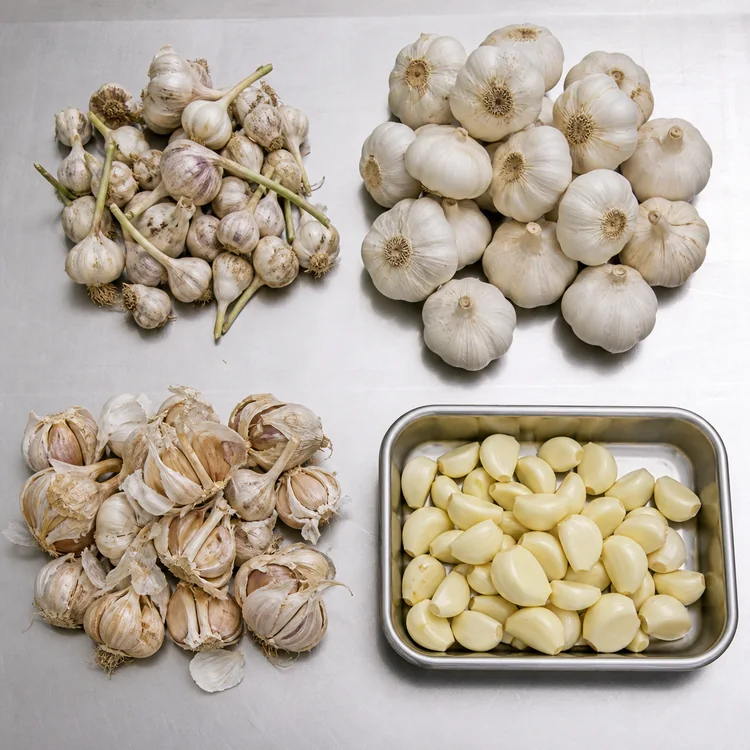
What early, on-time and late harvest look like
Too early: bulbs may be undersized, cloves may be poorly filled or weakly defined, necks remain succulent, and the harvested weight may include water that does not translate into stable saleable product. The crop can sometimes be sold as green or fresh garlic, but it may not fit a dry-bulb storage program.
Commercially mature: bulbs have reached the intended size, cloves are distinct and filled, and several sound wrapper layers remain. This is the preferred balance for many dry-bulb uses, subject to cultivar and market standards.
Too late: wrappers deteriorate and bulbs may split open, exposing cloves to soil, moisture loss, impact, and microorganisms. Roots may resume growth under some conditions. Large size cannot compensate for poor protection if the lot must cure, store, travel, or enter a controlled peeling line.
Wet soil, cuts and bruises are quality events
Mechanical damage is not merely cosmetic. Cuts can expose cloves; bruising and crushed tissue can become visible later; torn wrappers reduce protection; and dirty wet bulbs are harder to dry uniformly. The UC Davis postharvest guidance highlights careful handling and the effect of storage conditions on garlic quality.
Set field rules before pressure builds: define the safe digging offset, equipment depth, container fill height, maximum time in direct sun, lot identification, and rejection or diversion criteria. Train crews to place rather than throw bulbs. If rain interrupts harvest, re-check soil release and wrapper condition instead of resuming automatically.
Cure to an endpoint, not only for a number of days
Curing dries the outer skins, neck, roots, and surface moisture so bulbs are better prepared for handling and storage. Extension recommendations commonly describe a period measured in weeks, but the actual time changes with bulb size, humidity, temperature, airflow, arrangement, and whether tops are left attached. A thick layer in humid air will not reach the same endpoint as a ventilated single layer simply because both have spent the same number of days indoors.
Use a clean, shaded, dry, well-ventilated place and protect bulbs from rain, condensation, and direct sun. Avoid washing bulbs intended for dry storage unless a validated commercial system is designed for it. Cure is complete when outer skins are papery and dry, the neck is dry and firm rather than succulent, roots are dry, and there is no trapped surface moisture or active decay. Confirm the endpoint on a representative sample.
After curing, trim according to the market, clean without unnecessary skin removal, grade, and place only sound bulbs into storage. Our guide on how to preserve garlic covers household and commercial preservation routes; this article stays focused on the harvest decisions that make those routes possible.
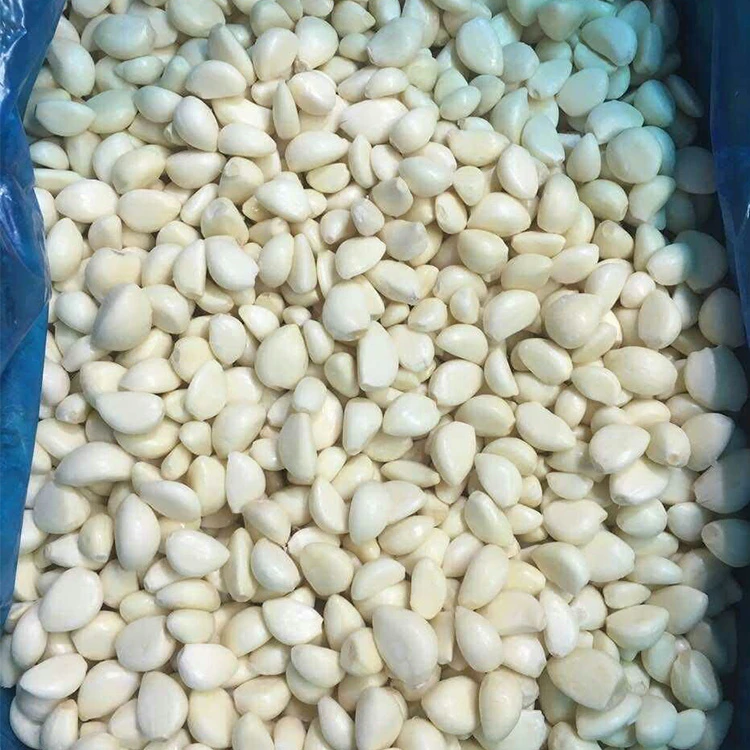
Route the harvest according to its destination
| Destination | Priority at harvest | Postharvest path | Main risk |
|---|---|---|---|
| Long fresh storage | Mature bulbs, intact wrappers, low damage | Complete cure, grade, controlled storage | Decay, sprouting, rooting, moisture loss |
| Short-term fresh sale | Appearance and intended fresh stage | Clean, cool, pack and market promptly | Heat, wilting, skin damage |
| Seed garlic | True-to-type, healthy, mature bulbs | Cure, segregate, store under seed protocol | Disease carryover and loss of identity |
| Peeling and frozen processing | Filled cloves, sound tissue, manageable skins | Controlled intake, peeling, inspection and timely processing | Low peeled yield, damaged cloves, variable size, microbial load |
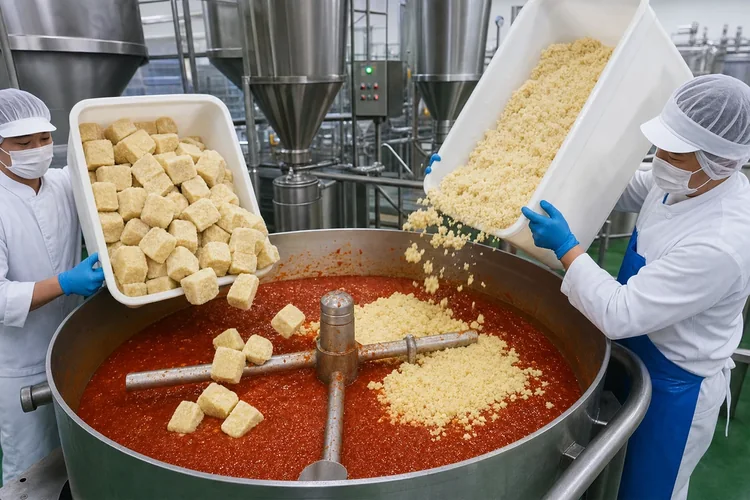
Maturity affects peeling yield and frozen quality
A frozen garlic processor buys usable cloves, not only gross bulb weight. Immature bulbs can contain smaller or less distinctly formed cloves and succulent neck tissue. Overmature or split bulbs have less natural protection and may carry more soil exposure, desiccation, mechanical injury, or rejection. Cuts and bruises incurred at harvest can travel into peeling as discolored, softened, or damaged cloves.
A simple raw-material yield study separates whole-bulb intake into sound peeled cloves, skins, roots and basal material, undersize cloves, damaged or diseased cloves, and other rejects. Divide usable peeled-clove weight by incoming bulb weight. Run the same method across fields and maturity stages before claiming that one harvest window is economically better.
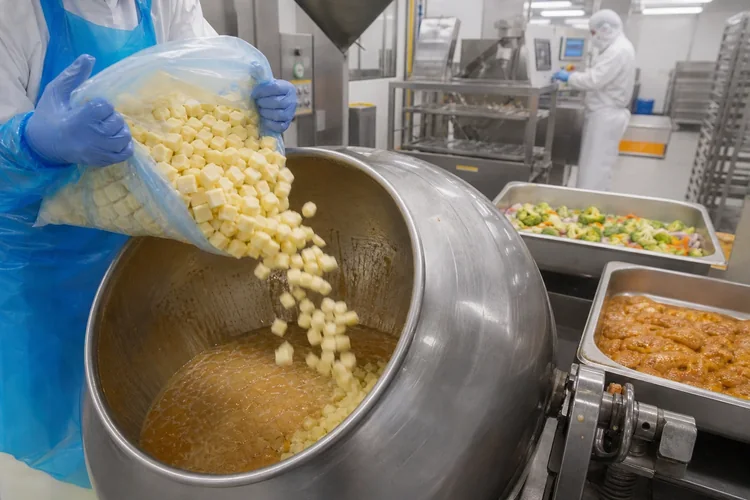
For IQF programs, peeled cloves may be used whole, sliced, diced, minced, or formed into portions. The IQF process from harvest to pack adds washing, inspection, cutting where required, rapid freezing, screening, packing, and cold-chain controls. Freezing does not repair poor maturity or field damage.
Choose the frozen garlic form after the application trial
Whole cloves preserve a recognizable form and let a processor cut later. Slices provide visible distribution. Diced or minced garlic disperses more quickly in sauces, soups, fillings, marinades, and prepared foods. Portioned cubes can simplify dosing where their formulation and unit weight fit the recipe.
For a closer explanation, see Where to Buy Frozen Garlic Cubes in Bulk.
The buyer should confirm garlic variety or flavor profile where material, piece size, color, clove defects, foreign material, free-flow condition, packing, microbiological and residue requirements, traceability, and frozen storage. Test aroma and flavor in the actual recipe after the full cook process rather than judging only a thawed raw sample.
For preparation details, see Can You Freeze Garlic Cloves?.
GreenLand-food supplies frozen vegetable programs in different forms; view the broader frozen vegetable range when a garlic project is part of a mixed ingredient or container plan.
Commercial harvest and intake checklist
- Cultivar, field or grower code, planting date, intended destination, and target grade.
- Leaf-stage record plus representative bulb size, clove definition, and wrapper observations.
- Weather, soil condition, irrigation status, disease pressure, and harvest date or shift.
- Limits and routing rules for cuts, bruises, split bulbs, decay, sunscald, soil, sprouts, and undersize.
- Time from lifting to shade, curing, cooling, or processing; container and transport conditions.
- Curing endpoint and storage controls when bulbs will not be processed immediately.
- Incoming-bulb yield study, peeled-clove acceptance, food-safety controls, traceability, and lot-release records.
From field record to frozen-garlic specification
If the harvest is part of an export or contracted processing program, connect the field lot to the finished lot. The record should show source, harvest window, intake result, storage or curing step, processing date, product form, pack date, and finished code. This makes a complaint or trend investigation more useful than a generic certificate detached from production history.
In the RFQ, state the garlic form, target piece size or unit weight, packing, order quantity, annual demand, destination, application, private-label needs, and requested documents. Also state any destination or customer limits for residues, microbiology, allergens, additives, treatment, origin claims, or certification. Requirements must be confirmed against the actual product, facility, and shipment.
For evaluation, ask for a representative product sample and the proposed specification. Measure free-flow condition, piece distribution, defects, net weight, color, aroma, flavor in the finished recipe, and usable yield. An approved sample is valuable only when it is paired with written tolerances and a repeatable receiving method.
Turn harvest observations into a commercial yield study
A harvest trial should connect field maturity to saleable output. Select clearly identified samples from the early edge, the main maturity window, and any deliberately delayed block. Keep cultivar, field, input history, sample size, and handling method comparable. Weigh the bulbs at intake, record wrapper and damage grades, and process them through the same cleaning and peeling method. If one sample receives gentler manual peeling while another goes through a production peeler, the yield comparison is not meaningful.
Separate the output into sound target cloves, sound undersize cloves, skins and roots, basal material, cut or bruised cloves, disease or decay rejects, sprouted cloves, and unpeeled or rework material. The exact categories should match the business decision. A whole-clove retail program may reject small but sound cloves that a minced-garlic line can use. Calculate both first-pass yield and final usable yield after rework so labor is not hidden inside a single favorable percentage.
Add time and quality measurements. Record kilograms peeled per labor hour or line hour, stoppages, rework time, wash-water or cleaning observations where relevant, clove-size distribution, color, odor, firmness, and finished-product performance. If the material is frozen, sample after freezing and again after the intended storage interval or shipment simulation. Evaluate it in the actual recipe because a visually sound clove may still deliver a different aroma or texture after processing.
Then convert yield into comparable raw-material cost. If one bulb lot costs USD 1.20 per incoming kilogram and produces 72% usable target cloves, its raw-material cost is USD 1.20 ÷ 0.72 = USD 1.67 per usable kilogram before peeling labor, energy, freezing, packing, and loss disposal. A USD 1.10 lot at 62% usable yield costs USD 1.77 per usable kilogram before those same additions. These figures are illustrative; use your measured results and complete cost model.
The study can reveal an economic maturity window rather than a visually preferred day. It may show that a slightly smaller, well-protected bulb peels more efficiently than a larger split bulb, or that a buyer's minced application can accept sound small cloves without a yield penalty. Keep enough replication to avoid turning natural field variation into a false rule.
Common harvest mistakes and the downstream consequence
| Mistake | Immediate effect | Possible commercial consequence |
|---|---|---|
| Harvesting by calendar only | Immature or overmature sections enter one lot | Uneven size, wrapper condition, peeling behavior and storage life |
| Waiting for every leaf to die | Wrappers may split or disappear | More exposed cloves, soil contact, dehydration and rejects |
| Digging too close or shallow | Bulbs are sliced or bruised | Lower grade, decay risk, trimming and yield loss |
| Leaving lifted bulbs in strong sun | Bulbs heat and may develop sun injury | Quality deterioration before curing or processing |
| Packing wet, damaged bulbs with sound bulbs | Moisture and defects are hidden in the lot | Uneven curing, decay spread, claims and traceability difficulty |
Frequently asked questions
How do I harvest garlic when it is ready?
Begin test digging when the lower leaves have browned while several upper leaves remain green. Ready test bulbs should have the desired size, distinct filled cloves, and several intact wrapper layers. Confirm multiple field locations because stress and soil differences can create uneven maturity.
Should all garlic leaves be brown before harvest?
Usually no for dry-bulb harvest. If all leaves are dead, protective wrapper layers may already have deteriorated and bulbs may begin to split. The exact leaf rule varies, so use leaf browning to trigger representative bulb inspection rather than as an absolute count.
Can I pull garlic out by the stem?
Loosen the soil first with a fork, spade, undercutter, or suitable lifting equipment. Pulling an anchored bulb can tear the stem, damage the basal area, bruise the bulb, or strip wrappers. Lift gently and avoid striking bulbs against tools or containers.
Should I wash garlic after harvesting?
For garlic intended for dry curing and storage, avoid adding water unless a validated commercial system controls washing and drying. Brush or clean according to the market after appropriate drying. Garlic routed immediately to processing should follow that facility's documented intake and hygiene procedure.
How long should garlic cure?
Many guides describe roughly two to several weeks, but airflow, temperature, humidity, bulb size, and arrangement can shorten or extend the process. Use the endpoint: papery dry skins, a dry firm neck and roots, no surface moisture, and no active decay.
Does harvest maturity matter if the garlic will be frozen?
Yes. Maturity and field handling affect clove fill, skin separation, peeled yield, defect level, tissue condition, and raw-material consistency. Freezing preserves suitable prepared material; it does not restore immature, bruised, diseased, or overmature cloves.
Source frozen garlic with GreenLand-food
GreenLand-food is a professional frozen garlic supplier and manufacturer in China, providing factory-direct wholesale supply for importers, food manufacturers, foodservice distributors, and private-label programs.
Send the product form, specification, packing, quantity, application, destination, private-label needs, and requested documents.