


Broccoli Dithiocarbamate Results: Could Natural CS2 Be Involved?
Oct 09, 2026
Leave a message


Natural background cannot be assumed for every detection, subtracted using a literature average or used to bypass a current limit. At GreenLand-food, we recommend bringing the laboratory and the destination-market regulatory reviewer into the decision before assigning a source or approving the lot. Their questions are connected but distinct: what was measured, which explanations are supported by evidence, and how the applicable requirement treats that result. The published analytical observations below help frame those questions; they do not establish the cause of a result in our broccoli supply.
CS2 is the measured common moiety
A common-moiety method intentionally collects a shared analytical response from more than one precursor. In dithiocarbamate analysis, a cleavage procedure releases carbon disulfide, which can be measured by a suitable instrumental method. The result may be reported as dithiocarbamates expressed as CS2. That reporting language is essential. It describes a grouped response rather than the direct identification of a named fungicide remaining in the vegetable. A buyer should preserve it when transferring the result into an approval sheet. Shortening the entry to pesticide positive can remove the analytical distinction the laboratory intended to communicate.
The EURL-SRM analytical observations report, version 3.1, describes reductive cleavage, partitioning of CS2 and instrumental measurement. Its discussion also identifies possible natural precursors and laboratory background sources. The method therefore has a defined quantity and known interpretation limits. Reading those limits does not make the result meaningless. It makes the followup more precise: the laboratory measured a CS2 response, and the source of that response may require additional evidence. A buyer can take the number seriously while refusing to attribute it beyond what the procedure establishes.
An instrument's selectivity for carbon disulfide does not supply selectivity for its original source. GC-MS/MS can help identify and quantify the compound reaching the detector, but the sample preparation may already have converted different precursors into the same compound. More detailed detection of CS2 does not reconstruct which precursor produced each molecule. This is the point to clarify when a buyer asks whether mass spectrometry confirms a particular fungicide. Confirmation has a scope. The laboratory should explain whether it confirms the measured common moiety, a specific precursor or another appropriately defined analytical target.
The residue definition and commodity classification are also part of the decision. A destination requirement may express a grouped residue as CS2, and the qualified reviewer needs its current wording. Historical method documents can mention rules or active-substance permissions that have since changed. Those references explain the document's context rather than establishing current approval status. This article does not quote a universal broccoli limit or claim that natural background creates an exemption. The laboratory can explain its analytical result, while the importer or regulatory specialist checks how the current rule applies to the exact commodity and intended market.

Handling can change formation or recovery from precursors. It is an influence on the CS2 response, rather than a separately identified chemical source.
Keep the original report intact while that work proceeds. Retain the reported quantity, uncertainty, quantification limit, sample identity and any method footnotes. If the laboratory later corrects or qualifies the report, preserve the original version and the reason for the revision. A buyer's internal note can state that attribution is under investigation without changing the number to zero or replacing the residue name with a presumed source. This allows the evidence to remain traceable and avoids misleading downstream customers who may otherwise see a clean-looking spreadsheet with no record of the unresolved analytical question.
There are two mistakes to avoid at this first stage. One is assigning a fungicide identity solely from a grouped result. The other is declaring the result a false positive solely because broccoli contains natural sulfur chemistry. Both move beyond the available evidence. A careful purchasing team records the measured signal and asks what the method can discriminate. That approach can lead to a defensible explanation, additional targeted work or a decision under the applicable requirement. It also keeps the commercial conversation focused on evidence rather than an argument over whether every positive result must have one predetermined cause.
Natural brassica chemistry can contribute
Broccoli belongs to the brassica group, whose sulfur-containing constituents are relevant to this analytical question. Under the cleavage conditions used by the common-moiety method, natural precursor compounds can generate CS2. The official EURL document identifies brassica and allium crops in this context and also notes reports concerning shiitake mushrooms. This is evidence that non-pesticide contributions are analytically plausible in particular matrices. It should not be broadened into a claim that all vegetables have the same background, that every broccoli sample responds equally or that the natural contribution in one lot can be calculated from the crop name.
The EURL's 2022 CS2 background poster summarizes commodity data and discusses sample homogenization. It reports that ambient milling can produce higher background than cryogenic milling in brassica crops, linked to increased formation of mustard oils. This observation is useful for the laboratory investigation because it identifies a preparation variable. The poster's distributions are not a background allowance for a commercial lot. They cannot establish that a reported result is entirely natural, or authorize a buyer to subtract a median before comparing the remainder with a requirement.

Intact and disrupted brassica tissue. The relationships shown are schematic and do not represent a tested GreenLand lot.
The scientific issue is a contribution to a signal, not a choice between two mutually exclusive stories. A tested material could have natural precursor chemistry while other evidence also requires examination. A crop's capacity to generate CS2 does not prove that no relevant fungicide was used, and a documented crop-protection program does not determine the numerical natural response of the laboratory's test portion. Investigators should consider the available sources together. A causal explanation becomes stronger when it is supported by compatible method evidence, relevant control observations and traceable production records, rather than by a general statement about the vegetable family.
Historical FAO evaluations also discuss the interpretive difficulties of CS2-based methods. They are useful because the shared analytical response has long been recognized. Their old numerical findings and proposed residue levels belong to their original studies and regulatory period. Reusing those figures as a present legal threshold would combine scientific background with an unverified legal assumption. The purchaser can ask the regulatory reviewer to consult the current residue definition and any current official guidance on background interpretation. The final decision should identify those documents explicitly, particularly when the shipment crosses markets with different requirements.
Organic status alone does not quantify natural background. The EURL poster uses organic-crop data to investigate background patterns, but that research design does not turn every certified crop sample into a zero-pesticide control for an unrelated commercial investigation. The tested sample still needs its own identity, preparation record and analytical controls. Similarly, the absence of a dithiocarbamate application in a grower's records is relevant evidence, but the reviewer must assess what the records cover and how they relate to the sampled lot. Those distinctions prevent a useful documentary fact from becoming an unsupported numerical correction.
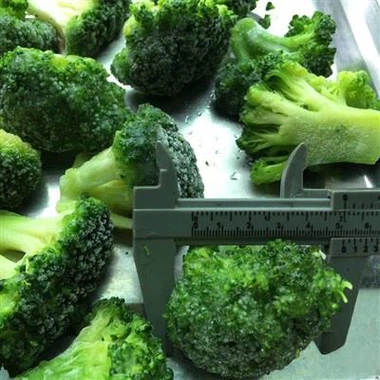
Identify the included florets and stems, then document homogenization and holding conditions for the laboratory sample.
For buyers, the practical value of this chemistry is a better question to the laboratory. Ask whether broccoli matrix background is recognized by the method, how the laboratory controls preparation variables and what evidence could distinguish the hypotheses under review. Ask how the report should communicate any interpretation limitation. Do not request a statement that all detected CS2 is natural before the evidence has been examined. A well-framed request gives the laboratory room to explain its findings accurately and gives procurement a usable path to a decision, even when the origin cannot be fully attributed.
Sample preparation belongs in the investigation
Review the path from sealed sample to analytical test portion. Broccoli florets, stem pieces and chopped material require representative homogenization, but the temperature and timing of that preparation can affect the analytical background question. Record whether milling was ambient, cooled or cryogenic, how the laboratory controlled sample warming and when the test portion entered the method. The goal is to compare the actual procedure with the laboratory's validated instructions. It is not to prescribe a new preparation method through a commercial email or to select the preparation that happens to yield the lowest result.
Holding conditions also need a precise description. Ask how long the sample remained intact, how long the homogenate was held, at what conditions it was stored and whether it was thawed or transferred before testing. The laboratory can assess whether these events fall within its method and whether additional controls are needed. A purchasing team should avoid drawing a direct causal conclusion from a single handling detail. A long delay may be relevant, but relevance does not establish the magnitude or direction of its effect for that material. The method owner should interpret the record alongside the analytical evidence.
Keep laboratory preparation chemistry separate from production and commercial storage claims. Evidence that milling affects background during testing does not demonstrate that industrial freezing creates a pesticide residue, that a cold-chain fluctuation explains the result or that a particular blanching schedule removes the signal. Those are different processes with different evidence needs. A buyer may still need production and temperature records for the lot, but they should be evaluated for the question they can answer. A plausible laboratory mechanism should not be used to accuse or clear a factory process that the cited method research did not examine.
The product form helps define the sampled material. Our frozen broccoli supply page describes forms whose floret and stem proportions can be specified. A bag of chopped broccoli and a selected portion of large florets are not automatically the same representative material. Confirm the specification, packages sampled and composite preparation before comparing laboratory results. Where samples were drawn independently, explain their relation to the lot. This matters for any residue investigation and becomes particularly useful when the chemistry may be sensitive to the handling of the actual tissue under analysis.

Holding history is part of the sample. The relationships shown are schematic and do not represent a tested GreenLand lot.
A meaningful comparison can investigate a documented preparation hypothesis. The laboratory may propose testing suitable retained material under controlled, validated conditions, with any paired preparation designed to address a stated question. Agree the controls and interpretation in advance. A result difference is evidence to evaluate, not an automatic replacement of the original report. Keep all observations, including those that do not support the hypothesis. The qualified team should decide whether the comparison is suitable for the analytical issue and whether its outcome changes the regulatory decision. The buyer should not invent a universal correction from the difference between two runs.
The same discipline applies to sample transport. Identify the material dispatched, its condition, container, transit and condition on receipt. Ask the laboratory for appropriate handling instructions rather than thawing and draining the sample to make shipping easier. A retained sample has value only when its identity and storage history are documented. If the material available for followup differs from the original tested sample, state that limitation in the investigation. The final explanation can then distinguish what is directly established by the retained material from what remains uncertain about the first test portion or the commercial lot.
Check laboratory blanks and traceable lot evidence
Laboratory background needs its own evidence path. The EURL method notes potential contamination related to rubber-containing materials and contaminated solvents, among other analytical considerations. Ask the laboratory which blanks and controls were appropriate to the run and how they performed. A reagent blank, procedural blank and matrix-related control answer different questions. The method owner should identify their role and explain any corrective action. A purchaser should neither assume that a positive arose from contaminated consumables nor dismiss that possibility without relevant records. The point is to examine a plausible source using the controls designed to detect it.
A clean reagent blank does not establish the natural background of broccoli. Conversely, a broccoli control with a response does not identify contamination in the laboratory. Keep these comparisons separate so their evidence is not overstated. Ask whether the run contained relevant recovery checks, calibration checks, interference assessments and sample replicates, and how those findings support the reported result. The laboratory can summarize fitness for the measurement without releasing every internal detail. Where a limitation affects the buyer's decision, it should be stated clearly enough to accompany the report and survive review by an importer or downstream customer.

Sample and blank are separate evidence. The relationships shown are schematic and do not represent a tested GreenLand lot.
Lot evidence starts with traceability to the tested product. Review grower or supply records, crop-protection information where applicable, harvest or processing identifiers, packing codes and sampling records. Their purpose is to establish the chain and assess the hypotheses, not to supply a substitute CS2 value. A production record can support or challenge an explanation, but it does not measure the laboratory background. A laboratory control can reveal an analytical issue, but it does not describe the entire crop-protection history. Combining the two types of evidence responsibly is more useful than asking either one to answer every part of the investigation.
If a quality manager evaluating frozen broccoli sends GreenLand a CS2-based dithiocarbamate report and asks whether natural brassica chemistry explains it, our response would be to preserve the result and ask the laboratory to assess matrix background, homogenization, holding conditions and relevant blanks. We would request traceable lot and crop records for the qualified team, while the importer confirms the current destination interpretation. We would not promise a natural-source conclusion or treat the report as cancelled.
Additional testing should investigate a defined hypothesis. Specify which material will be tested, which control addresses the hypothesis and what observation would support or weaken it. The laboratory may consider an appropriate confirmatory approach, but its usefulness depends on the analyte, matrix, stability and method scope. A targeted method is not automatically capable of resolving every dithiocarbamate precursor or every historical source. Ask what it can establish before commissioning it. Unlimited repeat testing until a low value appears creates a biased collection of results and leaves the original question about source and interpretation unresolved.

Identify the included florets and stems, then document homogenization and holding conditions for the laboratory sample.
Keep an investigation record that another reviewer can follow. Include the original report, sample chain, preparation summary, relevant control findings, crop records, stated hypotheses, followup plan and qualified conclusion. The comparison table helps organize possible sources and their evidence boundaries. It should never imply that one record alone proves a source. An unresolved attribution can be an honest outcome even after useful work. The appropriate release or rejection action still depends on the current requirement and qualified interpretation, which need to be documented independently from the desire to assign the signal to a single cause.
| Possible contribution | Evidence to examine | What remains unproven | Qualified followup |
|---|---|---|---|
| Dithiocarbamate precursor | Crop records and suitable target evidence | Individual source from CS2 alone | Lab assesses appropriate confirmation |
| Natural brassica precursor | Matrix and preparation evidence | Natural share in this lot | Method-owner interpretation |
| Laboratory background | Relevant blanks and consumable controls | Cause without run evidence | Investigate and document any correction |
Resolve the result without a compliance shortcut
The final decision should join crop-specific analytical evidence with the current legal and contractual requirement. Ask the responsible reviewer to identify the commodity category, residue definition, applicable limit, relevant decision rule and any official interpretation that applies. A report expressed as CS2 should be assessed on the basis required by that framework. No background deduction should be made solely because a paper reported natural responses in other specimens. If an authority permits a particular interpretation or followup, record its scope and the evidence needed. A supplier's general explanation cannot create that permission. The EU frozen-produce residue testing guide expands the batch-document review.
While the question remains open, define the commercial status of the lot. A hold pending qualified review can protect the decision without prematurely declaring a contamination source. Specify who owns the next action and what information will resolve it. If the result is valid but attribution remains uncertain, the record should say so. If a documented laboratory issue leads to a revised report, preserve the correction history. If a current requirement determines the outcome regardless of unresolved attribution, explain that distinction. These statements give procurement a concrete basis for shipment scheduling and customer communication without overstating the science.
Our chemical-residue and heavy-metal control guide covers the broader supplier-document and control context. This broccoli article addresses the narrower interpretation of a shared CS2 signal. Those subjects should remain connected without replacing each other. A complete sourcing program still needs agreed residue requirements, suitable laboratory coverage and traceable lot documents. A method-specific investigation helps explain a particular disputed result; it is not a substitute for the rest of the procurement controls or a guarantee that future lots will produce the same analytical response.
For a topic-specific inquiry, send the product form, application, destination, grouped-residue wording, complete laboratory report and the common-moiety method reference. Include crop precursor considerations already raised by the laboratory, homogenization and holding records, relevant blank findings and the lot identifiers. Add packing, quantity, private-label needs, required documents and the deadline for the decision. We can use those details to discuss the frozen-broccoli supply specification and the evidence needed for qualified review. Any additional analysis should be agreed for a stated purpose, with sample logistics and interpretation established before its result is used commercially.

Source attribution needs converging evidence. The relationships shown are schematic and do not represent a tested GreenLand lot.
When closing the investigation, distinguish measured quantity, supported source evidence and purchasing disposition. The note may establish that the common-moiety result was analytically supported while the individual precursor remained unassigned. It may document a preparation issue or a report correction, with the relevant laboratory explanation. It should identify the requirement and reviewer responsible for the final action. Keeping those conclusions distinct makes the record more accurate and more useful for the next inquiry. Natural brassica chemistry is a reason to investigate carefully; the decision rests on the actual evidence and the current framework governing the lot.
A commercial deadline should not determine the analytical explanation. When shipping is imminent, agree a realistic review schedule and identify which decisions can proceed while the laboratory question is open. Product form, packing and price can be discussed without issuing an unsupported residue assurance. The quality agreement should make clear whether shipment approval depends on the final investigation or on another specifically agreed evidence requirement. This reduces pressure to turn a plausible scientific mechanism into a conclusion simply because the booking date is close.
For recurring supply, translate the investigation into an agreed reporting practice. That may include clearer residue-definition wording, laboratory preparation instructions or a requirement to preserve suitable material for a disputed-result review. The laboratory should confirm any changes to the analytical program. Trend data then need to be read with those changes visible: an altered preparation procedure can affect comparability with earlier results. Record the date, scope and reason for the change so a subsequent buyer does not mistake a method difference for a change in the broccoli crop. The useful outcome is a more interpretable record for future decisions, with the actual source of each measured signal still assessed on its own evidence.
Source Broccoli with GreenLand-food
GreenLand-food is a professional broccoli supplier and manufacturer in China, providing factory-direct wholesale supply for importers, food manufacturers, foodservice distributors, and private-label programs.
Send the product form, specification, packing, quantity, application, destination, private-label needs, and requested documents. Include the analytical target and complete method and sample-state details when your purchasing requirement depends on a laboratory report.