


Frozen Peach Bellini: Puree Texture and Sparkling-Service Control
Sep 27, 2026
Leave a message

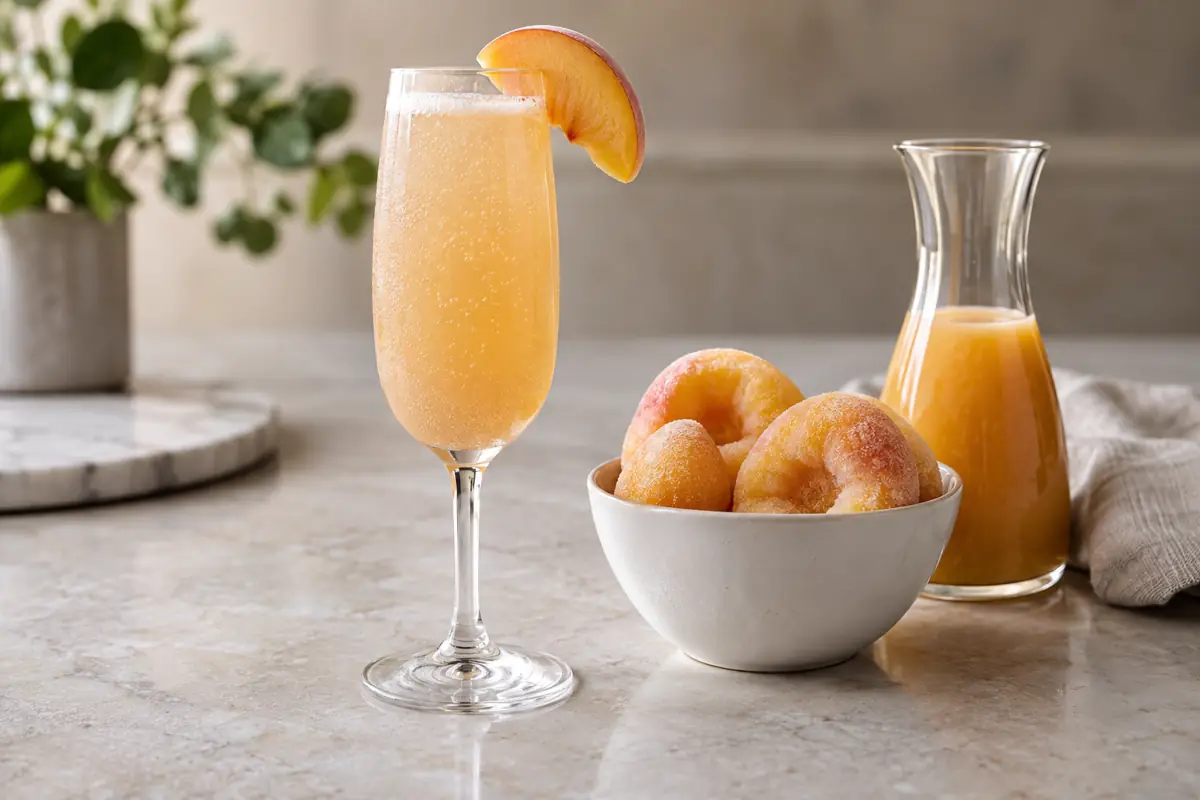
The consumer recipes establish a useful starting point. They combine peach puree with Prosecco or another sparkling drink, sometimes adding frozen fruit, peach nectar, syrup or liqueur. A bar operator must make further decisions that a quick recipe rarely answers. How much fruit flesh can the glass hold without looking muddy? Can a puree prepared before service be portioned consistently? Will one glass poured by a new team member look like the approved sample? At GreenLand-food, we supply frozen peach ingredient forms and help buyers check the actual cut, maturity and pack against those questions. The final beverage recipe and service protocol belong to the operator.
What makes a Bellini a sparkling peach drink
The classic structure is peach puree and sparkling wine, traditionally Prosecco. A nonalcoholic sparkling variant can use a suitable chilled sparkling base while preserving the same fruit-and-bubble experience. The meaningful distinction for development is texture. A Bellini should pour as a beverage and show a fine, lively sparkle; a frozen blended peach slush can be enjoyable but has a different viscosity and service endpoint. That matters when an operator promises a Bellini on a menu, designs glassware, or calculates how fast a prepared puree can be served.
Commercial recipes are not identical. Food Network combines Prosecco and peach puree in a carafe, then serves the mixture over frozen diced peaches. A British Columbia recipe prepares a frozen peach puree and tops it with sparkling wine immediately before service. Other home recipes place puree in each glass before adding the bubbles. These variants demonstrate the range of viable presentation choices. They do not establish that one ratio or sequence will work with every peach lot, puree particle size or sparkling base. Use them as starting methods and test the drink under your actual equipment and service conditions.
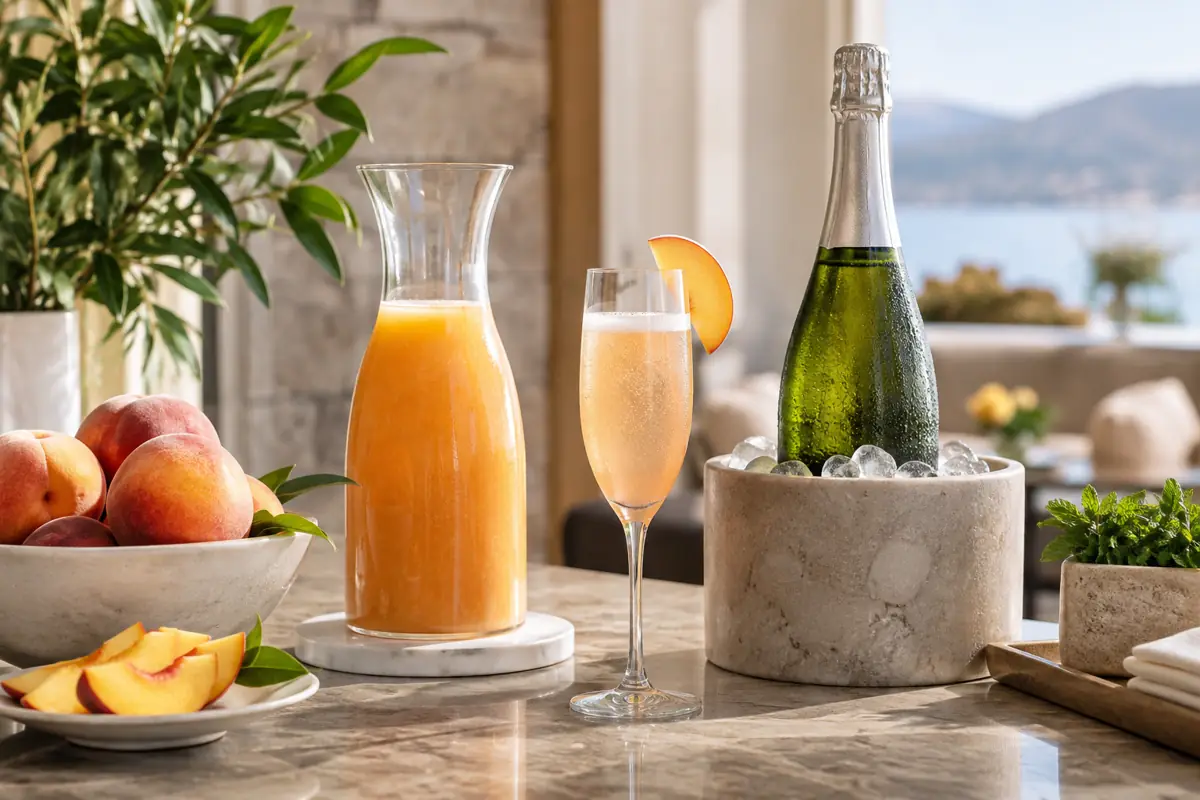
Fruit base and sparkling component stay separate until service.
The peach portion carries more than flavor. Fruit flesh gives color and body, while suspended particles alter how the beverage looks after the initial foam falls. A clear sparkling wine with a small amount of fine puree can look bright and transparent at the rim. A heavy or coarse puree can form a darker, opaque lower layer. Neither appearance is automatically wrong; the target depends on the menu and glass. The buyer should agree on a reference photograph made from the approved formula, then define how much settling is acceptable during the intended time between pouring and consumption.
Fruit variety influences the visual outcome. White peaches can produce a delicate pale color, while yellow peaches bring a stronger golden shade; actual fruit maturity and skin removal also matter. A supplier's product page may list several forms, yet a program should confirm the exact lot rather than infer that every option is in current stock. If a particular pale Bellini appearance is essential, provide the desired reference and request a sample from the quoted peach form. If the drink is designed around a yellow peach flavor, test that intentionally. Color correction by syrup can change sweetness and cost, so it belongs in the formulation decision rather than a late service fix.
Sparkling wine or a nonalcoholic sparkling base is a separate sourcing and destination decision. GreenLand's role here is frozen peach ingredient supply; the bar or beverage brand selects a lawful beverage base for its market. Keep the fruit-side specification independent from alcohol procurement. This allows the same frozen peach lot to be evaluated in an alcoholic Bellini and a nonalcoholic variant without implying that the two drinks will have identical foam, flavor or separation. The base's sweetness, acid and carbonation can change every one of those outcomes.
Turn IQF peaches into a pourable puree
Start with a defined frozen peach form. Halves, slices, chunks and dice can all be considered for pureeing when the equipment can handle them, but their preparation time and inspection needs differ. Confirm whether the peach is peeled and pitted, whether skin fragments are permitted, and how much ice or surface frost the pack carries. A pale beverage may reveal tiny dark skin flecks that would be invisible in a bakery filling. Pit fragments are a serious defect. Ask for the actual cut specification and examine the sample as received before it is blended.
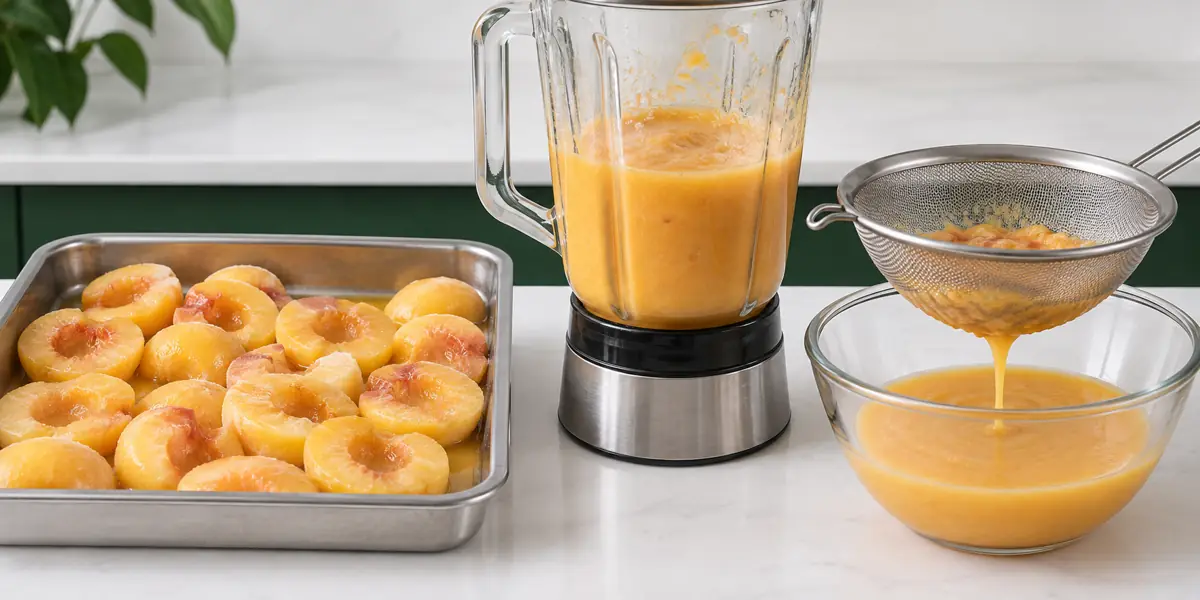
IQF halves, blender and sieve show puree preparation.
Thaw the test fruit under a controlled refrigerated procedure unless the validated equipment is intended to puree it from frozen. Record the weight of fruit entering the trial and the weight of free liquid released. Some thaw liquid may be included in the puree, but changing that choice changes solids and pourability. If one cook uses all drip and another drains it, two glasses made from the same lot can differ substantially. Blend a fixed mass of peach and decide whether a small measured amount of liquid is needed. A spoon test and a measured pour through the intended spout give more useful information than a vague instruction to blend until smooth.
Screening is a functional choice. A fine sieve can remove fibrous strands or small skin particles and give a more uniform pour, but it also removes edible material and lowers output mass. Record both starting fruit weight and finished puree weight to calculate usable yield under the chosen method. If the operator prefers a rustic drink with visible fruit texture, a coarser screen may be acceptable; test it in the actual glass rather than assuming extra pulp always improves perceived fruit content. The side-by-side view of coarse and fine puree makes the question concrete: which one stays suspended long enough and feels pleasant to drink?
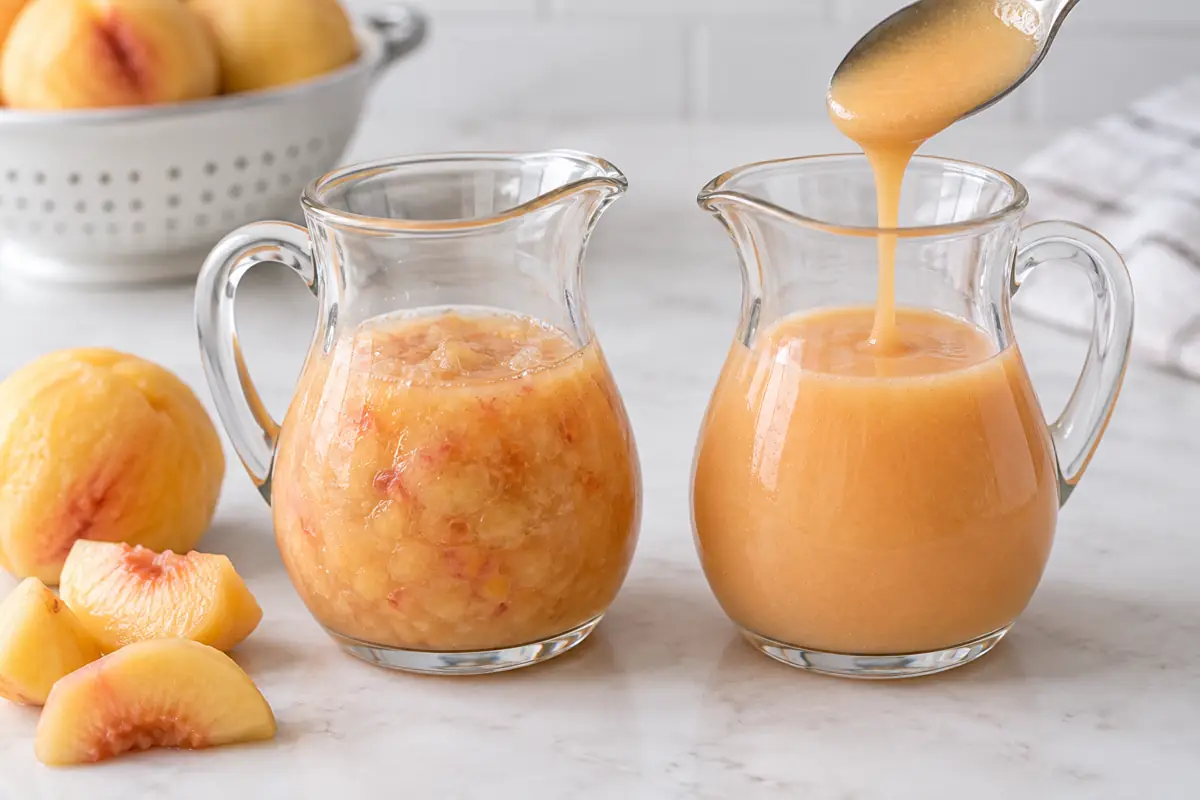
Coarse and fine peach puree show texture contrast.
Measure soluble solids as degrees Brix and record pH or titratable acidity when those values are used to manage a repeat program. Brix is an indicator of soluble material, not a complete measure of sweetness perception; acid and aroma affect the result. Compare the same blend method across two lots at the same fruit loading. If a recipe adds peach nectar, syrup or lemon, keep those additions fixed during the raw-fruit comparison. Otherwise a change in fruit quality can be hidden by an adjustment in the recipe. The existing GreenLand peach nectar guide covers the ingredient distinction; the Bellini trial focuses on what happens after the peach base meets carbonation.
Consider what "ready" means for the puree. GreenLand's frozen peach range presents frozen fruit forms for buyers to specify. A buyer should not assume the quoted carton contains prepared puree without explicit confirmation. If the hotel or beverage plant will make puree in-house, its labor, screening yield, storage control and food safety procedure affect cost. If it asks for a puree input, that is a separate specification and availability discussion. State the desired form in the RFQ and keep the proposed sample matched to that form.
Choose a glass-by-glass mixing order
The cleanest service comparison is between two controlled methods. In one, place a measured quantity of chilled peach puree in each glass and gently top it with the sparkling base. In the other, combine a small service batch of puree and sparkling base in a chilled carafe, then pour immediately. Use the same peach lot, puree screen, base, temperature, glass and fill level. The aim is to observe distribution and service speed, not to declare a universal winner from a recipe photograph. Carbonation loss depends on pouring, agitation, temperature and the base itself.
When puree enters the glass first, staff can portion the fruit component before opening the sparkling bottle. The incoming bubbles may lift some puree and create foam, while a heavy portion can remain near the bottom. A gentle single stir can help if the approved service allows it, though extra stirring can release more gas. Watch the first and last glasses in a line of orders: if staff spoon thicker material from the bottom of a jug, the fruit dose may drift even when the nominal scoop volume is unchanged. A container that can be stirred gently before each portion may improve consistency.
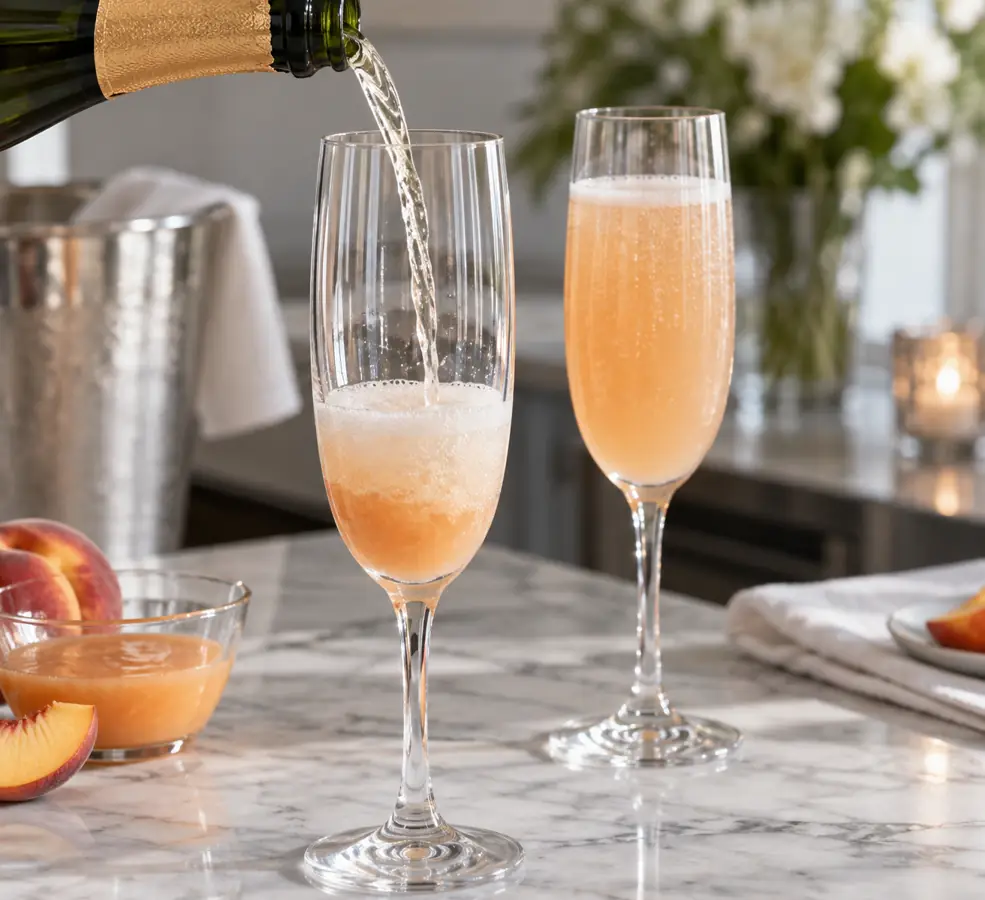
Sparkling base poured over puree in individual glass.
A pre-mixed carafe can give a uniform first pour, yet the mixture begins losing gas as soon as it is combined. Pulp may settle while staff prepare other drinks, and later glasses can differ from early ones. This is why a kitchen instruction to "make ahead" needs clarification. The puree can often be prepared ahead under an appropriate food safety and quality system; the sparkling component is generally better added at or near service. The time window should be tested with the actual recipe and temperature. Avoid promising a fixed holding period based on an unrelated home recipe.
For a peak breakfast or event service, define the unit of preparation. The team might portion chilled puree into a sequence of glasses, then finish each as ordered. Another service might prepare a small carafe for an immediate table of six. Record the maximum time between combining and delivery to the guest in each method. A large pre-mixed batch may save a moment during the rush but create flatter final servings or uneven peach solids. Measure the tradeoff in service conditions rather than assuming the fastest first pour is the most efficient overall.
Nonalcoholic sparkling bases need their own trial. A sweet sparkling cider, carbonated water and sparkling grape drink differ in sweetness, acidity and foam. The same peach puree loading can taste balanced with one and flat with another. Build the alcohol-free variant as a separate formula with its own reference glass. The service team can still use the same preparation principles: cold fruit base, controlled portion, gentle mixing and immediate observation. Check the destination market's labeling and service rules for the finished drink separately from the imported frozen fruit specification.
Test foam, color, and separation during service
Prepare a transparent-glass trial because opaque cups hide the behavior that guests will see in a flute or coupe. Make the approved candidate, then photograph or observe at pouring, after about 15 minutes and after about 30 minutes under a defined service temperature. These times are observation points for development, not promised holding limits. Record foam height after pouring, the persistence of visible bubbles, the boundary between a clear upper layer and peach sediment, and whether a gentle stir restores a pleasant appearance without excessive gas loss.
Compare two peach cuts or two screened puree textures while keeping the fruit mass in each glass constant. If a coarse puree settles quickly, the cause may be particle size, loading, temperature or interaction with the base. Change one variable at a time. Reducing the fruit dose could improve clarity but weaken peach flavor. Screening more finely may improve suspension but remove aroma-bearing flesh. Using a thicker sweetener can change mouthfeel and labeling. The purpose of the trial is to identify the smallest necessary change that preserves the menu's intended fruit experience.
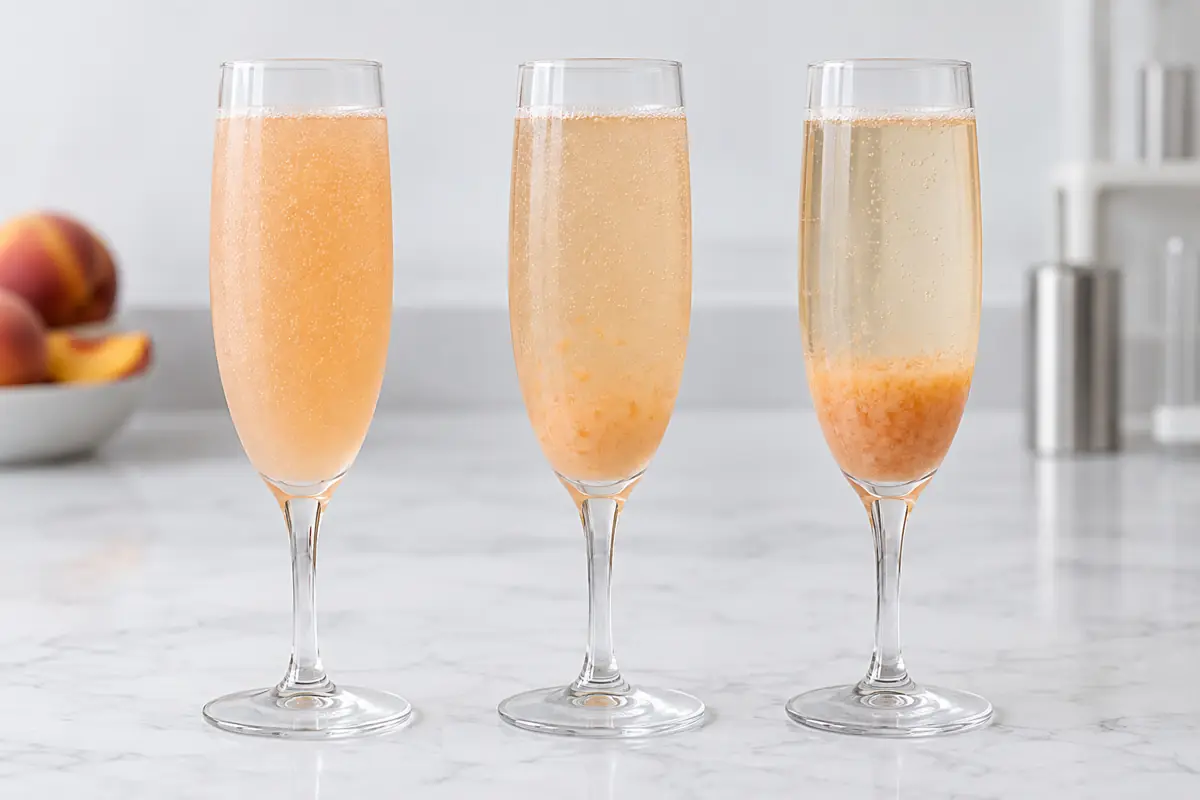
Illustrative progression of puree settling in clear glasses.
Color must be judged in the final beverage, not only in the fruit bag. A pink or golden tint can be affected by peach variety, skin, oxidation, the base and lighting. Standardize the glass and background when documenting the reference. Include a taste check after the initial foam subsides, because the first sip and a drink held on a table can differ. A product developer may accept a slight fruit layer if it disperses with one gentle movement; a premium hotel program might demand a more uniform appearance until delivery. Write that decision down so service staff and ingredient suppliers are assessing the same endpoint.
Temperature is part of the trial. Warm puree can release carbonation more aggressively and may make the finished drink feel flat despite an apparently vigorous initial foam. Very cold, stiff puree may fail to disperse. The chilled sparkling base also changes bubble behavior as it warms. Record fruit base temperature and service temperature alongside appearance. Those readings cannot be replaced by a photograph taken under ideal studio lighting. A small test at the actual bar, with the intended dispenser and glass, is more reliable than a bench sample poured only once.
Use defects to refine both recipe and ingredient requirements. Fibers that catch on a straw, a dense layer at the bottom, uneven color or chunks that obstruct pouring may indicate the need for a different screen or fruit cut. Browned flesh or visible pit material points to raw ingredient acceptance. A foam surge followed by rapid collapse may involve the sparkling base or mixing force as well as fruit texture. Diagnose each symptom before adding stabilizers or changing peach suppliers. A controlled record of fruit mass, finished puree yield, mixing sequence and observations will make the next sample comparison meaningful.
Translate the trial into a frozen peach specification
Once the beverage performs well, write the fruit specification from the trial. State the peach form, peel and pit condition, cut size or size distribution, maturity or color target, tolerated defects and pack. Request the Brix range or lot value used in development if the supplier can provide it, and define how deviations will be handled. If the recipe's puree yield is sensitive to thaw drip, record a practical test method with the sample. The aim is a supplier-readable purchase standard tied to the glass, not a wish list of unrelated fruit properties.
Cut form affects handling cost. A small dice may thaw and blend quickly but expose more surface to handling and can be harder to inspect individually. Halves offer a recognizable fruit form and may require more blender time or screening. A portion of broken pieces may be acceptable for a beverage puree if it is sound fruit and priced accordingly, while a premium whole or half fruit pack is more useful for visible garnish. Ask whether the proposed supply is a dedicated beverage grade or a general frozen peach product. For any named form, confirm current availability and take an actual sample.

Peach halves and chunks on GreenLand frozen peach page.
Packaging should match the operator's batching. A large carton may suit a commissary preparing many liters of puree, while a bar with lower turnover might need smaller packs to avoid repeated exposure after opening. Specify net weight, liner or inner bags, carton dimensions if relevant, lot marking and storage instructions. Calculate cost per usable kilogram of puree after screening and drip management, not only cost per frozen kilogram. A cheaper input that discards more fiber or requires extra labor may be less attractive at the intended scale.
The GreenLand frozen peach application guide provides broader information on cuts, thawing and processing. The Bellini specification should take only the points that control this drink. We help buyers confirm product form, packing, batch identity and documents for the quoted lot. Recipe approval remains the beverage developer's work. Keeping those roles clear avoids the common error of treating a supplier's fruit photograph as proof of finished drink stability.
If the program includes a private-label beverage mix, clarify whether the purchase is frozen whole or cut peaches for processing, an agreed puree input, or a finished preparation from another supplier. These are different products with different process and labeling responsibilities. The RFQ should state the intended recipe, expected annual and per-order volume, destination, required documents and target launch date. Include the approved trial method or reference glass when discussing new lots. That is far more useful than asking only for "peach for Bellini."
Keep commercial service and destination requirements in scope
Frozen fruit needs proper receipt and handling before it becomes a ready-to-drink ingredient. The operator should inspect carton integrity, lot identity and frozen condition when receiving, then manage thawing and puree preparation through its food safety plan. A frozen product is not automatically ready to use without further controls. The intended beverage may be served without a kill step, so sanitation, personnel handling, equipment cleaning and any required treatment or validated process need attention from the beverage business. GreenLand can supply ingredient documents for the quoted fruit; the finished drink's safety assessment belongs to the manufacturer or foodservice operator.
Alcohol rules also vary by destination and venue. The ingredient specification does not authorize service or sale of a cocktail. For a hotel chain, confirm local licensing, menu disclosure and age-service procedures with its own compliance team. The nonalcoholic variant should be developed and labeled on its own merits. It may share a peach puree, but the substitute base can change sugar, acid and flavor. A separate tasting and appearance record prevents the team from assuming the mocktail is approved because the wine version passed.

A distinct view of frozen peach halves on product page.
Seasonality is another operational reason to use frozen peaches. IQF inventory can let a menu keep a peach drink outside fresh fruit season, provided the actual supplier program and cold chain support the expected volume. Do not equate frozen year-round access with a guaranteed fixed price or identical fruit across every crop year. Request a forecast and agree when samples from a new crop or changed origin will be reviewed. A beverage chain often values stable preparation yield and a repeatable glass more than a particular fresh-market marketing phrase.
If garnish is part of the menu, distinguish it from the puree ingredient. A peeled frozen peach half may make a good puree after thawing but have a soft surface unsuitable for a neat fresh-looking slice. A fresh peach garnish, a separately approved frozen cut or no fruit garnish may be more honest choices. Test the garnish at service temperature and against the intended presentation time. Do not write it into the frozen peach purchase specification unless the same lot must actually provide it.
Training closes the loop between development and daily service. Give staff a measured fruit portion, puree preparation method, permitted time and temperature window, mixing order and example of acceptable appearance. Ask a new staff member to make several glasses while the developer observes. Differences in foam, shade or pulp distribution can reveal that an apparently clear instruction is still ambiguous. When the menu is rolled out to multiple sites, record fruit lot changes and compare them with the reference glass. That feedback can be used in future GreenLand ingredient discussions, while the operator retains control of the drink formula.
A strong frozen peach Bellini program therefore rests on two approvals: the frozen peach lot as a dependable ingredient, and the finished glass as a repeatable service product. Send us the required peach form, sample quantity, pack, projected order volume and destination. We can discuss frozen peach supply against that specification while the beverage team confirms the sparkling base, service protocol and market requirements.
Source Frozen Peach with GreenLand-food
GreenLand-food is a professional frozen peach supplier and manufacturer in China, providing factory-direct wholesale supply for importers, food manufacturers, foodservice distributors and private-label programs.
Send the product form, specification, packing, quantity, application, destination, private-label needs and requested documents. We will confirm the current lot and sample plan.