


Mandarin Marmalade from Frozen Segments: What Changes When the Peel Is Missing?
Sep 27, 2026
Leave a message


This distinction matters to fruit-preparation developers and small preserve makers buying peeled frozen mandarin segments. The frozen form removes peeling labor and can provide a consistent, portionable fruit input. It also moves several decisions that a whole-fruit recipe handles implicitly into the specification and formulation. We would compare incoming segment mass, separated thaw liquid, peel addition and final cooked yield before discussing a target jar weight. A useful first trial records each fraction rather than treating a kilogram of whole mandarins and a kilogram of peeled segments as equivalent.
Check the reference recipe's fruit basis
A marmalade recipe may begin with whole fruit, peeled segments, squeezed juice, prepared pulp or a cooked fruit mixture. Its stated fruit weight cannot be interpreted until that basis is clear. Whole mandarins include peel, albedo, membranes and sometimes seeds. Peeled frozen segments mainly bring edible pulp, although the amount of membrane and loose juice depends on their specification and handling. If a recipe calls for two kilograms of whole fruit, substituting two kilograms of peeled segments increases the pulp fraction while removing much of the peel fraction. The ratio of sugar, water and pectin-bearing material has therefore changed before the pot is heated.
Read the ingredient list and method together. A recipe may soften peel in water first, wrap seeds and pith in a bag, or add a commercial pectin. Each route extracts or adds structure in a different place. The National Center for Home Food Preservation orange marmalade recipe is a complete tested recipe with its own specified fruit and process. It cannot validate a new mandarin formulation simply because the finished product looks similar. A Satsuma marmalade recipe from Pomona's Pectin illustrates another complete system using its particular pectin and calcium instructions. The important point for ingredient comparison is to identify what that particular recipe actually uses, then keep its preservation instructions attached to that exact formulation.

Whole fruit, peel, measured pulp, cooking and cooled set serve different decisions.
Name the intended eating experience before changing ingredients. Some buyers expect suspended strips of peel and a slight citrus bitterness. Others want a smoother mandarin spread in which peel is barely visible. A peel-free fruit spread may be suitable for a bakery filling, but its label and sensory identity need to be assessed under the destination market's rules. The cooking process should follow the defined product, rather than forcing frozen segments into a traditional whole-fruit formula and hoping that the result happens to set.
A simple mass-balance sheet makes the issue visible. Record whole-fruit weight in the reference, the estimated or measured edible pulp recovered from it, peel and albedo retained, added water, sugar, pectin and final cooked mass. On a separate proposed line, enter the actual frozen segment mass, thaw liquor, any separately sourced peel, and the selected pectin system. Leave trial yield, set and process status blank until measured. The comparison is a development aid, never an authorization to transfer a canning time from the reference recipe.
The buyer also needs to know whether the fruit arrives sweetened or unsweetened. Frozen mandarin pieces in syrup would change soluble solids and free liquid; plain IQF segments make a different starting material. GreenLand's frozen mandarin orange product page describes segments, peeled whole mandarins and pieces according to confirmed specifications. We confirm the ordered form and its Brix, acidity, membrane condition and defect limits; we do not infer a preserve formula from a product photo or a generic category name.
Separate pulp, membranes and thaw juice
Thaw a representative sample under controlled conditions and weigh the fractions before cooking. Measure the still-intact segments, broken pulp and liquid that has separated in the package. If the formula uses all of the liquid, record that inclusion explicitly. If it drains some liquid, record the drained mass and what is discarded. Two lots with the same frozen net weight can behave differently in a kettle when one releases much more free juice. This is particularly important when a developer moves from a small saucepan to a larger cooker, where evaporation rate and mixing change.
Inspect the surface of the segments. The GreenLand freezing guide discusses peeling and membrane handling, while the product specification remains the controlling document for an order. Some segments retain visible membrane, and some are more thoroughly cleaned. Residual membrane can influence mouthfeel and the appearance of a clear gel. Seeds are another acceptance item: a few missed seeds can become very obvious in a spread. Establish acceptable membrane, seed and broken-piece levels for the actual filling or retail jar before placing the order.
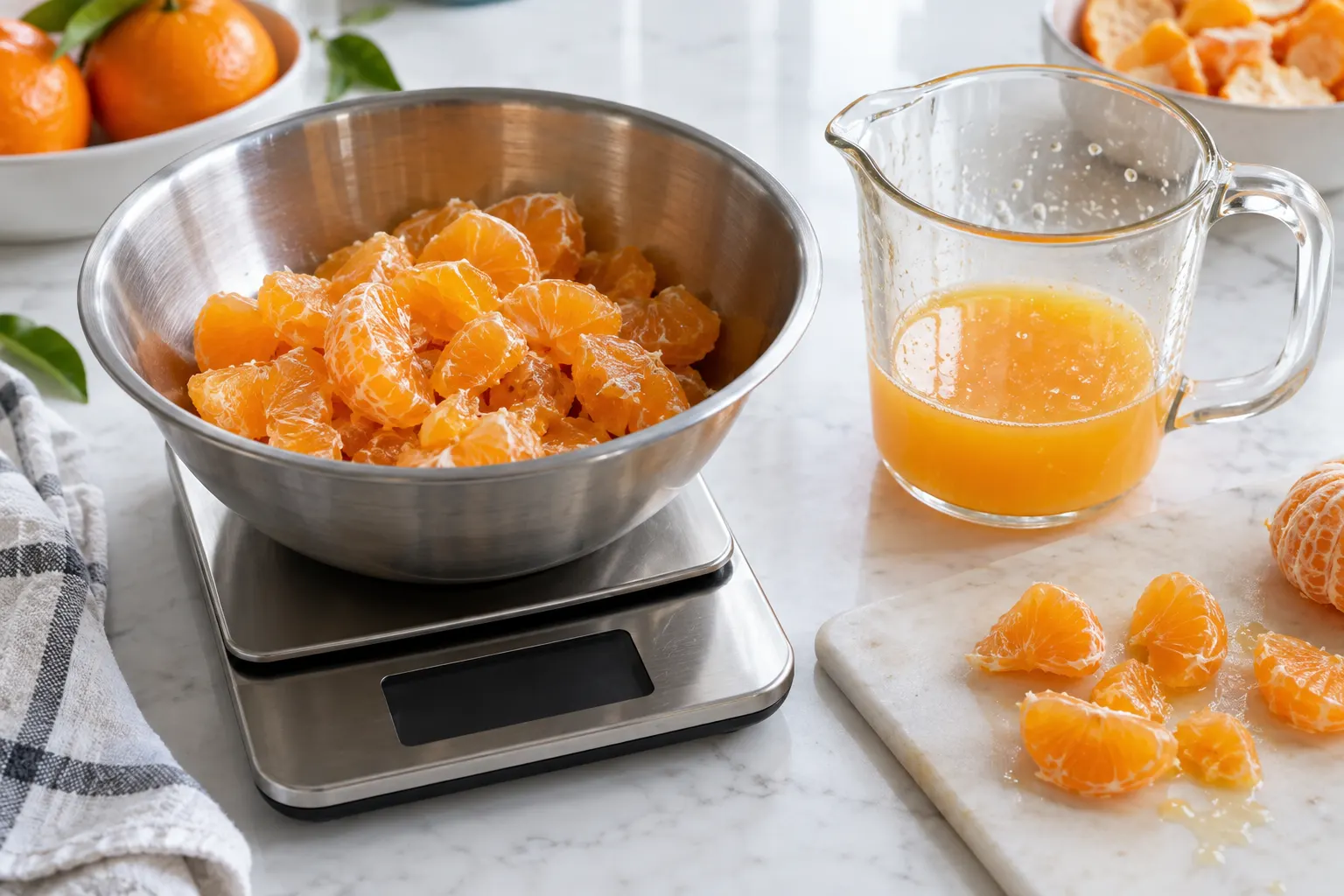
Measure fruit and free juice as separate inputs.
Thaw liquid deserves its own line in the formulation because it contains mandarin flavor and soluble material while contributing to the water load. Adding it back may improve fruit utilization, yet it can extend cooking or require a different target solids strategy. Discarding it without measuring hides both yield loss and a potential flavor change. Record the temperature and time used to thaw a test lot, as well as the weight of liquid after a consistent drain period. A trial is hard to compare when one sample is poured directly from a partly frozen bag and another is fully thawed and drained.
Use consistent terminology in the trial report. "Fruit input" should mean the actual material put into the kettle. "Edible mandarin pulp" should exclude separately added peel. "Thaw juice" should be the loose liquid collected after thawing. "Finished yield" should be the cooled product weight after evaporation and filling losses. These definitions let purchasing, development and quality teams discuss the same numbers. They also prevent a misleading apparent increase in extraction yield when the second trial simply includes more added water.

A real GreenLand product photo shows segment form and size inspection.
The fruit itself still matters after its fractions are measured. Taste a representative thawed sample for sweetness and acidity and compare its aroma with the reference lot. Note oxidized or fermented notes, unexpected bitterness, freezer damage, and a high broken-piece fraction. Measure Brix and acidity using a method suitable for the sample, and keep the lot identity linked to those results. A sharp but clean fruit may fit a sweeter marmalade; an unusually flat lot can be difficult to rescue with extra peel alone.
We help a purchasing team specify the mandarin form it needs for a fruit preparation. Segment integrity may be less valuable when the fruit will be crushed, while clean flavor, seed control and repeatable juice release are central. A bakery filling with visible pieces may demand a different whole-to-broken ratio. Samples should be cooked in the intended system before the buyer fixes a long-term acceptance range. The mandarin seed guide adds background on seed and bitterness concerns, but the finished marmalade trial still needs its own sensory review.
Specify peel and the pectin system
Peel affects more than appearance. The colored outer layer carries characteristic citrus oils and aroma. The white inner albedo contributes pectin and bitterness, depending on fruit and preparation. Traditional marmalade methods use peel and other fruit fractions together, so removing them changes both flavor and gel formation. If peeled frozen segments are the main fruit input, write a separate peel specification: citrus species and variety, fresh or frozen state, outer peel versus peel with albedo, cut width, pre-softening treatment, bitterness target and amount added per unit of pulp.
Do not assume GreenLand supplies a separate peel ingredient with the frozen mandarin order. The verified product page is for frozen mandarin forms, and peel availability would need a distinct commercial confirmation. The preserve maker can source suitable peel elsewhere or choose a different finished product. Either route needs a recipe built around the actual ingredients. A peel that looks attractive in the kettle may remain tough in the cooled spread if it has not been softened appropriately. A very fine peel cut can distribute evenly but change the expected bite and visual identity.
Pectin selection follows the sugar and acid target. A high-sugar traditional formula may rely on the fruit's own pectin, sufficient sugar and suitable acidity. An added conventional pectin can make set behavior more predictable, but the exact form and maker instructions matter. Low-methoxyl systems commonly involve calcium and can support a different sugar level. The NCHFP ingredient guidance explains the role of pectin, acid and sugar, while Oregon State Extension's pectin facts describes why pectin types and recipes should not be interchanged casually. Liquid, powdered and low-sugar pectins have different addition procedures; replacing one by spoon volume is poor development practice.
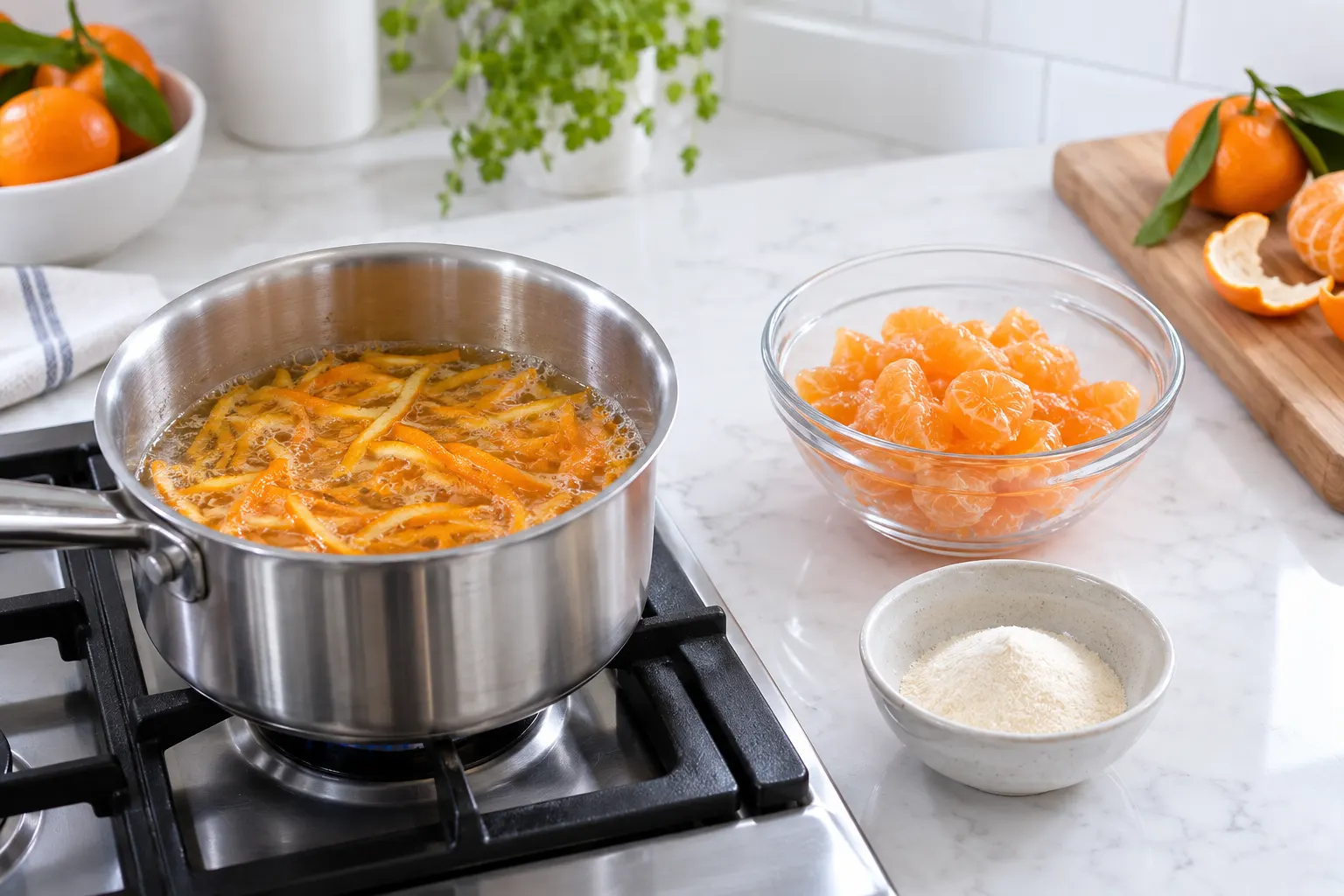
Peel, pulp and the selected pectin system need their own specifications.
Ask what the pectin system is intended to do in the final product. A breakfast jar, bakery filling and yogurt fruit preparation can require different spreadability and shear behavior. A gel that looks firm after overnight cooling may break down when stirred into a dairy base; a soft filling may leak during baking. Develop the test in the application that matters. Record pectin brand or grade, lot, dose, addition point and mixing conditions so that a successful result can be repeated rather than remembered as "a little more pectin."
Acidity deserves a measured target because mandarins vary by variety and maturity. Lemon juice is present in many recipes, but an arbitrary squeeze is not a measured acid adjustment. For a commercial formulation, use a suitable instrument and process plan to measure the relevant acid and pH endpoints. The exact values and any regulatory classification belong to the validated formula, not a generic blog instruction. For home preservation, follow an applicable complete tested recipe without changing its ingredient ratios or processing directions.
A practical bench trial can compare two peel levels and two pectin systems while holding the same measured segment and thaw-liquid basis. Change one major factor at a time within a small matrix. Record cooked yield, visible peel distribution, bitterness, free liquid and cooled texture. This produces a reasoned formulation choice. More boiling alone cannot add missing peel aroma, restore a poorly chosen pectin system or establish a safe sealed-jar process.
Judge peel tenderness and cooled set separately
The kettle gives incomplete information about the finished spread. Hot syrup can seem thin and then gel as it cools. Peel can look soft while hot but become conspicuous and chewy in a cold jar. Test both attributes after a defined cooling period. Put an agreed amount on a plate, spread it in the way a user would, and assess whether the peel bends and bites cleanly. Then judge gel cohesion and free liquid separately. A single "set passed" note cannot describe both the peel and the base.
Cook the peel according to the chosen complete recipe or validated development procedure before making a large batch. In some systems the shreds are softened before sugar is added; in others peel and fruit are managed differently. Trial records should note peel cut, pre-cook condition and addition stage. If the peel remains tough, increasing the total boil of the fruit may concentrate and darken the pulp before it solves the peel problem. A separate peel tenderness check tells the developer where to adjust.
Compare the finished product after it has reached its intended evaluation temperature. Record a sample at filling, after 24 hours of cooling and, when relevant, after an agreed storage interval. Observe whether peel shreds remain suspended or float, whether clear liquid separates, and whether the color shifts toward brown. The National Trust of South Australia mandarin marmalade recipe notes both a plate set check and fruit distribution during settling. Its particular recipe is a useful reminder that these are visible, distinct endpoints; it is not a replacement process for a new frozen-segment formulation.

Compare free liquid and cooled spreadability rather than hot appearance alone.
Yield is another quality measure. Weigh the finished cooled product, then compare it with the sum of fruit, juice, peel, sugar and other additions. High evaporation can create an apparently firmer jar simply because much more water was removed. It may also reduce the economy of the batch and make the flavor cooked. If two trial lots differ in endpoint solids, their gel and bitterness scores cannot be attributed solely to the peel or pectin change. Record the kettle size, batch size and heating conditions that affect concentration.
Sensory evaluation should use the intended application. A marmalade for breakfast toast can tolerate a stronger peel bite than a smooth pastry layer. A yogurt fruit preparation needs a different balance of visible pieces and dispersibility. Let a small panel taste samples blind when possible, and separate aroma, sweetness, sourness and bitterness comments. Follow with a check for seed fragments, unwanted membrane and pooled syrup. These observations translate into a more precise ingredient brief than an unqualified preference for a "better marmalade."
Use the selected development sample as a reference only after production can reproduce it. Keep the cooked batch's ingredient lot identities and weights, measurements, heating record, packaging and sample photographs. A visual of two cooled spoonfuls can help a team agree on spreadability, but it cannot replace measured solids and a process record. The next scale trial should be judged against the same defined endpoint, with appropriate tolerances rather than a single attractive jar.
Match the frozen mandarin order to the recipe
Once the formula is chosen, sourcing can focus on what the frozen fruit actually controls. GreenLand-food offers frozen mandarin orange in confirmed segment, peeled whole or piece formats. For a marmalade development trial, we would request the required form, representative variety or origin, Brix and acidity ranges, seed and membrane limits, whole-to-broken ratio, expected thaw behavior, pack size and planned quantity. The exact values have to be agreed against an available crop lot and an accepted sample. We would not promise that any standard segment lot will match an existing whole-fruit preserve recipe.
An IQF segment format is convenient when a developer wants to draw trial portions without thawing a large block. That convenience does not remove the need for stable frozen transport and controlled receiving. Check package integrity, lot coding, frozen condition and any evidence of excessive ice or refreezing. Pull a representative sample across the pack rather than selecting only attractive surface pieces. The fruit preparation may crush segments, but off-flavor, seeds and unexpected peel fragments remain consequential.
Packing should fit the development and production stage. Small packs can simplify pilot trials and reduce open-pack exposure. Bulk packs may fit an established kettle operation after the method is validated. Discuss inner bags, carton strength, net weight and thaw handling with the supplier, then test actual production ergonomics. A technically suitable fruit can still create waste if the pack cannot be portioned within the operation's planned thaw schedule. Private-label packaging belongs to a different order need and should be raised only if the buyer will retail the frozen fruit itself.

The frozen segment form is an ingredient input, not a finished preserve.
Seasonality and lead time influence lot continuity. A marmalade brand may plan several production runs from one approved fruit profile. Confirm what crop lot can cover the program, how substitutions will be communicated, and which tests will be repeated if the fruit source changes. Request samples early enough to cook them with the selected peel and pectin, not only taste them as thawed fruit. A supplier's Brix figure is useful, but the actual cooked result remains the decisive acceptance test for this application.
The procurement file should specify required documents and destination details alongside quality. Confirm the certificate and export-document set relevant to the shipment, lot traceability, food-safety records, temperature expectations and destination-market requirements. Ask for the current product specification rather than relying on a public page as a signed contract. The same page lists several possible forms and document options; what applies to a shipment depends on the facility, batch and agreement. A clear written specification makes it possible to investigate a later gel or flavor deviation against incoming material rather than guessing.
Source photos help a buyer recognize the frozen form and approximate segment condition. They are not evidence of the proposed marmalade's set or shelf life. We use sample preparation, measurements and records for those claims. If the recipe needs peel and GreenLand cannot confirm a peel component, keep that ingredient in a separate sourced specification. The buyer can still use the peeled frozen segments as a controlled pulp input while the preserve developer owns the complete formula.
Validate the finished product and storage route
Choose the intended storage and sales route before approving the pilot. A refrigerated fruit preparation, a frozen bakery component and a sealed shelf-stable jar face different safety, packaging and shelf-life questions. The fact that the incoming mandarin was frozen does not make a later juice-rich marmalade safe at ambient temperature. Cooking for flavor or apparent gel is not a validated lethality or sealed-container process. Commercial producers need a competent process authority or equivalent qualified validation appropriate to the formulation, packaging and destination market.
For home preserving, follow a tested complete recipe that specifically covers the ingredients and method being used. The NCHFP orange marmalade method was developed for its stated orange ingredients. It does not grant permission to replace those with peeled frozen mandarin segments and then retain the same canning time. Even a successful cold plate set cannot prove the safety of an altered jar. Avoid unvalidated jar inversion, casual "sterilize and seal" advice and shelf-life promises based only on appearance.
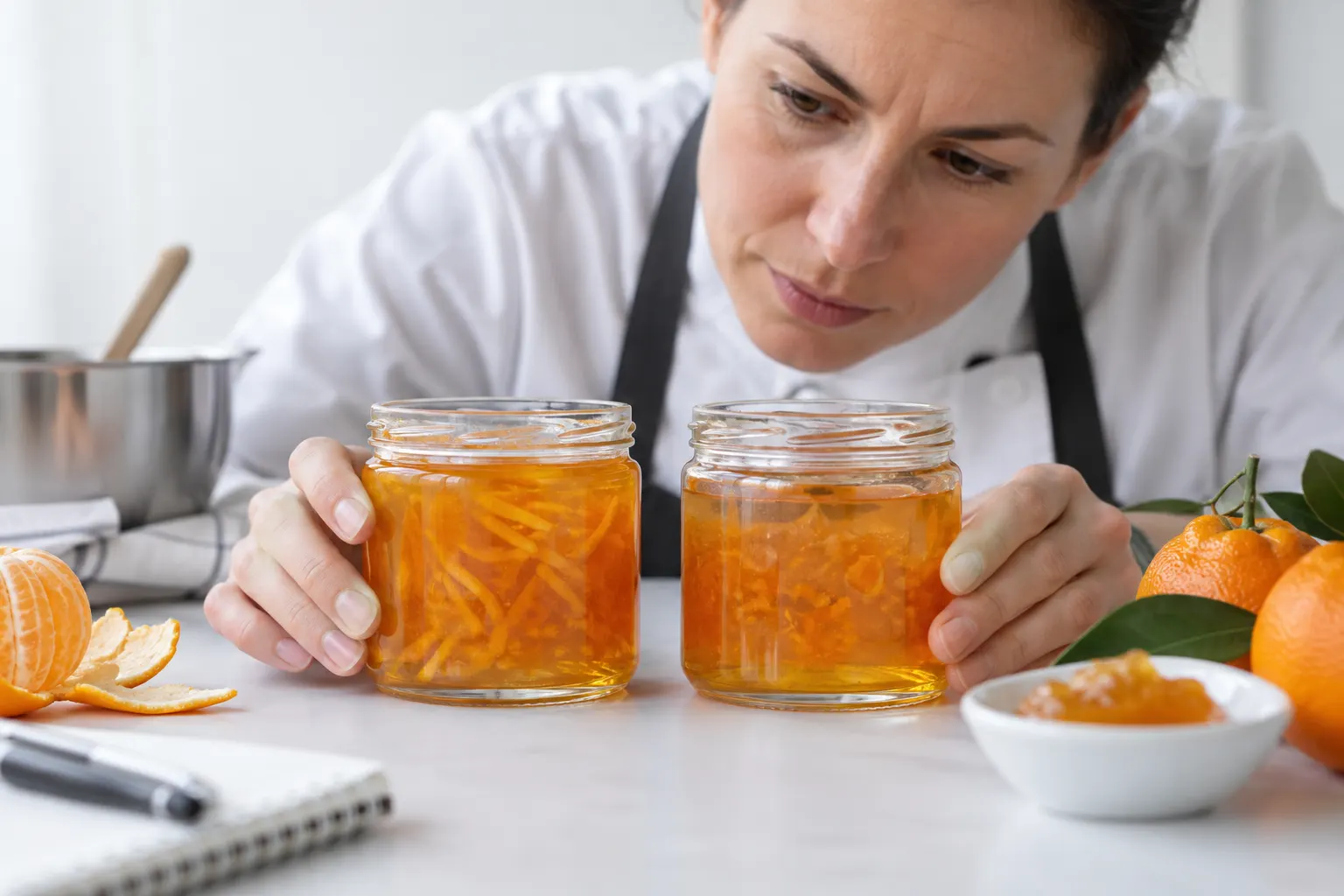
Visual review cannot establish a validated shelf-stable process.
Commercial validation should consider the entire formula and process: fruit and peel source, pectin and acid system, soluble solids, pH where relevant, heat treatment, fill temperature, closure, package size and expected distribution. A process expert will identify the correct critical limits and monitoring plan. The article's mass-balance worksheet helps prepare the information for that review, but the worksheet itself is not a process schedule. If a developer changes peel level or sugar target after approval, assess whether the validation still applies.
Product naming and labeling also require a market-specific check. "Marmalade" can have defined expectations or standards in some jurisdictions, and a peel-free mandarin spread may be described differently. Ingredients, allergens if present, net quantity, storage instruction and any nutrition claims must be reviewed for the destination market. Do not use the culinary name in a test notebook as automatic label approval. Keep the commercial label decision with the regulatory and quality team that has the final formulation and market.
When a pilot reaches an acceptable sensory endpoint, freeze the document set: approved ingredient specifications, actual measured formulation, bench and scale results, process validation, finished-product checks, packaging and shelf-life basis. These records let purchasing decide whether a frozen segment supplier can deliver consistent input for the approved recipe. We can supply and confirm a frozen mandarin segment specification; the preserve producer controls the peel, pectin and finished-product process. That division makes both the ingredient choice and the jar approval clear.
Source Frozen Mandarin Orange with GreenLand-food
GreenLand-food is a professional frozen mandarin orange supplier and manufacturer in China, providing factory-direct wholesale supply for importers, processors and foodservice buyers.
Send the product form, specification, packing, quantity, application, destination, private-label needs and requested documents.