


How to Cook Purple Cauliflower Without Losing Its Color
Sep 27, 2026
Leave a message

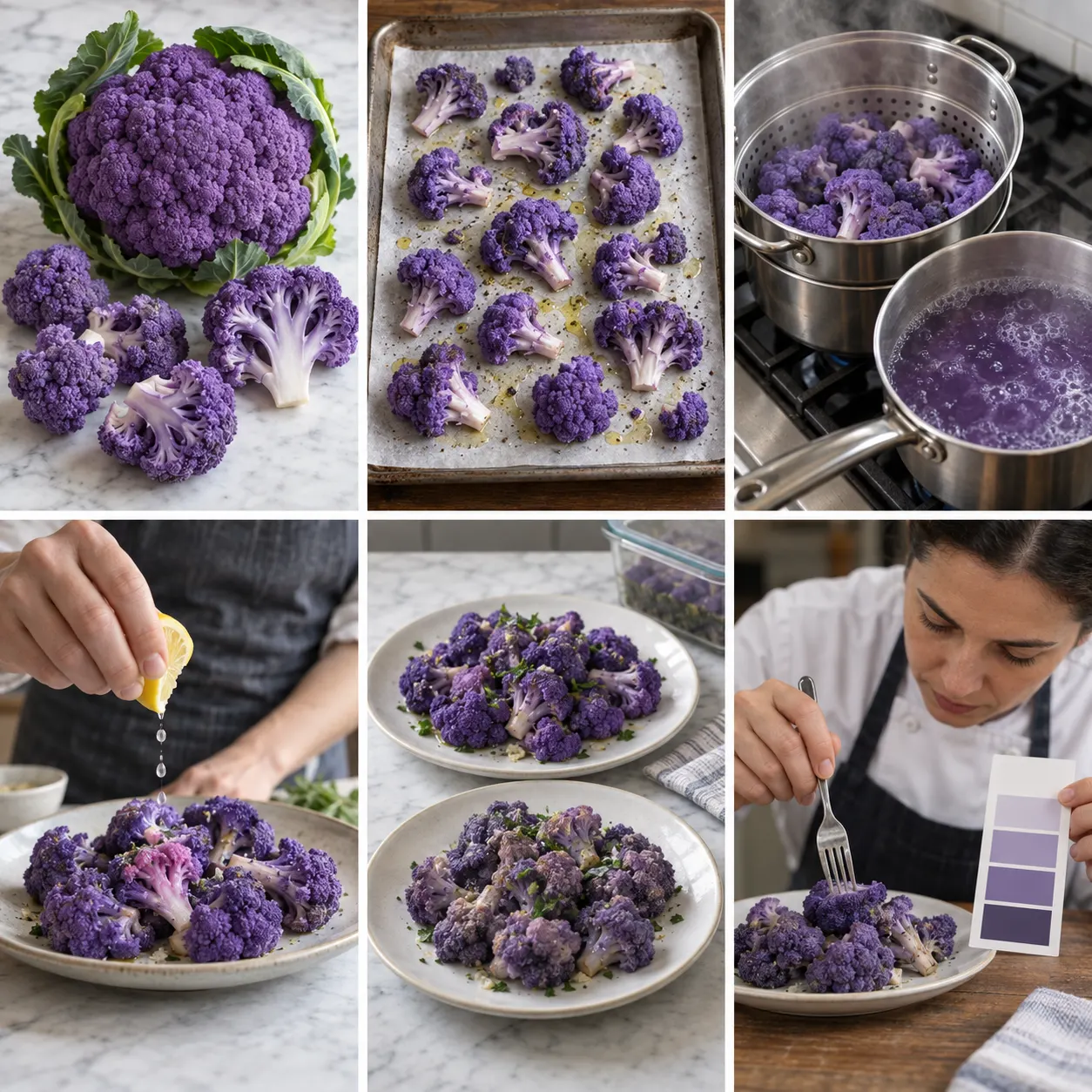
The Iowa State University Extension note on colored cauliflower identifies anthocyanin as the purple pigment and explains that color can leach into water. This makes dry heat a sound first test for a visibly purple dish. It does not make boiling unusable for every recipe, and it does not establish a fixed color after sauce, chilled holding or reheating. The useful decision is which cooking route achieves the desired color and tenderness under the operation's own conditions. GreenLand-food's verified frozen cauliflower page describes white cauliflower forms; purple cauliflower availability must be confirmed separately before a sourcing claim is made.
Identify the color and starting curd
Start by documenting the raw color. Naturally purple heads can vary from violet to a lighter lavender, and cut stems may be much paler than the curd. A photograph taken under consistent light beside a neutral reference helps the development team compare lots. Do not judge the method from a dark promotional photograph whose lighting was changed between samples. Identify the cultivar or supplier lot when possible, along with head size, maturity, floret cut, and the proportion of colored curd to white stem. These differences alter how purple the finished portion looks even when cooking is identical.
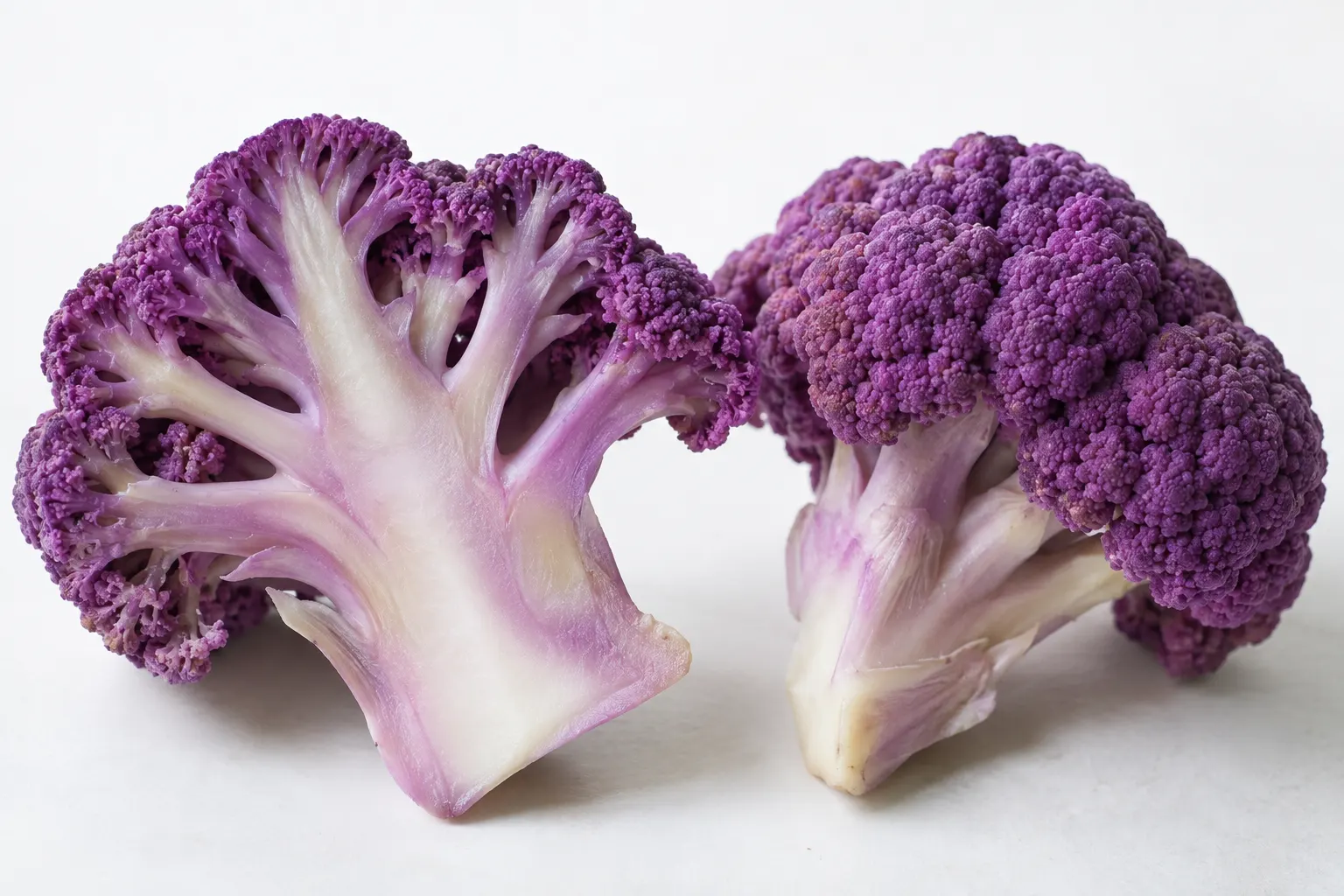
Raw curd color and cut geometry define the starting comparison.
Cut florets to a practical, reasonably consistent size. Small branches heat and soften faster than thick cores. If a tray mixes tiny florets with large stem-heavy pieces, the smaller pieces may dry or brown while the larger pieces remain firm. That variation can be mistaken for a pigment problem. Keep the stem length and cut face similar among test portions, drain surface water after washing, and use comparable loading per tray or pan. A fair method comparison begins with comparable raw material.
Choose a lower-water cooking route
Roasting is a sensible first route when visible color matters. Spread florets in a single layer with enough space for moisture to evaporate, apply the intended oil and seasoning, and cook until the specified tenderness is reached. The exact oven temperature and time depend on floret size, oven, tray load and the desired browned notes. Heavy browning changes the visual result, even if the purple pigment remains present beneath it. The color target may call for moderate browning rather than the deepest roasted flavor. Record the tray position and batch load when a sample works so the kitchen can repeat it.
Sautéing or grilling can also limit water contact. In a sauté pan, use a load that allows the pieces to heat evenly and avoid a deep pool of exuded liquid. If a lid or splash of water is used to finish thick stems, treat that as a process change and check the color afterward. A grill adds char and smoke that may be valuable in a dish but partly obscure the purple. There is no universal best method outside the finished recipe. The correct method produces the intended bite, flavor and appearance together.
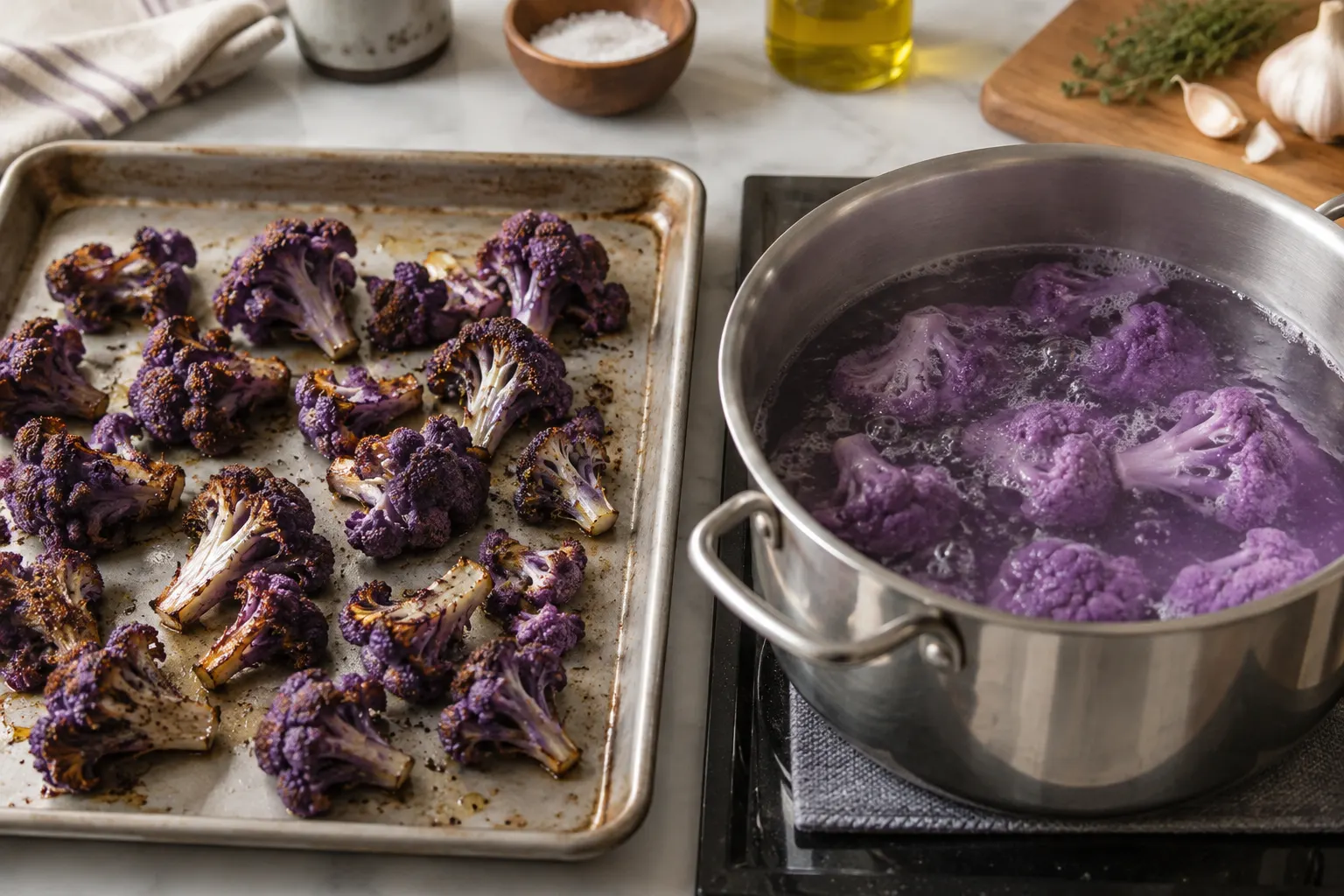
Immersion can move purple pigment into the water.
Steaming is a useful comparison when dry heat would produce too much browning or oil for the dish. The florets are not immersed, so the pigment has a different opportunity to move into water than in boiling. Yet steam is still heat and moisture, and an extended cycle can soften the curd or alter the visible shade. Compare a short, controlled steam with a roast or sauté of equal final tenderness. Purdue Extension's cauliflower guide lists common cooking routes and emphasizes practical texture checks; use them as a starting point for a kitchen trial, not as a purple-specific color guarantee.
Boiling is the clearest demonstration of leaching. Purple color in the water means pigment has left the vegetable. A short blanch may still be useful when the dish needs a particular texture or a downstream process, but define the outcome from the finished floret. We would not reject a batch solely because the water colors, nor assume a pale floret is acceptable because it is tender. The meal developer should choose a cooking method against a visible target and a bite target, with a small reference portion cooked by each route.
The starting moisture state deserves attention in any route. A washed floret that has not drained can steam on an oven tray before its surface dries, while a properly drained portion can begin to roast sooner. A frozen floret may release water as it heats, changing the pan environment again. Record whether the sample was raw, chilled, thawed or frozen when it entered the equipment. That detail can explain an apparent contradiction between a successful test batch and a later dull production batch using the same oven setting.
Test acid, sauce and heat in the actual recipe
Anthocyanin color can shift with the chemical environment around it. Acidic dressings, alkaline ingredients and the dish's own cooking liquid can change the appearance of purple cauliflower. A squeeze of lemon may make a local area appear pinker, but it is not a reliable instruction to "fix" every gray or dull cooked floret. The degree of change depends on the cultivar, amount of acid, contact time and other ingredients. Test the actual sauce or garnish at the actual addition point rather than treating one kitchen observation as a recipe-wide rule.
Begin with a plain cooked control and a version with the planned sauce. Photograph both under the same lighting immediately, after the planned service delay and after any reheat. If the sauce is strongly colored, use a separate score for the cauliflower itself and the overall plate. Tomato, turmeric, soy sauce, dairy or a dark glaze can dominate perception even when the curd pigment has not changed much. The buyer's concern may be a dish that still looks recognizably purple, rather than a laboratory measure of pigment retention alone.
Heat has at least two visible effects. It can change the pigment state, and it can soften the curd so that a roughened surface reflects light differently. Browning from dry heat creates a third effect. A deeper roast may retain more water-soluble pigment than a long boil yet look less bright because charred edges cover the colored surface. This is why an attractive raw head cannot predict the final plate and why a statement such as "roasting preserves color" still needs the phrase "at the cooking endpoint you actually use."
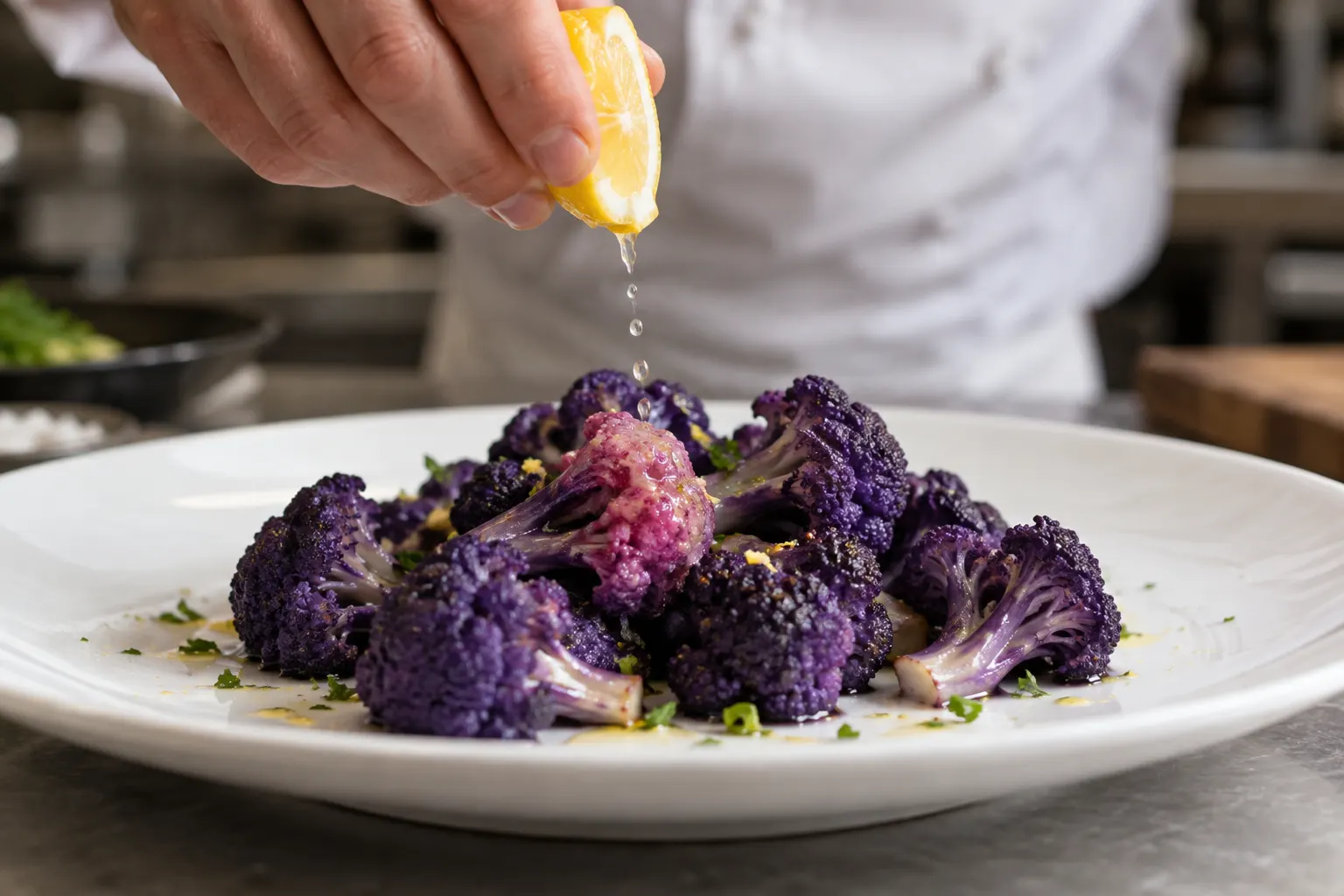
Test acid in the actual dish instead of promising a universal hue.
Research on colored cauliflower shows that cooking methods alter measurable phytochemicals, although a chemical assay is not identical to a diner's judgment of color. The study of colored cauliflower under boiling, steaming and sous-vide procedures supports treating method and time as experimental variables. It does not give a universal menu instruction for every purple cultivar or sauce. We use the research to design a controlled comparison, then evaluate the hue and bite of the real dish. We also avoid turning pigment content into a health or disease-prevention claim.
Salt and seasoning should be kept consistent in the comparison. If one sample has a lemon dressing and the other has a creamy sauce, differences in brightness may reflect the sauce rather than the cooking route. Keep ingredient mass, cut size, oil level, cooking endpoint and lighting as consistent as practical. When changing one factor, document it. A small trial can compare roast versus steam first; a second trial can compare the sauce or acid addition after the preferred heat method is selected.
For a plated dish, decide whether the purple color should be even or whether a range of violet and lightly browned edges is desirable. A restaurant garnish may benefit from lively variation. A retail prepared meal may need a tighter appearance range across production lots and reheating instructions. Both are legitimate specifications, but they require different acceptance photos. Write the visual target in terms a cook and quality inspector can use, then keep it with the approved method.
Assess color and bite after holding and reheating
The first cooked sample is only the beginning for a prepared meal. A product that is portioned, chilled, transported and reheated may have more moisture contact and a longer total heat exposure than a dish served directly from the pan. Place an equal portion in the intended container with the actual sauce and neighboring ingredients. Cool and hold it under the operation's food-safety plan. Reheat with the intended equipment and instructions, then judge color and texture at the normal serving temperature. Do not use a plate-ready oven sample to approve a reheated product.
Evaluate the floret at several moments: just after first cooking, at the end of the planned chilled hold, immediately after reheating and at the end of the service window. The time points help locate the source of color loss. A sample may remain bright through cooking but become dull in an acidic or alkaline sauce during holding. Another may look acceptable in the container and fade only after an aggressive reheat. Solving these problems requires different changes. Extra lemon at the end cannot repair a mushy floret caused by too much total heat.
Score tenderness separately from appearance. Use a fork or bite test on representative stem-heavy and curd-heavy pieces. Note whether the surface is dry, whether water collects in the pack, and whether the florets remain intact when stirred or plated. A vivid purple portion with soft, collapsing stems may fail the menu standard. A slightly muted but pleasantly firm floret may be better for a warm grain bowl. The acceptance decision should follow the role of the vegetable in the meal.
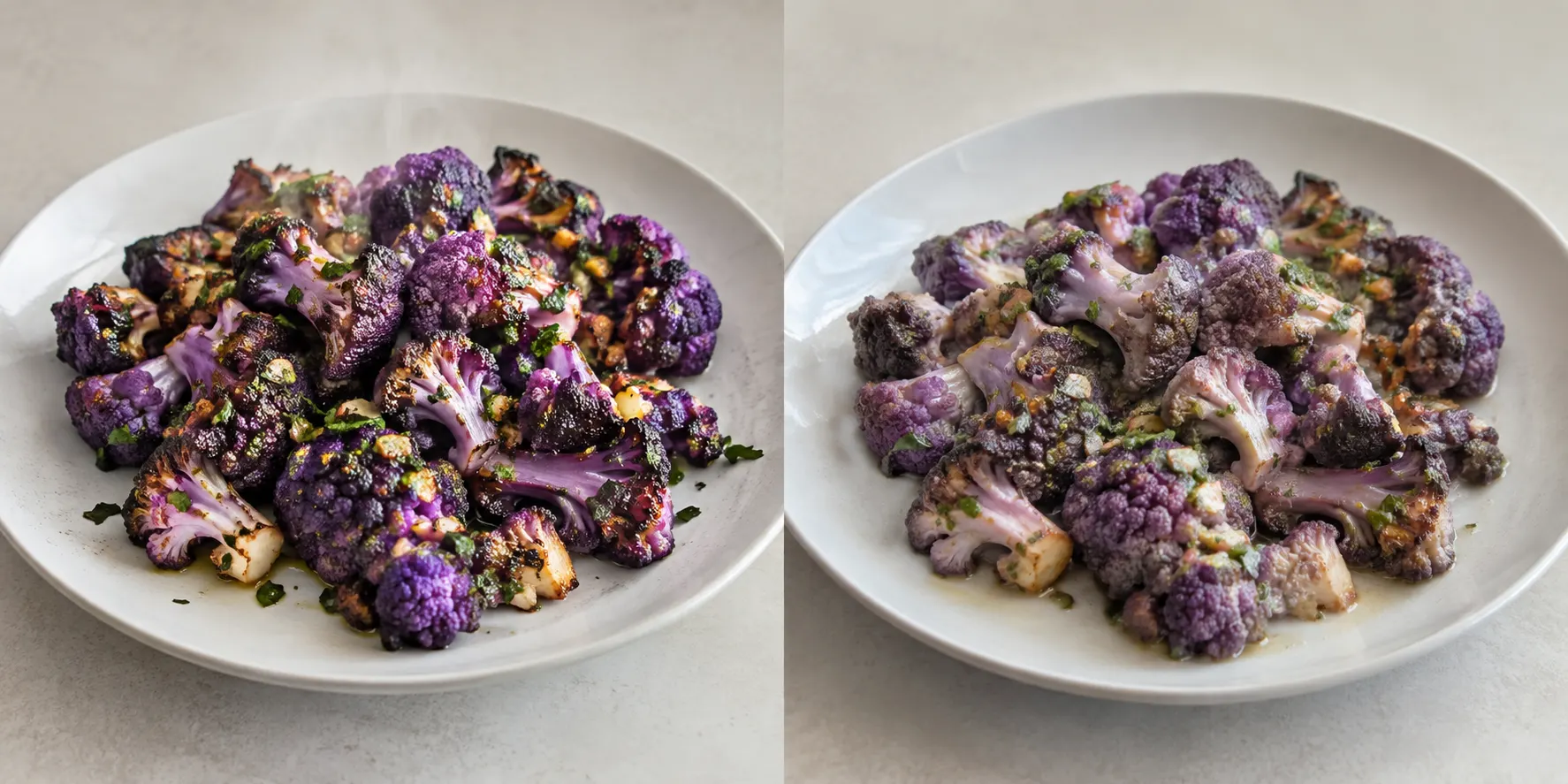
Appearance and bite need judgment after the intended reheat.
Photography can make this evaluation more repeatable. Use the same plate, background, light source and camera settings when possible. Include a neutral color reference, but do not place a branded or invented test card in the consumer-facing article as proof of a measured result. Compare samples at normal viewing distance and then examine close details. A colorimeter may help a development team track change, but a numeric reading should be linked to a defined measurement location and a real sensory judgment. The customer buys a meal, not an isolated hue value.
The reheat instruction itself may need adjustment. A covered microwave, open oven and hot holding cabinet expose the food to different moisture and heat histories. Test the method the customer or kitchen will actually follow, including portion size and the presence of sauce. If the menu uses purple cauliflower as a final garnish, adding it after another component reheats may protect its look, but only if the food-safety and service process supports that sequence. Write the chosen sequence in the production instruction and verify it at scale.
Holding and reheating records must remain separate from preservation claims. A visually attractive sample has not passed a microbiological shelf-life study. Use the operation's validated cooling, storage and reheating controls. The color trial can identify when the dish looks best, while the food-safety team establishes the handling boundaries under which it may be sold and served.
Portion geometry can make a difference during reheat. A shallow tray warms more evenly than a densely packed deep container, and florets buried under sauce may experience more moist heat than those on top. Evaluate the worst-looking and the best-looking portion after reheating, not only a carefully arranged center sample. If customers stir the dish before eating, perform that action during the trial. A color specification that survives only when the florets are arranged untouched on a plate will disappoint in a mixed prepared meal.
Build a repeatable kitchen comparison
A compact test matrix is more useful than a long list of generic cooking tips. Take florets from one representative purple cauliflower lot, divide them by size, and allocate comparable portions to roast, sauté and steam routes. If boiling is commercially relevant, include it as a fourth route. Record raw mass, trim yield, floret size, added oil or water, equipment, cooking endpoint, cooked yield, and the appearance of any colored cooking liquid. These entries explain why one route looks better and whether it will fit production.
Compare methods at a similar tenderness rather than identical minutes. A short roast and a short steam do not necessarily reach the same bite. Stop each route at the agreed endpoint, record the time it took, and then judge visual color. This lets the team understand the real cost of color retention. A method that looks bright but leaves the thick stems raw has not met the brief. A method that reaches tenderness only with excessive browning may need a smaller cut or a combined cooking step.
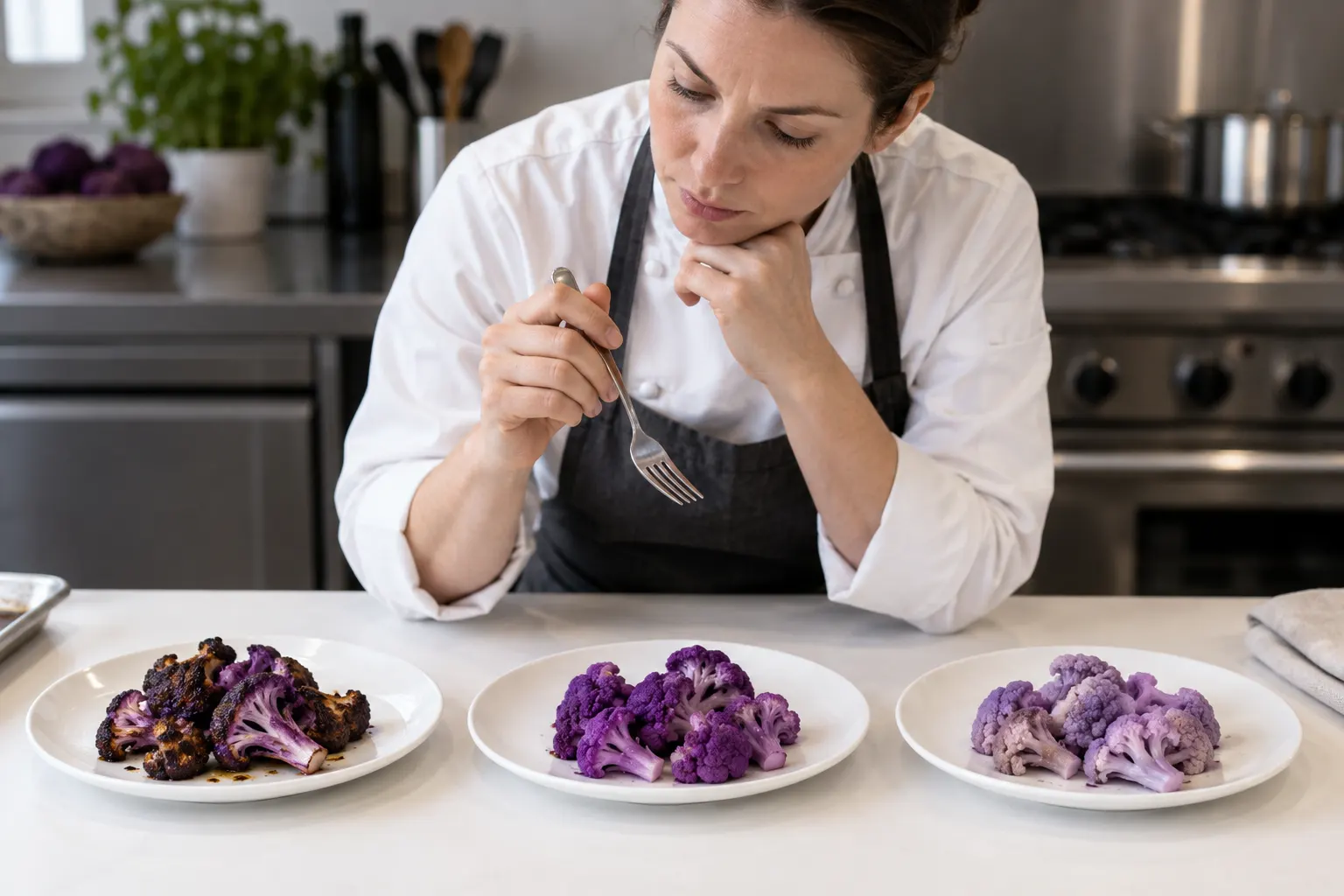
Compare similar portions under the intended cooking routes.
An acceptance sheet can use a few clear categories: recognizable purple coverage, evenness, unwanted gray or green patches, browned edge level, stem tenderness, curd integrity, pooled liquid and flavor. Define what each score means with actual approved sample photos. Avoid asking a quality inspector to approve "vibrant color" without a reference. A batch may naturally vary within a useful range, and the approved range should be wide enough to reflect that reality while excluding visually poor or overcooked pieces.
Repeat the best method with another raw lot. A single deep-purple head can make nearly any method look successful; a paler lot may expose a weak process. Evaluate the finished dish with its sauce, neighboring ingredients and normal service lighting. If the item is sold in a pack, include the pack window or tray color because it influences perceived hue. The second lot tests whether the method is robust or whether the sourcing specification must become tighter.
Production scale can change the result. A crowded oven tray holds moisture; a large sauté batch may stew in its own liquid. A larger steamer can cook unevenly if loading is inconsistent. Make a small scale-up run in the actual equipment before finalizing the recipe. Check the first and last portions produced, not only the middle tray. The visual story in a photo brief should show true curd structure and cooking state, while the manufacturing record holds the measured performance.

Score tenderness and color separately against a consistent reference.
The same matrix helps a buyer compare ingredient form. Whole fresh heads allow the kitchen to control the cut but create trimming work. Pre-cut florets save labor yet must meet size and freshness targets. A frozen form may add blanching history, thaw water and a different bite; it cannot be assumed to act like raw purple cauliflower in a roast. Verify the actual supplied form, cook status and intended use before running an equivalent test. The current GreenLand frozen cauliflower listing does not establish a purple SKU.
Finally, decide what failure means in the intended menu. A small shift from violet to lavender may be acceptable in a warm side dish but not in a dish sold primarily for its purple appearance. Slightly soft florets may work in a purée but fail a salad. Write the acceptance rule for the actual application, not for a generic photograph. That rule can guide both recipe adjustment and sourcing conversations.
Keep a retained reference sample and the camera setup details with the approved production sheet. A practical record includes raw and cooked weights, sample code, light source, plate, camera distance and the person who scored color and bite. Different observers can disagree on a borderline gray-purple hue; a shared reference reduces argument without pretending that visual judgment is perfectly numeric. Recheck the reference if the cultivar, cut, sauce or kitchen equipment changes. Those changes can shift the result even when the printed cooking time has stayed the same.
Keep the color lesson separate from product availability
The existing GreenLand frozen cauliflower range shows white cauliflower formats and corresponding quality-control concerns. The photographs here are of real white frozen cauliflower from that page; they illustrate the product we can discuss publicly, not proof that GreenLand currently supplies a purple cultivar. If a buyer asks for purple cauliflower, we would first verify the exact product, form, crop source, minimum quantity and available specification with the sourcing team. The answer cannot be inferred from a general cauliflower category label.

This real supplier photo shows white frozen cauliflower, not a confirmed purple SKU.
For a colored-cauliflower project, the useful request describes the intended dish. State whether the ingredient is to be roasted from raw, cooked from frozen, added to a chilled salad or reheated in a prepared meal. Define the cut range, acceptable curd and stem proportion, desired purple reference, texture after final heat, pack format, quantity and destination. These details help establish whether a suitable supply route exists and what sample should be tested. They also avoid buying a visually striking raw head that cannot hold the target appearance through the planned process.
If a relevant frozen purple form becomes available, ask for its processing and cook status. Freezing can affect cell structure and release water on heating, while blanching history can change the second cooking step. The trial must use the actual lot and instructions. Do not assume that dry roasting a fresh raw purple floret predicts the color of an IQF blanched floret. Compare the incoming ingredient against a fresh reference only under equivalent final eating conditions, then decide whether the convenience of a prepared frozen form suits the dish.

A second supplier view documents the existing white cauliflower form.
The white cauliflower supply page provides a model for the questions we would confirm on any cauliflower order: floret size, cut condition, defect tolerance, packing, frozen state, traceability and export documents. These procurement controls are still useful even though white product photos do not answer the purple color question. The GreenLand blanching guide offers background on heat and texture for cauliflower generally; color retention in a purple cultivar needs its own trial. Keep the two evidence streams clear in a buyer conversation.
Ask for a representative sample before approving a menu photograph or package image. Prepare it with the target sauce and reheat cycle, record appearance and bite, and agree on a realistic range. If the supplier cannot verify a purple product, use the article's method advice for separately sourced purple cauliflower while discussing only confirmed GreenLand frozen white cauliflower orders through the product page. This keeps the culinary guidance useful and the commercial claim accurate.
Source Frozen Cauliflower with GreenLand-food
GreenLand-food is a professional frozen cauliflower supplier and manufacturer in China, providing factory-direct wholesale supply for importers, processors and foodservice buyers.
Send the product form, specification, packing, quantity, application, destination, private-label needs and requested documents.