




Frozen Straw Mushrooms supply for commercial buyers
We supply frozen straw-mushroom ingredients for soups, sauces, vegetable blends and prepared meals. Cut pieces expose internal condition, but they also need a clear piece range and breakage limit to avoid uneven portions.
We compare maturity, cap-to-stem balance, pale interiors and darker outer surfaces on a representative frozen sample. Your heating process guides whether a recognizable half or a smaller dispersible piece is the better form, with each style approved separately.

Product forms
Photographed cut pieces
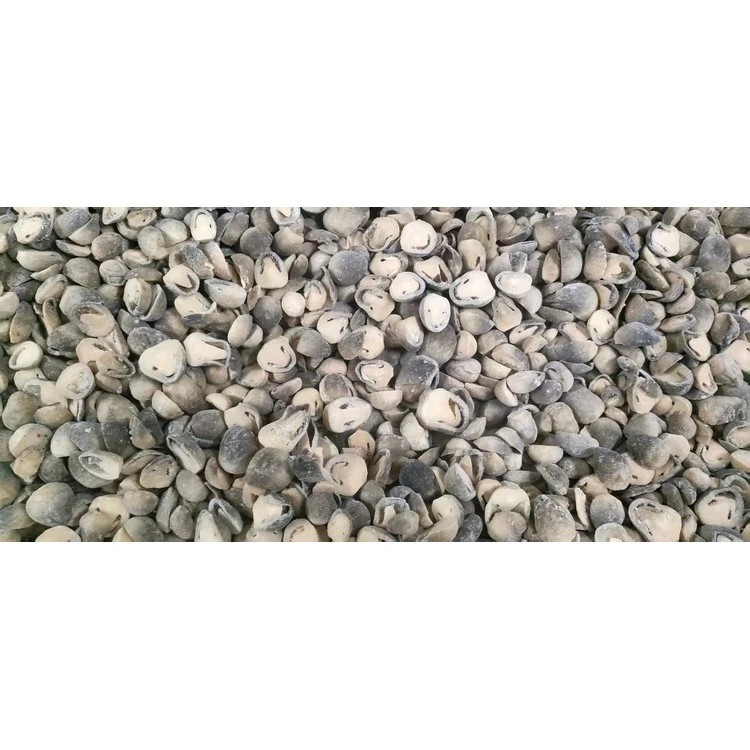
The source set shows bulk straw mushrooms with visible cut faces; many pieces appear halved or otherwise cut. We use this as a visual reference only. The purchase specification must say whether the order is halves, quartered pieces or another approved cut and define the share of small fragments.
Cap, stem and maturity
A straw mushroom can look quite different as an unopened button, a more open cap or a cut piece. We agree which maturity and cap-to-stem appearance your finished product can accept. A photograph of a mixed lot does not establish a single grade or a fixed percentage of each shape.
Alternative form boundary
Whole buttons, calibrated halves and smaller process pieces serve different uses. We discuss an alternate form only after checking an actual lot and cutting route. The photographed material does not prove that every named form is continuously available.
Purchasing risks and acceptance checks
Open cuts and broken pieces change visual yield.
We compare the requested cut with a frozen reference sample, count loose fragments and set a practical piece-size range for the buyer's line. Handling is judged after the cut and after frozen packing.
The receiving team can decide whether the delivered carton matches the agreed mushroom shape and breakage allowance.
Color variation can be mistaken for damage.
We distinguish the natural darker outside from unacceptable dark, bruised or discolored tissue on a defined sample. Cut-face color is reviewed separately from cap color.
A color decision tied to the actual cut rather than a vague 'light mushroom' description.
Soil, substrate or tough base residues enter a preparation.
We identify the stem-base trim and foreign-material limits before production, inspect representative pieces and make the final sort correspond to the approved standard.
A named defect list that the buyer can apply during receiving inspection.
Excess surface water or clumping disrupts portioning.
We discuss washing, drainage and freezing for the selected form and check how the lot separates from a packed carton. The buyer trial should observe water release in the intended recipe.
A more useful frozen-handling criterion for dispensing, blending and cooking.
Product specifications
We match the form, grade and acceptance method to the agreed sample and your application.
| Item | Requirement |
|---|---|
| Product identity | Straw mushrooms; lot identity and accepted commercial name confirmed in the order record. |
| Form | Photographed cut pieces are the current reference. State halves, quarters or another verified style in the approved order. |
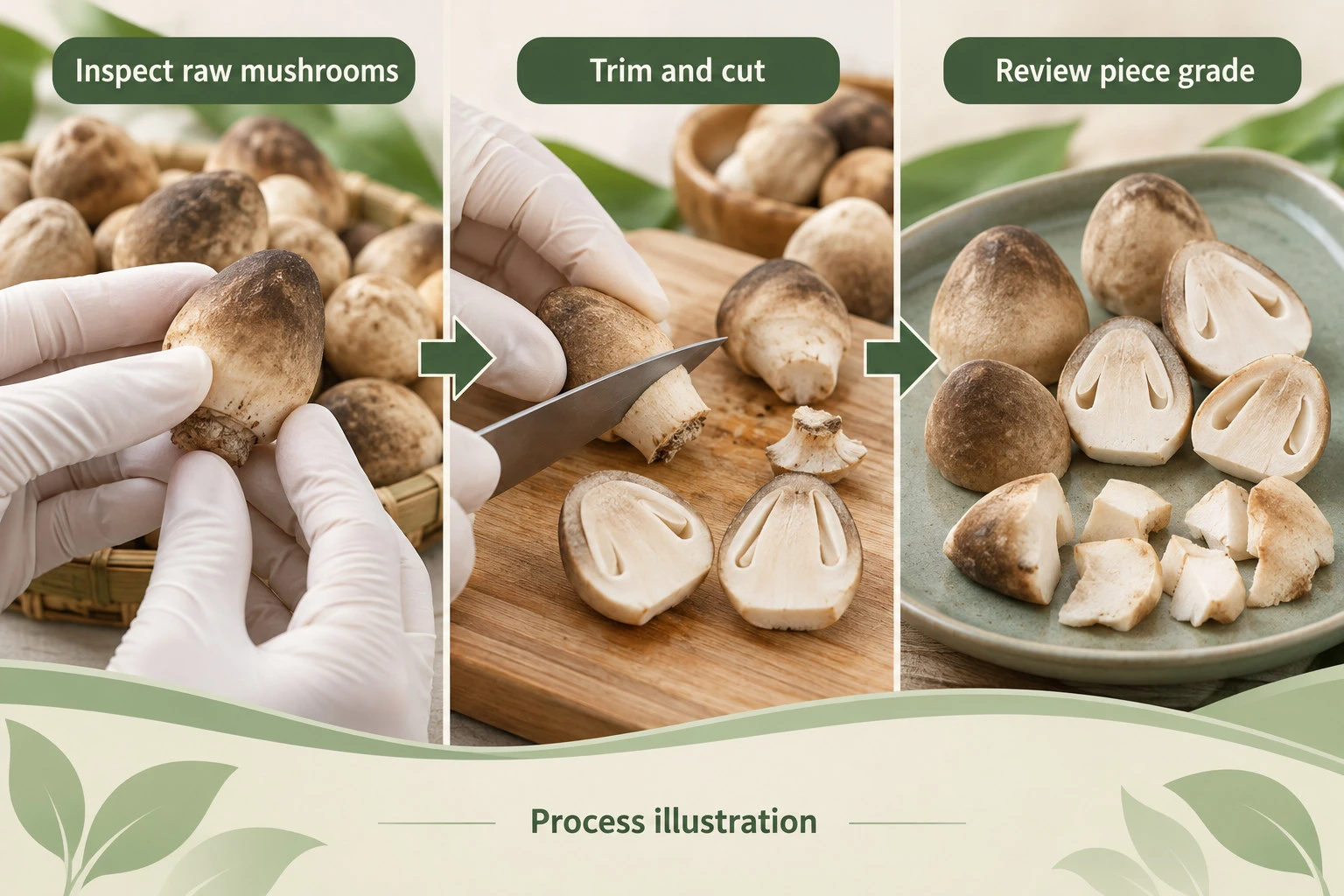
| Piece grade | Set size range, cap-to-stem balance, fragment allowance and the measurement method against a frozen sample. |
| Maturity and appearance | Agree button or more open appearance, outside and cut-face color, and limits for bruising or dark damage. |
| Stem-base trim | Specify allowed firm base, soil or substrate residue and incidental fragments separately from normal mushroom tissue. |
| Processing state | Confirm the actual washing, trimming, pretreatment, freezing and intended subsequent cooking state for the chosen lot; photographs do not prove these steps. |
| Packing | Confirm inner liner, net weight, carton strength, marks and destination labeling for the selected cut. |
| Commercial and shelf-life terms | MOQ, lead time, loading quantity, port, frozen storage requirement and shelf-life statement are set for the approved product and order; no universal values are asserted. |
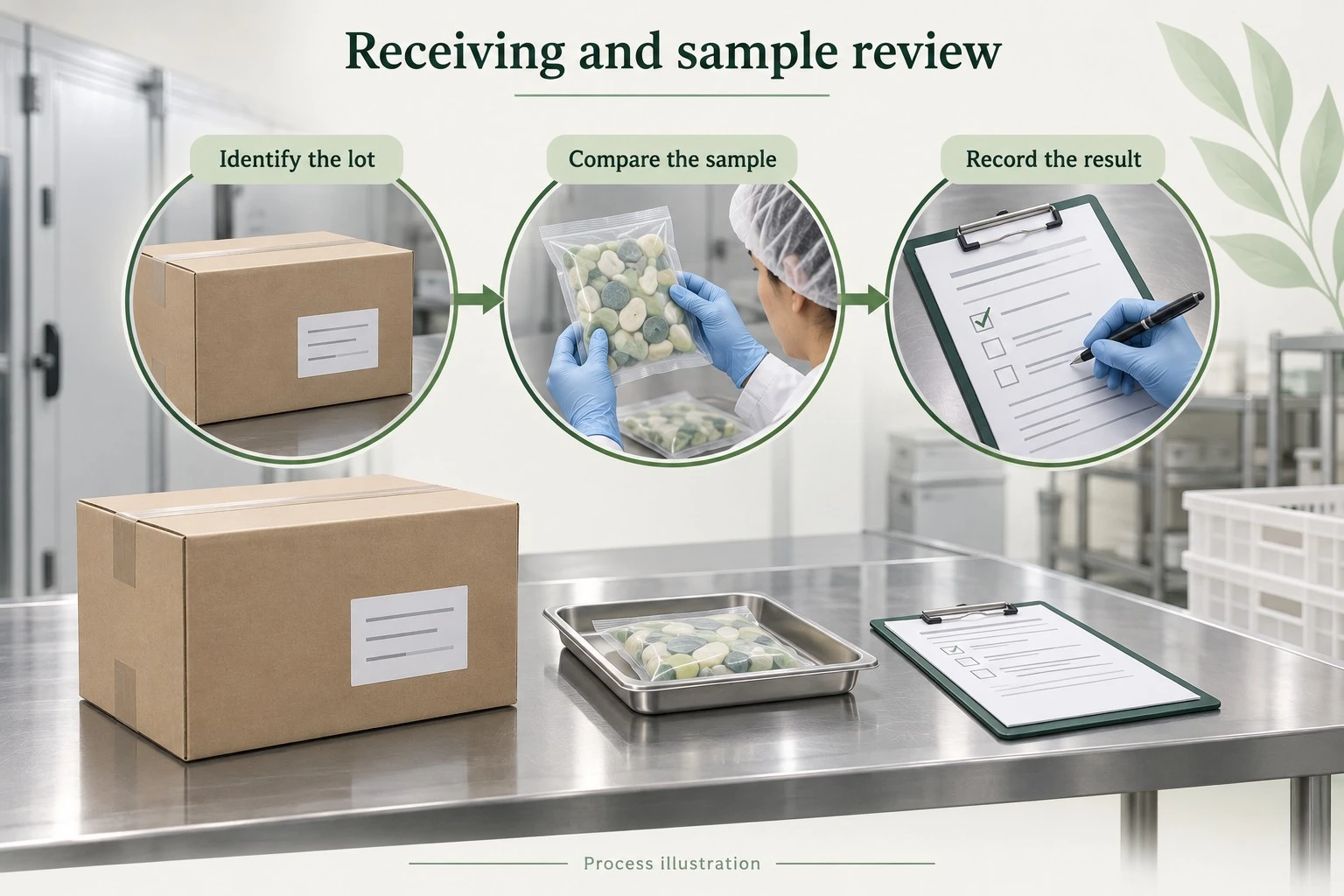
| Inspection records | Confirm batch identity, specification, requested test reports and the agreed receiving sample method. |
Preparation and frozen processing
- Lot and maturity review. We start with a source lot whose identity, maturity and visible cap condition suit the proposed cut. The buyer's reference decides whether a small button or a more developed shape is appropriate; the name straw mushroom alone cannot decide it.
- Cleaning and base trim. We discuss removal of soil or substrate and the firm stem base before cutting. The standard should state which surface marks are natural and which foreign or damaged pieces are rejected, because a dark outside can hide poor trimming.
- Cut and size control. We align the blade or handling step to the agreed halves, quarters or process pieces. A cut that exposes pale interior tissue also increases the chance of broken edges; we check both average piece size and fines, not only the largest attractive pieces.
- Pretreatment and freezing. Any heat treatment, cooling, drainage and freezing route must be verified for the commercial lot. We do not copy a blanching time from another mushroom. The frozen sample is checked for separation, frost and performance after the buyer's intended heating step.
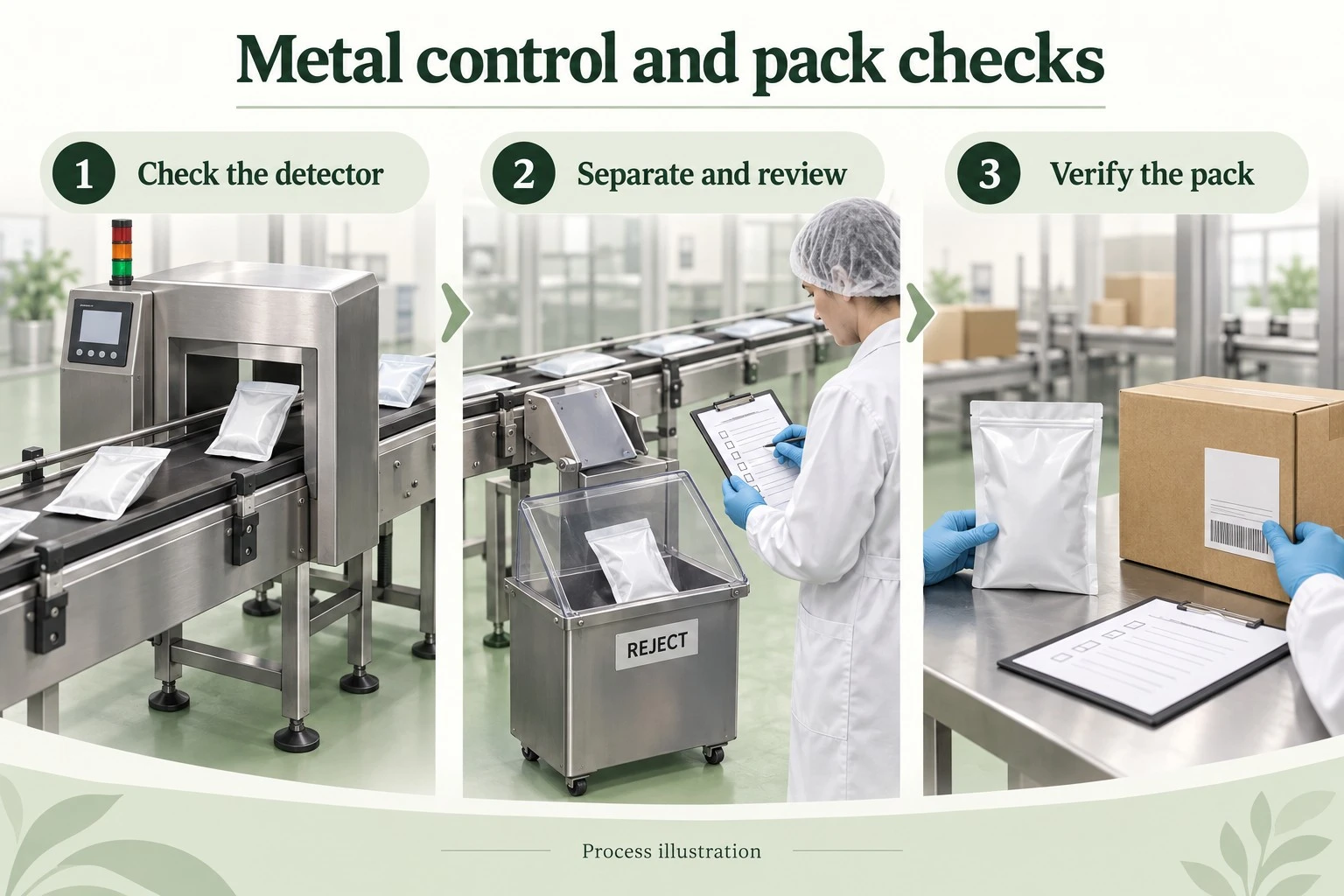
- Final inspection and packing. We inspect cut faces, cap color, base trim, loose fragments and foreign material, then check weight, liner seal and batch mark. The accepted lot can be compared with the retained reference if a receiving question arises.
Quality control
Our quality discussion is built around the cut face. We agree what a sound straw-mushroom half looks like, how much broken edge is acceptable and when dark tissue becomes a reject. We also specify firm-base or substrate residue, since visual uniformity does not by itself prove the pieces are clean. Inspection of a frozen carton and a trial after the buyer's cooking step answer different questions; both may be needed for a repeat program.
For the order file, we link the approved form and sample to a batch reference, packed weight and named defect checks. If a buyer requests microbiological, residue or other analytical evidence, we confirm the test, lot and limit before commitment. We do not infer a particular certification, treatment or shelf life from the photograph.
Applications and quality requirements
| Application | Buyer channel | Purchasing requirement |
|---|---|---|
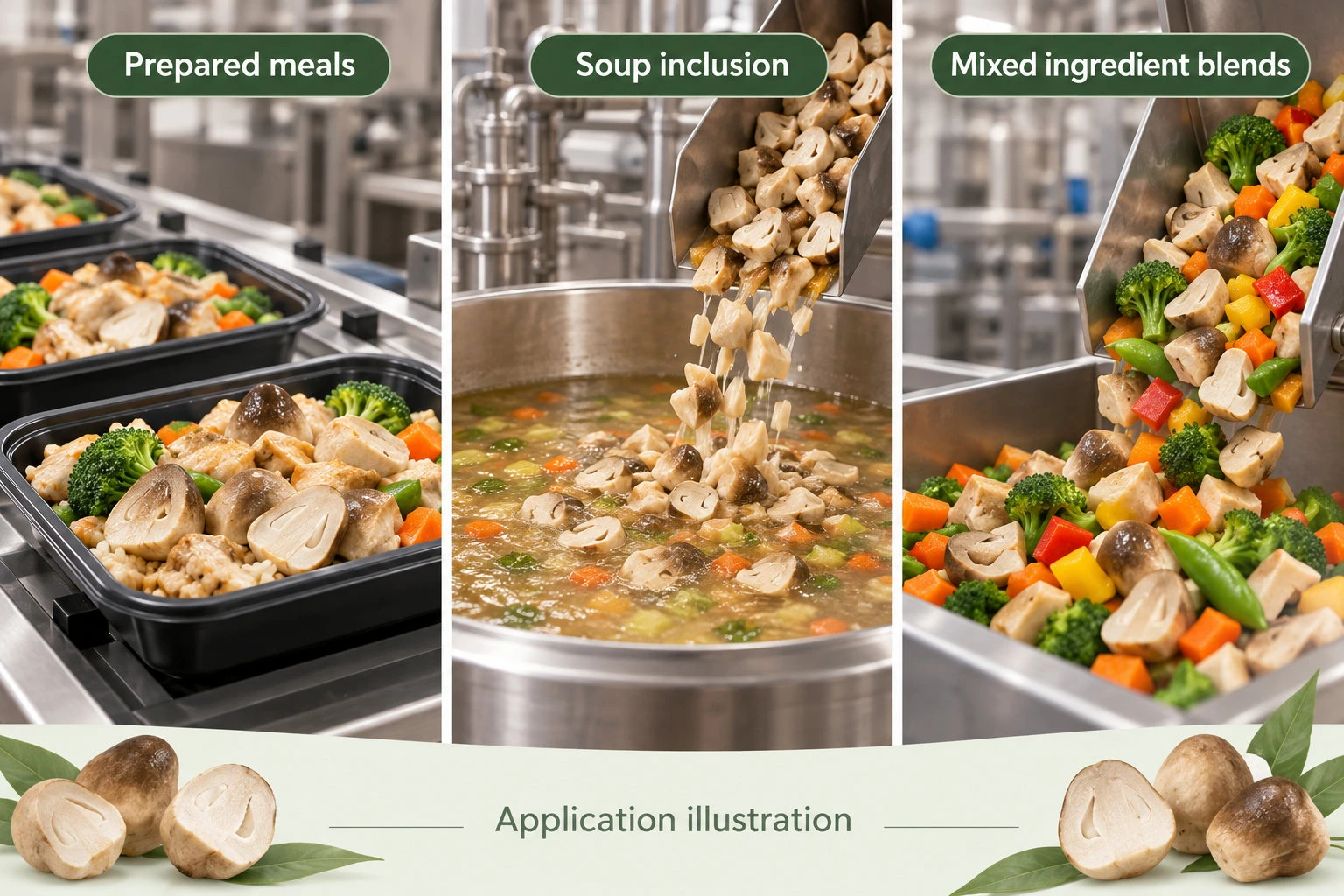
| Prepared meal mushroom pieces | Ready-meal manufacturers | Choose a recognizable cut whose cap and stem remain balanced after the factory heating process. The trial should count broken pieces and water release at the point the ingredient is added. |
| Soup and broth inclusion | Soup and sauce plants | Set a smaller piece range and base-trim standard so mushrooms distribute through portions without tough stems or excess loose fragments. |
| Mixed vegetable or mushroom blends | Ingredient blenders | Match straw-mushroom piece size to the other blend components and document its proportion and identity separately. A blend formula is approved apart from the single-ingredient lot. |
| Foodservice bulk cartons | Distributors and central kitchens | Agree a pack weight and frozen separation standard suited to repeated portioning. Cut style and intended cooking treatment must appear in the specification supplied to the customer. |
Packing and private label
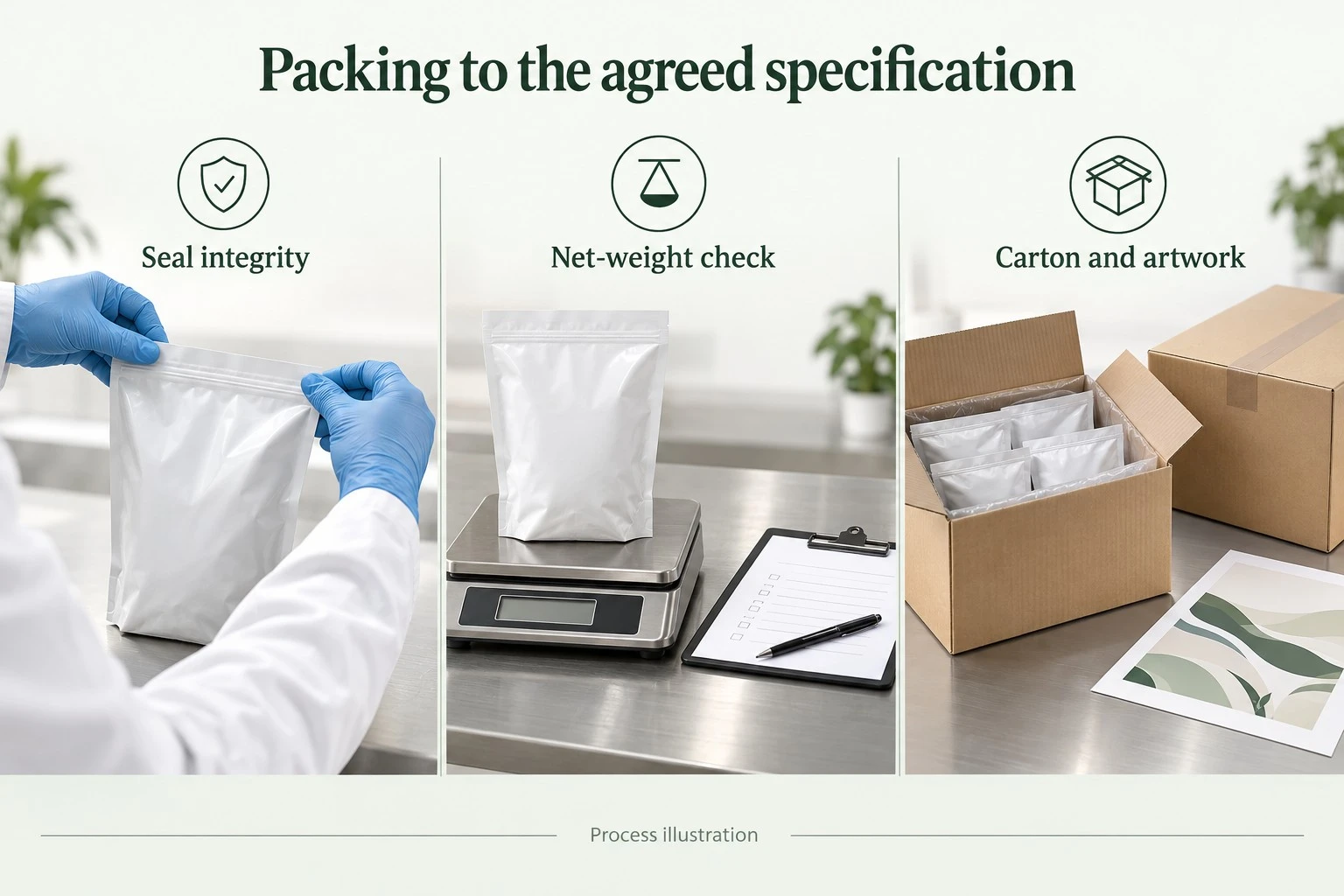
Cut straw mushrooms need a liner and carton fill that limit compression of delicate edges without leaving the pieces free to rub excessively. We discuss net weight, inner bag, sealing and carton strength for the selected half or process-cut grade. The pack should be checked after normal frozen handling, because a neat line sample can become a much higher broken-piece fraction in transit.
For foodservice or private-label supply, we settle the actual cut and preparation state before artwork. Label wording, ingredient name, barcode, carton marks and destination language follow the verified product. A mixed container is possible only after the final carton dimensions, other frozen SKUs and traceability plan are reviewed.
Documents and traceability
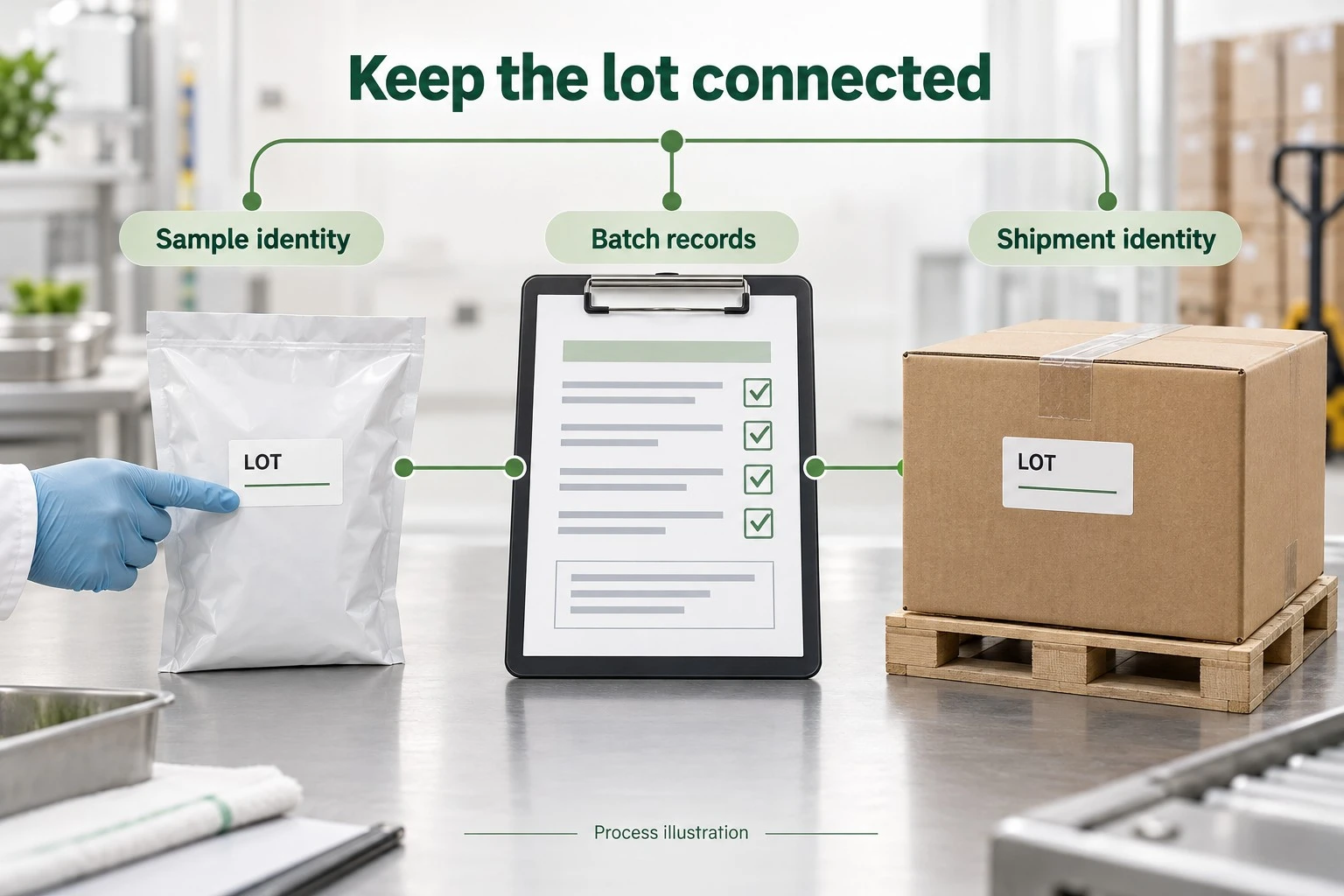
We build the product specification around the selected straw-mushroom form, maturity, base-trim limit and defect standard. The packed lot identifier connects the sample, carton marks and shipment record. A buyer can ask for a COA or relevant laboratory report, with the exact tests and limits agreed for that order rather than assumed to be standard.
Commercial invoice and packing list details follow the final order. Destination-specific documents, claims or certificates require a separate availability check. We describe only verified production and inspection steps in a customer document; a source image is a product-form reference, not proof of a process certificate.
Frozen storage and delivery
We agree frozen storage and transport conditions for the verified pack and review carton integrity before loading. At receipt, the buyer can compare the frozen separation, frost level and cut integrity with the approved reference. A change in piece condition may signal packing pressure or cold-chain handling that needs investigation.
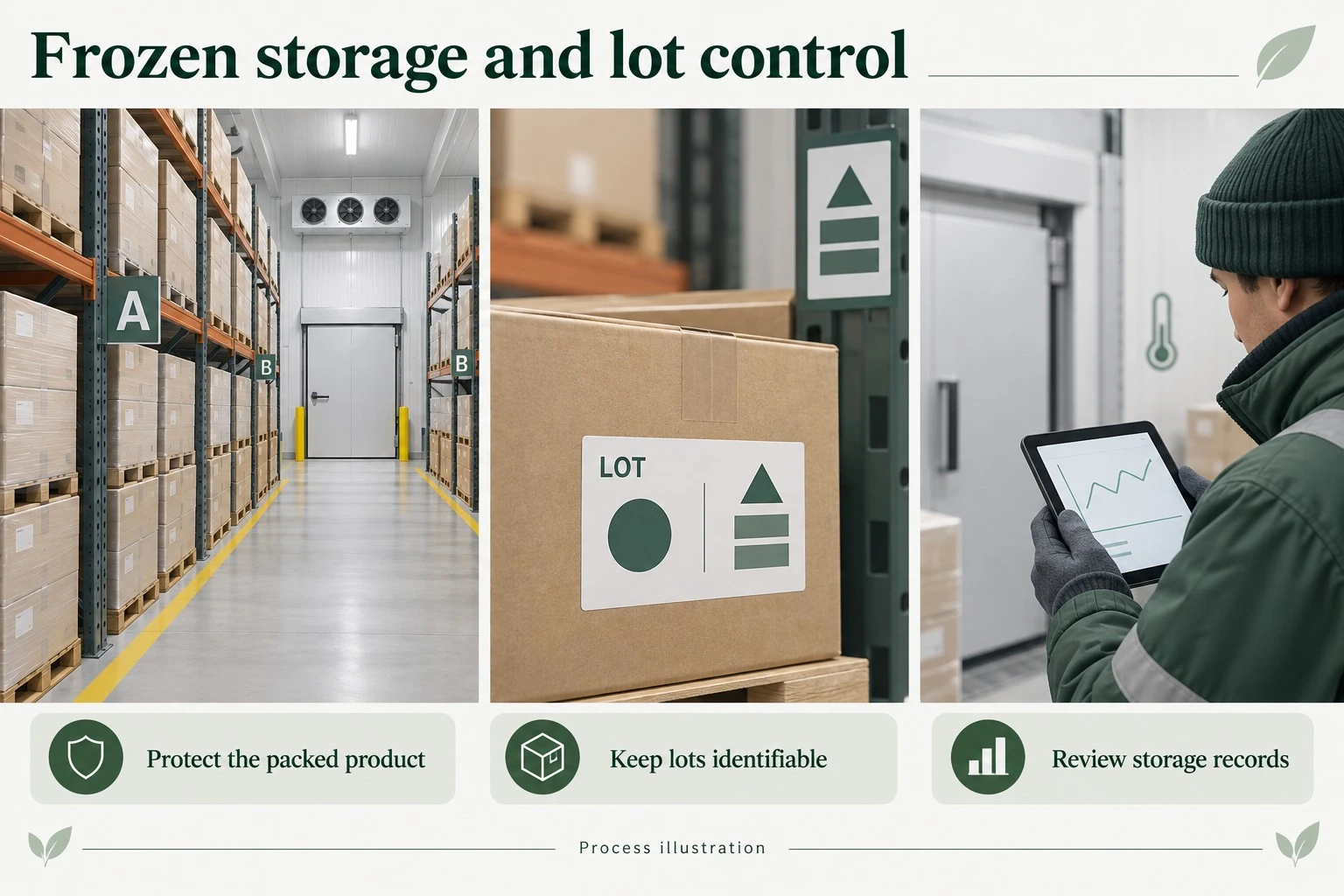
Loading quantity, pallet pattern, schedule and port depend on final pack dimensions and the confirmed order. For a mixed shipment, each straw-mushroom lot remains separately marked so its receiving result can be traced without confusing it with another mushroom or vegetable.

Frequently asked questions
Are the source mushrooms whole?
The reviewed bulk photos mainly show cut pieces with exposed pale interiors. A whole-button order requires its own source lot and sample.
Can the pieces be specified as halves?
We can discuss a half-mushroom grade, but the cut and acceptable fragments must be measured on an actual lot. The photos alone do not define a calibrated half.
What does dark outside color mean?
Some outer color is part of the visible material. We agree the line between natural color and unacceptable dark or damaged tissue on a sample.
How are stem bases controlled?
The order should define firm-base trim and any soil or substrate residue limit. We check representative pieces after preparation.
Will cut faces stay intact?
Breakage depends on the cut, freezing and pack pressure. We agree a broken-piece tolerance and assess a packed sample after frozen handling.
Is the product already cooked?
The source photos do not prove a cooked state. Pretreatment and intended further cooking must be confirmed for the actual SKU.
What is checked in a soup application?
Piece distribution, tough-base residue and water release matter in a soup line. We recommend a trial in the buyer's process.
Can this join a mushroom blend?
Yes as a proposal after a separate blend formula is approved. Each component identity and weight remains traceable.
What pack formats can be quoted?
We quote a liner, carton or smaller pack after the cut and order size are set. Pack strength and seal condition form part of approval.
What documents can accompany an order?
The product specification and normal shipment paperwork are aligned to the lot. Requested tests or certificates are confirmed by market and agreement.
Are MOQ and lead time fixed?
They depend on the selected cut, packing and lot. We give an order-specific quotation rather than publishing a universal value.
How do we begin?
Send the intended application and preferred form through our inquiry page. We will review a sample and work out the remaining details with you.
Discuss your sourcing requirement
Tell us whether your line needs straw-mushroom halves, smaller cut pieces or another verified style through our inquiry page. We will review the sample, defect limits and packing with you.
Send an inquiryView product catalogAs one of the most professional frozen straw mushrooms manufacturers and suppliers in China, we're featured by quality products and good service. Please rest assured to wholesale high-grade frozen straw mushrooms from our factory.