




Frozen Pak Choi supply for commercial buyers
We supply cut frozen pak choi for noodle meals, prepared vegetables and soup bases. Green leaf and pale stalk soften at different rates, so the buyer needs a defined cut and leaf-to-stalk proportion.
We agree stalk width, piece length and root-base allowance on a representative sample. We then compare stalk tenderness and leaf condition after heating while checking grit, yellow leaf and dark bruising.

Product forms
Leaf-and-stalk cut
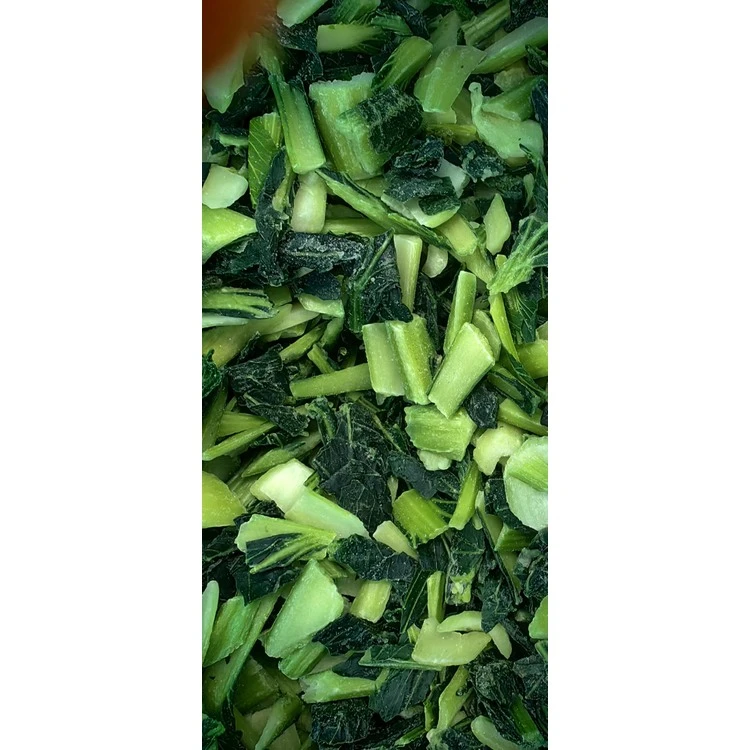
The source photo shows frozen mixed leaf and stalk pieces. We set cut length, stalk thickness and the ratio required by the buyer meal.
Stalk-led portion
A stalk-heavier style may suit noodle meals but needs its own sample. Grit and root-base remnants are particularly important in this grade.
Leaf-led portion
A leaf-forward style changes color and water release. Its availability and acceptance limit cannot be inferred from the one mixed-cut photograph.
Purchasing risks and acceptance checks
thick stalks cooking slower than leaves
We compare the raw-material condition and visible sample, then set an agreed limit for piece length, stalk width and leaf-to-stalk proportion.
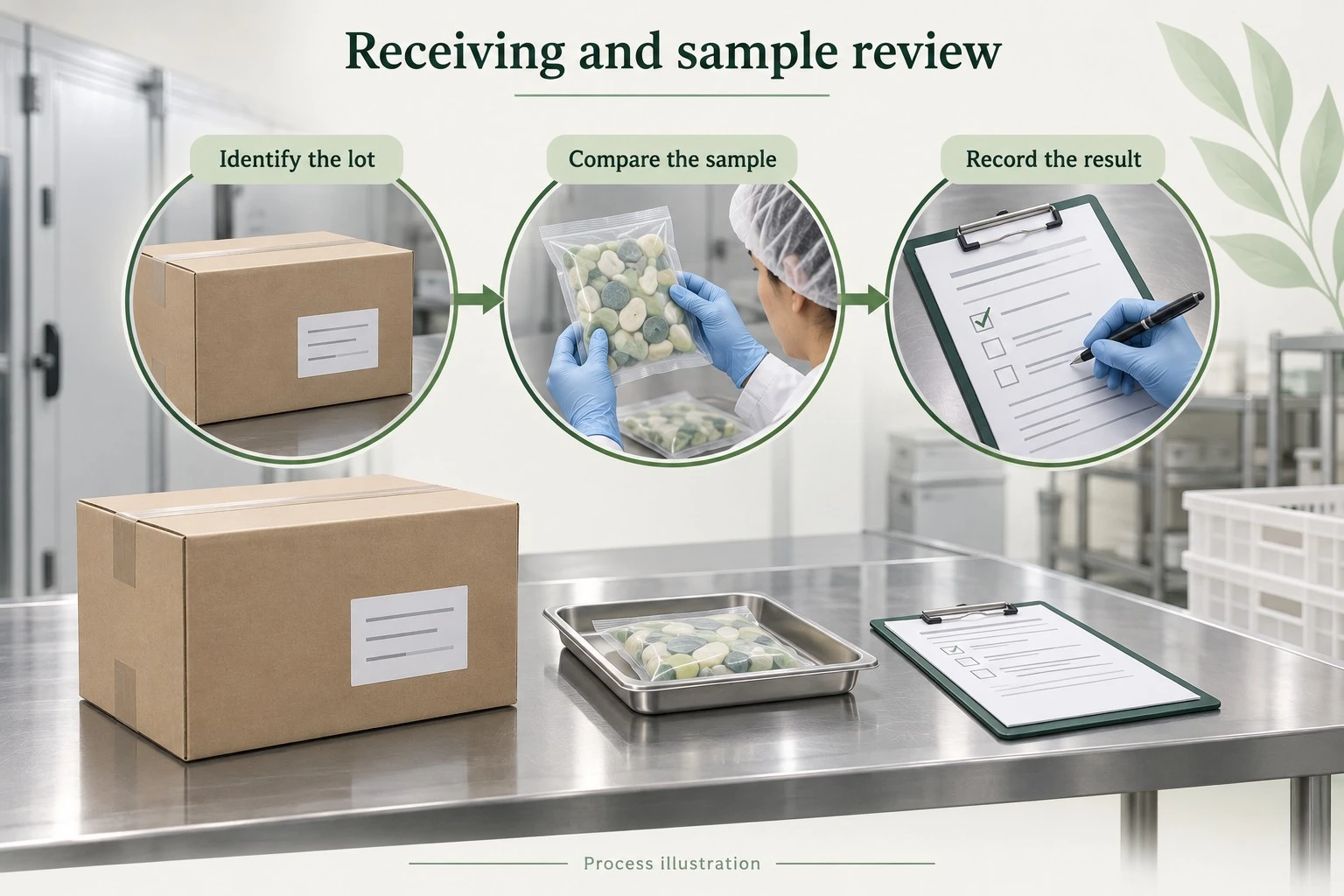
Your receiving team can judge the lot against the same pak choi leaf and stalk pieces reference used during approval.
Unwanted material or appearance outside the dark green leaf and pale stalk target
We define the visual exclusions for yellow leaf, coarse roots, grit and dark bruising; sorting and final inspection are aligned to the agreed sample.
Hard root-base and yellow leaf are separated from normal pale stalk.
Leaf fragments can freeze around thick stalk pieces and trapped grit.
Open a packed sample to check stalk thickness, leaf share, root-base residue and separation.
The meal producer receives a predictable leaf-to-stalk share and grit standard.
Product specifications
We match the form, grade and acceptance method to the agreed sample and your application.
| Item | Requirement |
|---|---|
| Product identity | Pak choi leaf and stalk pieces; confirm ingredient identity and intended frozen state on the order. |
| Commercial form | Cut leaf-and-stalk mix with an agreed ratio; each variation needs its own sample and approval. |
| Cut and size | Confirm piece length, stalk width and leaf-to-stalk proportion; agree the measurement method and tolerance from a reference sample. |
| Appearance | Agree the acceptable dark green leaf and pale stalk range and limits for yellow leaf, coarse roots, grit and dark bruising. |
| Processing route | Confirm root trim, wash, cut, blanching decision and drainage and any applicable pretreatment for the actual SKU. |
| Defect allowance | Write limits for thick stalks cooking slower than leaves, broken pieces and foreign material in the approved specification. |
| Packing and label | Confirm unit weight, inner bag, carton, label language and carton marks for the destination market. |
| Commercial terms | Confirm MOQ, lead time, loading port, trade terms and shipment quantity for this order; no standard value is implied. |
| Shelf life and storage | Confirm the approved shelf-life statement and frozen storage condition on the final specification and label. |
Preparation and frozen processing
- Raw-material review. We define the incoming pak choi leaf and stalk pieces condition, maturity and visible exclusions before selecting a production lot. The material must be suitable for cut leaf-and-stalk mix with an agreed ratio.
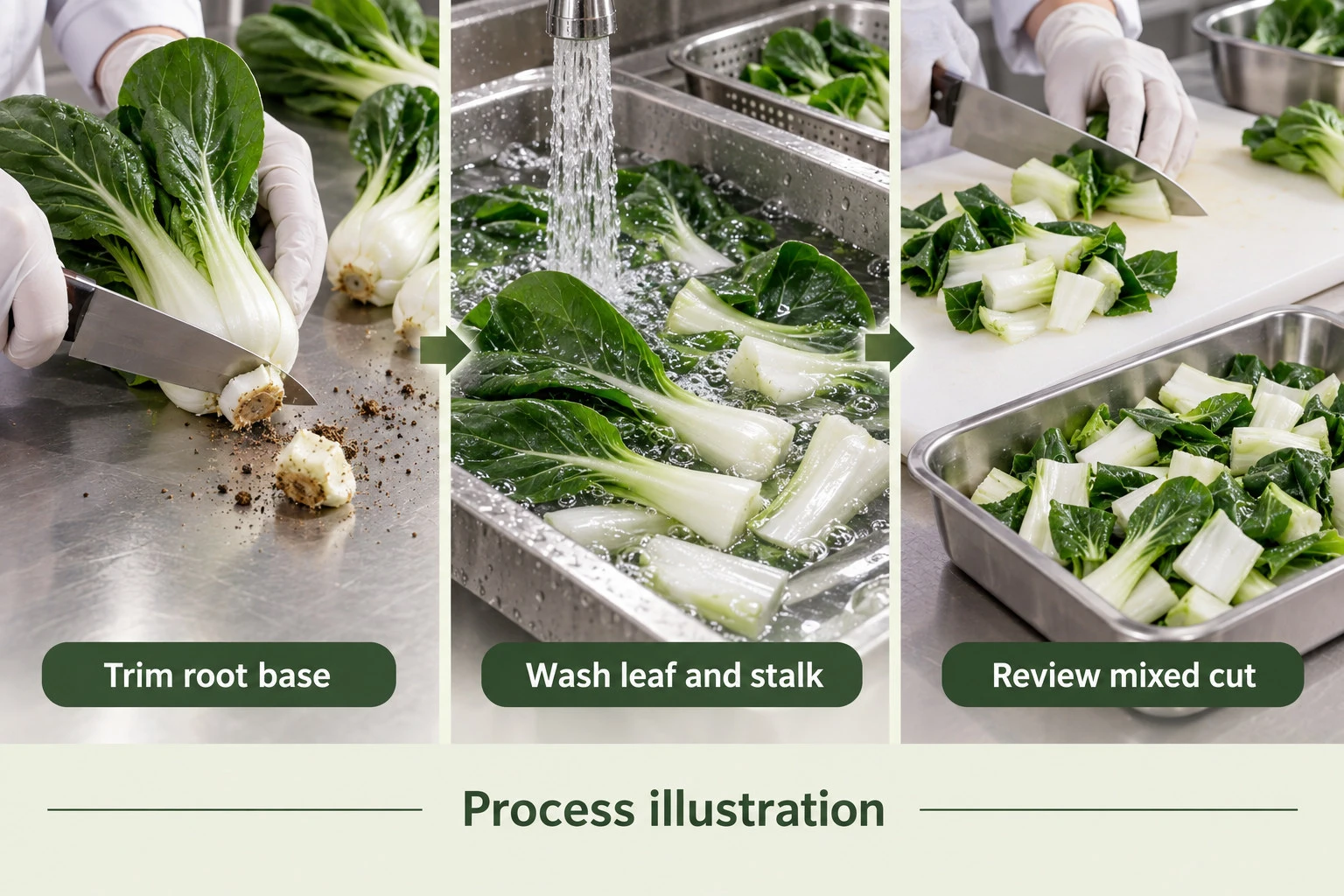
- Cleaning and preparation. We remove root-base material and grit before cutting, then sort damaged leaves and hard stalk. The approved grade records leaf-to-stalk share rather than only a nominal piece length.
- Pretreatment and processing state. The order record addresses root trim, wash, cut, blanching decision and drainage for this SKU. Processing time, temperature and finished state must come from its approved production record.
- Freezing and separation. Open a packed sample to check stalk thickness, leaf share, root-base residue and separation.
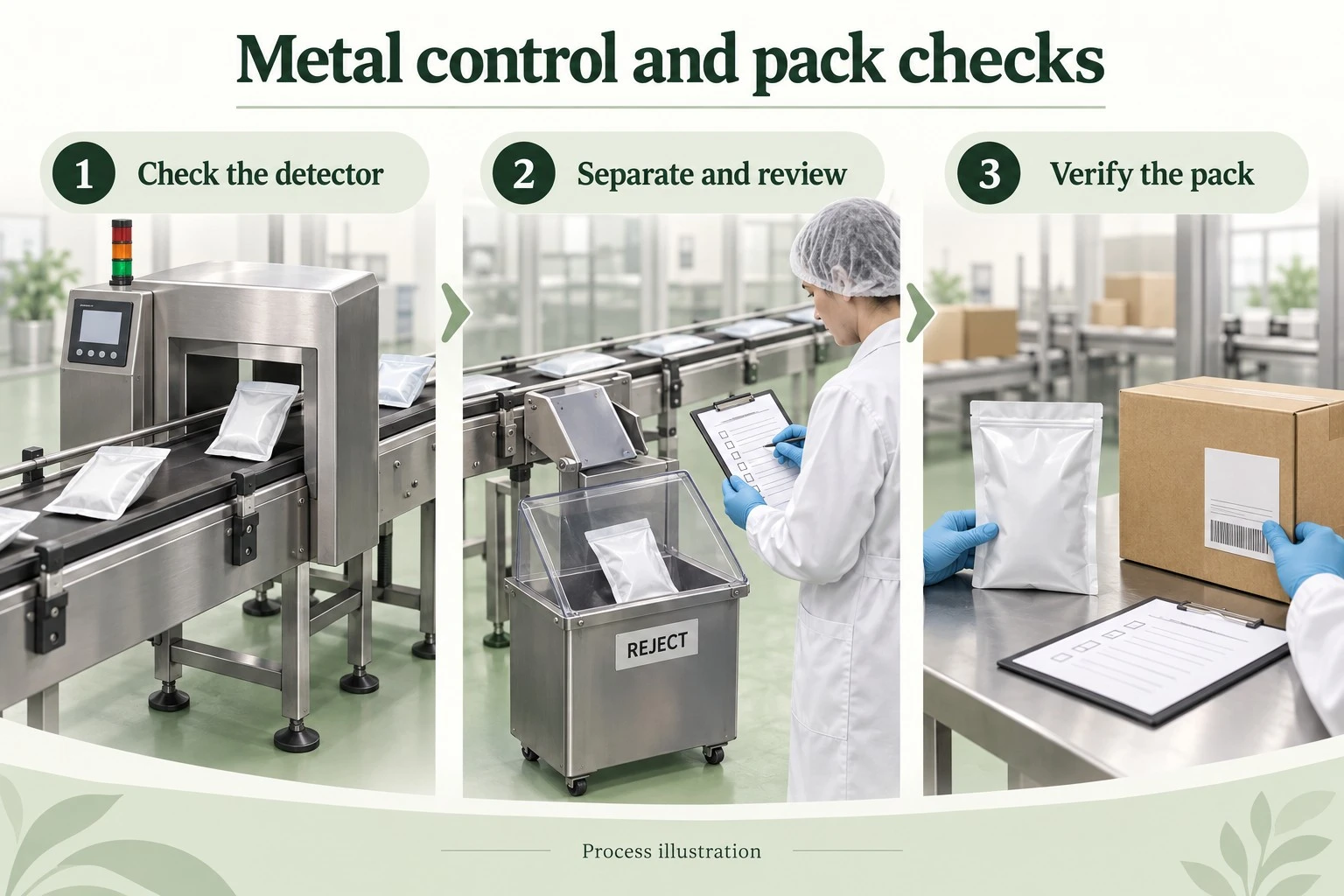
- Inspection and packing. We sort against the dark green leaf and pale stalk appearance target and named defects, then check pack integrity, net weight, label identity and batch code.
Quality control
For pak choi, we inspect the trimmed root base for grit and coarse tissue, then compare dark leaf and pale stalk proportions. The heated sample shows whether stalk tenderness matches the leaf.
We ask your team to assess stalk tenderness and leaf condition after heating, because a lot that looks acceptable in a frozen carton may perform differently after its intended processing step.
Applications and quality requirements
| Application | Buyer channel | Purchasing requirement |
|---|---|---|
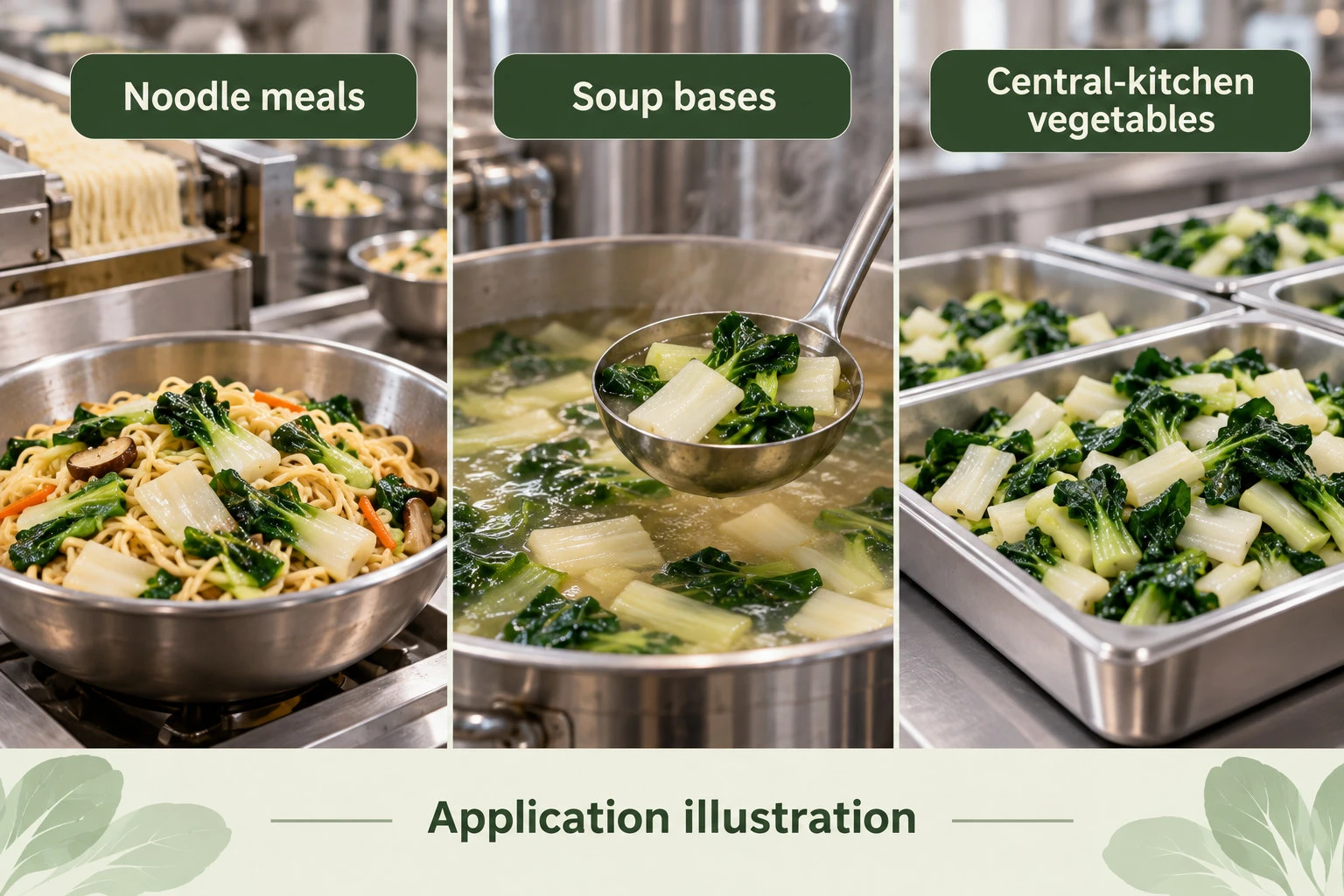
| Noodle meals | Asian meal factories | Balance pale stalk and dark leaf so each portion has the intended texture after reheating. |
| Soup bases | soup manufacturers | Keep root base and grit out while defining stalk width for the broth process. |
| Central-kitchen vegetables | foodservice kitchens | Confirm cut length and stalk tenderness from a heated sample. |
Packing and private label
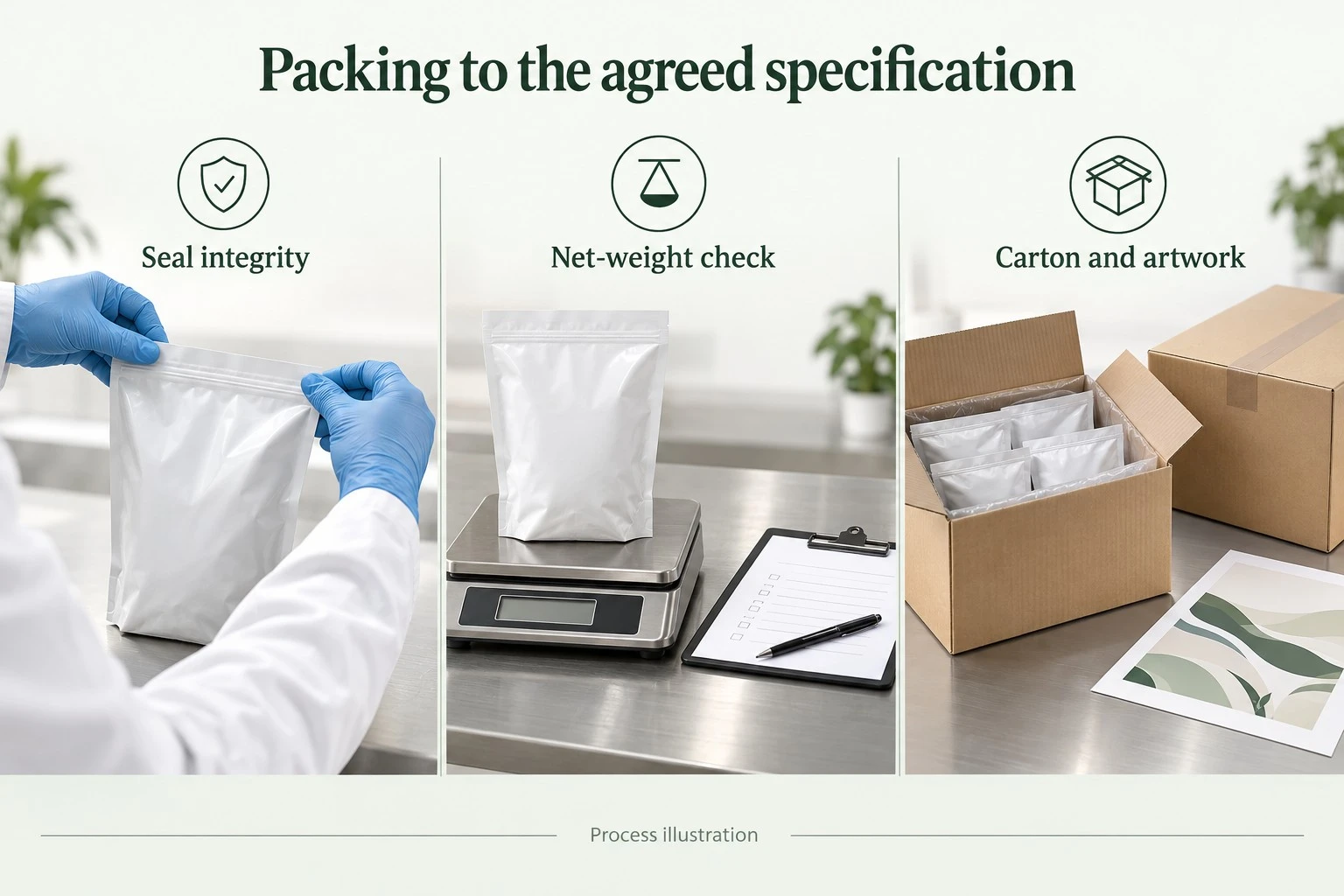
Bulk pack weight, liner and carton strength are set around pak choi leaf and stalk pieces and its risk of thick stalks cooking slower than leaves.
A stalk-led or leaf-led label needs its own evidence beyond the one mixed-cut image. We review the actual bag seal, label language, artwork and carton marks before printing.
Documents and traceability
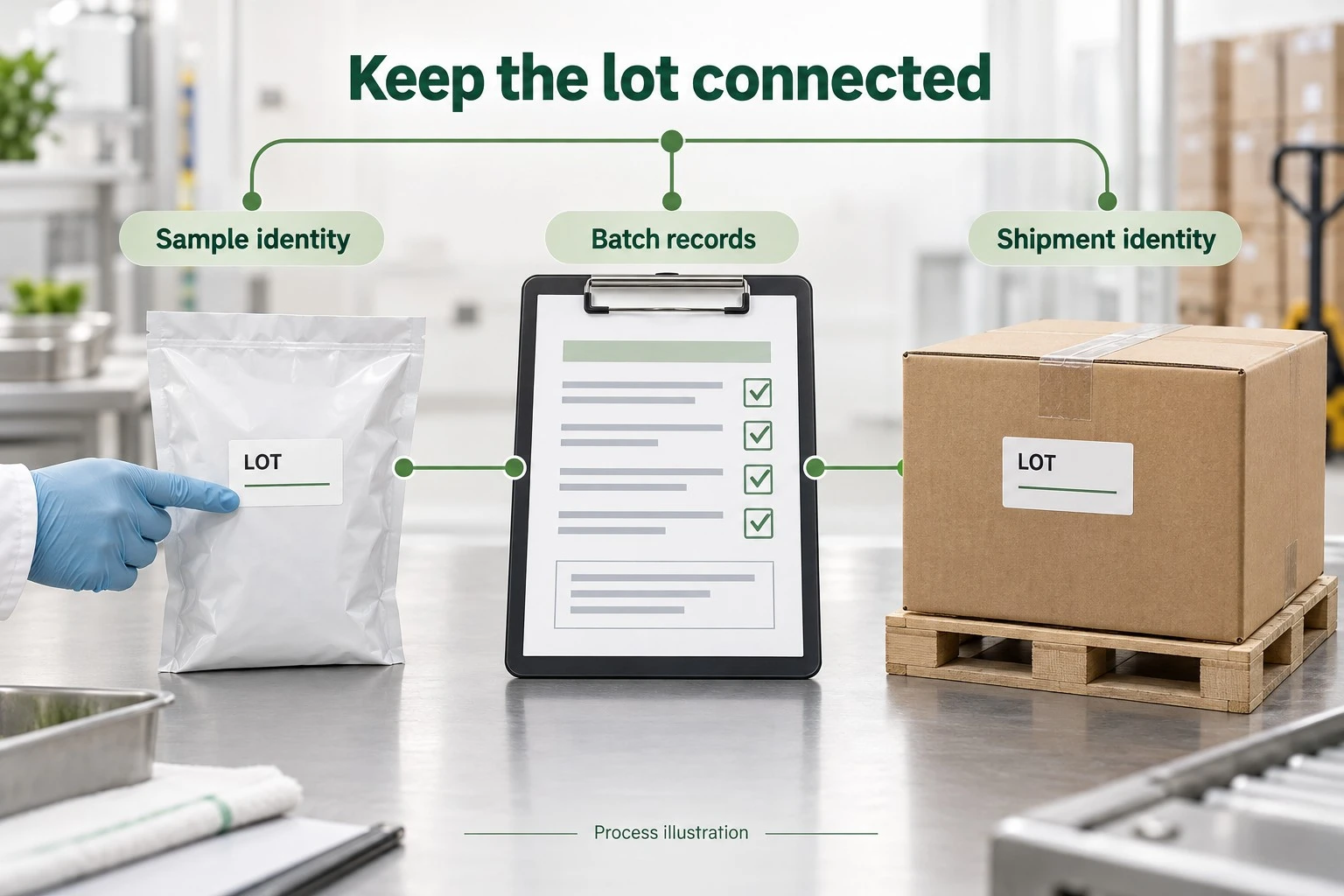
The invoice, packing list and carton marks must describe cut leaf-and-stalk mix with an agreed ratio consistently.
We discuss inspection records or reports for the actual pak choi leaf and stalk pieces lot and destination. Requested evidence must answer a defined receiving concern such as yellow leaf, coarse roots, grit and dark bruising; certification scope is checked before it is claimed.
Frozen storage and delivery
We check pak choi leaf and stalk pieces cartons, lot codes and pallet layout before frozen loading.
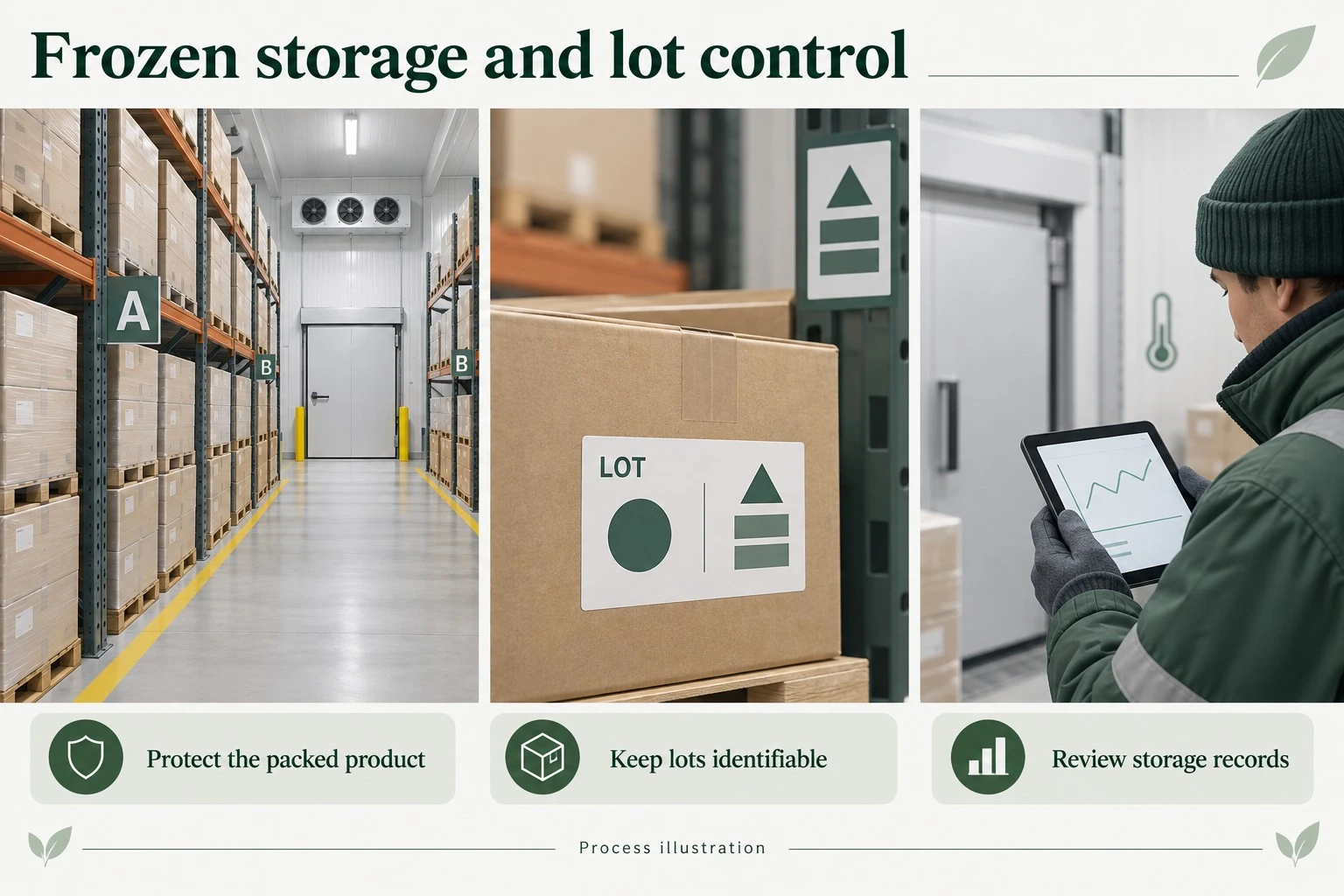
A mixed load keeps frozen pak choi identifiable by lot and pallet position.

Frequently asked questions
How is pak choi different from Chinese cabbage here?
This product has dark leaf and pale short stalk pieces. The leaf-to-stalk and root-trim standards are separate from heading Chinese cabbage.
Will stalk and leaf heat at the same rate?
They do not necessarily. We test the specified cut and ratio in the planned meal or broth process.
How is grit controlled?
We focus washing and inspection on the stalk base and leaf junctions.
How is the leaf-to-stalk ratio set?
We agree it on a representative mixed sample. The ratio affects color, texture and heating time.
What is checked at the root base?
We look for hard base remnants and trapped grit. Both are separate rejection points from normal pale stalk.
Is the photographed cut leaf-only?
No. It shows leaf and stalk pieces. A leaf-only offer needs separate evidence and a sample.
What matters in noodle meals?
Stalk thickness and leaf integrity should fit the meal heating time. We assess the material in the buyer process.
How will frozen pak choi be packed?
We select an inner bag and carton around piece length, stalk width and leaf-to-stalk proportion.
Which records accompany frozen pak choi?
We link the leaf-to-stalk proportion, cut and root-base standards to the accepted sample, lot inspection and shipment documents. Requested test reports are agreed for the destination and actual lot.
Can frozen pak choi join a mixed frozen shipment?
We can review frozen pak choi with other compatible frozen items under an agreed loading plan. Pak choi retains its own leaf-and-stalk proportion and lot identity within a mixed vegetable load.
How are MOQ and lead time confirmed for frozen pak choi?
Stalk width, leaf proportion and the agreed inner pack are checked before a schedule is confirmed. We confirm the order quantity and lead time for that defined order rather than publish one value for every pack.
What should we discuss first for Frozen Pak Choi?
Tell us the target leaf-to-stalk ratio and the meal heating step.
Discuss your sourcing requirement
Discuss your frozen pak choi application with us through our inquiry page.
Send an inquiryView product catalogAs one of the most professional frozen pak choi manufacturers and suppliers in China, we're featured by quality products and good service. Please rest assured to wholesale high-grade frozen pak choi from our factory.