




Frozen Broad Beans supply for commercial buyers
We supply shelled frozen broad beans, also known as fava beans, for vegetable blends, prepared meals and foodservice. Bean size, maturity and skin condition need separate limits: a uniform size grade alone cannot control tough skins or uneven tenderness.
We agree skin-on or skin-removed requirements before sampling and check split beans, loose skins and dark pieces. A heating trial helps us match the selected grade to a visible side dish or a mixed formulation.

Product forms
Shelled skin-on beans
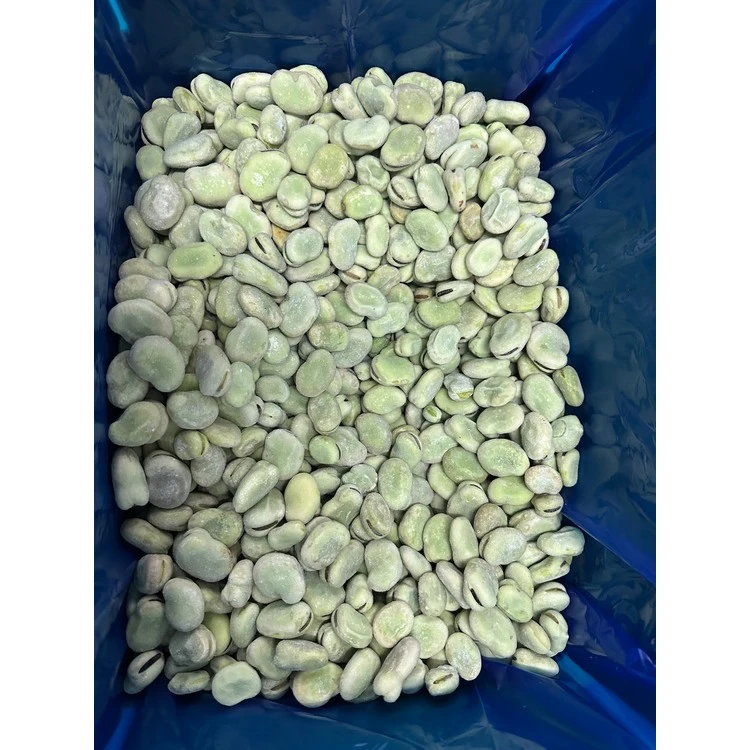
The pictured beans are shelled. We agree bean size, maturity, split-skin allowance and the proportion of pale or darkened beans.
Skin-removed proposal
A peeled fava style would have a different yield and damage profile. The source images do not prove it is available; a separate sample is required.
Small-bean grade
A smaller bean may heat and portion differently from a mature large bean. We grade on actual measured lots rather than a broad green-bean label.
Purchasing risks and acceptance checks
mixed maturity and broken beans
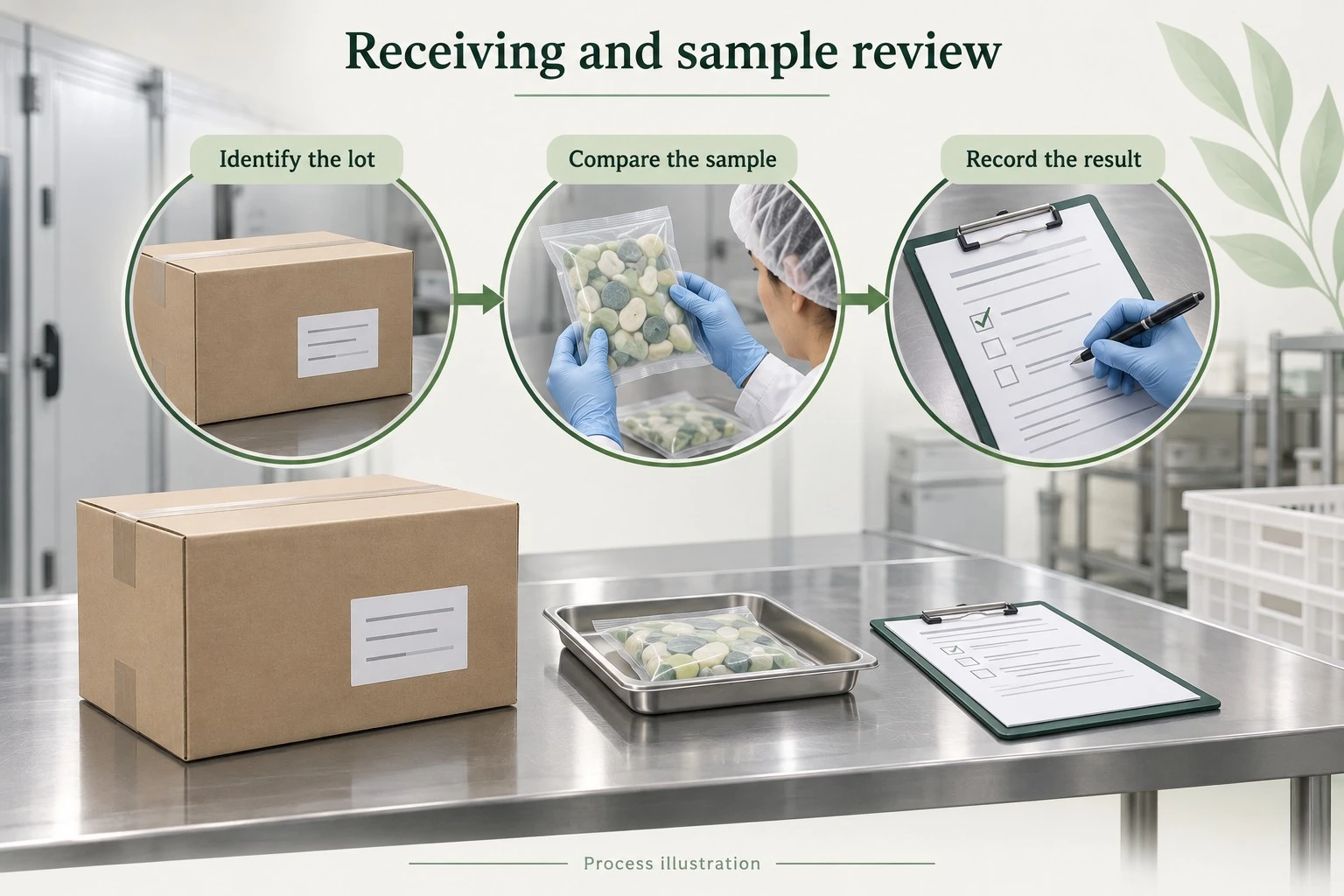
We compare the raw-material condition and visible sample, then set an agreed limit for bean size grade, skin condition and split-bean allowance.
Your receiving team can judge the lot against the same shelled broad beans reference used during approval.
Unwanted material or appearance outside the green to pale green bean target
We define the visual exclusions for dark skin, damaged cotyledons, loose skins and frost; sorting and final inspection are aligned to the agreed sample.
Mature tough-skin beans are assessed separately from simple color variation.
Mixed maturity can create different skin toughness within one size grade.
Compare beans across the carton for skin splits, maturity and texture after the customer heating process.
Bean size, split skin and cooked bite can be judged independently.
Product specifications
We match the form, grade and acceptance method to the agreed sample and your application.
| Item | Requirement |
|---|---|
| Product identity | Shelled broad beans; confirm ingredient identity and intended frozen state on the order. |
| Commercial form | Shelled beans; skin removal considered as a separate specification; each variation needs its own sample and approval. |
| Cut and size | Confirm bean size grade, skin condition and split-bean allowance; agree the measurement method and tolerance from a reference sample. |
| Appearance | Agree the acceptable green to pale green bean range and limits for dark skin, damaged cotyledons, loose skins and frost. |
| Processing route | Confirm shelling, grade, blanching profile and cooling and any applicable pretreatment for the actual SKU. |
| Defect allowance | Write limits for mixed maturity and broken beans, broken pieces and foreign material in the approved specification. |
| Packing and label | Confirm unit weight, inner bag, carton, label language and carton marks for the destination market. |
| Commercial terms | Confirm MOQ, lead time, loading port, trade terms and shipment quantity for this order; no standard value is implied. |
| Shelf life and storage | Confirm the approved shelf-life statement and frozen storage condition on the final specification and label. |
Preparation and frozen processing
- Raw-material review. We define the incoming shelled broad beans condition, maturity and visible exclusions before selecting a production lot. The material must be suitable for shelled beans; skin removal considered as a separate specification.
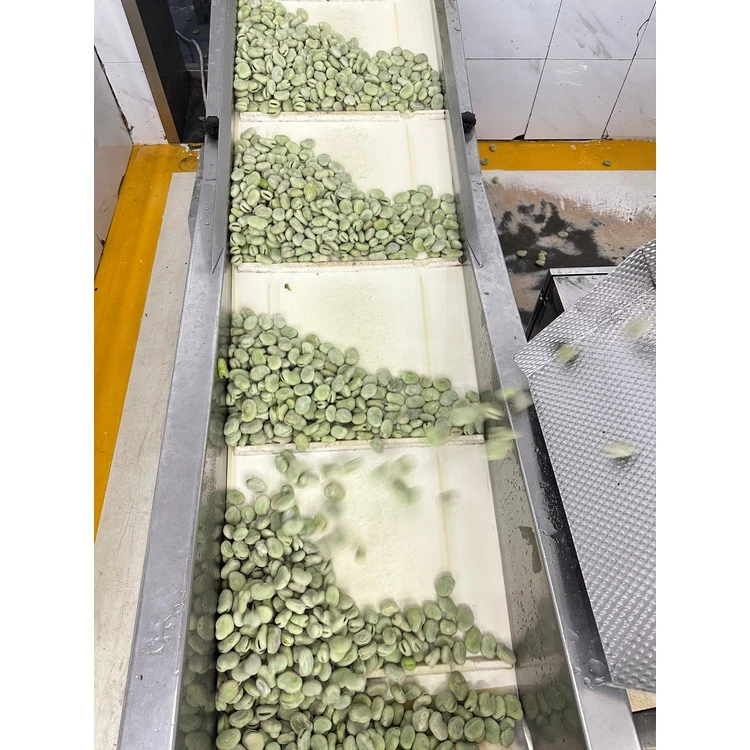
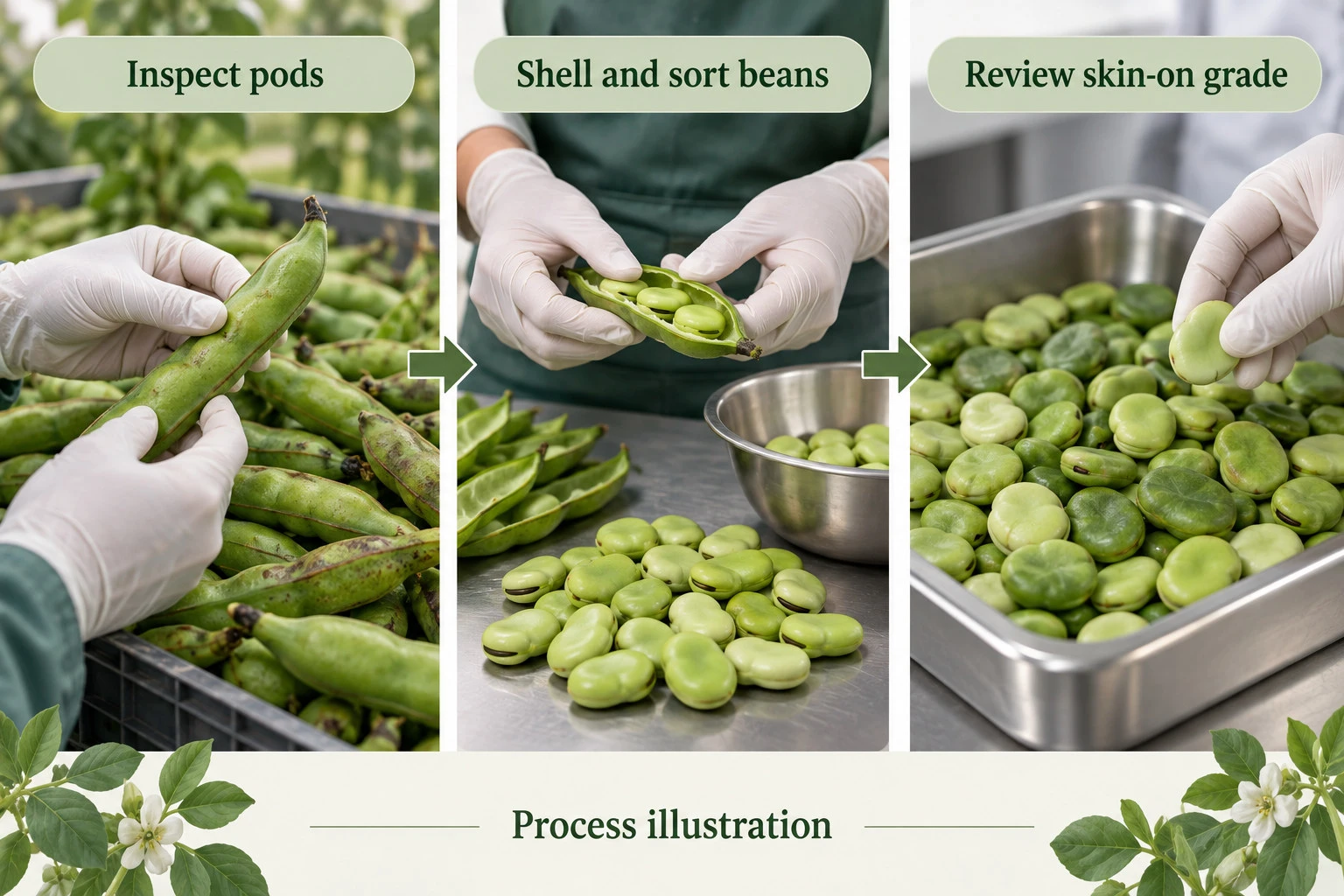
- Cleaning and preparation. We shell and sort beans by maturity and size, removing damaged or discolored pieces. Any skin removal or heat-treatment status is tied to the verified production route, not inferred from the carton photo.
- Pretreatment and processing state. The order record addresses shelling, grade, blanching profile and cooling for this SKU. Processing time, temperature and finished state must come from its approved production record.
- Freezing and separation. Compare beans across the carton for skin splits, maturity and texture after the customer heating process.
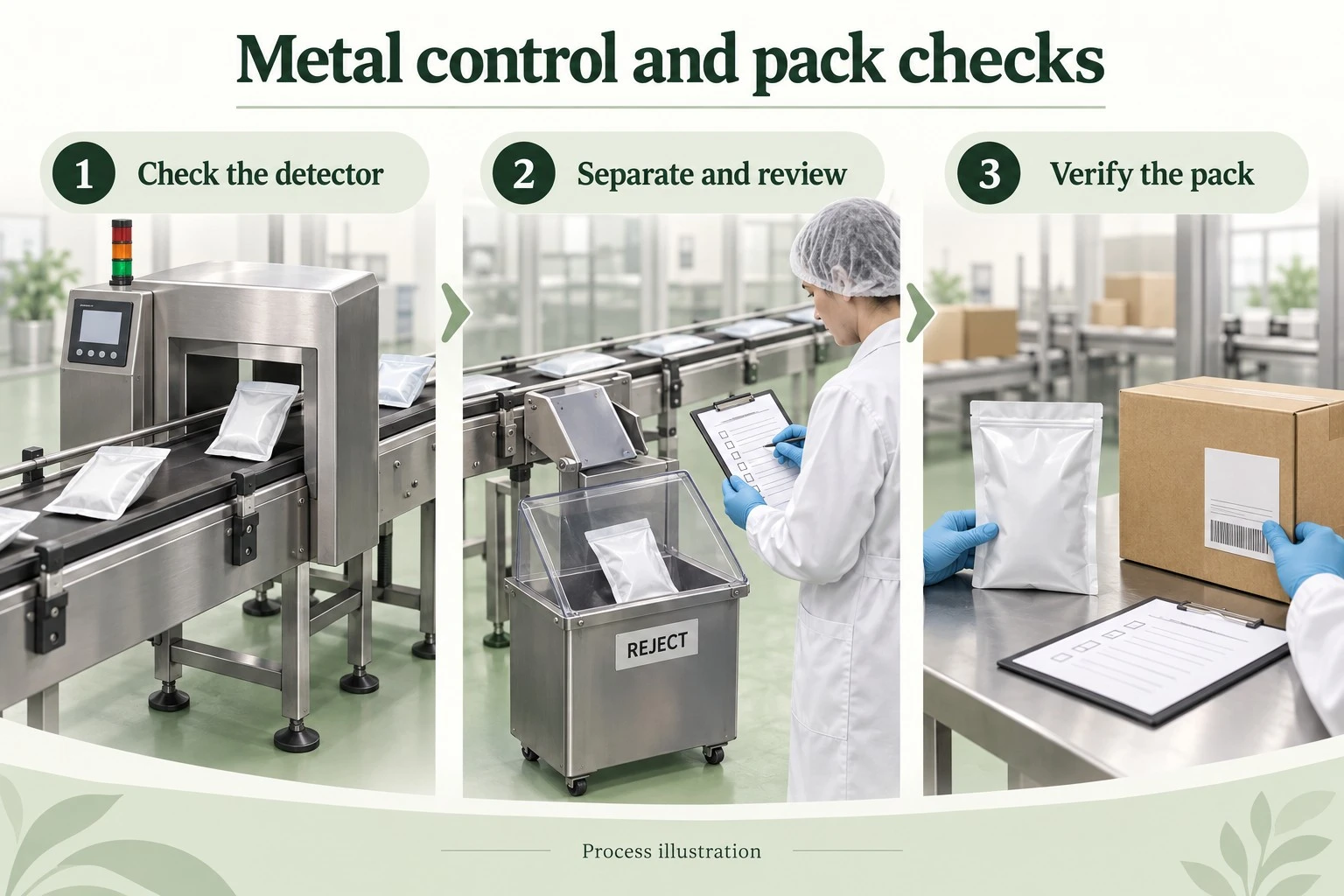
- Inspection and packing. We sort against the green to pale green bean appearance target and named defects, then check pack integrity, net weight, label identity and batch code.
Quality control
For broad beans, split beans, loose skins and dark beans are graded separately from seed maturity. A heated sample reveals whether the chosen skin-on form meets the buyer texture target.
We ask your team to assess bean tenderness and skin behaviour after heating, because a lot that looks acceptable in a frozen carton may perform differently after its intended processing step.
Applications and quality requirements
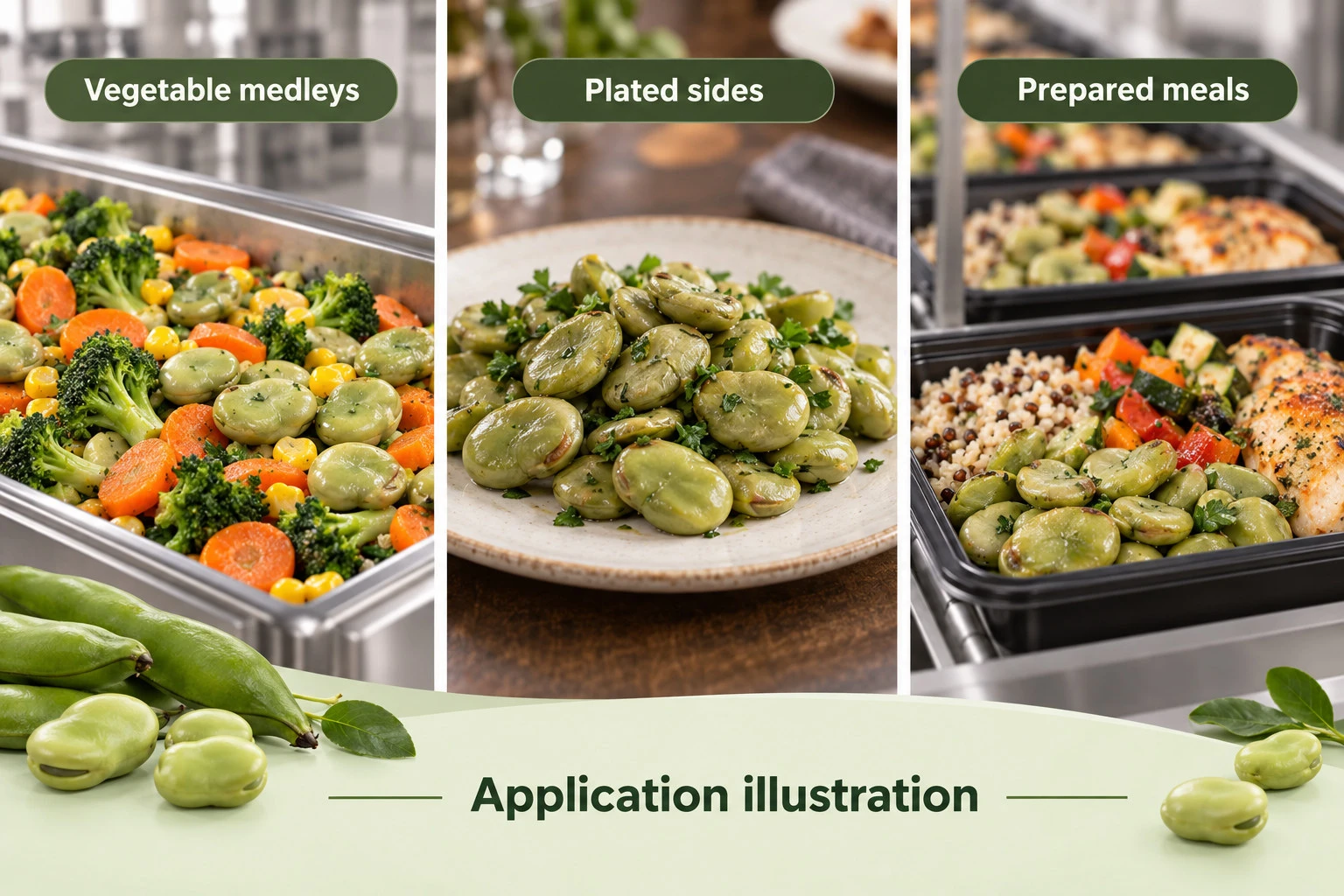
| Application | Buyer channel | Purchasing requirement |
|---|---|---|
| Vegetable medleys | blend packers | Select a bean-size grade that matches the other pieces and limits loose skins. |
| Plated sides | foodservice distributors | Test skin tenderness and split-bean allowance after the planned heat step. |
| Prepared meals | meal factories | Treat skin-removed beans as a separate specification, not an assumed variation of the photographed shelled beans. |
Packing and private label
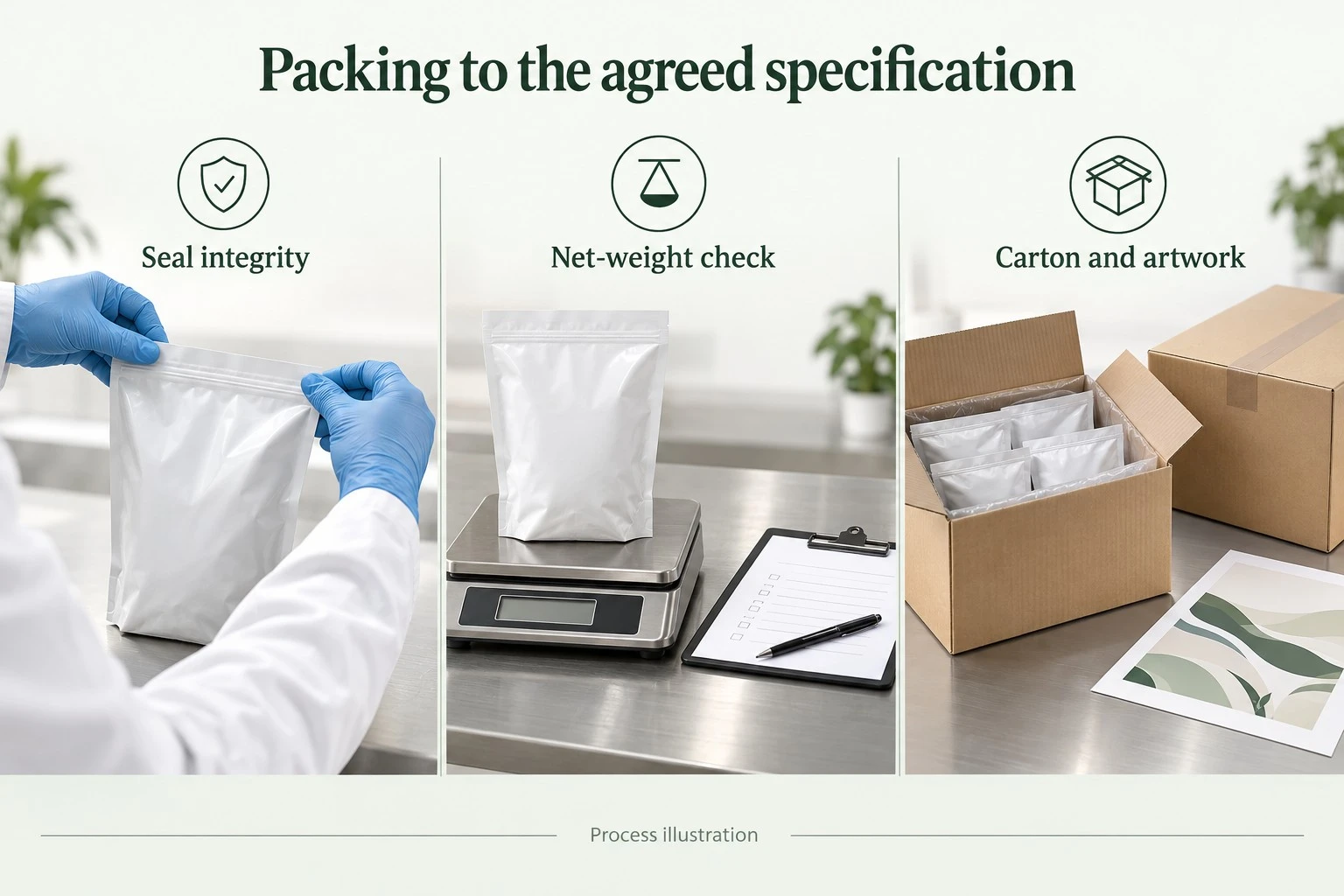
Bulk pack weight, liner and carton strength are set around shelled broad beans and its risk of mixed maturity and broken beans.
A peeled-fava claim requires a verified peeled lot; the current photos show shelled beans. We review the actual bag seal, label language, artwork and carton marks before printing.
Documents and traceability
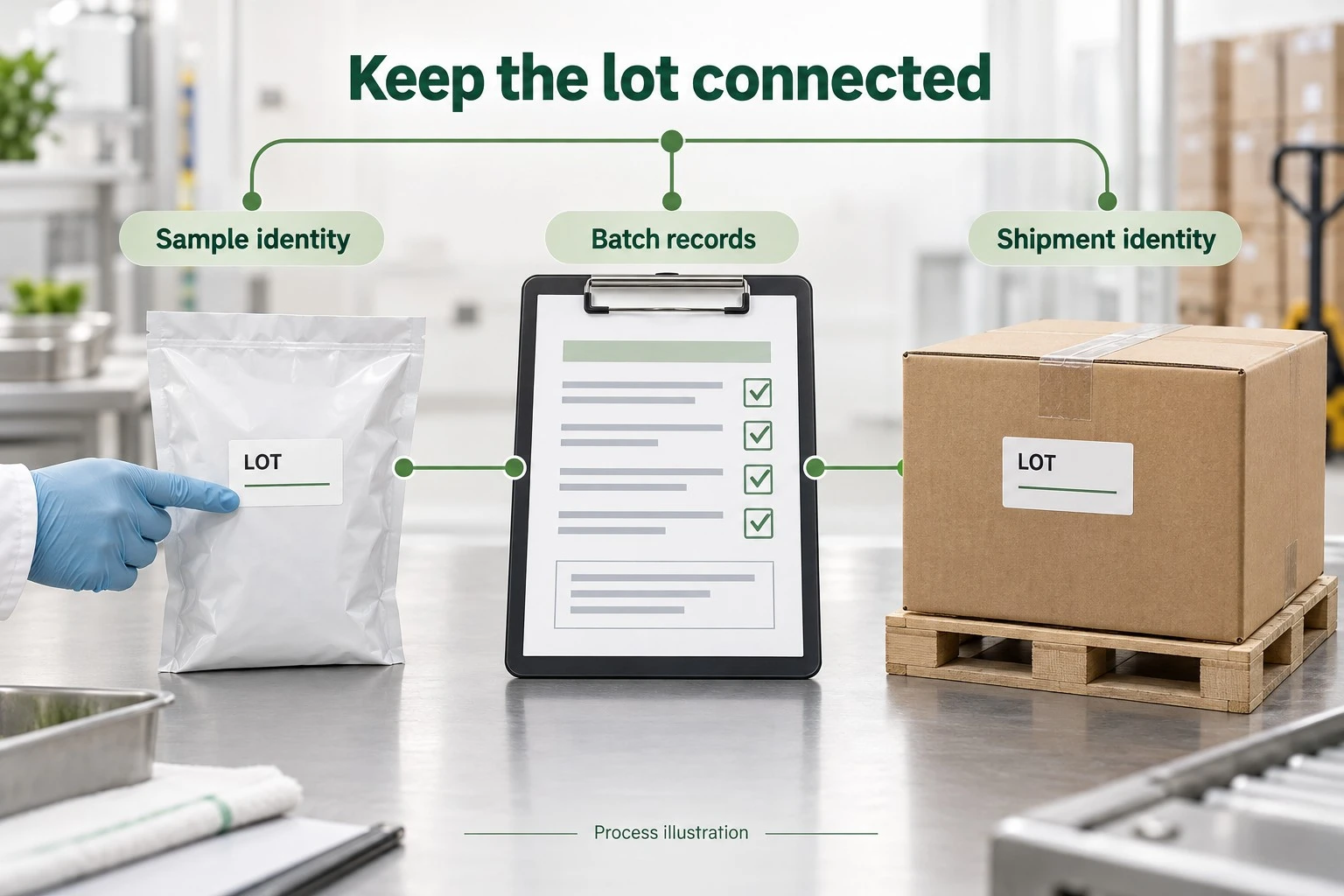
The invoice, packing list and carton marks must describe shelled beans; skin removal considered as a separate specification consistently.
We discuss inspection records or reports for the actual shelled broad beans lot and destination. Requested evidence must answer a defined receiving concern such as dark skin, damaged cotyledons, loose skins and frost; certification scope is checked before it is claimed.
Frozen storage and delivery
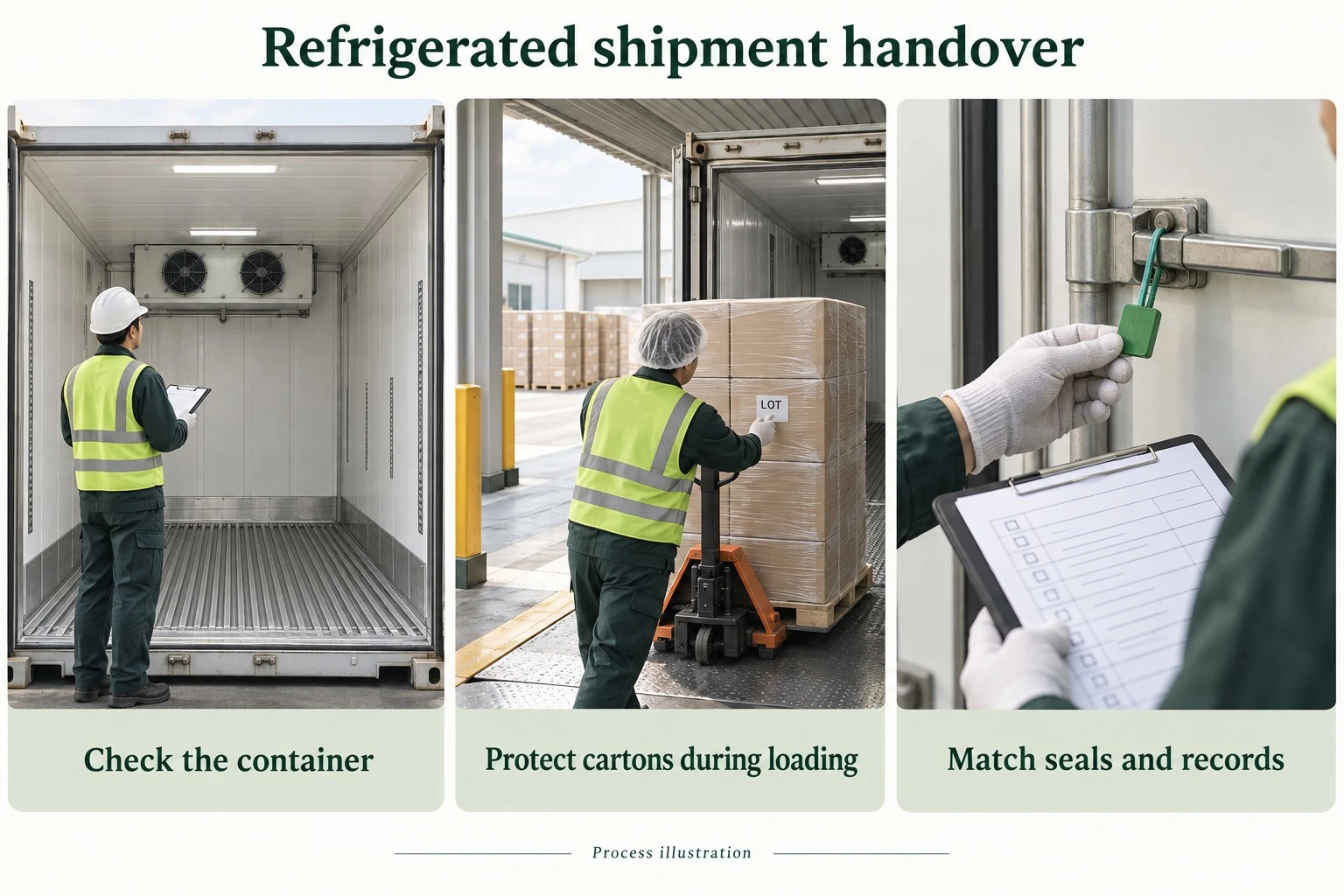
We check shelled broad beans cartons, lot codes and pallet layout before frozen loading.
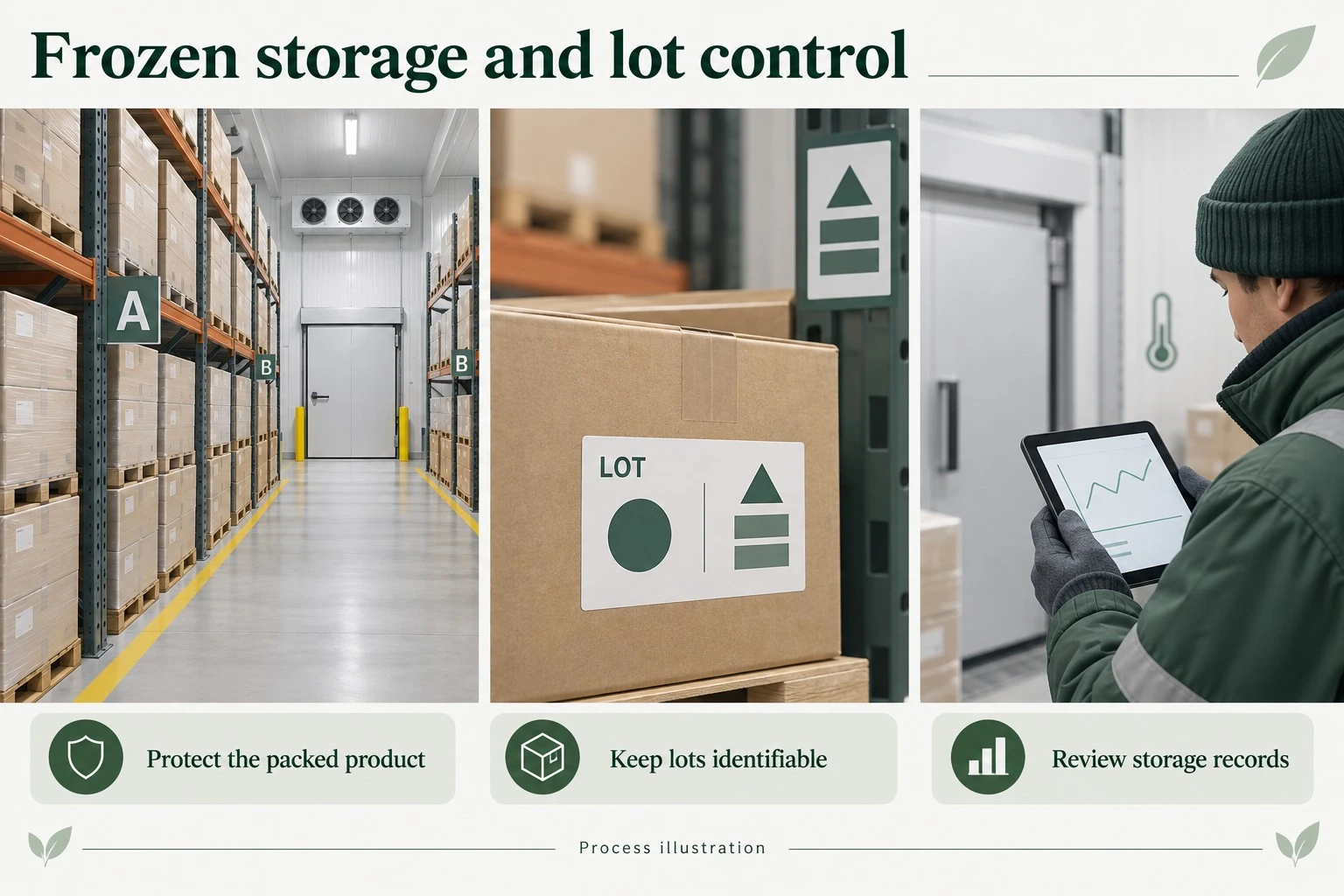
A mixed load keeps frozen broad beans identifiable by lot and pallet position.
Frequently asked questions
Are the broad beans shelled?
The pictured product is shelled beans. Seed-skin removal is a different preparation and must be agreed separately.
How is maturity assessed?
We review size, skin toughness and colour on an actual lot sample; large beans may need a different heat step.
What is the split-bean allowance?
We set a split and loose-skin limit for the intended side dish or blend.
Are broad beans and fava beans the same offer here?
Yes, fava is a common market term for broad beans. The order still specifies shelled form and skin state.
Are the pictured beans skin removed?
The source images establish shelled beans, not a peeled cotyledon grade. A skin-removed offer needs separate verification.
Can the bean be used in a vegetable medley?
We compare bean size and heating response with the other vegetables. A skin-on shelled grade may need a different treatment from small diced pieces.
What is checked after frozen handling?
We inspect split skins, broken beans and clumps from a packed carton. A display tray may understate transport damage.
How will frozen broad beans be packed?
We select an inner bag and carton around bean size grade, skin condition and split-bean allowance.
Which records accompany frozen broad beans?
We link the bean-size, skin-state and split-bean standards to the accepted sample, lot inspection and shipment documents. Requested test reports are agreed for the destination and actual lot.
Can frozen broad beans join a mixed frozen shipment?
We can review frozen broad beans with other compatible frozen items under an agreed loading plan. Skin-on and skin-removed beans remain separate items, with their maturity grades and lot marks kept distinct.
How are MOQ and lead time confirmed for frozen broad beans?
Bean grade, skin removal and inner-bag format affect the production and packing plan. We confirm the order quantity and lead time for that defined order rather than publish one value for every pack.
What should we discuss first for Frozen Broad Beans?
Tell us whether the bean is skin-on shelled fava and what maturity range the side dish accepts.
Discuss your sourcing requirement
Discuss your frozen broad beans application with us through our inquiry page.
Send an inquiryView product catalogAs one of the most professional frozen broad beans manufacturers and suppliers in China, we're featured by quality products and good service. Please rest assured to wholesale high-grade frozen broad beans from our factory.