




Frozen Burdock supply for commercial buyers
We supply frozen burdock strips for Asian vegetable blends, savory fillings and foodservice. Strip width, pale cut-face color and the absence of woody core help the ingredient retain a consistent bite through the buyer's heating process.
We agree the cut style, peel allowance and acceptable dark edges on a representative sample. We then compare firmness and color after heating so a thin strip grade is not replaced by coarser, tougher pieces.

Product forms
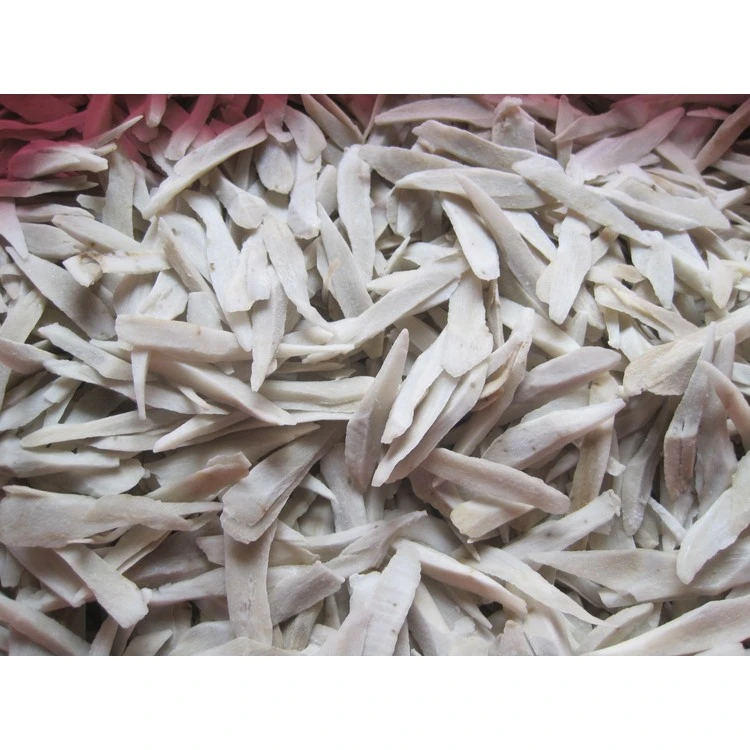
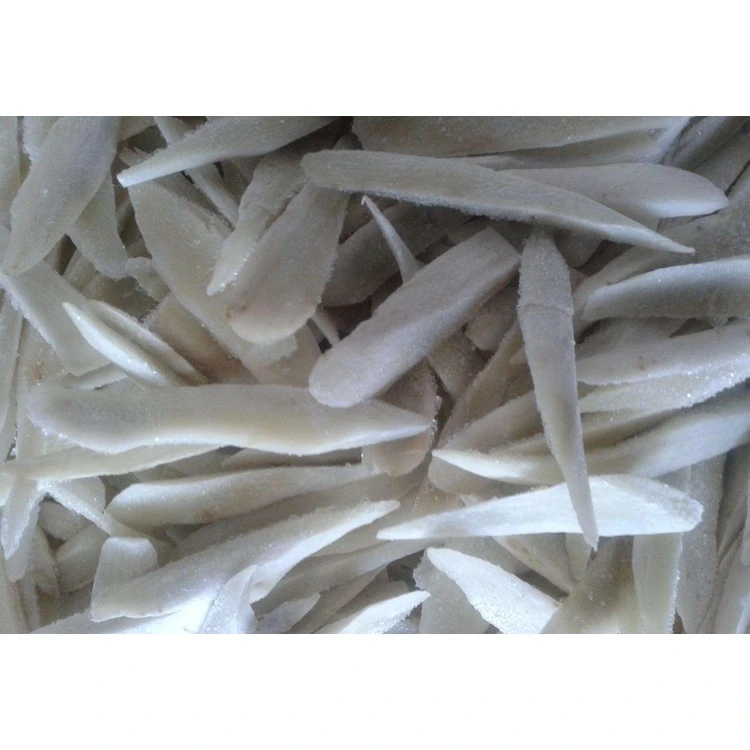
Pale root strips
The usable product reference shows strips. We grade strip width, length, woody core and broken fragments on a spread sample.
Browning-controlled appearance
A cut face may darken during preparation. We set a color reference and rejection point without promising a specific chemical treatment from a photograph.
Different root cut
A dice or coarse baton would change bite and line yield. We discuss those only against a separate production sample.
Purchasing risks and acceptance checks
surface browning and high breakage of thin strips
We compare the raw-material condition and visible sample, then set an agreed limit for strip length, thickness and peel allowance.
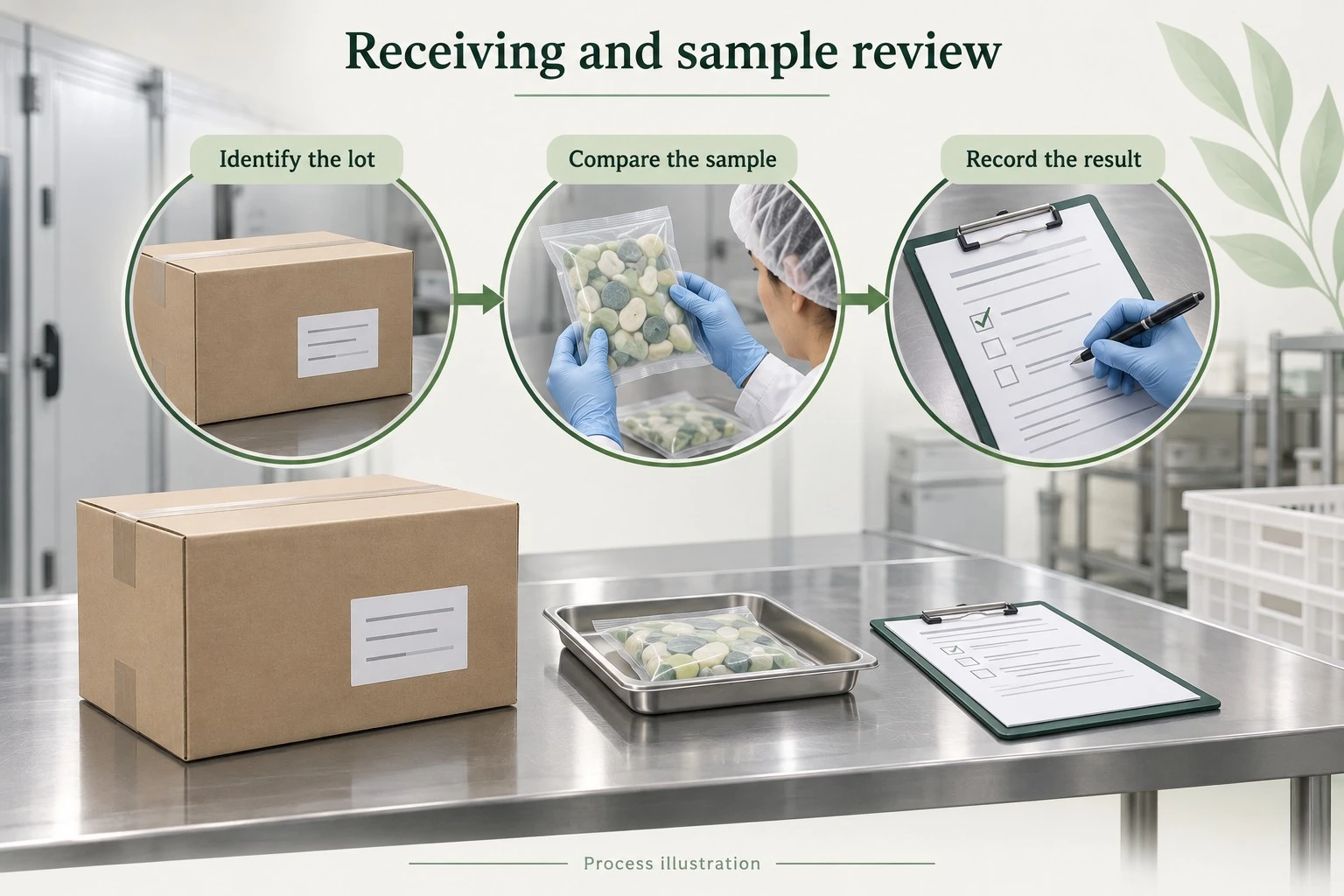
Your receiving team can judge the lot against the same cut burdock root strips reference used during approval.
Unwanted material or appearance outside the pale root flesh target
We define the visual exclusions for dark edges, tough peel, woody core and loose fragments; sorting and final inspection are aligned to the agreed sample.
Woody cores and severe cut-face browning are distinct rejection points.
Thin strips can break and expose additional browning during handling.
Compare packed strips after transport simulation for fragments, woody core and cut-face color.
The buyer sees a defined strip width, color range and broken-fragment allowance.
Product specifications
We match the form, grade and acceptance method to the agreed sample and your application.
| Item | Requirement |
|---|---|
| Product identity | Cut burdock root strips; confirm ingredient identity and intended frozen state on the order. |
| Commercial form | Peeled or scraped strips, with cut style confirmed by sample; each variation needs its own sample and approval. |
| Cut and size | Confirm strip length, thickness and peel allowance; agree the measurement method and tolerance from a reference sample. |
| Appearance | Agree the acceptable pale root flesh range and limits for dark edges, tough peel, woody core and loose fragments. |
| Processing route | Confirm wash, peel or scrape, cut and colour-control decision and any applicable pretreatment for the actual SKU. |
| Defect allowance | Write limits for surface browning and high breakage of thin strips, broken pieces and foreign material in the approved specification. |
| Packing and label | Confirm unit weight, inner bag, carton, label language and carton marks for the destination market. |
| Commercial terms | Confirm MOQ, lead time, loading port, trade terms and shipment quantity for this order; no standard value is implied. |
| Shelf life and storage | Confirm the approved shelf-life statement and frozen storage condition on the final specification and label. |
Preparation and frozen processing
- Raw-material review. We define the incoming cut burdock root strips condition, maturity and visible exclusions before selecting a production lot. The material must be suitable for peeled or scraped strips, with cut style confirmed by sample.
- Cleaning and preparation. We peel and trim according to the approved root grade, then cut strips to a measured width. Color and breakage are reviewed after handling; any pretreatment claim must match the actual production record.
- Pretreatment and processing state. The order record addresses wash, peel or scrape, cut and colour-control decision for this SKU. Processing time, temperature and finished state must come from its approved production record.
- Freezing and separation. Compare packed strips after transport simulation for fragments, woody core and cut-face color.
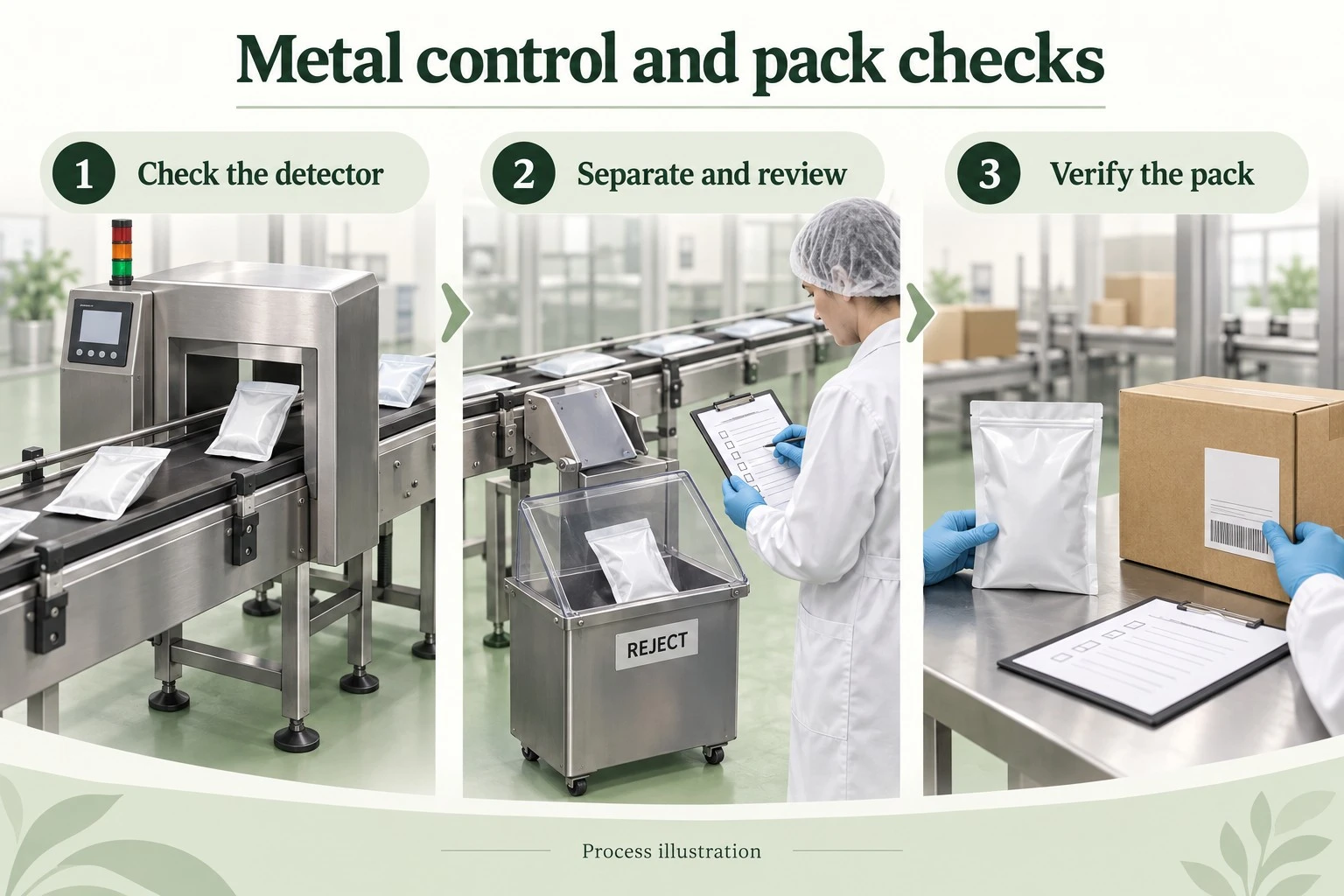
- Inspection and packing. We sort against the pale root flesh appearance target and named defects, then check pack integrity, net weight, label identity and batch code.

Quality control
For burdock, the quality sample must show both surface colour and inner root texture. Darkened edges, remaining peel and woody core are distinct defects and need separate limits.
We ask your team to assess firmness and colour after the intended heat step, because a lot that looks acceptable in a frozen carton may perform differently after its intended processing step.
Applications and quality requirements
| Application | Buyer channel | Purchasing requirement |
|---|---|---|
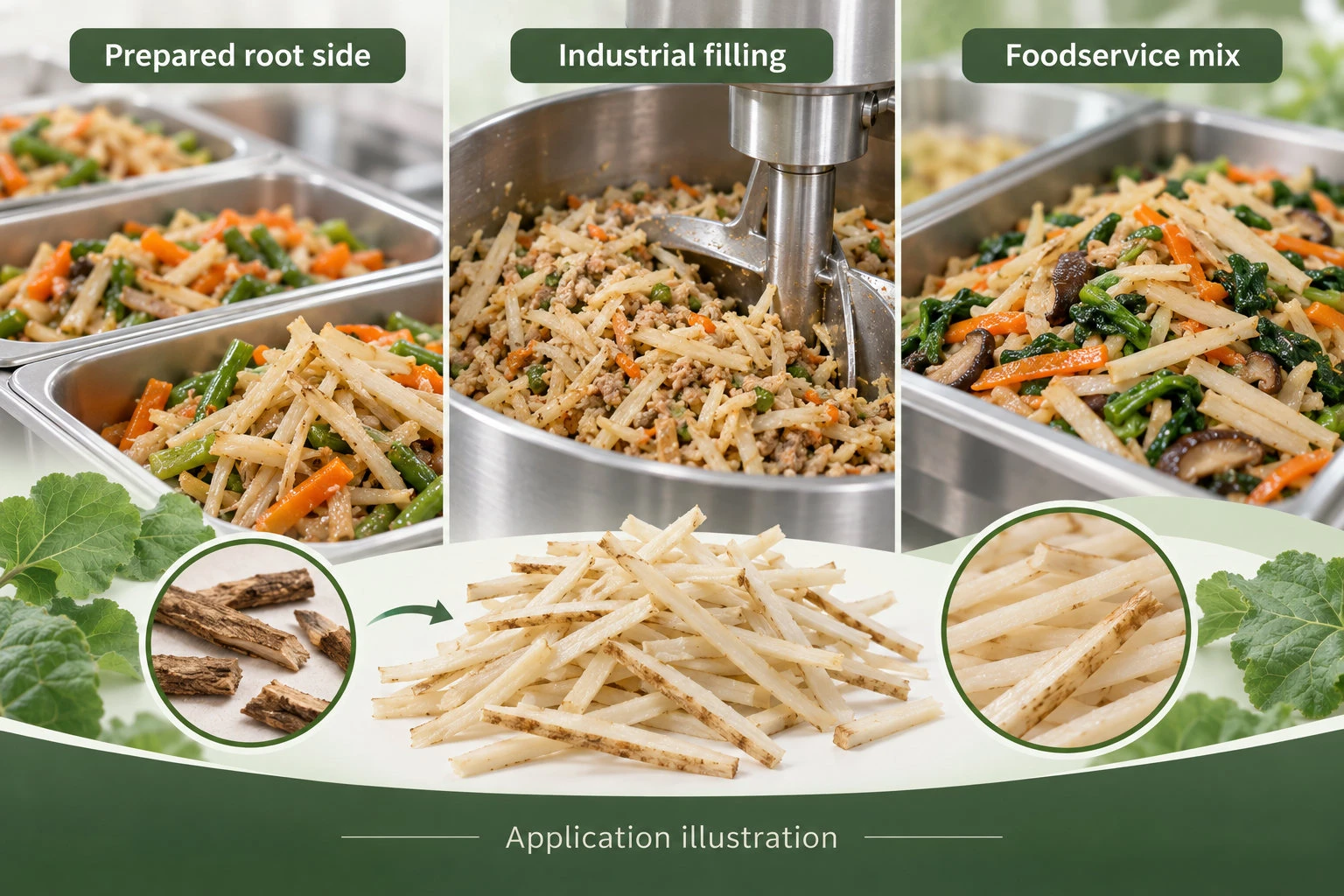
| Prepared root-vegetable sides | meal factories | Choose strip width and color tolerance suited to the cooked visual target. |
| Industrial fillings | filling producers | Limit woody core and uneven long strips that interfere with depositor performance. |
| Regional foodservice mixes | specialty distributors | Confirm peel allowance and firmness after reheating in the intended dish. |
Packing and private label
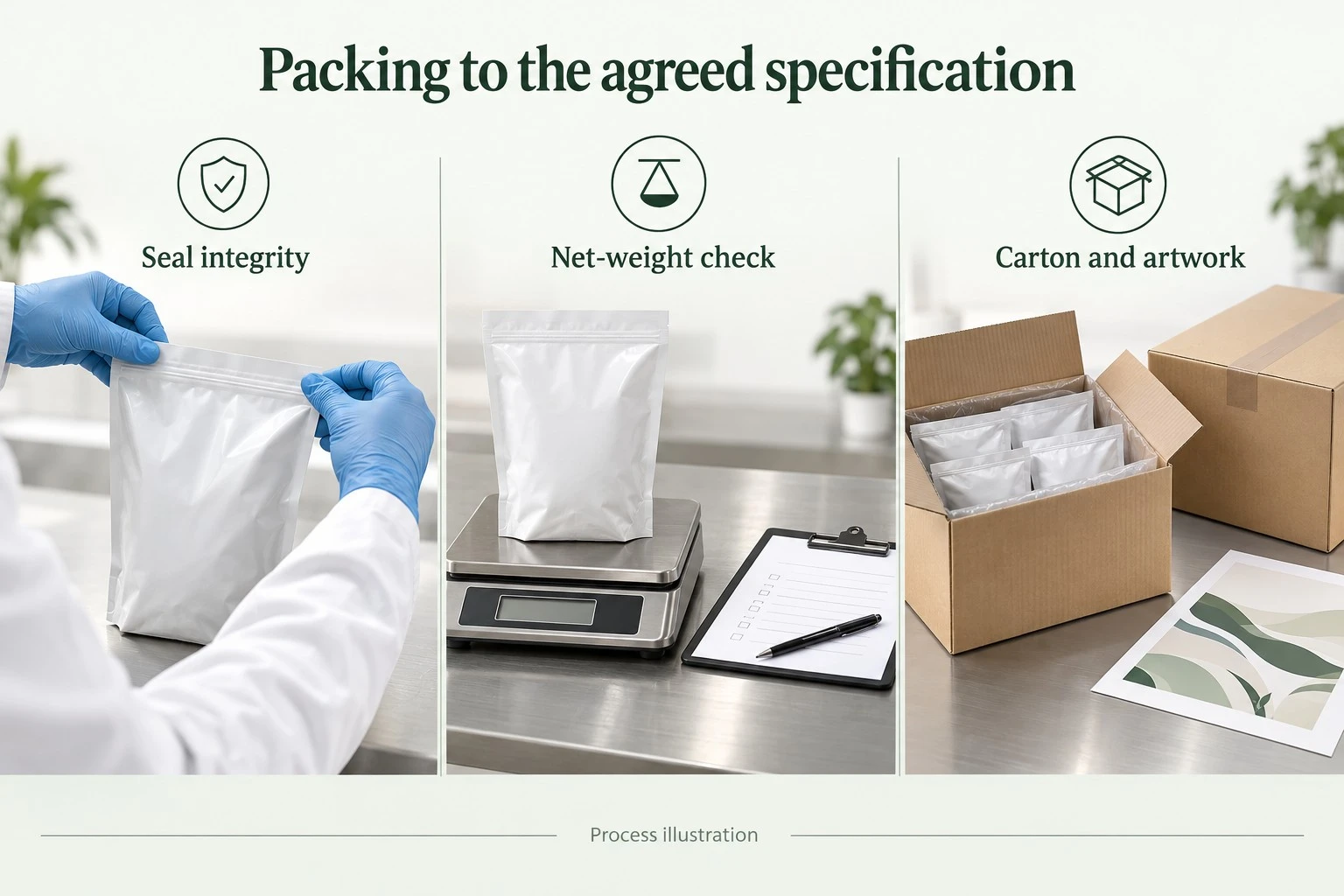
Bulk pack weight, liner and carton strength are set around cut burdock root strips and its risk of surface browning and high breakage of thin strips.
For private label, we review the strip specification, bag seal, label language, approved product artwork and carton marks before printing.
Documents and traceability
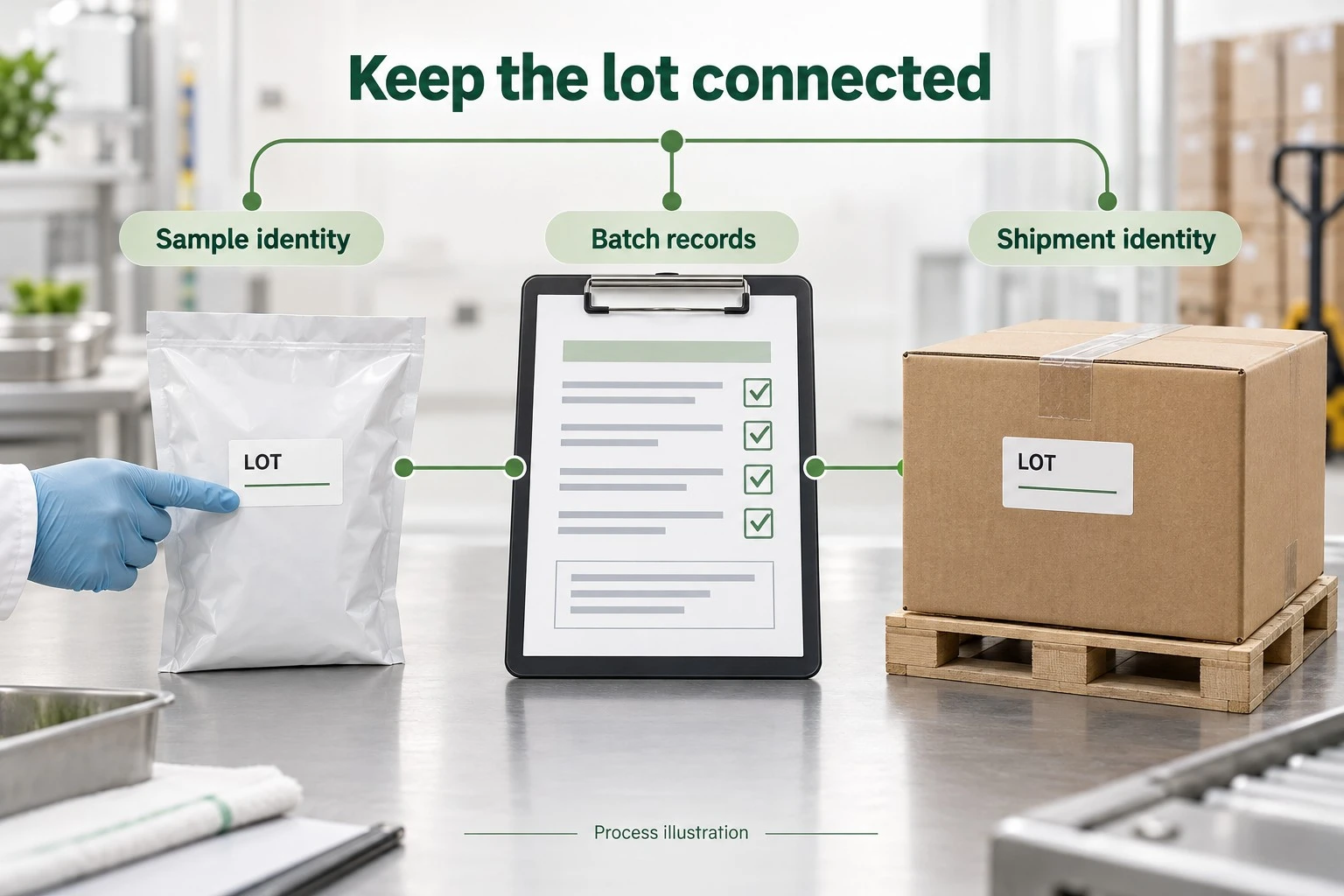
The invoice, packing list and carton marks must describe peeled or scraped strips, with cut style confirmed by sample consistently.
We discuss inspection records or reports for the actual cut burdock root strips lot and destination. Requested evidence must answer a defined receiving concern such as dark edges, tough peel, woody core and loose fragments; certification scope is checked before it is claimed.
Frozen storage and delivery
We check cut burdock root strips cartons, lot codes and pallet layout before frozen loading.
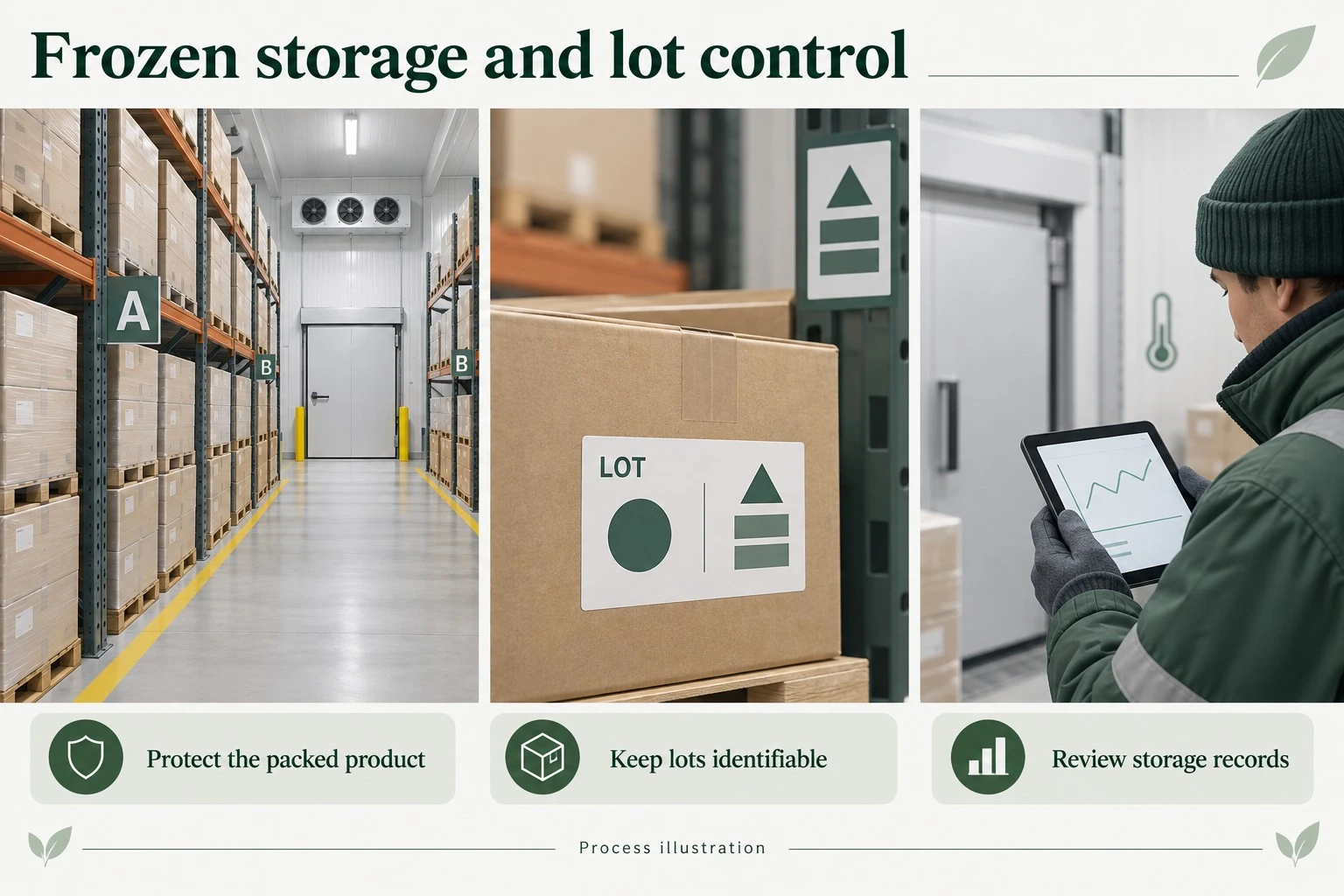
A mixed load keeps frozen burdock identifiable by lot and pallet position.

Frequently asked questions
Is the burdock peeled or scraped?
The surface-preparation style is agreed with a sample. Remaining peel can change colour and bite.
How are woody cores controlled?
We define an allowance for coarse root centres and narrow strips that break easily.
What colour change is acceptable?
We agree a pale-cut reference and a receiving tolerance for dark edges after processing.
How wide are the burdock strips?
We agree a measured width range and broken-fragment allowance on an actual lot. A photograph alone cannot calibrate the cut.
Are peel remnants accepted?
We inspect the pale cut faces and outer surface for retained peel. The accepted amount is separate from woody core tolerance.
Can thin strips survive blending?
We check broken-fragment percentage after frozen handling and blending. A very narrow strip may need stronger carton protection.
How do you assess burdock after heating?
We compare firmness, cut-face color and broken strips after the intended heating step, using the approved width and peel allowance.
How will frozen burdock be packed?
We select an inner bag and carton around strip length, thickness and peel allowance.
Which records accompany frozen burdock?
We link the strip dimensions, peel allowance and cut-face color standards to the accepted sample, lot inspection and shipment documents. Requested test reports are agreed for the destination and actual lot.
Can frozen burdock join a mixed frozen shipment?
We can review frozen burdock with other compatible frozen items under an agreed loading plan. We review carton placement to protect thin strips and keep the burdock lot distinct from other vegetables.
How are MOQ and lead time confirmed for frozen burdock?
Strip preparation and the selected bag and carton determine the packing run required. We confirm the order quantity and lead time for that defined order rather than publish one value for every pack.
What should we discuss first for Frozen Burdock?
Tell us your strip width and the acceptable color and fragment limits.
Discuss your sourcing requirement
Discuss your frozen burdock application with us through our inquiry page.
Send an inquiryView product catalogAs one of the most professional frozen burdock manufacturers and suppliers in China, we're featured by quality products and good service. Please rest assured to wholesale high-grade frozen burdock from our factory.