


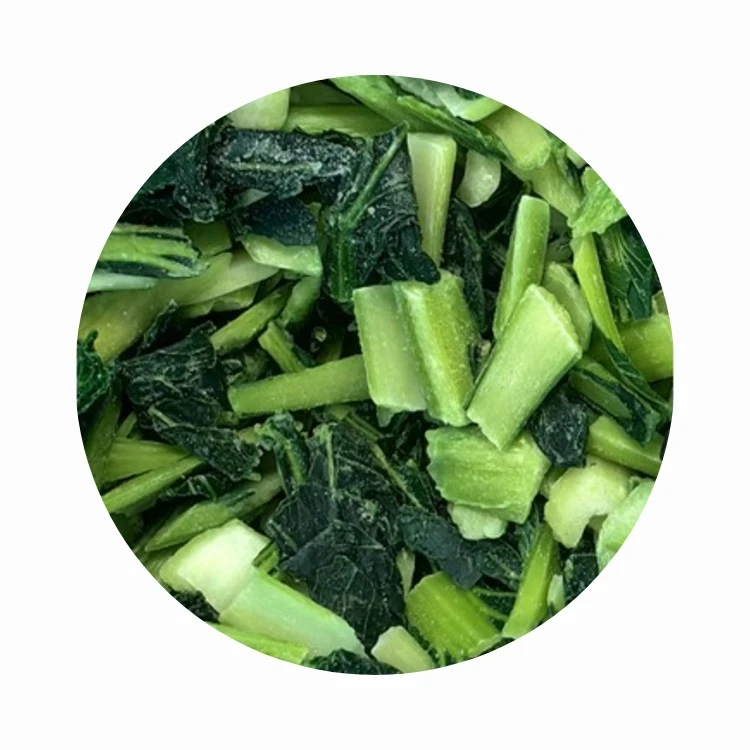
Frozen Pak Choi
Description
Technical Parameters
Pak Choi for food manufacturing and foodservice
We supply pak choi with the pale petiole and green leaf ratio defined for the finished cut. We keep this nonheading leafy brassica separate from heading Chinese cabbage.
We agree the order form, pak choi leaf and pale petiole pieces, against a sample and a written specification. Market identity is bok choy or pak choi, a nonheading leafy brassica. Tell us the destination, planned use, quantity and pack format. We confirm the available form, preparation status and quality limits before quoting the order.
We cook the pale petiole and green leaf in the same trial portion and decide whether their different softening rates fit the line. We then set the purchase specification around the prepared result, including the defects that matter for that use.
Choose the pak choi form by application
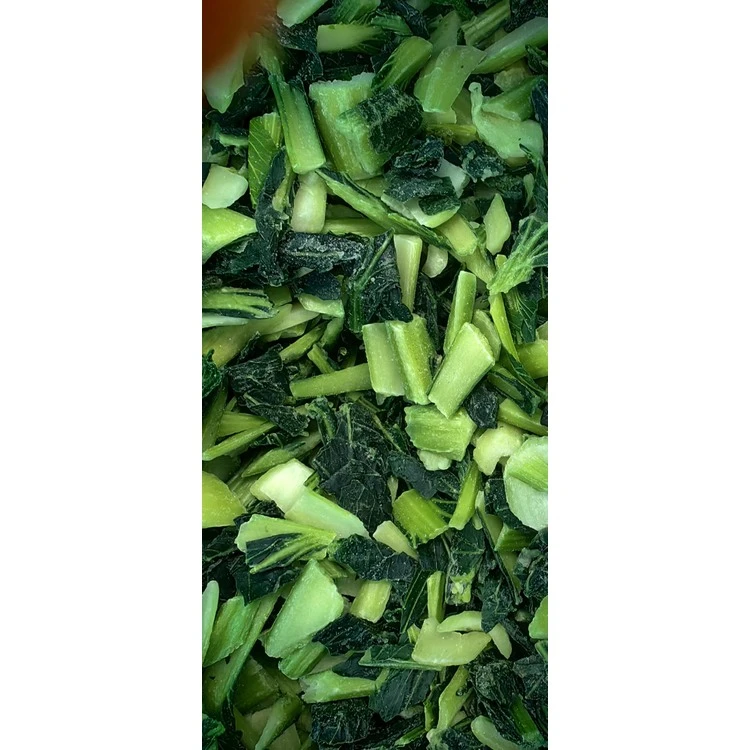
The main order form is pak choi leaf and pale petiole pieces. We confirm whether whole small heads or cut leaf-and-stalk pieces are ordered, with a defined leaf-to-petiole ratio. We set the cut or size distribution with a frozen sample and check the result after the customer's normal preparation, since the usable yield depends on the actual pieces in the bag.
If your line needs a different form or finish, we check production availability and price it as a separate specification. We record the accepted form on the order so receiving staff can distinguish normal crop variation from a changed product.
| Form | Description |
|---|---|
| Main order form | pak choi leaf and pale petiole pieces |
| Alternate form | Subject to a separate sample and written availability confirmation |
Control the receiving risks for pak choi
We address the main risks: thick petioles heating more slowly than leaf, yellow leaf, gritty bases, and crushed cut sections. Inspect the base of each cut for grit and damage, then score leaf yellowing separately. We record visual defects on a defined sample and use process records or relevant test reports for hazards that cannot be judged by sight. The buyer receives a workable acceptance method rather than a vague color description.
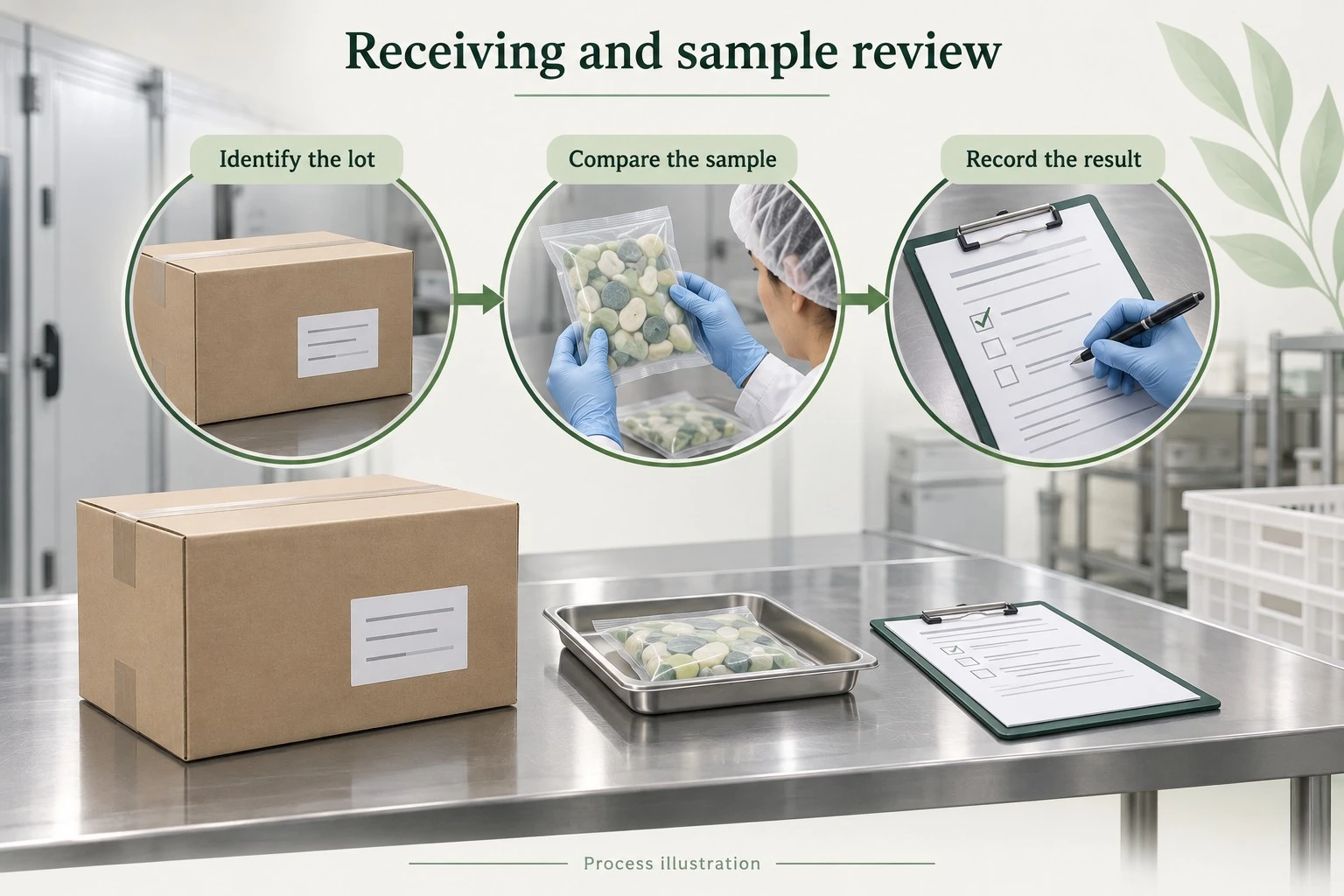
At packing and loading, we confirm inner-bag seals, carton condition, case marks and lot codes. A carton with good-looking pieces still needs the right label and frozen condition. We identify any excessive clumping or surface frost separately from cut defects so the importer can trace the cause and make a clear receipt decision.
| Receiving risk | Our control | Buyer outcome |
|---|---|---|
| thick petioles heating more slowly than leaf, yellow leaf, gritty bases, and crushed cut sections | Agree sample, defect definitions and inspection method | A practical acceptance basis |
| Process or identity ambiguity | Pak choi is distinct from heading Chinese cabbage; confirm actual trimming and blanching status rather than inferring it. | Clear use instruction and technical review |
| Frost, leakage or label mismatch | Compare frozen pack and case marks with order approval | Documented receipt decision |
Specify pak choi before production
We put pak choi leaf and pale petiole pieces on the order specification with its identity, piece distribution, color range, defect allowance and packing. We confirm whether whole small heads or cut leaf-and-stalk pieces are ordered, with a defined leaf-to-petiole ratio. We agree how the sample is taken and assessed so the same basis can be used during production, pre-shipment review and arrival inspection.
We also state the actual processing status and customer use instruction. Pak choi is distinct from heading Chinese cabbage; confirm actual trimming and blanching status rather than inferring it. We confirm the test or report scope needed for the destination and quote MOQ, lead time, loading port and trade terms only after the form, quantity and packing are fixed.
| Parameter | Order basis |
|---|---|
| Identity | Market identity is bok choy or pak choi, a nonheading leafy brassica. |
| Form and appearance | We confirm whether whole small heads or cut leaf-and-stalk pieces are ordered, with a defined leaf-to-petiole ratio. |
| Defects | thick petioles heating more slowly than leaf, yellow leaf, gritty bases, and crushed cut sections |
| Process status | Pak choi is distinct from heading Chinese cabbage; confirm actual trimming and blanching status rather than inferring it. |
| Commercial terms | Confirm with final quantity, pack and shipping route |
Preparation and freezing controls for pak choi
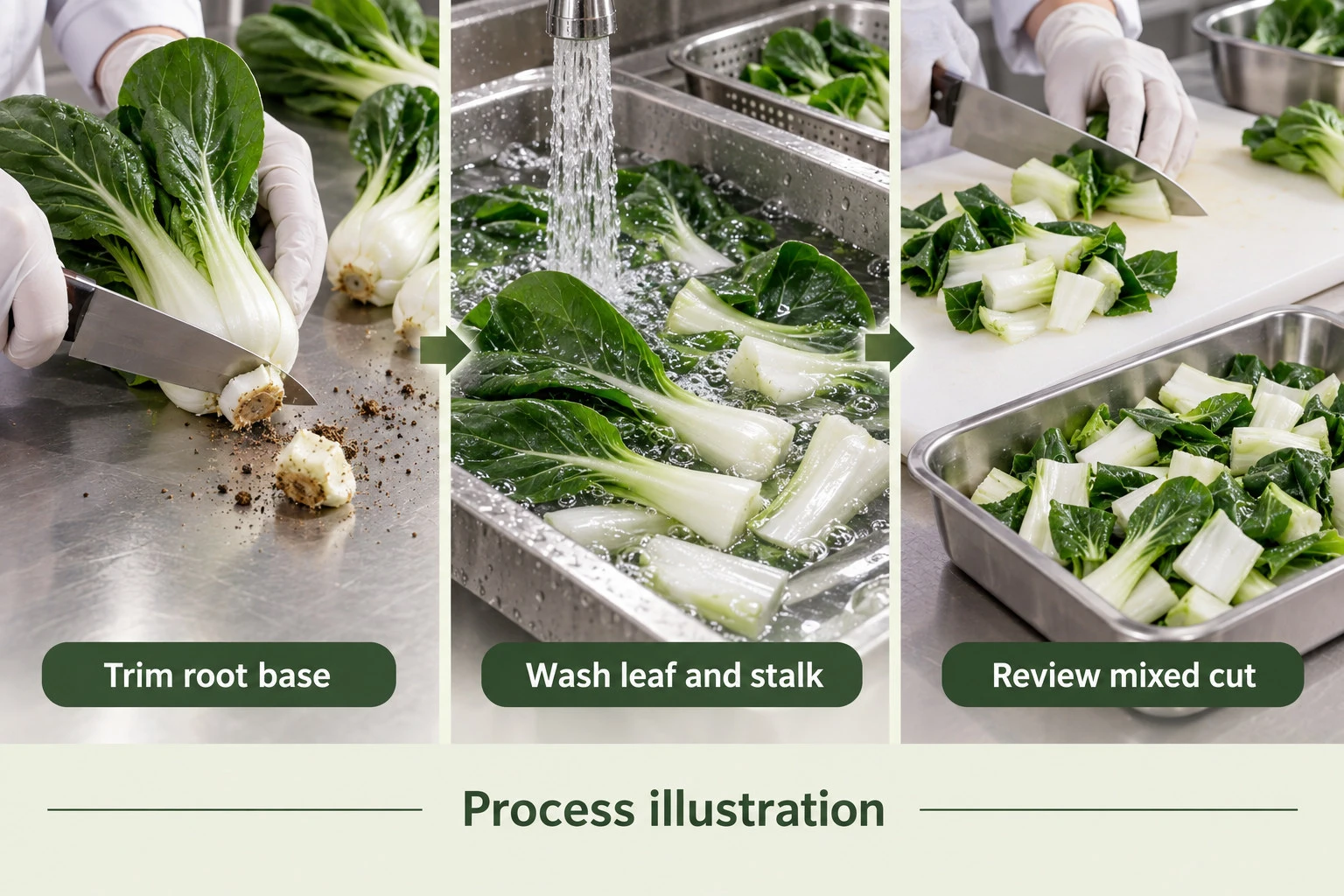
We confirm head size, gritty-base removal, petiole and leaf cutting, washing and any declared blanching. We compare the different softening rates of leaf and petiole in the buyer application.
We record the agreed preparation and treatment status with the lot before packing. We check pak choi leaf and pale petiole pieces for its agreed visual defects after freezing, while any required heat or safety condition is verified from the appropriate process and test records. The use instruction follows that recorded status.
We compare the prepared sample with the buyer's line result and record exceptions for thick petioles heating more slowly than leaf, yellow leaf, gritty bases, and crushed cut sections. This gives production and receiving teams the same reference for a repeat order.
Match pak choi to the buyer's line
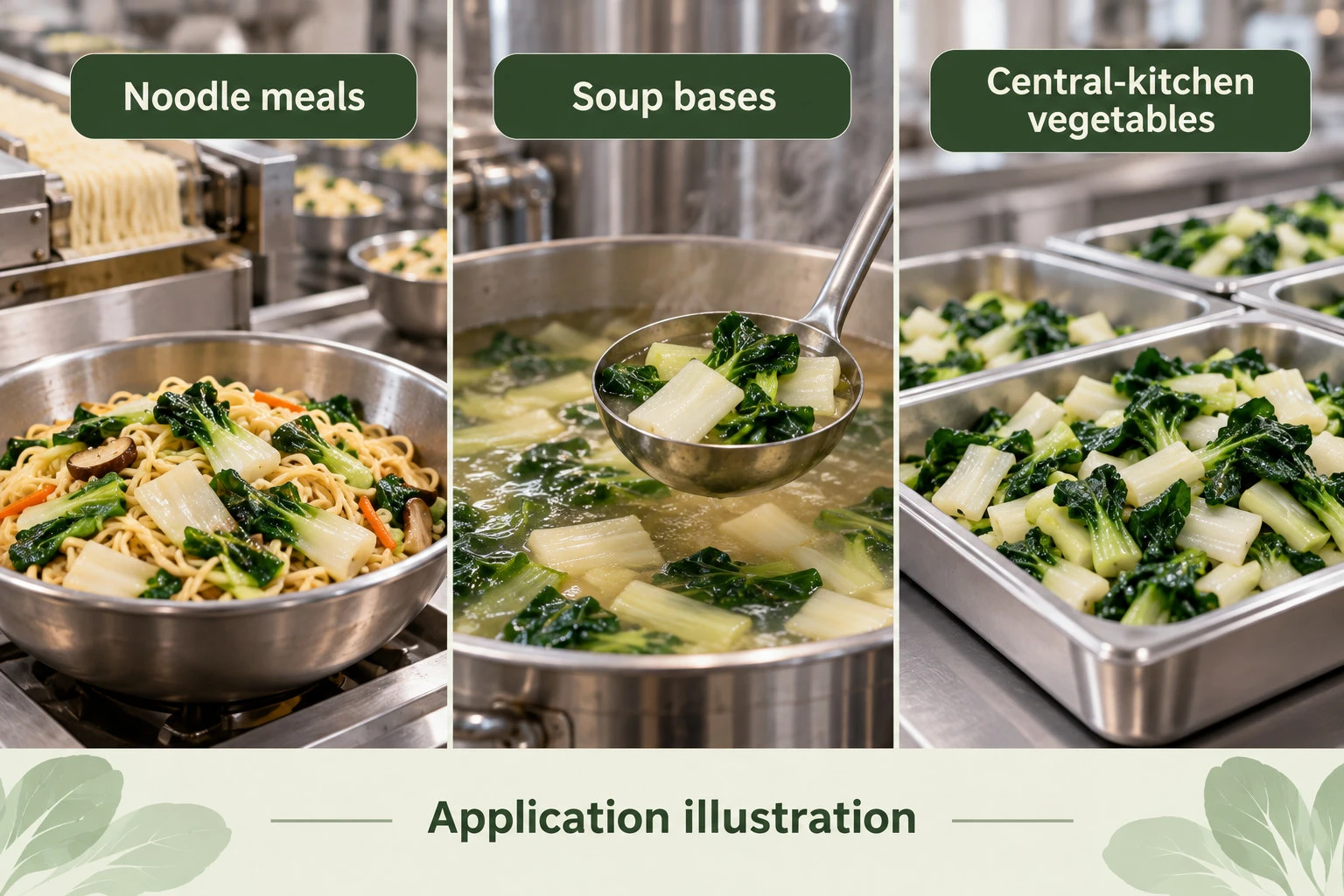
We match pak choi to cooked Asian vegetable blends, noodles, and prepared meal components. We cook the pale petiole and green leaf in the same trial portion and decide whether their different softening rates fit the line. We ask for the target prepared result and how the ingredient enters the buyer's line, then set size and defect limits around that use.
For manufacturing, we check feeding, yield, treatment status and repeat-order tolerance. For foodservice, we align the case weight, portioning and use instruction. For a retail pack, we review the consumer-facing identity and artwork against the approved ingredient. We confirm any ready-to-eat claim separately with process evidence before it appears on a label.
| Channel | What we confirm |
|---|---|
| Food manufacturing | Cut, defect allowance and fit for cooked Asian vegetable blends, noodles, and prepared meal components |
| Foodservice | Pack size, portioning and required preparation |
| Retail or private label | Consumer-facing identity, use instruction and artwork approval |
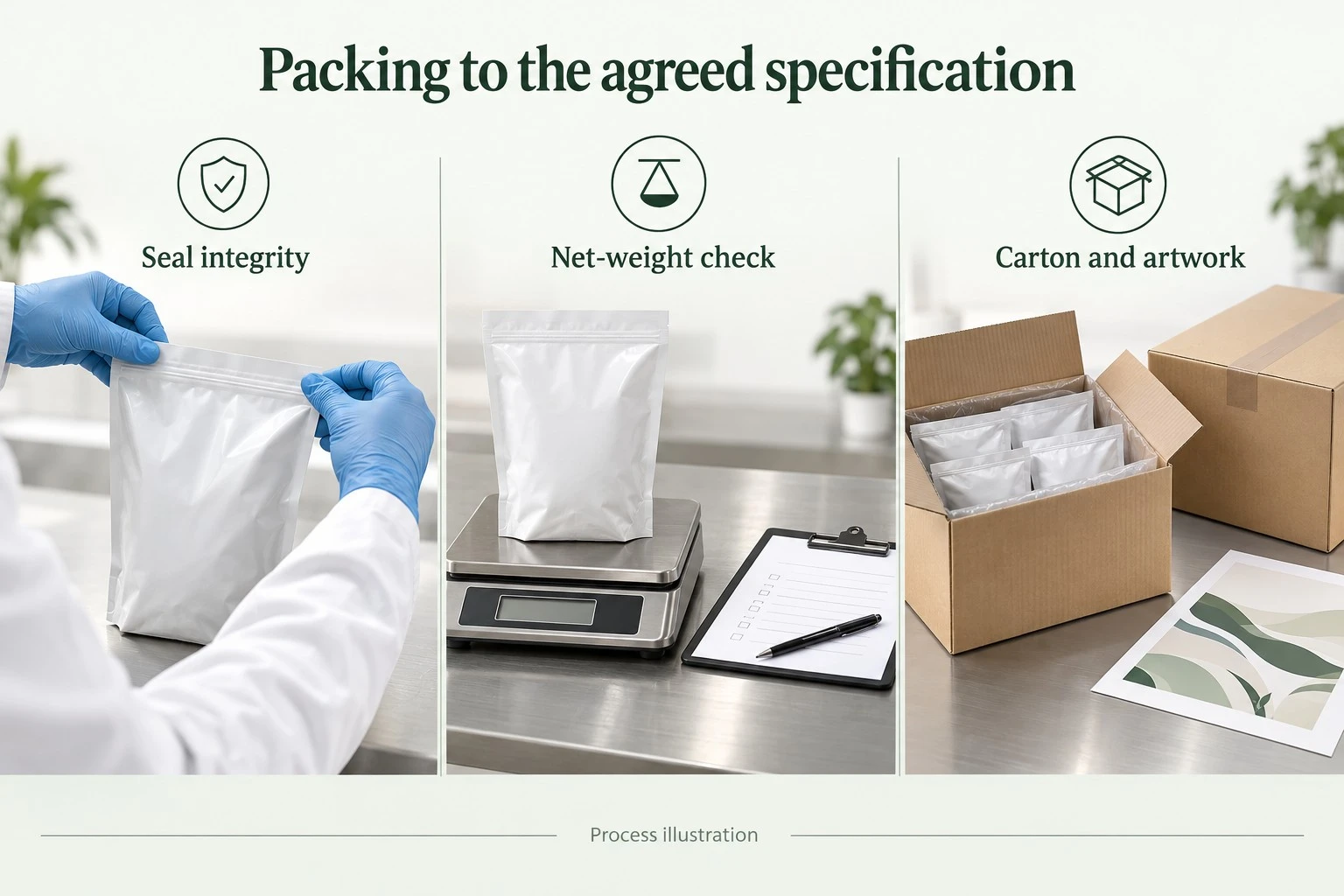
Pack the approved ingredient for its channel
We match inner-bag material, net weight and carton strength to the agreed pak choi form and distribution channel. We confirm bag seals, case marks and pallet arrangement before loading. Bulk cartons need a durable liner and clear lot identification; smaller packs need the exact net weight and label proof accepted by the buyer.
For private label, we review product name, ingredients, language, barcode, date code and use instruction in the artwork. We approve a final proof with the buyer and link its version to the packing order. MOQ and packing availability follow the confirmed quantity and production plan.
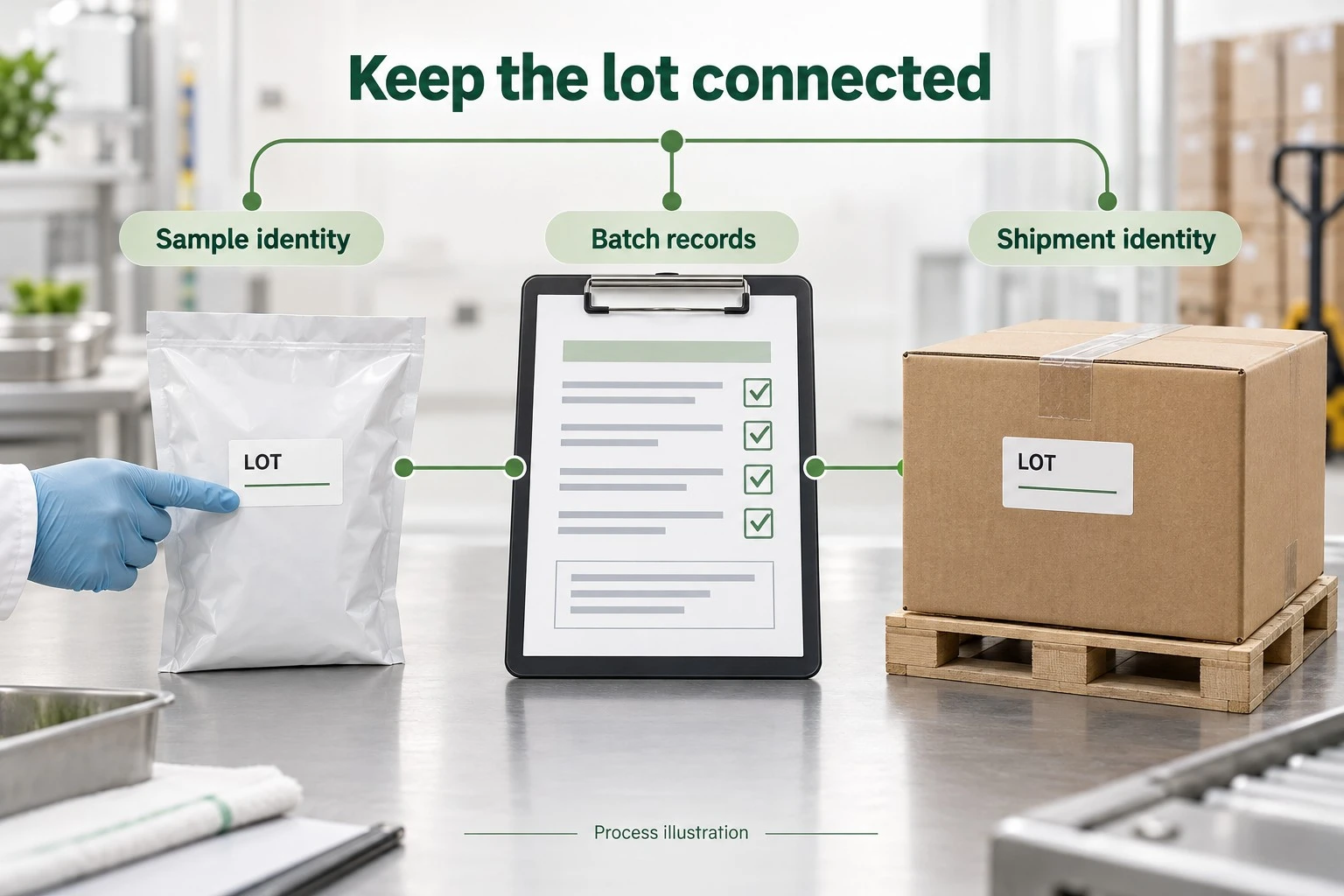
Link the shipment file to the lot
We align the pak choi shipment file with the destination and buyer QA program. The agreed file can include the product specification, invoice, packing list, lot mapping and requested available reports. Each report is checked for product identity, lot, method and date so the buyer can connect it to the cases received.
When microbiological, residue, heavy-metal or process verification is required, we agree sampling and report timing before production. We confirm destination labeling and document needs with the importer, then map outer cases and inner packs to the same lot code for receipt and repeat-order review.
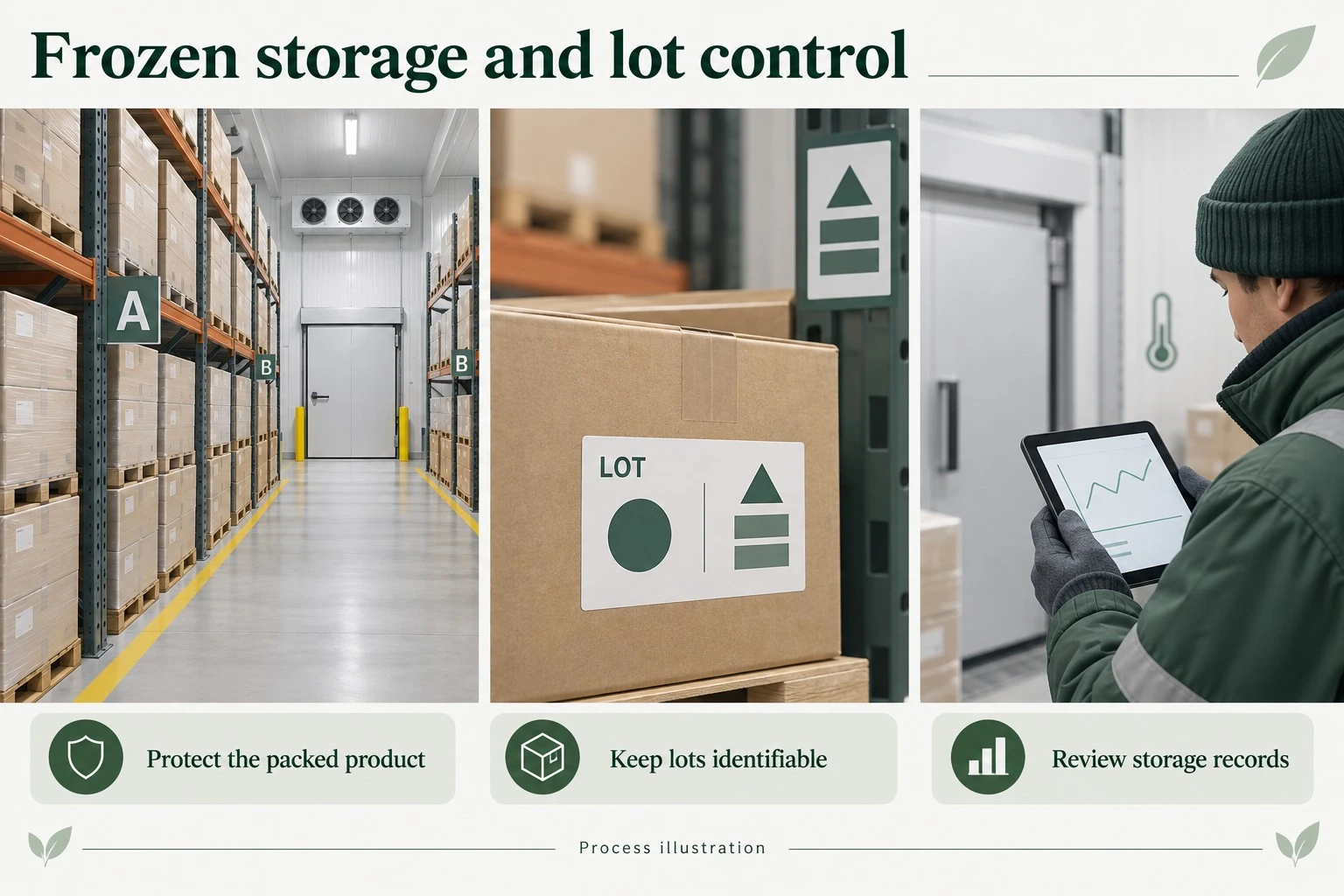
Release the frozen shipment on a clear basis
We confirm the approved frozen storage condition and transport plan in the order file. Minus 18 C is a common industry reference, but the final specification, label and route agreement govern this shipment. We check case condition, visible frost or clumps, pallet stability and container suitability before release; the importer checks arrival condition against the same agreed standard.
If the order is part of a mixed container, we review pack compatibility, pallet arrangement and document separation by lot. We coordinate lead time and loading quantity with the actual production and shipping schedule. At receipt, temperature evidence, packaging condition and lot identity are reviewed together; a cold reading alone cannot resolve an identity or processing discrepancy.
Frozen Pak Choi: purchasing questions
What exactly is the main product form?
The reference form is pak choi leaf and pale petiole pieces. We approve any alternative separately.
How do you confirm the ingredient identity?
We write the identity into the order and sample record. Market identity is bok choy or pak choi, a nonheading leafy brassica.
Can we set a specific cut or size?
Yes, subject to sample and production confirmation. We confirm whether whole small heads or cut leaf-and-stalk pieces are ordered, with a defined leaf-to-petiole ratio.
Which defects should our team inspect?
We agree inspection limits for thick petioles heating more slowly than leaf, yellow leaf, gritty bases, and crushed cut sections before lot approval.
Is the product already cooked or ready to eat?
No such status is inferred from freezing. Pak choi is distinct from heading Chinese cabbage; confirm actual trimming and blanching status rather than inferring it.
Which application is the best fit?
We first test fit for cooked Asian vegetable blends, noodles, and prepared meal components against your actual process.
Can you quote a bulk pack?
We quote the inner bag, net weight and carton after confirming your handling and order quantity.
Can private-label packing be reviewed?
We can review artwork, barcode, language, marks and use instructions for the actual order.
What frozen storage condition applies?
The approved specification and label govern; minus 18 C is a common industry reference only.
Which documents can accompany a lot?
We confirm the applicable specification, commercial papers, traceability and requested available reports before shipment.
Can this share a mixed container?
We review packaging, pallet arrangement, lot separation and route before confirming a mixed load.
How are MOQ and lead time set?
We quote both after form, packing, quantity and shipment window are confirmed.
Plan your frozen pak choi order
Tell us your application and preferred packing. We will help confirm the product form, order specification and shipment plan.
Discuss Your Order
Hot Tags: frozen pak choi, China frozen pak choi manufacturers, suppliers, factory
These technical parameters set out the product and order controls we agree before supply. Numerical limits, methods and test scope follow the accepted SKU specification. The downloadable technical sheet carries the same parameters.
01 Physical and sensory
| Parameter | Specification / agreement | Verification |
|---|---|---|
| Identity | Market identity is bok choy or pak choi, a nonheading leafy brassica. | Approved sample and label |
| Form and color | We confirm whether whole small heads or cut leaf-and-stalk pieces are ordered, with a defined leaf-to-petiole ratio. | Frozen and prepared sample |
02 Physicochemical and residues
| Parameter | Specification / agreement | Verification |
|---|---|---|
| Residue scope | Set by destination and buyer agreement | Applicable lot report if ordered |
| Other chemistry | Agree only relevant parameters | Agreed method and report |
03 Microbiological
| Parameter | Specification / agreement | Verification |
|---|---|---|
| Criteria | Set by destination and intended use | Lot sampling and method if ordered |
| Process relation | Pak choi is distinct from heading Chinese cabbage; confirm actual trimming and blanching status rather than inferring it. | Process record and release review |
04 Freezing and cold chain
| Parameter | Specification / agreement | Verification |
|---|---|---|
| Freezing route | Confirm actual SKU process | Production record |
| Storage | Approved specification; minus 18 C as industry reference | Storage and shipment record |
05 Pack and shelf life
| Parameter | Specification / agreement | Verification |
|---|---|---|
| Net weight and case | Order-specific agreement | Pack check |
| Shelf life | Approved label and specification only | Date-code and version check |
06 Process
| Parameter | Specification / agreement | Verification |
|---|---|---|
| Preparation | We confirm whether whole small heads or cut leaf-and-stalk pieces are ordered, with a defined leaf-to-petiole ratio. | Approved process sheet |
| Heat treatment | Pak choi is distinct from heading Chinese cabbage; confirm actual trimming and blanching status rather than inferring it. | Lot-specific evidence where relevant |
07 Ingredients additives and allergens
| Parameter | Specification / agreement | Verification |
|---|---|---|
| Ingredients | Confirm actual single or mixed ingredient declaration | Final artwork |
| Additives and allergens | Confirm actual formulation and destination rules | Supplier declaration and artwork |
08 Defects and foreign matter
| Parameter | Specification / agreement | Verification |
|---|---|---|
| Visual defects | thick petioles heating more slowly than leaf, yellow leaf, gritty bases, and crushed cut sections | Agreed sample and inspection |
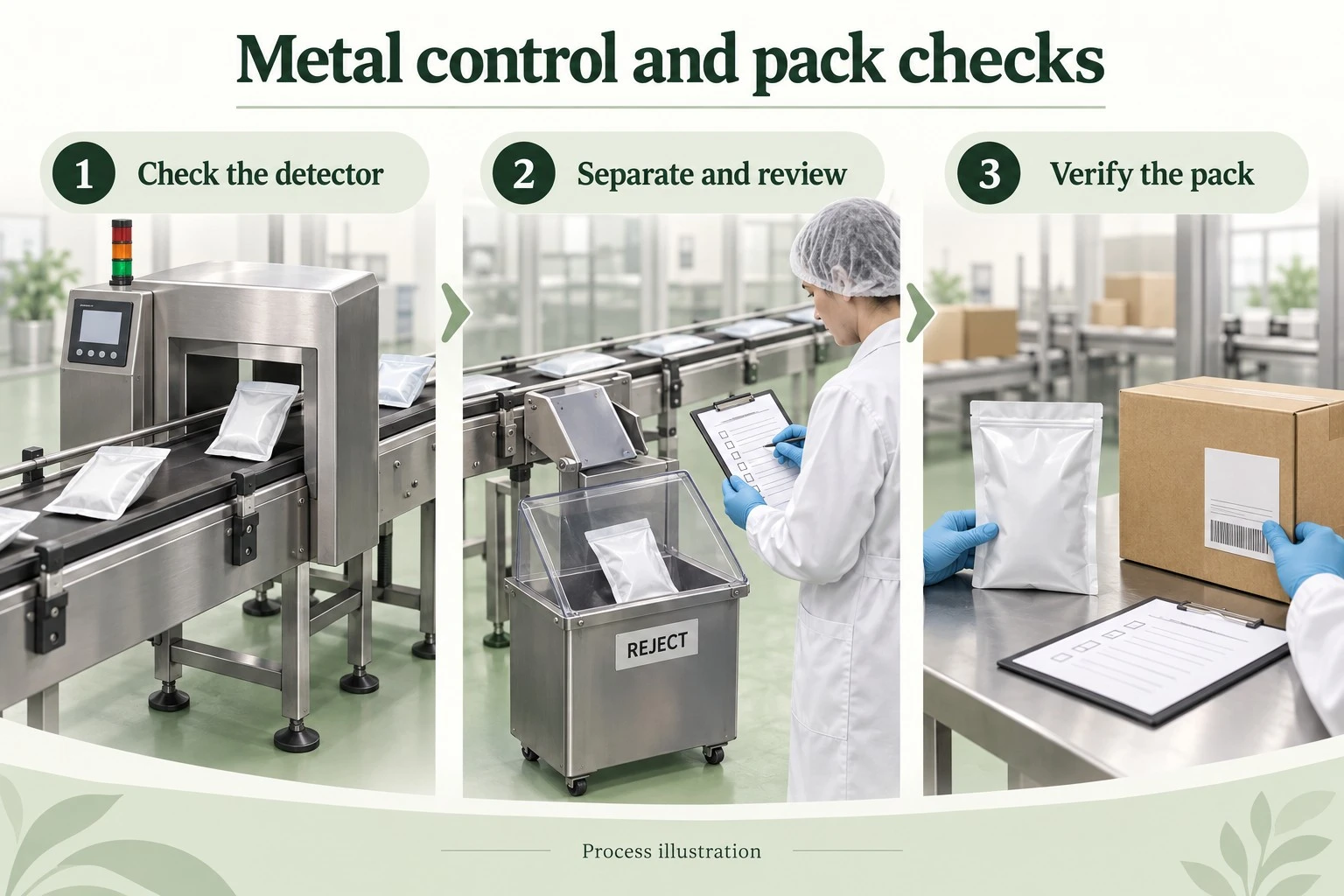
| Foreign matter | Agree reject criteria and detection plan | Inspection and detector records if used |
09 Materials and label
| Parameter | Specification / agreement | Verification |
|---|---|---|
| Food-contact pack | Agree material and suitability | Packaging specification |
| Label | Product name, lot, dates and use instruction | Approved artwork proof |
10 Detection and traceability
| Parameter | Specification / agreement | Verification |
|---|---|---|
| Lot boundary | Define production and packing lots | Traceability mapping |
| Release evidence | Agree tests and inspection scope | Lot file review |
Previous
No InformationNext
No Information


