


Importing Frozen Produce from China into Canada: Licence, Standards and Border Release
Oct 16, 2026
Leave a message

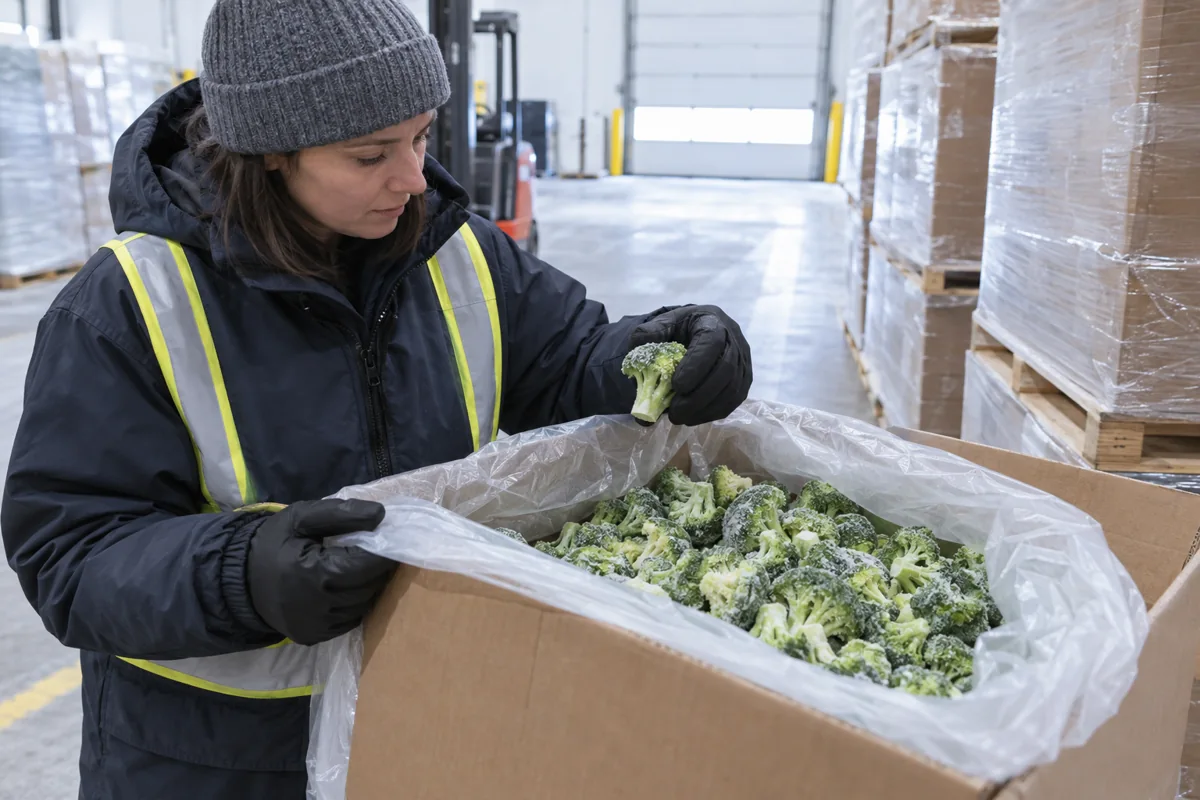
Reviewed 16 October 2026.
China-grown, China-processed, single-ingredient blanched IQF broccoli florets can enter Canada as a frozen processed vegetable when the Canadian importer holds the right Safe Food for Canadians (SFC) import licence, implements a preventive control plan, and files the product accurately through the applicable CFIA and CBSA routes. A supplier's certificate of analysis is only one part of that decision. Before we make a shipment, we ask the importer to fix the product identity, intended use, package, HS and CFIA commodity extension, licence coverage, current AIRS conditions, labelling route and broker instructions. At the border, CFIA admissibility, CBSA release and the carrier's physical delivery are distinct events. Our proposed order plan connects each one to evidence from a defined production lot.
This guide uses a narrow example throughout: conventional broccoli florets grown and processed in China, blanched before IQF freezing, packed in industrial bulk cartons, with further cooking required. Fresh broccoli, ready-to-eat vegetables, seasoned mixes, organic claims and retail consumer packs can change the rules. The Canadian importer is the regulated Canadian food and customs actor. We can provide product, process, test and shipment information for its review, but cannot apply for its Canadian licence or declare a Canadian customs entry on its behalf.
Define the China-origin frozen broccoli SKU
The first order gate is a shared written SKU definition. We would record the growing and processing origin, florets rather than whole heads, absence of added ingredients, industrial packing and cooking-required use. The importer and broker can then assess the same product instead of making separate assumptions from a sales sample and invoice.
The first decision is whether everyone is describing the same food. Under the CFIA processed fruit or vegetable import guidance, frozen vegetables belong to the processed fruit or vegetable category. The current incorporated Canadian Standards of Identity, Volume 4, section 52, describes frozen vegetables prepared by blanching and freezing fresh vegetables. Section 52 applies to all frozen processed vegetables except the specific exclusions in sections 55–58; broccoli florets are not in those exclusions. This is a stronger basis for classification than a generic tariff-site description of "vegetables." It also explains why importing this SKU should not be managed as fresh broccoli without a separate analysis.

GreenLand IQF broccoli florets showing product identity.
We propose a signed one-page SKU record before price and sailing are fixed. It identifies botanical commodity and form, Chinese growing and processing origin, ingredients as broccoli only, the processing sequence, whether blanching is a quality step rather than a validated sterilization claim, the frozen presentation, industrial pack sizes, further-cooking instruction, lot code format and destination use. The importer compares that record with the commercial invoice, product specification, artwork and its own licence scope. A later change to seasoning, pre-cooking claim, pack or consumer channel is a change-control event: the importer reruns the classification and label review before we print or load.
The importer also confirms the Canadian tariff classification and the CFIA Other Government Department extension for the exact state and presentation. CFIA's licence application guidance specifically tells food importers to declare a correct HS code and CFIA OGD extension. The Automated Import Reference System, AIRS is the live place to query product, origin, end use and processing choices for CFIA import conditions. A previous AIRS screenshot is not a standing permit. The importer or its broker should save the dated result and any applicable permit or document instruction against the purchase order. If AIRS returns a condition that does not match the proposed goods, stop the booking and resolve it with CFIA or the broker; do not relabel a product to fit a convenient menu choice.
Bulk cartons are part of the identity. A 10 kg or other agreed case is a buyer specification, not a universal legal pack size. Carton marks should give the product, net quantity, lot, origin, producer or responsible entity as required for the route, storage instruction and handling text that makes further cooking clear where necessary. We approve the exact wording with the importer because outer shipping marks, an industrial food label and a consumer label serve different channels. If the importer later repacks, it should determine whether its Canadian activities require additional SFC licence coverage and preventive controls; the original China-side carton does not settle that question.
Qualify the Canadian importer and customs account
The second gate belongs to the Canadian business, not the Chinese processor. A buyer should name the legal food importer and the customs importer of record, check whether they are the same entity, and document who operates the CFIA and CBSA portals. We can supply evidence, but cannot create those Canadian authorizations for the buyer.
The Canadian buyer or designated importer of record needs its own food-import readiness. The CFIA step-by-step importing guide says a licence is required to import food, including ingredients. Through My CFIA, the importer creates or uses its account, selects the activity "Importing Food," and selects the relevant commodity and subcommodity. It develops and implements a preventive control plan (PCP) before applying and importing. The PCP must address how it evaluates the foreign supplier and product hazards, verifies controls, receives and distributes the food, handles complaints and recalls, and maintains traceability. The CFIA importer PCP guide explains the written controls and two-year retention for evidence of implementation.

Canadian import documents and sealed bulk carton.
The current CFIA Fees Notice lists C$307.96, as of 31 March 2026, for a two-year processed fruit or vegetable SFC licence. That is a licence fee, not a total cost to import a container. An application result is a licence with relevant activity and commodity coverage; a submitted form, payment receipt or supplier audit is not the licence. CFIA processing can depend on application completeness, so we do not promise a universal approval date. Before we allocate a shipment to an importer, we ask for the licence number, coverage and expiry, and the buyer checks its own My CFIA record. We provide the product flow, hazards, traceability fields and proposed testing basis for the buyer to incorporate into its PCP; we do not claim the buyer has implemented its plan.
The National Centre for Permissions currently publishes a 70-business-day SFC licence service standard, measured from receipt of a complete application to the decision. Additional information requests or a pre-issuance inspection can extend processing. The importer should apply and renew early, track the application in My CFIA and contact permission@inspection.gc.ca when the published time has elapsed without an update. GreenLand-food supplies the product and source-process information needed for review before a vessel is committed.
For this processed frozen-vegetable activity, the small-business written-PCP exception should not be assumed. CFIA states that the exception for businesses with gross annual food sales of C$100,000 or less does not cover processed fruits and vegetables. The importer should use the processed fruit and vegetable activity table when confirming its own licence and written-plan obligations.
Food licensing and customs accounting are separate. CBSA's commercial-import setup requires a nine-digit business number and an RM import program account, together forming the BN15 importer identifier. Canadian-resident businesses can register BN in the CARM Client Portal; non-resident importers follow the CRA business-number route described by CBSA before CARM registration. The importer assigns at least a Business Account Manager and can delegate authority to a licensed customs broker in CARM. It should sign an agency agreement, agree which party prepares classification and valuation, and monitor the broker's entry. Delegation does not transfer the importer's legal responsibility.
CBSA recommends Release Prior to Payment (RPP) for importers wanting release before payment and says the importer must post its own financial security for that privilege. It is wrong to assume the broker's security automatically covers a new importer. If RPP is not in place, the importer and broker need another payment and release plan. Before shipment, the buyer should be able to identify its BN15, broker delegation, bond or cash-security status if using RPP, and who will receive CBSA accounting notices. We put the same importer identity on invoice, shipping instructions and food-document handoff so mismatched company names do not create a late correction.
Build the importer PCP around a traceable lot
The third gate is a lot-to-PCP map. We suggest that the importer identify each product hazard and requested supplier control before issuing the purchase order. The resulting evidence request should be proportionate: source-field records for residues, actual lot processing records for heat and cold handling, and traceable sampling for the test panel.
The Canadian importer's PCP is not a binder of certificates collected after arrival. It is an operating plan tying product hazards to supplier controls and verification. For this broccoli, the importer should examine pesticide use in source fields, water and soil considerations, incoming raw-material condition, blanch/cool/IQF handling, hygienic zoning after the heat step, foreign-body control, frozen storage, packaging integrity and the response when a sample or complaint fails. Its plan can name our proposed order checks and specify the evidence it expects for each lot. The buyer decides the verification frequency and uses its own hazard assessment, historic performance and destination requirements.
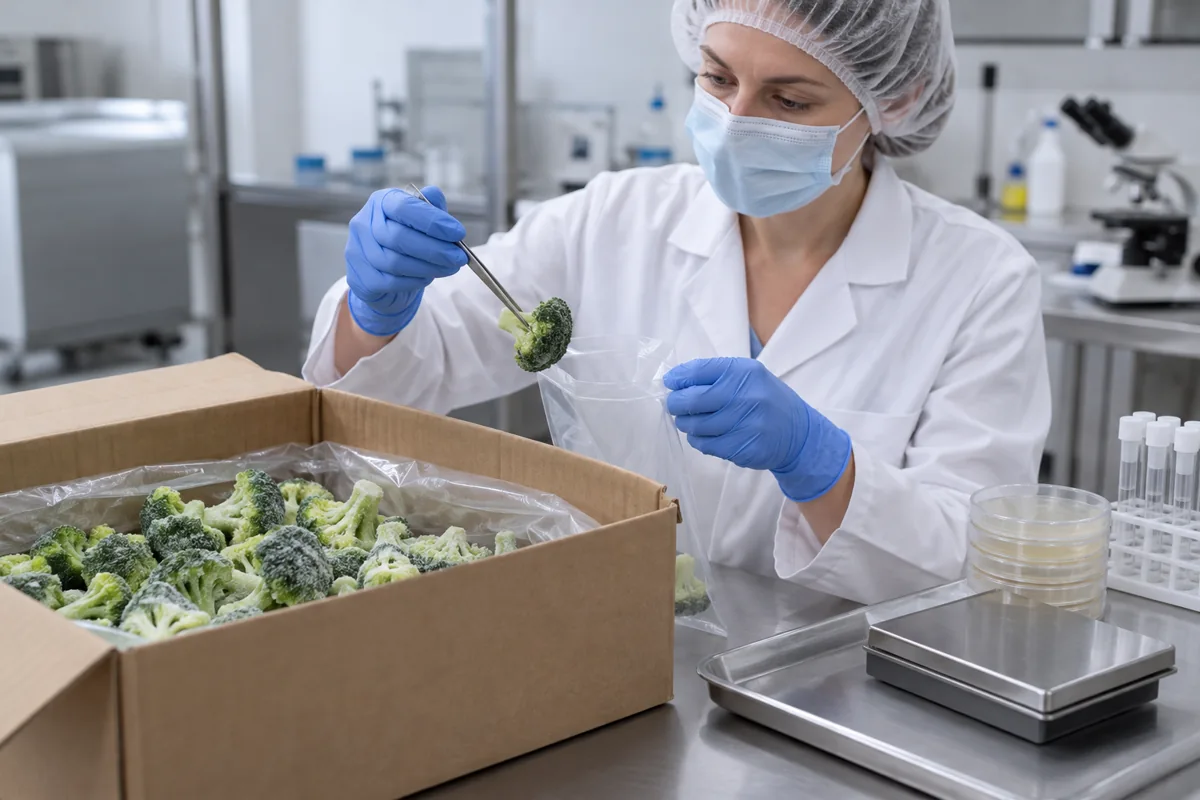
Frozen broccoli sample and lot record.
We propose starting the lot dossier at source. The source-field identity, harvest window and pesticide-application history should map to incoming broccoli intake and a finished lot code. The lot record then traces processing date, blanch and cooling logs, IQF output, sorting/inspection findings, pack date and carton ranges. We do not state a universal validated blanch time or lethality; a cooking-required product must not be described as ready to eat merely because it has been blanched. A deviation in raw material, sanitation, temperature or foreign matter triggers a hold while QA investigates, documents disposition and decides whether rework, further testing or rejection is justified. No result should be silently averaged across unrelated lots.
The CFIA importer PCP guidance expressly asks importers to describe how foreign-supplier controls provide comparable safety outcomes and how the plan is verified. For a first commercial order, the buyer may request a process flow, hazard summary, recent audit or inspection evidence where actually available, laboratory methods, representative sampling plan and records for the lot proposed. Such requests are buyer due diligence unless a particular law or AIRS condition makes an item compulsory. We will state whether an item exists for the actual facility and lot; we will not substitute an old certificate from another site or imply a third-party scheme is a Canadian import authorization.
Traceability has to work in both directions. The importer should be able to identify from whom it received each lot and to whom it supplied it, and have complaint and recall procedures. We align our carton code, packing list and certificate-of-analysis lot code so the buyer can isolate a defined quantity without holding every broccoli shipment. At destination, the importer logs received carton counts, seal condition, temperature record and any reallocated lot ranges. A claim file should retain photos, time, reefer data, affected cartons and sampling chain before any product is mixed or cooked. That evidence supports both commercial claims and CFIA response; it is more useful than a statement that the supplier follows "strict quality control."
Apply Canadian microbiological, residue and label standards
The fourth gate separates an incorporated legal limit from a private purchase specification. Section 59 of the current Canadian Standards of Identity, Volume 4, applies to imported frozen vegetables under subsection 59(2); it should be interpreted with section 52's frozen-vegetable identity and the narrower remanufacturing condition for thermophilic spores. A buyer may require more tests, but should label those as contractual.
The current incorporated Canadian Standards of Identity, Volume 4 gives a concrete imported-frozen-vegetable microbiological threshold in section 59. Viable aerobic mesophiles must not exceed 250,000 per gram. Aerobic thermophilic spores must not exceed 100 per gram if the frozen vegetable is intended for remanufacturing. Section 59(2) says these counts apply at the plant for domestic production and at the time of Canadian entry for imported frozen vegetables. The second test therefore depends on the actual intended use; do not automatically impose it on every foodservice carton. Our proposed pre-shipment test plan should state the method, sample units, lot definition and lab turnaround, then compare the result with the importer-approved legal and buyer limits. It is unsafe to promise a passing border result from an earlier source-field or pilot sample.

GreenLand frozen broccoli florets for product review.
Food safety assessment goes beyond those two counts. Salmonella, Listeria monocytogenes and other hazards may matter under the Food and Drugs Act, buyer PCP and CFIA investigation. The CFIA standards hub separates commodity standards from Health Canada's ready-to-eat Listeria policy. This SKU is expressly cooking-required, so we should not paste a ready-to-eat Listeria category and numeric limit into its specification without an actual classification. A buyer can set a tighter contractual Salmonella or indicator criterion, identify a recognized method and require a representative sampling design. That contractual acceptance limit must be labelled as buyer specification rather than misquoted as a universal statutory threshold.
Canadian pesticide maximum residue limits are chemical-and-commodity specific. The current Health Canada public registry MRL extract, downloaded for this review on 16 October 2026, lists broccoli bifenthrin at 0.9 ppm, acetamiprid at 1.2 ppm and pyraclostrobin at 5.0 ppm. These are examples, not a three-chemical release panel. Health Canada's residue-definition table says the food-crop pyraclostrobin residue includes a named metabolite, while food-crop acetamiprid is defined as its parent chemical; a lab panel that measures only what is easiest to test can therefore miss the legal residue definition. For every active in the source-field history, the importer or its lab needs the current MRL row for broccoli or applicable crop group, the residue definition, analyte panel and reporting limit. If no specific current MRL is established, the importer must apply Canada's governing default rule and any relevant Food and Drug Regulations provision, not borrow the U.S., EU or Korean number. We hold any disputed residue interpretation for current database confirmation before production or release.
Labels and grade claims are another separate decision. CFIA processed-product labelling guidance identifies frozen broccoli under the applicable standard of identity and grade framework. The importer must decide whether the bulk pack's principal display panel, bilingual mandatory information, net quantity, origin, responsible party and storage/cooking instructions meet the specific B2B sale route and whether a Canadian grade is used or required. We can supply accurate ingredient and process facts, a draft carton mark and a photo of the actual pack. We should not print "Canada Grade A," "ready to eat," or "pesticide free" merely to improve sales copy. Food-contact materials and inner liners must be suitable for the frozen-food application; a supplier packing declaration and material specification are useful evidence, while a generic photograph of a carton proves neither suitability nor Canadian label approval.
File food and customs data against the same shipment
The fifth gate is one coherent entry data set. The broker should receive the approved SKU record and documents before transmission, with product name, manufacturer, importer, origin, carton count, net weight and lot identifiers matching the physical consignment. Every discrepancy discovered before loading is cheaper to resolve than an entry amendment at the port.
Once the importer signs the SKU and PCP evidence plan, its broker can prepare the customs and CFIA submission. In sequence, the buyer verifies its SFC licence and current AIRS path; the broker confirms classification, origin, value, importer BN15 and any OGD extension; we provide commercial invoice, packing list, bill of lading or sea waybill details, manufacturer and lot identity, product specification and any test or certificate specifically required by the approved route. The final document set must describe the same commodity, quantities, cartons and lot as the physical load. An invoice saying "mixed vegetables" against cartons of single-ingredient broccoli creates both customs and food-control ambiguity.
For the electronic entry, the importer or broker transmits an Integrated Import Declaration (IID) through the Single Window route. The CFIA filing instructions require the eight-character alphanumeric SFC licence number in the Registration Number field exactly as issued, with no extra spaces or words. The licence must be active and cover the importing activity and commodity. A rejected declaration needs the stated error corrected and resubmitted; a pending licence application cannot fill the gap. The broker retains the electronic response and the CBSA transaction reference with the shipment file.
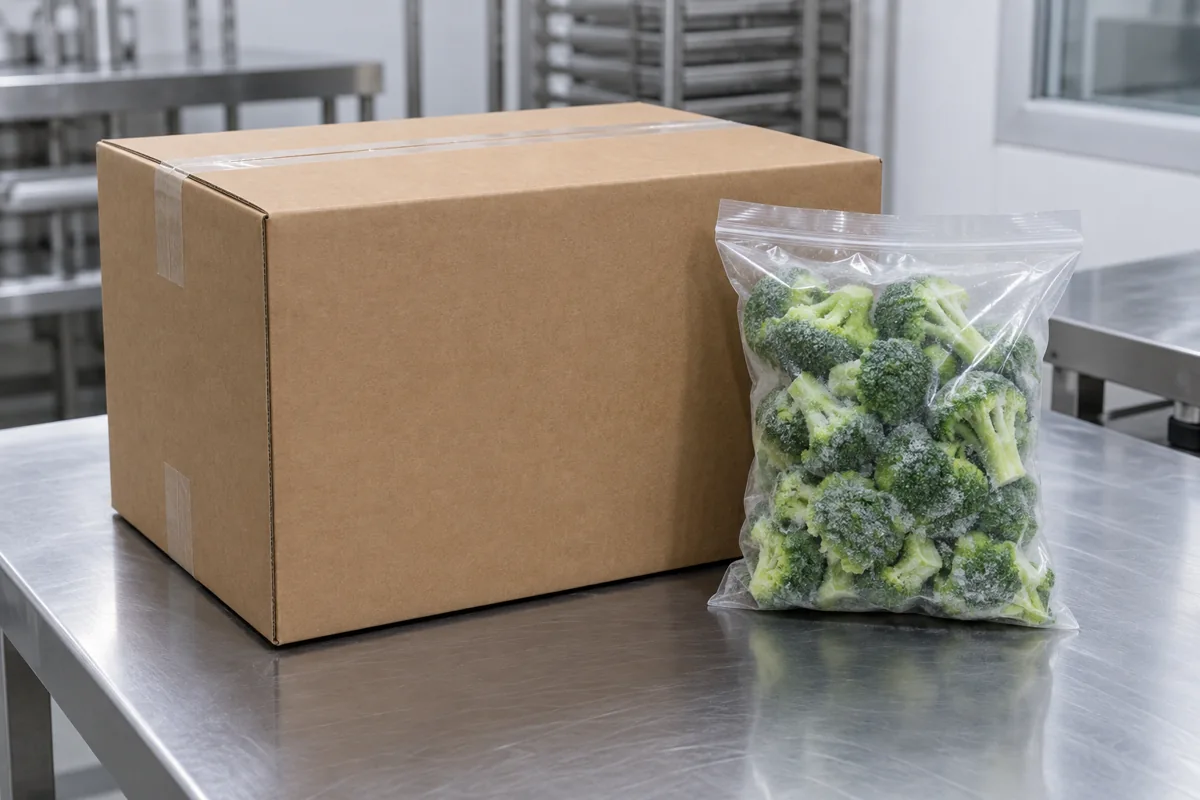
Sealed industrial carton and frozen broccoli sample.
Keep CFIA, CBSA and carrier release distinct
The carrier and terminal control arrival notices and physical handover. CBSA controls customs release and accounting, while CFIA can review admissibility, examine or sample where its programme and risk assessment require it. A customs release message is not permission to sell food that is subject to an unresolved CFIA direction, and a CFIA document review does not settle customs duties or an unreleased container. The importer or broker should save the release reference from each authority and the carrier delivery order, then instruct refrigerated drayage only when the freight can move lawfully. The site receiving team checks carton integrity, count, lot marks and temperature history before placing stock in available inventory.
Our proposed load check starts with clean, dry, odour-free reefer condition, correct set point for the agreed frozen specification, inner-bag seals, carton strength, pallet pattern and airflow clearance. The shipment record links reefer ID, seal, loading time, carton range and logger position to the purchase order. A numerical set point by itself does not prove product temperature; the buyer should agree the target, probe/sample method at receipt, logger review and deviation tolerance in the contract. If a container waits for inspection, the importer should ask the cold-storage operator to preserve frozen conditions and segregate the held lots. It should also budget terminal, examination and demurrage exposure rather than relying on a processing-time promise.
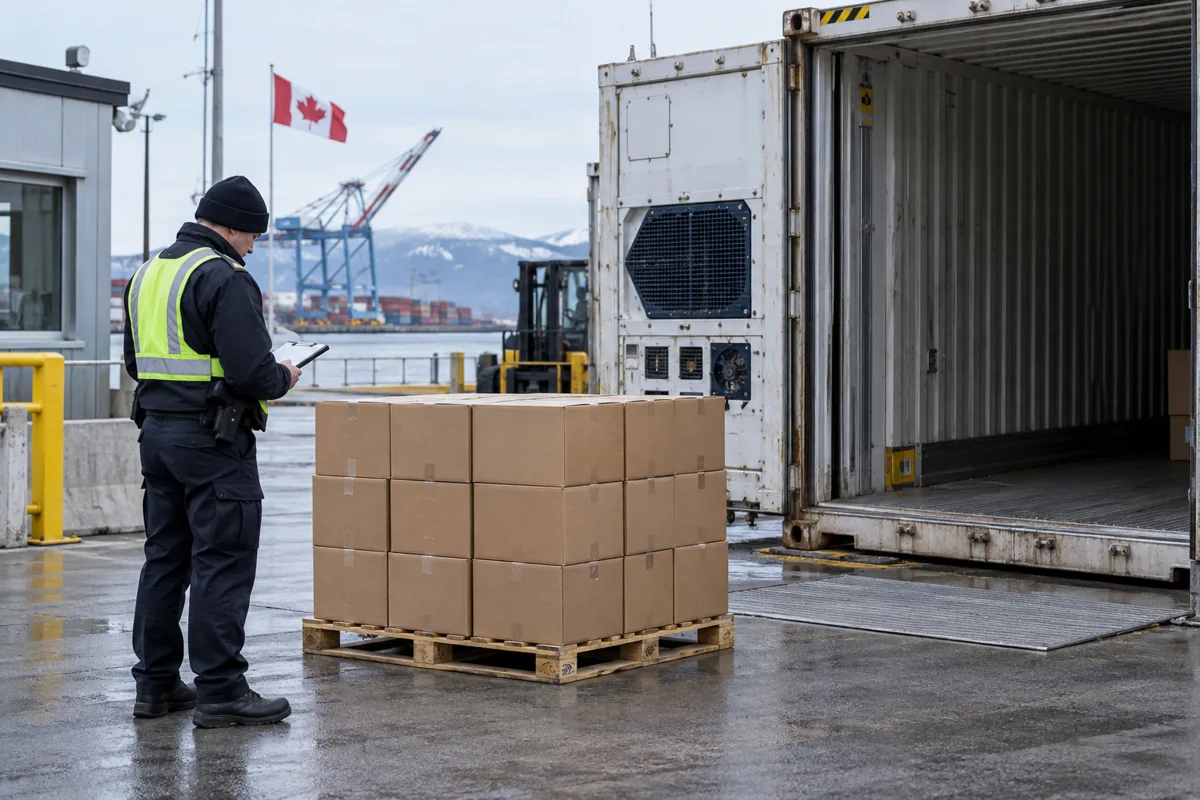
Sealed frozen-food pallet at Canadian port.
A useful buyer handoff is a four-column decision record. It names the rule or buyer requirement, the order action, the evidence and the exact condition for release. The importer can adapt it to its licence and entry conditions:
| Requirement | Order action | Evidence | Release condition |
|---|---|---|---|
| SFC import licence and PCP | Verify importer activity and commodity scope; include Chinese supplier in PCP | My CFIA licence record, current PCP and verification records | Valid coverage before import filing; unresolved supplier hazard closes before sale |
| CBSA importer account | Set BN15, CARM broker delegation and RPP/security or payment plan | CARM account and delegation record, broker instruction | CBSA release and accounting route accepted |
| CFIA product route | Run live AIRS for China-origin processed frozen broccoli and end use | Dated AIRS output, classification and OGD extension | All applicable CFIA conditions met or resolved |
| Frozen-food safety | Define lot, current s.59 criteria and risk-based buyer tests | Lot-specific laboratory report, method and sampling record | Legal threshold met and buyer hold lifted |
| Physical shipment | Match invoice, carton, lot, seal and reefer record | Invoice, packing list, seal/loading record, temperature log | CFIA/CBSA release plus carrier handover; receiving QA accepts stock |
Handle holds and close the next-order corrective loop
The sixth gate is a release log with three columns for CFIA admissibility, CBSA customs release and carrier or warehouse handover. A broker screenshot showing one status cannot substitute for the other two, and the buyer's internal QA hold remains a separate stock decision.
The first response to a document query is to freeze the affected lot's status, not to edit the invoice until it matches a desired answer. The importer should ask the broker or CFIA what field or condition is in dispute, then send the original source record and a documented correction if the original was wrong. A corrected certificate should identify who changed it, when, why and which lot it covers. We can provide the production and pack evidence; the Canadian importer controls the official filing and response.
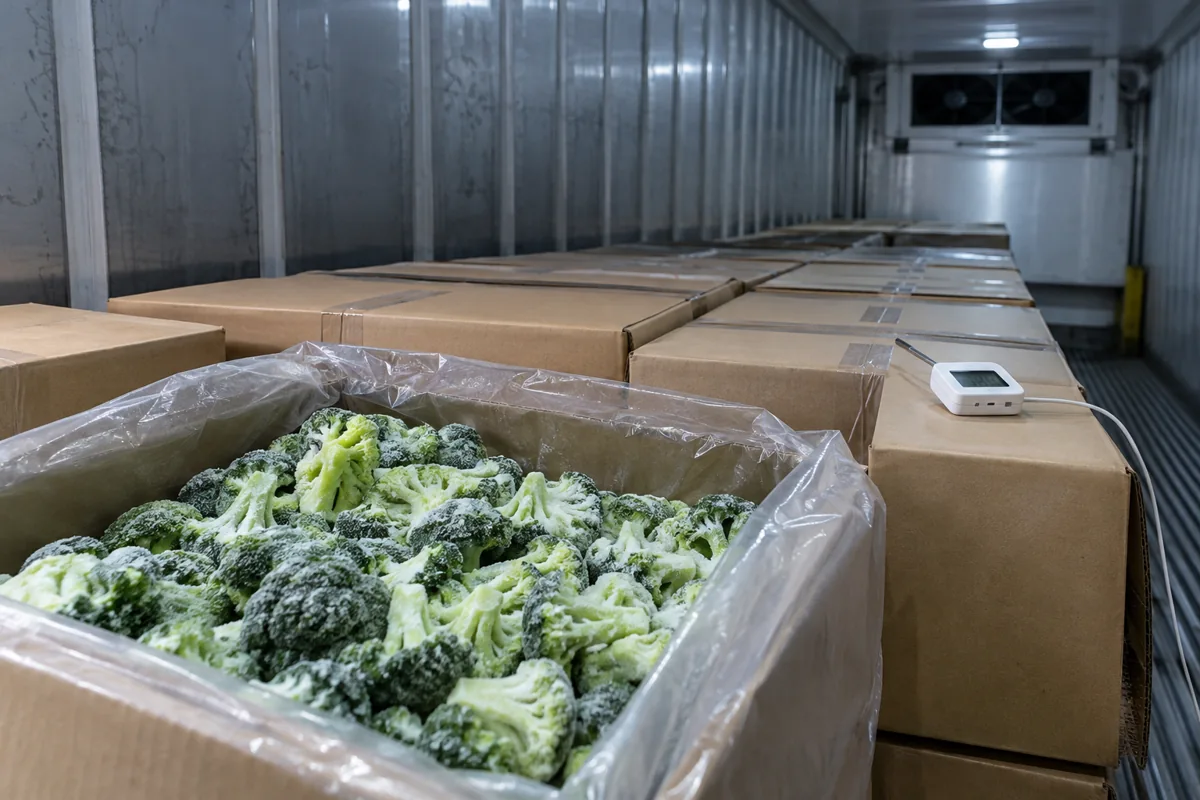
Refrigerated transport and lot temperature review.
For a microbiological or residue failure, the importer isolates the affected cargo and stops distribution while it investigates scope. We examine source fields, adjacent production lots, sample chain, lab method, blanch/cool/IQF records, sanitation, packaging and transport exposures. The importer decides whether more sampling is allowed or useful under CFIA direction, and whether rejection, re-export, destruction or recall is required. We should not promise that a second negative sample erases a first valid positive. Rework is possible only where technically sound and permitted for the product and authority; it is not a routine fix for an MRL exceedance.
Commercial quality failures have a different path. A higher broken-floret percentage, excess stem, low green colour, ice clumping or damaged cartons may fail the purchase specification while still passing a legal entry test. The receiving team should sample across the lot according to a written plan, compare against the agreed method and tolerance, record images and keep the cartons segregated while we jointly assess credit, replacement or other disposition. Treating every complaint as a border violation creates noise; treating a food-safety signal as only a price dispute creates risk. The purchase contract should distinguish these outcomes before cargo sails.
The next order is where corrective action becomes measurable. We would revise the source-field selection, processing check, pack approval or shipping instruction implicated by evidence; run a defined verification trial; and provide the importer with the updated record. If the importer changes end use from cooking-required industrial supply to an uncooked application, that is a new product-risk and labelling review. The same applies to a new factory, new agricultural source, new ingredient or new retail pack. Continuing the old entry assumptions would give the broker and PCP the wrong product.
The seventh gate is a recorded disposition. If an authority asks for documents, the importer should preserve its original submission and response. If a legal sample fails, distribution remains stopped while scope and official direction are determined; a buyer specification miss can be resolved commercially only after food legality is established.
GreenLand-food is a China-based frozen-food supplier and manufacturer discussing factory-direct wholesale supply. For this Canada-bound broccoli order, our proposal starts with the buyer's product form, floret-size band, stem tolerance, expected cooked use, industrial packing, quantity, delivery window and required documents. We then align a named source and production lot, agreed testing panel, label proof, packing marks and reefer plan with the Canadian importer's PCP and broker timetable. That proposed evidence package is order-specific; licence coverage, any certificate and processing validation must be verified from the actual facility and shipment records.
Ask us for a sample and a draft specification if you need to compare florets for foodservice versus further manufacturing. We can discuss whether a visually uniform premium floret justifies a tighter size and stem tolerance, or whether a processing grade with controlled breakage is more appropriate for soup, sauce or ready-meal lines. The importer should specify how samples are chosen and cooked; a hand-picked sales sample is not a substitute for shipment acceptance. When the commercial format is fixed, we can provide an evidence list showing which records are routine for the order, which are conditional on the actual Canadian entry route, and which are extra buyer requests.
Before payment and sailing, the buyer should check five gates: valid importer licence and PCP scope; current AIRS and broker classification; approved label and bulk pack; lot-specific production and test evidence; and a cold-chain and hold plan. After arrival, release has three separate meanings-CFIA admissibility, CBSA customs release and physical carrier/warehouse handover. The buyer should not make the stock available for sale until all relevant legal and internal QA holds are closed. That decision is more reliable than counting days from vessel arrival or assuming a supplier COA is a border permit.
Continue with the China-origin IQF broccoli supply plan for the same China-origin, single-ingredient, blanched IQF broccoli order.
Plan your frozen vegetables order
GreenLand-food is a China-based frozen vegetables supplier and manufacturer discussing factory-direct wholesale supply. Send us your form, specification, bulk packing, quantity, cooking application, destination and requested documents so we can prepare a reviewable proposal for the actual source and order.