1. Are the blueberries supplied as whole IQF fruit?
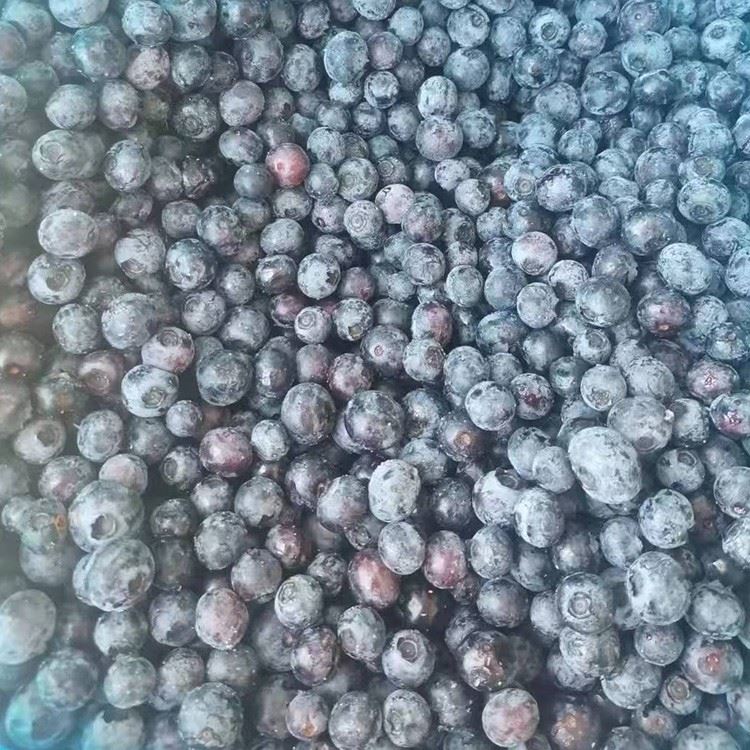
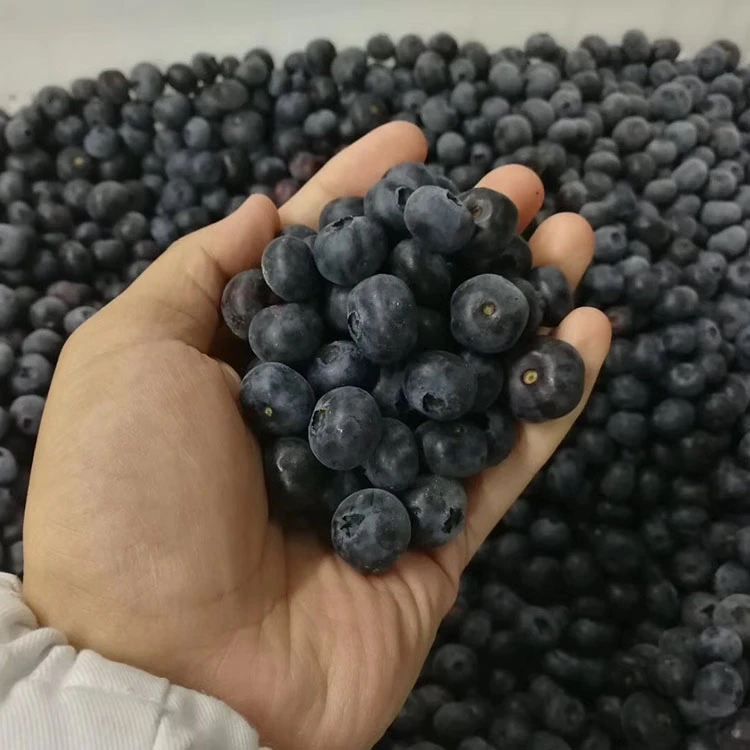
Yes. The main product is whole, individually quick frozen blueberries. Frozen separation is reviewed against the agreed specification and maintained through the specified cold-chain handling.
2. Do you supply cultivated or wild frozen blueberries?
Cultivated blueberries are offered for wholesale supply. Wild blueberries are reviewed separately when crop and stock permit. Confirm type and origin in the quotation and specification.
3. Which size grades can be quoted?
The listed references are 6-9 mm, 8-12 mm, 10-14 mm, 12-16 mm and 16 mm+, along with uncalibrated fruit. Availability depends on type, origin, crop and stock.
4. How should we choose Grade A, Grade B or processing grade?
Within the agreed commercial program, Grade A has tighter appearance and defect requirements, Grade B permits broader variation, and processing grade emphasizes Brix, flavor, color and yield. Approve the actual limits with the grade name.
5. Is 10-16° Brix guaranteed for every order?
No. Approximately 10-16° Brix is a possible crop reference in this wholesale program. Confirm the requirement for the selected type, origin and crop, then use the actual batch result where testing is included.
6. How are soft and broken berries assessed?
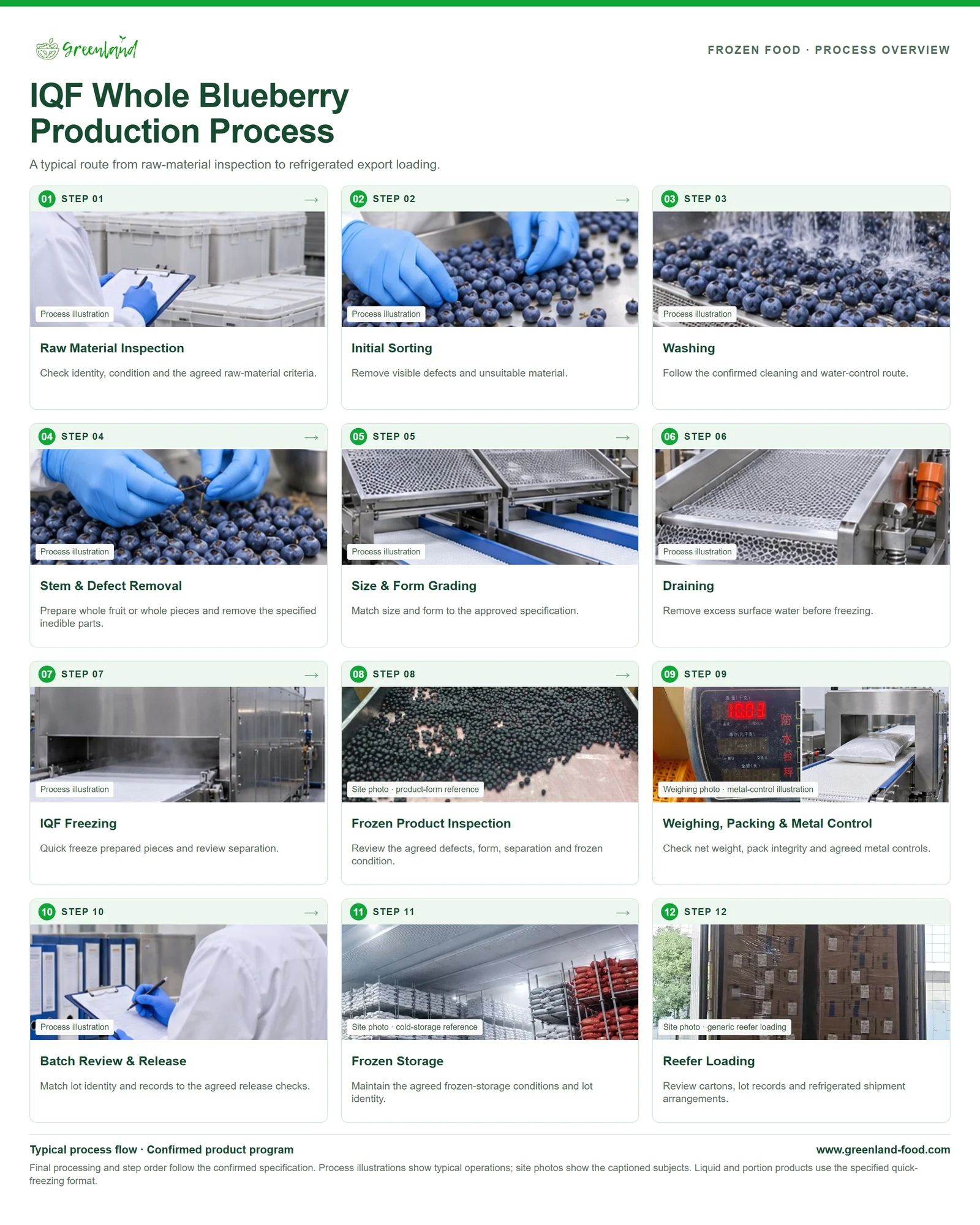
Agree definitions and tolerances first. Raw-fruit review, sorting, freezing, packing, storage and sample inspection are then assessed against the same order requirements.
7. Can drip loss be checked?
Yes, under an agreed application test. Define the thawing method, time, temperature and calculation so samples and repeat lots can be compared on the same basis.
8. How are stems, leaves and foreign matter controlled?
Cleaning, sorting, grading, final inspection and the applicable detection controls form part of the process. Agree the plant-material and foreign-material acceptance criteria for the order.
9. Which grade should bakery or yogurt buyers review?
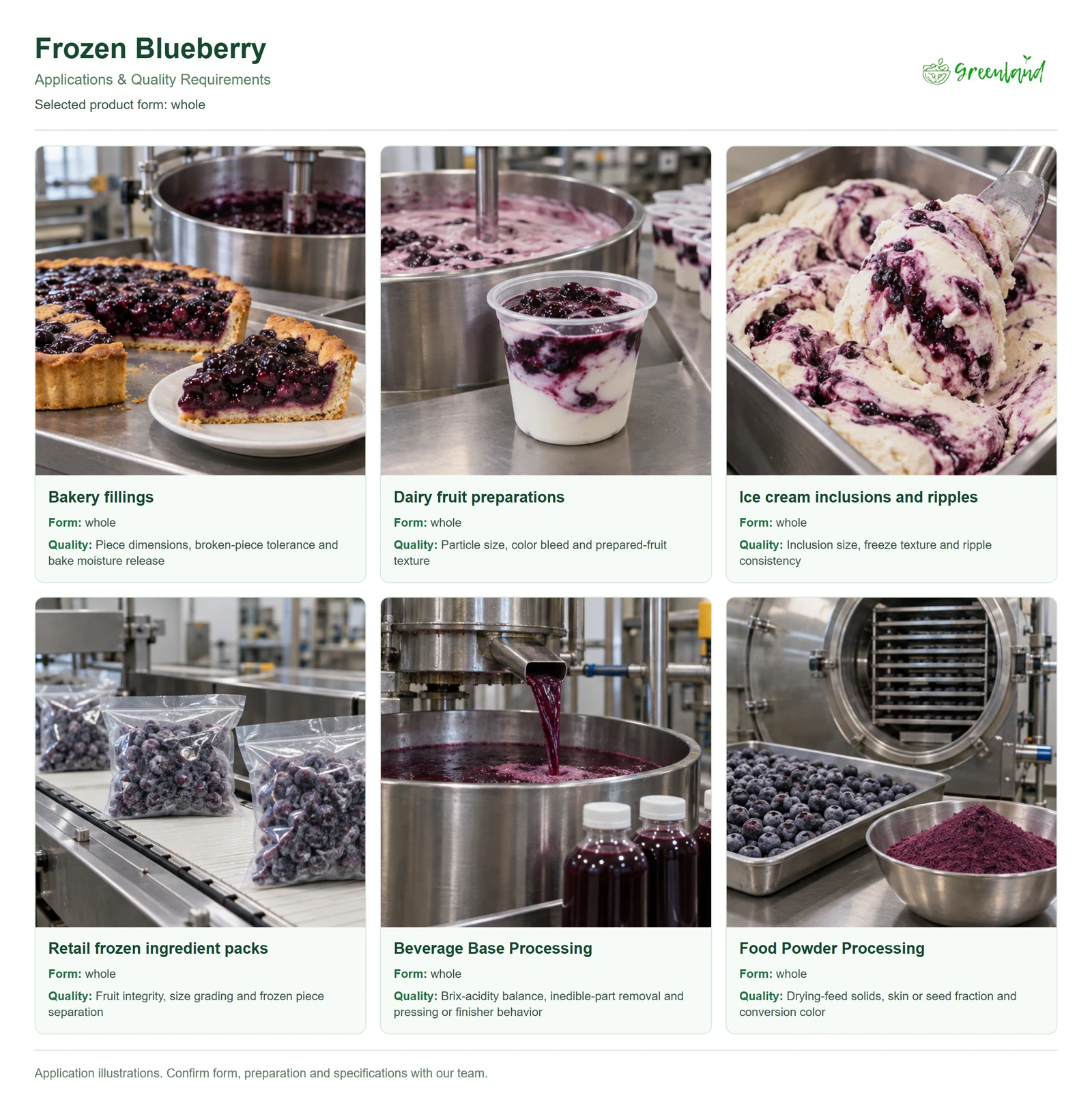
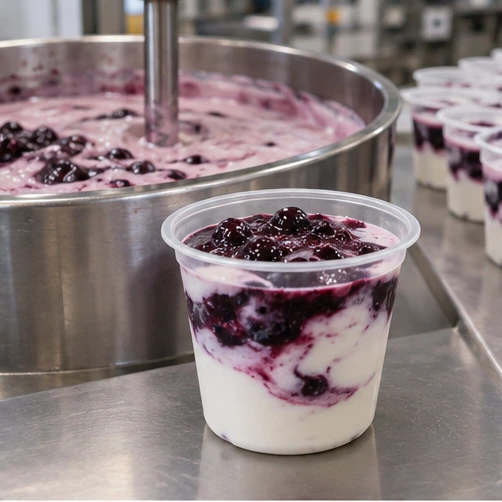
Visible bakery use may call for Grade A whole fruit. Fillings and dairy preparations can review smaller calibrated or Grade B options after testing size, Brix, berry condition and drip in the actual process.
10. What bulk packing is available?
A 1 x 10 kg carton is a common bulk reference. Bags of 20 kg or 25 kg are reviewed where available. Foodservice and retail configurations are confirmed separately.
11. Can you produce private-label retail packs?
Yes, subject to program volume and packing approval. Confirm film, artwork, barcode, language, importer details, dates and carton marks before private-label production.
12. Can certified organic supply be reviewed?
An organic request is considered only within a valid certified product and factory program, subject to crop availability, transaction-specific review and destination requirements. It is not assumed for every lot.
13. What MOQ and lead time should we plan for?
Use one 20 ft reefer as the reference MOQ and around 15-21 days as the lead-time reference. Confirm both against stock, crop, packing and the shipment plan for the actual order.
14. Can blueberries ship in a mixed container?
Compatible frozen products can be reviewed for a mixed load. Share each SKU, quantity and pack format so stock and carton requirements can be checked against one loading plan.
15. Which documents are available for the shipment?
The agreed file can include specification, batch COA, commercial invoice, packing list, bill of lading, origin and health documents, test reports and applicable certificate copies. Confirm the list before ordering.
16. What is needed for a bulk quote or annual supply plan?
Send type, origin preference, grade, size, Brix, defect requirements, packing, application and destination. Include first-order quantity, annual volume, shipment frequency and the required document list.