


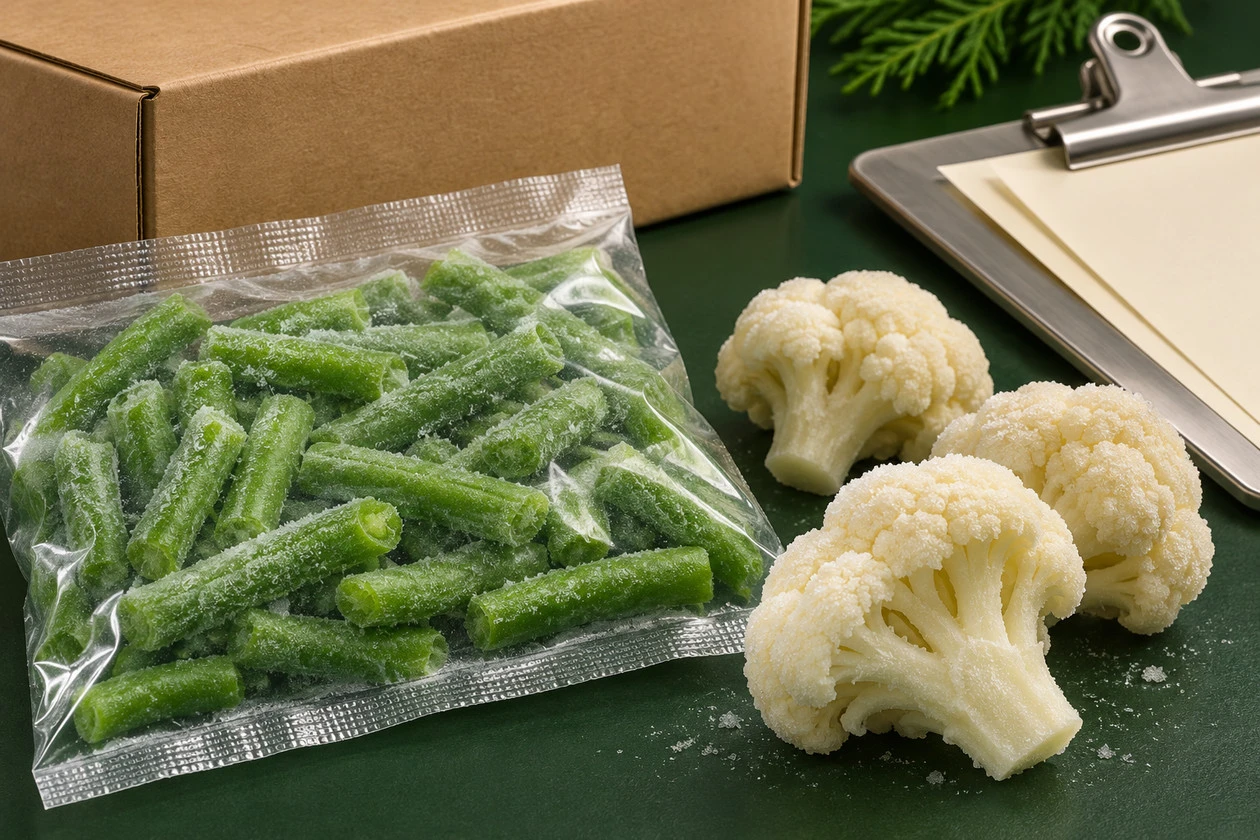
We match the certificate to the site and SKU
Consider cut green beans frozen at one site and filled into private label pouches at another. An approval based on the freezing site can leave the packing step unresolved. We ask where the pouch is filled, which operation controls the label and how both locations keep the lot identifiable. A change to the packing route can change the evidence your quality team needs, even when the cut and pack weight stay the same.
We start with your SKU and intended use. Send the vegetable and cut, the pack format, the sales market and the exact IFS Food requirement from your customer. A plain frozen green bean, a mixed vegetable bag and a product seasoned on a shared line can call for different controls and supporting records. We agree the route early enough for your quality team to review it before production is assigned.
For the proposed route, we compare the manufacturer and site on the current certificate with the operation that will actually process and pack your order. We check the product and activity descriptions, the issuing body, dates and any exclusions. A broad scope label for fruit and vegetables still needs to be read with the activity description. For example, look for the steps relevant to your SKU, such as cutting, blanching, quick freezing or primary packing. Where wording leaves a step unclear, we ask for clarification from the certification body or the site and record the outcome for your review.
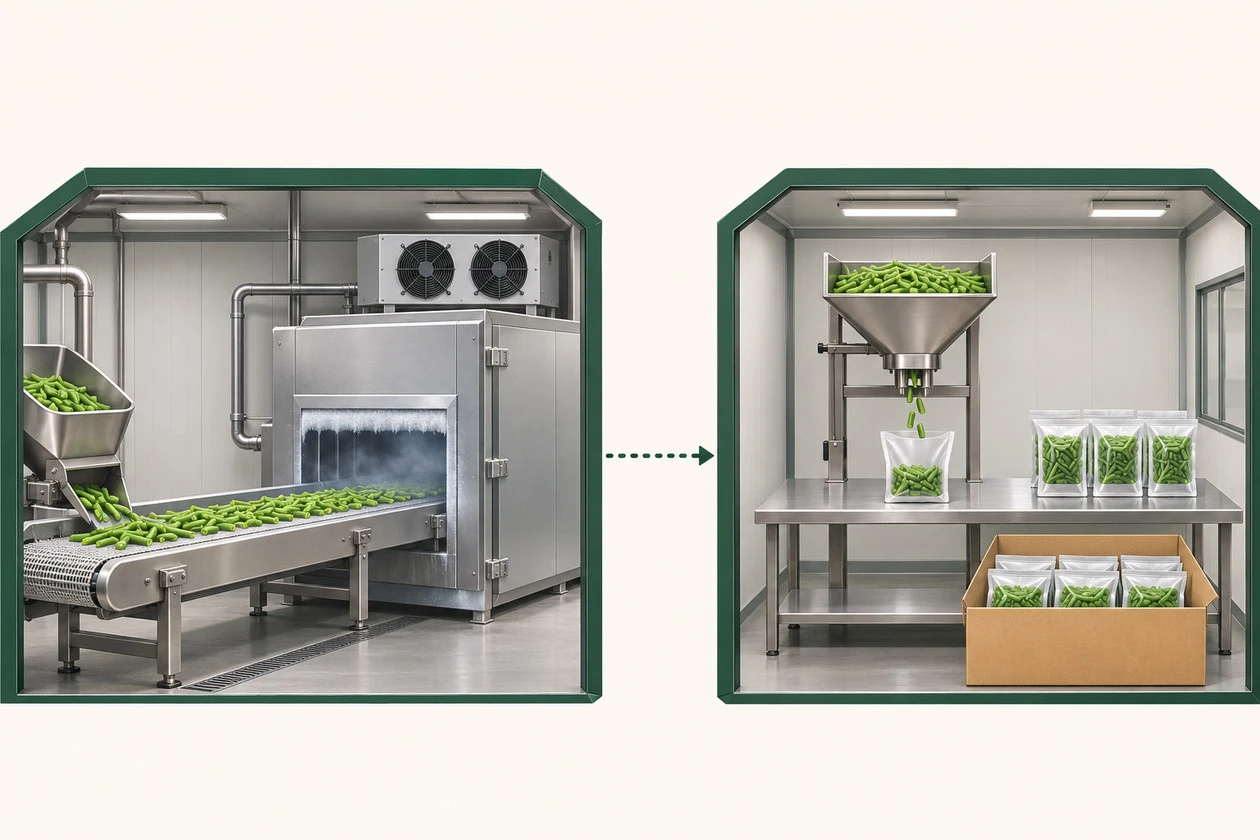
Illustration. When we move primary packing, we check the scope for that part of the route again.
We use the verification link on the certificate or confirmation from the issuer to check its status. When a renewal is due between quotation and production, we flag that date while planning the order and check the renewed record before relying on it. A site change, a move to another packer or a new processing step sends the scope back for review. For an outsourced step, we ask who performs it, how the manufacturer approves and controls it, and what records follow the material back into the order.
For a first order, ask us to record the production and packing route alongside the quote so it can be checked when the purchase order is released. If another location is proposed to keep a shipping date, we bring the changed route back to your team. In that situation a previous approval is useful as a comparison. The decision still depends on the activities and current certificate for the route that will run your SKU.
If the evidence is incomplete, we leave the IFS requirement open on the offer while we resolve the scope or identify another route for your review. That gives your procurement and QA teams the same answer before they commit. The scheme owner explains scope, outsourced operations and certificate verification in the IFS Food standard and document hub.
What we check when raw vegetables arrive
A receiving check starts with a material description the line can work with. For green beans, we discuss maturity, pod condition and the defects that affect the agreed cut. Overmature or damaged pods can change trimming loss and the proportion of usable pieces. For cauliflower florets, the mix of stem, curd and broken pieces matters to how the product portions out and how it performs in the next processing step. We put the relevant limits in the specification so the purchasing, intake and finished product teams work from the same description.
We match the delivery to an approved source and identify the incoming lot before it joins production. The intake records should show the material received, inspection outcome and any decision to hold or reject it. If a defect is confined to one delivery, the receiving lot gives the site a starting point for segregation. When more than one delivery will feed a run, we ask how the operation keeps the contributing lots visible after sorting and trimming.

GreenLand-food product photo. The caliper shows how pod size can be recorded when the specification calls for it.
Chemical controls begin with the origin and risk of the raw material. We agree what pesticide residue, heavy metal or other evidence is relevant to the vegetable, the market and your specification. Where a site uses a rapid intake screen, we check the purpose of that screen and how an unexpected result is escalated. A screen and a laboratory report answer different questions. For a report used in your decision, check the sample identity, date, analytical scope and reporting basis against the material or finished lot you want to approve.
The raw material and finished product specifications serve different decisions. At intake we need to know whether the delivery can be processed into the agreed product. At finished inspection we look at the cut, tolerance and defects you will receive. Where a source or grade changes, we review the intake result alongside finished samples from the proposed run so a good looking sample does not hide a mismatch in the underlying supply.
A change of source can be routine during a season. We review whether the new origin, supplier approval, test evidence and raw material specification still support the agreed supply. The same vegetable name on the purchase order cannot tell the intake team how to handle a different grade or growing source. Ask us to include the material attributes that affect your line yield and finished size range when we confirm the specification. See how we organize inspection and supporting records in our frozen food quality control system.
How we review blanching and foreign material controls
We review the process flow for the agreed product before selecting the production records we need. For an order of blanched cut beans, we follow the material through preparation, blanching, cooling, freezing and packing. The site's hazard analysis identifies where hazards are controlled and which checks carry a critical limit. The QA file should show the process used for the actual vegetable and cut, the approved settings, who checks them and what happens when a check fails.
Blanching records need enough context to interpret the temperature and time. The relevant setting depends on the product, the size of the pieces and what the step is meant to achieve. A floret with a thick stem can heat differently from a short bean piece. We ask for the basis for the site's limits and look for readings linked to the run rather than a generic operating sheet. We also confirm the intended use and any cooking directions with you, especially where you will put the vegetable into a product with no further heating step.
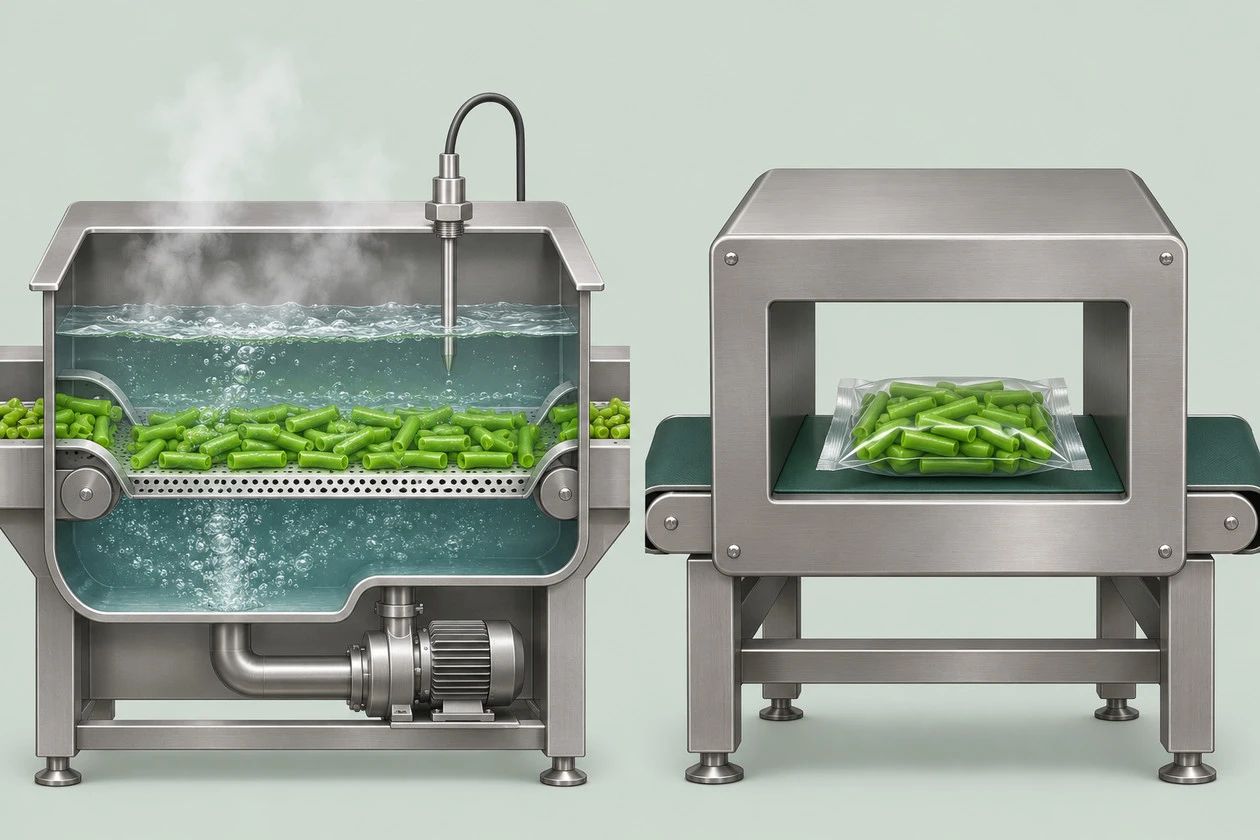
Illustration. Time and temperature records and detector checks give us different evidence for the same production run.
For metal detection, we check where the detector sits, what product and pack pass through it and how the site checks that it can detect and reject its test pieces. Moisture, pack dimensions and the way the product passes through the opening can influence the setup. We ask for the detector log for the relevant run and how the site identifies material between the last satisfactory check and a failed one. The corrective record should account for the product put on hold and the checks used to decide its disposition.
We also check how the site knows a measuring device is fit for use. A temperature entry needs a unit, a time and a link to the line or instrument used. If a device is found out of tolerance, we ask when it last checked correctly and which runs depend on it. A review can then focus on a defined window of product, with supporting checks and a QA decision for those lots.
A passing finished product test can leave questions about a production record. If an entry is missing, we ask site QA to establish whether the control was operating, define the affected production window and document its decision. A sample can only speak for the material and conditions covered by the test. The release review still needs a defensible account of the run and what happened to any potentially affected product. We can review these questions with your QA team through our factory audit and inspection support.
How we check hygiene, packing and labels
We ask the site to show the conditions around the process, including line clearance, cleaning verification and the handling of exposed vegetables. A signed cleaning record tells us that a task was recorded. Verification helps us understand whether the equipment and contact surfaces were suitable for the next run. Where the risk assessment calls for environmental monitoring, we review what is sampled and what the site does with an unexpected result. Equipment condition, water controls, hygiene and maintenance records matter when they could affect the product you are buying.
For a plain cauliflower SKU on shared equipment, we check what else runs on the line and whether ingredients, packaging or tools could carry over. A seasoning used in another SKU can change the allergen questions the site has to address. Before a changeover, we want the operation to identify the previous run, the cleaning or segregation required and the person who clears the line. Your label requirements belong in the same review so the words on the pouch reflect the approved product and process.

GreenLand-food product photo. Floret shape and stem size are part of identifying the agreed product before packing.
A bulk liner and a printed retail pouch also create different evidence needs. We match the SKU and the version of the packaging specification to the supplied bag, carton and approved artwork. For private label, check the product name, ingredient and allergen declarations where applicable, net weight, date format and the position of the lot code. The first packed samples are useful when a buyer needs to see how a code reads on the actual film or carton. Keep the approved artwork version available to compare with production.
The packing record should connect the label and food contact packaging to the product lot. When a print change is made mid-run, we ask the site to account for the material already packed and distinguish the units carrying each version. A code that scans or reads clearly is only useful if the underlying record links it to the right product. We confirm which evidence your team wants with the lot file before the packaging is printed or the order is scheduled.
We trace cartons back to the production lot
We start a traceability check with the carton code your team will see at receiving. The code should lead to the finished lot, production date, packing records and the incoming materials that fed the run. From the production records we should also be able to follow that lot forward into cold storage, dispatch and the customers who received it. Where material is split between runs or held for a later pack, we look for the point at which a new lot or packing reference was assigned.
Quantity is part of that exercise. For a run of cut beans, we reconcile incoming weight with packed output, recorded trim or process loss, product kept in stock, and any product held or otherwise disposed of. We check that the records use comparable quantities and account for split shipments. A trace that finds the correct incoming lot but leaves some of its finished cartons unaccounted for gives your QA team an incomplete picture of what could be affected.
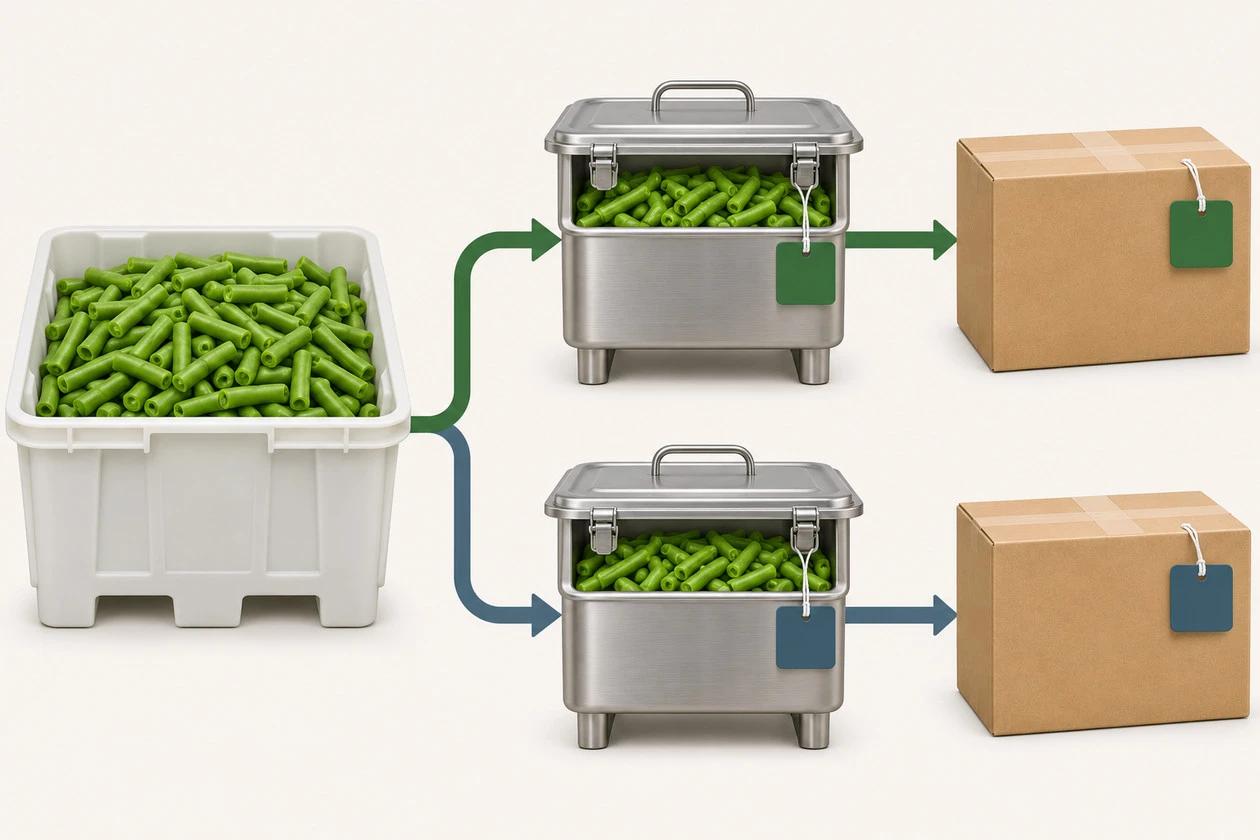
Illustration. One delivery can feed two runs. The carton code should still lead back to the right run.
During supplier review, we ask to see a timed trace exercise that reflects the complexity of the product and route. The test should show the links in both directions and the quantities reconciled. IFS Food v8 calls for testing traceability and mass balance and sets a four-hour maximum for tracing finished product to raw materials and customers, with tighter timing when required by the customer. We discuss your own target at specification stage and ask for the test record and actions if the exercise exposes a gap. See the IFS Food v8 requirements for traceability.
In an illustrative dispatch record, one run yields 48 finished cases. Twenty go on the first dispatch, eighteen on the second, eight remain in stock and two are held. The 48 cases reconcile only when the file accounts for both the stock and the hold. If your complaint identifies a carton from the second dispatch, the code tells us which run and pallet to look at and which other records to pull.
A real inquiry can start with a photo of a carton and a delivery note. We use those details to match the shipment and pull the corresponding records. If two production dates share a container, each date needs its own link to pallet and lot records. This helps narrow a complaint to the affected quantities and gives us a way to check whether any related stock is still in storage. Our batch traceability system shows how carton marks, production, packing and shipment documents connect.
How we review cold-chain records and release the lot
For the pre-dispatch review, we bring together the finished lot, the agreed specification, the release record and any certificate of analysis or laboratory results required for the order. We check that the sample or report links to the right material and date, that the test covers the requested parameters, and that QA has recorded the decision. When a shipment contains several lots, we review which lots each report covers. Where a representative sample is agreed, we confirm how it is identified and retained.
The cold-chain review starts with product condition and handling before loading. We check the agreed dispatch condition, the storage record and the loading plan. A trailer setpoint, a trip logger reading and a product temperature measurement describe different things. We ask where and when a reading was taken and check it against the agreed measurement method. When the order calls for a logger, the loading record should say where it was placed so your team can interpret the trace at arrival.

Illustration. We read the logger with its placement and loading record so the temperature history has context.
If a temperature reading falls outside the agreed conditions, we check the time, duration and location of the excursion and identify the affected lots. Site QA assesses the available product and handling evidence before deciding what can be released. The disposition belongs with the lot record so the shipping team can distinguish cleared cartons from stock still on hold. A difference in product condition at arrival can then be investigated against the same loading details and temperature history.
Timing matters when a test or investigation is still open. We agree which documents need to be available before dispatch and which shipment records will be generated during loading. For example, a loading photograph or a logger placement record belongs to the actual load, while the approved specification and test decision can be reviewed earlier. We match those records through the lot and shipment references so the final file follows the goods.
We also separate the immediate correction from the work needed to prevent a repeat. Replacing a wrong label can clear the affected stock once QA has checked the corrected units. Finding out how the wrong artwork reached the line and confirming the new check works takes a separate record. We ask for the owner, completion date and verification where relevant. If a departure could affect your agreed product, pack or shipment date, we bring it to your team before dispatch is arranged.
The records we review from quote to dispatch
Use the following checks when you tell us what your QA team wants to see. The timing matters. Scope is most useful before the order is assigned, while a lot record can only be completed once that lot has been produced. We agree the evidence needed for each decision and confirm what can be shared for your order. Keeping the checks in this sequence also makes it easier to spot a document that belongs to a different route or production date.

Illustration. We keep affected cartons identifiable while the release decision is open.
Order evidence by stage. Scroll across on a narrow screen to read all four columns.
| Check stage | What we verify | Evidence you can review | When a check fails |
|---|---|---|---|
| Before quotation | Match the proposed manufacturer, processor and packer to the SKU, activities and current scope. | Current certificate or verification result and the proposed processing and packing route. | Resolve expiry, exclusions or an unclear packing step before confirming coverage. |
| At intake | Check the source, material identity, grade, lot and agreed screening or test evidence. | Specification, receiving record and relevant supplier or laboratory evidence. | Identify and segregate affected deliveries for a QA decision. |
| During processing | Review applicable blanching limits, monitoring, detector checks and responses to deviations. | Agreed extracts from the process flow, monitoring logs and exception records. | Identify the time window and hold affected production for review. |
| At packing | Match packaging, artwork, weight and lot markings to the approved SKU and run. | Approved artwork, packing specification and relevant checks from the run. | Isolate affected packs and reconcile them after correction. |
| Before release | Trace the carton to production, input and packing lots and match required results. | Lot record, COA or test results where agreed, and the recorded release decision. | Resolve missing or conflicting evidence with site QA before dispatch. |
| At loading | Check lot and quantity, product condition, loading record and logger placement where agreed. | Packing list, loading evidence and temperature records as agreed. | Review the affected load and document what can be dispatched. |
For a repeat order, tell us if the destination, intended use, pack or artwork has changed. We review the parts of the file affected by that change and confirm which previous records still apply. A private label pouch added to an existing bulk SKU, for example, can require a different packing review and updated artwork approval even when your vegetable specification stays the same. Agree who will check the first packed samples and which version must be attached to the release record.
When you send a specification or retailer questionnaire, include the certificate requirement and your approval deadline. We can then separate the evidence available at quotation from the lot records that will follow production. If you need to review the controls before committing volume, agree a sample or trial lot and the documents your team will use to accept it.
Discuss your frozen vegetable order with GreenLand-food
GreenLand-food supplies factory-direct wholesale frozen vegetables from China. As your supplier, we match the proposed manufacturer and packing route to your specifications and document requirements.
Send the vegetable, cut, specification, packing, quantity, intended use, destination and any private label needs. Include your IFS Food requirement and the documents your quality team wants to review.