


How to Prepare Lotus Root: Peeling, Boiling, Stir-Fries, Hot Pot and Storage
Oct 14, 2026
Leave a message


Start from the actual fresh or prepared form
First identify what is in front of you. Fresh lotus root is the segmented edible rhizome of Nelumbo nucifera, usually with beige outer skin and pale flesh visible at a cut end. It grows in wet soil and needs careful cleaning before kitchen cutting. A chilled pouch may instead contain peeled or sliced root held in liquid. Frozen cuts can arrive as rounds, chunks or dice. These are distinct preparation starting points even though the ingredient name is the same.
Read a prepared pack's ingredient list and directions before draining or rinsing. Some items have already received a heat treatment or a color-management treatment; others still require a full cooking step. A pale appearance is not a reliable indicator of that history. Nor does a soft thawed texture show that a frozen product is ready to eat. The offered specification and current label should explain the supplied state and required preparation.
For whole fresh rhizomes, choose sound firm segments. Examine the ends and exterior for obvious decay, damaged areas, mold or objectionable odor. Reject material that looks rotten rather than trying to remove the appearance with a soak. Wash before peeling to reduce the transfer of surface soil to the newly exposed flesh. The raw-material assessment and clean preparation area set the conditions for every later step.

Actual supplied lotus-root cuts help establish the form before the kitchen chooses a method.
For frozen cuts, inspect the bag, identity and piece condition under the kitchen's receiving procedure. Confirm that the ordered form is present and the pack has been handled under the applicable cold conditions. A product photograph may show intact rounds, but the receiving sample must establish the actual cut and breakage in the supplied lot. Record relevant concerns with the lot identification so the supplier can examine them.
Plan the portion before opening a large pack. A busy kitchen may benefit from smaller inner bags that match service demand, while a manufacturer may use a full liner in one batch. Unnecessary thawing and repeated withdrawals create extra handling. Choose a pack and portioning method that the operation can control, then follow the product directions for unused material. Convenience should be assessed through the whole service route.
The corresponding GreenLand product photographs provide a truthful reference for supplied cuts, including their channels and natural size variation. They are useful for discussing dimensions; they do not replace preparation instructions. When switching between fresh, chilled and frozen material, make a small trial with the proposed item before rewriting the main recipe. Compare usable quantity and finished bite, rather than substituting one purchased kilogram for another without checking the result.
Wash, peel and inspect the hollow channels
Prepare clean hands, equipment and a suitable work surface before handling the root. FDA guidance recommends washing produce under running water, including produce whose skin will be removed. Household soap and detergent do not belong on vegetables. Washing reduces contamination and removes visible material; it does not sterilize the food. Keep soil-removal work separate from the clean board used for final cutting, especially when preparing a large quantity.
Rinse the whole segment and pay attention to joints and creases. Trim the ends with a clean knife, then remove the thin outer skin with a vegetable peeler or controlled knife strokes if the recipe calls for peeled material. A peeler can reduce unnecessary flesh loss. Heavy trimming changes the usable yield and can make slices irregular. For a commercial trial, weigh the usable prepared material so that purchasing and kitchen staff compare the same quantity.
Inspect the channels once the ends are exposed. Visible trapped material needs removal from accessible spaces; cutting the segment into shorter pieces may make inspection and rinsing easier. Examine the actual flesh at the same time. Dirt, abnormal dark areas and decay are different observations and should not be treated as one cleaning problem. If the condition is doubtful, select sound material rather than relying on vigorous washing to repair it.

Rinsing an exposed segment makes its channels accessible for inspection and visible soil removal.
Keep peel and trimmings away from the clean finished slices. A knife that has contacted a dirty exterior can carry material onto the board or flesh. Organize the work so that washed root moves forward into peeling and cutting, while waste moves into a separate container. This makes the sequence easier to maintain during a rush and reduces repeated handling. The objective is clean, controlled preparation, rather than a visually elaborate workstation.
Cut surfaces can discolor while they wait. Work in manageable batches and keep prepared material protected and chilled as needed. A short recipe-specific water hold, sometimes with a small amount of food acid, can help appearance. Drain the pieces before the next operation. Such a soak is a culinary color step; it should not be described as a validated parasite treatment or a way to extend room-temperature holding.
For purchased peeled slices, avoid automatically repeating every fresh-root preparation step. Extra soaking can introduce unnecessary moisture or change flavor, while extra blanching can soften the slice before the actual cook. Follow the pack's directions and clarify an uncertain supplied state with the seller. That simple check prevents a recipe intended for raw whole rhizomes from being applied unchanged to a prepared frozen ingredient.
Cut for stir-fries, simmering and hot pot
Choose the cut by the cooking job. Thin rounds present the wheel pattern and heat relatively quickly. Half-moons fit a smaller mouthful or a mixed vegetable dish. Larger pieces suit a longer simmer when an intact large round is unnecessary. Dice distribute through fillings. Their names describe the form, but dimensions and variation determine how that form behaves in the actual equipment.
Use a stable board and an appropriate sharp knife or guarded slicer. A large rhizome can be awkward to hold, so shorten it into manageable segments before making repeated cross-cuts. If the recipe accepts half-moons, a flat cut face can improve stability. Do not sacrifice safe handling for a very thin decorative slice. Consistent usable pieces are more valuable than a handful of perfect rounds surrounded by crushed edges.
A short preparation sequence helps preserve that consistency. First establish the dish and intended bite. Next cut a small trial quantity at one chosen thickness. Then cook it by the proposed method and assess the finished piece. Adjust the cut if necessary before preparing the full amount. This is an actual ordered process, because a change in the trial should precede the larger cutting job rather than being discovered after it.
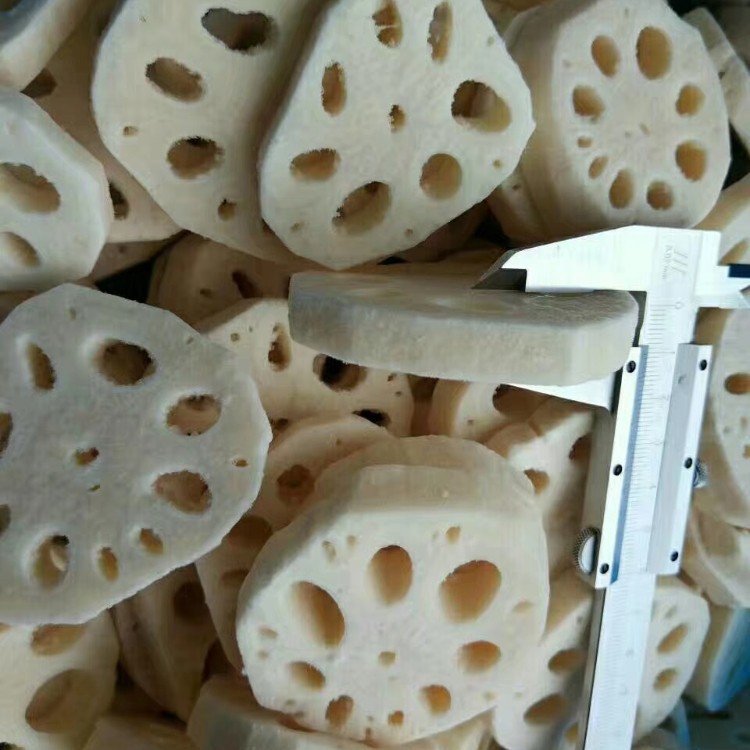
Dimensional views help connect the offered cut with the dish's heating and presentation needs.
For stir-frying, choose a thickness that finishes within the recipe's short pan sequence. A very broad slice may need halving if it dominates the rest of the dish. For hot pot, consistent thickness helps portions cook at a similar rate, while intact bridges between channels preserve appearance. For a long soup cook, a more substantial piece may offer a useful margin against breakage. These are application choices, not universal dimensions.
A commercial cut specification should name the measurement that matters: slice thickness, diameter range, cube dimension or an agreed reference. Include a practical tolerance and any relevant broken-piece allowance. The actual GreenLand dimension photographs illustrate cut assessment, but an order needs its own agreed values. Avoid reading a photographed caliper setting as a guarantee for every product or interpreting the site's image title as the whole specification.
Natural rhizome diameter and hole architecture vary. For an appearance-sensitive dish, count usable intact rounds after the cooking and handling sequence. For a filling, evaluate distribution and the amount of small fragments. The most expensive round grade may add little value when the kitchen will chop it immediately. Conversely, buying a loose irregular grade for a visible garnish can create sorting labor and waste that outweigh a lower carton price.
| Cut | Cooking role | Main result to check |
|---|---|---|
| Thin rounds | Quick pan dishes | Intact wheels and even bite |
| Thicker rounds or chunks | Broth and simmered dishes | Center tenderness and shape |
| Small dice | Fillings | Distribution and moisture |
| Half-moons | Mixed portions | Mouthful size and breakage |
Boiling and blanching have different purposes
Boiling can be the main cooking method, while blanching can be an intermediate preparation step. Both involve heat, but their purpose and endpoint may differ. A brief blanch used to manage processing quality does not establish complete cooking or readiness for cold service. Confirm what the supplied ingredient requires and what the finished recipe needs before deciding whether a separate water step belongs in the sequence.
For a simple cooked side, place uniformly cut prepared fresh pieces in suitable boiling water and maintain the recipe's cooking conditions. Avoid a load so large that the pot loses heat for an extended period. Assess several pieces from the batch rather than only the thinnest visible slice. The desired texture can remain firm, but a texture preference alone cannot replace the required safe preparation. Product directions control a prepared commercial item.
Scientific cooking results are specific to their material. One lotus-root experiment used approximately two-millimeter slices and separate boiling, steaming and frying treatments. It found different texture and flavor responses. That supports checking thickness and method together, rather than adopting its minutes as a universal schedule for every whole piece, cultivar or frozen pack. Commercial validation needs the actual supplied product and intended process.

A water-cooking stage has its own purpose and endpoint before any later pan finish.
If the water step precedes immediate stir-frying, drain thoroughly and proceed with the recipe. Excess water left in the channels and between slices enters the pan and can dilute the sauce. If the food is prepared for later use, use an appropriate cooling procedure and protected chilled storage. A deep bowl of warm slices left on the counter is a different process from a controlled small-batch cooling step.
Color can change during cooking for more than one reason. Compare the incoming slice, cooked tissue and surrounding liquid before assigning a cause. A tan slice in broth does not prove that its browning treatment failed; the broth and heat conditions can matter. The existing GreenLand boiling-color article examines that narrower investigation. Here the kitchen's first job is to keep preparation conditions and observations clear enough to reproduce.
CDC guidance on freshwater plants advises avoiding raw or undercooked material and cooking well because of Fasciolopsis risk. It supplies a general safety principle rather than a lotus-root-specific universal time. Do not substitute a quick vinegar soak, the ingredient's frozen state or a competitor's short blanch suggestion for that guidance. For a commercial food operation, obtain the intended-use instructions and apply the cooking controls relevant to the finished product.
CDC freshwater-plant safety guidance supports the preparation caution described here.
Stir-fry and air-fry with controlled moisture
A useful stir-fry starts before the pan is heated. Have the sauce and accompanying ingredients ready, choose a manageable quantity and decide which components need the longest cooking. Lotus root should enter at a stage that gives it the required preparation without overcooking the quicker vegetables. A recipe with thin rounds and one with thick chunks need different sequencing, even if their seasoning is identical.
Surface moisture changes the pan behavior. Drain washed or blanched slices and use the supplied frozen product according to its directions. A wide pan with room for evaporation is easier to control than a deep crowded pile. If the slices release more liquid than the pan can remove, the mixture cooks in that liquid instead of developing the intended dry pan character. Dividing the batch can be more effective than adding extra oil.
Use the sauce quantity that coats the food without hiding the moisture problem. A watery stir-fry can taste weak even when the nominal seasoning rate is unchanged. Reducing the sauce may help one recipe, but it should follow observation of the actual ingredient and pan. Prepared chilled slices and frozen material can carry different amounts of water, so a direct swap often needs a small process adjustment.

Intact rounds and a light sauce illustrate the intended appearance of a controlled stir-fry.
Toss gently enough to protect the thin bridges between holes. Repeated crushing with a utensil can turn attractive wheels into fragments. Include the other ingredients' physical handling in the trial: dense meat pieces, vigorous mixing and a deep transfer container can all increase breakage. Inspect the dish after its normal portioning step, because the pan photograph may look better than the food that reaches the serving tray.
Taste a properly prepared trial at the serving stage. Record whether the root remains distinctly firm, whether there is unwanted fibrousness, and whether the sauce and vegetable flavor are balanced. For foodservice, repeat the observation after the planned hot hold. For a ready meal, include cooling and reheating. These stages can change the perceived bite and reveal whether the first cooking endpoint needs adjustment.
We would discuss a frozen slice around this actual application, including cut, previous treatment and packing. A supplier sample should come from the proposed item. If the sample passes in a small pan, check it at a realistic batch load before treating the recipe as established. That makes later troubleshooting concrete: the team can distinguish a change in ingredient condition from a change in load, sauce or holding.
Air-frying offers another dry-heat route for thin lotus-root rounds. Cut the slices evenly, drain and dry their surfaces, then coat them lightly with oil if the recipe calls for it. Arrange them in one layer with space for air to move through the basket. A published lotus-root chip recipe uses this approach and moves the slices during cooking. Inspect color, edge crispness and the center of several pieces instead of judging the batch from one browned wheel.
The chip recipe is a culinary example for fresh thin slices, not a universal time or a safety validation for a frozen commercial pack. An air fryer may brown the exterior before a thick center has reached the intended finish. Follow the supplied item's cooking directions, test the actual cut and load in the equipment to be used, and keep any required complete cooking step. Record whether the result will be eaten immediately or held, because the crisp surface can soften during service.

Thin lotus-root rounds cook in one uncrowded air-fryer layer.
A Japanese Taste air-fried lotus-root recipe shows a thin-slice application; its appliance time is not a product-specific cooking instruction.
Cook lotus root in soup and hot pot
Soup and hot pot use cooking liquid deliberately, so the moisture issue differs from stir-frying. The cut still matters. A thin wheel offers visible identity and a lighter mouthful; a thick piece needs enough heat to reach its center and may produce a softer starchy result during a longer simmer. Decide whether the dish needs sustained firm bite or a more yielding vegetable before selecting the product.
Add lotus root according to the actual starting state and remaining cook. Prepared frozen pieces add cold load as well as food. The broth needs to return to the intended cooking conditions, especially when several ingredients are added together. Avoid treating the first visible bubble or one arbitrary clock time as proof that every piece in a crowded vessel is ready. Follow applicable cooking directions and the food operation's established controls.
In a clear soup, inspect broth and tissue separately. Seasoning, meat, mushrooms and other vegetables can color the liquid, and the root can also change appearance during heating. A darker broth is not automatically a defective lotus-root lot. Compare the same ingredient load, liquid and observation stage if color matters to the application. The desired clear presentation should be defined in the actual recipe rather than inferred from a raw product photograph.

Cooked lotus-root wheels remain identifiable in a clear broth with tofu and mushrooms.
Hot pot introduces serving organization as well as cooking. Keep raw ingredients and utensils separate from cooked food and serving utensils under the kitchen's safe handling procedure. A vegetable can receive contamination from another ingredient during preparation or at the table. Cooking the vegetable properly does not excuse returning a contaminated utensil to a ready serving portion. The complete service route deserves attention alongside slice thickness.
For a prepacked meal or foodservice broth component, consider what happens after the first simmer. Cooling, packing, reheating and service holding create additional exposure to heat and moisture. An initially agreeable slice may become too soft or break under those later conditions. Test the full route and decide whether the cut or first cook should change. A short tasting in fresh broth is only one part of that approval.
Lotus root can sit alongside tofu, mushrooms, greens or cooked proteins without needing a strong flavor of its own. Its distinctive perforated shape and bite can make the ingredient recognizable in a finished bowl. Preserve that role by matching the portion and cooking sequence to the other components. If the menu changes from clear broth to a dark braise, revisit appearance and texture expectations rather than assuming the earlier sample answers every application.
Cool, store and repeat the preparation safely
Plan storage before producing leftovers. Portioning to demand is often the easiest way to preserve quality and reduce extra handling. Once food has been cooked, follow an appropriate prompt cooling and refrigeration procedure. Small shallow containers make heat removal easier to manage than a deep mass in the original pot. Protect the food during storage and retain enough identification to know what was prepared and when.
For household leftovers, federal guidance generally uses a refrigerator at 40 degrees F or below and a short storage period for cooked soups and similar dishes. Refer to the applicable food category and current guidance; a vegetable-only container and a meat soup may need different handling considerations. In commercial service, the operation's validated cooling, holding and date-control procedures apply. Do not infer shelf life from color or a food photograph.
Keep unopened frozen material continuously under its labeled conditions. Remove only what the recipe needs, handle partly used packs appropriately and return the remainder promptly. A thawed pack must follow its own instructions and the food operation's controls. Freezing does not repair earlier unsafe handling, and repeated warming can reduce quality. If a pack's condition is doubtful, hold it for assessment rather than masking the problem in a sauce.

Small protected containers illustrate an organized chilled-storage stage after cooking.
Reheating changes the texture further. A crisp pan dish can become softer in a covered container or after another moist heating step. Reheat according to the applicable safe procedure and assess the result you plan to serve. If the preparation is intended for repeated service, record the complete sequence and adjust the initial recipe only within that established method. Quality preference should not reduce a required safety step.
For repeat supply, keep the accepted item, cut and preparation together. Purchasing staff need to know which product the kitchen tested; kitchen staff need the directions that apply to the delivered product. A proposed substitution should be reviewed before routine use. Changing thickness, pretreatment or pack size can alter both preparation labor and the pan result, even when the invoice continues to say lotus root.
A useful GreenLand inquiry can begin with the dish, approximate quantity and destination. We can clarify the supplied cut, packing, sample and documentation requirements in conversation. The strongest approval is a practical one: a named frozen lotus-root item has been prepared safely through the intended route and produces the required appearance, bite and usable yield. That gives the next order a clear reference while keeping everyday preparation manageable.
Review the offered form through our frozen lotus root supply information, then confirm the active specification and sample with our team.
Source frozen lotus root with GreenLand-food
GreenLand-food is a professional frozen lotus root supplier and manufacturer in China, providing factory-direct wholesale supply for importers, food manufacturers, foodservice distributors and private-label programs.
Tell us your application, approximate quantity and destination. We can clarify product form, specification, packing, private-label needs and requested documents with you, then confirm the appropriate sample and current supply details.