


What Is Kale? Taste, Nutrition and Dietary Suitability
Oct 15, 2026
Leave a message


For a salad, the leaf variety and age matter. For soup or a cooked side, tenderness and stem content matter. For a frozen ingredient, the useful questions include chopped size, cooking instructions and how much water it releases. A bag of plain frozen kale and a salty kale chip snack therefore deserve separate judgments even though both begin with the same plant. Choosing a form for the actual meal makes kale easier to enjoy and its nutrition easier to describe accurately.
We approach kale as a food ingredient with a defined identity and intended use. This guide explains how to recognize it, interpret common nutrition questions and choose an appropriate culinary form. Detailed washing, home freezing and smoothie handling have their own methods; the basic starting point is to know which leaf and food state you have in front of you.
What the ingredient is and how it is classified
Kale is commonly called leaf cabbage because the edible leaves grow without the dense rounded head associated with heading cabbage. It belongs to the brassica group, a useful connection when comparing its aroma and cooking behavior with broccoli, cauliflower and Brussels sprouts. That relationship does not make the vegetables interchangeable. A broccoli floret contains clustered flower buds and branching stems; kale supplies a broad leaf blade with a pronounced central rib. The shape of the edible part changes cutting, chewing and moisture handling. Purdue FoodLink provides a concise botanical and variety reference.
In everyday food classification, kale is a leafy vegetable. It is eaten for its leaves and tender usable stem portions rather than a fruit, seed or underground storage organ. Calling it a cruciferous vegetable refers to its plant family. Calling it a dark green vegetable describes a dietary grouping or appearance. These names answer different questions, and neither establishes a nutrient amount for a particular bag. Purple varieties also belong to the same broad food category even when the plate looks less uniformly green.
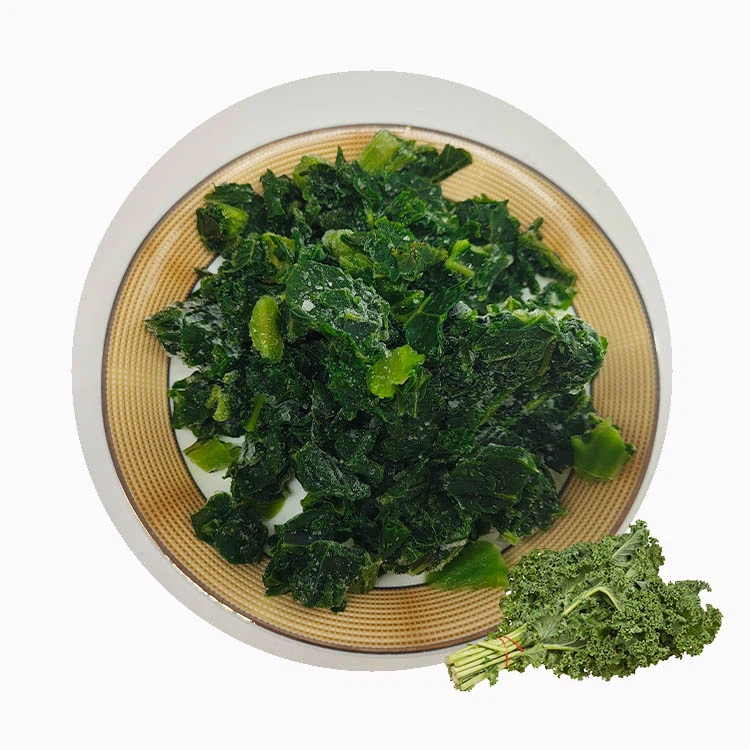
The product photograph shows the supplied chopped leaf and stem form.
The name on a purchase description should identify more than the general ingredient when appearance matters. Curly kale has ruffled margins that hold dressing and seasoning. Lacinato, also called Tuscan or dinosaur kale, has elongated bumpy leaves that are convenient for ribbons. Baby kale describes small young leaves rather than one separate universal variety. A buyer ordering baby leaves for a salad mix should confirm the actual cultivar mix and stem tenderness. The same word can otherwise lead two people to picture different ingredients.
Fresh, frozen and dried describe food states. Chopping describes a cut. Blanching describes a heat treatment that may form part of preparation for freezing. None of those words alone proves that the food is ready to eat without further cooking. A frozen product can be useful for soup or sauce even when a fresh leaf is the better choice for a raw salad. The declared preparation instructions are part of the product identity, particularly when the food will enter a chilled dish or a beverage without another heat step.
For commercial enquiries, we confirm the proposed frozen kale form against the recipe. Chopped leaves with a controlled stem proportion are practical for many cooked applications, while a formula that requires intact raw leaves has a different need. Name the leaf form, intended finished texture and any required cooking status in the enquiry. Those details help a supplier discuss a meaningful sample rather than assume that every product called kale will behave alike.
Appearance and identification
The easiest way to recognize kale is to look at the whole leaf before concentrating on its color. Curly kale has an obvious central rib and a frilled outline. Lacinato leaves are usually longer and narrower, with a textured surface that resembles small blisters. Other edible varieties can have flatter lobed leaves and reddish or purple stems. The exact shade varies with variety, maturity and growing conditions. A naturally purple leaf is therefore different from a green leaf developing irregular brown deterioration.
Small leaves are usually easier to incorporate into a raw dish because the rib and blade have had less time to become coarse. Larger leaves offer useful edible material but may need the central rib removed, finer cutting or cooking. Size is only one clue. Feel the leaf, inspect the stem junction and compare several leaves in the bunch. A small damaged leaf can perform worse than a larger sound one. Avoid treating a photographic variety example as a complete incoming quality specification.
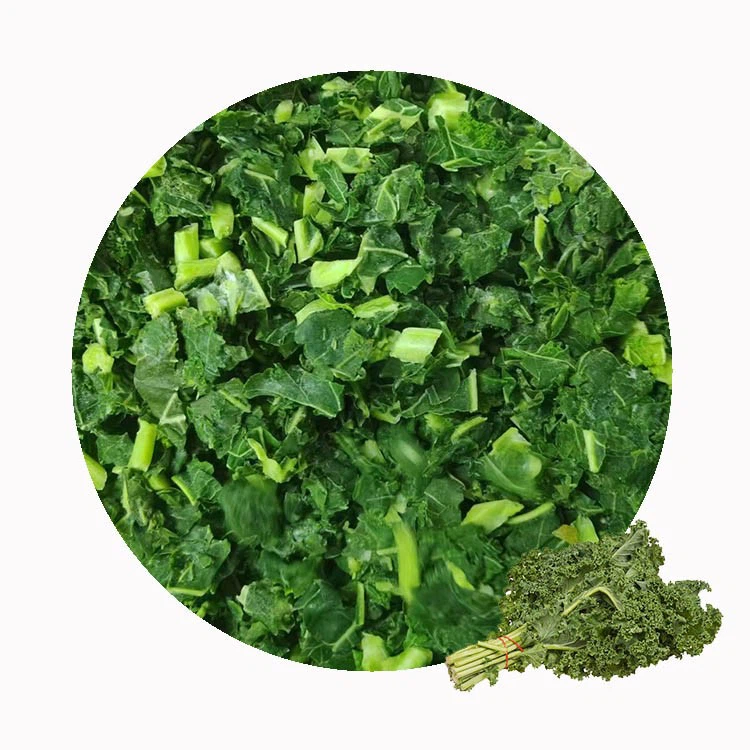
The product photograph shows the supplied chopped leaf and stem form.
Fresh kale should have a sound leaf structure suitable for the chosen use. Yellowing, sliminess, extensive soft decay or an unpleasant deteriorated smell are reasons to reject affected material. Slight loss of firmness is mainly a quality issue, but appearance cannot establish microbiological safety. Conversely, vivid green color cannot prove clean handling. Food Hero's Kale Basics describes varied leaf colors and shapes, and distinguishes baby leaves by their small tender condition. Its shopping advice is useful when inspecting fresh bunches.
Chopped frozen kale looks different because the intact outline is partly lost. Look for recognizable leaf pieces, rib or stem fragments and the declared cut distribution. Surface frost can be present on a frozen vegetable. Heavy loose ice or a compact clump deserves closer investigation because it may make dosing difficult, although one photograph cannot reconstruct storage history. Thawing the product merely to obtain a fresh-leaf appearance changes the material being assessed. Review the frozen condition and the cooked result as separate observations.
In a mixed frozen vegetable bag, identification should also come from the ingredient declaration and the written specification. Dark green fragments alone may be hard to distinguish from another chopped leafy vegetable. That is especially true after processing, when leaf shape is no longer visible. Ask for the named species or commercial variety description when it is relevant to the programme, and connect the sample to its lot. A label, specification and representative sample together provide a stronger basis than color alone.
Kale sold for ornamental planting needs a different decision from kale sold as food. Decorative appearance does not establish that the plants were raised or handled for consumption. Choose a food product with a traceable edible supply route. In a kitchen, keep the whole-leaf identity clear during receiving and preparation, then retain the bag or lot information if the ingredient is chopped. That small habit is useful when several greens are prepared in the same work area.
Nutrients, calories and serving-size comparisons
Plain kale provides fiber, vitamin K, vitamin C, carotenoids and other micronutrients. A food can contribute nutrients without being the main source of every nutrient in a meal. Kale supplies some protein, calcium and iron, but the presence of those nutrients does not make a small scattering of leaves equivalent to a protein portion or to a fortified food. The useful nutrition question is how much edible kale the person actually consumes and how it is prepared.
For a small raw-cup example, Purdue's reference reports eight calories, with protein and fiber rounded to about one gram each. It does not state that cup's gram weight, so those figures should not be converted into a universal hundred-gram specification. They show why a loose cup can contribute relatively few calories while a dense cooked portion is a different quantity of food. Kale contains iron and potassium, but a claim that it is high in either needs the actual portion, product data and the applicable definition. A rounded zero in a small-serving table does not establish that a plant contains none of that mineral.
Raw cups are particularly easy to misread. Loose curly leaves create a large volume with relatively little mass. Finely chopped leaves settle more tightly. Cooking collapses the leaf structure, so a cup of cooked kale can contain substantially more starting leaf material than a loosely filled raw cup. Compare grams and preparation state before comparing calories or vitamins. A per-cup number without a stated mass is a weak basis for changing a retail label or calculating a finished dish.

Raw and cooked leaf volume differs; compare nutrition using a stated edible weight.
The same care applies to fresh and frozen comparisons. A plain chopped frozen product may have undergone blanching, cooling and drainage. A cooked entry may specify boiled and drained leaves; a raw entry may include a different edible portion. Water changes the amount of food in each hundred grams, and cooking can change nutrient retention. A current supplier nutrition declaration for the exact item is the better starting point for formulation. A generic database entry can help estimate a household meal when its description matches the ingredient.
| Food description | Useful comparison basis | Main interpretation issue |
|---|---|---|
| Raw whole or chopped kale | Edible grams and stated leaf/stem inclusion | Loose volume changes with cutting and packing |
| Cooked drained kale | Cooked edible grams and method | Collapse and drainage change water and portion density |
| Plain frozen chopped kale | Exact product declaration and preparation state | Blanching, stem content and cooking instructions vary |
| Kale chips with oil and seasoning | Finished snack grams and ingredient list | Oil, salt and drying alter the finished profile |
Adding oil, nuts, cheese or dressing changes the whole dish. A tablespoon of oil spread through a tray of chips contributes energy even though the leaf itself is light. Cheese supplies additional nutrients and may add sodium and saturated fat. A recipe calculator should include these ingredients and the actual finished yield. Otherwise the nutrition description can sound precise while describing only one component of the meal.
For a food business, the basis should remain consistent from development through labelling. Record whether the ingredient weight is taken frozen, thawed and drained, or after cooking. If the formula uses drained kale, include the actual drained yield when calculating how much raw ingredient is required. A report expressed per hundred grams of supplied frozen product answers a different question from a report for a prepared serving. We help the purchasing team confirm the applicable declaration and specification rather than borrow an attractive number from a general article.
Dietary suitability, digestion and cautions
Plain kale can be incorporated into vegetarian and vegan meals and contains no gluten ingredient by itself. The finished product still needs its full ingredient statement. A salad may contain cheese or an animal-based dressing; chips may include wheat-containing seasoning; a soup may use meat stock. People with food allergies or coeliac disease should use the actual label and the relevant manufacturing information. An ingredient name does not describe all additions or cross-contact controls in a packaged food.
Kale is often included in lower-carbohydrate meals because a normal vegetable serving can fit the recipe's carbohydrate target. Portion size and the rest of the dish remain relevant. Sweet dressings, dried fruit, grain portions and snack coatings can contribute more carbohydrate than the leaves. Someone managing blood glucose should assess the full meal according to their established care plan. We do not assign a therapeutic serving size or claim that kale corrects a blood glucose problem.

Dietary suitability depends on the portion and the complete meal.
Fiber and a firm leaf structure can affect the eating experience. A person who suddenly adds large bowls of raw kale may notice gas, fullness or discomfort. Smaller portions, finer cutting and cooking are practical ways to explore tolerance, while varying vegetables prevents one ingredient from dominating the diet. They do not guarantee symptom relief. Persistent digestive symptoms, a prescribed restricted diet or difficulty swallowing require individual advice rather than a general vegetable recommendation.
Kale can fit a low FODMAP eating plan at an appropriate portion. Monash University's 2025 shopping list includes kale among leafy vegetables low in FODMAPs at its standard 75 g serving. That classification addresses fermentable carbohydrates; it does not guarantee that every person tolerates a large bowl of raw leaves. Check the current app and dietitian guidance for the exact form and amount. Garlic, onion, dressing and other additions also affect the finished dish. Fiber can support regular bowel habits as part of the wider diet, but kale is not a predictable laxative and does not promise a bowel movement at a particular time.
Kale is also different from high-oxalate greens often discussed in kidney-stone diets. The University of Chicago Kidney Stone Program describes frozen, boiled and drained kale as having little oxalate. Keep that description tied to its food state rather than assume all greens or concentrates are equivalent. A prescribed stone-prevention or kidney diet still needs individual interpretation of portion and the complete meal. We do not assign a personal oxalate or potassium allowance.
Vitamin K deserves a specific distinction. The NIH vitamin K fact sheet explains that people taking warfarin need a reasonably consistent vitamin K intake and should discuss changes with their healthcare team. This is different from automatically forbidding kale for everyone using any medicine described as a blood thinner. Do not change medicine or abruptly change vegetable intake on the basis of a supplier article. The prescriber can interpret the actual medication and eating pattern.
Questions about thyroid conditions, kidney restrictions, reflux or other health needs also depend on the person and the wider diet. A general claim that kale is always harmful or always beneficial in one condition is too broad. A person with a prescribed mineral limit needs the food form, portion and relevant nutrient information assessed within that plan. Cooking and drainage change the food but do not create a universal safe dose. Concentrated powders and supplements introduce another exposure pattern and should not be judged as an ordinary serving of leaves.
For institutional menus, dietary suitability must be communicated through the complete recipe. Identify additions, keep substitutions controlled and offer an appropriate portion and texture. If a customer requires a specific allergen statement or nutrition parameter for frozen kale, request the current controlled documents at purchasing stage. That avoids having kitchen staff infer suitability from a green photograph, a front-of-pack slogan or an older supplier page that was written for a different product.
What nutrition and health claims can establish
There are several different kinds of evidence behind statements about kale. A nutrient analysis measures what is present in a defined sample. A study of dietary patterns may examine associations between vegetable intake and health outcomes. A laboratory experiment may investigate a plant compound under particular conditions. These findings have different meanings. Detecting a compound in kale does not establish that a serving treats disease, and an association in a population cannot predict a result for an individual diner.
Kale and other brassicas contain glucosinolates, whose breakdown products are studied for several biological effects. The Harvard Nutrition Source kale overview discusses research uncertainty alongside kale's nutrient contribution. The practical food conclusion is to include vegetables in a varied eating pattern. A claim that kale prevents cancer, detoxifies the body or replaces treatment goes beyond what an ingredient guide can responsibly establish. Food copy should describe the food rather than promise a medical outcome.

Match claims and declarations to the actual food form and product.
The word antioxidant also needs context. A food may contain substances with antioxidant activity, but the amount absorbed and the effect in a human diet are separate questions. A laboratory assay is not a forecast of disease prevention. Similarly, calling kale a superfood does not define a regulated nutrient standard or explain how to use it. A clear description of the leaf, portion and preparation is usually more useful to a reader choosing dinner or developing a vegetable product.
For labels and advertising, claims depend on the destination market and the finished product. A claim such as high in a nutrient may require a defined amount, serving basis and compliant wording. An analysis of a raw leaf cannot automatically support the same claim for a cooked soup or a snack with other ingredients. Recipe changes, moisture loss and portion changes can all alter the result. Have the relevant labelling team assess the applicable rules and evidence before printing a claim.
A purchaser can make this work concrete by asking which item, lot or representative sampling plan supports the declaration. Confirm whether the values refer to supplied food or prepared food, the analysis method where needed, and any rounding conventions. These questions are useful when comparing two suppliers whose documents use different descriptions. They also help avoid a false impression that the more detailed-looking sheet is necessarily the better-supported one.
We confirm product form and available technical information for a proposed supply. The customer's finished formulation and destination claim requirements then need their own review. If a programme changes from plain chopped kale to a seasoned retail product, carry that change through the ingredient statement, nutrition calculation and cooking directions together. A truthful nutrition message becomes easier to maintain when it is attached to a defined food and portion rather than an expansive story about one fashionable ingredient.
Flavor, texture and culinary uses
Kale's flavor is often described as earthy, green and mildly bitter. Variety, leaf maturity and preparation change how strongly those notes appear. A fine raw ribbon gives a different bite from a large mature piece with its rib attached. Tender young leaves can be used with a light dressing, while mature curly leaves often benefit from finer cutting or cooking. The aim is to match the physical leaf to the intended dish before adjusting seasoning.
Acid, salt, fat and naturally sweet ingredients can balance the impression of bitterness in a recipe. Lemon in a cooked side, apple in a salad or beans in a soup changes the overall eating experience. They do not remove every bitter compound or turn a poor-quality leaf into a sound ingredient. Taste a small prepared portion and then adjust the whole dish. Large amounts of seasoning applied before checking the vegetable can obscure the actual problem.

Fresh chew, cooked tenderness and a dry crisp leaf serve different applications.
Texture explains why the food forms have different uses. Fresh kale can retain a resilient chew in salads. Dry leaf pieces can become crisp chips when enough surface water is removed and the oven load is suitable. Cooked kale becomes more pliable. Freezing and subsequent heating also alter structure, so purchased frozen chopped kale is particularly useful where tenderness and distributed green pieces are wanted. A thawed frozen leaf will not recreate the same fresh salad bite.
In soup, chopped kale can remain visible among beans or vegetables, or be cooked more softly for a blended base. In pasta, its particles should be small enough to distribute without forming long strings around a fork. In a filling, excess water can interfere with binding. These are application observations to test with the actual ingredient. A sample that works in a broth does not automatically meet the moisture target of a pastry filling.
Smoothies introduce a separate safety and sensory decision. Fine pieces may blend readily, but a blender does not supply a cooking step. Use a product whose declared status is suitable for the intended route. If cooking is required, follow that instruction before the chilled application and control cooling. The existing kale smoothie guide extends that particular use; its convenience should not be interpreted as permission to ignore a different pack's directions.
For a commercial sample, write down the finished texture that matters: a chewable salad leaf, tender visible soup particles, finely distributed sauce solids or drained filling material. Then compare representative samples under the same method. Record stem content, cut size, water release and the result after the real holding or reheating period. Those observations keep the discussion focused. An attractive bowl of kale is a useful visual reference, while a repeatable application test shows whether the proposed form belongs in the customer's recipe.
Food safety and checking current alerts
Kale is produce, so safe handling begins before cooking. Keep it separate from raw meat and their juices, use clean utensils and wash fresh leaves as appropriate for the label. The FDA produce handling guidance recommends washing produce under running water and discourages using soap or detergent on food. Open leaf folds and inspect the stem junctions where dirt can lodge. Drying afterward is useful for salads and chips because remaining water affects their texture.
Washing can remove dirt and reduce some contamination; it cannot prove that a leaf is free of pathogens. A packaged product labelled prewashed or ready to eat has its own handling directions, and unnecessary handling in an unclean kitchen can recontaminate it. Freshness cues and safe handling therefore work together. A clean-looking leaf that contacted raw poultry juice needs a food-safety response even if its color is still attractive.

Open leaf folds and keep washed greens on a clean preparation side.
Frozen kale also needs a defined use. Freezing preserves the ingredient but does not sterilize it. Blanching for quality preservation is not a declaration that every frozen product is fully cooked or ready to eat. Read the actual cooking directions and any storage conditions. In a food business, establish the recipe's required heat treatment and handling route within the facility's food-safety system. Sensory tenderness alone is not a validated safety endpoint for a product that requires cooking.
Kale cannot be declared free from Cyclospora simply because it has been washed or frozen. CDC's current prevention guidance, reviewed in September 2026, explains that washing alone cannot guarantee removal of this parasite and advises cooking produce when possible, with its stated temperature of at least 70°C or 158°F. That general guidance does not establish the status of a particular kale lot. Check product-specific official alerts, follow the pack's cooking requirements and never use a cooking workaround for food already recalled. A historical outbreak headline should not be presented as a current recall of all kale.
Questions such as whether kale can be eaten now need a product-specific alert check. Consult the FDA recall and safety alert portal for US products, or the relevant regulator in the destination market, and match the brand, product description, lot, dates and distribution area. A headline mentioning leafy greens does not identify every kale product. Conversely, finding no matching notice in one country's portal does not establish that every product everywhere is safe.
Retain the package information when checking an alert. If a product matches an official recall, follow the stated return or disposal directions and do not try to make it usable through a kitchen workaround. If the identity is unclear, separate the stock while the supplier or responsible authority checks it. A business should also retain its receiving and lot records so affected material can be traced through preparation and service. This guide does not make a universal no-recall declaration.
At purchasing stage, we help clarify the proposed frozen kale specification, packing and documents. Share the intended application, destination and preparation route, especially when the finished food is chilled or carries a dietary claim. Ask for the applicable controlled information before approving the sample. The most useful final decision connects a recognizable ingredient, honest nutrition description and an appropriate handling method, so the kale performs as expected in the meal that the customer actually serves.
Continue reading about kale
Review frozen leaf texture, blendability and product status for a smoothie route.
Replace variable bunch and cup descriptions with measured usable leaf weight.
Follow the separate preservation decisions for fresh leaves and future cooked use.
Discuss Frozen Kale with GreenLand-food
GreenLand-food is a professional frozen kale supplier and manufacturer in China, providing factory-direct wholesale supply for importers, distributors, foodservice companies and food manufacturers.
Share the product form, specification, packing, quantity, application, destination, private-label needs and requested documents so we can confirm the proposed supply and sample requirements.