


How Much Is One Bunch of Kale? Weight and Yield Conversions
Sep 24, 2026
Leave a message


One bunch of kale is a shop unit, not a fixed weight. For an initial recipe estimate, allow roughly 225–450 g (½–1 lb) of untrimmed fresh kale for a common grocery bunch, then weigh the bunch you actually receive. After thick stems and damaged leaves are removed, a working estimate is about 150–360 g of usable leaf. Cooked weight and volume depend strongly on method, while an equal weight of frozen chopped kale can replace the prepared leaf in many cooked dishes after the recipe is tested. These are planning ranges, not a supplier specification or a promise about a particular bunch.
The variation is visible in published recipes: one cook calls half a pound a bunch, while another starts with ¾–1 pound. A converter may assume 350 g as a medium bunch; that number is useful only when your bunch resembles its reference. A foodservice kitchen buying by the case should replace the phrase "one bunch" with a gross weight, edible yield and portion target. That small change makes purchasing and menu costing far more repeatable than trying to convert every tied bundle into an exact number of cups.
What one bunch actually weighs
Retail kale bunches are tied for display. The tie can surround a compact group of young leaves or a much larger group with heavy stems. Variety, growing season, harvest maturity, trimming at the supplier, leaf hydration and local merchandising all change the gross weight. A narrow 150–250 g bunch and a larger 350–450 g bunch may both be sold under the same name. Some market bunches exceed those values. That is why the word cannot carry a precise recipe conversion across stores or seasons.
The broad 225–450 g starting interval is useful when a buyer has no scale or prior purchase record. It is intentionally wider than a single "medium bunch" estimate. Budget Bytes uses about half a pound of chopped kale as one bunch, while other recipes use substantially larger bunches. Those are practical recipe inputs, not product standards. Their difference explains why the receiving scale should settle a production question.
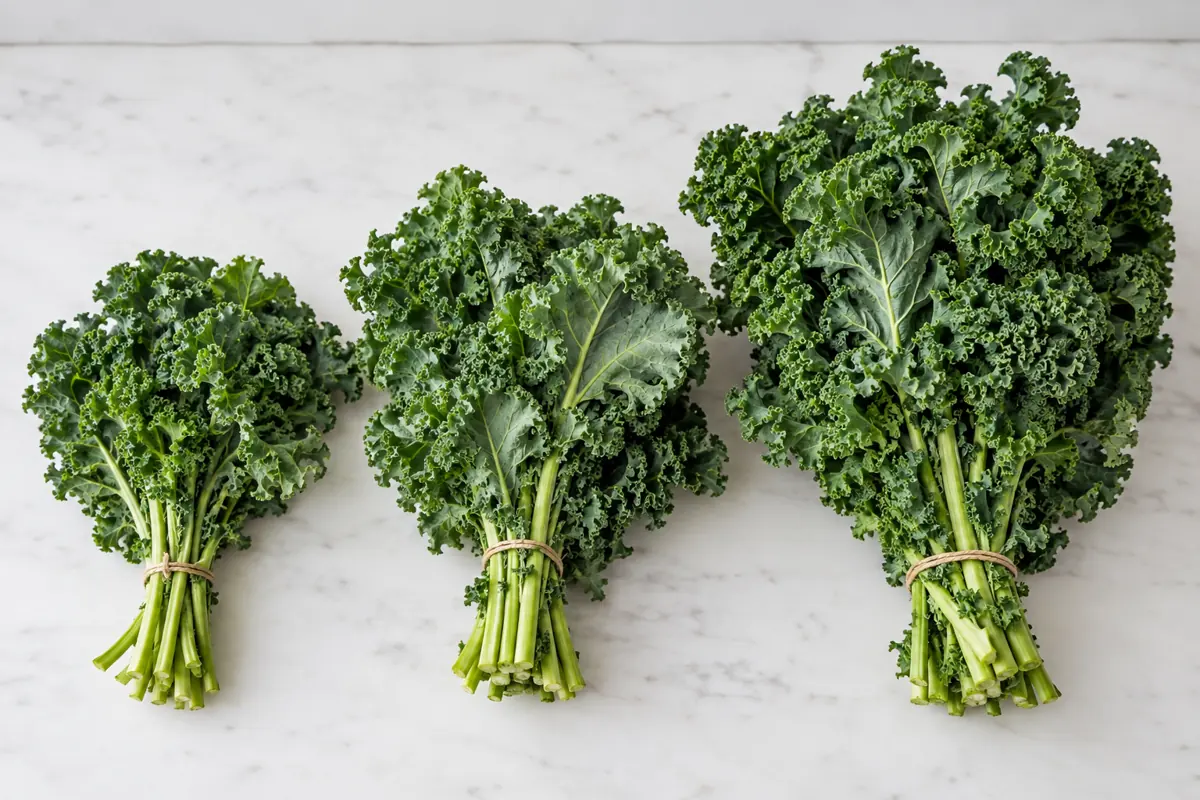
Three kale bunches of visibly different sizes.
Weigh kale before washing when possible, or drain it in the same way every time. Water trapped in curly leaves can add appreciable weight without adding edible kale solids. Also record whether the stems are still attached. A pretrimmed bunch and a bunch with thick mature stalks can have similar gross weights yet yield different amounts of usable leaf. If a menu specifies tender leaves for a raw salad, the trim loss can be greater than in a soup where some thinner ribs are acceptable.
For a small recipe, a simple practical approach is to buy one average bunch and hold a second if the leaves are small. For a repeated menu item, measure five to ten representative bunches from the actual supplier, record the weight range, and set a recipe input in grams. A stable weight specification is especially useful for central kitchens receiving cases whose bundle count can stay constant while the leaf size shifts. The same principle applies when the supplier changes during a crop transition.
Do not confuse the number of leaves with weight. Lacinato kale has a long, relatively flat leaf; curly kale can look voluminous because it traps air. One large stalk may carry a broad leaf with a heavy rib, while several small leaves may have a better edible fraction. Counting leaves helps a home cook plan a garnish but is weak for a commercial portion standard. Weight after trimming is the more useful ingredient quantity.
Gross bunch weight versus trimmed leaf yield
The amount you can use depends on the recipe's trim rule. Remove the thick base and any wilted, yellowed or damaged pieces first. For a raw salad, strip the fibrous central rib if the target is a tender bite. For a long-cooked soup, some smaller ribs can be chopped and included. Record both gross purchase weight and clean edible weight. Edible yield is the clean weight divided by gross weight; trim loss is the balance. A recipe that names only one bunch hides this difference from both the purchaser and the cook.
As a provisional planning range, 65–80% edible leaf yield from an untrimmed bunch is reasonable to test when thick ribs are excluded. That would make a 225 g bunch yield about 145–180 g and a 450 g bunch about 290–360 g. These figures are illustrative calculations, not a measured universal kale yield. A young, well-trimmed supplier pack may do better, while a mature stem-heavy bunch may do worse. Run a receiving trial before using the range for cost commitments.

Kale leaves and thick stems separated after trimming.
The trim operation itself needs a definition. "Stemmed" may mean removing only the thick lower stalk or stripping the full midrib to the leaf tip. Those two instructions produce different usable weights and bite. A supplier selling pre-chopped kale may include a controlled proportion of small stem pieces. That product is not automatically inferior: it may be suitable for soup, blended sauce or a long heat process. For a raw salad or a fine green filling, the same stem content may be objectionable. State the application when specifying an acceptable leaf-to-stem ratio.
A yield trial is quick. Weigh ten received bunches as purchased, record any free surface water, trim them to the recipe rule, then weigh the usable leaves. Divide the total clean leaf weight by the total gross weight rather than averaging ten separate percentages; the total-weight method reflects the actual kilograms purchased and used. Keep the result by supplier, variety or season if these factors change. The trial also shows whether bunches vary so much that the kitchen must weigh each prep batch rather than counting ties.
For cost calculation, the price per kilogram of usable leaf is the purchase price per kilogram divided by edible yield. If a case appears cheaper but requires more stripping or discards more damaged leaves, its true prepared cost may be higher. Include prep labor and disposal where those amounts matter. When evaluating a frozen alternative, compare its as-sold usable weight and application performance against the prepared fresh leaf, not against the gross bunch. That is the point at which both ingredients enter the recipe.
Raw cups and why packing changes the number
Cup estimates are convenient for a home recipe, but kale volume changes with cut size and packing. A cup of large torn leaves contains much more air than a cup of fine chopped pieces. A loosely filled measure differs from a pressed one. Curly leaves also spring above the rim, while flatter leaves settle. Published "cups per bunch" figures vary partly because the writers are measuring different forms of kale, even before the bunch weights differ.
If the recipe must use cups, define the preparation: remove specified stems, wash and dry, cut to a named approximate size, then fill the cup without pressing or use a consistently light pack. Record the number of cups produced by a weighed sample. If one bunch gives six loose cups in your kitchen, that observation is useful locally, but it should travel with the bunch weight and trim rule. It is not a conversion for every supplier.

Chopped kale measured with different cup packing.
A consumer conversion chart places a medium bunch at about 225–285 g and roughly six to eight moderately packed chopped cups. Another kale converter uses 350 g and just over five cups. Their assumptions and cup methods differ. Rather than choose whichever number fits the desired recipe yield, treat them as evidence of measurement uncertainty and use grams for repeated production.
Volume can still help with pan loading. A sauté pan that appears full of raw kale will hold much less after leaves wilt. Add the leaves in several batches so heat can reach them and excess moisture can leave the pan. When a recipe line says "six cups raw kale," ask whether that refers to leaves before or after trimming and how firmly they are measured. For a soup or sauce, the finished weight may matter more than the starting raw volume. For a salad, the visual fill of the serving bowl may justify a local cup reference after mass has been standardized.
The same ambiguity affects prewashed bagged kale. A 200 g bag gives a known net weight but may contain chopped stems and moisture; it cannot be assumed to equal one bunch of hand-stripped leaf. If the pack is specified as cleaned and ready to use, test its preparation yield and visual quality. A stable net weight is still a better starting point than a bunch count, provided the material entering the recipe meets the same leaf and cut specification.
Cooked kale volume and mass
Kale loses much of its apparent volume as air spaces collapse and leaf cells soften. The exact cooked cup yield depends on chop size, pan shape, added liquid, whether the kale is covered, the cooking time and how much liquid is drained. Some references suggest one ordinary bunch may make around one to two cooked cups, while larger bunches or gentler cooking can yield more. A cup of cooked kale is also denser than a loose cup of raw kale, so raw and cooked cup counts should never be treated as the same mass.
For menu planning, record cooked yield by weight first. Weigh the clean raw leaves, cook them by the production method, drain or reduce liquid according to the recipe, and weigh the finished kale. If 240 g of clean leaves make 180 g of sautéed usable kale in your trial, the cooked mass yield is 75%. A batch intended for soup may retain all its cooking liquid and produce a different apparent yield. A boiled, squeezed filling may lose much more water. The example illustrates a calculation; it is not a prescribed kale cooking factor.

Fresh chopped kale beside a smaller cooked portion.
Cooked cups are best measured after a brief, standardized draining or resting step. Immediately after cooking, a very wet spoonful may bring liquid into the measure and inflate the apparent portion. Pressing the greens hard into the cup changes the result again. If a plated side requires 80 g cooked kale, portion by weight during development and then identify the scoop or spoon that reliably gives that amount on the line. The finished plate, not a raw cup estimate, is what the customer experiences.
One extension resource lists one pound of kale as about six cups raw leaves and 1¼ cups cooked leaves; a different cook reports a larger chopped volume from 12 ounces. Those are reminders that handling and measurement method matter. They should not be used to claim that all kale loses the same fraction of its weight. Volume collapse is visually striking, but water may remain within the leaf or in the pan. Keep mass and volume calculations separate.
If the menu is a chilled cooked salad or a prepared meal, check the portion again after cooling and reheating. Kale can release liquid during holding, and a sauce may bind some of it. Define whether the portion weight includes sauce or other ingredients. For procurement, a cooked-yield trial needs the same wash, trim, heat and drain steps as the actual line. Otherwise a neat spreadsheet conversion will not predict the packed product.
Substituting frozen chopped kale
Frozen chopped kale removes much of the fresh washing, trimming and cutting work. It can be a sensible substitute in soups, sauces, sautéed sides, vegetable blends and prepared meals where the final dish uses cooked kale. Begin by replacing the clean fresh-leaf weight, not the gross bunch weight. If a tested recipe uses 240 g of trimmed fresh kale from a 300 g bunch, an initial frozen trial starts around 240 g of frozen chopped kale, adjusted for the product's cut, blanching status, free water and finished yield. It should not automatically start at 300 g.
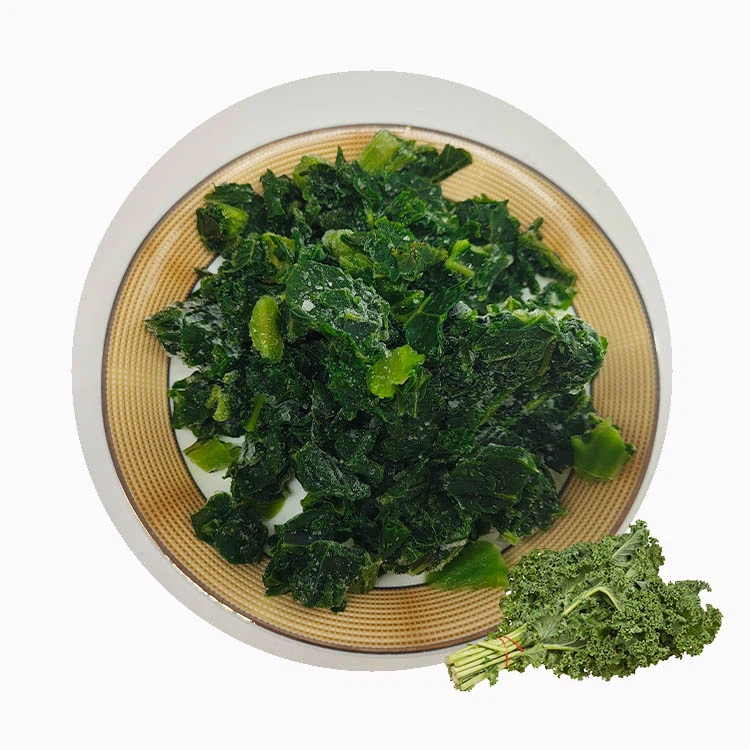
Frozen chopped kale from GreenLand product page.
The substitution is application dependent. A frozen leaf has already experienced preprocessing and freezing, so it may soften and release liquid differently from fresh kale. A raw salad that relies on crisp leaf structure is a poor match. A soup or blended sauce can often accept the changed texture, although the frozen ingredient may affect cooking time and final viscosity. If the product is blanched, check whether it has a cooked flavor and how much additional heating the recipe needs. If it is a frozen block, plan for portioning and thawing differently from a free-flowing IQF cut.
The GreenLand frozen chopped kale product page describes cut size, leaf-stem ratio, blanching and packing as specification points. Those details matter more to a conversion than the bare word "frozen." A 10–30 mm chopped ingredient gives a different mouthfeel from large leaf pieces, and a stem-heavy pack changes color and bite. When planning a regular menu, request a sample that matches the finished application and compare it with the fresh reference after the complete cook and hold cycle.

Frozen chopped kale from GreenLand product page in second view.
Frozen net weight is not automatically finished edible weight. Check for surface ice, free water after thawing, and any liquid released during heating. Run the same trial as for fresh kale: weigh the frozen input, cook it by the real recipe, then weigh and assess the usable result. In a sauce, released moisture may be absorbed and remain in the finished food. In a savory pastry filling, it may need to be drained to avoid a wet crust. The correct purchase equivalence depends on what the recipe does with that water.
Buyers should also specify packing and cold-chain handling. A kitchen serving small daily batches may prefer portionable bags; an industrial sauce line may prefer a different bulk format. Confirm the stated storage temperature, product form, net weight, batch code, shelf-life information and destination-market documentation against the approved sample and order. The GreenLand kale freezing guide explains broader storage and use questions; this conversion should stay focused on how many usable grams enter the recipe.
A repeatable menu-planning conversion
A working conversion should begin with four measured quantities: gross fresh bunch weight, clean trimmed leaf weight, cooked usable weight, and the frozen product weight that gives an equivalent finished portion. Record the method beside those numbers. For example, a trial might purchase a 300 g bunch, trim it to 240 g leaves, and cook it to 180 g of drained sautéed kale. That is an 80% edible yield and a 75% cooking yield from trimmed leaves. The first frozen trial would use about 240 g frozen chopped kale, then be adjusted to match the 180 g finished serving and its texture. The numbers are an illustration of the method, not a standard for every bunch.
| Planning stage | Example amount from one 300 g bunch | What to verify |
|---|---|---|
| Gross fresh purchase | 300 g | Tie weight, stem content and surface water |
| Trimmed clean leaves | 240 g | 80% edible yield under the recipe's trim rule |
| Cooked usable kale | 180 g | 75% mass yield after the stated cook and drain method |
| Initial frozen chopped input | About 240 g | Adjust after checking cut, free water and cooked result |
Use a small range around a measured average for operational planning. If several supplier samples yield 70–80% edible leaves, calculate the purchase quantity from the lower end when a shortage would disrupt service, then refine after more deliveries. If the cooked mass yield varies between trials, investigate heat, pan loading, drainage and leaf maturity before adding a large safety buffer. A good conversion should reveal the cause of variance and make the next order more accurate.

Fresh bunch trimmed leaves and cooked kale on a prep bench.
For a 60-portion side dish at 80 g cooked kale per portion, the kitchen needs 4.8 kg cooked usable kale. If the measured cook yield is 75% of trimmed leaf weight, it needs about 6.4 kg clean leaves. At an 80% fresh edible yield, that implies about 8 kg gross fresh kale. If the buyer chooses frozen chopped kale, a starting trial uses about 6.4 kg frozen input and checks whether its cooked yield truly matches. These figures are arithmetic from the stated trial assumptions; the operation should replace them with its own measured yields before placing a standing order.
The same record can guide an RFQ. Ask the supplier for kale form, cut range, stem tolerance, blanching status, packing, net weight, expected application, quantity and destination. Compare the delivered sample with your fresh reference using one cook method and one finished portion. At GreenLand-food, we can discuss the frozen kale form and packing against a target recipe, but the buyer's own cooked yield and sensory acceptance complete the conversion. The useful answer to "how much is one bunch?" is therefore a measured range linked to the form that reaches the plate.
When a menu changes from fresh bunches to a frozen chopped supply, update the recipe sheet in grams rather than leaving "one bunch" in the method. Include the frozen weight per batch, the intended starting state, when it enters the pan, any draining step and the finished portion weight. This prevents one cook from treating a compressed frozen block as the same volume as loose fresh leaves. Check the dish at the end of normal holding as well as immediately after cooking; released water and color can change during service.
If the buyer receives kale from several farms or distributors, record a small rolling sample of bunch weights by source and season. A range is more useful than an average alone when a shortage would interrupt service. Separate a change in bundle size from a change in trim yield: the first affects purchasing units, while the second affects usable food. A receiving scale, a labeled trim container and a short log make the distinction visible without a laboratory study. Recalculate the conversion whenever the supplier changes the bunch definition or the recipe changes its stem rule.
Plan a dependable frozen kale supply
GreenLand-food is a professional frozen kale supplier and manufacturer in China. We discuss factory-direct wholesale supply, product form, packing and shipment details against your application.