


Red Currants in Dairy Desserts: Acidity and Color Transfer
Oct 19, 2026
Leave a message

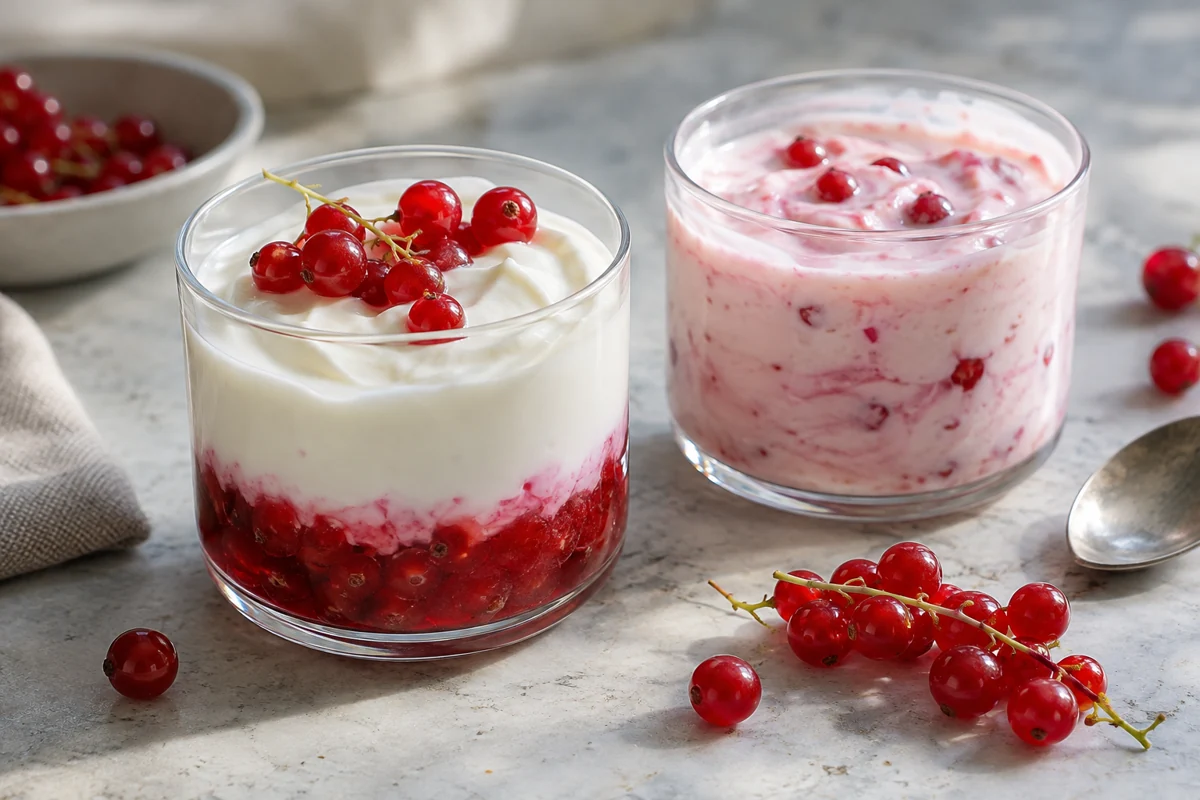
For a layered yogurt, the main question may be how far red color spreads into the white layer. A stirred dessert can welcome an even pink shade while still needing control of graininess and separated liquid. A frozen ripple has another requirement: fruit must remain well distributed through scooping and service. We supply frozen redcurrants against an agreed ingredient specification; the customer's dairy formulation and preparation route determine the finished application. The following comparisons are development approaches, with illustrative photography rather than reported GreenLand test results.
Choose the fruit form for the dairy dessert
Start with what the customer should see and feel in one spoonful. A whole redcurrant gives a localized tart burst, a small skin and seeds. A strained fruit preparation distributes flavor and color more evenly. Crushed fruit sits between those forms, bringing pulp and broken skins that can remain visible after mixing. Calling all three "redcurrant in yogurt" leaves too much of the purchasing decision unspecified.
Loose frozen berries can suit a visible inclusion when the process can handle their size and delicacy. Inspect the supplied frozen sample and follow it through the actual fruit preparation. A berry that looks intact in a frozen tray can split during warming, pumping or stirring. The relevant approval is the condition that reaches the dessert, including the permitted amount of broken fruit and released liquid. A photograph of a full bag cannot establish that result.
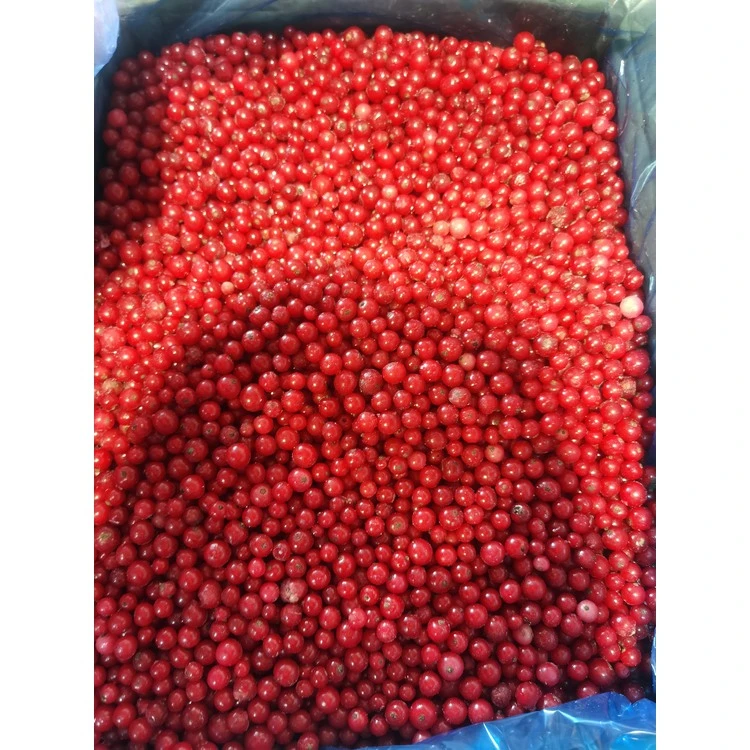
Original product photograph: loose redcurrants in a blue liner.
The two original gallery photographs on this page show the offered redcurrant form under different visible surface conditions. They help identify the small loose berries. Neither photograph supplies a measured whole-fruit percentage, a guaranteed diameter or an acceptance limit. Those fields need a representative sample and an agreed method. The photographed frost also should not be copied into a specification as an ideal surface condition.
For a smooth dessert, decide whether the fruit will be screened and who owns that operation. A screen removes some skins and seeds and changes usable yield. The fruit dose before screening can differ substantially from the preparation dose after screening and cooking. Keep both masses in the recipe record. Otherwise a stronger red shade could result from a higher concentration rather than a different incoming berry lot.
Seed texture is especially relevant in a delicate dairy base. Approve it in the finished serving, at the serving temperature, using the actual fruit dose. A screen that works for a drink may remove more material than a dessert manufacturer wishes to lose. Conversely, a lightly crushed preparation can leave an occasional seed or skin that becomes conspicuous in an otherwise smooth product. The choice should follow the intended eating experience and available equipment.
Use the frozen redcurrant product page to begin the ingredient discussion, then specify the required transformation separately. A frozen whole-fruit order does not automatically include a finished dairy fruit preparation. Keeping that distinction clear makes the quotation, sample approval and downstream trial easier to reproduce.
Acidity changes the dairy base as well as the taste
Redcurrant acidity affects perceived sharpness, but dairy structure also responds to acid. The University of Guelph's dairy processing chapter describes how decreasing milk pH can destabilize casein particles and how acid development forms yogurt's gel. This explains why adding an acidic fruit preparation deserves a formulation trial. It does not predict that every redcurrant addition will curdle a particular dessert.
Measure the dairy base before fruit addition and the finished mixture under a defined method. Keep sample temperature, instrument calibration and the interval after mixing consistent. The fruit's pH alone cannot tell the developer the final mixture's pH. Milk proteins, salts, fruit acids, water and the rest of the recipe contribute. Taking an arithmetic average of two pH values would give a misleading calculation because pH is logarithmic and the ingredients have different buffering behavior.
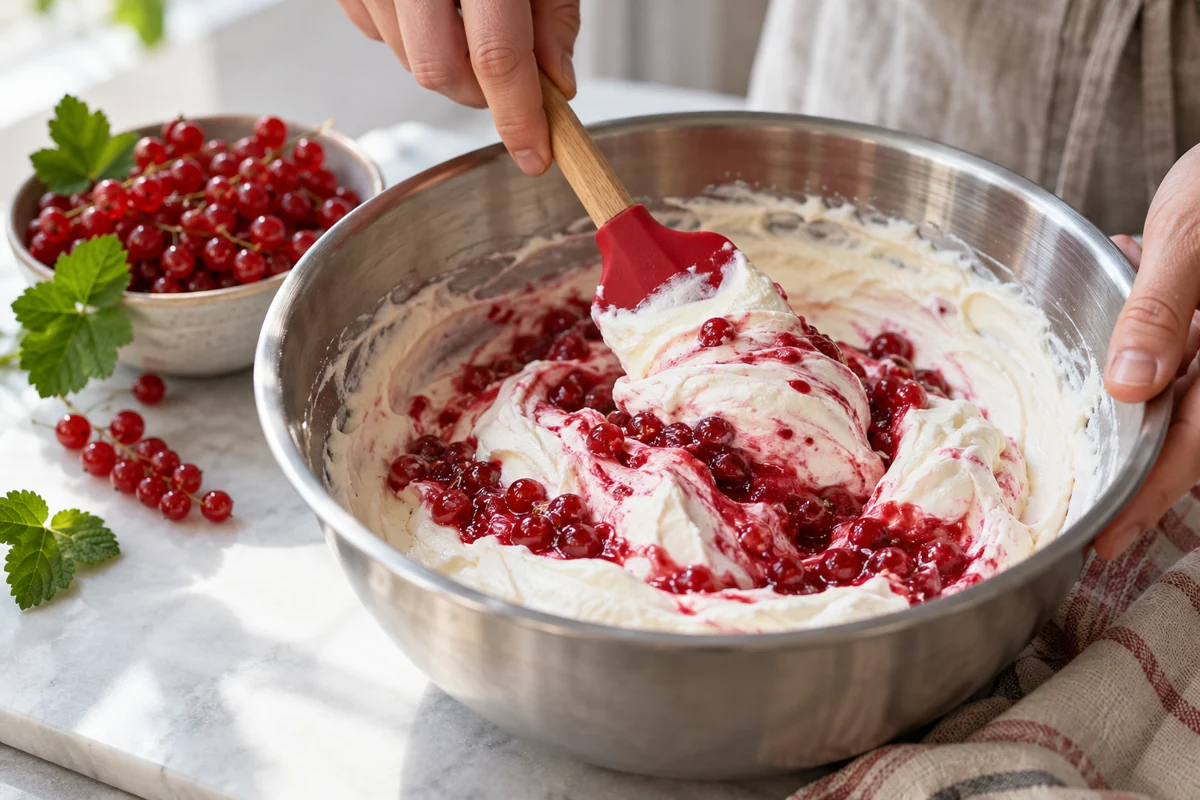
Illustrative photograph: redcurrant preparation being folded into a white dairy base.
Titratable acidity adds another kind of information when the formulation team needs to compare acid contribution. It measures the amount neutralized to a stated endpoint under the chosen method. Keep the reporting acid equivalent and units with the result. Two lots can have a similar pH while requiring different amounts of neutralization. That distinction can help explain why an equal fruit dose changes sharpness or interacts differently with the same base. It still needs interpretation in the finished recipe.
The base matters. A cultured yogurt already has an acid-developed protein network. A milk pudding may rely on starch, protein, or another setting system. A cream dessert with gelatin has its own composition and structure. Adding the same fruit preparation to these foods does not create equivalent mixtures. The useful comparison holds one actual dairy recipe constant while the fruit input or addition method changes. Changing the base at the same time answers a broader development question.
Pay attention to local contact during addition. A concentrated acidic preparation poured into a small part of a dairy batch initially meets a different local environment from a well-dispersed addition. Addition rate, mixing intensity and temperature should therefore appear in the trial record. More aggressive mixing can also damage fruit and disturb an existing gel. A smooth-looking sample immediately after vigorous stirring may not remain acceptable after standing.
Adjust sweetness in the final serving after the physical system is understood. Sugar changes taste and formulation solids, but it cannot be assumed to repair protein aggregation or separated liquid. Agree a sensory target with the intended serving size and temperature. When a customer changes yogurt supplier, milk solids, stabilizer or sweetener, repeat the relevant comparison before deciding that the berry specification must change. Our article on berry color in different fermented bases extends that base-selection question.
Control the movement of juice and color
A pink halo around red fruit in white yogurt can come from pigment-bearing liquid moving away from the fruit. More even pink color can also result from physically dispersing fruit during mixing. These observations require different remedies. Before changing the recipe, describe whether the issue is a widening layer boundary, scattered red streaks, uniformly colored dairy, or an unexpected dull shade. Preserve photographs of the same sample presentation so the description stays consistent.
Redcurrant pigments include anthocyanins, whose visible behavior depends on their environment. The original redcurrant juice heating study shows that temperature and composition affect pigment stability in a juice system. Its experimental conditions do not supply a storage-life prediction for a yogurt cup. They give a reason to record the fruit preparation's thermal history and to check the final dairy application rather than judge color only in a bowl of red sauce.
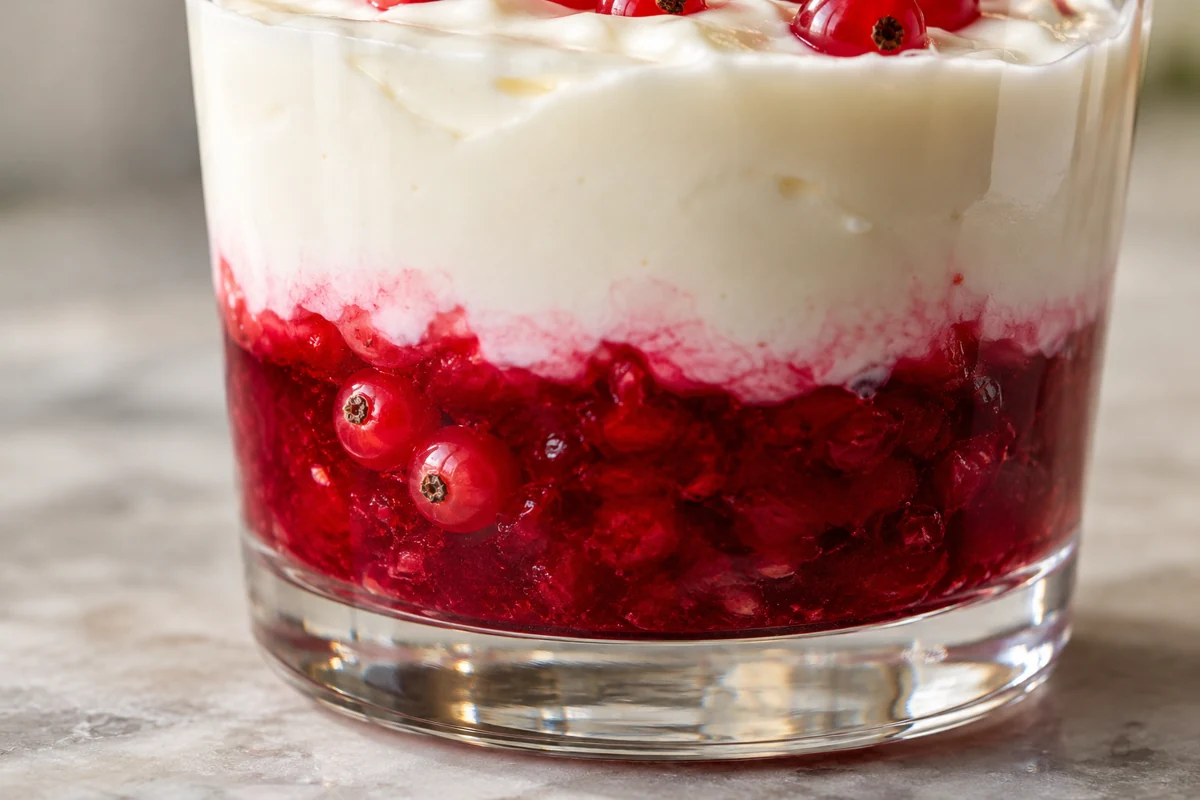
Illustrative photograph: pink color at the boundary between redcurrant preparation and yogurt.
Separate migration from fading in the observation plan. A red layer can lose its sharp boundary while the cup still contains pigment. A dairy mixture can change shade even when its fruit dose remains constant. Visual lightness is also affected by the white base and the way it scatters light. A darker or brighter sample is therefore not a direct measurement of retained anthocyanin. A chemical retention claim would need a suitable analytical method and a defined sample basis.
Begin the physical investigation with the liquid accompanying the berries. Record whether thaw liquid enters the preparation, is removed, or is measured and returned at a fixed amount. Removing it can remove dissolved fruit constituents as well as water. A drained berry addition and an undrained addition are different formulations even if both started with the same frozen mass. If the process changes this decision, compare the recipes by actual retained fruit and liquid masses.
An appropriate fruit preparation can help a layered product maintain the desired distribution, but thickness alone does not prove that color movement has stopped. A sauce may look thick because of suspended pulp and still carry mobile colored liquid. Test the specific preparation in contact with the dairy, including the actual layer thickness and holding conditions. Stabilizer changes should be evaluated for flavor, appearance and spoon texture as well as the interface.
Set a practical appearance description. A small pink boundary may be acceptable in a visibly fruit-containing dessert and unacceptable in a product sold for sharply separated layers. Record the agreed reference and the observation point. Do not promise "no bleeding" without defining what the customer can see, when the assessment is made and how the cup has been handled. That written basis is much more useful when comparing repeat lots.
Prepare the redcurrants before they meet the dairy
Treat fruit preparation as a controlled intermediate stage. Record incoming frozen mass, the handling condition at opening, any released liquid, additions, screening losses and final preparation yield. The dairy manufacturer should be able to reconstruct how much supplied fruit entered each kilogram of finished dessert. A percentage of cooked preparation and a percentage of original frozen fruit are different quantities whenever sugar, water or other ingredients are added or material is removed.
Prepare only the quantity required by the approved process and keep the rest under the agreed frozen conditions. Small redcurrants warm quickly when spread thinly during sorting or weighing. A sample held on a workbench for photographs may have a different juice-release history from fruit transferred promptly into production. Include the weighing and transfer interval in development records when the outcome depends on intact skins or free liquid.
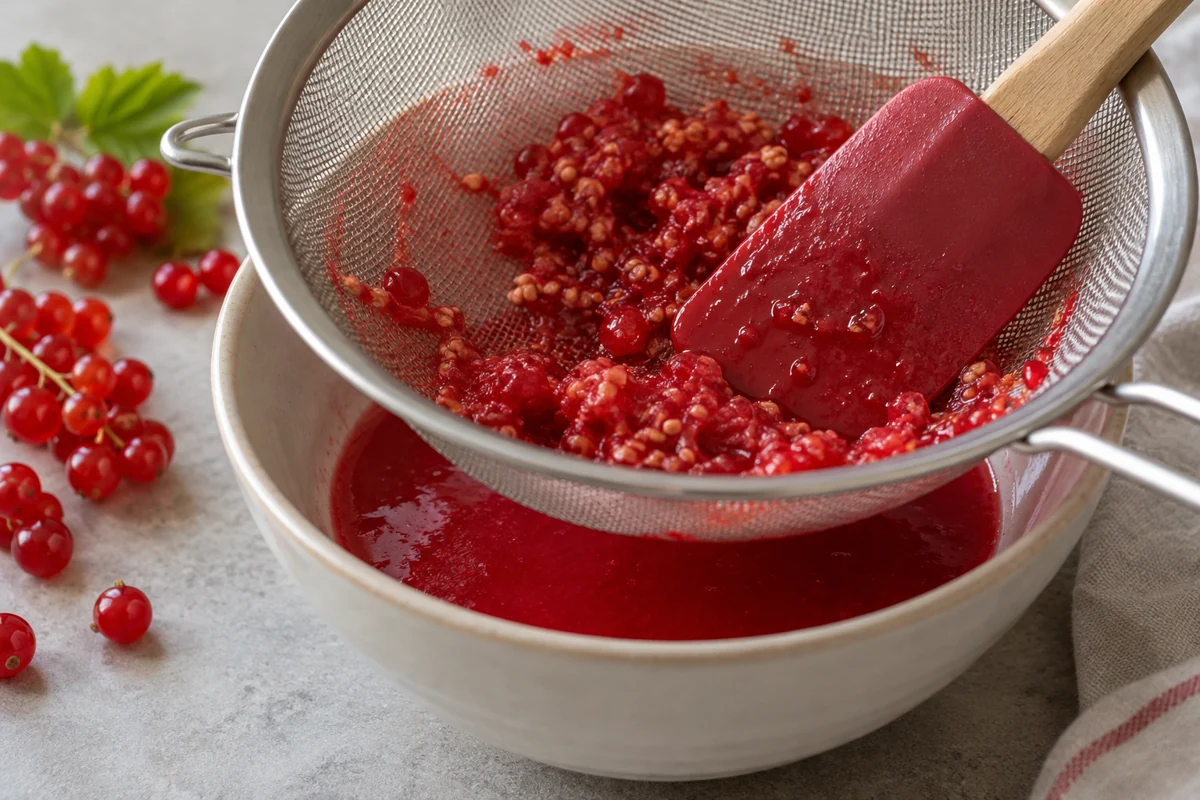
Illustrative photograph: cooked redcurrants pressed through a fine sieve over a sauce bowl.
Where smooth texture is required, screening should be trialed with the intended fruit condition and equipment. Cooked softened fruit, partly thawed fruit and firmly frozen berries do not pass through a screen in the same way. Record the screen aperture and the treatment preceding it. Check what remains on the screen and whether the finished preparation still contains objectionable seeds or coarse skin. A finer screen can improve smoothness while reducing yield or changing texture.
Heating, cooling and hygiene must follow the product's approved food-safety process. Freezing preserves the ingredient but does not establish a ready-to-eat status. The Food Safety Authority of Ireland advises boiling imported frozen berries for one minute before consumption in its consumer guidance. A commercial dairy manufacturer must establish a suitable process for its own product, equipment and destination requirements. A recipe photograph or a chilled dessert description cannot supply that validation.
Bring the preparation to the specified condition before it contacts the dairy. Temperature affects mixing, viscosity and the thermal exposure of the base. Cooling also needs a defined route and hygienic protection; leaving a cooked pan to cool for an unspecified interval is an incomplete production instruction. Record the allowed preparation holding time and storage condition through the manufacturer's food-safety system rather than infer them from a domestic sauce recipe.
Check the preparation again after its normal transfer. A sample taken directly from a kettle can appear more intact than material that has passed through a pump or depositor. Compare the actual fruit pieces, liquid distribution and spreadability at the point of addition. If the transfer changes, reassess that stage before attributing more broken berries or a wider red halo to the incoming fruit lot.
Match assembly to the way the dessert will be held
Assembly should match the appearance the dessert must retain during storage and service. In a fruit-on-bottom cup, the depositor controls fruit mass and layer depth before the dairy is added. A disturbance at that boundary can produce a red streak immediately. Later diffusion can widen it during holding. Observe the cup just after filling and again at the agreed checkpoints so those two events remain distinguishable.
Keep cup shape and fill geometry in the trial. A wide shallow fruit layer presents a different contact area from a narrow deep layer of the same mass. The dairy pour height and flow can also disturb the preparation. When a packaging change alters the visible boundary, test the new geometry with the same ingredient lot and recipe before changing the fruit specification. The larger contact area may have changed the application even though the formulation sheet did not.
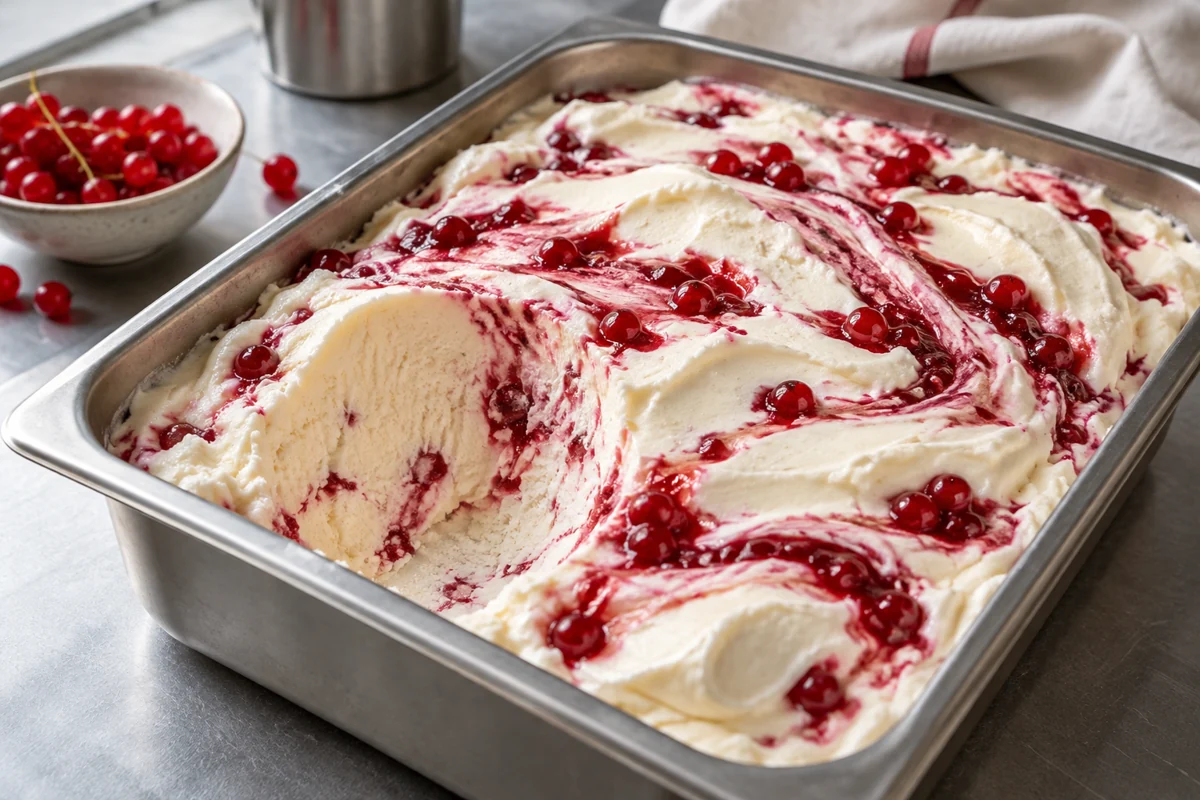
Illustrative photograph: redcurrant ripples visible in a frozen dairy dessert.
For a stirred product, define how much uniformity is wanted. A completely pink dairy base with evenly distributed small fruit pieces differs from a white base carrying occasional red folds. Mixing time and shear should support that target. Excess handling may release more juice, reduce the visible whole-berry share and change the consistency of an established yogurt gel. Assess the mixture after its usual holding interval, since immediate mixing can hide a separation tendency.
Frozen dairy desserts require observation after the actual freezing and service route. A ripple that looks attractive when first layered may spread, fracture, become too firm or distribute unevenly during scooping. Fruit preparation solids, sugar composition, water, dose and freezing process all contribute. A whole-berry IQF photograph cannot establish the firmness of a frozen ripple. The customer's trial should use the intended preparation and serving condition.
A topping applied shortly before service gives the fruit less contact time with the dairy. That can suit some foodservice operations, provided the topping has an approved preparation, storage and service procedure. It changes the work at service and the consistency of portions. Compare the operational cost and serving appearance with a preassembled cup. A shorter contact time is an application choice, not evidence that the ingredient can be handled without the required hygiene controls.
Record the assembly route in the approved reference. Include the fruit and dairy masses, order of addition, relevant temperatures, equipment and packaging. For private-label programs, add the required appearance at opening and through the expected service period. A sample signed off after careful manual layering should be identified as such; approval for production should follow the actual filling process, which may disturb the interface differently.
Compare finished cups through the intended storage period
A useful trial preserves enough information to explain a result. Begin with the approved dessert as the reference and change one important variable at a time where practical. The variable might be the redcurrant lot, a screening choice, preparation solids or addition sequence. Use the same dairy batch and filling setup when they are meant to stay constant. Keep enough independent cups to see whether a difference is repeatable rather than choosing the best-looking cup.
Set observation times from the intended product journey. Include a view after assembly, the planned release point and later points needed by the manufacturer's validation plan. Storage temperature, light, packaging and handling must be recorded. Photographs taken after different intervals or in different refrigerator positions can create an apparent ingredient difference that belongs to the observation method. The trial schedule should be decided before the samples are made.
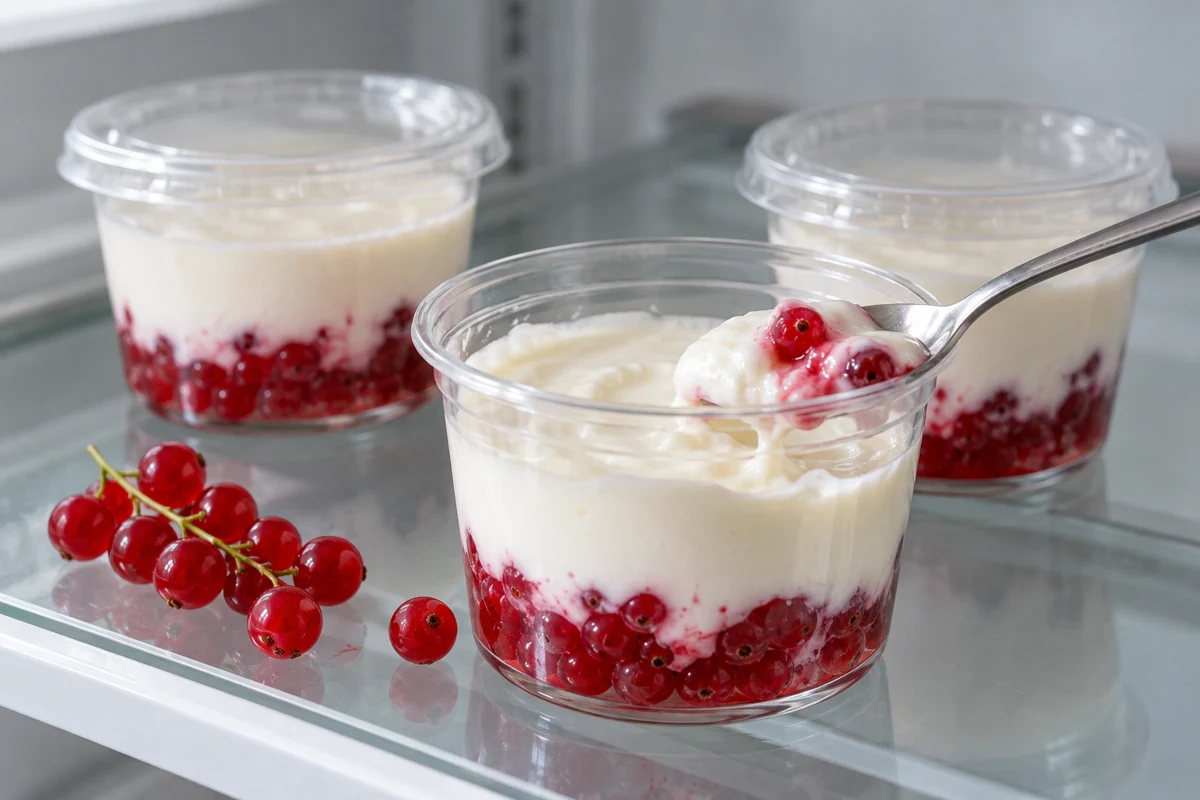
Illustrative photograph: matched dessert cups for observing fruit layer and dairy texture.
Use the same presentation for visual comparison. Keep cup dimensions, fill height, background, lighting and viewing angle consistent. If the target is the red-white interface, photograph it before stirring. If the eating quality is the target, use a separate cup or document that the sample has been disturbed. Repeatedly opening, spooning and returning one cup to storage changes its history and can erase the condition the team wanted to study.
The physical endpoint should reflect the complaint. For a layered cup, it might be boundary definition and visible colored liquid. For a stirred dessert, it could be uniformity, graininess, fruit integrity and liquid separation. Instrumental color or texture measurements can add consistency when the method suits the food. A single photograph cannot identify the composition of a deposit, and a pH result cannot quantify color migration. Keep these observations separate in the record.
Taste the product only within the approved safe evaluation procedure. Compare sharpness, sweetness and seed or skin perception at the intended serving temperature. An apparently mild fruit preparation can taste much sharper in a lightly sweetened dairy base. Conversely, increasing dairy solids or changing sweetener may change perception without changing the redcurrant lot. The recorded formulation helps the purchasing team avoid demanding a fruit change to solve a base-formulation difference.
Agree the action associated with the result. The team may approve a berry lot, revise the preparation, change assembly or commission further analysis. A development comparison does not establish shelf life by itself. The manufacturer owns finished-product safety and shelf-life validation under its actual process. We can connect the supplied berry sample and ingredient records to that work; the resulting application approval should state precisely what was tested and what future lots must match.
Write the incoming specification around the application
Turn the accepted application into an incoming ingredient requirement that the receiving team can verify. State frozen redcurrants as the product, the agreed loose-berry form and the required preparation or destemming level. Define whole fruit, split skins, crushed fruit, stalk fragments and other relevant defects in plain physical terms. Put the unit and sample basis beside each limit. A broken-fruit percentage by mass and a count of berries with split skins are different measurements.
Keep ingredient and application limits in their proper places. Incoming stalk control belongs in the redcurrant specification. A finished yogurt's boundary appearance depends on the whole recipe and assembly process. If a customer needs an application test as part of ingredient acceptance, define the reference dairy base, fruit-preparation method, dose, holding conditions and decision rule. Without that detail, two teams can reach different judgments while using the same berries.
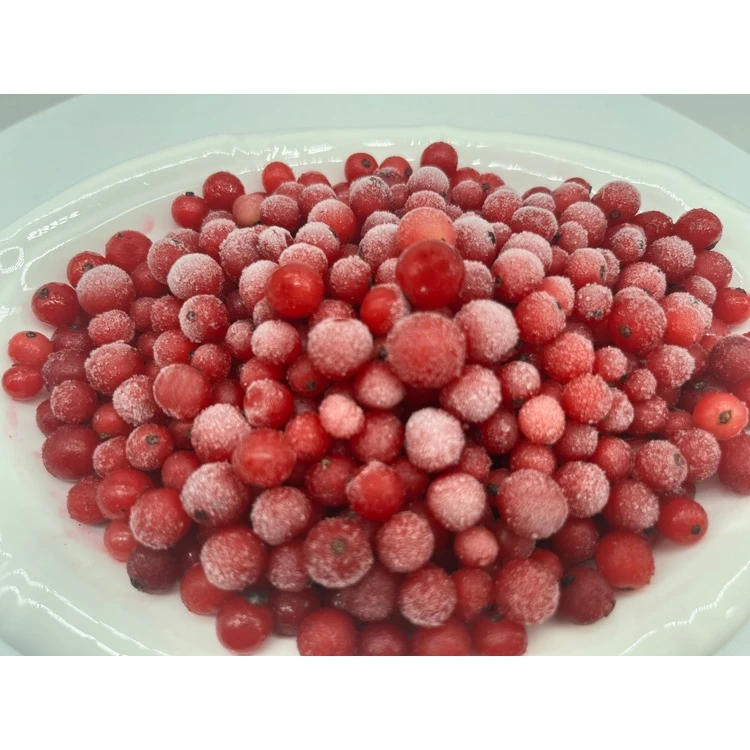
Original product photograph: frozen redcurrants on a plate. No lot measurement is inferred.
Ask for chemistry only where it answers a formulation need. Soluble solids and acidity can help characterize a fruit lot, but a generic range should not be copied from another supplier's website. Agree sampling, preparation and measurement method for the actual offered lot. The Brix and sugar-profile guide explains why a refractometer reading does not identify individual sugars. That distinction matters when a developer uses fruit composition in a frozen-dessert formulation.
Packing affects what reaches the mixer. Agree net weight, liner, carton configuration and handling arrangements that suit the line. Check seals, visible frozen condition and lot coding at receipt. A large pack repeatedly opened for small doses may require a different operational approach from one emptied into a single batch. MOQ, lead time and crop availability belong in the confirmed quotation, alongside the product form and shipment plan.
The document request should identify its purpose. A lot-linked specification and relevant analytical reports help characterize the supplied ingredient. Traceability records connect fruit, packing and shipment. Any required microbiological or residue evidence needs named analytes, method and represented lot; a broad request for a certificate does not define those details. Ready-to-eat suitability and the finished dairy process require their own technical agreement.
For repeat orders, retain the approved ingredient reference and the finished application record with their different identities. If color transfer or texture changes, compare the incoming lot, preparation yield, dairy recipe and filling history together. This gives both teams a practical route to the cause. We help purchasing teams describe the frozen fruit precisely, while the manufacturer's application evidence determines whether the assembled dessert continues to meet its intended appearance and eating quality.
Source frozen redcurrants with GreenLand-food
GreenLand-food is a professional frozen redcurrant supplier and manufacturer in China, providing factory-direct wholesale supply for food manufacturers, importers, foodservice distributors and private-label programs.
Send the product form, specification, packing, quantity, application, destination, private-label needs and requested documents. We help your purchasing team connect the approved frozen sample with the order and receiving method.