


Red Currant Sauce for Savory Dishes: Acidity, Straining and Consistency
Oct 19, 2026
Leave a message

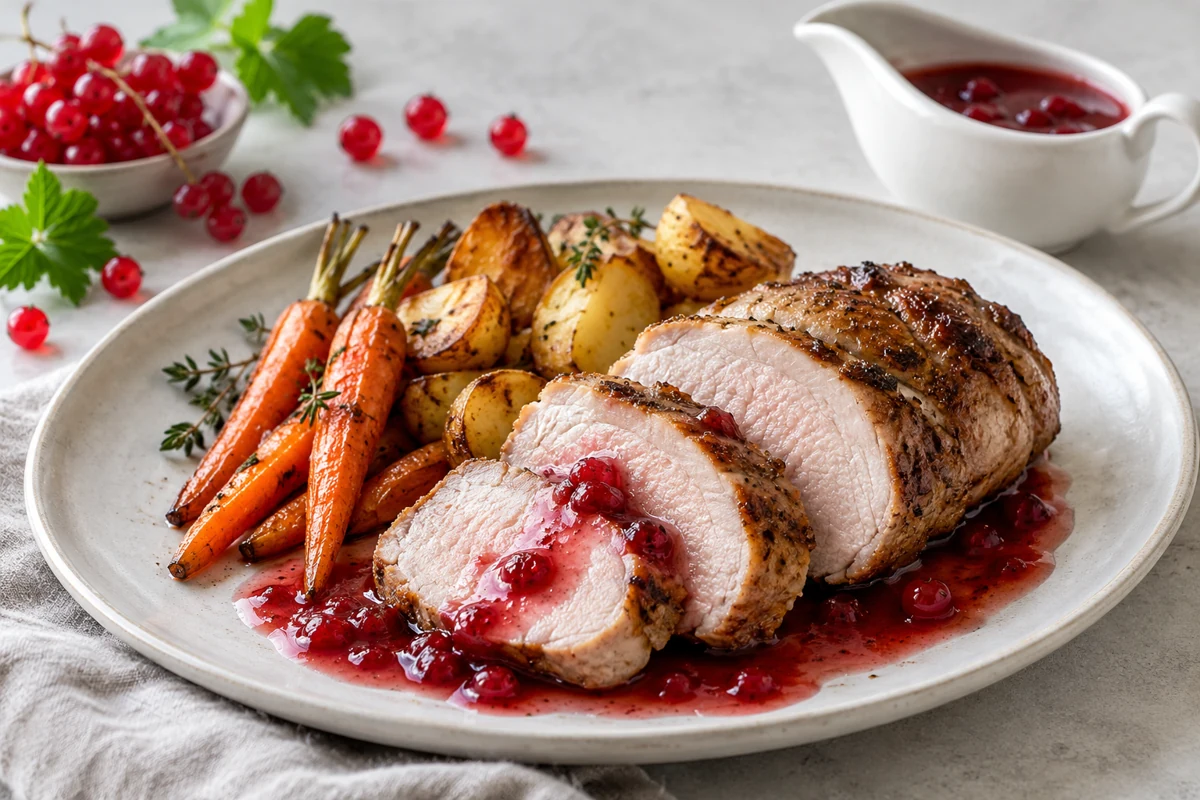
Frozen red currants give a kitchen control over the starting fruit, but they also introduce seeds, skins, thaw liquid and a variable amount of recoverable pulp or juice. A sauce made from these berries is different from one made by melting a sweetened redcurrant jelly. Both can work; substituting one for the other without changing the formula can upset sweetness, acidity and consistency.
At GreenLand, we would discuss the planned extraction and service method before recommending an order specification for sauce production. A smooth restaurant sauce, a coarse roasted-onion condiment and a prepared meal glaze need different trials. The following approach connects the berry input to the finished plate, then turns the useful findings into purchasing controls without claiming that a single recipe fits every application.
Decide whether the sauce starts with berries or jelly
Whole frozen red currants provide fruit solids as well as juice. They need a defined cooking and separation method if the finished sauce is to be smooth. A purchased redcurrant jelly has already been extracted, sweetened and set according to its own formulation. Melting that jelly into stock or vinegar brings its sugar, pectin system and other declared ingredients into the sauce. It is a prepared ingredient, rather than a weight-for-weight substitute for raw berries.
Read an existing recipe with that distinction in mind. A spoonful of jelly stirred into lamb juices may supply both sweetness and body. Replacing it with the same weight of frozen berries adds a different balance of water, acid, fruit solids and sugar, as well as seeds and skins. Conversely, replacing berries with jelly can make the result sweeter and change its behavior when it cools. Use the intended ingredient from the beginning of the trial instead of trying to correct every difference at the end.
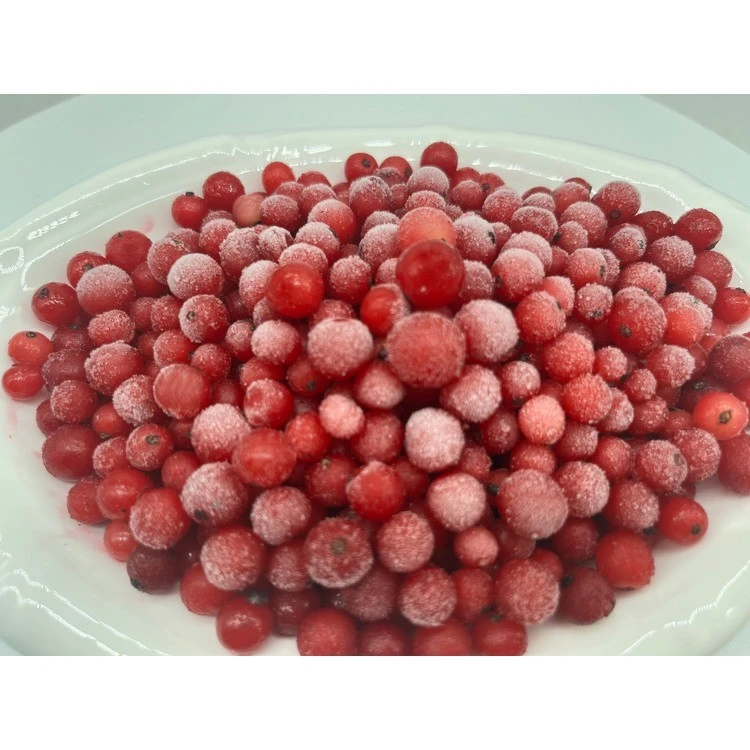
Frosted loose redcurrant berries on a white inspection plate. GreenLand-food product photograph.
For a berry-based sauce, decide whether the desired fruit character is smooth or textured. A strained sauce can coat a slice of meat without leaving seeds on the surface. A rustic condiment may deliberately retain softened fruit and chopped vegetables. That choice affects the required equipment, the recoverable yield and the appropriate berry grade. The ingredient does not have to remain visually intact if it will be strained, but it still needs sound quality and agreed foreign-matter controls.
Our bulk frozen redcurrants page identifies application questions such as breakage, stems and free juice. Use those details as items to confirm for a sauce order. A small kitchen working through a hand sieve may place a different value on clean destemmed fruit than a processor with a dedicated separation stage. Do not assume that a downstream sieve removes every possible unwanted material or replaces a receiving specification.
Weigh the thaw liquid that the process intends to keep. It contains part of the fruit's liquid contribution and should not disappear from the formula simply because it collected at the bottom of a container. If the method deliberately drains the berries, record the drained weight and the fate of the liquid. Comparing a drained sample with an undrained sample under the same ingredient weight can make one lot appear more intense for reasons unrelated to its original composition.
The first approval should name the ingredient form precisely: frozen berries, recovered juice, seedless puree or purchased jelly. If an intermediate is prepared in-house, document its preparation and usable weight. This gives the next cook or production operator a repeatable starting point. It also lets purchasing compare offers in the form the sauce actually consumes, rather than treating all redcurrant ingredients as equivalent because they share a fruit name.
Balance acidity against the complete savory dish
Redcurrants are naturally tart, which is part of their value in savory cooking. Aim for tartness that makes the complete dish more enjoyable. A small amount of bright sauce beside a fatty cut of meat may taste balanced even when the same sauce seems sharp by itself. A large pool beside a delicate vegetable dish can feel intrusive. Portion size and the food underneath the sauce belong in the formulation discussion.
Taste the first trial with the intended protein or vegetable, cooked and seasoned in its normal way. Include the starch or puree if it will share the plate. Mashed potato, pastry and roasted roots can carry a thin fruit sauce differently from a smooth meat surface. A sauce that is attractive on one bite may dominate the full dish after several mouthfuls. Review a realistic serving, not just a carefully chosen spoonful.
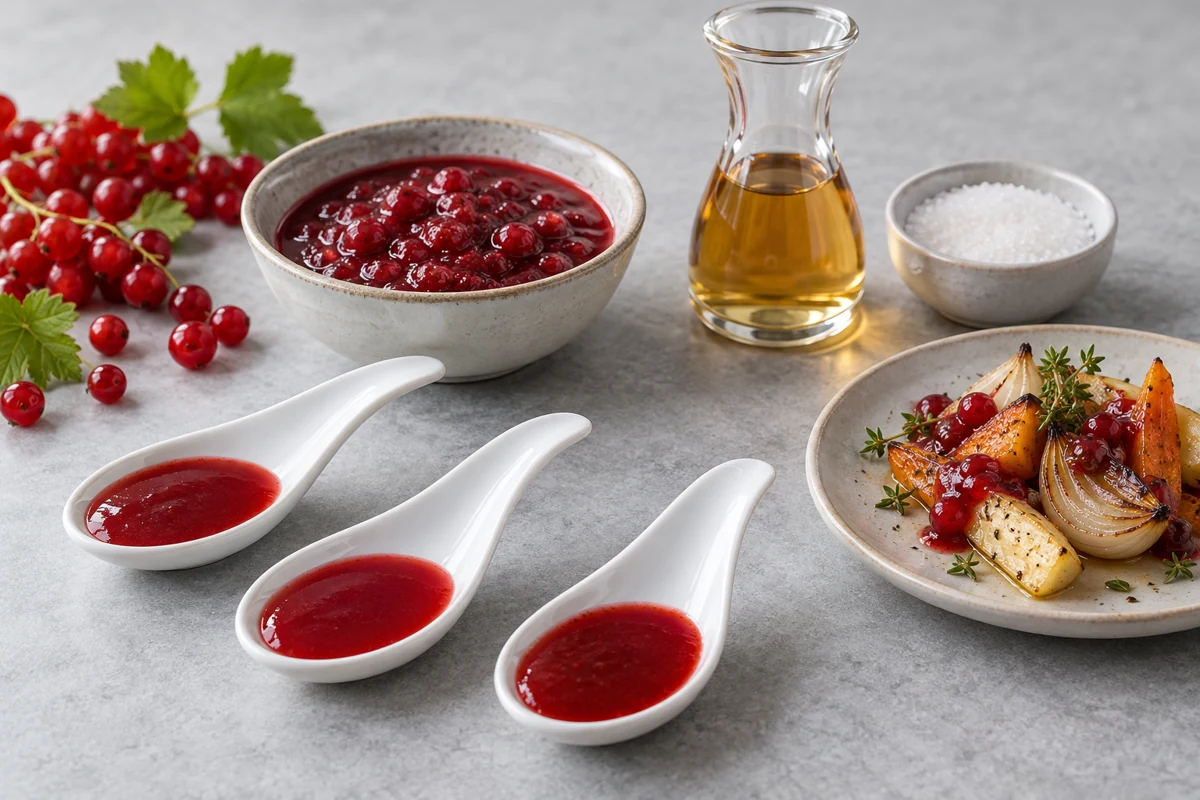
Compare seasoning changes against the food the sauce will accompany. Illustrative tasting setup.
Added sugar can soften the sensory impression of acidity, but it does not simply remove the acid. A large sugar correction may turn a savory sauce toward a dessert-like profile. Stock, wine, vinegar, aromatics and fat also change the balance, each bringing its own flavor and compositional effects. Additions should follow a written formula during development so that a successful adjustment can be reproduced instead of remembered as a vague splash or pinch.
Vinegar and wine deserve particular attention when the berries are already tart. A recipe designed around sweet jelly may rely on vinegar to sharpen it; a berry-based version may need a different amount. Wine reduction can bring aroma and concentration as well as acidity. If an alcohol claim matters for the menu or finished product, do not assume that a brief simmer removes all alcohol. Select suitable ingredients and obtain the evidence required for the claim.
For production control, sensory comparison and analytical measurement serve different purposes. pH is useful in appropriate technical assessments, while titratable acidity can help describe the amount of acid relevant to formulation. Neither measurement alone predicts whether a sauce tastes balanced with roast lamb or mushrooms. If values are part of the specification, agree the sample preparation, test method and interpretation with the technical team. Avoid setting a universal pH target from a restaurant recipe.
Use a small sequence of controlled adjustments. Keep the berry base and final sauce weight fixed while comparing a modest change in sweetness or acid addition. Then take the best candidate back to the plate. If every sample is reduced to a different weight, the comparison confounds seasoning with concentration. Recording the final weight is a simple way to make sensory decisions more useful, particularly when different people prepare the trial on different days.
Separate seeds and skins at the right stage
For a smooth redcurrant sauce, straining removes material that a diner might otherwise notice as seeds or skins. The timing determines what is separated and how much flavor and body have already developed. Softening the berries first can help release their contents. Straining the fruit base before final reduction can make it easier to assess the smooth liquid and avoid working a very thick mixture through the screen. Neither sequence is mandatory for every recipe; select one that suits the equipment and intended texture.
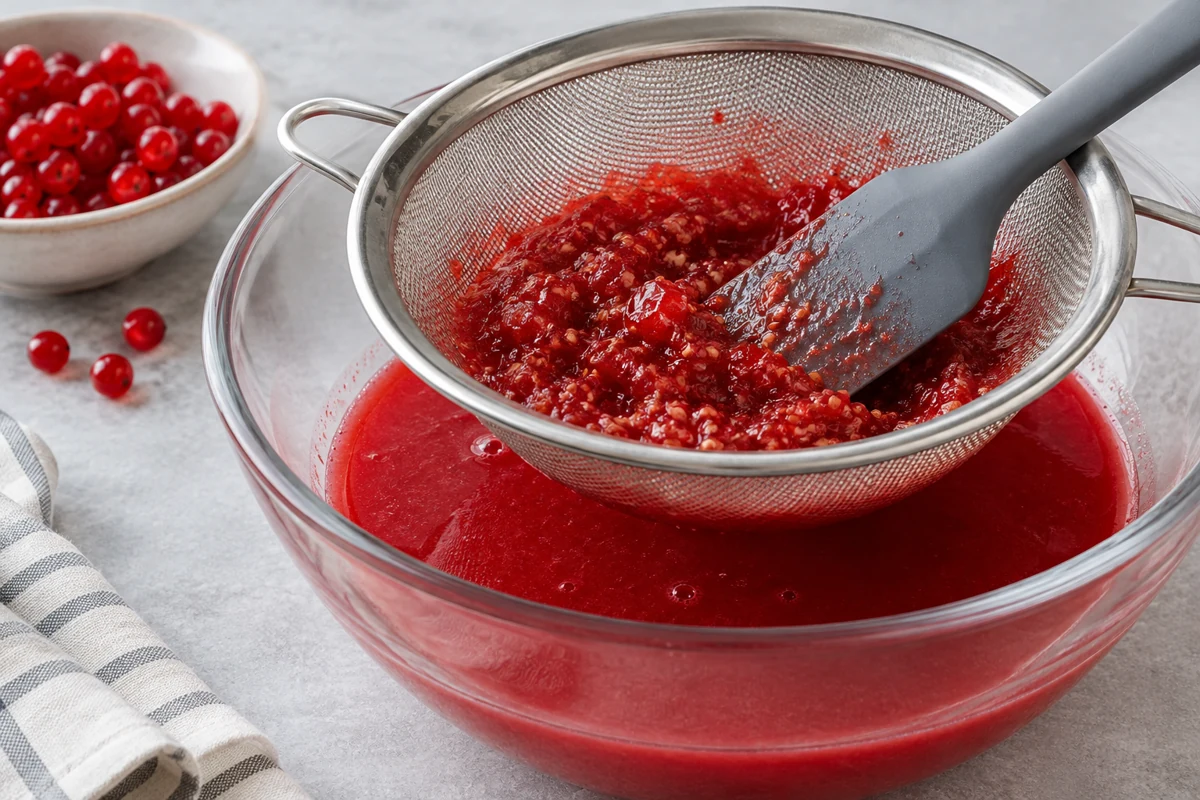
Straining separates coarse material while changing recovered yield. Illustrative preparation.
A fine sieve can remove coarse residues while allowing some pulp through. A cloth-drained juice can be clearer and lighter in body. Forceful pressing may improve recovery but also push fine material into the liquid. For a savory sauce, absolute transparency is often unnecessary; an appealing, smooth, slightly opaque sauce may be the desired result. Define smoothness in terms of the eating experience rather than assuming that a clear red liquid is automatically better.
During a trial, collect the first strained fraction and the additional pressed fraction separately if the difference matters. Compare their flavor, appearance and mouthfeel after bringing them to the same final formulation. This helps determine whether extra pressing is worthwhile. A few more grams of liquid do not necessarily improve the economics if they introduce a coarse texture that requires another filtration stage or more labor to correct.
The University of Alaska Fairbanks currant guidance distinguishes juice from puree preparation. That is a useful technical distinction for sauce development: a seedless puree can retain fruit body even though the coarse seeds and skins have been removed. It should not be described as clear juice, and it should not be assumed to behave like a jelly made from clarified juice and sugar.
Weigh the wet residue and the recovered base. Include what remains on the sieve, in the pan and on the utensils when estimating losses at a practical level. If the process adds stock before straining, note that the recovered liquid contains stock as well as fruit. A yield expressed only as strained sauce weight divided by berry weight will then be misleading. Keep the ingredient inputs visible so a buyer can compare methods fairly.
At larger scale, consider how the separation stage will run through the full batch. A screen that handles one saucepan easily may slow as fine pulp accumulates. Cleaning frequency, safe handling of hot material and product retained in the equipment affect throughput. Confirm these points with the actual equipment and operating team. A kitchen sieve trial can identify a desired texture, but it does not validate the capacity or hygienic design of a production line.
Choose a pouring sauce or a spoonable condiment
Consistency should follow the application. A thin sauce can soak into a grain dish or accompany sliced meat without forming a heavy coating. A spoonable condiment stays where it is placed and can carry chopped onion or other vegetables. A glaze needs to adhere during its intended finishing step. These are different jobs. Calling all of them redcurrant sauce hides the practical reason one formulation succeeds and another fails.
Reduction increases concentration by removing water, but it also intensifies the flavors already present. Reducing a tart sauce until it looks thick can create an acidity or salt problem, particularly when stock and seasoning have been added early. Record the final weight and taste at the intended service temperature. If the flavor is right before the consistency is right, consider a suitable formulation change rather than continuing to evaporate without a clear endpoint.
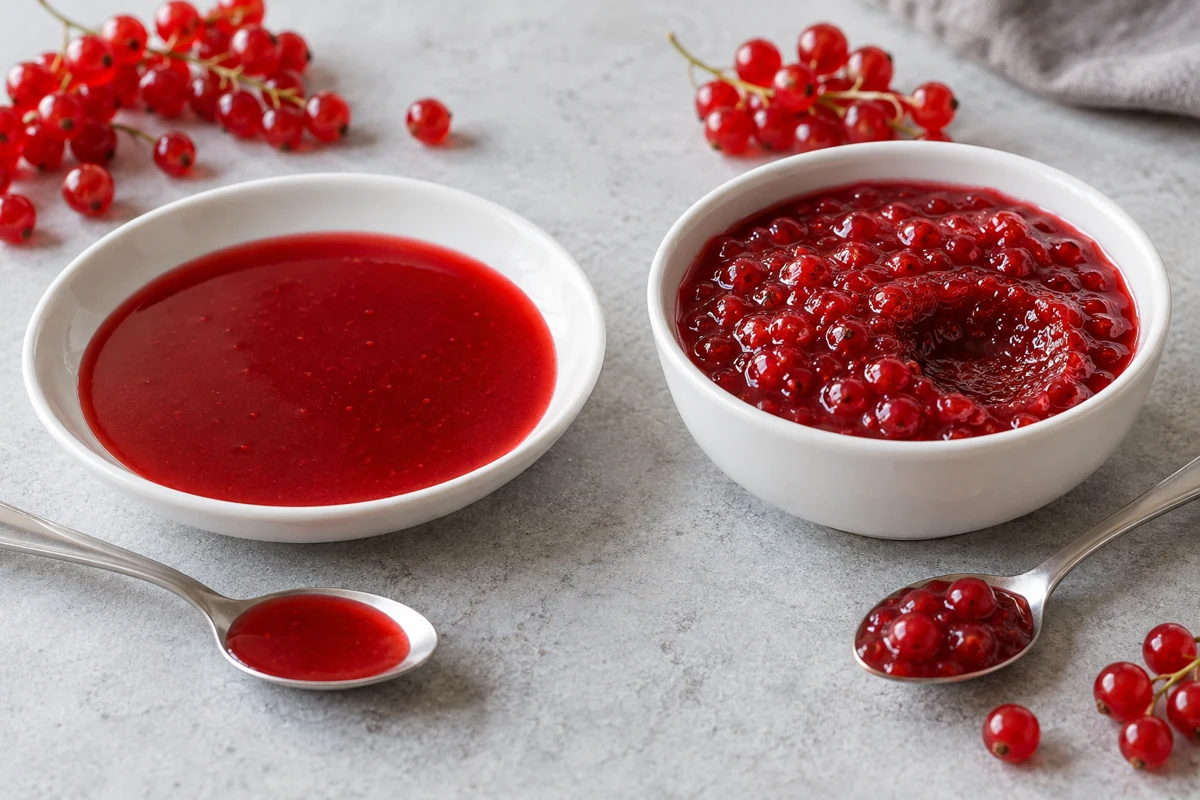
A pouring sauce and a fruit condiment need different consistency targets. Illustrative comparison.
Pulp contributes body and changes the way the sauce moves across a plate. A clear juice may need a different approach from a seedless puree even when their red color looks similar. Purchased jelly adds a setting system and sugar that may affect cooling behavior. Where a starch or another thickener is appropriate, follow its supplier's application guidance and test it under the actual heating, acid and storage conditions. Different thickeners are not interchangeable by name or by spoonful.
Use a repeatable practical check to describe the accepted consistency. A measured portion placed on a level plate at a defined temperature can show how far it spreads over a stated observation period. A spoon-coating check can be useful if the spoon and method stay consistent. These are internal comparison methods unless standardized and validated for a wider purpose. Record enough detail for the next batch to be judged against the same reference.
Avoid judging thickness from an isolated photograph. Lighting can make a thin liquid look dense, and a cold sample can appear more structured than a hot one. The approved reference should include the actual temperature and a physical comparison, ideally alongside retained written observations. For prepared meals, assess the sauce after the complete intended process, including any chilling, freezing or reheating used by the manufacturer. A fresh saucepan result is only an early checkpoint.
If a thicker sauce is needed for a pastry or plated component, test the finished assembly. A sauce that holds a neat spoon shape can still migrate into an absorbent base during holding. Conversely, a thin sauce may be desirable when absorption is part of the eating experience. The approval question is whether the dish performs as intended over its service window, not whether the sauce meets a single visual ideal in a bowl.
| Sauce format | Plate behavior | Check at service |
|---|---|---|
| Pouring sauce | Spreads or absorbs into the dish | Portion, spread and flavor intensity |
| Spoonable condiment | Stays near its placed position | Fruit texture and holding behavior |
| Glaze | Adheres during finishing | Coverage after the actual finishing step |
Judge the sauce on meat and vegetables
Redcurrant sauce is often associated with rich meats, but its tartness can also work with roasted vegetables and earthy ingredients. The useful test is specific. Compare it with the actual cut of meat, the actual cooking method or the actual vegetable combination on the menu. A charred surface, a sweet roasted root and a delicate steamed vegetable each present a different sensory background. A generic claim that the sauce pairs with everything gives a chef little practical direction.
For meat service, check how the sauce behaves on the plate and on the cut surface. Does it pool attractively, cling lightly or run into the garnish? Does its sweetness become too prominent beside a salty pan jus? If the dish already includes a sweet vegetable puree, a sweeter redcurrant sauce may add repetition rather than balance. Test the full combination before adding extra sugar to improve the sauce on its own.
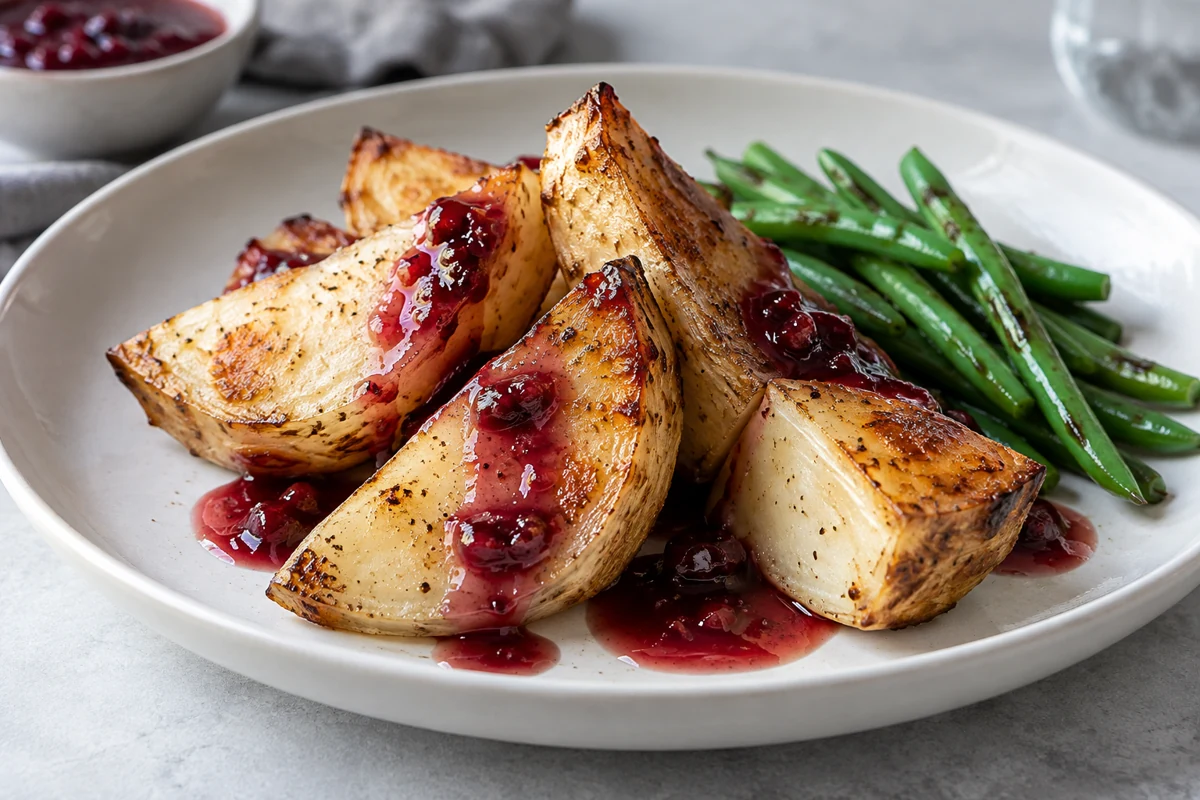
The vegetable combination and sauce portion shape the flavor balance. Illustrative plate.
For vegetables, consider both flavor and ingredient declarations. A sauce built with meat stock may be inappropriate for a vegetarian dish even when the fruit is the headline ingredient. Wine, butter and other additions can matter for dietary or allergen communication. Review the complete recipe and supplier declarations for the intended market. The fact that the starting redcurrants are plant ingredients does not determine the suitability of the finished sauce.
Portioning is part of the trial. Weigh a realistic sauce portion and serve several complete plates rather than one presentation plate. Ask whether the first and last bites remain balanced. A smaller amount of a concentrated sauce may work better than a larger amount diluted to seem gentle in isolation. Record the accepted portion because it affects both the customer experience and the cost per serving.
If two berry lots are being compared, keep the rest of the dish constant. Use the same stock batch, seasoning, reduction endpoint and portion weight where possible. Otherwise a difference attributed to the berries may come from the cooking. Blind coding can help the tasting team focus on the result rather than the supplier name or purchase price. A modest, well-controlled comparison is more useful than a large tasting with poorly matched samples.
Document the decision in practical language: too sharp beside the puree, seeds noticeable on the meat, sauce spreads beyond the intended area, or fruit flavor disappears after reheating. Such notes identify the next useful adjustment. A score without a description can be difficult to act on. The accepted sample should demonstrate the intended plate, while the written record explains which features production needs to preserve.
Follow consistency through cooling and reheating
A sauce approved straight from the pan may change during the rest of the kitchen's workflow. Cooling can alter its apparent thickness; reheating can change evaporation and the balance between liquid and solids. Holding may expose separation or surface drying. These are reasons to test the complete service route. They are not a basis for predicting a universal change in every redcurrant sauce, because the formula and process determine the behavior.
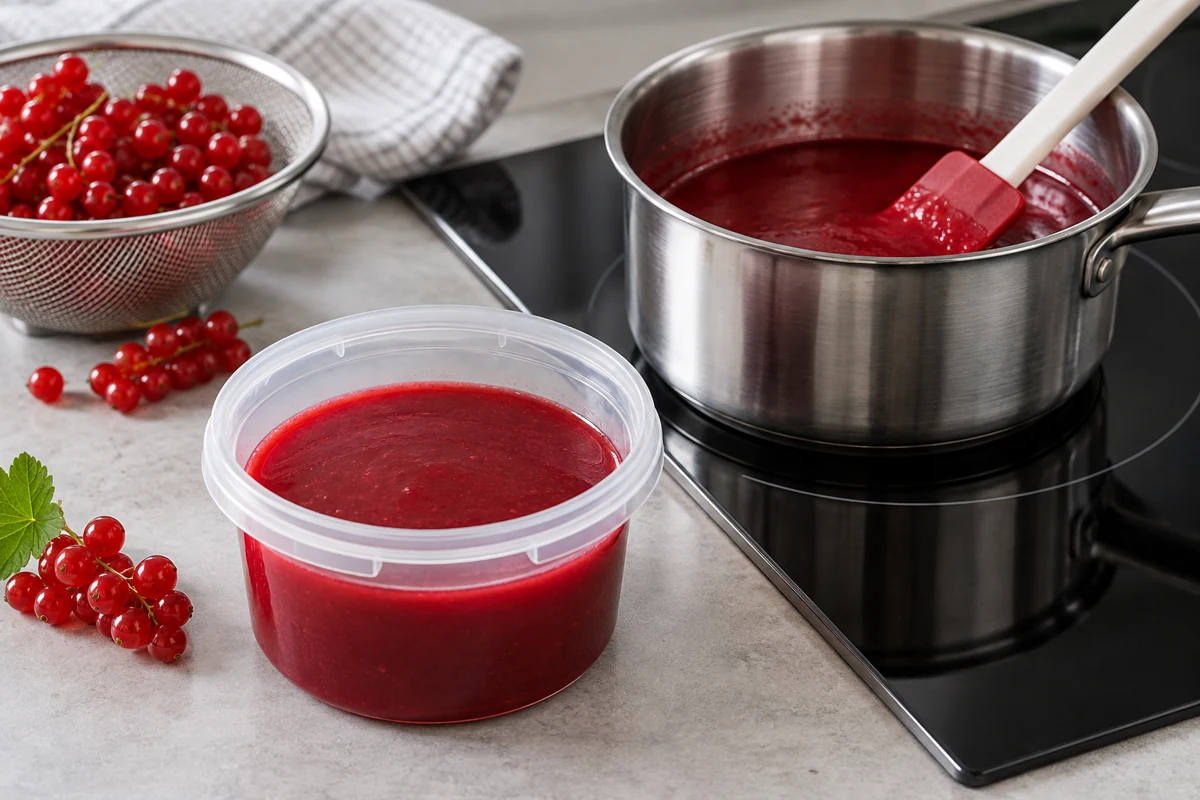
Assess the sauce through its intended cooling and reheating route. Illustrative process stages.
Write down the intended route before the trial. A sauce made and served promptly has different handling demands from one chilled for later service or incorporated into a frozen prepared meal. Use the site's validated food-safety procedures for cooling, storage, reheating and hot holding as applicable. The development team should assess quality within those controls rather than choosing a convenient temperature because it makes the texture look better.
Compare the sauce at the start and end of the planned service window. Check flavor, visible separation, coating behavior and the amount left in the container. If staff routinely add water or stock during holding, include that practice in the documented formula or establish a controlled adjustment procedure. Unrecorded additions can cause the last servings to differ from the first and can affect the safety assessment for the finished product.
For a chilled or frozen manufactured meal, test the sauce after the actual intended reheating instructions have been followed. Examine whether liquid separates around the fruit component or whether the sauce becomes excessively firm. Packaging, portion depth and the rest of the meal can influence heating and moisture movement. A successful microwave test in a shallow kitchen dish does not necessarily represent a deeper retail tray.
Avoid assigning a shelf life from the fruit's acidity, a recipe comment or the appearance of the sauce. A savory formulation may contain stock, vegetables, fats and other ingredients that change its preservation requirements. Commercial shelf life and storage instructions need appropriate evidence for the complete product, process and package. A sealed jar is not proof of a safe shelf-stable sauce, and a condiment recipe should not inherit canning instructions from plain currant jelly.
If a trial fails after reheating, first check whether the process was followed consistently. Compare final weight, temperature, holding duration and any adjustment before changing the berry specification. A supplier cannot solve a variability problem caused mainly by uncontrolled evaporation at service. Once the process is stable, repeated lot differences become easier to identify and discuss with the ingredient supplier in measurable terms.
Specify redcurrants for recoverable sauce yield
A sauce specification should describe what the berries need to deliver after the approved preparation method. Whole-fruit appearance may be secondary for a strained sauce, while clean flavor, controlled stems and predictable recoverable material may be central. For a rustic condiment with visible fruit, berry integrity can become more important. Put the application and the agreed grade together so purchasing does not approve a different material solely because the product name matches.
Define the sample and the trial record used for approval. Include frozen input weight, retained thaw liquid, added water or stock, recovered base and final sauce weight. Note the straining method and the accepted texture at service temperature. When possible, keep the same reference dish and sauce portion for future comparisons. This connects an ingredient decision to the food the customer will actually eat.
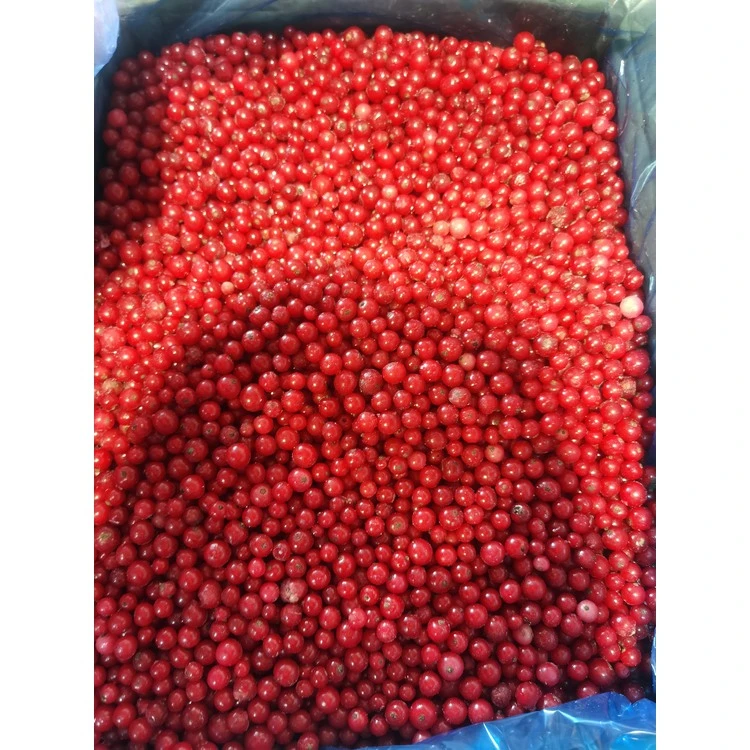
Loose frozen redcurrants in a blue-lined carton. GreenLand-food product photograph.
Use a transparent cost calculation. As an illustrative example, a lot costing 3 currency units per kilogram and yielding 0.60 kilogram of usable strained fruit base has a fruit cost of 5 units per kilogram of that base, before other ingredients and processing. A lot costing 3.30 units and yielding 0.75 kilogram gives 4.40 units per kilogram of base. These are hypothetical figures, not GreenLand prices or promised yields. Actual recovery and flavor acceptance must be measured under the same method.
The lower cost per recovered kilogram is not automatically the winning offer. If one base needs more correction, creates more filter work or performs poorly on the plate, include those consequences. Equally, a premium whole-berry grade may add no value if the approved process deliberately crushes and strains the fruit. The purchasing decision should reflect the accepted sauce, the labor involved and the consistency needed across batches.
Agree inspection items for the actual order, including foreign matter, stems, breakage, loose ice or free juice, pack integrity and temperature requirements. Confirm which analytical results and traceability documents are available for the lot and which checks the buyer will perform. These are order discussions, not assumptions that every attribute is routinely certified or that a photograph proves a numerical limit.
At GreenLand, we can use your sauce brief to discuss the proposed frozen redcurrant material, packing and shipment requirements. Share whether the product will be strained, reduced, chilled, reheated or used in a prepared meal, together with the expected volume and destination. That information makes a sample request more useful and gives both sides a clearer basis for reviewing the commercial order. The strongest approval is a berry lot that works in the agreed sauce process and remains acceptable on the finished plate.
Continue reading about fruit applications
Follow raspberry seed removal and puree recovery as a separate example of preparing a smooth fruit base.
Distinguish a refining-screen setting from measured particle size and the mouthfeel of the finished puree.
See what a defined freeze–thaw quality comparison can establish, and why it does not establish shelf life.
Source frozen redcurrants with GreenLand-food
GreenLand-food is a professional frozen redcurrants supplier and manufacturer in China, providing factory-direct wholesale supply for importers, food manufacturers, foodservice distributors, and private-label programs.
Send the product form, specification, packing, quantity, application, destination, private-label needs, and requested documents.