


Importing Frozen Produce from China into the United States: A Practical Buyer Guide
Oct 16, 2026
Leave a message

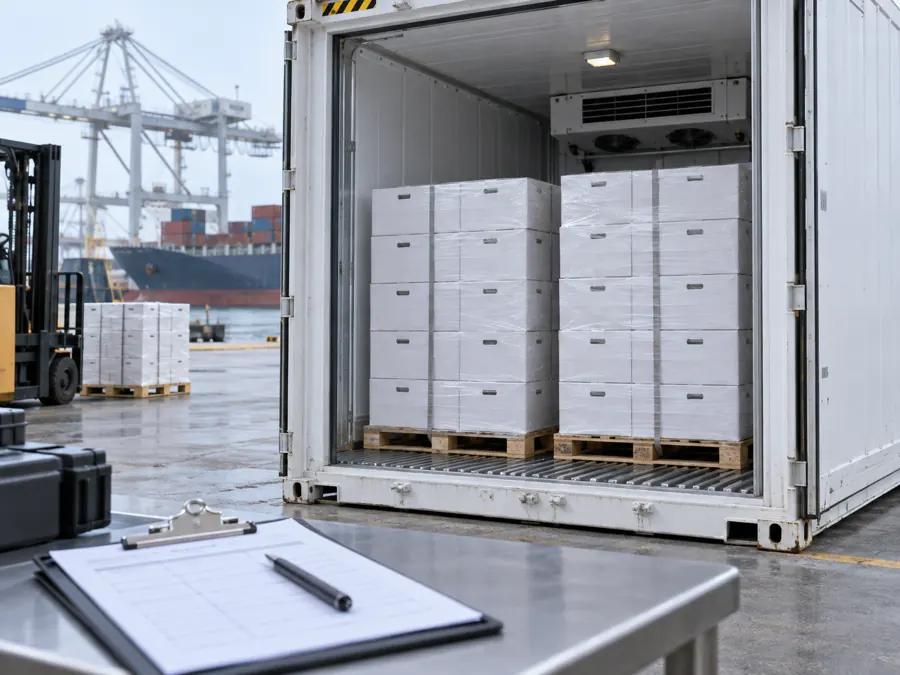
Importing this food is a sequence of separate decisions. The U.S. owner or consignee identifies the FSVP importer; the customs importer of record arranges its CBP identity and bond; the foreign food facility maintains FDA registration and a U.S. agent; a filer sends FDA prior notice and customs data; and the ocean ISF party sends advance vessel data. The broker can file for a principal without becoming every principal. Our supply work begins with a product definition and lot records so those parties can file consistent facts. A clean FDA response alone does not replace CBP cargo release or the carrier and terminal's delivery order.
The practical order of work is:
- Define the exact broccoli form, origin, process and cooking use.
- Assign the FSVP importer, CBP importer of record and filing agents.
- Confirm the source facility's FDA registration and 2026 renewal.
- Obtain the APHIS permit and check its commodity conditions and tariff classification.
- Assemble matching supplier, transport and entry documents.
- File ocean ISF, FDA prior notice and ACE entry data within their separate windows.
- Resolve FDA, CBP and terminal release before collecting the container.
Define the food, origin, process and intended use
Start with a specification that says broccoli, not a broad "frozen vegetables" label. Record the botanical product, floret or spear form, whether it is cut, single-ingredient status, China as the country of growth and manufacture, the blanching method as an actual process description, IQF status, food-service or manufacturing use, and the statement that the product requires thorough cooking. These details drive the USITC tariff classification, the FDA product code, APHIS's commodity search and the wording of the invoice and prior notice. If a later order adds sauce, oil, seasoning or another vegetable, the classification, allergens and food-safety analysis may change; it cannot inherit this case's filing sheet.
We ask the purchaser to freeze one version-controlled product identity before samples, quotes and filings. A practical line reads: "IQF blanched broccoli florets, Brassica oleracea, single ingredient, China origin, bulk food-service pack, keep frozen, cook thoroughly before eating." This is a proposed transaction description, not a claim that a particular U.S. agency has approved our goods. The importer should verify the grower and manufacturing addresses against the documents supplied for the actual lot. A commercial invoice with "mixed frozen produce" while the prior notice names broccoli creates an avoidable discrepancy.
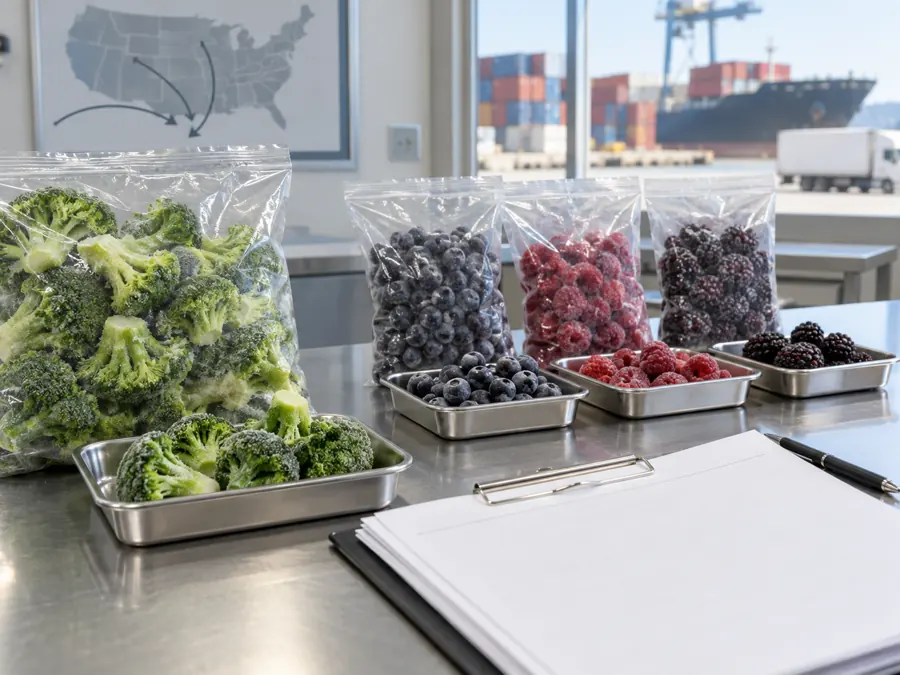
Illustrative scene: Separate frozen vegetable and fruit samples on an inspection table.
The intended use has a second consequence. Blanching protects colour and texture, but unless a documented validated process establishes pathogen lethality, we do not present it as a kill step. FDA's ready-to-cook guidance warns that partial factory cooking and freezing do not make food safe for a raw or merely warmed use. If the U.S. customer intends a thaw-and-serve salad, smoothie or other no-cook use, stop and reassess the hazard analysis, processing claim, labelling and supplier qualification. The mere presence of broccoli in a frozen carton cannot settle whether the customer's final food is ready to eat.
We send the buyer a draft specification, ingredient declaration, production flow, packaging construction and proposed label wording for approval. That package is also the place to identify the intended cooking instruction and any buyer-specific limits for stem proportion, floret size, ice, broken pieces or foreign matter. The importer can then ask its broker to test the factual tariff description and its FSVP team to test the safety information, before the contract makes a date-dependent legal assumption. This prevents a late relabelling or cargo hold from turning a small difference in description into a large storage cost.
The product-standard file also needs chemical and quality decisions. Current U.S. examples for this broccoli are bifenthrin 0.9 mg/kg and lambda-cyhalothrin 0.4 mg/kg, with each section's own crop group and residue definition. These examples do not cover the complete pesticide panel. There is no single federal aerobic-count limit for every cooking-required frozen broccoli lot. The U.S. broccoli supply plan sets out the analyte, grade, sampling and contract decisions that accompany this import procedure.
Assign the U.S. importer, FSVP importer and filing agents
There are several parties called "importer," and their names need not be identical. Under FDA's FSVP rule, the FSVP importer is the U.S. owner or consignee when the food is offered for entry: the person in the United States that owns, has purchased, or has agreed in writing to purchase it. If no such U.S. owner or consignee exists at entry, the foreign owner's U.S. agent or representative can be the FSVP importer only with a signed statement of consent. It is a named responsible person with supplier-verification duties, not a blank field the broker fills with a convenient company.
The FSVP importer gives the entry filer its name, email address and FDA-recognized unique facility identifier for each relevant entry line. FDA currently recognizes its U.S.-location DUNS number; the old "UNK" workaround ended in 2022. The FSVP record is more than a number: hazard analysis, evaluation of the foreign supplier's performance and risk, an approved supplier decision, suitable verification activities and corrective actions must be available under the applicable rule. FDA's FSVP importer list explicitly notes that an FSVP importer may differ from CBP's importer of record. We ask the purchaser to name both roles in an order handoff sheet and to make sure the same U.S. entity is not mistakenly listed as a mere "agent" without accepting its actual responsibility.
The importer keeps its FSVP supplier-verification file before entry. FDA's FSVP Importer Portal accepts records after a written FDA request. It does not issue an advance supplier-approval certificate. Entry-status questions and requested shipment documents follow the separate ITACS route described below.

GreenLand frozen broccoli florets showing their crown and cut stem form.
CBP separately needs an importer of record number. The importer or its customs broker handles CBP Form 5106, commonly tied to an EIN for a U.S. company, and a customs bond or qualifying cash security. A one-entry bond suits infrequent entries; a continuous bond covers a 12-month period. CBP states a continuous bond minimum of $50,000 or 10% of the prior year's duties, taxes and fees, whichever is higher, and says processing commonly takes one to two weeks after the surety submits it. That is a planning estimate, not a promise for this buyer; a new entity, incomplete 5106 record or underwriting may take longer. Ask the broker for the actual filing readiness date before booking space.
The foreign food facility's U.S. agent has a different function. It is the FDA registration contact for the facility and must be a person residing or maintaining a place of business in the United States; FDA says a mailbox or answering service alone is insufficient. It need not be the FSVP importer or customs broker. The ISF importer for an ocean movement is generally the party causing the merchandise to arrive by vessel, or an authorized agent files for it. The person who submits prior notice can be anyone with the required shipment knowledge. We can supply data to all of them, but we do not identify a customer, broker, FSVP importer, surety or agent in public copy as if already contracted.
Check facility registration and the 2026 renewal
FDA says foreign facilities that manufacture, process, pack or hold food for U.S. consumption generally register through its Food Facility Registration system, subject to regulatory exemptions. A foreign facility's registration includes its U.S. agent. This registration belongs to the qualifying facility, not to an individual broccoli SKU, and it is not FDA certification or FDA preapproval. We would give the importer a current facility identity and registration confirmation for the actual manufacturer as part of supplier qualification.
This shipment is being planned during an even-numbered renewal year. The live FDA 2026 renewal page shows 1 October through 31 December 2026. An update is a different action from a renewal, and a registration not renewed by the end of the window expires. Before a 2026 fourth-quarter shipment, we ask the facility for dated renewal confirmation and the U.S. agent's acceptance, then pass that evidence privately to the importer.
Illustrative scene: Commercial shipping papers beside a frozen vegetable carton.
The facility must include an FDA-accepted UFI in its registration; FDA currently recognizes DUNS. This facility identifier is separate from the U.S. FSVP importer's DUNS and the CBP importer of record number. They may all be different entities. Our pre-shipment handoff therefore has three fields rather than one "FDA number": manufacturing facility registration/UFI and U.S. agent, FSVP importer's U.S. DUNS and email, and customs importer identity. If a facility address, name or agent changes, the manufacturer should use FDA's proper update procedure and the buyer should update its supplier record before the filer submits a mismatched entry.
There is no generic "FDA import licence" for each frozen broccoli container. FDA states it does not approve, certify or license individual food importers, foods, labels or shipments in advance. It can still inspect or detain an offered entry. We use the verified facility record, compliant product and honest entry data to make the shipment reviewable. A buyer can ask for a private copy or verified status at contracting, while a public claim such as "FDA certified broccoli" would misstate what registration means.
Confirm APHIS eligibility and the exact tariff line
APHIS is a separate plant-health gate. Under 7 CFR 319.56-12, frozen fruits and vegetables enter under §319.56-3 and must be held under Part 305. Section 319.56-3(b)(1) requires an APHIS import permit; its processed-produce permit exception expressly excludes frozen fruits and vegetables. China-origin IQF broccoli therefore needs an APHIS permit even though we blanch it. The current ACIR commodity record for frozen Brassicaceae, published 24 September 2026, expressly covers quick-frozen broccoli (Brassica oleracea var. italica) from China for food use through all U.S. ports. It says to obtain the APHIS import permit using PPQ Form 587 through eFile and allows port inspection under §319.56-3. The U.S. applicant should secure the approved permit before booking and give its conditions to the broker. A traveler baggage prohibition is a different import channel, not a commercial-container ruling.
To apply, the U.S. permit applicant signs in at APHIS eFile and follows the official PPQ 587 application guide. Select "Not for Propagation and Planting" as intended use, "Fruits and Vegetables" as commodity type, and "Frozen" as process type, China and broccoli with its scientific identity. Provide the actual process description and requested attachments. Retain the application receipt, then download the issued permit and send its conditions to the broker and GreenLand before loading. The guide distinguishes an A- application number from a P- system-generated permit record ID. The broker uses the APHIS permit number printed on the issued permit; an internal record ID or pending application does not authorize shipment.
That ACIR record requires the commodity to be quick frozen before shipment and at no time above 20°F (−6.66°C); if it is above that temperature on arrival, APHIS regulates it as fresh, unfrozen produce. The 7 CFR 319.56-2 definition also requires the commodity to remain at −6.7°C (20°F) or below for at least 48 hours before release. We would retain continuous IQF, freezer-storage and transport records that together substantiate that period; the rule does not say the entire 48 hours must occur at the U.S. port. This is a plant-health condition, distinct from our proposed commercial freezer set point of −18°C. The record lists a permit and port inspection but does not list a routine phytosanitary certificate for this defined item. The filing team should still read the actual permit for any additional condition or document wording, and refresh the ACIR result for a materially different product or an order affected by a later rule or emergency measure. Blanching alone does not discharge the quick-freeze and Part 305 holding conditions. This defined case has a published commodity route; an actual lot remains a pre-shipment gate until the permit and conditions are in hand.

GreenLand frozen broccoli florets in a product photograph.
The 2026 USITC HTS Chapter 7 search places vegetables that are uncooked or cooked by steaming or boiling in water and then frozen under 0710, subject to actual product facts. For reduced-size broccoli, the current table shows 0710.80.97.22 for spears, .23 for certified organic broccoli in containers holding more than 1.4 kg, .25 for other broccoli in such containers, and .26 for other packing. Our proposed non-organic florets in industrial packs over 1.4 kg therefore point to 0710.80.97.25, subject to the broker's final classification of the actual cut and pack. The 0710.80.97 parent shows a 14.9% general duty in the current schedule. Do not budget only that rate for China: the broker must check the operative Chapter 99 and other measures, origin, entry date, exclusions if any, and all customs fees when it prices this order. We have not asserted a total landed duty.
The same discipline applies to a "certified organic" line. A buyer request for organic cartons does not make them classifiable as certified organic. The certification, scope, chain of custody and U.S. National Organic Program import documentation would have to match the actual transaction. We would keep conventional and organic identity, contract and artwork separate; until verification, quote the conventional product. USDA Grade A is also a voluntary quality specification, not an APHIS permit or tariff status. The product case linked below explains the grade and contract measurement basis without turning a grade table into a legal border test.
Assemble the order and entry documents
An import file begins before the cargo is stuffed. We propose an order handoff sheet with the legal seller, buyer, FSVP importer, customs importer of record, consignee, manufacturer, U.S. agent for facility registration, broker, forwarder and ISF filer. Next to each name we record the shipment function and the person who can correct a field. A broker's power of attorney permits filing for a client; it does not erase the client's legal duties. Written acceptance is especially important where the FSVP role is a U.S. representative because no U.S. owner or consignee exists at entry.
| Action and official route | Responsible applicant or filer | Prepare and retain | Timing and result |
|---|---|---|---|
| FDA Food Facility Registration | Actual foreign manufacturing/packing/holding facility | Legal facility address, activity, U.S. agent and facility UFI/DUNS | Before entry, retain the actual site registration confirmation. During 1 October–31 December 2026, complete biennial renewal and retain its dated confirmation; an ordinary update is not renewal. |
| APHIS PPQ 587 in eFile | U.S. permit applicant | Broccoli botanical identity, China origin, quick-frozen state, food use and shipment route | Obtain the issued permit PDF before loading; hand its permit number and conditions to the broker. Retain the application receipt separately. No universal processing time is assumed. |
| CBP Form 5106, bond and ACE access | Customs importer of record, usually through its broker and surety | Legal identity/EIN or other accepted importer number, bond data and power of attorney | Establish before entry; broker confirms importer record and bond acceptance. |
| FSVP importer identification | U.S. owner/consignee or consented U.S. representative | U.S. DUNS, email, supplier evaluation, verification and corrective-action plan | Give accurate FSVP identity for each entry line and maintain the supporting programme. |
| CBP ocean ISF | ISF importer or authorized agent | Ten ISF elements, including seller, buyer, manufacturer, origin, HTS, stuffing location and consolidator | File eight elements ≥24 hours before vessel loading; later two by the applicable pre-arrival limit. |
| FDA Prior Notice in PNSI or ACE | Appointed knowledgeable filer | Product, manufacturer, parties, shipping and arrival facts | File at least eight hours before vessel arrival; retain confirmation and correct changed data. |
| CBP ACE entry and FDA entry review | Customs broker for the importer of record | Invoice, packing list, HTS, value, origin, bond, FDA facility and FSVP details | Submit within the applicable entry windows and obtain distinct CBP/FDA release statuses before delivery. |
FDA does not charge a government fee for food facility registration or prior-notice submission. A U.S. agent, broker, surety bond, laboratory, cold storage and terminal can charge commercial fees under their own agreements. APHIS permit processing and total port clearance have no reliable single duration for this shipment; the importer should seek a current estimate from the issuing office and build the first booking around the approved permit, not an assumed number of days.

Illustrative scene: Container seal and shipping documents.
Our supplier document set for a lot should include the commercial invoice, packing list, sales specification and signed order, lot or batch identifiers, origin statement supported by growing and processing records, manufacturing facility identity, draft outer-carton wording, and a process description that accurately says blanched, IQF and cook before use. The transport set adds booking information, vessel and bill of lading, seal number, container identity, refrigerated set point, loading record and logger instructions as agreed. Any phytosanitary or other government document is conditional on the exact APHIS decision; it is not a generic PDF automatically attached to every frozen vegetable. A certificate of analysis can report actual samples, methods, units and results, but cannot prove every unit was tested.
The CBP entry process uses the tariff line, value, country of origin, importer number and shipping particulars. FDA's prior notice and entry data require product, manufacturer, shipment and party details that must agree with those papers. Send document drafts to the U.S. team before sailing. A late invoice revision may make the ISF, prior notice and entry inconsistent even when the product itself is sound. A practical check reads each legal name, address, lot, net weight, carton count, seal and description aloud across the invoice, packing list, booking and filings.
The labels depend on sales channel. An industrial bulk carton for further processing needs its accurate ingredient, identity, net quantity, responsible business details and handling/cooking information as applicable; a later consumer retail pack brings different U.S. food-label requirements. "Keep frozen" and "cook thoroughly before eating" should survive every handoff, especially if the buyer repacks. We will not print a retailer's artwork or make a nutrient, organic, Kosher or Halal claim until the buyer supplies the approved specification and substantiating documents. Country-of-origin marking and any special CBP or FDA requirements are reviewed for the actual entry and pack rather than copied from an old template.
File ISF, prior notice and the ACE entry on time
Ocean cargo has an advance customs filing before the vessel is loaded. CBP's ISF guidance says the ISF importer or agent sends eight of the ten data elements at least 24 hours before cargo is laden on a U.S.-bound vessel; the container-stuffing location and consolidator elements have a later outer limit of 24 hours before U.S. port arrival. The filer should still obtain all ten early and update permitted flexible fields when better facts become known. The data include seller, buyer, importer number, consignee number, manufacturer or supplier, ship-to party, origin and HTS number. Our loading team must tell the filer the true stuffing location, seal, cartons and sailing details rather than assuming the forwarder's booking is enough. CBP describes potential $5,000 liquidated damages per inaccurate, incomplete or late ISF violation; this is a consequence, not a routine fee to budget.
FDA prior notice is a different advance filing. It can be submitted through FDA's PNSI or through the CBP ABI/ACE/ITDS route. Under FDA's prior-notice Q&A, the minimum is two hours before road arrival, four hours before rail or air arrival and eight hours before vessel arrival; the filing cannot be made more than 30 calendar days before anticipated arrival through ACE or more than 15 through PNSI. A filer should not treat these minimums as a safe operating lead time: corrections, refusals and weekend schedules take time. Any knowledgeable person may submit, but we appoint one filer and require its confirmation number and matching shipment version in the order file.
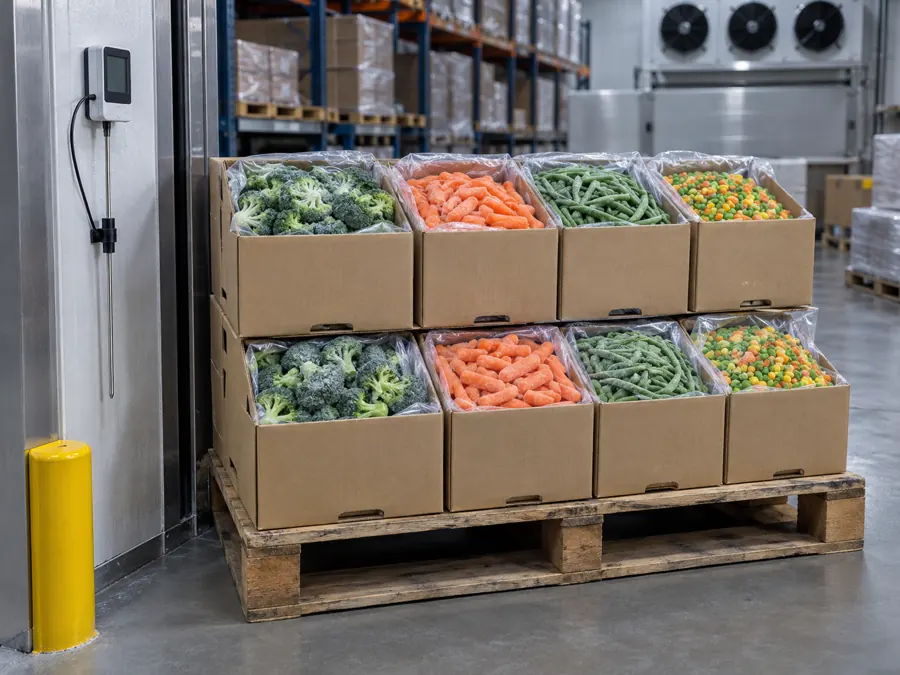
Illustrative cold-room handoff; export cartons must be sealed and lot coded before loading.
The licensed broker usually submits customs cargo-release and entry-summary data electronically through ACE, using the importer number and bond. FDA-regulated lines move from CBP to FDA screening under the customs entry number. This is where the FSVP importer name, email and DUNS are declared for each food line. FDA's entry review description says a complete entry may be released electronically or routed for human review because information is missing, risk is elevated, or an import alert may apply. The broker should share the ACE and FDA status with the buyer and us, without interpreting "documents received" as "food released."
Keep the actual results in one shipment status sheet: accepted ISF transaction and amendments; FDA Prior Notice confirmation; CBP entry number; FDA line status; CBP cargo release; and carrier/terminal delivery release. The importer or filer uses the entry number in FDA ITACS to check FDA status and submit requested entry documents or the goods' location. FDA explains ITACS access and status checks here. An ISF acceptance or Prior Notice confirmation records a filing; neither is permission to distribute the food. If FDA requests examination or sampling, keep the cargo at the instructed location and preserve its frozen condition while the importer answers the request.
For a first shipment, plan extra time for the importer number, bond, facility and U.S. agent checks, FSVP setup, APHIS eligibility and classification review before buying a vessel slot. For a repeat shipment, those standing roles remain but ISF, prior notice and entry data are shipment-specific and must be filed again. FDA registration has its own renewal schedule; FSVP supplier review and corrective action are ongoing. No government page offers a guaranteed end-to-end clearance duration for this product. Quoting a universal "three-day customs release" would be misleading when a hold, sample, paperwork error or terminal congestion can change the timeline.
Manage FDA, CBP and terminal release or a hold
Think of release as three connected statuses. FDA may issue an electronic release, request documents, examine or sample, detain, or place a relevant product and firm under detention without physical examination through an import alert. CBP separately controls customs release and duty/security matters. The steamship line and marine terminal need their commercial release, delivery order, charges and appointments before the container leaves. We ask the U.S. buyer to appoint a single status owner who will not direct a truck to pick up until all applicable releases and appointments align. Cold storage, demurrage and detention exposure can grow while agencies or commercial parties resolve a hold; those amounts come from the actual service contracts, not a universal regulatory tariff.
FDA's Actions & Enforcement page says a Notice of FDA Action goes to the importer of record, consignee and filer for examination or sampling. Hold the product at the approved location, preserve seals and temperatures, and give FDA location and access details. Do not distribute goods while FDA is evaluating a sample. If the article appears violative, FDA issues a detention notice explaining the concern and the response deadline. The importer may submit records or private test evidence, request an extension, or discuss lawful reconditioning where allowed. A lab result alone is not a substitute for FDA's disposition. A final refusal leads to export or destruction under agency supervision, subject to the notice and applicable rules.

Illustrative scene: Refrigerated container at a port inspection bay.
Before departure we check FDA import alerts against the exact manufacturer, product and issue, including processed-food pesticide alerts. A firm name that resembles another firm is not proof of a listing, and absence from one search is not a clearance guarantee. If a lot has a disputed pesticide result, frozen state does not erase it. We hold the lot, investigate raw material, analytical method and residue definition, and release only after the named buyer and competent parties review the evidence. The IQF broccoli U.S. supply plan shows the proposed raw-to-finished controls and where a negotiated specification sits beside legal requirements.
For an initial inquiry, send us the broccoli form, destination port, channel, estimated volume, carton weight, required cooking and label language, requested documents and target arrival window. We can prepare a product proposal and lot evidence plan, while your U.S. importer, FSVP owner and broker confirm ACIR, tariff measures and filing readiness for the shipment date. The useful handoff is a named decision and a dated record for each gate, not an assertion that a generic certificate opens every port.
Plan your frozen broccoli order
GreenLand-food is a China-based frozen broccoli supplier and manufacturer discussing factory-direct wholesale supply. Send us your form, specification, bulk packing, quantity, cooking application, destination and requested documents so we can prepare a reviewable proposal for the actual source and order.