


What Is Eggplant? Aubergine, Taste, Classification and Nutrition
Oct 15, 2026
Leave a message


Eggplant, aubergine and brinjal describe a familiar food
The words eggplant and aubergine are regional names rather than separate product grades. North American English commonly uses eggplant, while British English commonly uses aubergine. Brinjal appears in South Asian and other markets. Recipes can therefore use different names for a similar ingredient. Read the accompanying shape, cut and cooking instruction before deciding whether the author means a globe fruit, a slender Asian type or another specific form. The name alone cannot establish that distinction.
The botanical classification helps explain a common confusion. The portion eaten develops from a flower and contains seeds, so it is a fruit in botanical usage. In a culinary classification, it normally belongs with savory vegetables. Both descriptions can be appropriate because they answer different questions. A procurement specification can use the familiar category name frozen vegetables while still identify the ingredient accurately as eggplant. There is no need to rename a product category simply because botanical and kitchen terms differ.
The Royal Botanic Gardens, Kew identifies Solanum melongena as a member of the Solanaceae family and describes its domestication in the region between India, Myanmar and China. This places it among the nightshades, a family that also includes tomatoes and potatoes. Family membership is useful for identification, but it does not make all parts of all related plants edible. Use recognized food varieties and the edible fruit described by the supplier, not an unidentified ornamental plant.

Eggplant is the edible fruit of a flowering nightshade plant.
The familiar name has historical associations with small white egg-shaped fruit, but today's eggplants show much wider variation. A large purple globe does not contradict the word eggplant; the common name is not a current size or color specification. Likewise, a long purple fruit can still be Solanum melongena. The exact cultivar and market type belong in a technical description when they affect use. A general label such as Asian eggplant can cover more than one appearance and should be clarified for a repeat order.
Some plants sold with eggplant in their common name belong to other species. African eggplants and small pea eggplants should not automatically be treated as equivalent to a large globe aubergine in a recipe or supply contract. They can differ in bitterness, size, seed proportion and traditional use. If a dish depends on a named type, obtain its specific identity and evaluate a sample. A broad shared food name is an insufficient basis for a substitution that changes the eating result.
Kew's geography also needs careful interpretation. A discussion of domestication is not a statement about the origin of a particular commercial shipment. Eggplant is now cultivated in many regions, with harvest windows that depend on climate and production conditions. A local summer season cannot establish year-round availability from a frozen supplier. For a purchasing decision, ask for the offered origin, crop period and stock or production plan appropriate to the order. Historical background and current supply evidence serve different purposes.
Recognize varieties by shape, skin and flesh
Globe eggplants have a broad body that makes large rounds or planks. Slender Chinese or Japanese market types often provide narrower pieces that are convenient for batons, stir-fries and portioned wedges. Small oval types suit other traditional dishes, including preparations where whole or halved fruit is important. These broad shape descriptions are useful starting points, not guarantees of a particular seed level or cooking time. Two fruits of the same market type can still differ through maturity and growing conditions.
Skin color ranges from deep purple to white, green and striped patterns. Color helps the buyer recognize the offered form and plan the appearance of a finished dish. It is a poor substitute for identifying the variety or assessing the flesh. A white eggplant does not automatically taste milder, and a dark purple one does not automatically provide a particular health benefit. Ask which visual characteristics are consistent in the supplied lot when color forms part of your customer's acceptance criteria.

Variety and fruit shape affect slice dimensions and the balance of skin and flesh.
Select fresh fruit that feels firm and has reasonably intact skin and a fresh-looking calyx. Inspect for bruising, decay, cracks and extensive soft spots. Purdue Extension's FoodLink page provides these practical selection cues. Whole-fruit appearance gives only part of the information. Cutting a representative sample reveals the flesh condition, developed seeds and amount of tissue lost during trimming. A kitchen buying by kilogram but serving by slice needs to understand both the outer shape and usable interior.
Young, properly handled fruit often has pale flesh and seeds that do not dominate the bite. As the fruit becomes overmature, seeds can become more conspicuous and the texture less suitable for a delicate preparation. Cutting also exposes tissue that can discolor with time. A slightly changed cut surface needs interpretation in context, while decay, mold or an objectionable odor calls for rejection. Do not claim that color alone proves safety or that a bright purple skin guarantees a sound interior.
The skin is commonly edible after suitable preparation. Slender types can have relatively tender skin that works well in a cooked dish, while a large or older fruit may have a tougher outer layer. Leaving skin on provides a visible border and can help pieces remain identifiable as the flesh softens. Peeling gives a more uniform pale appearance but changes yield and may leave pieces less supported. Our narrower article on Chinese eggplant skin addresses that choice in more detail without treating all varieties as identical.
The stem and calyx need trimming before ordinary eating preparations. Handle them carefully because some fruit or plant material can have prickly structures. Wash the whole fruit before cutting, even if the recipe will remove the skin, so material from the outside is less likely to transfer through the knife. The FDA recommends running water and clean tools for produce. Washing is a sensible preparation step, while the final recipe still needs its own appropriate cooking and storage controls.
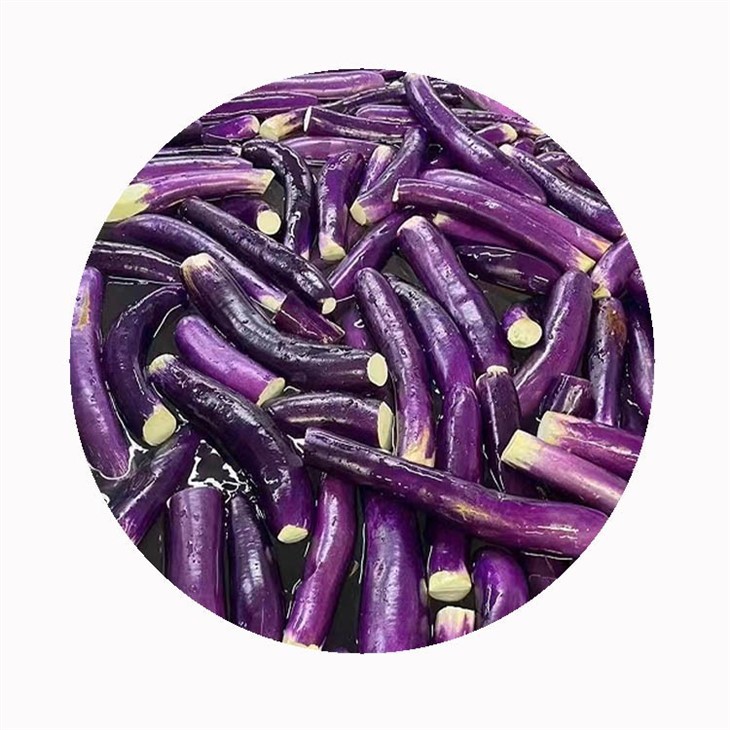
Variety and fruit shape influence slice diameter and the amount of skin in a portion.
For a frozen ingredient, ask about visible skin, cut size and the proportion of seeds or blemishes allowed in the specification. Whole slender fruit, short segments, wedges and dice will not make identical portions. A photograph of packed wedges can support discussion of that incoming form. It cannot demonstrate a finished roasted slice or establish a universal cooking yield. We help buyers confirm the offered product description and compare it with the actual appearance their dish requires.
Understand its taste and response to cooking
Eggplant's raw taste is generally mild, sometimes with bitterness or astringency that depends on the type and condition. The flesh feels spongy and can be unpleasantly firm in a dish that expects softness. Cooking develops a more tender, sometimes creamy texture and lets the vegetable carry seasoning, sauce and browned flavors. A well-prepared eggplant should therefore be judged in its intended cooked application. A raw bite is a limited predictor of a roasted dip or a braised wedge.
Different heat methods produce different experiences. Roasting can create browned faces while the center softens; steaming gives a moist, gentle result that can receive a dressing; simmering lets the flesh blend into a sauce. Grilling adds contact browning and, depending on the fuel and method, a smoky character. The same cut may taste richer after frying because oil is part of the finished dish. Choose the method according to the desired flavor and texture, then evaluate its added ingredients as well.
Oil uptake is a practical issue because the raw porous flesh can take in oil during cooking. That does not justify pouring more oil into a pan whenever the surface looks dry. Measure a starting quantity, spread or brush it evenly and observe the result. A thoroughly softened piece can feel less spongy than an undercooked one. Where a dish needs gentle cooking, a small amount of water or sauce can help it finish, although that changes the surface result compared with dry browning.
Salt treatment is optional and purpose dependent. A recipe may salt cut surfaces to draw moisture or season the pieces before frying or layering. Many preparations using young tender fruit can proceed without a lengthy salt rest. If you salt, control the amount, standing time and removal of surface moisture. Count the remaining salt in the final dish. A salt step does not transform poor-quality or spoiled fruit into an acceptable ingredient, and it should not be described as a safety treatment.

Cooking softens the spongy flesh; added oil also changes the finished dish.
Some familiar dishes show how varied the texture target can be. Baba ganoush and other dips use thoroughly softened flesh that can be scooped or blended. Ratatouille and caponata often need visible pieces integrated with other vegetables and sauce. Eggplant Parmesan needs slices that can make layers and soften during the finished bake. An ingredient approved for a purée may therefore fail a slice presentation even when its flavor is satisfactory. The application determines which quality matters most.
Frozen eggplant can be useful in cooked applications, but freezing changes the expectation of fresh firmness. The final texture depends on the cut, pretreatment, freezing and handling as well as the recipe. Ask what preparation has already occurred and what final cooking is required. Individually quick frozen describes the format; it does not establish that the vegetable is ready to eat or that every piece will behave like freshly cut fruit. Compare an actual sample after the full cooking method.
For a restaurant, texture after holding may be more important than the appearance immediately out of the pan. A tender wedge can continue softening in hot sauce, while a browned slice can lose surface crispness under cheese. Check the dish at the time customers actually receive it. This makes the approval more useful than a single attractive plate photographed at the best possible moment. It also explains why a supplier needs the application and handling conditions before making a meaningful ingredient recommendation.
Read nutrition by weight and preparation state
Plain raw eggplant is a relatively low-energy ingredient that contributes fiber and small amounts of several vitamins and minerals. Purdue's displayed panel gives approximately 20 calories, 5 g carbohydrate and 3 g fiber for a cup of cubes weighing 82 g. Its figures are rounded reference information. Illinois Extension gives about 20 calories, 5 g carbohydrate and 2 g fiber for a cup. These public summaries support a modest description of the ingredient, not a precise nutrient specification for every lot.
A cup is a volume measure whose weight depends on the cut and packing. Large loosely placed chunks leave more space than small firmly packed dice. An 82 g reference cup is therefore a defined comparison portion rather than a promise that every kitchen cup contains 82 g. When precision matters, weigh the ingredient and select a dataset matching its state. Do not turn rounded cup values into apparently exact per-100-g laboratory results. The arithmetic can look precise while the starting information is not.
Raw, boiled, drained, roasted and fried entries answer different questions. Cooking can remove water, causing some nutrients to be more concentrated per unit of cooked weight, while some processes can also change the amount retained. Added oil, salt or sauce changes the finished values further. A comparison between raw eggplant and a fried breaded portion should explicitly name those preparations. Otherwise readers may assume that the higher energy value belongs to a different variety rather than to the recipe and water change.

Identify the food state and account for added oil when interpreting a serving.
Oil contributes substantially to a recipe's energy when it is retained in the finished food. Measure what the recipe uses and assess what remains in the final dish rather than borrow a generic calorie figure for raw eggplant. Breading contributes flour or crumbs; cheese adds its own energy, protein, fat and sodium. A complete casserole is the sum of its ingredients and processing changes. Eggplant's low raw energy does not make every dish prepared with it low in energy or fat.
Fiber is a useful reason to include a variety of vegetables in ordinary eating patterns, but the portion still matters. A few thin slices make a different contribution from a large bowl of cooked pieces. Peeling and recipe composition can also affect a finished portion. Eggplant supplies bulk and variety, while it is generally a modest protein source on its own. A plant-based main meal can pair it with beans, lentils, tofu or other protein foods, according to the menu and dietary needs.
For a manufactured food, a nutrition panel must describe the sold or prepared product according to the applicable rules. The correct reference may involve a complete formulation calculation, representative testing, or both under the destination requirements. Define the serving weight, preparation instructions and whether sauce or oil is included. We discuss the frozen vegetable's specification separately from a customer's finished-meal claim. A supplier's product photograph or a broad article figure cannot certify the nutrition of an untested retail recipe.
Natural variation also limits claims based on an individual reference entry. Cultivar, maturity and processing can influence the ingredient, and the finished recipe can have larger effects. Keep a reference figure in proportion to the decision being made. It can explain why plain eggplant differs from a cheese-rich bake, but it cannot establish that one commercial batch meets a threshold for a regulated high-fiber claim. That claim requires an appropriate basis tied to the actual product and market.
Fit eggplant into a diet without overstating health claims
Eggplant can fit a vegetarian or vegan meal when the other ingredients do. The plain vegetable does not contain wheat, milk or eggs, yet a breaded slice or Parmesan dish can contain all three. Cheese may also involve ingredients a vegetarian customer wishes to check. Read the complete ingredient list and handling information before describing the dish. A buyer's allergen request should follow through the coating, sauce, cheese, packaging and shared preparation, rather than stop at the vegetable's name.
Nightshade membership is sometimes treated as a reason that everyone should avoid eggplant. A plant family name alone does not establish that a person will react to an ordinary cooked food. At the same time, individual allergies and intolerances need to be taken seriously. Someone with a known allergy should follow professional advice and avoid the relevant ingredient or exposure. An article about a vegetable cannot diagnose symptoms or assure an individual that a particular food is safe for them.

Eggplant can contribute texture to a meal; the other ingredients determine its wider nutritional balance.
Some readers notice digestive discomfort after large vegetable portions or particular recipes. Portion size, overall fiber intake, oil, spices and other ingredients can all influence the experience. A heavily fried dish and a small steamed portion are different exposures. Make only practical culinary suggestions here: select an appropriate portion, cook to a tender texture and assess the complete meal. Persistent or concerning symptoms belong in a conversation with a qualified clinician rather than a supplier's product claim.
Purple skin contains plant pigments that are studied for their chemical properties. Laboratory observations about antioxidant activity are not proof that eating an eggplant dish prevents or treats disease. Dose, preparation, metabolism and the design of human studies matter to any stronger conclusion. Keep the public description proportionate: eggplant provides color, variety and dietary fiber in a suitable meal. Avoid promises about cancer, cholesterol treatment, detoxification or a specific medical outcome that the food article cannot establish.
The raw-versus-cooked question also needs proportion. Raw eggplant can be bitter and spongy, and cooking is the customary route for most familiar dishes. That does not support a blanket claim that a small raw piece of every recognized edible variety is poisonous. Conversely, cooking is not a reason to use leaves, unknown ornamental plants or spoiled fruit. Use the identified edible fruit, prepare it cleanly and follow an appropriate recipe. Anyone with an individual medical concern should obtain advice suited to that concern.
Food safety is separate from nutrition. Wash fresh produce under running water before preparation, use clean equipment and avoid contact with raw meat juices. For a frozen product, follow the supplied storage and cooking instructions, keeping in mind that IQF does not mean sterile or ready to eat. Cooked meals need prompt cooling and suitable refrigeration. A nutrient-rich ingredient can still be mishandled, while correct handling does not create a medical benefit. Both topics deserve their own evidence and controls.
Choose fresh or frozen forms for the application
Fresh whole eggplant gives the kitchen control over trimming, peeling and cut shape. That flexibility has a cost in preparation time and variable yield. A globe fruit can supply broad slices for a layered dish, while slender fruit may be easier to cut into similarly sized batons. Before substituting, compare the actual piece dimensions, skin texture and finished appearance. A lower incoming price can be offset by trimming losses or extra work needed to make the desired portion.
Frozen forms can simplify storage and portioning when they suit the recipe. Wedges, segments, slices and dice have different uses, and the preparation state must be clear. Some dishes welcome a softer cooked result; others rely on a large intact slice or a crisp coating. Ask for the offered form and cooking instructions before placing the ingredient in a menu trial. A supplier category covering frozen eggplant is a starting point for that discussion, not a guarantee that every possible cut is available.
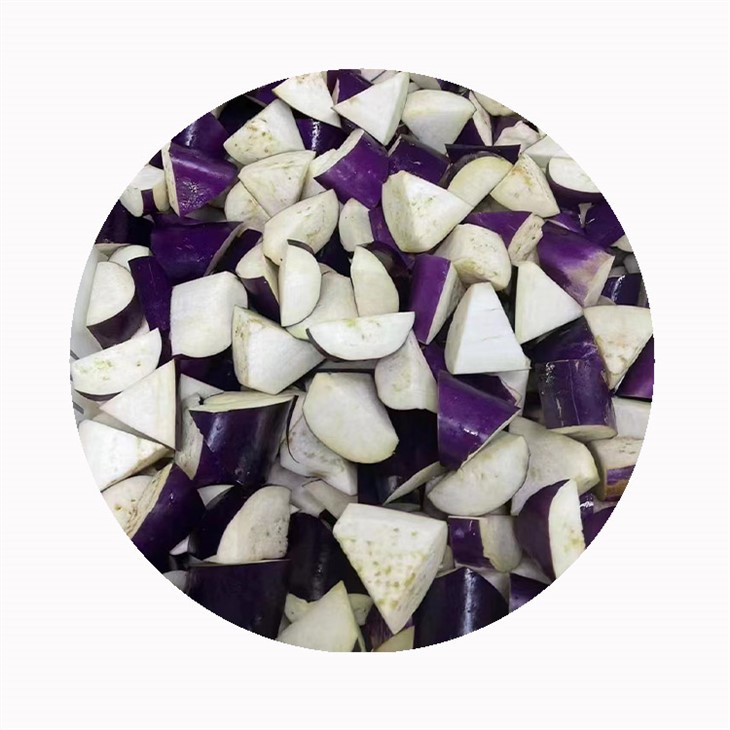
Wedges suit different applications from evenly cut flat slices used for layered Parmesan.
Our frozen eggplant page supports a conversation about bulk ingredient supply, appearance and cut requirements. We confirm the offered specification and packing with your team. Real photographs of whole slender fruit, short segments or packed wedges can help explain the incoming form. They do not establish a cooked casserole capability or an accepted nutrition claim. The buying decision should connect those visible forms to the application you will actually prepare.
Run a representative trial with a defined incoming weight and cooking method. Assess the usable cooked yield, skin tenderness, visible seed level, browning and liquid released. Include the intended hot hold or cooling and reheating step when those form part of service. Keep the sample and method record linked so a later delivery can be compared under similar conditions. Without that connection, two visually similar frozen ingredients can be judged by different recipes and produce a misleading acceptance decision.
Storage and crop planning need their own written information. Fresh eggplant is best used promptly and handled to limit bruising and moisture damage. Frozen product should remain under its specified cold conditions; the pack's shelf-life claim needs the stated temperature and packaging basis. Ask about origin, crop timing and available quantity when planning a continuing menu. Begin with the intended dish and volume, and let the supplier discussion resolve the cut, packing, documents and schedule needed to support it.
Source frozen eggplant with GreenLand-food
GreenLand-food is a professional frozen eggplant supplier and manufacturer in China, providing factory-direct wholesale supply for importers, food manufacturers, foodservice distributors and private-label programs.
Tell us the application and destination, then share any requirements for product form, specification, packing, quantity, private-label needs and requested documents. We can help clarify the details for the proposed ingredient supply.